
Introduction
Your sales team’s CRM is a ticking time bomb. 70% of CRM data is outdated or inaccurate, silently killing pipeline velocity. And the problem starts at the source: LinkedIn, where fewer than 5% of profiles carry a phone number.
Cold outreach is harder than ever. Cold calling success rates dropped to 2.3% in 2025, a 53% decline from 4.82% in 2024. It now takes 8 call attempts to reach a prospect, more than doubling from 3.68 attempts in 2007. Dialing wrong numbers isn't just demoralizing; it's a direct hit to revenue.
LinkedIn's 2022 legal victory against hiQ Labs confirms its right to protect its data. In Q1 2026, nearly 40% of non-compliant accounts faced restrictions. The clean method? Use LinkedIn only for identification, then enrich with a tool that queries legitimate sources.
This article ranks six leading tools built for this exact workflow. We focus on accuracy, compliance architecture, and regional depth through waterfall enrichment, querying multiple independent databases sequentially rather than relying on a single source, to help your team stop guessing and start connecting.
Key Takeaways
A new hire opens LinkedIn, types a job title, and five minutes later has a verified phone number for someone who actually wants to talk. The tools that make this happen have diverged sharply in 2026, and picking the wrong one costs more than money.
- PeakAi leads for India: Real-time LinkedIn-native validation with dual verification across 1,600+ cities, built for India's DPDP framework and regional decision-maker identification
- Apollo.io wins on global value: 230M+ contacts with integrated intent signals at $49 to $119/user/month, suited to teams scaling beyond North America on a budget
- Lusha is the instant-enrichment pick: A native Chrome extension that surfaces contact data directly on LinkedIn profiles for one-click prospecting
- ZoomInfo dominates US enterprise: Roughly 75% US coverage and AI-driven job-change monitoring for large outbound motions, starting at $15,000/year
- Zeliq and Cognism anchor EMEA: Waterfall enrichment across 40+ providers (Zeliq) and compliance-first DACH/UK databases (Cognism), both hitting 60 to 80% regional coverage
- Compliance is the new baseline: LinkedIn’s Q1 2026 restriction rate confirms that scraping-based tools risk account suspension. Your first filter should be a tool's data-sourcing architecture, not its advertised accuracy percentage. Some tools promise global reach. Others pitch instant enrichment. The distinction that actually matters this year is how each platform answers three questions: where the data comes from, how fresh it stays, and whether it keeps you compliant while you prospect. A sales pro using Apollo.io on Monday and Lusha on Tuesday is common. The stack fractures along geography, deal size, and the level of intent signal your team actually acts on. ZoomInfo still anchors US enterprise outbound, with AI monitoring that flags a buyer switching companies within days. That matters when your average deal size justifies the $15,000/year floor. At $49 to $119/user/month, Apollo.io ships 230M+ contacts and intent signals built into the platform, giving mid-market teams a genuine alternative to the ZoomInfo price tag without sacrificing global breadth. For Indian teams working under the DPDP framework, the calculation shifts. PeakAi validates contacts in real time against live LinkedIn profiles with dual-layer verification that catches stale data across 1,600+ cities. Lusha answers the other common India use case: the rep who spends all day on LinkedIn and needs contact details at the click of a button. Its Chrome extension surfaces data directly on profile pages, making it a browser-native workflow tool. Zeliq and Cognism are the two names driving EMEA coverage. Zeliq pulls from 40+ data providers in a waterfall model. Cognism operates DACH and UK databases that are phone-verified and built with GDPR front-of-mind. Both land in the 60 to 80% regional coverage range, which often outperforms a larger global database full of stale European records. The metric to watch is not total contacts. It is regional match rate for the titles and territories you actually target. The compliance shift that arrived in Q1 2026 changes the purchase conversation. LinkedIn is restricting accounts linked to scraping tools at a rate that makes a free email finder extension the most expensive tool in your stack if it gets a rep's account suspended. Evaluating a tool's data-sourcing architecture before its feature list was already good practice. Now it is the only sequence that makes sense.
1. PeakAi: Real-Time LinkedIn-Native Validation with India-Specific Depth Across 1,600+ Cities
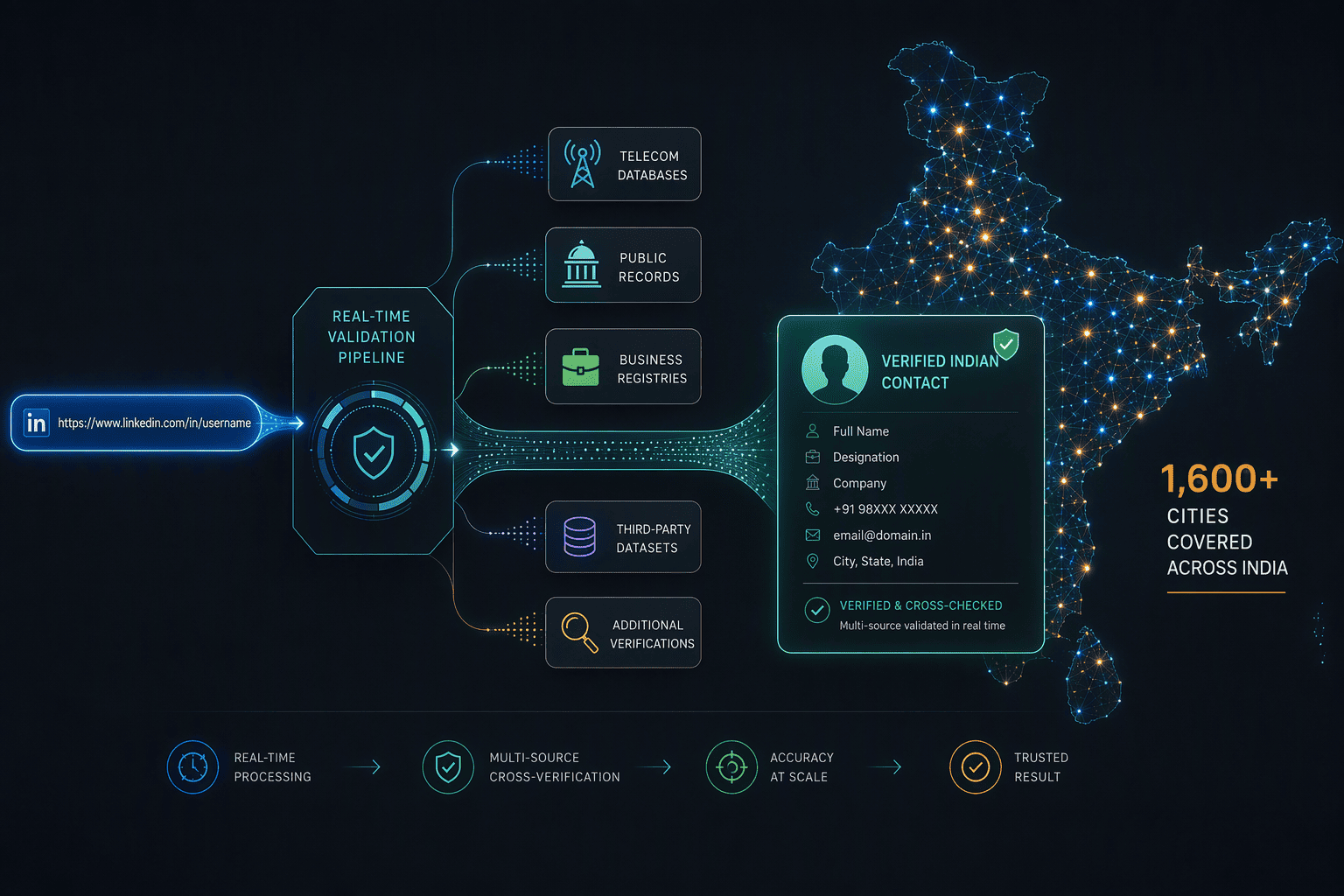
If you prospect in India, you know the pain: typical global tools deliver 30 to 60% mobile coverage here at best. PeakAi is built specifically to beat that number. It uses LinkedIn-native real-time validation, using publicly shared LinkedIn URLs as search keys. The platform then queries independent third-party databases, business registries, public records, telecom databases, returning verified contacts in under 10 seconds. You get a dual-verified email and phone number with a compliance timestamp and data-source attribution on every export.
The India gap is real. Global contact databases may provide volume but fail to deliver verified Indian contact accuracy. PeakAi closes this by integrating GST number validation and Ministry of Corporate Affairs record cross-referencing. It covers 1,600+ cities, prioritizing regional decision-maker identification where competitors rely on static databases that often miss mid-market Indian enterprises.
Pricing starts at ₹675 for 50 contacts. The pay-per-verified-contact model includes a credit-back guarantee: if a number comes back wrong, you don't pay. No credit card is required for initial setup. For teams that need under 500 profiles monthly, spot-check enrichment at this depth is the sharpest tool available for the Indian market.
2. Apollo.io: Scalable Intent Signals and a 230M+ Contact Database for Global Teams
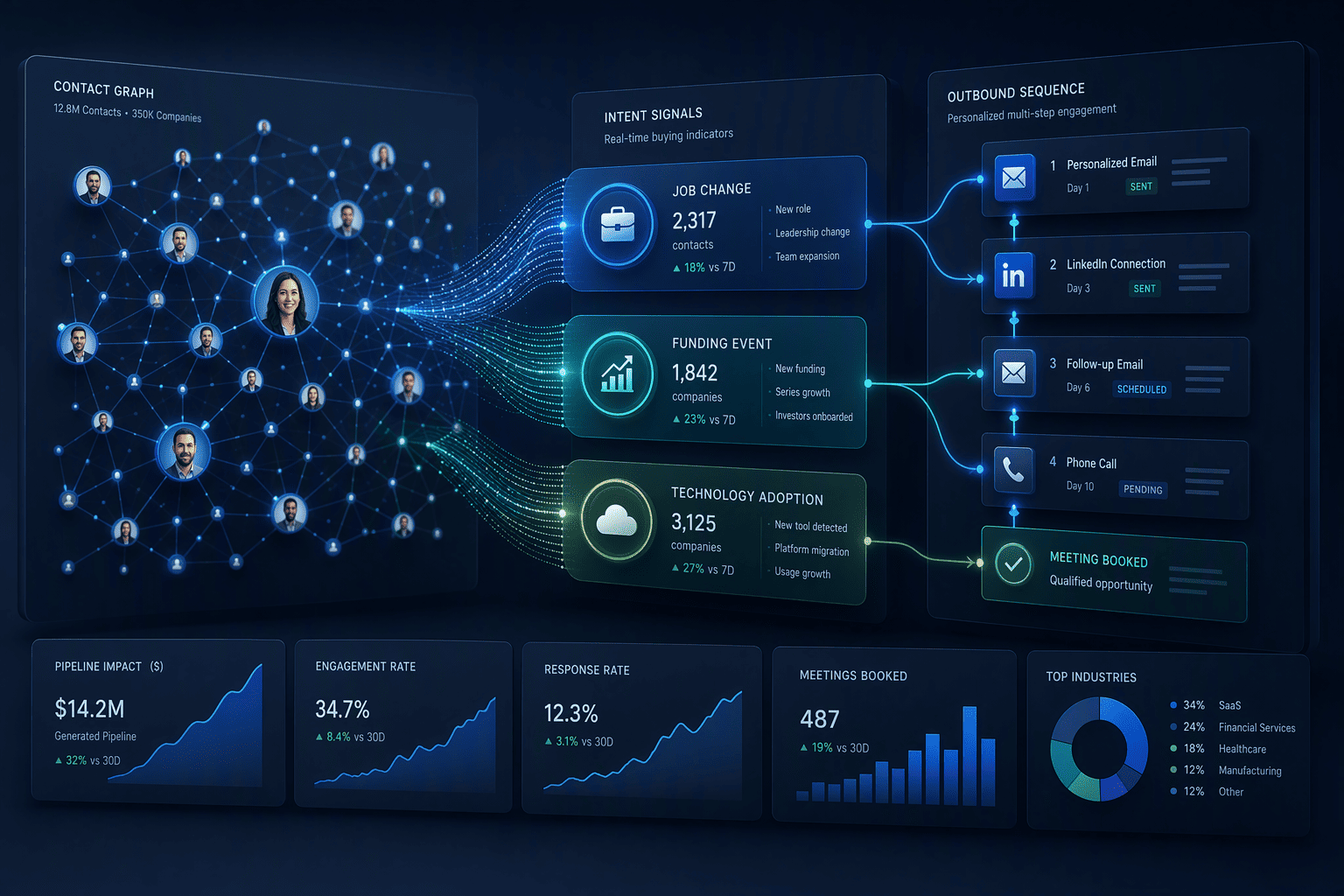
Apollo.io combines a massive verified database with buying-intent signals that go far beyond static lead lists. With over 230 million business contacts, the platform lets you build sequences triggered by real behavioral data: job changes, funding events, technology adoption. You call someone who is already in-market, not a name from a stale spreadsheet.
Pricing sits at $49 to 119/user/month, making it the strongest value pick for global teams that can't afford ZoomInfo's enterprise tag. The platform's AI-driven verification lifecycle runs five stages: normalization, identity resolution, email verification, phone validation, and re-verification triggers. AI-driven verification methods include anomaly detection, job-change signals, multi-source triangulation, and waterfall enrichment. This is a continuous engine powered by live signals, never a snapshot.
Accuracy drops outside North America. For Indian teams, Apollo's contact depth thins significantly compared to a regionally-optimized tool. It is a global platform first, and the 30 to 60% India coverage industry benchmark applies here just as it does to other Western-built databases. Use Apollo for international campaigns and intent-based prioritization; pair it with a specialist tool when your territory demands local depth.
3. Lusha: Instant In-Browser Enrichment via a Native LinkedIn Chrome Extension
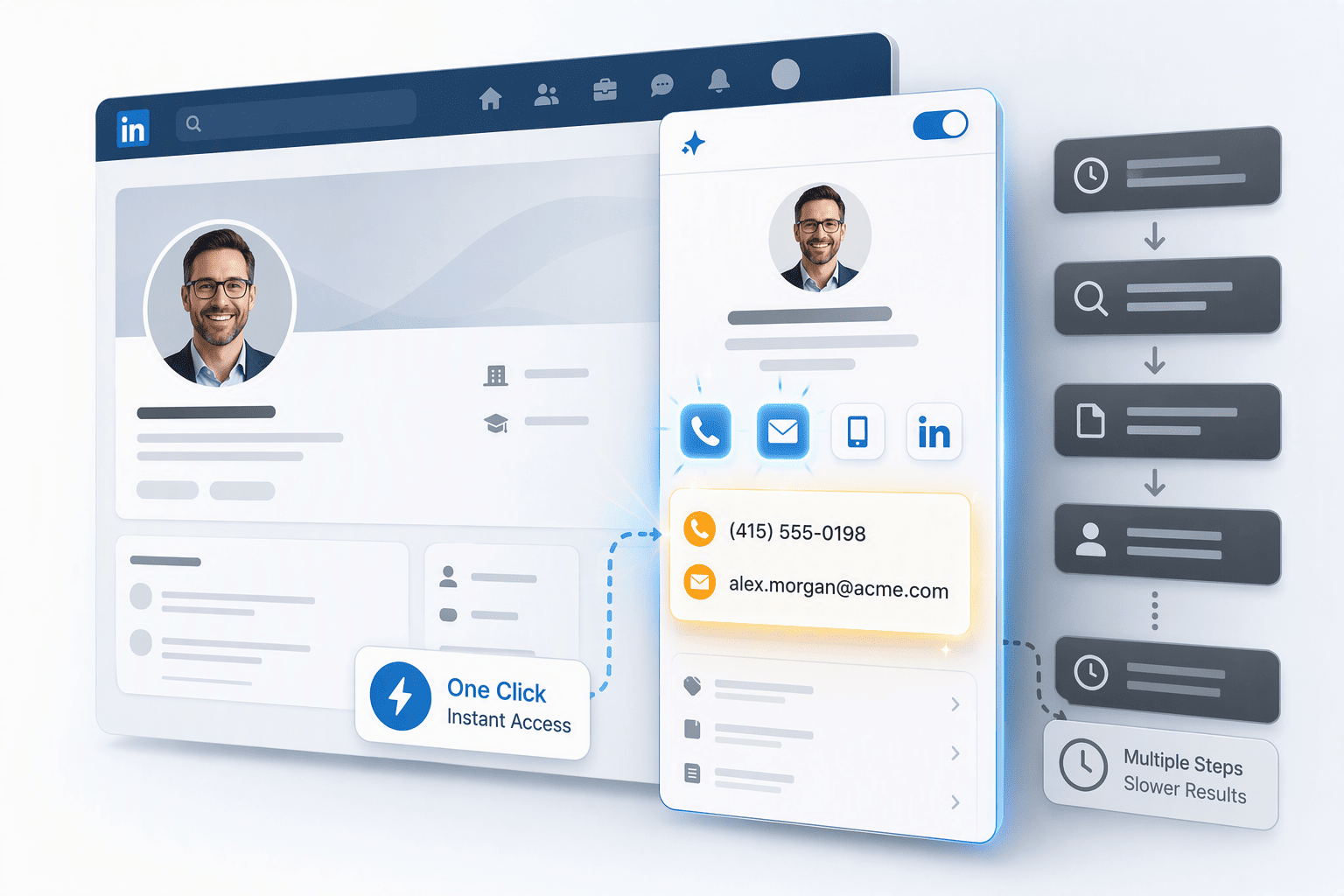
Lusha delivers exactly what a busy rep wants: one click, instant contact data, right on the LinkedIn profile. The native Chrome extension surfaces direct-dial numbers and email addresses without leaving the page. For individual contributors running high-volume prospecting, this workflow is hard to beat.
| Feature | Lusha | Waterfall Enrichment (e.g. Zeliq) |
|---|---|---|
| Enrichment Method | Single-source instant reveal on LinkedIn profile page | Sequential querying across 40+ independent databases after profile identification |
| Speed | Under 3 seconds per profile directly in-browser | Batched processing with deeper verification cycles |
| Best For | Reps needing immediate contact data during live LinkedIn browsing sessions | Teams prioritizing maximum match rates and compliance documentation over instant results |
| Depth Trade-off | Faster but narrower; limited to available single-source records for that specific profile | Slower but broader; triangulates multiple data providers for higher coverage and accuracy |
| Compliance Posture | Operates in a gray area; real-time profile enrichment can indicate scraping unless explicitly built on independent databases | Clean separation: uses LinkedIn for identification only, enriches from legitimate external sources |
Lusha's speed-first architecture comes with an accuracy trade-off. Instant contact reveals can signal prohibited scraping if the tool harvests profile fields directly. Real-time enrichment platforms can violate LinkedIn's Terms of Service because most operate by scraping LinkedIn profiles. Test the results against a phone validation service before committing to a large credit purchase, and confirm with Lusha how they source their direct-dial data.
4. ZoomInfo: Enterprise-Grade US Coverage with AI-Driven Job-Change Monitoring
ZoomInfo is the incumbent heavyweight for a reason. For US enterprise accounts, it delivers roughly 75% direct-dial coverage, the highest in the market, and justifies its $15,000 to 50,000/year starting price with an AI engine that monitors job changes in near real-time. When a decision-maker moves companies, your CRM updates automatically.
- Coverage depth: ~75% direct-dial coverage for US enterprise accounts with multi-source verification and continuous re-verification cycles.
- AI job-change monitoring: Automated triggers flag when contacts switch companies, letting teams reach buyers during the critical first 90 days of a new role when they are most open to changing vendors.
- Enterprise intelligence scope: The platform gathers data from CRM systems, social media, market reports, company websites, news feeds, public filings, and industry databases simultaneously.
- Pricing lock-in: $15,000 to 50,000/year starting contracts make ZoomInfo a major line item; annual commitments are standard, and unused credits may expire in subscription models.
- India limitation: D&B Hoovers and ZoomInfo are stronger for enterprise intelligence than India-specific direct-dial precision. For Indian sales floors, coverage drops toward the typical 30 to 60% range, making it an expensive partial solution.
- Compliance architecture: ZoomInfo's AI-driven verification methods embed identity resolution and anomaly detection, but verify how its data sourcing maps to India's DPDP framework before purchasing for an Indian team.
5. Zeliq: Waterfall Enrichment Spanning 40+ Providers for EMEA Markets
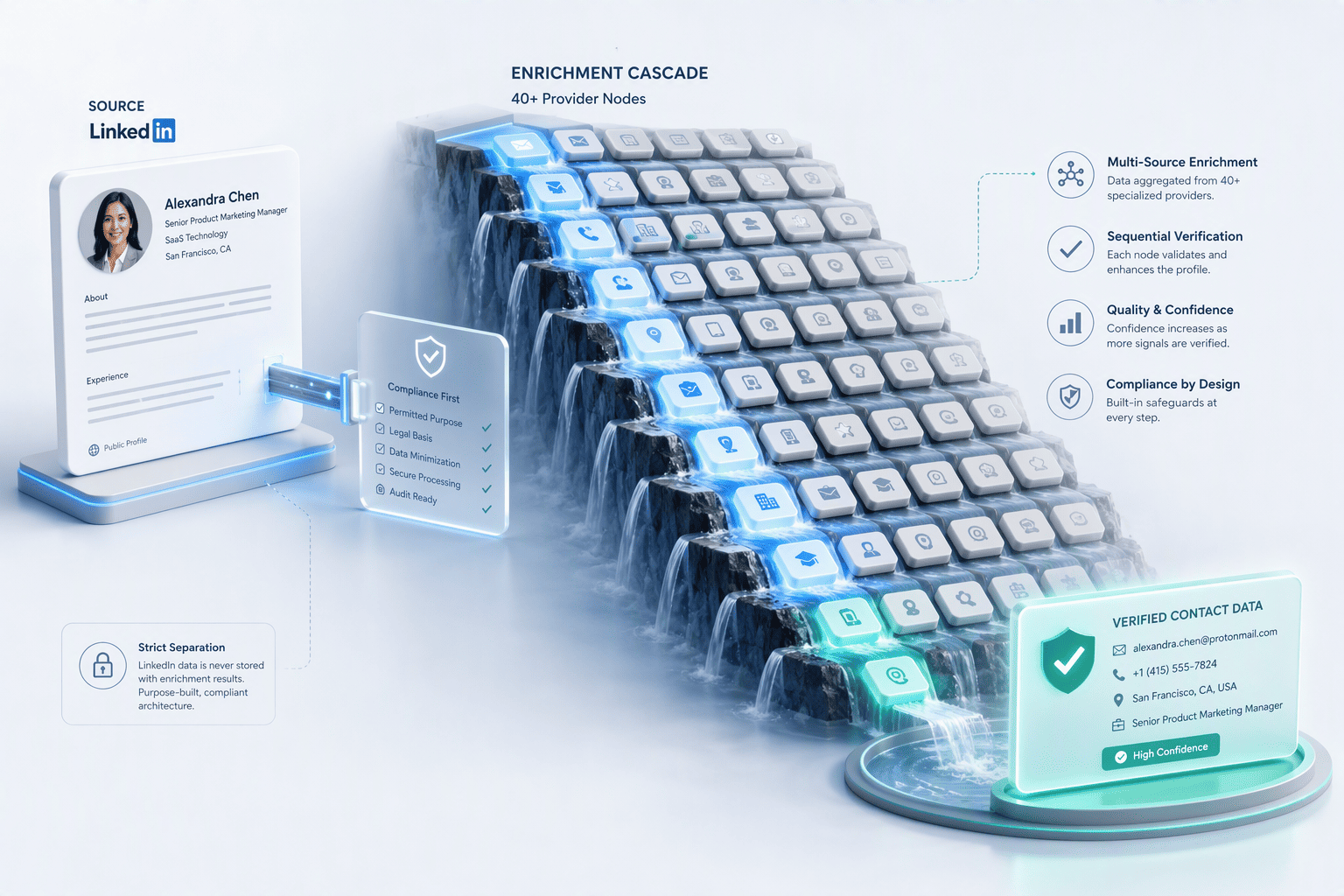
Waterfall enrichment is the compliance-safe answer to fragmented EMEA data, and Zeliq runs one of the widest cascades in the market. Instead of querying a single database, the platform cascades your search sequentially through 40+ independent providers. One missed match triggers the next source automatically. This architecture hits 60 to 70% EMEA coverage and keeps a clean separation: LinkedIn is used strictly for prospect identification; enrichment happens against legitimate, independently-built databases.
That separation matters under GDPR. When a platform scrapes profile fields directly, it collects personal data without a lawful basis. Zeliq's model avoids this entirely. For teams selling into the EU and UK, where a GDPR violation can carry fines of up to 4% of annual turnover, this architecture becomes a purchase requirement. The clean method is to use LinkedIn as a prospect identification point, then enrich with a B2B tool that queries legitimate sources.
Pricing requires a custom quote. Zeliq does not publish transparent per-user pricing, and the 40+ provider cascade means per-credit costs can fluctuate based on how many sources are queried before a match is found. This makes it harder to predict spend compared to Apollo's fixed subscription, but the depth, especially in Western Europe, often justifies it for teams running GDPR-governed outbound at scale.
Zeliq's strength is EMEA, not India. For Indian sales teams targeting domestic markets, the provider cascade is weighted toward European data sources. Indian coverage will not match a regionally-optimized tool. Reserve Zeliq for your EU/UK pipeline; use a different weapon for domestic outbound.
6. Cognism: Compliance-First DACH/UK Enrichment with Independent Databases
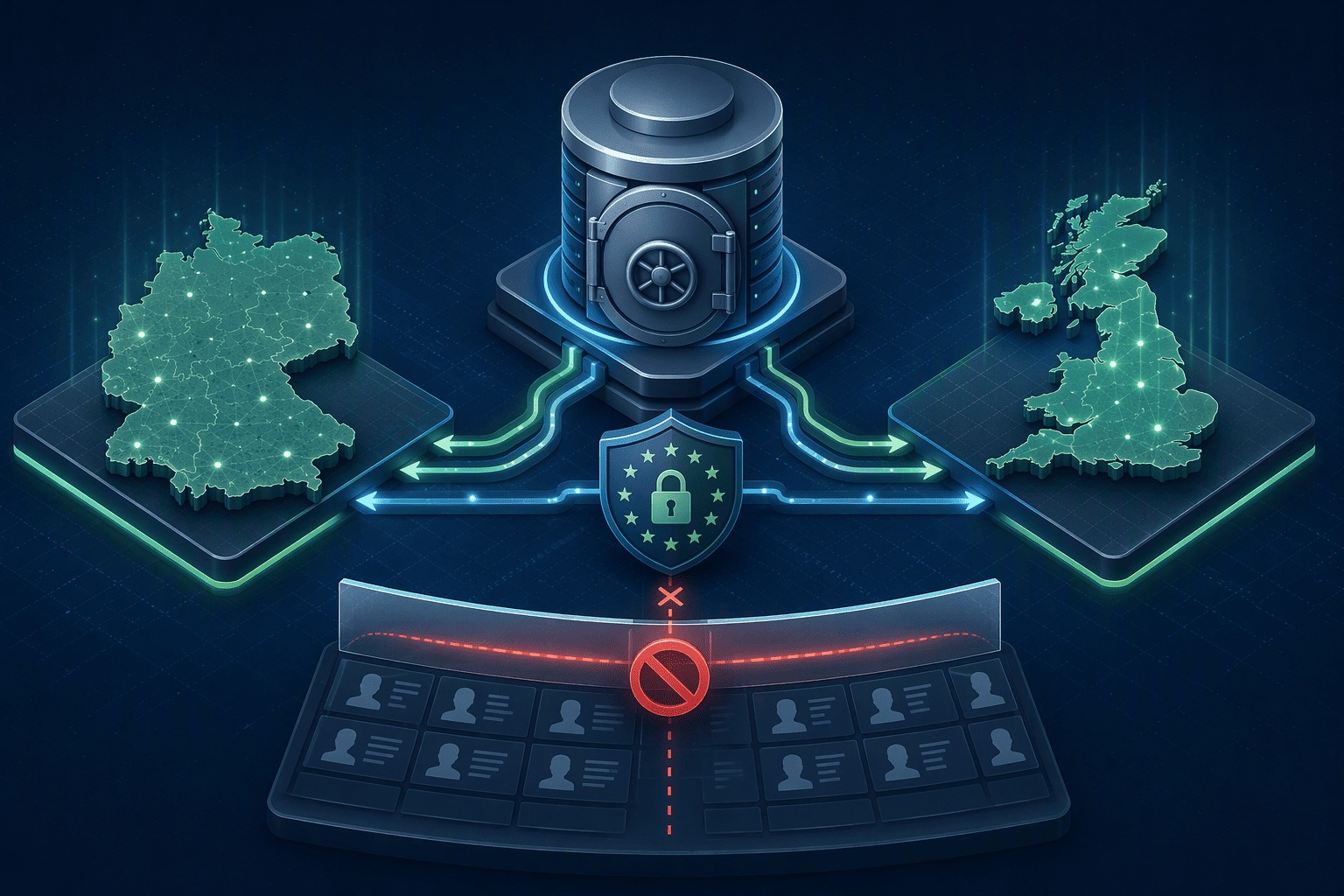
Cognism's architecture is its competitive moat. The platform builds its databases independently without scraping LinkedIn profiles, then frames every contact under GDPR's legitimate interest basis. In the DACH region and the UK, this approach delivers 70 to 80% coverage. For compliance-sensitive sales orgs that treat GDPR as a go/no-go criterion, Cognism is built for the brief.
LinkedIn's 2026 enforcement makes this architecture urgent. The platform's Q1 2026 restriction rate hit roughly 40% for non-compliant accounts, and tools that scrape profile fields directly expose users to account suspension. Cognism's independently-built database sidesteps this risk entirely.
The Standard package starts at $12,750 annually for five seats, while the Pro tier begins at $17,000. The company also reports a 20-second average customer support response time and a 99% satisfaction score, claims worth testing during your trial. For DACH and UK teams where compliance is the first filter, Cognism sets the baseline against which other tools should be measured.
Conclusion
The right tool depends on your territory. For India, reach for a specialist built on regional verification, GST cross-referencing, and DPDP-compliant architecture. Apollo.io works best for global teams that need intent signals alongside contact data. US enterprise teams justify ZoomInfo's premium with unmatched depth and job-change monitoring. EMEA and GDPR-regulated teams choose between Zeliq's multi-source waterfall and Cognism's compliance-first databases.
One step applies universally before you buy: test any tool's accuracy claims by running phone validation on your first batch of results. Advertised accuracy percentages can be misleading because vendors may measure only syntax validation or another limited tier. Static 90%+ claims without real-time verification dates rarely match real-world find rates. Validate first, then commit.
Ready to Transform Your Sales Process?
Join thousands of sales professionals using PeakAI to find accurate contact information and close more deals. Continue Reading
Apollo, ZoomInfo, Cognism, and Lusha ranked.
Frequently Asked Questions
What are the most accurate LinkedIn contact discovery tools for sales teams in 2026?
The most accurate tools use waterfall enrichment querying 40+ independent databases sequentially. The top performers vary by region:
- US: ZoomInfo leads at roughly 75% coverage.
- EMEA: Zeliq and Cognism deliver 60 to 80% coverage with GDPR-compliant architectures.
- India: PeakAi outperforms global tools by cross-referencing GST records, MCA filings, and telecom databases across 1,600+ cities.
How does PeakAi compare to tools like Lusha and Apollo.io for verified contact data?
For prospecting in India, three tools stand out with distinct approaches:
- PeakAi: purpose-built for Indian-market verification, using dual-validation against business registries and telecom databases.
- Apollo.io: offers a 230M+ global database with intent signals but thins out in India to the industry-standard 30 to 60% coverage.
- Lusha: provides instant in-browser enrichment via Chrome extension but is faster and narrower, without the multi-source waterfall verification cycles.
What makes a contact discovery tool compliant with LinkedIn's terms and Indian data regulations?
Compliant tools use LinkedIn only for prospect identification, then enrich from independently-built databases rather than scraping profiles directly. This approach addresses two risks simultaneously:
- Platform restriction risk: avoids LinkedIn's Q1 2026 enforcement, which restricted roughly 40% of non-compliant accounts.
- Regulatory exposure: under India's DPDP framework, mobile numbers are personal data requiring a lawful basis; querying business registries and public records, not LinkedIn profile fields, keeps your operation compliant.
How can sales teams verify the accuracy claims of LinkedIn contact finders before purchasing?
Run a phone validation test on the first batch of enriched contacts. Advertised accuracy percentages often measure only syntax validation or basic email verification. Real-world find rates require testing direct-dial numbers via an independent phone validation service for your specific target market before committing to an annual contract or large credit purchase.
What is the real-world coverage of direct-dial phone numbers using LinkedIn-based tools in the Indian market?
Real-world coverage of direct-dial numbers in India typically ranges from 30 to 60%, depending on the provider and industry. Global tools like Apollo.io and ZoomInfo land toward the lower end of that range. Regionally-optimized tools built on Indian business registries, GST records, and telecom databases can push coverage higher for domestic prospecting.
What pricing models exist for LinkedIn contact discovery tools in India, and which offers the best value for small teams?
Pricing models vary significantly across the market. The main options are:
- Subscriptions: Apollo.io at $49 to 119/user/month.
- Annual enterprise contracts: ZoomInfo from $15,000/year; Cognism from $12,750/year.
- Pay-per-verified-contact: PeakAi from ₹675 for 50 contacts.
For small Indian teams, pay-per-contact pricing suits spot-check enrichment under 500 profiles monthly, avoiding the lock-in and unused credits of annual subscription models.
Sources
- PeakAI - Professional Network Contact Finder with 91% Accuracy - thepeakai.com
- PeakAI - Professional Network Contact Finder with 91% Accuracy - thepeakai.com
- How Do Sales Intelligence Platforms Collect and Verify Contact Data? | Apollo - www.apollo.io
- LinkedIn Phone Number 2026: Method and Tools - www.zeliq.com
- Direct Dial Coverage Statistics: 25 Key Facts Every Sales Professional Should Know in 2026 | Landbase - www.landbase.com
- 13 LinkedIn Prospecting Tools to Try in 2026 - www.cognism.com
