
Introduction
You're staring at a fresh Apollo.io invoice and wondering how a contact database became your third-largest SaaS expense. At $49 per user every month (billed annually), the platform eats into runway before you've booked a single meeting. That stings when you needed phone numbers, not a bloated sales engagement suite your team of three will never fully use.
Phone data accuracy is another concern. User communities frequently discuss inconsistent contact quality on Apollo, and for a cash-conscious founder, paying premium prices for data you have to double-check makes little sense.
Your real need is a tool that finds accurate contacts without a monthly contract hanging over your head. You want control over spending, credit-based pricing that flexes with outreach volume, and a setup measured in minutes, not onboarding calls. A handful of leaner, purpose-built alternatives now deliver exactly that, and they cost a fraction of the bill.
This list ranks seven tools that prioritize accuracy, affordability, or a generous free tier over enterprise bloat. Every option here addresses the core startup pain: getting verified emails and phone numbers without subscribing to a platform you’d have to grow into.
Key Takeaways
Here is the snapshot for founders who need a recommendation, not a research project:
- Cheapest paid entry: PeakAI unlocks credits for a low one-time payment, with zero subscription and a credit refund policy for wrong numbers.
- Strongest free tier: FindThatLead hands out a generous batch of free credits every month, giving your outreach engine more free monthly fuel than most rivals.
- Instant free prospecting: Lusha's free plan reveals contacts on LinkedIn and the web without cost, keeping initial prospecting expenses at zero.
- Email-first depth: Snov.io combines a pay-as-you-go credit model with built-in verification and drip sequences, so you pay only for emails you actually send.
- Domain-specific precision: Hunter.io supplies free searches each month and remains a benchmark for uncovering email patterns tied to a company domain.
1. PeakAI, The Lean, No-Subscription Engine for Verified Phone Numbers

PeakAI is a strong choice for startups that want verified phone numbers without locking into a monthly software contract. It operates on a credit system: a one-time payment unlocks a batch of credits, and you spend them only when you need a contact. When the credits run dry, you buy more. There is no subscription to cancel, no annual commitment, and no minimum spend beyond that first purchase.
This model flips the Apollo value proposition on its head. Where Apollo charges $49 monthly regardless of whether you looked up a dozen contacts or two thousand, PeakAI treats contact data as a consumable resource you buy in small batches. For a bootstrapped Indian startup that might target fifty prospects one month and zero the next while building product, that variable-cost structure preserves cash. The browser extension installs quickly from the Chrome Web Store, so you skip the sales calls, the implementation fees, and the complex onboarding sequences that bigger suites demand.
PeakAI emphasizes phone number accuracy and fast verification as core differentiators, and the platform backs its data with a credit-refund policy: if a number is wrong, your credit returns to your balance. For a startup whose outreach strategy hinges on dialing, that safety net matters. Every call placed to a wrong number burns time and credibility, and knowing you won't pay for bad data reduces the risk of testing a new tool.
This tool fits startups focused on the Indian market especially well. The company positions itself as India-focused and states compliance with relevant data protection standards. While accuracy for Indian numbers can vary by region and contact type as with any tool, the pay-per-use structure makes it practical to test PeakAI against a specific target list before committing real budget. For a founder who needs a phone number now, not a bloated platform later, this is a focused, practical option.
2. Lusha, The Freemium Gateway for Instant Contact Discovery
Lusha earns the second spot because it lets a startup start prospecting today without spending anything upfront, a critical advantage when every expense must prove itself before getting approved. The free tier grants a limited batch of monthly credits that reveal phone numbers and emails directly on LinkedIn profiles and company websites, making it a zero-risk entry point for teams that need to validate a market before committing budget.
- Friction-free setup: The browser extension installs in under a minute and surfaces contact data inside LinkedIn and company websites. There is no separate dashboard to learn on day one.
- Zero-cost validation: For a founder testing a new industry or city, the free credits let you pull a handful of contacts each month and gauge interest before spending anything.
- Clean interface: User reviews on Capterra consistently note Lusha's simple UI. A non-technical founder can find leads within minutes of installing the extension.
- Cost scaling caution: Paid plans ramp up in price quickly. Once you cross the free-credit threshold, Lusha shifts from a budget ally to a line-item expense faster than some credit-only alternatives.
3. Snov.io, The Pay-As-You-Go Powerhouse with Email-First Depth
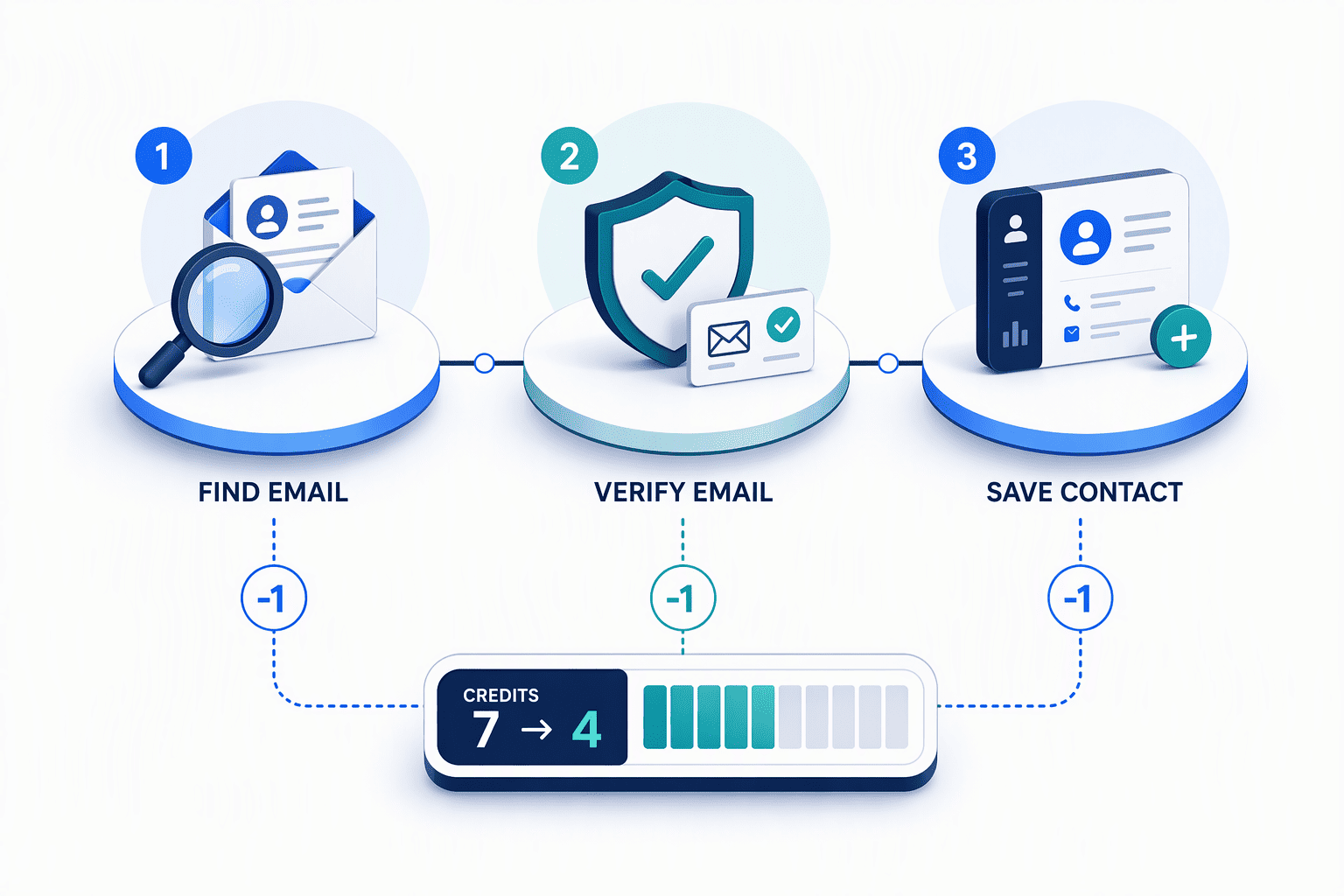
Snov.io fits a startup that prioritizes email outreach over phone calls and wants CRM-lite functionality without paying for a full-stack sales platform. Its trial gives you a taste of the email finder and verifier cascade, and the paid plans follow a credit-based model that keeps spending tied to actual usage.
| Feature | Snov.io Starter | Hunter.io Starter |
|---|---|---|
| Monthly Price | Starts around $39 for 1,000 credits | Starts around $34 (annual billing) for 500 searches |
| Email Verification | Built-in multi-step cascade | Built-in verification check |
| Drip Campaigns | Included CRM-lite sequences | Not included |
| Setup Complexity | Manual warm-up setup required | Simple domain search setup |
What you get for the credits is mostly email work. The credits unlock email discovery, domain-level lookups, and a verification cascade that cleans the list before you hit send. If you need a phone number, you are in the wrong tool. The platform does not pretend to cover every channel — it drills deep on one and makes that channel affordable enough to test.
Where Snov.io gets interesting is the CRM-lite layer tucked into the same credit pool. A built-in drip engine lets you queue emails and track opens, clicks, and replies without forwarding anything to a separate CRM. For a small outbound pod running LinkedIn touchpoints outside the platform, this replaces enough of a sales hub to delay buying one. The trade-off is warm-up: Snov.io asks you to connect your inbox and configure warm-up manually, which takes some setup time that other tools automate from the start.
4. Hunter.io, The Simplicity Standard for Domain-Specific Email Hunting
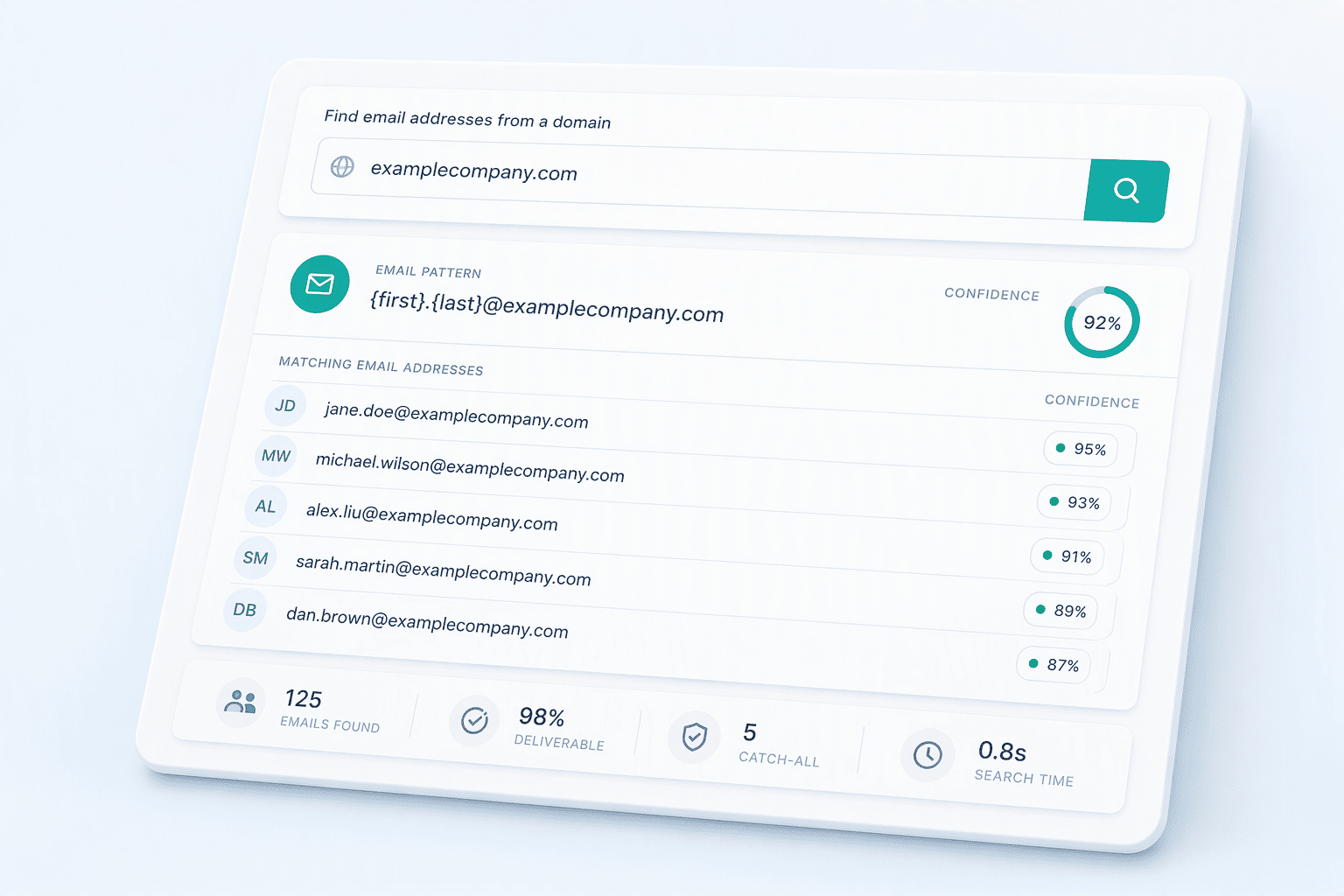
Hunter.io remains one of the cleanest tools on the market for finding email addresses tied to a specific company domain, making it a practical choice for startups running narrow, account-based sales plays. You type a company website, and it surfaces the email pattern and individual addresses associated with that domain, along with a confidence score that signals how likely each address is to reach a real inbox.
The free plan offers a modest number of monthly searches — enough for a team that pursues only a handful of high-value accounts each week. Every search returns verification data sourced from public professional footprints, so you are not guessing at patterns but acting on confirmed signals. For an Indian startup targeting a curated list of enterprise prospects, this focused approach wastes fewer credits than broad, untargeted database searches.
5. FindThatLead, The Social-Selling Prospector with a Generous Free Tier
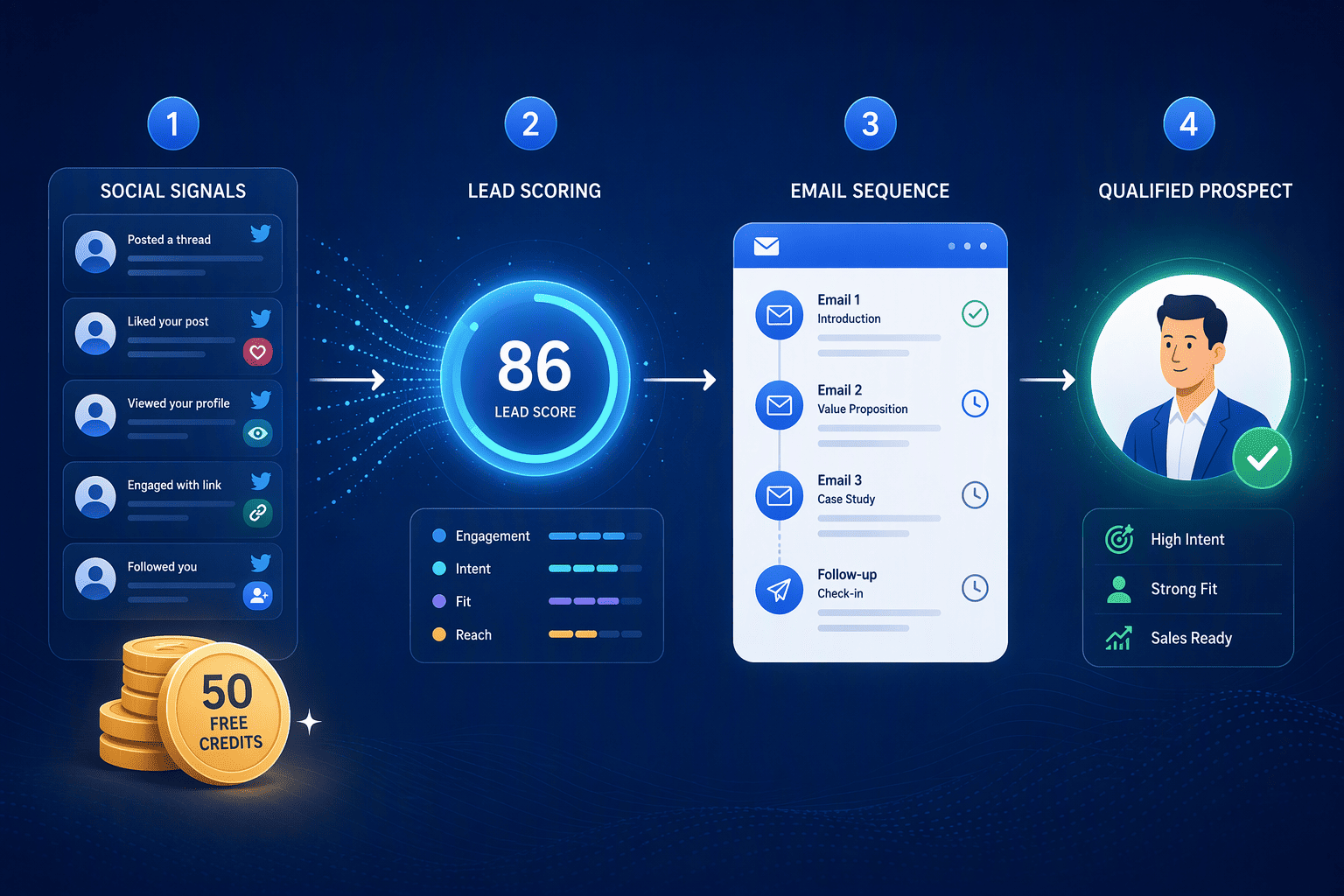
FindThatLead stands out for several reasons:
- Generous free credits: It offers a substantial batch of free credits every month, outpacing the free monthly allowance of many competitors.
- Social lead scoring: Its PROspecting feature layers in social media lead scoring, pulling signals from Twitter to identify prospects who are actively engaging on topics relevant to your pitch.
- Automated email sending: The built-in email tool lets you run simple sequences directly from the same interface without patching together a separate email tool.
For a startup with a tight budget and an active social-selling motion, FindThatLead bundles the right features at zero initial cost. You can run a full prospecting cycle on the free credits alone before ever considering a paid tier.
6. RocketReach, The Vast Multi-Source Database for Hard-to-Find Contacts
Sometimes your ideal prospect is a regional operations director at a mid-sized manufacturer in a tier-two Indian city, and every mainstream tool returns a blank. RocketReach exists for those dead ends.
It cross-references public records, social profiles, and professional listings on a broad scale. When standard scrapers fail, this aggregated depth can surface contacts other platforms miss.
Free lookups are limited, so ration them for prospects who stump the simpler tools. That constraint can help a startup founder stay disciplined: it discourages casual searching and encourages precise targeting.
The scale cuts both ways. A database this large may hold stale data points next to fresh ones, so verify before you trust a number. For a startup chasing niche job titles in less-digitized industries, RocketReach is the deep-sea net worth deploying for the occasional high-stakes catch.
7. Datagma, The GDPR-First European Engine with a Privacy-Focused Edge

Datagma is the right tool when compliance is not a checkbox but a foundational business requirement. It is built with strict GDPR alignment in mind, meaning every contact record in its database traces back to a transparent source. For an Indian startup that sells into the European market or handles data from EU citizens, adopting a GDPR-first engine from day one can prevent costly compliance retrofitting later. The same principles also align well with the expectations of India's DPDP Act 2023, which continues tightening domestic data protection standards.
Sourcing transparency matters because the legal risks around data sourcing grow every year. Datagma discloses its methodology rather than hiding behind a vague promise, giving your legal counsel a clear trail to review. This creates a cleaner data chain that may lower your exposure if a prospect questions how you obtained their information.
Accuracy under a regulation-first model may differ from the aggressive scraping approaches some budget tools use. Accept that trade-off. A vetted database that keeps you compliant is worth more than a massive unverified list that carries legal risk, particularly when your startup's early reputation cannot survive a data complaint.
The tool fits a specific profile: a privacy-conscious founder targeting regulated industries or European prospects. If your startup pitches to German manufacturers or French software firms, Datagma’s framework aligns with the standards your prospects themselves already operate under. That makes it a trust signal as much as a data source.
Conclusion
The tool that fits your startup comes down to which constraint bites hardest. If you need phone numbers now on a bare-minimum budget, PeakAI's low one-time entry with credit-back guarantees and zero subscription is the sharpest answer to Apollo's $49 monthly drain. If your outreach is pure email with a curated target list, start with Hunter.io's free tier or FindThatLead's generous monthly credits. And if EU regulations or India's emerging data laws matter to your sales motion, Datagma keeps your outreach aligned with strong privacy standards from the start. Match the tool to the specific problem, and you will stop paying for features your team never opens.
Frequently Asked Questions
What are the best free or low-cost alternatives to Apollo.io for finding business contacts and emails?
The strongest alternatives each avoid a monthly subscription and serve a different primary use case:
- PeakAI: $9 one-time payment for 250 credits, ideal for phone number verification.
- Lusha: Permanent free tier for occasional contact lookups.
- FindThatLead: 50 free monthly credits, suited for social-selling motions.
- Hunter.io: 25 free domain searches per month, best for narrow account-based email discovery.
How does PeakAI compare to Apollo.io in pricing, data accuracy, and features for Indian startups?
Here is how PeakAI and Apollo differ on key dimensions:
- Pricing model: PeakAI charges a one-time $9 for 250 credits with no subscription, while Apollo costs $49 monthly per user.
- Phone accuracy: PeakAI claims 91% phone accuracy, whereas Apollo's phone data is often cited at 50 to 70%.
- Market focus: PeakAI is positioned as India-focused with compliance under India's DPDP Act 2023.
What is a 'pay-as-you-go' contact finding tool and how does it work without a subscription?
A pay-as-you-go tool lets you purchase a batch of credits upfront and consume them each time you reveal a contact, with no recurring monthly charge. Credits are deducted per use (for example, PeakAI deducts 5 credits per phone number), and you buy more only when your balance runs out.
What should an Indian startup look for in a contact-finding tool regarding data compliance and local market coverage?
When selecting a tool, consider these guidelines:
- Prioritize compliance: Look for compliance with India's DPDP Act 2023 as a baseline, plus GDPR if you target European clients.
- Test before committing: Test any tool against your specific Indian market list before committing budget, because regional data coverage and accuracy for Indian contact numbers vary significantly across platforms.
Is it possible to get a free trial for a sales intelligence tool without entering a credit card in 2026?
Several tools offer free tiers without payment information. Lusha provides a permanent free plan for limited monthly credits, FindThatLead offers 50 credits monthly, and Hunter.io gives 25 free searches per month. Many browser extensions also install without requiring a credit card upfront.
How accurate are instant phone number and email verification tools, and what accuracy rates are realistic?
Realistic accuracy for compliant enrichment tools falls in the 85 to 92% range. Claims above 95% often indicate prohibited scraping that risks account suspension. Advertised figures also frequently measure syntax validity rather than true deliverability to a live person's inbox or phone.
Sources
- PeakAI - Professional Network Contact Finder with 91% Accuracy - thepeakai.com
- PeakAI vs Apollo.io 2026: Simpler & More Affordable | Compare Features & Pricing - thepeakai.com
- 7 Best Snov Alternatives 2026 (Real Delivery Data) - moderninbound.com
- Apollo.io Software Pricing, Alternatives & More 2026 | Capterra - www.capterra.com
