
Introduction
A few hours of dialing dead numbers can quietly burn a third of a sales team's week. One team tracking their Indian SMB outbound found that 34% of exported 'verified' mobile contacts from global tools were unreachable on the first attempt, mostly because the numbers were formatted for North American carriers or pulled from cached profiles that hadn't been updated since before the pandemic. That loss compounds fast when you're running multi-channel sequences across LinkedIn, email, and calls.
India breaks the standard contact-finder playbook. Over 60% of Indian professionals use personal email domains like Gmail or Yahoo for work correspondence, based on the EazyReach B2B Contact Database India data. A dialer that can't parse Reliance Jio prefixes and Vodafone Idea circle codes will fail at the first ring. Global tools trained on North American and European data patterns deliver hit rates that drop 20 to 30 percentage points when pointed at an Indian prospect list.
Real-time verification across at least two independent sources is the only approach that keeps bounce rates under 5% for Indian data. Tools that check email validity at the moment of lookup, not from a stale quarterly snapshot, separate the sales team that books meetings from the one that debates list quality.
There is also a compliance trap that many teams walk into blind. Scraping LinkedIn profiles to enrich contact records violates LinkedIn's User Agreement. Account restrictions and permanent bans happen regularly, and LinkedIn has stepped up pattern-detection enforcement. Any tool that advertises bulk profile scraping as a feature is selling a shortcut that carries direct legal and operational risk.
Key Takeaways
Your tool stack must match the market's unique data footprint. Here is what separates a working pipeline from a dead one for Indian B2B prospecting:
- Multi-provider waterfalls achieve the ceiling: Querying 5+ live data sources at once, rather than a single static database, is how you hit a 90%+ match rate for Indian leads.
- Local validation trumps global breadth: A tool that verifies a mobile's active circle or a GSTIN against MCA21 outperforms a Western giant with a billion outdated corporate HQ records.
- Unlimited is rarely unlimited: Plans that promise unlimited exports enforce practical caps like 2,500 leads per search. Indian sales teams should budget for volume throttling.
- Cost models reward your actual volume: Pay-per-use models starting at $0.18 a credit make sense for spot-checking under 500 profiles monthly. Subscriptions punish low-usage teams.
1. PeakAi: Real-Time Indian Verification Across 1,600+ Cities
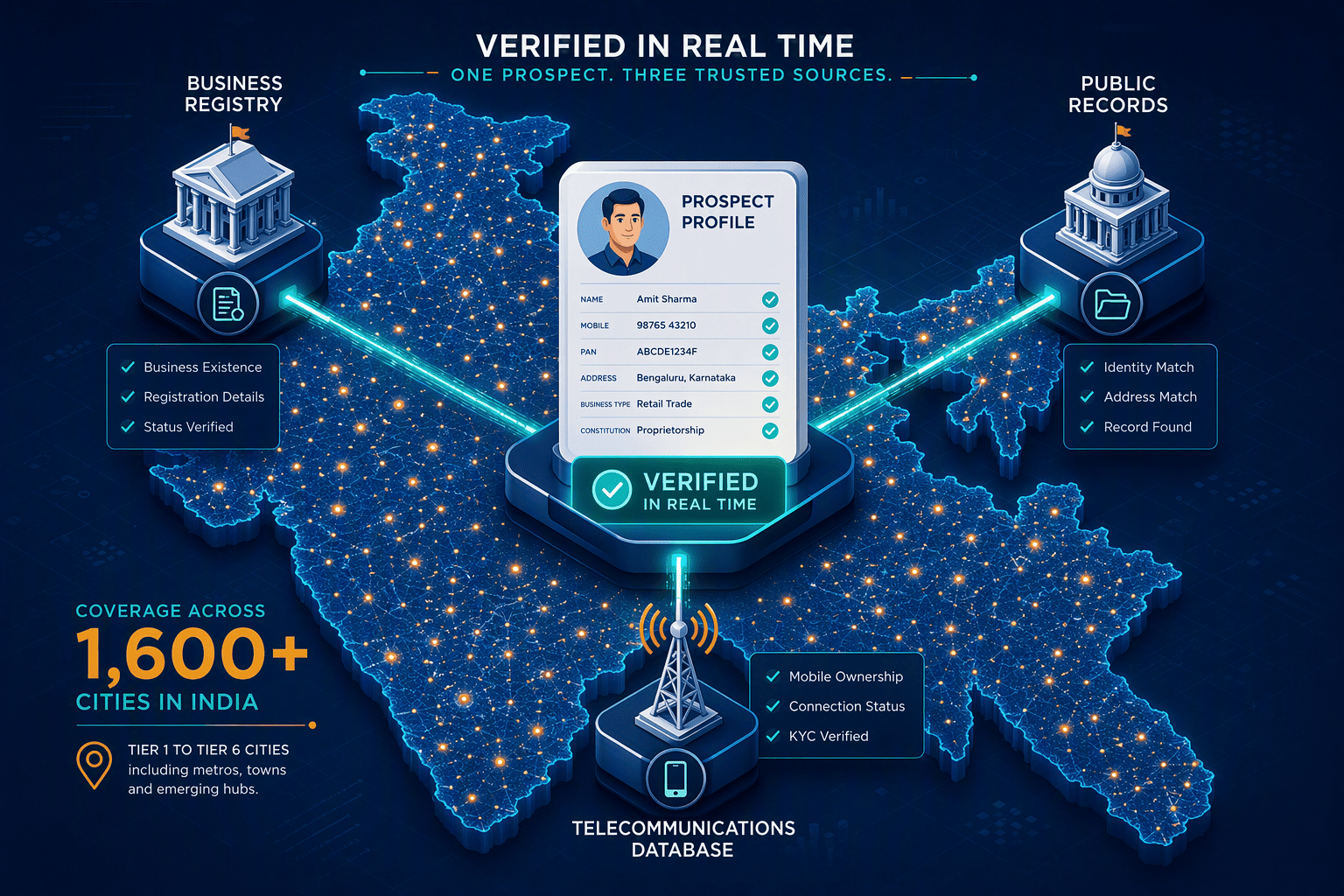
PeakAi returns verified contacts in under 10 seconds by querying external sources such as business registries, public records, and telecommunications databases. Its architecture isn't built on a blind bulk export but on dual verification for both emails and phone numbers, cross-referencing the data across an India-focused coverage map of 1,600+ cities.
That granular city-level coverage solves a specific problem: incorrect mobile formats that trip up generic global tools. Run a prospect from Kochi or Jaipur through a Western database and you often get a default 10-digit string that doesn't match the active circle or is just a dead landline. PeakAi validates the phone number against local telecommunications data so the format routes to the contact's current mobile prefix. You can use it to cut the noise when you need a small batch of hyperlocal Indian contacts instantly. The company offers a credit-back guarantee for incorrect phone numbers, which suits spot-check enrichment under 500 profiles monthly.
It's built around Indian-market verification rather than global breadth alone. Pricing starts at $9 for 50 contacts.
2. Scrupp: Multi-Provider Waterfall for 90%+ Email Match Rates
Scrupp doesn't look up a single database and call it a day. It fires off a query to 5+ sources simultaneously in a multi-provider waterfall enrichment flow. Where a standard Lusha or Apollo lookup might hit a dead end on a database-only search, Scrupp's architecture fills the gaps in real time by checking multiple live providers. This is the core engineering that backs its claim of a 90%+ match rate. It uses LinkedIn-native real-time validation and tags every enriched contact with a data quality flag such as valid, risky, or not found, so you can filter junk before it hits your sequence.
For the Indian market, this waterfall approach is critical. Your prospect's corporate email isn't in Salesforce. The single provider you rely on doesn't index that particular domain.
Scrupp's sequence checks the next provider and the next until it finds a live, verified email. It's built for precision, not just volume.
The Chrome extension can enrich up to 2,500 leads per Sales Navigator search and export that list directly to CSV. Most importantly for cautious teams, its pay-as-you-go model starts at a free tier with no minimums, making it a direct counter to the forced monthly subscriptions that punish teams testing a new Indian territory.
3. Lusha: The Western-Focused Giant with Indian Gaps
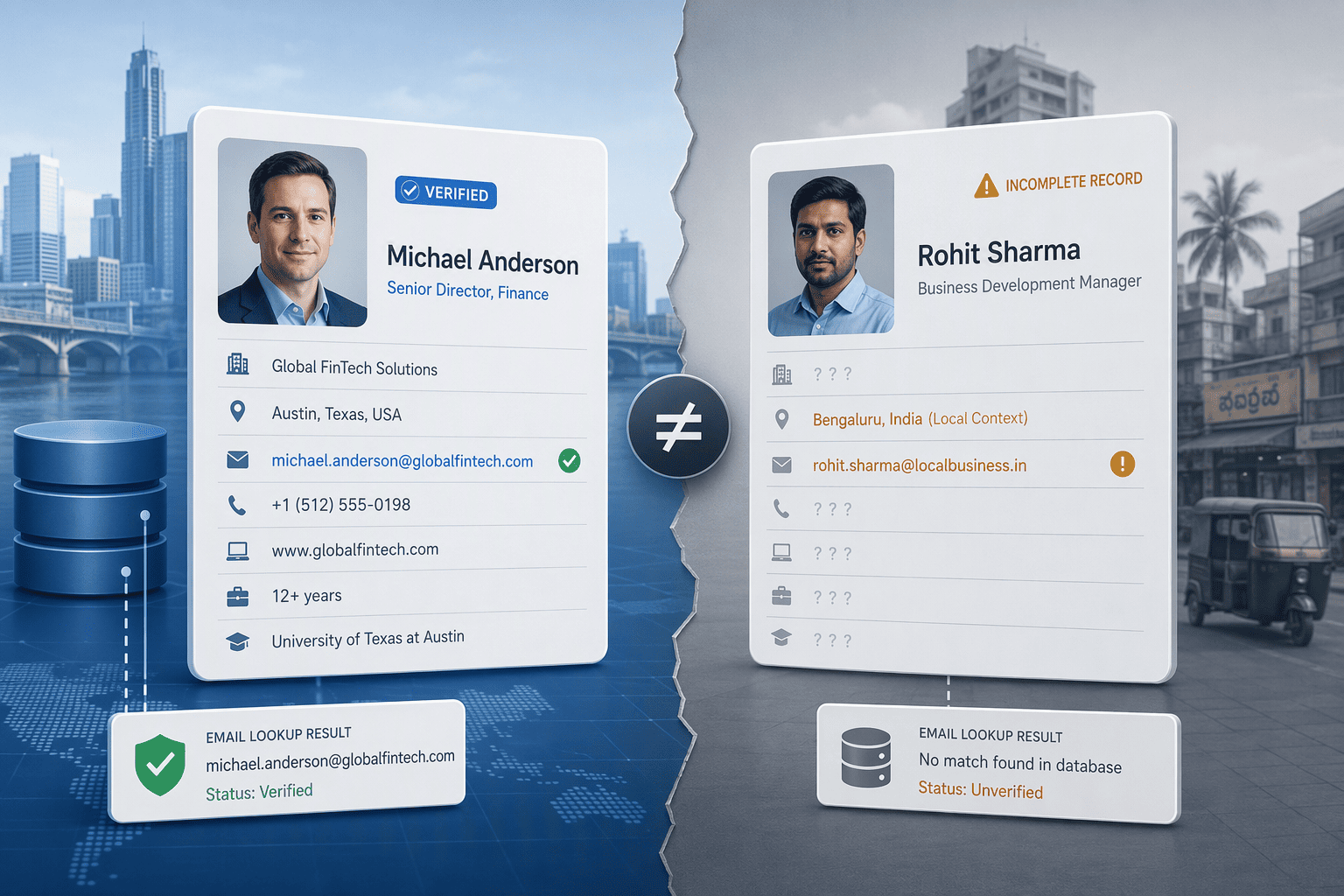
Lusha charges $36 a month for B2B contact data. The browser extension pops up phone numbers and email addresses while you browse LinkedIn profiles. It's a static database that queries a pre-indexed snapshot of corporate records.
That snapshot draws heavily from Western data samples. When you look up a US-based VP at a Fortune 500 company, the tool returns a corporate email formatted the way American enterprises structure them. The match rate looks fine under those conditions.
Indian businesses run differently. A regional sales head in Ahmedabad often operates from a Gmail address because the firm never set up a company domain. Lusha's database does not index personal email providers at the depth Indian prospecting requires. You search, get a corporate-format guess, and it bounces.
Mobile numbers age out fast in India. Subscribers port between carriers, recycle prepaid SIMs, and abandon old numbers within months. A data snapshot that sits unrefreshed for three years hands you dead lines.
Lusha's accuracy claim measures how often its output matches its own database, not how often the phone rings the person you need. Lusha does not publish its verification methodology for those percentages. You pay the subscription before finding out whether the numbers work.
If your target list is limited to Western multinationals that happen to have an Indian office, you might get enough hits to justify $36 a month. But a total addressable market of Indian founders, domestic enterprises, and mid-market firms will produce bounce rates that undercut your sequence performance. The tool measures precision against a corpus that never accounted for how Indian professionals actually use email and phones.
4. Apollo.io: Workflow Automation with Indian Volume Limits
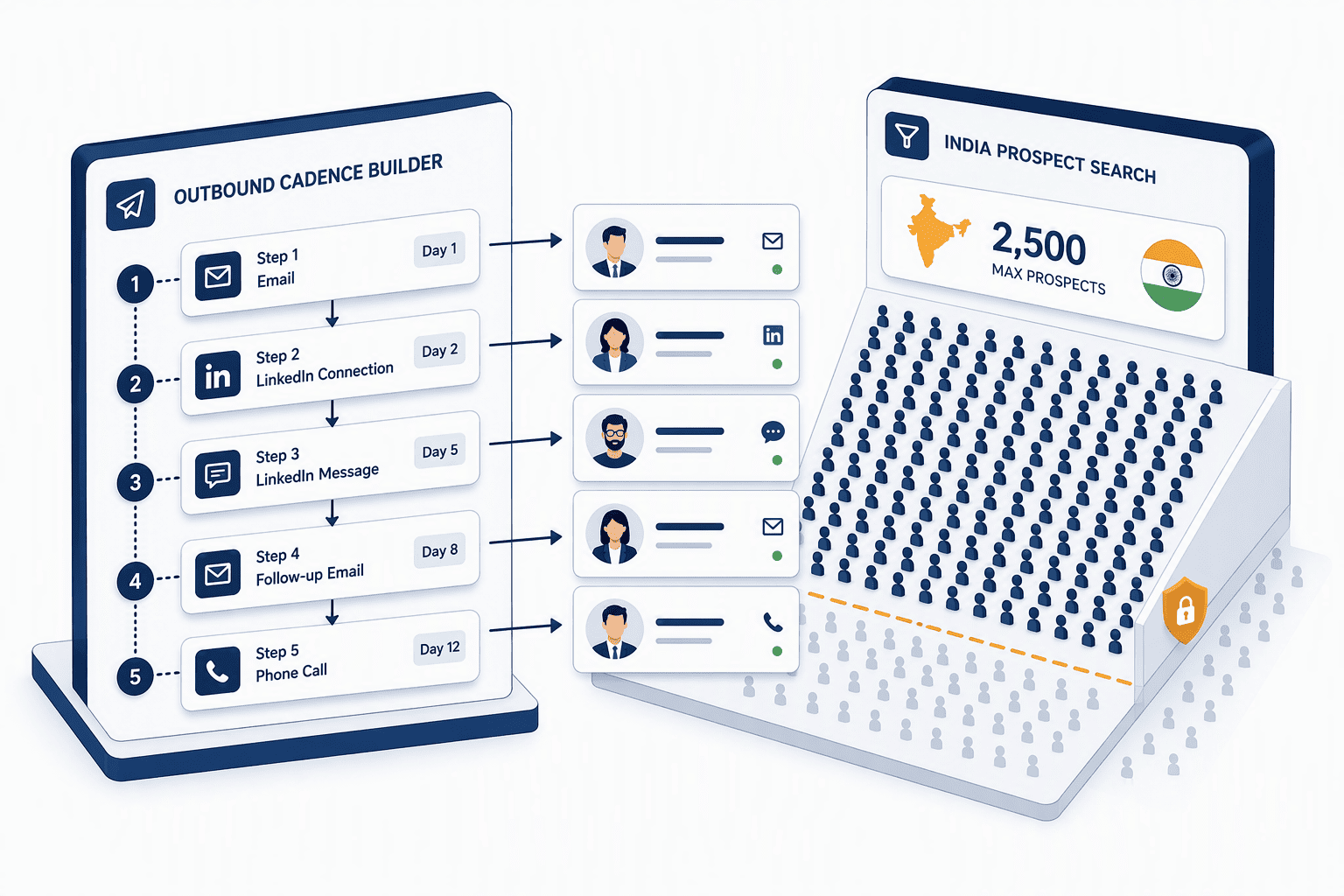
Apollo.io's sales engagement platform is capable. Its contact database is large, and its email sequencing tools work well for teams building multi-step outbound cadences in North American markets. For those use cases, the $49 per month subscription is a straightforward purchase.
The platform is less practical when your focus is Indian B2B contact data. Apollo enforces an export limit of 2,500 leads per search. Narrow a query to a specific industry or job title in India and that cap may not bother you. Run a broader search across Indian manufacturing or IT services and you will reach the limit before you have pulled every relevant lead. This is not a defect. It is a built-in volume control, and for teams that need wide coverage of the Indian market, it means leads get left on the table during every broad search.
| Dimension | Apollo.io | Scrupp Waterfall |
|---|---|---|
| Data Retrieval Method | Static database lookup (Apollo DB only) | Real-time waterfall across 5+ live providers |
| Practical Export Limit | Hard cap at 2,500 leads per search | Enrich up to 2,500 per Sales Nav search; pay only per verified export |
| Base Cost | $49/month committed subscription | Free tier available; starts at $0/month (PAYG) |
| Indian Data Footprint | Global database; sparse coverage on Indian regional entities | Live validation tailored to local formats and active data sources |
If your primary need is workflow automation and your Indian target list is narrow and already defined, Apollo fits. When what you need is contact accuracy above 90% at scale, the static database and export ceiling force you to add a real-time enrichment tool on top.
5. ContactOut: Personal Email Domain Handling for Indian Prospects
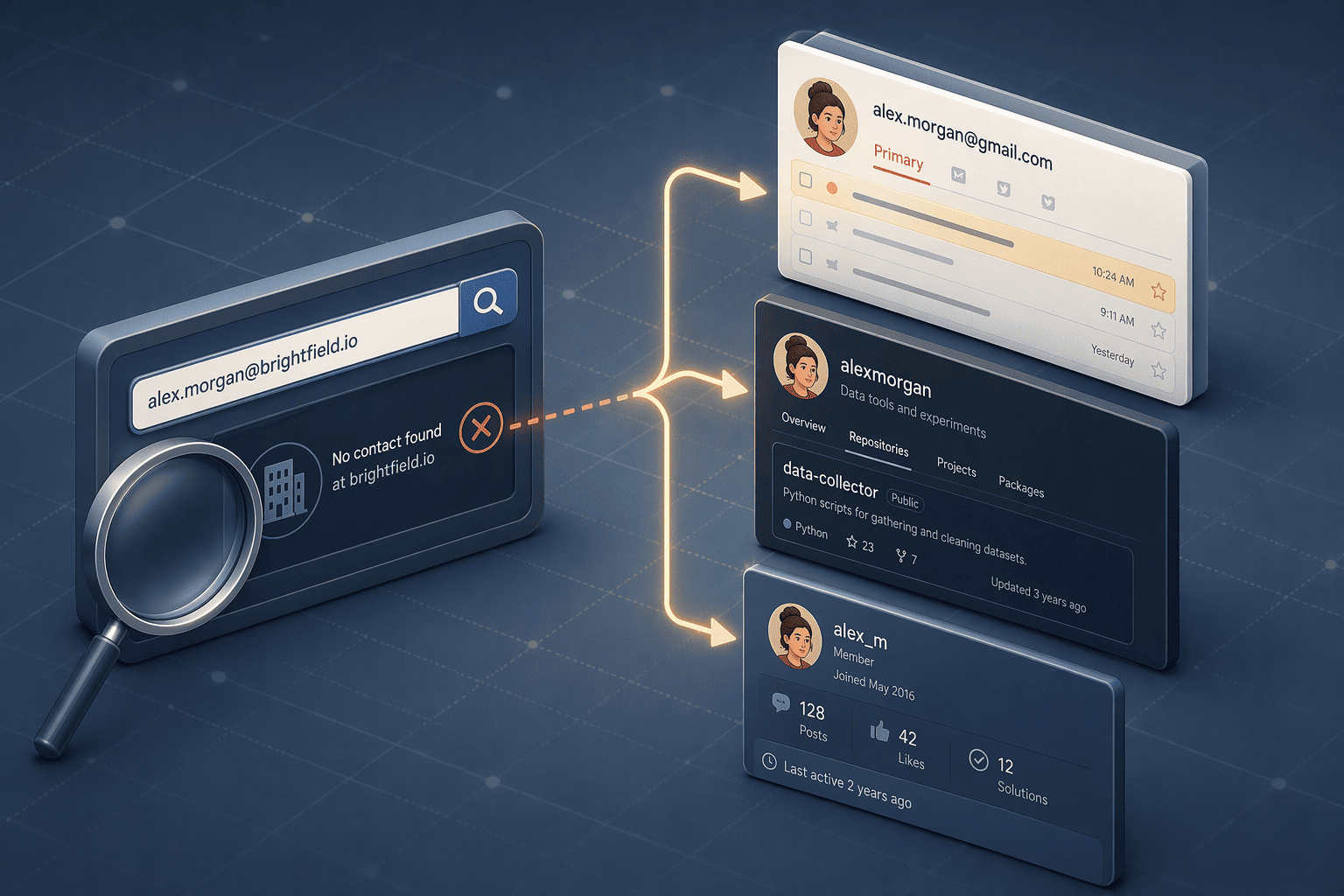
ContactOut focuses on a problem that trips up most corporate email finders in India: the founder or senior manager who runs everything from a personal Gmail or Yahoo address. Its crawler indexes personal domains left across the web, panel pages, old GitHub repos, forum posts, and surfaces them when a company-domain search returns nothing.
Standard tools look for [email protected]. In India, that address often doesn't exist. The prospect never had it, or the company uses Google Workspace and the person just handles business from a personal inbox. Those tools either return a blank or guess a combination that bounces. ContactOut skips the guesswork by finding the address the person actually left online.
What you don't get is multi-source verification. The surfaced email could be a discarded 2019 address sitting on a stale meetup page. ContactOut doesn't layer the waterfall checks that verify current status and deliverability. For Indian sourcing, pairing it with a real-time verifier gives you the strongest shot at a real, working address.
6. Kaspr: GDPR-Centric Enrichment with Limited APAC Coverage
Kaspr was built for one legal environment, and it stays in that lane. Its enrichment engine runs on GDPR consent models and European business registries. Every phone number and email it surfaces is tied back to a lawful basis under EU rules, which makes it useful for teams sending cold outreach into Germany or France.
That same architecture leaves India out. Indian businesses rarely appear in the European registries Kaspr draws from. The consent frameworks that power its matching don't map onto how Indian companies publish contact data, and most Indian professionals never interact with the data-sharing networks Kaspr queries. The database is not incomplete in India. It is absent.
You will not see a string of bounces or invalid formats. You will see an empty result because the contact was never indexed. Kaspr does its job where the legal framework aligns. For a pipeline that runs through Mumbai or Bangalore, you need an enrichment source that actually crawls the platforms where Indian professionals list their details.
7. Skrapp.io: Domain-Level Aggregation for Bulk Indian Lists
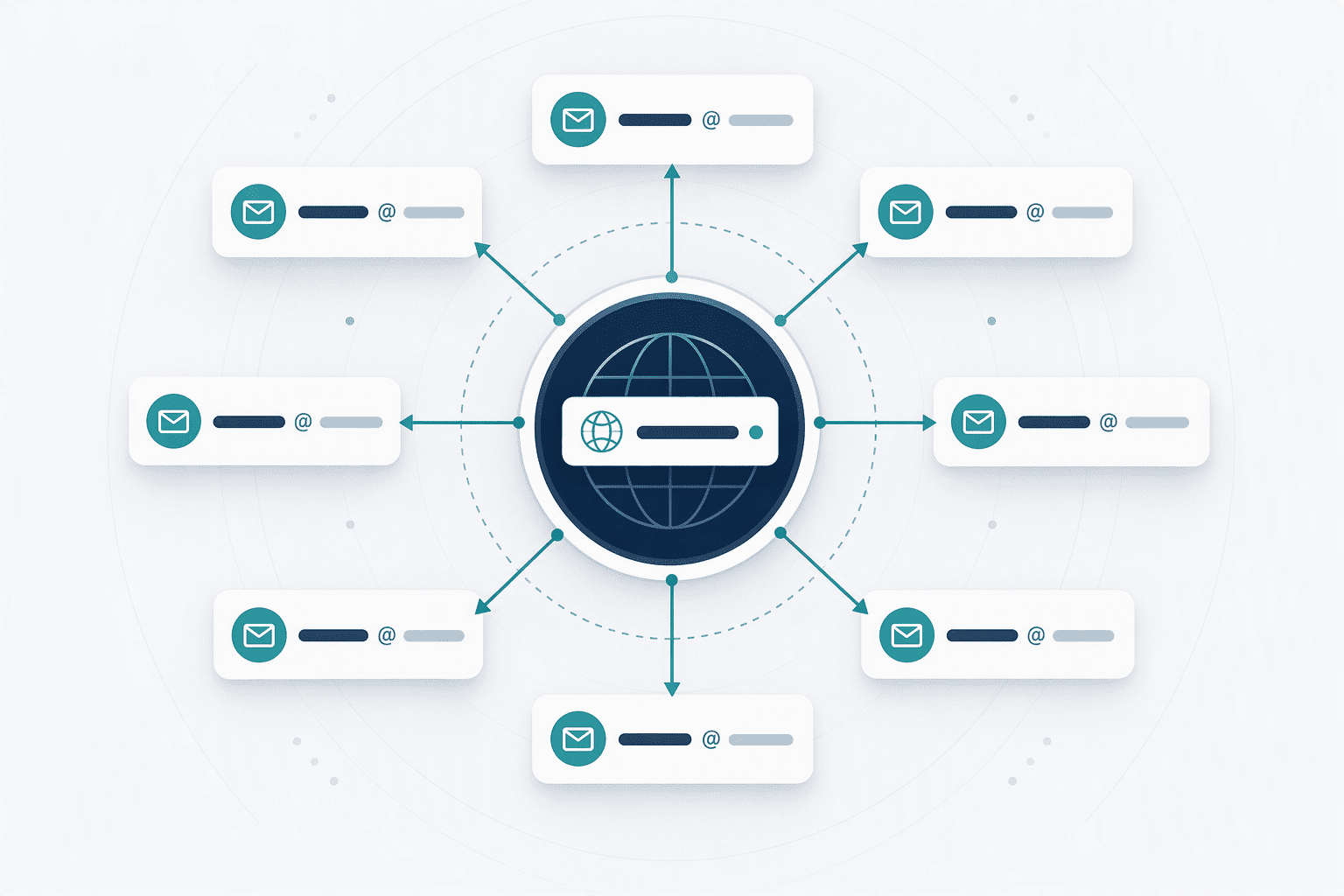
Skrapp.io works differently from the waterfall verifiers. Instead of checking individual contacts against live sources, it scrapes and pattern-matches at the company domain level to build bulk lists quickly. Volume comes first here, not per-contact precision.
It pulls every email address it can discover for a target domain in one pass. This is list-building at scale, not verification of a single, carefully chosen prospect.
The catch is in the method. Scrupp's multi-provider waterfall queries 5+ live sources to validate each contact. Skrapp guesses patterns. For large corporations with standardized naming conventions, that works reasonably well. For smaller Indian firms where email formats are inconsistent, the engine will return outdated addresses or combinations that were never valid in the first place.
The practical use for India is straightforward. Run Skrapp when you need a raw, wide list of 500 contacts from a particular sector for a broad awareness campaign. Then move that data through a real-time verification tool to strip out the false matches before your critical outreach begins.
Conclusion
Hitting 90%+ accuracy on Indian B2B contacts comes down to real-time, multi-provider waterfall enrichment and hyperlocal validation against India's mobile and personal email footprint. Brand-name subscriptions or static database size won't get you there.
PeakAi works well for small-batch, high-precision local looks. Scrupp's multi-provider waterfall handles verified lists at scale. A Western-skewed database on its own will consistently fall short for Indian prospects.
Match your use case to the architecture. If accuracy matters more than volume, PeakAi's local-first approach is the right tool. When you need verified lists at scale, Scrupp's waterfall enrichment across multiple providers is the faster path. Trying to stretch a single global database across Indian mobile numbers and personal-email-heavy profiles is the #1 reason data teams see contact quality drop below usable thresholds.
Frequently Asked Questions
How accurate are LinkedIn contact discovery tools for Indian B2B prospects, and what does '90%+ accuracy' actually mean?
Advertised percentages can be misleading because vendors may measure only syntax validation rather than a live mailbox or active mobile check. For Indian B2B, a 90%+ accuracy claim is meaningful only if it comes from real-time, multi-provider waterfall enrichment where multiple sources verify a contact simultaneously, not from a static, aging database lookup.
What makes a contact discovery tool effective specifically for the Indian B2B market?
A tool built for India must handle two local data quirks:
- Personal email domains: It surfaces Gmail, Yahoo, and other personal addresses, not just corporate ones.
- Varying mobile formats: It validates active numbers against live telecommunications data by city circle and prefix.
What are the compliance risks and LinkedIn policy considerations when using contact discovery tools in India?
Using tools to scrape LinkedIn for enrichment violates LinkedIn's User Agreement, and aggressive bulk extraction can trigger account warnings or temporary restrictions. Under India's DPDPA, ensure your tool of choice maintains privacy-first design and does not store profile information or browsing history without consent.
How does PeakAi's India-focused verification process work compared to generic global contact tools?
PeakAi queries external sources specific to the Indian market, including telecommunications databases and public records, to deliver a real-time dual verification on both emails and phone numbers. This contrasts with global tools that apply Western-centric data models and frequently fail to validate an active Indian mobile prefix or circle.
What is the real cost-per-verified-contact for Indian B2B prospecting tools, and how do pricing models differ?
Costs fall into two camps. Pay-per-verified-contact models can start as low as $0.18 per credit for spot-check enrichment, while flat monthly subscriptions like those at $36 or $49 force a recurring commitment regardless of your usage volume. Unused credits may expire in subscription models.
What are the practical limits of unlimited plans and what should Indian sales teams realistically expect?
Subscription tiers that advertise unlimited contacts still embed practical throttling limits. Indian sales teams should expect three constraints:
- Export caps: Limits such as 2,500 leads per search restrict how many contacts you can pull at once.
- Fair usage policies: Data extraction velocity is throttled, preventing truly limitless one-session pulls.
- Batch planning: Work in planned batches rather than expecting a continuous firehose of data.
Sources
- LinkedIn Contact Enrichment — Accurate B2B Data - scrupp.com
- 11 Best LinkedIn Email Finder Tools in 2026 (Free and Paid) | Enrich - www.enrich.so
