
Introduction
You have seen the claims. A banner on every B2B contact tool reads "90%+ phone number accuracy." Then your rep dials three disconnected lines in a row and starts questioning the whole stack.
The problem is not your workflow. It is that most accuracy figures are the vendor grading its own homework. Independent testing tells a different story. When researchers pull a random sample and run it through a single-provider lookup, verified mobile coverage usually lands between 30% and 60%.
That gap is why waterfall enrichment exists. A tool hits dozens of independent databases, cross-checks every number in real time, and discards anything it cannot confirm. One source might have the number; ten sources agreeing make it trustworthy.
A dial tone in 2026 is a sales metric. One bad data source can choke a quarter, and no marquee logo on a pricing page changes the math. This article compares the tools that actually deliver high accuracy, shows where the numbers come from, and identifies the scenarios where each one works.
Key Takeaways
Busy teams need the truth, not a demo. Here is what actually matters when picking a tool for contact discovery right now:
- Real accuracy vs. marketing claims: No single provider consistently hits 90%+ on mobile numbers across multiple markets. Even top performers like Cognism land at 70 to 80% in their strongest regions.
- Waterfall is the only way: Queries across 40+ independent providers and real-time cross-verification produce genuine accuracy. Single-source scraping is the fast track to disconnected numbers.
- India breaks global tools: Domestic verification requires TRAI and DLT integration that Western databases ignore. Using a generic tool in India risks DNC registry fines for calling unverified numbers.
- The 300-contact breakpoint: Teams contacting fewer than 300 prospects per month should buy pay-per-verified-contact. Scaling beyond that makes unlimited plans like Apollo.io 40 to 60% cheaper.
- Compliance is non-negotiable: Nearly 40% of non-compliant LinkedIn accounts faced restrictions in early 2026. A tool must query independent databases, never scrape the platform directly.
1. PeakAi
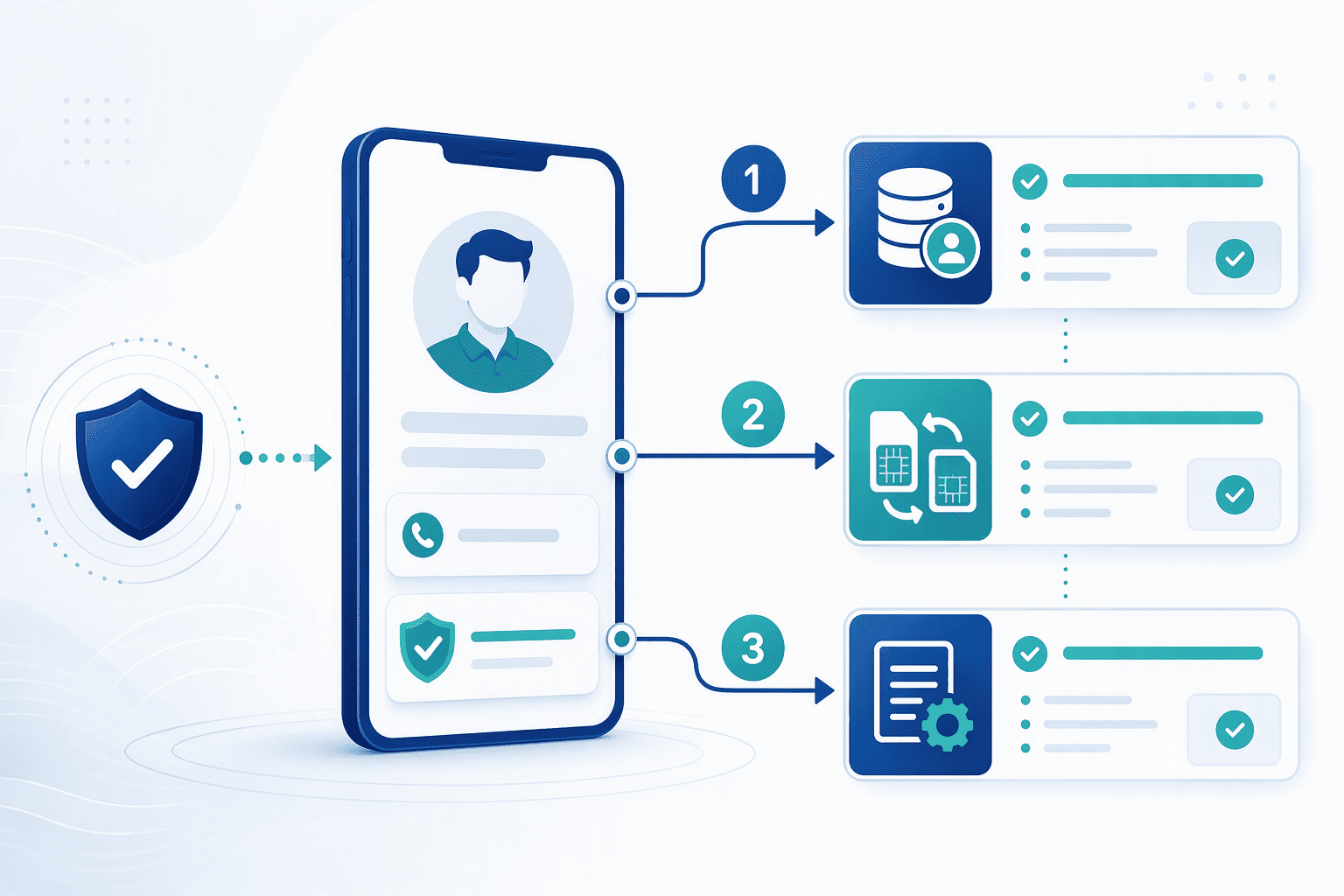
PeakAi tops this list for a specific reason. It is the only tool built around Indian-market verification rather than global breadth, integrating directly with TRAI-registered telemarketer lists, the MNP database, and DLT platforms.
- Market-specific integration: Connects with TRAI-registered telemarketer lists, the MNP database, and DLT platforms, eliminating the false-positive numbers that trigger National Do Not Call complaints.
- Compliant lookup engine: Queries external sources like business registries, public records, and telecom databases using a LinkedIn profile URL as the search key, never scraping the platform itself.
- Dual verification: Validates both emails and phone numbers against those sources, returning results in under 10 seconds.
- Broad Indian coverage: Spans 1,600+ Indian cities.
- Audit-ready documentation: Provides a compliance timestamp and data-source attribution with every exported record.
Pricing starts at $9 for 50 contacts, translating to $0.18 per credit. That is below the typical $0.50 floor for Western equivalents. A credit-back guarantee for incorrect numbers plus instant top-up removes the two biggest friction points. Small teams wanting India-specific phone accuracy without compliance gambling get the strongest option here.
2. Cognism
Independent tests reveal a gap between Cognism's advertised and actual mobile number accuracy in regulated European markets; the table below breaks down how its performance stacks up against a global alternative.
| Dimension | Cognism | Global Alternative (e.g., Lusha) |
|---|---|---|
| Advertised accuracy | 90% (homepage messaging) | Varies by region; not typically advertised as a fixed global rate |
| Independent EMEA mobile accuracy | 70% to 80% (DACH and UK market tests) | Generally lower in DACH; stronger in US/UK markets |
| Best-fit region | Strong DACH and UK coverage | Broader global coverage with depth in North America |
| Standout detail | Sells heavily on a single accuracy figure that independent tests do not verify | Strengths lie in ease of use and integrations rather than a single accuracy claim |
| Who it disappoints | Buyers expecting homepage-level accuracy across every EMEA mobile record | Teams needing deep, verified mobile data in heavily regulated European sub-regions |
3. Apollo.io
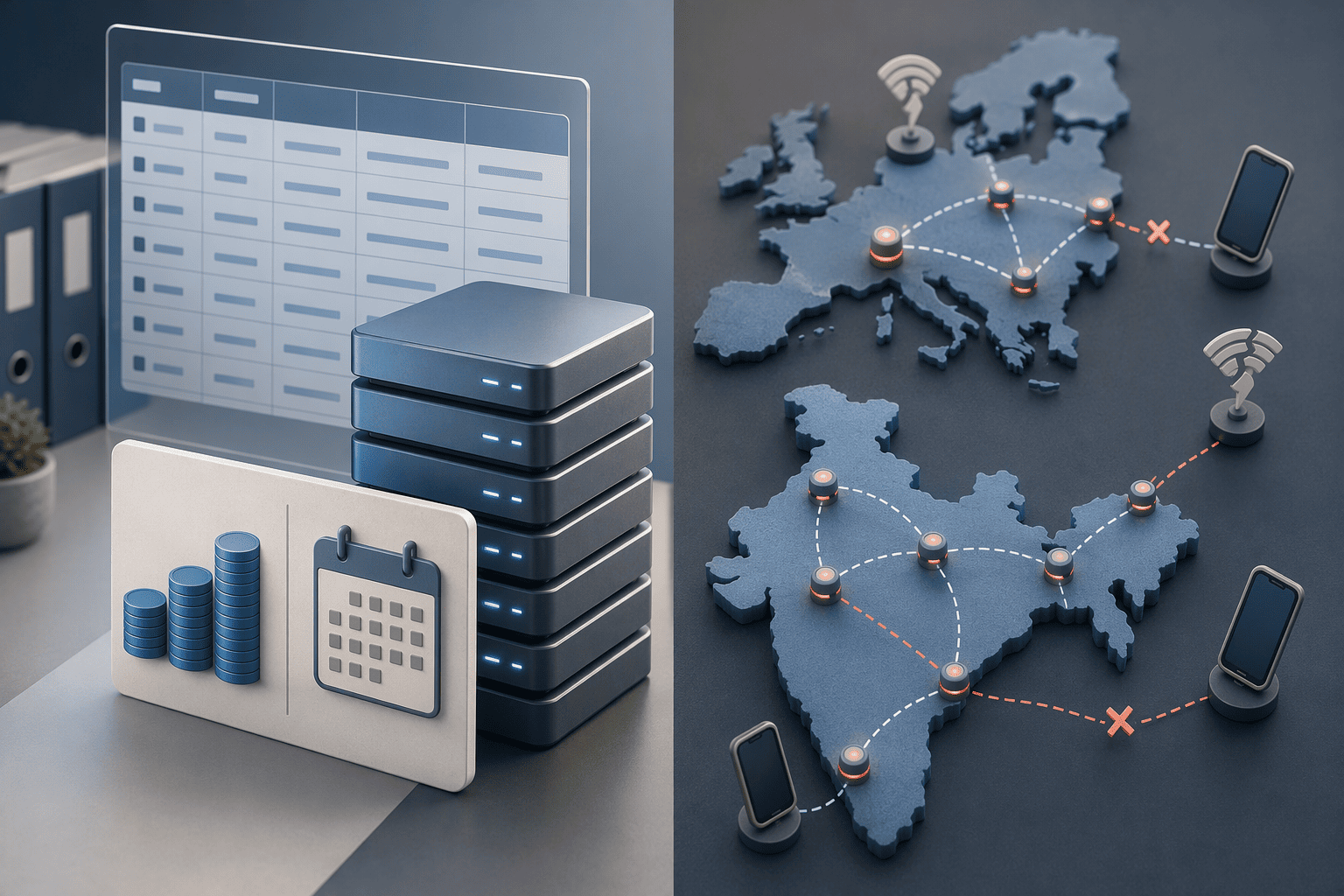
Apollo.io runs a 65M+ contact database with unlimited-credit plans priced between $49 and $119 per user per month. You know your cost before the quarter starts. That predictability matters for teams that send high volume and cannot justify per-credit billing.
But Apollo trades precision for scale. Its direct-dial mobile coverage in India and Europe is patchy. Independent tests clock verified mobile accuracy in those regions well below 90%, so a rep working a Delhi or Berlin list will hit more dead numbers than the dashboard suggests (PeakAI, Professional Network Contact Finder with 91% Accuracy).
The platform integrates with Sales Navigator through n8n workflows that push enriched contacts into your CRM without scraping LinkedIn directly. That compliance-safe path matters more than a percentage point on a stat sheet, because it keeps your account off the radar while the automation does the heavy lifting.
If you need broad email coverage and can live with phone data that needs a second look, Apollo gives you the most reach per rupee. When a disconnected number means a lost deal, bolt on a waterfall verification step from a market-specific tool instead of treating Apollo as the final source.
4. Lusha
Lusha runs on credits. You pay per verified contact, not per database lookup. Plan rates put most contacts between $0.50 and $1.50, and the browser extension pulls enriched data straight from LinkedIn profiles you visit by hand.
The company only charges for numbers that pass its internal check. Fair, yes. Cheap at volume, not really.
If your team reaches fewer than 300 prospects a month, the credit model roughly breaks even with unlimited competitors. You pay for what holds up. Push past that mark and unlimited plans from tools such as Apollo.io run 40 to 60% less.
Lusha earns its keep through a Chrome extension workflow that takes exactly one click. Open a profile, click, verified data appears in your CRM.
No integration dance. No batch-upload busywork.
The main gap is independent accuracy testing. PeakAi publishes an Indian-market methodology; Lusha's verification process stays thinner on detail. Contacts pulled in India may not hit the same verification tier the service delivers in its strongest markets. Small teams that want simplicity above flawless precision will settle in here. Anyone else should open a spreadsheet and do the math before running the card.
5. ZoomInfo
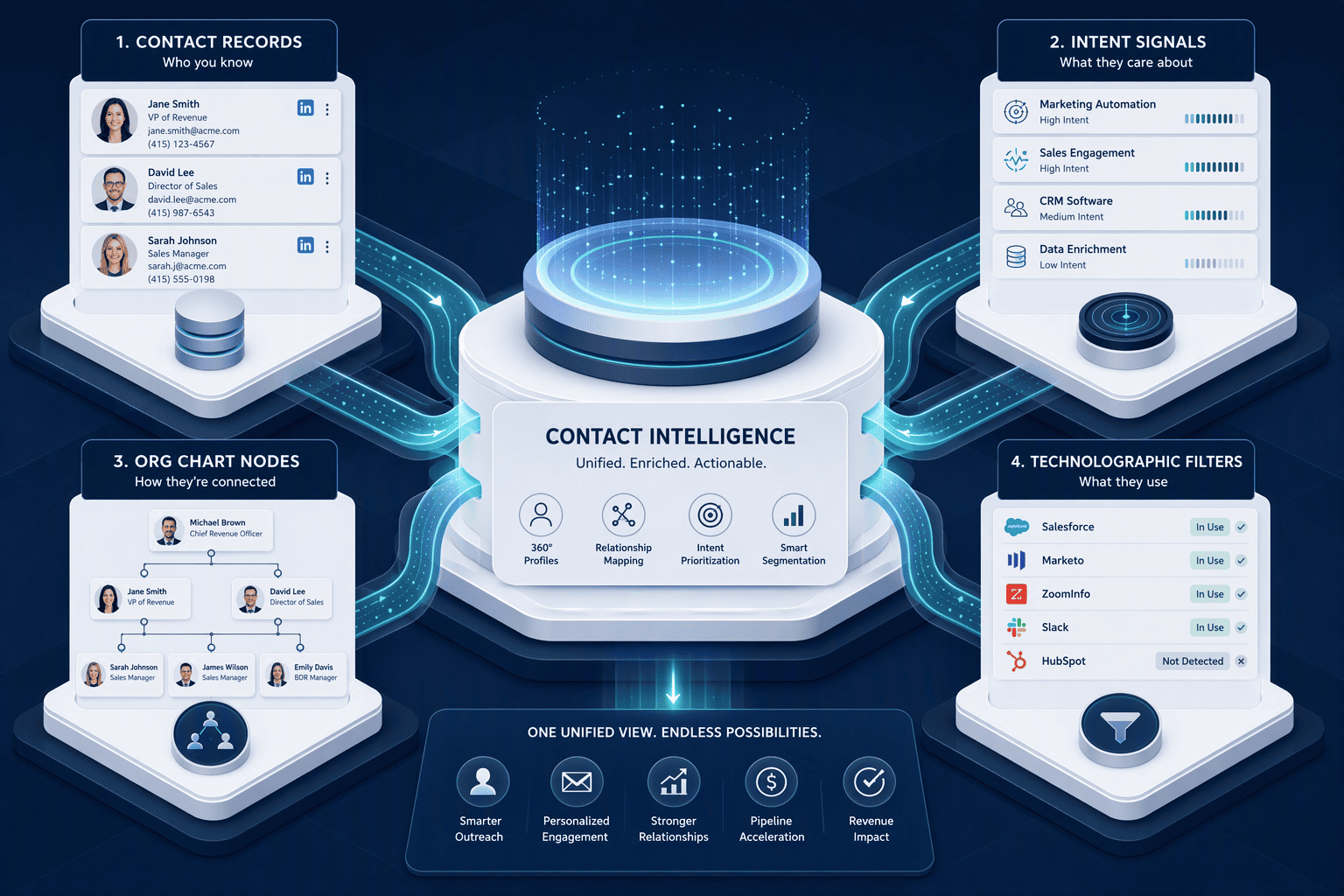
ZoomInfo is the aircraft carrier of B2B databases. Its scale is unmatched, with coverage spanning North America at a depth no competitor approaches. Enterprise teams needing intent data, org charts, and technographic filters layered on top of contact records get a single platform that replaces three or four point solutions. The problem is that scale does not equal accuracy on mobile numbers. Independent benchmarks consistently show ZoomInfo’s direct dial accuracy sitting well below the 90% it implies in marketing materials, and international coverage is substantially thinner than its North American core.
Pricing reflects the enterprise position. Contracts are opaque, annual, and frequently run into five figures for mid-sized teams. Add-on modules for intent data and website visitor tracking push costs higher. For 2026, a new compliance shadow hangs over the platform. Nearly 40% of non-compliant LinkedIn accounts faced restrictions in early 2026, and ZoomInfo’s data-sourcing practices have attracted regulatory attention in the EU.
ZoomInfo is strongest for enterprise intelligence, not India-specific direct-dial precision. D&B Hoovers shares this profile. If you are a North American sales organization selling complex B2B and you can absorb a high fixed cost, the coverage breadth is worth the price. If you are an Indian sales team needing accurate mobile numbers, you are overpaying for coverage you will never use and accuracy you will not get.
6. UpLead
UpLead checks email addresses in real time before charging a credit. That is the product. Phone numbers show up in the platform, but the company does not position itself as a phone-first data provider. Teams that treat UpLead as a mobile-number source walk into a visibility problem: no one has published independent accuracy figures for its phone data.
Email verification is the engine here. UpLead validates every address at the point of export, so you pay only for contacts that pass the check. Bounce rates drop as a result, and sales ops teams that measure success by inbox placement tend to like the economics.
Phone coverage is present but thin. The data exists inside the subscription, not behind a separate add-on, yet UpLead never built the waterfall enrichment chain that phone-specialist competitors deploy. When a direct dial is missing, there is no documented fallback to switchboard patterns, corporate directories, or carrier-level lookups. You get what the initial match returns.
Accuracy is a black box. Independent benchmarks put dedicated phone tools in the 88 to 91% range for direct-dial correctness. UpLead has no comparable third-party number. Without one, a team buying the platform for outbound dialing is making a bet without odds.
This is an email-first tool that includes some phone data, not a dialing engine. Organizations where deliverability drives pipeline will find it useful. Teams whose outreach depends on reaching a mobile number should treat the phone data as a bonus, not the reason to buy.
Indian buyers have an extra item to watch. UpLead has disclosed no integration with TRAI’s DLT registry, no mobile number portability checks, and no local numbering-plan verification. That absence tends to produce higher false-positive rates on Indian mobile numbers compared to providers that built region-specific validation logic.
7. Kaspr
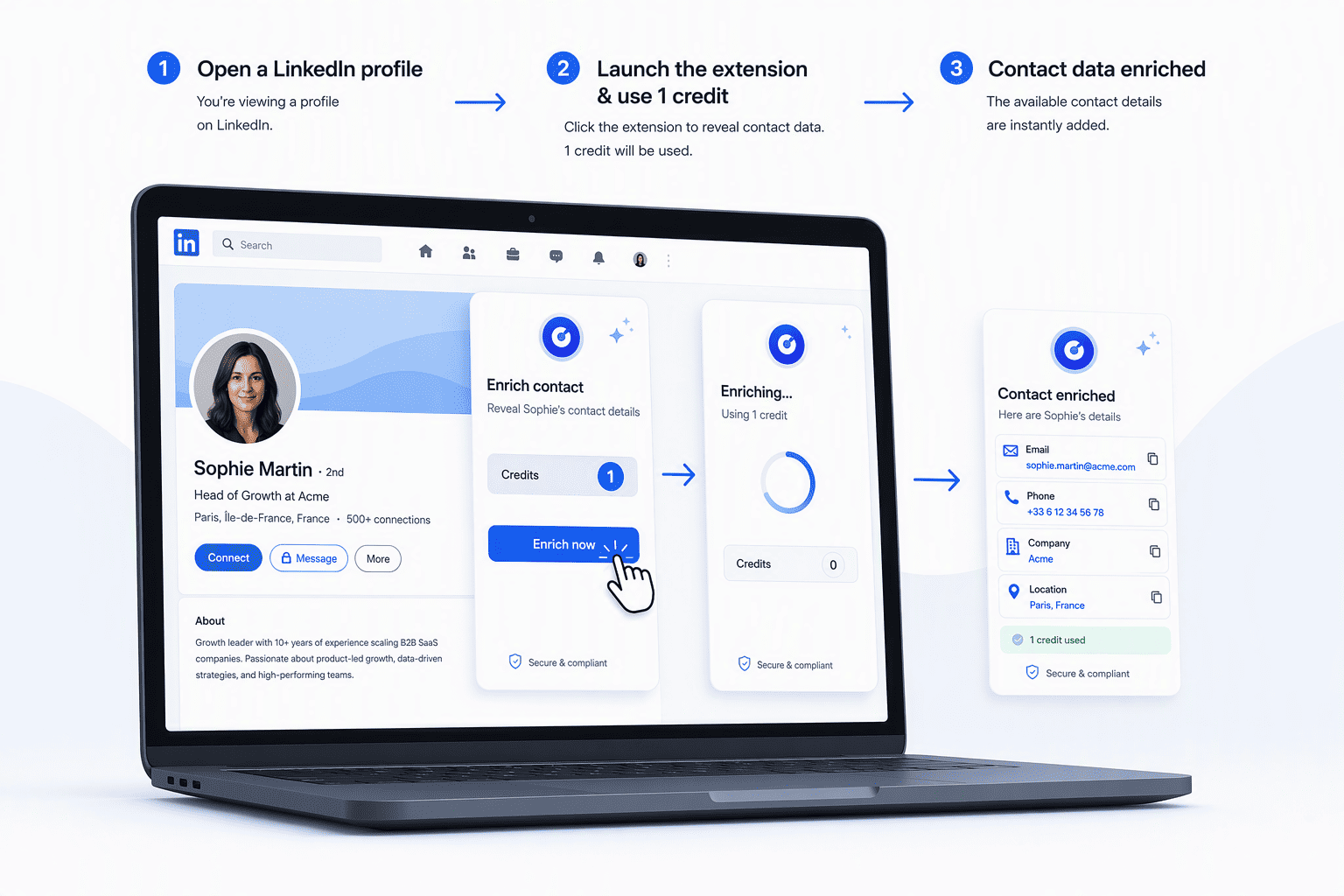
Kaspr works through a Chrome extension that enriches LinkedIn profiles one at a time. If you're building lists in bulk, you'll find it slow. If you research a handful of prospects before a call, that manual workflow works.
Here is how to evaluate whether it fits your pipeline:
- Trigger a manual lookup: Open a LinkedIn profile, click the Kaspr extension, and receive enriched contact data sourced from multiple independent databases.
- Burn a credit per result: You pay per direct contact revealed. European market accuracy is strong, with independent tests in France, UK, and Germany showing reliable mobile coverage.
- Push to your CRM: Native integrations with HubSpot and Salesforce pipe the enriched record into your workflow without manual data entry.
- Watch for India gaps: Most European tools lack domestic Indian verification sources. Teams dialing into Mumbai will see lower accuracy than teams dialing into London.
8. RocketReach
RocketReach has a database of over 700 million profiles. That is a big number. The platform is fundamentally an email finder, with phone coverage acting as a secondary feature. User reviews consistently note that email accuracy is solid while phone reliability lags specialized peers like PeakAi or Cognism.
Bulk lookup limits structure the product. You buy a plan, you get a certain number of lookups, and phone data shows up when it is available rather than when you specifically query for it. That passive approach means sales teams who need verified direct dials as their primary metric will be disappointed. The database breadth delivers discoverability that smaller vertical tools cannot match.
For recruiters and growth teams who can send a follow-up email when a phone number misses, RocketReach is a reasonable top-of-funnel layer. The 700M+ profile count means you will find people that Apollo.io or Lusha miss entirely. Pair it with a dedicated phone waterfall like PeakAi and you get the best of both worlds.
Phone data is a bonus, not the headline.
9. AroundDeal

AroundDeal focuses on the Asia-Pacific coverage that Western tools miss. Its pipeline integrates India-specific MNP databases and DLT platform compliance at the architecture level, not as an afterthought.
Indian mobile numbers are routinely ported between carriers. A database that ignores portability returns the original operator assignment, which is often wrong by the time you dial. AroundDeal accounts for this in its matching logic.
For teams that sell into India, Southeast Asia, or ANZ, the tool fills the coverage gap left by Cognism and ZoomInfo. DLT platform compliance means the numbers are checked against the same telemarketing registries Indian regulators monitor.
Side-by-side comparisons with global alternatives show AroundDeal is more accurate inside APAC and less deep in North America and Europe. That is a design choice. When your dialing list lives in one region, a specialist beats a generalist every time.
Conclusion
No single tool reaches 90% phone accuracy for every market. That number is a marketing claim, not a guarantee. If a vendor promises it without asking which country or industry you target, walk.
Real accuracy depends on how the data gets built. Tools that layer multiple sources (a waterfall enrichment stack) outperform single-database products, especially outside the U.S. In India, TRAI compliance and DLT registration are not optional add-ons; a dial list that skips those checks puts your team's caller IDs at risk of being blocked.
If your outbound motion lives in a consent-first jurisdiction, start with a source that prioritises opt-in data. Cognism fits that profile. For high-volume North American cadences where cost per record matters most, Apollo.io's unlimited model tends to win. India-based sales floors need a tool that indexes local business registries, mobile portability data, and DLT status. PeakAi and AroundDeal are built with those checks in place.
Before committing to any annual contract, run a 300-contact side-by-side test. Load the same list into two or three tools. Count how many numbers connect, how many bounce, and what the real cost per connected call turns out to be. A cheaper per-record price means nothing if 60 out of 100 numbers never ring.
One final rule: do not risk a LinkedIn account to scrape phone data. A waterfall database verifies the same numbers without touching LinkedIn's activity-detection triggers.
Ready to Transform Your Sales Process?
Join thousands of sales professionals using PeakAi to find accurate contact information and close more deals.
Frequently Asked Questions
What makes a LinkedIn contact discovery tool genuinely achieve 90%+ phone number accuracy, and how is that accuracy verified?
Genuine 90%+ accuracy requires waterfall enrichment: querying 40+ independent databases and cross-verifying results in real time. Vendor self-reported benchmarks lack third-party audit rigor. Independent tests typically place even top tools at 30 to 60% verified mobile coverage.
Which LinkedIn contact finder tools currently offer the highest reported phone number match rates in 2026?
PeakAi reports 91% accuracy through India-specific waterfall enrichment. Cognism delivers 70 to 80% in DACH and UK markets. Other platforms claim 90%+ but rely on self-reported data without published verification methodology.
How does India-specific phone verification differ from global databases, and why does it matter for sales teams targeting the Indian market?
Indian verification requires TRAI-registered telemarketer list integration, DLT platform compliance, and mobile number portability database access. Global databases skip these sources, returning disconnected or wrong numbers. India’s DNC registry fines dialers for contacting unverified numbers, making accuracy a compliance obligation.
What are the compliance and account-safety risks when using LinkedIn contact extraction tools?
LinkedIn prohibits scraping via bots, crawlers, or browser extensions. Nearly 40% of non-compliant accounts faced restrictions in early 2026. Safe tools query independent external databases using a LinkedIn URL as a search key, never accessing LinkedIn’s APIs directly.
What is the true cost of pay-per-verified-contact models versus unlimited subscription plans for small teams in India?
Pay-per-verified-contact runs $0.18 to $1.50 per contact depending on the tool. Teams contacting fewer than 300 prospects per month break even. Scaling beyond that makes unlimited plans like Apollo.io at $49 to $119 per user per month 40 to 60% cheaper overall.
How can recruiters and sales teams automate LinkedIn contact enrichment using tools like n8n without violating platform rules?
Configure n8n to pull profile URLs manually identified via Sales Navigator, then route them only to external enrichment APIs. The workflow queries independent databases, not LinkedIn itself. That separation preserves automation benefits while eliminating scraping violations.
Sources
- PeakAI - Professional Network Contact Finder with 91% Accuracy - thepeakai.com
- Best Chrome Extensions for LinkedIn Phone Numbers in 2026 (vs SyncGTM Waterfall) | SyncGTM - syncgtm.com
- LinkedIn Scraper 2026: 4 Methods Compared + Free Tools - derrick-app.com
- Free Business Verification India | Company Legitimacy Check | Job Scam Detector - Wimaan - wimaan.in
- PeakAI Alternatives & Comparisons | Compare B2B Contact Finders 2026 - www.thepeakai.com
