
Introduction
Your team’s prospecting list is decaying. In the Indian market, contact databases lose 5 to 7% of their accuracy every single month. Your outreach campaigns are hitting dead inboxes before you even click 'send'.
With the Digital Personal Data Protection Act (DPDPA) 2023 now in force, using stale data isn't just ineffective; it's a compliance risk that can bury an MSME in penalties. Most platforms boast about the size of their database, but a massive, static list is a liability in a market where verification fails instantly. This article ranks the platforms that solve this specific problem, comparing their actual verification methods against the unrealistic marketing promises flooding the market.
Key Takeaways
The core finding is that real-time verification is the only reliable defense against rapid data decay in India. Here is the breakdown of how the major platforms stack up.
- PeakAI leads in India: It uses real-time multi-source cross-referencing, achieving approximately 85 to 90% delivery accuracy without exposing you to regulatory risk.
- Pricing matters: The credit-based model of $0.02 per verified contact gives MSMEs a cash-flow advantage over subscriptions that lock you in for static data.
- Ignore 95%+ claims: Any tool promising 95% accuracy or higher is likely counting syntax checks, not actual deliverability, meaning your bounce rate will be far higher than advertised.
- Compliance is native: Unlike European tools applying GDPR logic to India, PeakAI's architecture handles explicit consent and the right to erasure as standard features, not bolt-on clauses.
1. PeakAI: Real-Time Multi-Source Verification Built for India’s MSMEs
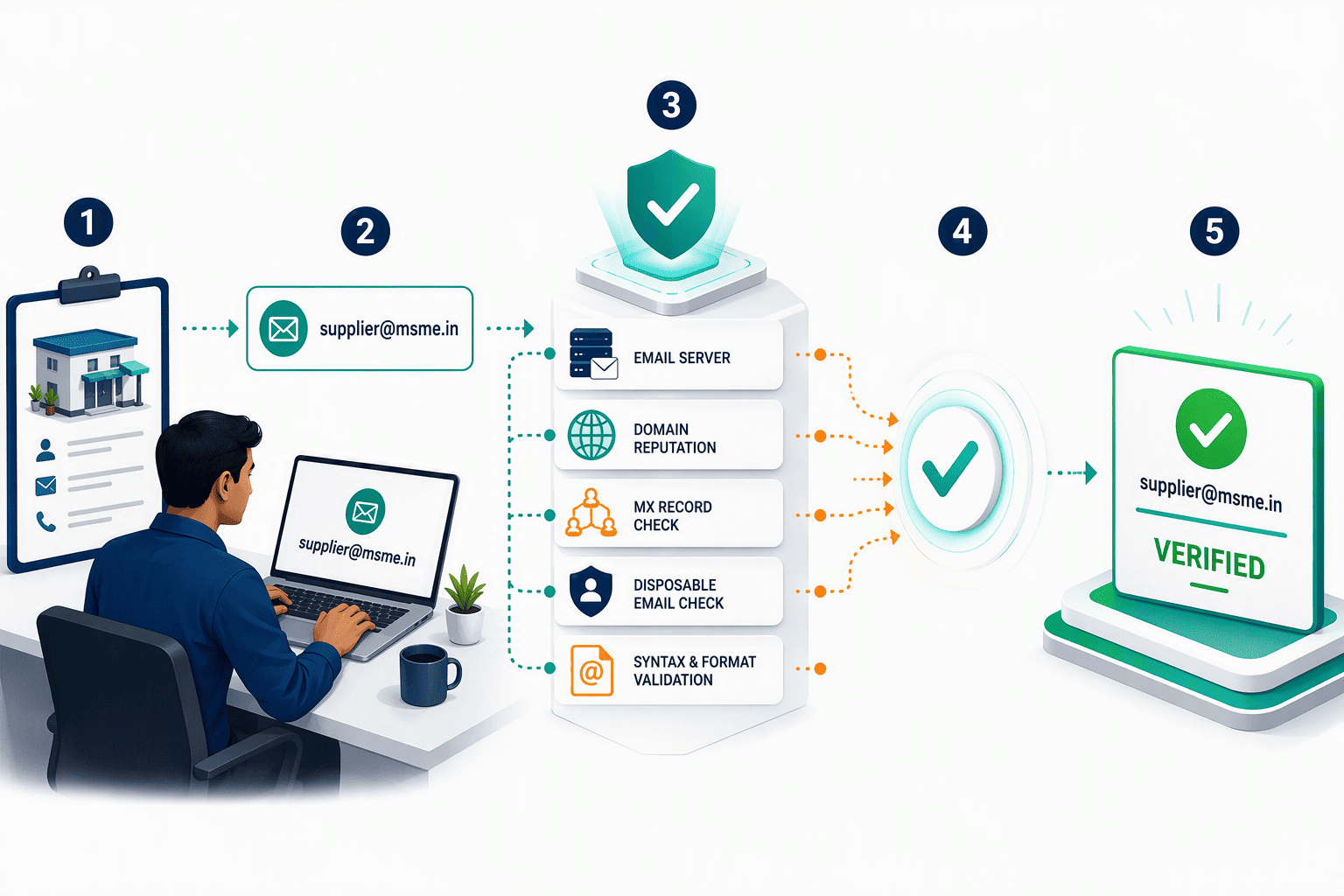
PeakAI ranks first because it is the only platform in this comparison that does not serve you a stale slice of a static database. Instead of selling you a batch export that was fresh last quarter, it verifies the contact in the exact moment you request it. This delivers an effective accuracy range of approximately 85 to 90% for emails in the Indian market. Your team gets a verification layer built for action.
- Real-time verification: confirms the contact the instant you request it, not from a batch export.
- Effective accuracy: delivers approximately 85 to 90% for emails in the Indian market.
- Action-ready verification layer: built for immediate team use.
The workflow removes friction completely. The Chrome extension sits directly on top of a LinkedIn profile or your CRM, and a verified phone number surfaces in 10 seconds. This speed matters because the cost is strictly pay-as-you-go at $0.02 per verified contact. You don't pay for a guess; you pay for a result.
For India’s MSMEs, the regulatory alignment makes the difference. The DPDPA 2023 demands explicit consent and a clean right to erasure mechanism. PeakAI’s architecture sources only from public records and corporate databases in a compliant manner. You can purge data on request without breaking your core database, so your sales motion for a micro-enterprise stays within the bounds of the law.
2. Lusha: Simple Bulk Enrichment with Broad Database Reach
Lusha is the right pick for volume. If you need to clean 20,000 rows fast without thinking about per-credit spend, its bulk enrichment engine gets the job done. The interface disappears into the background, letting you churn through huge lists.
But freshness is the trade-off you make for that scale.
Lusha relies on a statically refreshed database. This creates a gap in the Indian market, where the rate of job changes and number churn is relentless. You gain breadth, but you lose the real-time confirmation that the number on your screen still rings at that prospect’s desk. It will land squarely in the 60 to 70% accuracy benchmark typical of batch processing tools.
For sales floors that prioritize activity metrics over precision, Lusha provides incredible reach. When you hit the limit of its dataset freshness, you will need a verification step, or your bounce rate quietly eats into the top of your funnel.
3. Apollo.io: The All-in-One Platform with a B2B Database Core

Apollo.io sells a full revenue operating system. Sequences, scoring, and a massive database live in one place. It is powerful. The database model creates a timing problem for India's sales teams.
- Scale over signal: prioritizes database breadth for automated playbooks, resulting in lots of records flowing into workflows.
- Static decay: relies on a large, aggregated static core where signal decays silently at 5 to 7 percent per month; you only discover stale records when an email bounces or a call connects to the wrong person.
- Orchestration-layer value: the market-leading workflow tools keep outreach running, even when underlying contact data needs secondary cleaning.
- Indian mobile deliverability gap: high portability and churn among Indian mobile numbers makes static IDs inaccurate across a 30-day sequence, often connecting you to the wrong person.
4. SignalHire: Internal HR-Tech Algorithm Focused on Professional Emails

SignalHire takes a completely different path. Most tools look at the sales org chart, but this platform uses an HR-tech algorithm. It finds people where they get recruited, which is often different from the names on a company's 'Contact Us' page.
It is precise for personal addresses.
For Indian corporate outreach, this creates a distinct use case. The tool is strong at finding personal professional addresses (Gmail, Yahoo) that a prospect used on a resume. Those addresses serve a specific purpose: a direct backchannel when a standard email finder returns nothing for a corporate inbox.
5. Kaspr: GDPR-First Contact Finder with a European Compliance Lineage
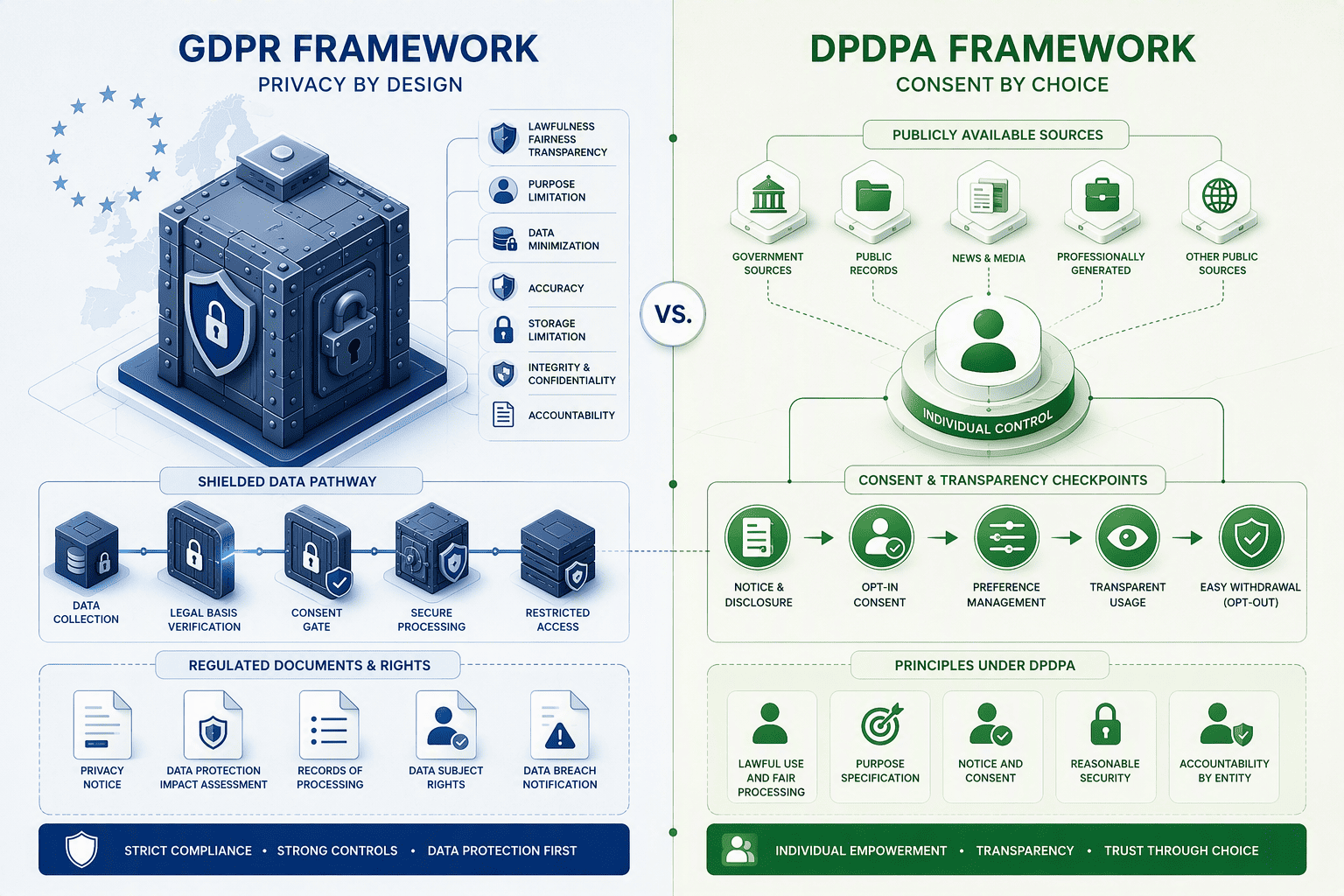
Kaspr builds from a strict GDPR foundation, treating data extraction with the heavy privacy controls the European market demands. It is fantastic for that specific regulatory context. Translating this lineage to India introduces operational friction.
| Aspect | Kaspr (GDPR Logic) | PeakAI (DPDPA Logic) |
|---|---|---|
| Legal Basis | Relies on 'Legitimate Interest' assessments. | Built on explicit consent management and public-source aggregation. |
| Data Fiduciary Duty | A processor role that leans abstract under Indian law. | A clear architecture for India's 'Data Fiduciary' role, handling user rights. |
| Right to Erasure | Achieved via standard ticketing; process-centric. | Native function within the dashboard; a one-click mechanic for compliance. |
| Risk Profile for MSMEs | You bridge the gap between European rules and DPDPA yourself. | You operate within a framework designed for the Indian statute. |
Kaspr works, and its data is clean for Western markets. The problem for an Indian MSME is that compliance with DPDPA is an aftermarket task you take on alone, adding a layer of ambiguity your legal counsel needs to clear.
6. Cognism: Intent-Led Prospecting with Phone-First Data and Diamond Data®
Cognism approaches the market from the top down. Its Diamond Data® product focuses on phone number accuracy and layers intent signals on top, a valid premise when you need to know who is in-market before you dial. The phone-first model is aggressive, and its reported coverage of EU decision-makers is a strong 90%, according to Cognism’s reporting. The disconnect comes in the value calculation for the Indian market. The premium price attached to verified mobile data can be high, while the natural accuracy for Indian numbers, even when verified, tends to converge around the 80 to 85% benchmark due to carrier dynamics and number portability.
The premium price point only yields a marginal accuracy gain over lower-cost India-focused alternatives.
7. Wiza: Live LinkedIn Scraping Turned into a Managed Platform Service

Wiza takes the freshest possible approach: live scraping. By pulling data directly off LinkedIn in real time, it bypasses the decay problem of a hard drive database. When a profile updates, Wiza’s export should reflect that immediately, and this makes its freshness hard to beat in a speed test.
The major risk is platform compliance. LinkedIn’s terms of service explicitly prohibit automated scraping, and relying on a tool built entirely on this mechanic puts your professional accounts at risk of a permanent suspension. Under the DPDPA, scraping personal data from a platform without the data principal’s explicit permission sits in an extremely gray legal zone. You are trading platform safety for freshness, and for most Indian MSMEs building their sole revenue channel, that trade is too expensive when accurate, compliant alternatives exist.
8. Industry Context Section: Realistic Data Accuracy Benchmarks vs. Marketing Claims in India
Realistic contact data accuracy for Indian prospects sits between 85% and 90% for emails when verified in real time through multi-source cross-referencing. Marketing claims of 95%+ accuracy are a red flag, typically measuring syntax validation rather than actual deliverability.
- Static database accuracy: most Indian-market tools benchmark email accuracy closer to 60% to 70% when pulling from static databases.
- Decay rate: real-world contact data decays at 5% to 7% per month; no single scrape stays clean.
- Phone number accuracy: even top tools hit roughly 80% to 85% at collection for Indian mobile numbers; landlines and VoIP numbers drop fast.
- PeakAI’s real-time verification: cross-checks LinkedIn profiles against corporate databases and public records to hold 85% to 90% email accuracy at the point of enrichment.
- Compliant enrichment: solutions that respect India's DPDP Act 2023 can realistically deliver 85% to 92% accuracy; a higher number without continuous verification is a claim worth questioning.
9. Industry Context: Realistic Data Accuracy Benchmarks vs. Marketing Claims in India
Vendor marketing is loud, but the math on data decay is unforgiving. You need to hardwire these benchmarks into your buying decision to filter out impossible promises.
- Email reality is 60 to 70%: At the point of collection, a good static database hits this range, and anything higher likely involves real-time checks.
- Phone accuracy sits at 80 to 85%: This is the best-case scenario for static Indian numbers before the monthly 5 to 7% decay starts.
- Decay is monthly, not yearly: Your static list is nearly a third dead after just six months if you do not verify it continuously.
- 95%+ claims are red flags: These figures almost always measure 'syntax verification.' The address looks real, but means nothing for deliverability.
Conclusion
A static database becomes stale the moment it is exported. In India, where professionals change roles rapidly and mobile numbers recycle within weeks, a list older than a month is already deteriorating.
The platforms reviewed here each tackle a piece of the contact-data problem. An MSME operating on thin margins cannot afford a bounce-heavy outreach cycle. What matters is a system that verifies every record at the point of use, against an India-compliant source that updates in real time.
PeakAI powers that continuous verification layer, so your next send actually lands.
Frequently Asked Questions
What defines a high-accuracy LinkedIn prospecting platform in 2026?
A high-accuracy platform is defined by its verification method, not its database size. It must cross-reference contact data in real-time against multiple live sources to counter the 5 to 7% monthly data decay common in India, ensuring deliverability over mere data capture.
How does PeakAI's data accuracy and verification process compare to other sales intelligence tools?
PeakAI performs real-time multi-source verification, hitting approximately 85 to 90% email accuracy. Traditional competitors use periodic batch updates, settling around 60 to 70% accuracy as their static databases degrade before the next scheduled refresh cycle.
What is the pricing structure and credit system for PeakAI's LinkedIn prospecting platform?
PeakAI uses a credit-based, pay-as-you-go model costing $0.02 per verified contact. Phone numbers cost 5 credits. It starts at $9 for 250 credits on a trial, with no mandatory monthly subscription.
What privacy, compliance, and data-sourcing standards should a prospecting platform meet under India's regulatory framework?
A platform must comply with the DPDPA 2023 Act, ensuring data is sourced from legitimate public records, explicit consent for processing is managed, and a built-in mechanism for the user's right to erasure exists without bureaucratic delay.
What are the realistic accuracy benchmarks versus industry claims for contact data in the Indian market?
Realistic benchmarks sit at 60 to 70% for email accuracy and 80 to 85% for phone numbers upon collection. Claims of 95% or higher are unrealistic in the Indian market without continuous real-time verification.
How does a Chrome extension-based enrichment layer like PeakAI integrate with existing sales workflows?
It overlays directly onto your current tabs. A rep can open a LinkedIn profile or a CRM record, click the extension, and receive a real-time, verified phone number and email in seconds without switching between disparate tools.
Sources
- Top 11 LinkedIn Prospecting Tools in 2026 - coldiq.com
- 13 LinkedIn Prospecting Tools to Try in 2026 - www.cognism.com
- Best LinkedIn Data Providers: How to Choose Right in 2026 - brightdata.com
- PeakAI Pricing 2026 - Plans Starting at $9 | No Subscription Required - thepeakai.com
