
Introduction
You run a B2B prospecting list for India in a tool your US team recommended, and the data is a mess. "Director" at a two-person firm in Indore. A phone number that rings a disconnected landline in Bengaluru.
An email that bounces off a catch-all Gmail server. India's B2B landscape operates on a different data reality. Generic Western databases choke on the country's 6.3 crore MSMEs because the signals they depend on, stable corporate email conventions, rigid job titles, fixed office locations, simply do not exist here in the same structured form.
By 2026, this fragmentation runs deeper, driven by India's mobile-first professional culture and the enforcement era of the Digital Personal Data Protection (DPDP) Act 2023. Your ability to reach a real business owner now hinges on parsing unstructured firmographics, verifying mobile numbers instead of dialing direct-desk lines, and doing it without violating India's new privacy laws. Most tools fail this specific test completely. A few are built to handle the chaotic long-tail of Indian small business data, and the gap between them determines whether you build a pipeline or a list of dead ends.
Key Takeaways
Here are the strategic findings for building a compliant B2B prospecting stack that works in India's MSME-heavy market.
- Core Signal Layer: LinkedIn Sales Navigator remains the key starting point for filtering active Indian buyer intent, but verified direct contacts for mobile-first profiles are missing.
- Local Enrichment Wins: India-specific tools that map MSME firmographics and verify mobile numbers outperform global databases, where Indian domain bounce rates run high.
- Cost Flexibility Matters: Pay-as-you-go credit models and INR-friendly pricing structures handle the churn of high-turnover SDR teams.
- Compliance is Non-Negotiable: The DPDP Act 2023 and LinkedIn's platform rules require consent and restrict scraping. A stack with GDPR/DPDP-aligned data sourcing keeps you clear of legal risk and account bans.
- End with WhatsApp, Not Email: Activating prospects demands an India-first CRM that routes verified contacts into WhatsApp Business API and voice calls, with email as a secondary channel.
1. PeakAI, The Enrichment Layer Built for Indian MSME Prospecting

PeakAI is an enrichment layer that delivers verified mobile numbers and emails for Indian small businesses that standard CRMs consistently miss. It ingests local business signals and maps the chaotic firmographics of Indian MSMEs: the proprietary firms, traders, and service shops that form the bulk of the B2B market. The tool claims a 91% phone number accuracy rate and verifies contact data in about 10 seconds, tackling the bouncy email problem that plagues campaigns targeting public-domain email users like Gmail and Yahoo.
This Chrome extension runs a structured database overlay built to interpret India's business data reality. For an Indian sales floor, the critical advantage is mobile-first verification. When a Western enrichment database sees a sole proprietor with no office desk phone, it returns a blank field.
PeakAI surfaces the proprietor's verified mobile number, the actual contact point for a decision-maker. The platform structures this without requiring annual lock-in contracts, offering a usage-based model where a phone number costs 5 credits and an email costs 1 credit, with plans starting at $9 for a trial. The service offers a 100% credit refund on purchases if the data doesn't pan out, no questions asked.
The real utility for Indian prospecting lies in its compliance-ready posture in the DPDP Act era. PeakAI's certification set covers GDPR, CCPA, and India's DPDP Act 2023, making it a relevant choice when legal teams review the sourcing methodology. It surfaces publicly available business contact information only. The company does not store payment credentials, and basic usage logs are only retained as long as an account is active or as required by law.
You won't find artificially inflated global accuracy numbers here that break down the moment you target a business in Bagalkot or Ariyalur district. The platform openly notes that quality can vary by region and contact type, and advertised accuracy percentages rarely reflect actual contact-find rates because platforms often measure syntax validation rather than deliverability. For Indian teams targeting micro-enterprises across 575 to 485 cities, the value proposition is getting a verified mobile number where competitors deliver only an unverified catch-all bounce.
2. LinkedIn Sales Navigator, The Native Foundation for Emerging-Market Targeting
LinkedIn Sales Navigator is the foundational signal layer you need to kick off any structured Indian prospecting workflow, because it filters the noise that generic databases can't. India's LinkedIn user base has ballooned, making the platform the richest repository of active professional intent in the country. The tool's native filters let you drill down into specific Indian geographies and industry verticals, a key function when targeting MSME clusters in places like Andaman and Nicobar or Nagaland where standard firmographic lists simply don't exist. You can build lead lists based on recent job changes, posted content, and company news, letting you catch a business owner precisely when they are signaling growth intent.
Its core limitation in India is terminal. The vast majority of Indian Sales Navigator users do not display verified, direct contact data on their profiles. You will get the signal that a director in Delhi's trading sector is active, but you won't get their real mobile number, the primary communication channel, through the tool itself. Pricing tier relevance is also a strain; the cost represents a significant per-seat investment in the Indian context, making it an expensive springboard unless paired with a specialist enrichment tool that can turn those filtered signals into verified contact points.
3. Lusha, Pay-As-You-Go Credits for Indian Sales Floors
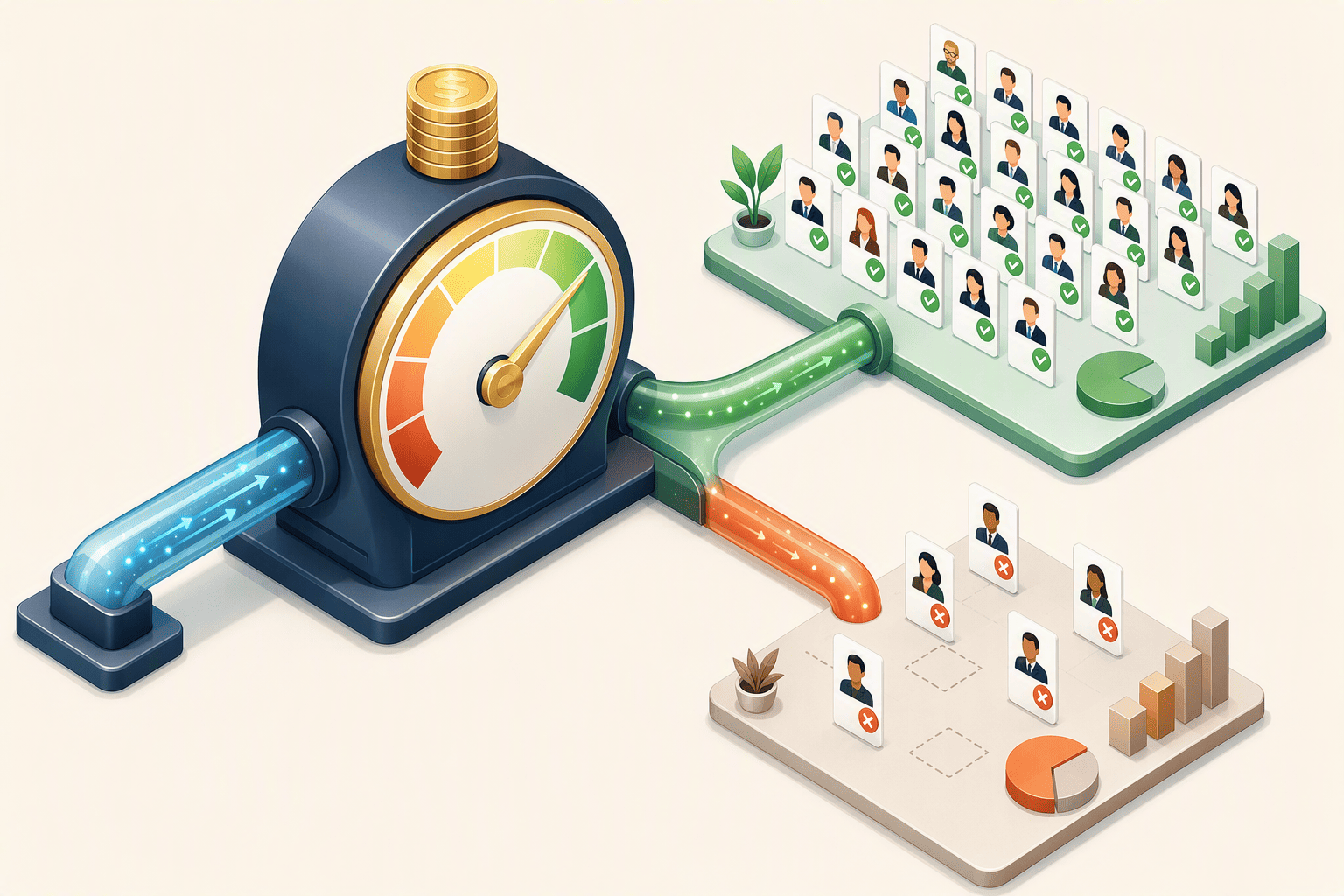
The economic reality of a high-churn Indian SDR floor makes Lusha's credit-based model a logical fit, offering a pay-as-you-go escape from the heavy upfront cost of annual per-seat database subscriptions.
When you target Indian profiles, Lusha's credit consumption rate against actual mobile and email hit-rates becomes the deciding number. In established Western markets, a batch of credits might net a high volume of direct-dial phone numbers. For Indian contacts, where the data landscape is fragmented, the yield of verified direct contacts per credit can be significantly lower. Many of your credits will land on generic front-office numbers or catch-all email domains. The platform's usefulness in India is inversely proportional to your expectation of a clean 1:1 credit-to-verified-direct-contact ratio.
Lusha's pricing, when calculated in INR terms against local purchasing power, puts a high premium on each individual credit used for less reliable data. A sales floor spending 200 credits might only find 50 to 70 genuinely direct contacts for Indian prospects, making the effective cost per real lead significantly higher than the advertised ticket price. This reflects the data scarcity that all global scrapers encounter in emerging markets. The flexibility is the saving grace. A team lead can cap monthly spend by region, shut off a low-yield Indian campaign without wasting a pre-paid annual commitment, and re-allocate the budget to a specialized local database for the heavy lifting.
The sentiment isn't that Lusha fails in India; it's that it's an opportunistic layer best deployed on the leads who exhibit the most structured digital footprints, perhaps those in larger IT or financial services firms in Mumbai or Bengaluru. For the long tail of trading establishments, manufacturing units, and service proprietors, the credit drain versus the contact success rate generally points teams toward India-focused enrichments that are built to interpret local data signals from the ground up.
4. Apollo.io, The Database Overlay with India Depth Gaps
Apollo.io's sequencing engine is genuinely good. Its India contact database, however, consistently falls short. Here are the core trade-offs when applying it to Indian campaigns.
- Strong Sequencing, Weak Local Core: Apollo.io provides a complete sales engagement platform with a built-in database. The sequence builder works smoothly. The native data depth drops sharply once you leave the US and European corridors.
- India Bounce-Rate Risk: Third-party benchmarks consistently show Apollo.io's bounce rates spike in APAC regions, with India as a primary pain point. The database lacks verified Indian direct-dials and emails. Automated sequences that run without independent scrubbing will hit a high percentage of dead addresses.
- Data Recency Disconnect: User reviews frequently cite data recency as a weakness for Indian businesses. A Mumbai startup contact accurate two years ago may now sit at a competitor. Apollo's refresh cycle often lags on these profiles, producing hard bounces that damage sender reputation.
- Use Case Fit: Apollo.io works best as a sequencing UI for Indian campaigns when you supply your own verified data layer. Depending on its native database without a specialized verifier piles on deliverability risk. That risk alone can cancel out the automation advantages.
5. Skrapp.io, The Lightweight Extractor for Indian Tier-2 Outreach
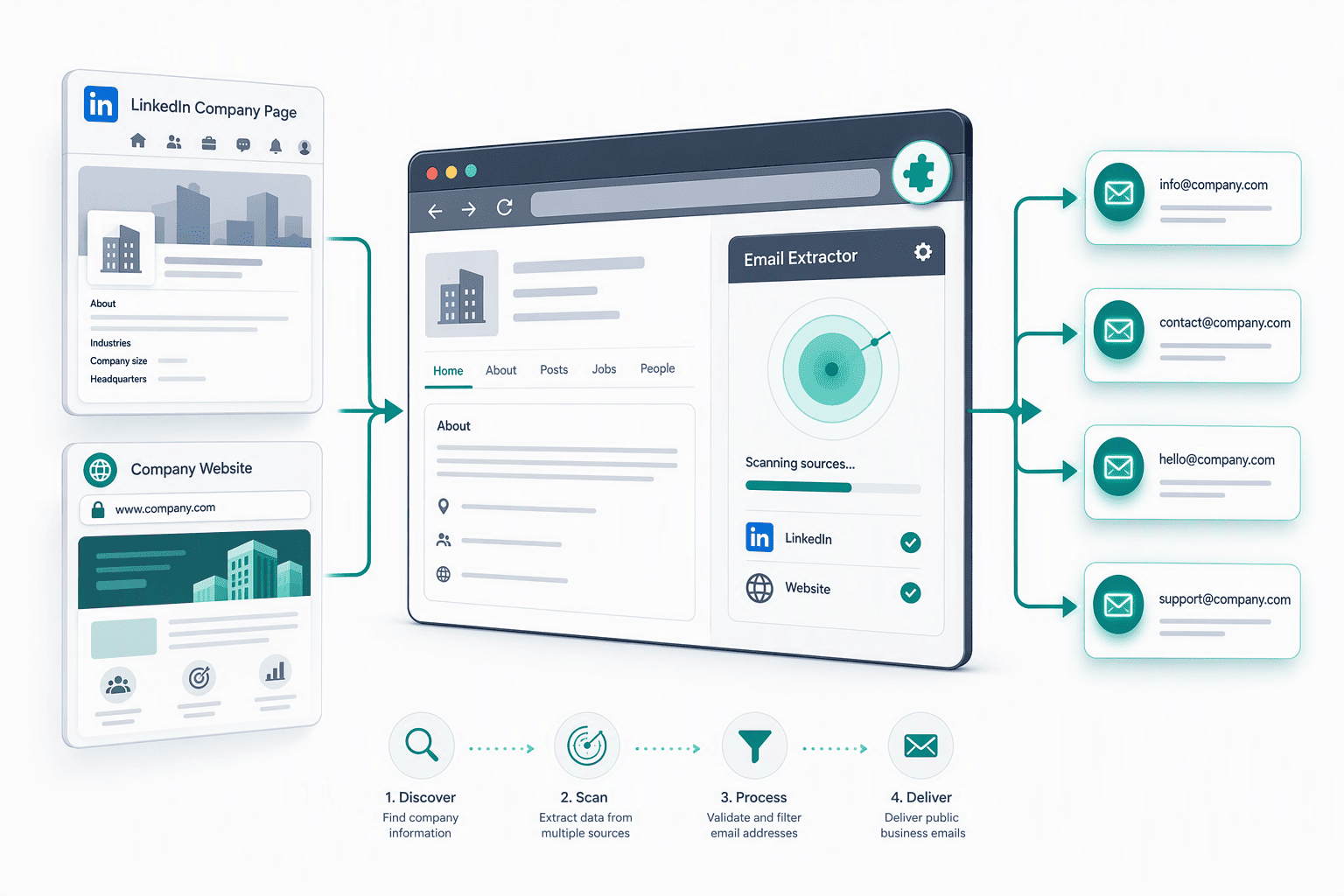
Skrapp.io's browser extension extracts publicly available emails from LinkedIn and company websites. The method fits the digital footprint of many Indian Tier-2 and Tier-3 businesses.
| Feature | Skrapp.io for Indian Tier-2 Prospecting | Considerations for Indian Sales Teams |
|---|---|---|
| Data Source Coverage | Extracts emails from a company's public LinkedIn page and website domain. Often surfaces the prevalent generic business emails (info@, support@) and public Gmail/Yahoo addresses used by Indian SMEs. | Finding the owner's direct Gmail address is common in Indian MSME outreach, but these contacts are often catch-all identifiers, not role-specific decision-maker addresses. |
| Cost Efficiency | A cost-effective entry point for price-sensitive sales floors, removing the per-credit anxiety associated with pay-as-you-go models. The Chrome Web Store ratings reflect solid functionality for its core extraction promise. | The real cost comes from the time spent verifying and cleaning a list heavy with unqualified public emails. A low per-contact data cost can mask a low ROI if SDRs waste cycles on wrong numbers. |
| Compliance Posture (DPDP Act Risk) | Operates by scraping data that is publicly visible. It does not, by default, obtain the affirmative consent required under India's evolving digital privacy framework. | The DPDP Act 2023 changes the game for scraping. Extracting a public Gmail for a business purpose without explicit consent poses a direct compliance risk, and LinkedIn's Professional Community Policies explicitly prohibit such scraping. |
6. Wiza, The LinkedIn-to-CRM Pipe with Indian Accuracy Trade-offs
Wiza excels at transforming raw LinkedIn search results into structured, import-ready CRM lists, but in India, the platform collides with the cultural reality of ambiguous and inflated job titles. The tool provides a clean pipe. You run a Sales Navigator search for a specific industry in the Delhi NCR region, and Wiza attempts to find verified contact data for those exact profiles, pushing the list directly into your CRM. The speed of integration is a genuine asset for teams running large-scale, event-driven campaigns.
But when Wiza encounters a LinkedIn profile holding the title "Proprietor" or "Director at Self-Employed," the machine logic begins to fracture. These are the functional decision-makers of millions of Indian enterprises. Wiza's parsing engines, like most global tools, are designed around Western corporate hierarchies where a "Director" is a mid-senior manager with an enterprise-grade email server. In the Indian MSME context, "Director" is often the owner's title, even for a single-unit enterprise registered under UDYAM. This job-title inflation means Wiza frequently misclassifies these profiles.
The downstream effect surfaces in CRM hygiene reports. You get a list of "Directors" with emails. Many of those emails lead to shared, unverified mailboxes or bounce entirely.
Wiza's email verification claims hold up against classic syntax errors, but catch-all server responses expose their limits. Such responses are common on Indian MSME-owned domains. A tool that flags a catch-all as "verified" introduces a silent threat into a CRM system where SDRs trust the label blindly.
Your team's specific trade-off with Wiza will be speed versus accuracy on this specific long-tail profile type. If your campaign is narrowly focused on verified large enterprises in India, like established IT firms with clean corporate structure, Wiza's ability to quickly move those leads into your workflow is high-value. But if your market is the broader 6.3 crore MSME base, a significant portion of the list will need rigorous manual cleansing before it's safe to call. Relying on Wiza's automated verification alone for this segment turns the CRM pipe it provides into a channel for a substantial volume of bad data. The cost in wasted sales effort outweighs the integration speed you gain.
7. LeadSquared Converse + CRM, The India-First Workflow Hub
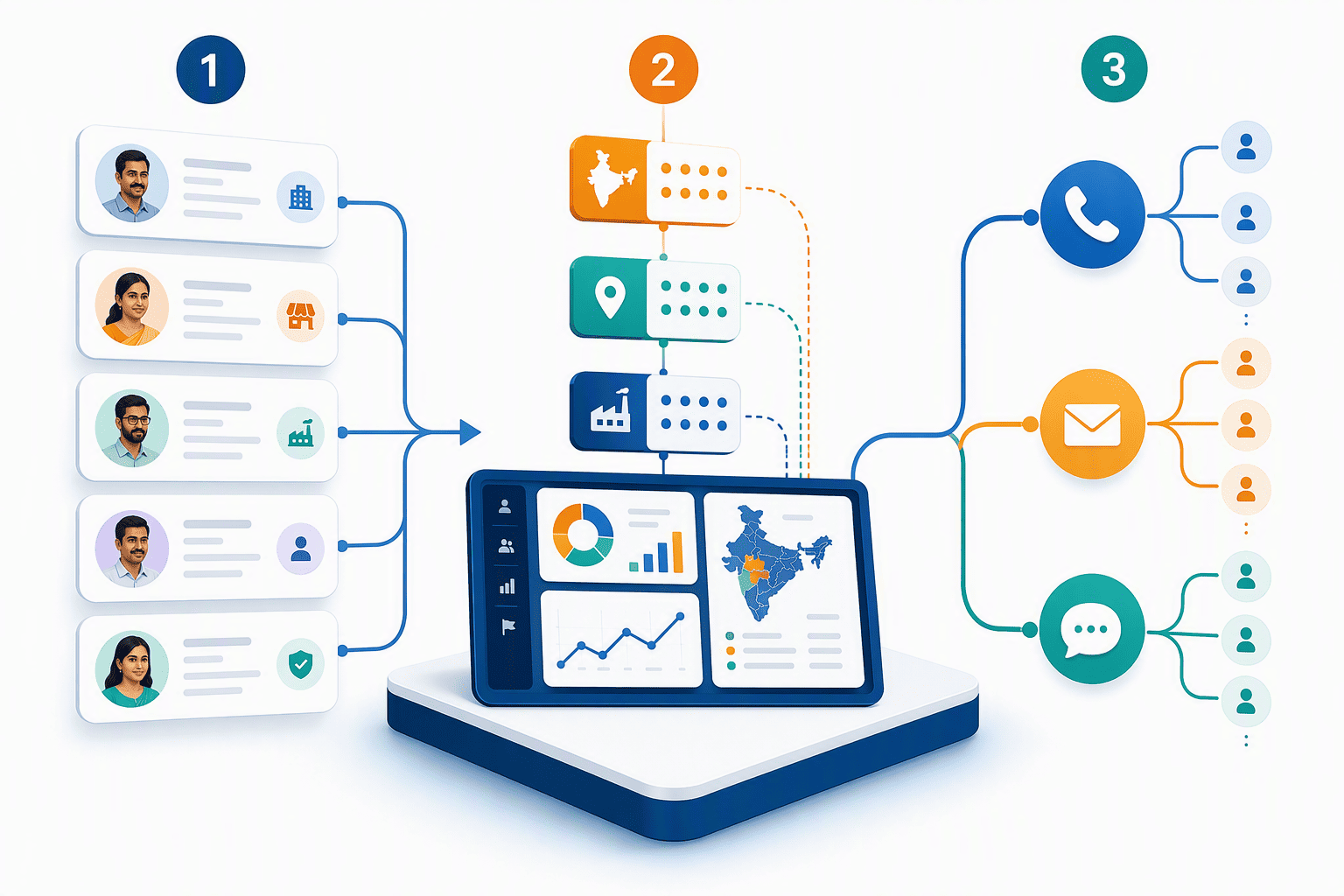
LeadSquared functions as the central activation hub for an Indian prospecting stack. It takes a LinkedIn-enriched contact list and turns it into contextual, multi-channel conversations. The workflow below maps how the platform becomes the localized operating system for your data.
- Import Enriched Data: Pull verified contacts from your enrichment layer directly into the LeadSquared CRM, mapping key firmographic tags like state, district, and UDYAM registration status for segmentation.
- Segment by Communication Channel: Use business activity codes and location data (e.g., "Manufacturing in Bagalkote" or "Trading Activities in Delhi") to segment leads for the channel most likely to get a response.
- Activate WhatsApp via Converse: For segments where a phone number is verified, initiate contextual outreach through the WhatsApp Business API. In Indian business communication, generic-domain email open rates are often negligible; WhatsApp is the channel that actually gets read.
- Automate Voice Touchpoints: Deploy automated voice calls and click-to-call workflows for MSME decision-makers who prefer a direct verbal conversation over text. This is the dominant behavioral pattern in many Tier-2 and Tier-3 Indian markets.
- Track Consent and Engagement: Log all WhatsApp and voice interactions directly against the lead record inside an India-focused CRM. The engagement trail you build is what demonstrates consent and intent under DPDP Act requirements.
- Trigger Sales Cadences: Push engaged leads into India-specific sales cadences based on their interactions. The SDR's first call happens after the prospect has received a WhatsApp message and shown interest, which sharply increases human connect rates.
- Measure Lead Source Efficacy: Run closed-loop reporting back to the original LinkedIn source and enrichment tool. You see which specific data source and campaign produces the highest revenue, so future prospecting tool budget allocation is a data-driven decision.
8. Kaspr, The European Compliant Tool Adapting to the DPDP Act Era
Kaspr's entire operational DNA was forged under GDPR, making its consent-driven, public-source methodology one of the strongest templates available for compliant B2B prospecting as India begins enforcing the DPDP Act. The tool surfaces contact data by linking publicly available professional information individuals have made visible themselves, a foundational requirement for an era where consent legitimacy is the primary legal defense. For an Indian sales leader whose legal team is asking sharp questions about data provenance, Kaspr provides a coherent methodology narrative.
This alignment doesn't mean it magically solves Indian data scarcity. Kaspr's database depth is, as expected, concentrated in Europe. Its coverage of Indian MSMEs and the specific mobile numbers that drive B2B commerce in Asia is not its core strength. You will find it effective for prospecting European subsidiaries of Indian enterprises or for Indian professionals operating in GCC or EU markets, and significantly less effective for mapping a manufacturing cluster in Coimbatore. The core value proposition for Indian operations is the compliance framework: a working model of how to source data transparently and defensibly under heavy privacy regulation.
As the Data Protection Board of India begins issuing directives and the cost of non-compliance with the DPDP Act materializes, the risk mitigation here should weigh against the coverage gap. Deploying Kaspr for specific high-profile outreach where you must demonstrate absolute compliance, say, approaching a European buyer for an Indian IT services firm, creates a defensible legal posture. Pairing it with an India-first enrichment layer that is also certifiably compliant bridges the depth gap. Kaspr gives you the process discipline for the new privacy era; the India-focused enrichment tool gives you the numbers to actually dial.
9. LinkedIn Prospecting Compliance Stack, DPDP Act 2023, Data Storage, and Platform Rules for Indian Teams

Your Indian sales stack now operates under the dual threat of the DPDP Act 2023 and LinkedIn's enforcement engines. The Act defines obligations around explicit consent and the processing of personal data, while LinkedIn's User Agreement flatly prohibits scraping. Using a browser extension that extracts profile data and stores it without a lawful basis now carries specific financial penalty risk and the immediate operational risk of a platform ban that can vaporize your entire outbound pipeline. Compliance in 2026 separates a sustainable sales motion from a legal notice.
Building a compliant workflow in 2026 therefore requires a clear segregation of roles. You must use tools that source data through consent-based, public-domain methods, not prohibited scraping. You then must store that data in a system that logs consent and enforces deletion timelines, and the activation layer must use channels like the WhatsApp Business API that carry their own opt-in frameworks. Tools that instantly surface phone numbers or claim contact rates above 95% on LinkedIn profiles are a red flag. They are almost certainly pulling from prohibited sources, exposing your team's LinkedIn accounts directly to suspension and your company to DPDP Act liability.
Conclusion
Success in Indian B2B prospecting in 2026 requires explicitly rejecting a US-centric database-first sequence in favor of a layered stack.
Start with LinkedIn Sales Navigator to find the signal, the Indian professional showing intent. Route that signal through PeakAI to accurately enrich it with verified mobile numbers and context on MSME firmographics, sidestepping the blank fields and bounce rates delivered by global aggregators.
Activate those verified contacts inside LeadSquared Converse, using WhatsApp and voice as your primary channel alongside email. This native signal, local enrichment, and India-first activation sequence turns a chaotic, fragmented data landscape into a systematic, compliant, and profitable pipeline.
Frequently Asked Questions
Which LinkedIn automation and lead generation tools specifically support B2B prospecting in India while complying with the DPDP Act 2023?
Tools built with privacy-by-design frameworks, like PeakAI and Kaspr, are specifically suited for the DPDP Act era. Their key compliance features include:
- PeakAI: surfaces publicly available business contact information and holds certifications covering GDPR, CCPA, and India's DPDP Act 2023, ensuring legal sourcing.
- Kaspr: follows a GDPR-native, consent-driven method that aligns well with India's new privacy obligations.
What are the key challenges unique to B2B prospecting on LinkedIn in emerging markets like India, and how do tools address them?
The main challenges are unstructured MSME firmographics, inflated or ambiguous job titles, a dominant mobile-first culture without direct-dial desk phones, and heavy reliance on public-domain emails. Local enrichment tools address these by:
- Mapping Indian business taxonomies rather than relying on fixed corporate office data alone.
- Verifying mobile numbers directly to reach the actual decision-maker.
How does PeakAI function as a LinkedIn enrichment layer, and what specific advantages does it offer for Indian B2B prospecting?
PeakAI is a Chrome extension that overlays a proprietary database on LinkedIn to reveal verified mobile numbers and emails for Indian businesses. Its specific advantage is mobile-first verification, delivering the actual phone number of an MSME proprietor where global tools return blank fields, with stated 91% accuracy and a pay-per-use model.
What is the realistic accuracy rate for phone numbers and emails extracted via LinkedIn tools in India?
Claims above 95% are often red flags for prohibited scraping. Typical accuracy benchmarks for compliant, deliverable contacts include:
- Realistic range: A realistic accuracy range for compliant, deliverable contacts on Indian long-tail MSME profiles is closer to 85 to 92% on verified tools like PeakAI.
- Measurement distortion: Many platforms measure syntax validation rather than actual deliverability, which inflates their reported numbers significantly.
What data usage and storage regulations must Indian sales teams consider when using LinkedIn prospecting tools?
Teams must operate under the DPDP Act 2023, which mandates explicit consent for processing personal data, and LinkedIn's Professional Community Policies, which strictly prohibit automated scraping. This makes it mandatory to:
- Use compliant sourcing tools that source data from compliant, public-domain methods.
- Store data with auditable consent logs and deletion protocols to ensure ongoing compliance.
Why is WhatsApp more important than email when activating prospects found via LinkedIn in India?
Indian MSME owners heavily operate on mobile and often use personal Gmail or Yahoo addresses that yield extremely low open rates. A verified mobile number allows you to reach the decision-maker through WhatsApp Business API, which has a near-100% delivery and high read rate, making it a fundamentally more effective activation channel than email.
