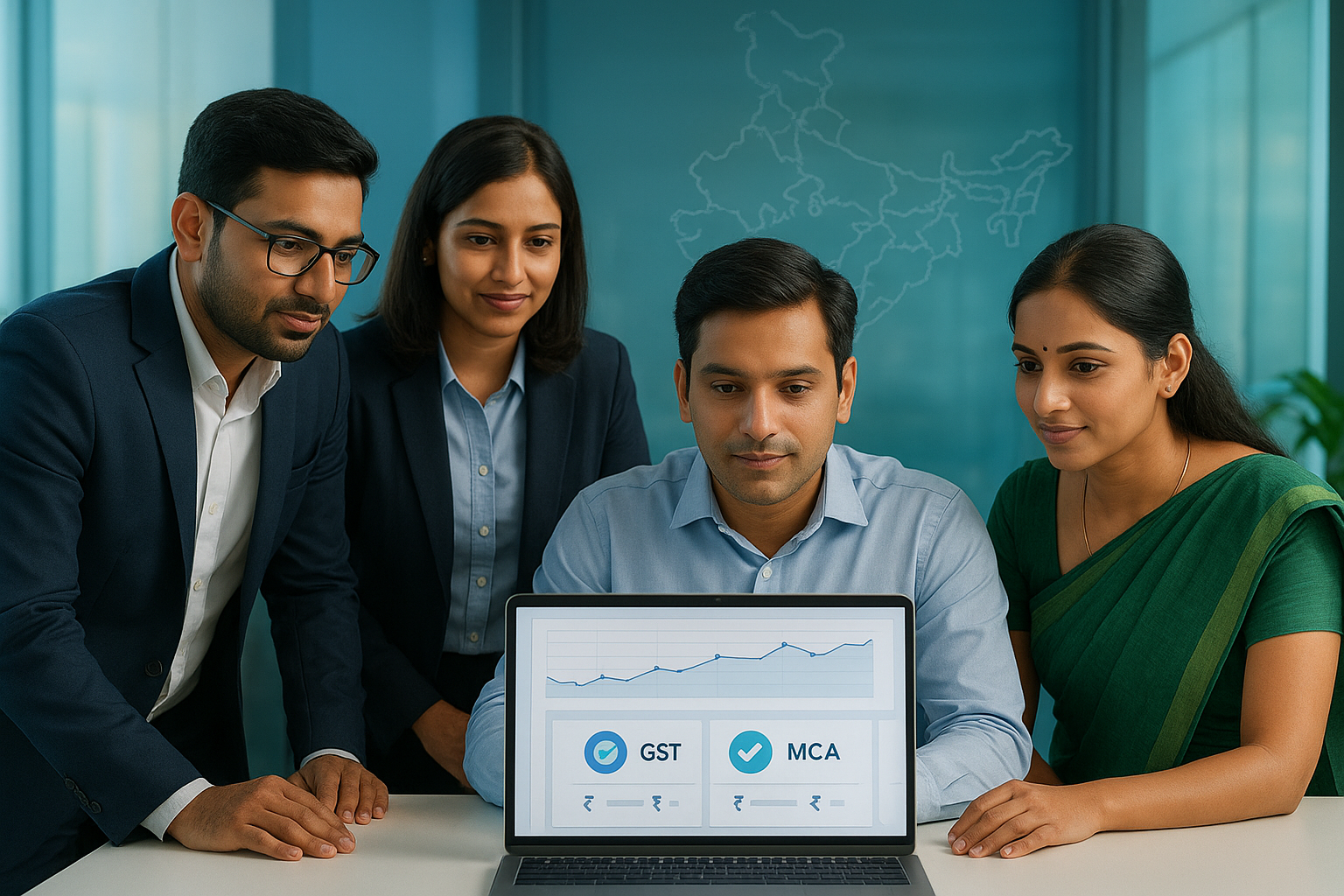
Contact enrichment for Indian B2B teams involves appending verified phone numbers, work emails, and company data to lead records while adhering to India's Digital Personal Data Protection Act consent requirements and regional verification standards.
Key Takeaways
- Affordable contact enrichment tools for Indian B2B teams prioritize GST and MCA database verification, DPDP Act compliance, and pay-as-you-go pricing models starting from approximately ₹13 per contact (roughly $0.16), making real-time verification accessible to startups and SMBs without annual lock-in contracts.
- Cost-per-verified-contact ranges from approximately $0.85-$1.50 for specialized platforms compared to $2-$4 for enterprise solutions, according to industry benchmarking data [4].
- Phone number verification quality matters more than database size — 90-day refresh cycles prevent 2-3% monthly contact decay across Indian markets.
- DPDP Act 2023 requires explicit consent for personal data processing, making data-source transparency critical when selecting enrichment vendors [9].
- LinkedIn Terms of Service prohibit automated scraping, creating account suspension risks for teams using non-compliant tools.
What Indian B2B Teams Should Know About Contact Enrichment in 2026
Affordable contact enrichment tools for Indian B2B teams prioritize GST and MCA database verification, DPDP Act compliance, and pay-as-you-go pricing models starting from approximately ₹13 per contact, making real-time verification accessible to startups and SMBs without annual lock-in contracts. Contact enrichment appends verified phone numbers, work emails, company size, industry classification, and decision-maker titles to lead records, reducing bounce rates and improving outreach precision.
Companies with high-quality customer data are 60% more likely to exceed their sales targets2025 comparative analysis [8]. Poor data quality generates enough bounces to push a domain into reputation decline [1], making verification infrastructure a foundational requirement for outbound campaigns. Indian B2B teams face unique verification challenges: global databases often lack depth in Tier 2 and Tier 3 cities, while regional data sources require integration with GST and MCA registries for accuracy.
Why Verification Method Matters More Than Database Size
A tool advertising 600 million contacts means little if its Indian coverage relies on stale data or lacks regional verification. According to MarketsandMarkets [4], phone number verification quality directly impacts sales productivity — 90-day refresh cycles prevent the 2-3% monthly contact decay common in rapidly changing Indian markets. Tools that integrate GST and MCA databases offer real-time verification against government-registered business entities, reducing bounce rates and improving first-call success.
DPDP Act and Data-Source Transparency
India's Digital Personal Data Protection Act took partial effect on 13 November 2025 and will be fully enforced by 13 May 2027 [11]. The Act requires explicit consent for personal data processing, making the source of enrichment data legally significant. Tools that scrape LinkedIn profiles without consent expose buyers to compliance risk, while platforms sourcing from public registries and consent-based directories align with DPDP requirements. Teams should verify whether a vendor discloses its data-collection methodology and consent framework before committing to annual contracts.
DPDP Act Compliance: Why Data Source Matters for Indian Buyers
The Digital Personal Data Protection Act of 2023 establishes India's data privacy regime with phased implementation through 2027 [11]. Phase I took effect immediately upon rule notification in November 2025, requiring organizations to obtain explicit consent before processing personal data. Phase II, effective in mid-2027, will enforce stricter penalties and expand the Data Protection Board of India's oversight authority. For B2B contact enrichment, the Act's consent requirements make data-source transparency a procurement criterion — not just a compliance checkbox.
Scraping vs. Consent-Based Enrichment
LinkedIn Terms of Service explicitly prohibit automated scraping [9]. Tools that extract contact data directly from LinkedIn profiles without the platform's API authorization violate these terms, creating account suspension risks for users. While enforcement varies, teams using scraping-based tools report periodic bans and data-access interruptions. Consent-based enrichment platforms source data from public business registries (GST, MCA), opt-in directories, and API partnerships, aligning with both LinkedIn's policies and DPDP Act requirements.
GDPR and DPDP: Overlapping but Distinct Frameworks
Tools marketed as GDPR-compliant do not automatically satisfy DPDP Act requirements. GDPR governs EU resident data; DPDP governs Indian resident data. A platform compliant with GDPR for European contacts may still violate DPDP if its Indian data sourcing lacks explicit consent. Protection overview [9], the DPDP Act requires fiduciaries to disclose data sources and obtain verifiable consent, a standard not universally met by global enrichment platforms. Teams procuring tools for Indian outreach should request vendor documentation of India-specific compliance measures, not just GDPR certifications.
Comparison Framework: Global Databases vs. Regional Verification
Global B2B databases excel at North American and Western European coverage but often lack depth in Indian Tier 2 and Tier 3 cities. Regional verification platforms integrate GST and MCA registries, offering real-time validation against government-registered business entities. The trade-off: global databases provide broader international reach; regional tools deliver higher accuracy for India-specific prospecting.
Coverage Depth vs. Verification Accuracy
According to GrowthTech Spotlight [7], ZoomInfo's proprietary database holds over 300 million contacts, making it the largest in this comparison. Apollo offers 270M+ contacts with 97% email accuracy [6]. Lusha provides 100M+ business profiles with 85% accuracy [4]. Database size correlates weakly with Indian market accuracy — a 600-million-record platform may have sparse Tier 2 city coverage, while a smaller platform with GST integration achieves higher verification rates for Indian SMBs.
Integration Complexity and Workflow Fit
Enterprise platforms like ZoomInfo integrate with Salesforce, HubSpot, and Marketo [7], supporting governed CRM-native enrichment. Lighter tools such as Lusha operate primarily via Chrome extension on LinkedIn [4], offering faster setup but less automated CRM sync. Apollo combines prospecting and enrichment in one platform with built-in email sequencing [5], reducing tool sprawl for teams that want unified workflows. Regional platforms may require custom API integration but often provide higher accuracy for India-focused campaigns.
Affordable Contact Enrichment Tools for Indian B2B (Comparison Table)
The following comparison evaluates six platforms by pricing model, India-specific coverage, verification method, and compliance posture. Pricing reflects publicly available or vendor-quoted rates as of May 2026. Accuracy figures are vendor-claimed or independently benchmarked where available.
| Platform | Pricing Model | India-Specific Coverage | Accuracy / Verification | Compliance | Best For |
|---|---|---|---|---|---|
| PeakAi | Pay-per-contact (starts ₹13/contact approx.) | 1600+ Indian cities with GST/MCA integration | 91% phone accuracy (vendor-claimed) | DPDP Act aligned (GST/MCA sourcing) | India-focused teams needing regional verification without annual lock-in |
| Lusha | $36/user/month [6] | 100M+ global profiles [6]; India depth varies | 85% [4] | GDPR and CCPA compliant [4] | Quick LinkedIn lookups with direct dial emphasis |
| ZoomInfo | $15K+/year [6] | 600M+ contacts [6]; strong North America, limited Tier 2/3 India | 95% [4] | GDPR compliant | Enterprise teams with multi-region needs and budget for annual contracts |
| Apollo | Free tier; $49/user/month [6] | 270M+ contacts [6]; moderate Indian SMB coverage | 97% email accuracy [6] | GDPR compliant | Budget-conscious teams wanting prospecting plus enrichment in one platform |
| EazyReach | Pay-per-reveal (pricing not publicly disclosed) | Multiple verified sources including MCA DIN records | 91% [2] | DPDP Act and GDPR compliant | LinkedIn-native workflow with MCA-backed verification for Indian contacts |
| SunTec India | Custom (₹/month basis) | LinkedIn Sales Navigator filters; publicly available LinkedIn data | Not disclosed | CMMI Level 3, ISO, HIPAA | Managed service for teams outsourcing lead generation and enrichment tasks |
Data sourced from vendor websites, third-party reviews, and industry reports as of May 2026.
Per-Scenario Recommendations
- **India-only prospecting with budget constraints**: PeakAi or EazyReach offer pay-per-contact models with GST/MCA verification, avoiding annual commitments.
- **Multi-region campaigns with enterprise CRM governance**: ZoomInfo provides the deepest North American and European coverage with native Salesforce and HubSpot integration, though at premium pricing.
- **Unified prospecting and outreach for lean teams**: Apollo combines 270M+ contacts with built-in email sequencing starting at $49/user/month, reducing tool sprawl.
- **LinkedIn-first workflows with direct dial priority**: Lusha's Chrome extension offers quick lookups with 85% accuracy, widely praised for direct dials [12].
- **Managed enrichment as a service**: SunTec India handles LinkedIn lead generation and enrichment with CMMI Level 3 certification, suited for teams outsourcing prospecting tasks.
Cost-Per-Verified-Contact: Pricing Models That Scale for Indian Teams
Cost-per-verified-contact ranges from approximately $0.85-$1.50 for specialized platforms compared to $2-$4 for enterprise solutions, according to MarketsandMarkets [4]. For Indian buyers paying in rupees, this translates to roughly ₹70-₹125 per contact for budget tools versus ₹165-₹330 for enterprise platforms, assuming an exchange rate near ₹83. Pay-as-you-go models eliminate the upfront cost barrier of annual contracts, making enrichment accessible to startups and early-stage sales teams.
Credit-Based vs. Subscription Pricing
Credit-based models charge per contact revealed, allowing teams to control spending and pause usage during low-activity periods. Subscription models charge monthly or annually per seat, making sense for teams with consistent prospecting volume. According to Impeck Telecom [10], Indian B2B buyers increasingly prefer pay-as-you-go pricing to avoid locking capital in annual SaaS contracts. A team enriching 200 contacts monthly pays approximately ₹2,600-₹25,000 depending on the platform's per-contact rate, making credit-based tools more economical for sporadic campaigns.
Hidden Costs: Bounce Rates and Time Waste
A wrong email address bounces and hurts domain reputation [1], potentially costing more than the contact price itself. Teams that prioritize low per-contact cost over verification quality often face 20-30% bounce rates, wasting sales time and damaging sender reputation. According to Enginy AI [1], bad data can generate enough bounces to push a domain into reputation decline, requiring expensive remediation. Paying ₹15 per verified contact with 91% accuracy is more cost-effective than ₹8 per contact with 70% accuracy when accounting for wasted outreach and reputation risk.
GST and MCA Integration: Regional Verification Methods Explained
India's Goods and Services Tax (GST) registry and Ministry of Corporate Affairs (MCA) database are government-maintained records of registered businesses and directors. Contact enrichment platforms that integrate these sources cross-reference lead data against official filings, validating company registration status, director names, and business addresses. This regional verification layer is absent from global platforms that rely on aggregated third-party databases.
How GST Verification Works
Every registered business in India receives a unique 15-digit GST Identification Number (GSTIN). Enrichment tools query the GST registry to confirm a company's legal name, principal place of business, and registration status. A mismatch between the lead's stated company name and GST records flags potential data errors or shell entities. This verification step filters out defunct businesses and reduces cold outreach to inactive contacts, improving campaign efficiency.
MCA DIN Records for Decision-Maker Validation
The MCA assigns a unique Director Identification Number (DIN) to every company director in India. Enrichment platforms cross-reference LinkedIn titles against MCA DIN records to validate decision-maker roles. Methodology [2], multiple verified data sources including MCA DIN records improve accuracy to 91% for Indian contacts. This validation prevents wasting outreach on self-proclaimed titles that lack official registration, a common issue in Tier 2 and Tier 3 city prospecting.
Why Global Databases Miss Regional Nuance
Global platforms aggregate data from international sources — business directories, web scraping, user contributions, without access to India's government registries. A LinkedIn profile stating "Founder at XYZ Pvt Ltd" may be accurate or aspirational; GST and MCA integration distinguishes the two. Teams prospecting in metros like Mumbai or Bangalore may find acceptable accuracy from global databases, but Tier 2 city campaigns benefit significantly from regional verification layers that validate business legitimacy and decision-maker authority.
When to Choose Pay-As-You-Go vs. Subscription Pricing
Pay-as-you-go pricing suits teams with variable prospecting volume, seasonal campaigns, or budget constraints that prevent annual SaaS commitments. Subscription models make sense for teams enriching hundreds of contacts monthly with predictable usage patterns. The decision hinges on monthly contact volume, budget flexibility, and the cost of unused seat licenses.
Break-Even Analysis: Credits vs. Seats
For illustration, a team enriching 150 contacts monthly at ₹13 per contact pays approximately ₹1,950/month with pay-as-you-go pricing. A subscription tool charging $49/user/month (roughly ₹4,070 at ₹83/USD) costs more upfront but may include additional features like CRM sync or email sequencing. The break-even point occurs around 300 contacts/month, above this volume, subscription pricing often delivers lower per-contact costs, while below it, credit-based models offer better capital efficiency.
Flexibility for Early-Stage Teams
Startups and early-stage sales teams often lack the budget for $15K+/year enterprise contracts [6]. Pay-as-you-go models eliminate upfront commitments, allowing teams to test enrichment quality before scaling spend. According to Public Media Solution [3], the Indian B2B market is projected to reach $90-$100 billion by 2025, with SMBs driving adoption of flexible procurement models. Teams can enrich 50 contacts to validate data quality, pause during product development cycles, and resume prospecting when ready, flexibility impossible with annual seat licenses.
When Subscription Models Make Sense
Teams enriching 500+ contacts monthly benefit from subscription pricing's lower per-contact marginal cost. Enterprise platforms like ZoomInfo and Apollo bundle enrichment with CRM integrations, intent signals, and organizational charts, features that justify annual contracts for large sales organizations. According to Hans Dekker [6], Apollo offers a free tier alongside $49/month paid plans, providing a middle ground for teams transitioning from pay-as-you-go to subscription models as prospecting volume grows.
FAQ: Contact Enrichment for Indian B2B Market
Conclusion
Indian B2B teams evaluating contact enrichment tools face a fundamental trade-off: global database breadth versus regional verification accuracy. Enterprise platforms like ZoomInfo and Apollo offer multi-region coverage and deep CRM integration, suited for organizations with international prospecting needs and budgets to support annual contracts. Regional tools prioritizing GST and MCA verification deliver higher accuracy for India-focused campaigns, often at pay-as-you-go pricing that aligns with startup and SMB capital constraints.
The contact enrichment landscape in 2026 is shifting toward compliance-first architectures as DPDP Act enforcement expands through 2027. Teams should prioritize vendors that disclose data-sourcing methodology, integrate government registries for real-time verification, and offer transparent pricing models without hidden bounce-rate costs. Cost-per-verified-contact matters less than the total cost of poor data, wasted sales time, damaged domain reputation, and compliance risk outweigh nominal per-contact savings.
For teams starting today, request vendor documentation of DPDP Act compliance measures and run a 50-contact pilot to validate accuracy before committing to annual contracts. Compare actual bounce rates, phone-answer rates, and time-to-first-meeting across two platforms to measure real-world performance beyond vendor-claimed accuracy percentages. The right tool balances regional verification depth, budget flexibility, and workflow fit, not just database size.
Frequently Asked Questions
What are the best affordable contact enrichment tools for Indian B2B teams in 2026?
Affordable tools for Indian B2B teams prioritize GST and MCA verification, DPDP Act compliance, and pay-as-you-go pricing. PeakAi and EazyReach offer regional verification starting around ₹13 per contact, while Apollo provides a free tier with 270M+ contacts [6]. Lusha emphasizes direct dial lookups at $36/user/month [6].
How can I verify contact data before sales outreach campaigns?
Verify contacts by cross-referencing against GST and MCA registries for Indian leads, using real-time email validation APIs, and testing phone numbers with carrier lookup services. According to Enginy AI [1], a wrong email address bounces and hurts domain reputation, making verification critical.
What is the cost-per-verified-contact for Indian B2B enrichment tools?
Cost-per-verified-contact ranges from approximately $0.85-$1.50 for specialized platforms compared to $2-$4 for enterprise solutions, according to MarketsandMarkets [4]. For Indian buyers, this translates to roughly ₹70-₹125 per contact for budget tools versus ₹165-₹330 for enterprise platforms. Pay-as-you-go models eliminate upfront annual commitments, making enrichment accessible to startups.
Is LinkedIn scraping legal for contact enrichment in India under DPDP Act?
LinkedIn Terms of Service explicitly prohibit automated scraping [9], and India's Digital Personal Data Protection Act requires explicit consent for personal data processing [11]. Tools that scrape LinkedIn profiles without consent violate both LinkedIn's policies and DPDP requirements, creating account suspension and compliance risks. Consent-based platforms sourcing from public registries, opt-in directories, and API partnerships align with legal standards.
How does GST and MCA verification improve contact accuracy in India?
GST and MCA verification cross-references lead data against government-maintained registries of registered businesses and directors, validating company legitimacy and decision-maker authority. According to EazyReach [2], multiple verified sources including MCA DIN records improve accuracy to 91% for Indian contacts. This regional verification layer filters out defunct businesses and self-proclaimed titles common in Tier 2 and Tier 3 city prospecting.
When should Indian B2B teams choose pay-as-you-go vs. Subscription pricing?
Pay-as-you-go pricing suits teams enriching fewer than 300 contacts monthly, with variable prospecting volume, or budget constraints preventing annual SaaS commitments. Subscription models make sense above 300 contacts/month when lower marginal costs and bundled features like CRM sync justify upfront spend. According to Impeck Telecom [10], Indian buyers increasingly prefer pay-as-you-go to avoid locking capital in annual contracts.
What integrations should I look for in a contact enrichment tool for Indian sales workflows?
Prioritize native CRM integrations for Salesforce, HubSpot, Zoho, or Pipedrive to automate enrichment workflows and reduce manual CSV uploads. According to SunTec India [2], common integrations include HubSpot, Salesforce, Pipedrive, Zoho, and Excel/Sheets. LinkedIn-native tools via Chrome extension offer faster setup but require manual export to CRM. Apollo combines prospecting and enrichment with built-in email sequencing [5], reducing tool sprawl.
Sources
- How to Verify a Business Contact Before Reaching Out - Enginy AI - www.enginy.ai (2026)
- Zoominfo - linkfinderai.com (2025)
- Top 10 Lead Generation Tools for Indian B2B Sales Teams in ... - publicmediasolution.com
- Top 6 Contact Enrichment Tools Comparison (And What They Won't ...) - www.marketsandmarkets.com (2025)
- 8 Contact Enrichment Tools That Find Emails and Phone Numbers Fast in 2026 | SyncGTM - www.syncgtm.com (2026)
- Best Data Enrichment Tools 2026: Clay, ZoomInfo, Apollo & More | Hans Dekker - www.hansdekker.ai (2026)
- B2B Data Enrichment Tools: ZoomInfo, Apollo, Cognism, Lusha | GrowthTech Spotlight - www.growthtechspotlight.com
- Top 10 Contact Enrichment Tools of 2025: A Comparative ... - superagi.com (2025)
- Data protection laws in India - www.dlapiperdataprotection.com
- 15 Best B2B Lead Generation Tools for India - Impeck Telecom - impecktelecoms.com
- India Digital Personal Data Protection Act (DPDPA 2025) - CookieYes - www.cookieyes.com (2025)
- B2B Data Enrichment Tools: ZoomInfo, Apollo, Cognism, Lusha | GrowthTech Spotlight - www.growthtechspotlight.com
