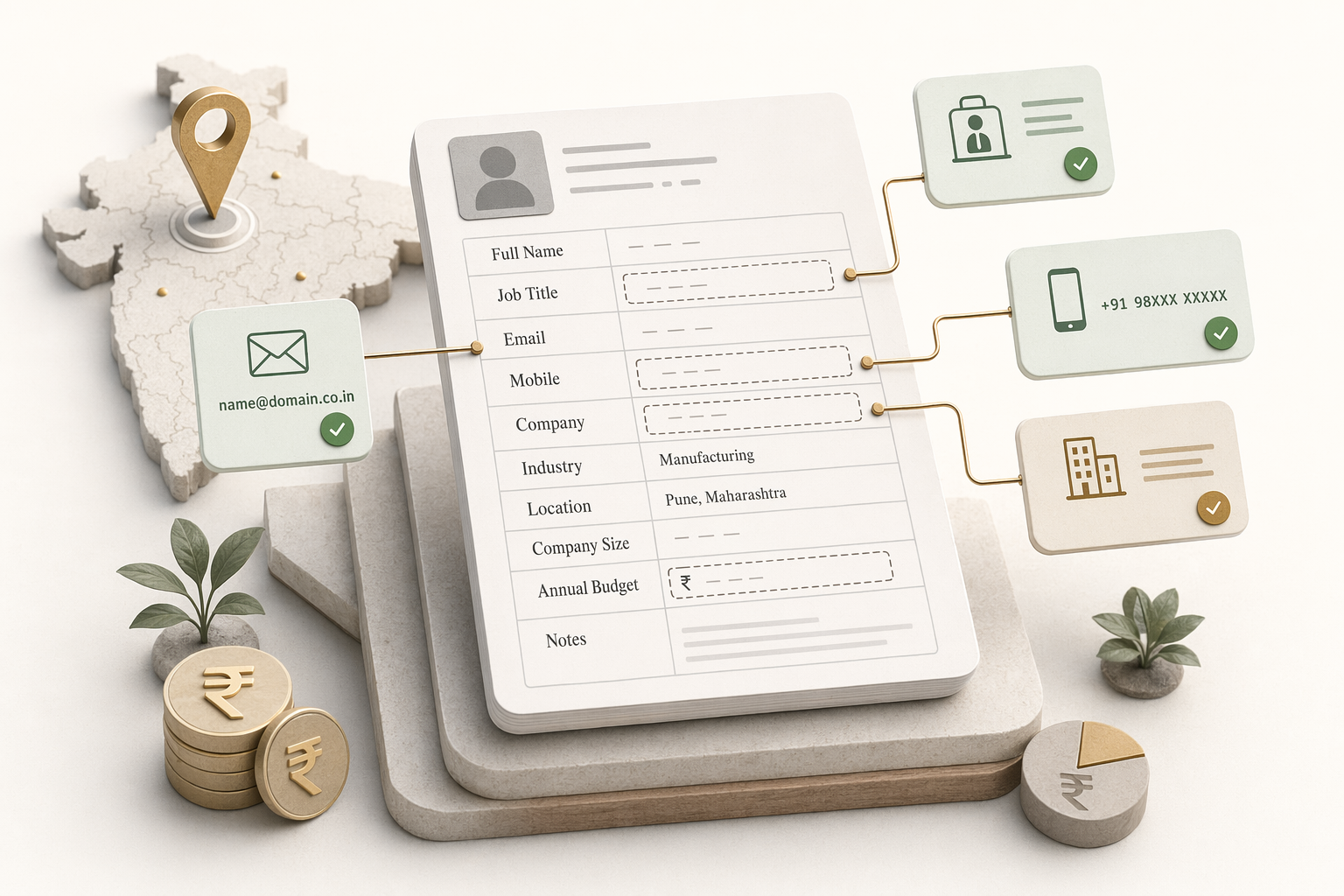
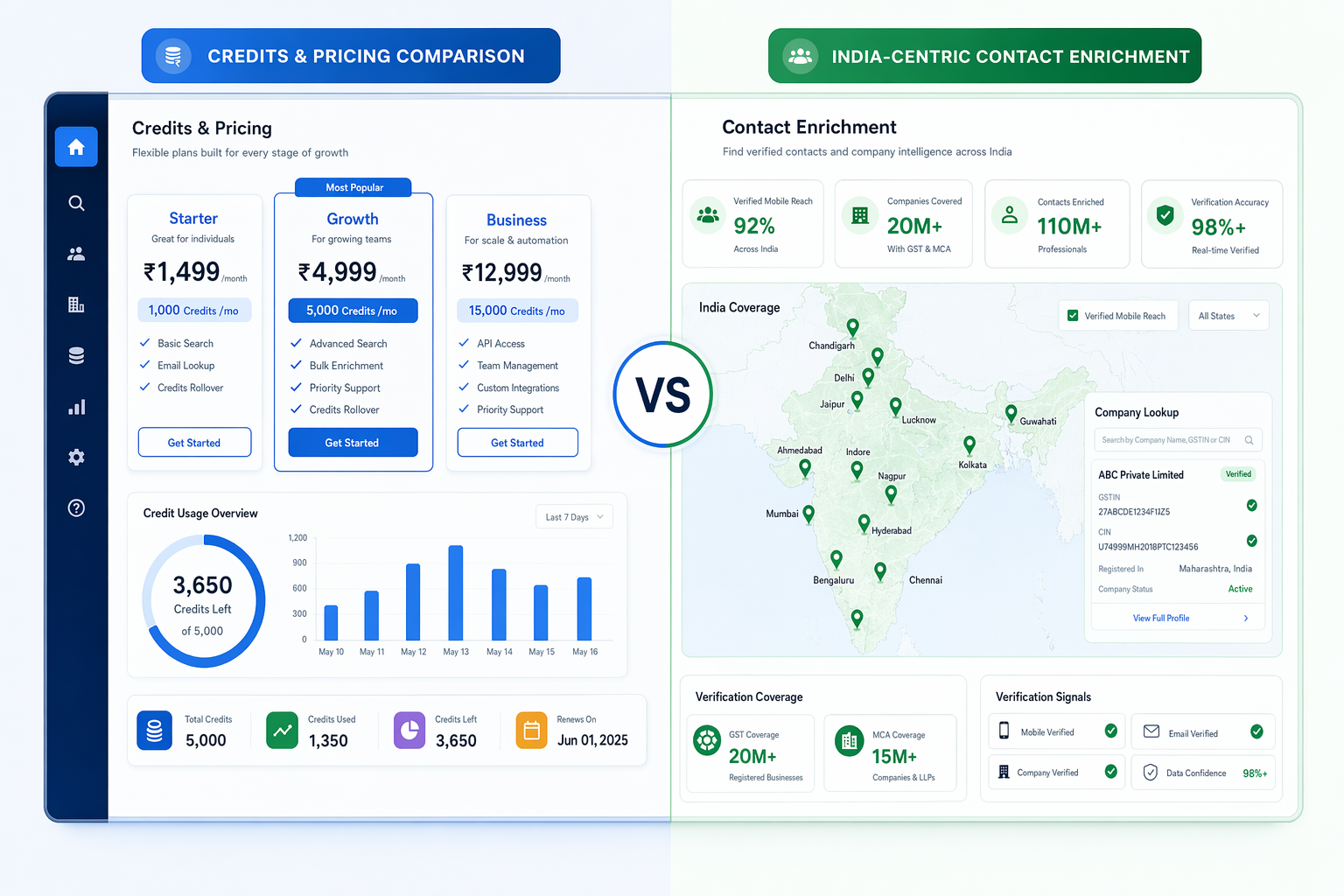
Contact enrichment tools append verified emails, mobile numbers, job titles, and company data to incomplete B2B records — a critical function for Indian sales teams targeting domestic prospects where global platforms often lack region-specific phone coverage and affordable pricing aligned with rupee budgets.
Key Takeaways
- Apollo.io, Lusha, Cognism, Clay, ZoomInfo, and PeakAi offer contact enrichment for Indian B2B teams, with pricing from $29/user/month to $15K+/year; evaluation hinges on India-specific mobile accuracy, pay-per-use versus subscription economics, real-time verification timing, LinkedIn Terms compliance, and transparent regional accuracy disclosure.
- India-specific data coverage varies: Apollo and PeakAi explicitly advertise India contact databases, while Cognism focuses on European markets and Clay aggregates 75+ sources with India coverage around 3% according to industry data.
- Pay-per-use models avoid subscription waste for variable prospecting volumes, while annual contracts from $15K+ suit enterprise teams with consistent demand.
- Pre-download verification workflows let buyers see contact quality before payment, reducing bounce risk compared to post-export refund models.
- Regional accuracy transparency matters: accuracy rates mean little without verification methodology disclosure, especially for India mobile numbers where decay runs 2-3% monthly [1].
Introduction
Indian B2B teams face a verification-cost mismatch: global enrichment tools price in USD while needing India-verified mobile numbers, creating affordability gaps that generic platforms rarely address. Apollo.io, Lusha, Cognism, Clay, ZoomInfo, and PeakAi position themselves across this market, each with distinct economic models, regional coverage depth, and compliance architectures. Choosing the right tool depends on five criteria: India-specific data coverage breadth, pay-per-use versus subscription economics for variable prospecting volumes, real-time verification workflow that signals contact quality before download, compliance architecture aligned with LinkedIn Terms and India's Digital Personal Data Protection Act, and regional accuracy transparency that discloses verification methodology rather than headline percentages alone. The data enrichment solutions market was valued at $2.37 billion in 2023 and is projected to grow at 10% annually through 2030 [2], yet Indian SMBs still struggle to find tools that balance global database scale with rupee-aligned pricing and India mobile accuracy.
Why India-Specific Data Coverage Matters for Contact Enrichment
Contact enrichment tools built for North American or European markets often lack depth in Indian B2B directories, resulting in low match rates for India-based prospects. According to industry benchmarking, Clay's direct dial coverage for India sits around 2.85%, while platforms like Cognism concentrate European coverage — particularly UK, Germany, France, and Nordics — leaving Asia-Pacific markets underserved [3]. Apollo.io explicitly markets an Indian business contact database with verified contacts and continuous verification, positioning it as one of the few platforms with stated India focus. Indian sales teams targeting domestic accounts — from Mumbai fintech startups to Bangalore SaaS companies, need tools that source mobile numbers from local telecom registries, validate against GST and Ministry of Corporate Affairs records, and distinguish mobile from landline classifications, a granularity global platforms rarely provide.
Mobile versus Landline Distinction in India Data
Indian B2B prospecting prioritizes mobile numbers over landlines because decision-makers rarely answer desk phones, yet many enrichment databases mix both without clear labeling. Phone data decays at 2-3% monthly as contacts change roles, companies, or numbers [1], making real-time classification key. Tools that surface whether a number is mobile, landline, or VoIP before download let SDR teams prioritize high-intent outreach channels. This capability separates India-focused platforms from global databases that bundle phone types without distinction.
GST and MCA Integration as Verification Layers
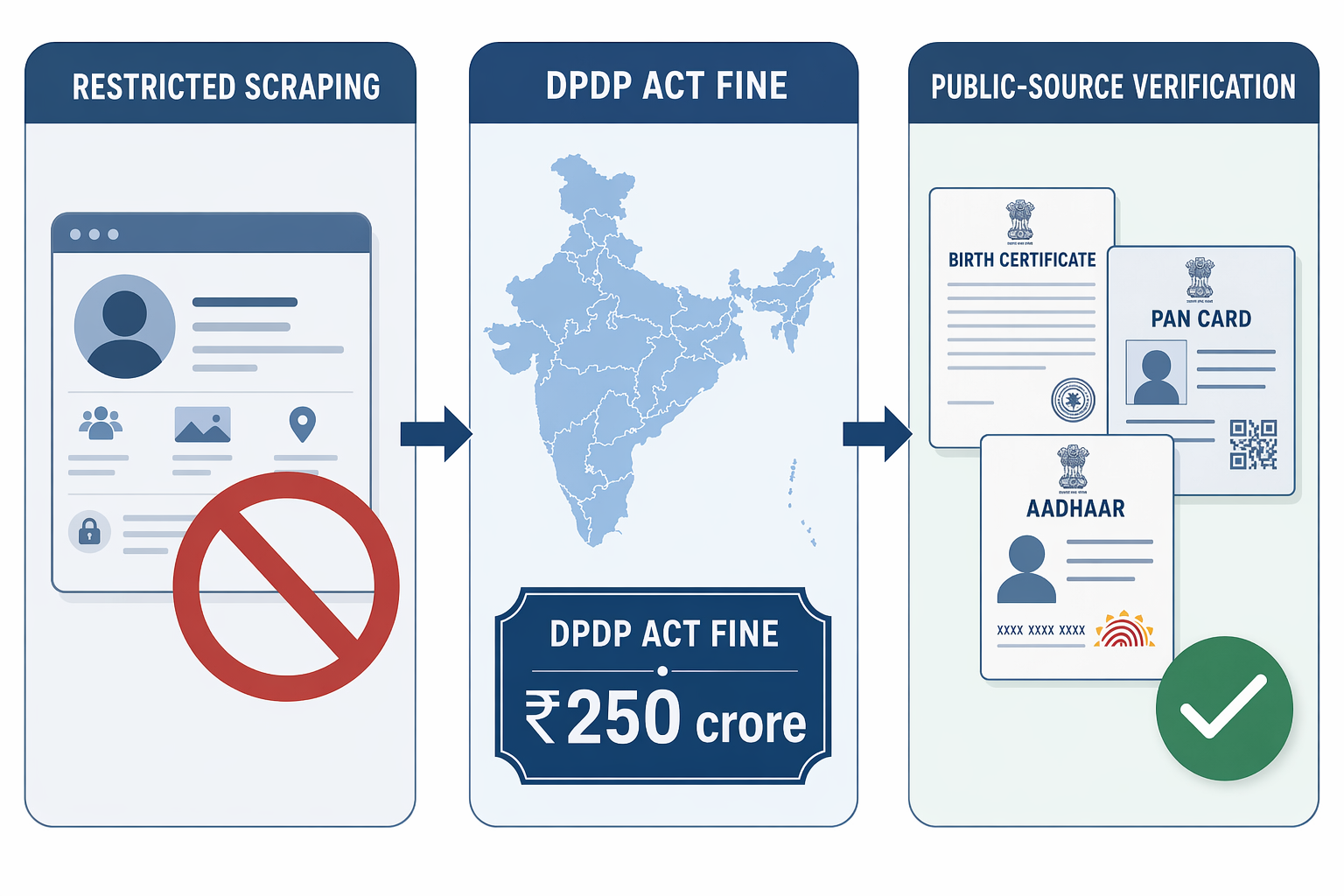
India's Goods and Services Tax Network and Ministry of Corporate Affairs databases offer public firmographic records, company registration status, director names, registered addresses, that enrichment tools can cross-reference to validate contact authenticity. Platforms integrating GST and MCA lookups add a compliance layer absent in tools relying solely on web scraping or third-party aggregators. This verification step matters under the Digital Personal Data Protection Act, which took effect in November 2025 with fines up to ₹250 crore for breaches [4], pushing Indian buyers toward enrichment architectures grounded in public-source data rather than opaque aggregation.
Pay-Per-Use vs. Subscription: Economic Models for Indian SMBs
Subscription models from ZoomInfo ($15K+/year) [5] and Cognism ($15K-$25K/year) [5] lock buyers into annual contracts with fixed seat counts, creating waste when prospecting volumes fluctuate month-to-month. Indian startups and SMBs, often operating on lean budgets with variable sales cycles, face a structural mismatch: paying for unused credits during slow quarters while scrambling for extra capacity during high-activity periods. Pay-per-use models offer an alternative: buyers purchase credits for verified contacts as needed, avoiding subscription lock-in.
Break-Even Analysis for Variable Prospecting Volumes
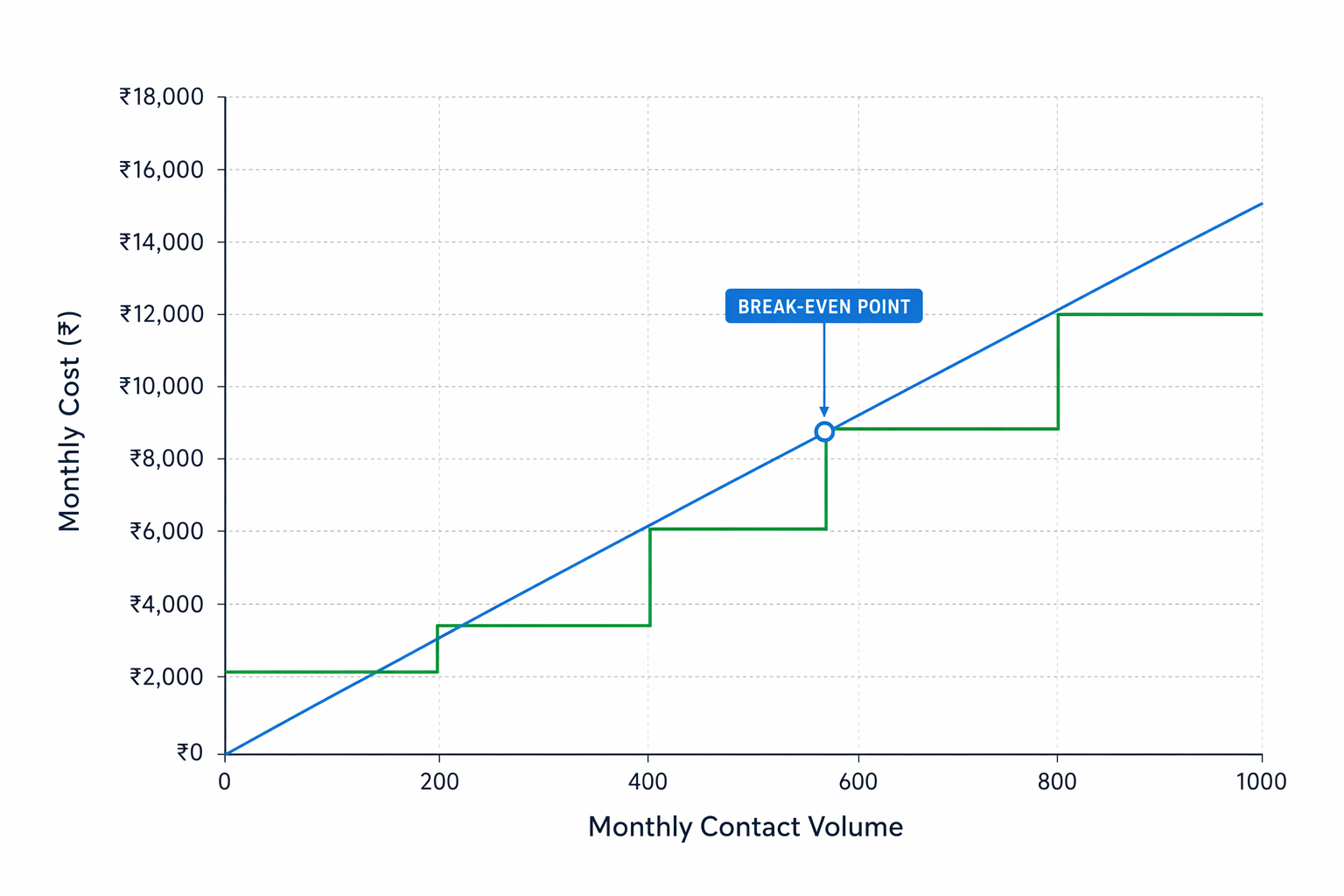
For illustration, a startup enriching 200 contacts monthly at ₹13.50 per contact (credit-based rate) spends ₹2,700/month versus ₹4,000+/month for a $49/user subscription priced in dollars, actual results vary by exchange rates and contract terms. Teams with consistent monthly volumes above 400-500 contacts may find subscription economics favorable, while variable-volume teams benefit from pay-per-verified-contact models that scale with usage. The key decision variable is prospecting consistency: annual contracts favor predictable pipelines, while credit-based pricing suits seasonal or campaign-driven outreach.
| Platform | Starting Price | Free Tier / Trial | India Coverage Claim | Pricing Model |
|---|---|---|---|---|
| PeakAi | ₹675 for 50 verified contacts | 5 free credits | India-focused coverage with GST/MCA integration, 1600+ cities | Pay-per-verified-contact (credit-based) |
| Apollo.io | $49/user/month | Free plan with 100+ contacts monthly | Indian business contacts with continuous verification | Subscription + free tier |
| Lusha | $29/user/month | 50 credits/month free | Not stated for India | Subscription + free tier |
| Cognism | $15K+/year | Trial available | UK, Germany, France, Nordics focus | Annual contract |
| ZoomInfo | $15K+/year | No free tier | 300M+ global contacts | Annual contract |
| Clay | $149/month | 100 credits/month free | 75+ sources, ~2.85% India coverage | Subscription + free tier |
Data sourced from manufacturer websites, review aggregators, and industry reports as of June 2026.
Real-Time Verification Workflow: Pre-Download vs. Post-Export
Verification timing determines whether buyers pay for invalid contacts or see quality signals before committing credits. Post-export models, where contacts are downloaded first and verified afterward, shift risk to the buyer: a 30% bounce rate means paying for 300 unusable records per 1,000 exports. Pre-download verification workflows show email deliverability status, phone number validity, and data freshness indicators before the buyer consumes credits, reducing wasted spend on stale records. According to testing across 22 enrichment tools, accuracy ranged from 71% to 97%, meaning pre-verification transparency is the primary defense against low-quality data spend.

Bounce Rate Impact on Prospecting Economics
LinkedIn outreach campaigns averaging 30% bounce rates indicate poor contact quality upstream [6], translating to wasted SDR hours and sender reputation damage. For illustration, a team sending 1,000 cold emails with 30% bounces at ₹15 per contact spends ₹4,500 on invalid records monthly, actual results vary by provider and verification rigor. Pre-download verification platforms display confidence scores or verification badges before export, letting buyers filter low-confidence records and preserve credit budgets for high-quality contacts. This workflow shift from post-export refunds to pre-download confidence signaling represents a structural improvement in enrichment economics, particularly for cost-sensitive Indian SMBs.
Compliance Architecture: LinkedIn Terms and DPDP Alignment
LinkedIn's Terms of Service prohibit automated scraping, yet many enrichment tools rely on browser extensions that parse profile data in real-time while users navigate the platform. This architectural choice creates account restriction risk: LinkedIn detects unusual activity patterns and may ban accounts associated with scraping behaviors. Enrichment-based compliance architectures avoid this risk by sourcing data from public registries, opt-in directories, and licensable B2B databases rather than live LinkedIn scraping. India's Digital Personal Data Protection Act, finalized in November 2025 with full compliance required by mid-May 2027 [7], adds regulatory pressure: contact data processing must align with consent frameworks and public-source verification, making LinkedIn-scraping tools legally precarious for Indian buyers.
Public-Source Verification Under DPDP Act Requirements
The DPDP Act mandates that organizations processing personal data of individuals in India establish lawful bases for collection and processing, with fines reaching ₹250 crore per breach [4]. Enrichment tools sourcing contacts from public directories, GST registries, MCA filings, industry association rosters, satisfy public-source exemptions more cleanly than platforms aggregating data from opaque third-party providers or LinkedIn scrapes. Buyers evaluating compliance risk should prioritize tools with transparent sourcing methodologies and opt-out mechanisms aligned with DPDP notice requirements, particularly when processing data for Indian prospects under Indian regulatory jurisdiction.
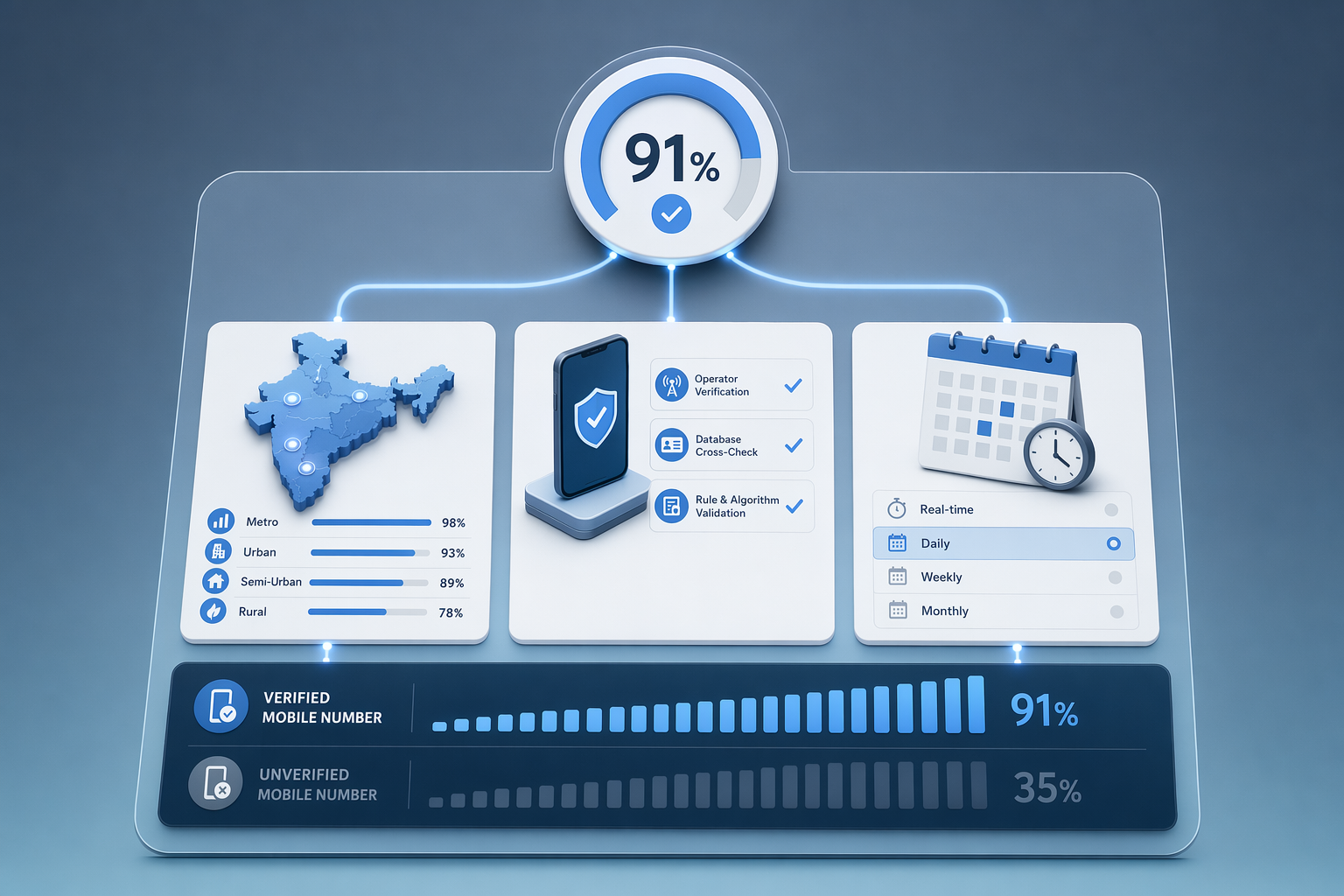
Regional Accuracy Transparency: What 91% Phone Accuracy Actually Means
Accuracy claims without methodology disclosure offer little buying confidence: a platform advertising 91% phone accuracy for India-verified mobile numbers means nothing unless the vendor explains how accuracy was measured, which contact segments were tested, and how frequently data is refreshed. According to testing of 15 LinkedIn enrichment platforms, most were either inaccurate or expensive, highlighting that headline percentages mask critical variance in verification rigor. Phone-verified mobile numbers produce an 87% connect rate versus 30% for unverified industry averages [1], proving that methodology matters more than marketing claims. Buyers should ask: does the accuracy rate apply to Indian mobile numbers specifically or global averages? Was accuracy measured via human verification, third-party validation, or algorithmic estimation? How often is the dataset refreshed to account for 2-3% monthly decay?
Validation Workflow Before Committing to Annual Contracts
Before signing $15K+ annual agreements, Indian B2B teams should run pilot tests on 100-200 India-based contacts to validate regional accuracy claims. Export a sample batch, cross-reference phone numbers against known valid contacts or public registries, measure email deliverability via test campaigns, and calculate the true match rate for India-specific prospects. Tools offering free trials or pay-per-use pilots enable this validation without upfront commitment. PeakAi offers a free trial with 5 free credits, allowing teams to test India mobile accuracy before scaling. Apollo provides a free plan with 100+ contacts monthly, while Lusha offers 50 credits/month free [5], both enabling low-risk validation. Platforms refusing pre-purchase testing or hiding verification methodology documentation should raise red flags, particularly for buyers prioritizing India-market accuracy over global averages.
| Platform | Stated Accuracy Metric | Methodology Transparency | Free Testing Option |
|---|---|---|---|
| PeakAi | 91% phone accuracy for India-verified mobile numbers | GST/MCA integration and India-specific verification disclosed | 5 free credits |
| Apollo.io | Continuous verification for Indian contacts | Real-time verification mentioned; specific methodology not detailed | 100+ contacts monthly free |
| Lusha | Verified emails and 280M+ direct dials | Verification process mentioned; regional breakdown not disclosed | 50 credits/month free |
| Cognism | 87% phone accuracy (phone-verified mobile numbers) | Human team phone verification disclosed | Trial available |
| ZoomInfo | 100M+ verified contacts globally | Verification process proprietary; regional accuracy not disclosed | No free tier |
| Clay | 80% email enrichment accuracy; 75+ sources aggregated | Waterfall lookup methodology; source-level accuracy varies | 100 credits/month free |
Data sourced from platform documentation, external reviews, and industry testing as of June 2026.
Conclusion
Indian B2B teams evaluating contact enrichment tools face trade-offs across five dimensions: India-specific data coverage depth, pay-per-use versus subscription economics, pre-download versus post-export verification timing, LinkedIn Terms and DPDP Act compliance architecture, and regional accuracy transparency with disclosed methodology. Apollo.io and PeakAi position themselves with explicit India coverage claims, while Cognism and ZoomInfo serve enterprise buyers with $15K+ budgets and global datasets. Clay offers flexible waterfall enrichment across 75+ sources but India coverage remains around 3%, and Lusha provides mid-market subscription pricing with verification processes that lack regional disclosure. As the enrichment market grows 10% annually through 2030, Indian buyers should prioritize pilot testing on India-based contacts, validate accuracy claims against public registries, and align pricing models with prospecting volume patterns before committing to annual contracts. Start with free-tier trials from Apollo, Lusha, Clay, or PeakAi to benchmark India mobile accuracy, then scale to paid tiers only after validating regional data quality meets your outreach requirements.
Frequently Asked Questions
What are the best affordable contact enrichment tools for the Indian B2B market?
Apollo.io, Lusha, Cognism, Clay, ZoomInfo, and PeakAi serve Indian B2B teams with pricing from $29/user/month to $15K+/year. Apollo and PeakAi explicitly market India contact coverage, while Cognism focuses on Europe and Clay aggregates 75+ sources with low India coverage. Affordability depends on prospecting volume: pay-per-use models suit variable-volume teams, while annual subscriptions favor consistent pipelines above 400-500 monthly contacts.
How can I verify contact data accuracy before committing to annual contracts?
Run pilot tests on 100-200 India-based contacts using free trials from Apollo (100+ contacts monthly), Lusha (50 credits/month) [5], or PeakAi (5 free credits). Export a sample batch, cross-reference phone numbers against known valid contacts, measure email deliverability via test campaigns, and calculate true match rate for India-specific prospects.
Is there a platform that enriches LinkedIn profiles in real-time without account ban risk?
Enrichment architectures that source data from public registries, opt-in directories, and licensable B2B databases avoid LinkedIn Terms of Service violations, unlike browser extensions that parse live profile data and risk account restrictions. According to platform testing, tools using private networks instead of user LinkedIn accounts provide enterprise-grade data extraction with consumer-friendly pricing. Buyers should prioritize compliance architectures aligned with DPDP Act requirements for Indian contact processing.
Why do my LinkedIn prospecting efforts show 30% bounce rates?
Bounce rates around 30% indicate poor upstream contact quality from enrichment providers [6], translating to wasted SDR hours and sender reputation damage. Phone data decays at 2-3% monthly as contacts change roles [1], making real-time verification key.
What does 91% phone accuracy mean for India-verified mobile numbers?
Accuracy claims require methodology disclosure: how was accuracy measured, which contact segments were tested, and how frequently is data refreshed? Phone-verified mobile numbers produce an 87% connect rate versus 30% for unverified industry averages [1], proving methodology matters more than headline percentages.
Do pay-per-use models cost less than annual subscriptions for Indian SMBs?
Pay-per-use economics favor variable-volume teams: enriching 200 contacts monthly at ₹13.50 per contact costs ₹2,700/month versus ₹4,000+/month for $49/user subscriptions priced in dollars. Teams with consistent monthly volumes above 400-500 contacts may find subscription economics favorable, while seasonal or campaign-driven outreach benefits from credit-based pricing that scales with usage. The key decision variable is prospecting consistency throughout the year.
How does GST and MCA integration improve contact enrichment accuracy for India?
India's Goods and Services Tax Network and Ministry of Corporate Affairs databases offer public firmographic records, company registration status, director names, registered addresses, that enrichment tools cross-reference to validate contact authenticity. Platforms integrating GST and MCA lookups add compliance layers absent in tools relying solely on web scraping. This verification step matters under the Digital Personal Data Protection Act, with fines up to ₹250 crore for breaches [4].
Sources
- Data Enrichment Tools: 10 Tested With Pricing - Autobound.ai - autobound.ai
- Data Enrichment Solutions Market Size & Share Report 2030 - grandviewresearch.com
- Best B2B Prospecting Tools in 2026: ZoomInfo vs Apollo vs Cognism vs Clay – Surferstack - surferstack.com
- Digital Personal Data Protection Act India: Compliance Guide 2026 - atlassystems.com
- B2B Prospecting Tools Compared: Clay vs ZoomInfo vs Cognism in 2026 – Surferstack - surferstack.com
- Why Your LinkedIn Outreach Gets Ignored (30% Bounce Rate Explained + Fix) - nexaleadgen.com
- India's New Data Privacy Rules Are Here: 8 Steps for Businesses - jdsupra.com (2026)
