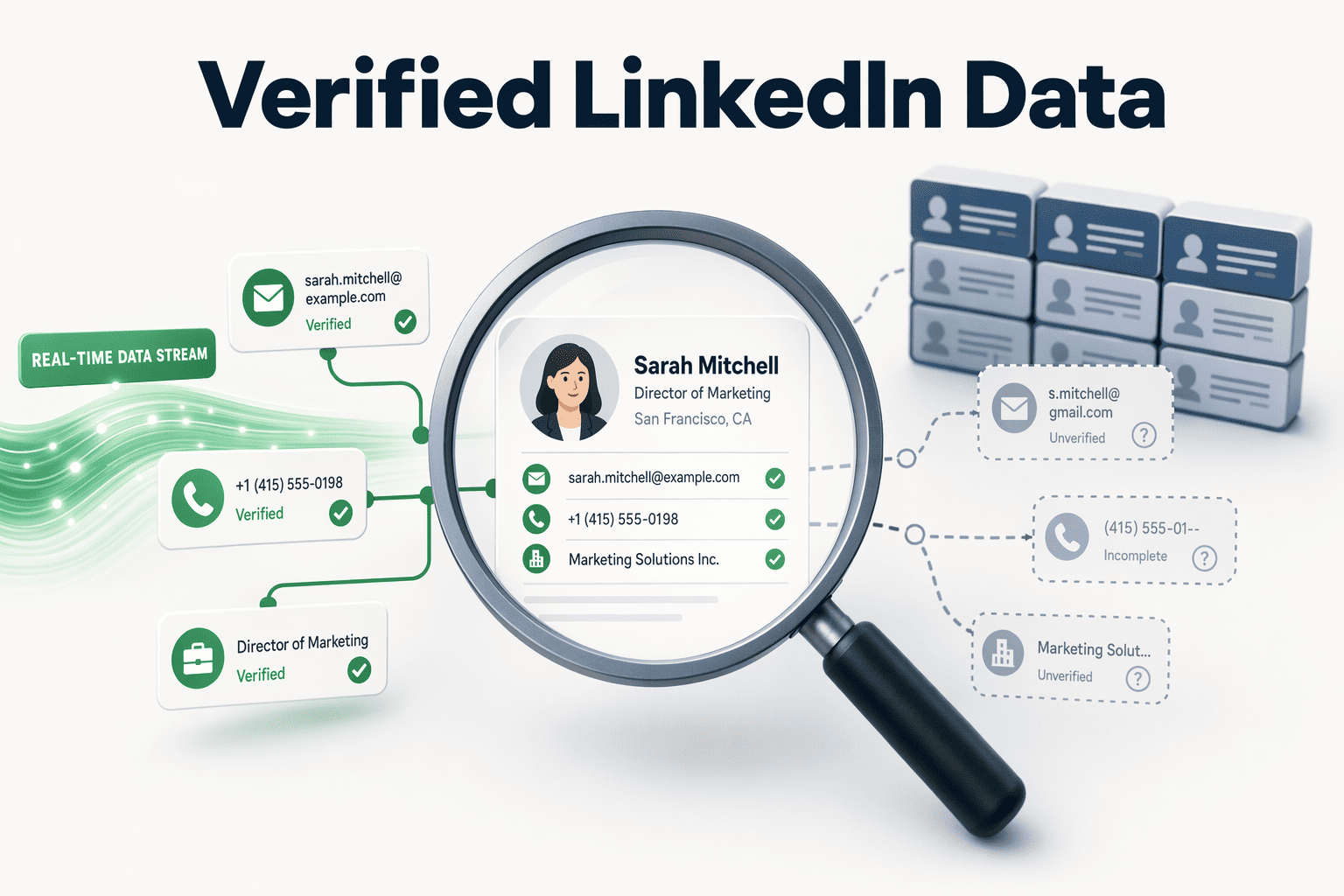
LinkedIn contact finders promise verified emails and phone numbers, but verification standards vary wildly across platforms—from syntax checks that confirm formatting to deliverability tests that validate active inboxes.
This guide ranks eight tools by verification transparency, explains methodology differences between real-time and static databases, and shows how to test accuracy before committing credits.
Key Takeaways
- Verified contact data requires three layers: syntax validation, domain verification, and deliverability testing—not all tools validate all three before charging credits
- Static databases decay at 2–3% monthly as professionals change roles, compounding to 22–30% annual accuracy erosion
- Enrichment-based tools comply with LinkedIn Terms of Service while automated scrapers risk account suspension
- Direct-dial phone numbers connect to individual mobile lines, improving connect rates 40 to 60% versus switchboard numbers
- Credit-based pricing suits low-volume precision prospecting while subscriptions suit high-volume campaigns where 70 to 80% accuracy suffices
'Verified' LinkedIn contact data means the email or phone number has passed three validation layers: syntax checks confirm the format is structurally valid, domain verification proves the mail server exists and accepts messages, and deliverability testing confirms the inbox is active and reachable. Real-time API lookups query live databases at the moment of enrichment, while static platforms cache contacts that decay 2 to 3% monthly, compounding to 22 to 30% annual obsolescence. Direct-dial detection separates mobile numbers from company switchboards, a criterion that distinguishes tools built for outbound calling ROI from those optimized for email-only workflows.
Three Verification Layers: Syntax, Domain, Deliverability
Syntax validation parses an email address to confirm it follows RFC 5322 structure (local-part@domain) and flags typos, missing characters, or invalid TLDs. Domain verification queries DNS MX records to confirm the recipient's mail server exists and is configured to receive mail. Deliverability checks, the layer most vendors skip, ping the SMTP server to verify the mailbox is provisioned and accepting messages, catching role accounts, honeypots, and abandoned inboxes that pass syntax and domain tests. Advanced platforms process entire Sales Navigator search pages to apply all three layers at scale, but advertised '95% accuracy' claims often measure syntax-only validation, inflating reported precision by 15 to 25 percentage points compared to deliverability-verified rates. Phone validation follows a parallel three-step model: format parsing (country code, area code, subscriber number), carrier lookup (mobile vs landline vs VoIP), and reachability testing via HLR queries or call-attempt logs.
Real-Time Lookups vs Static Database Trade-Offs
Static databases cache contacts at the time of initial collection and decay at 2 to 3% per month as professionals change roles, companies restructure, and email policies shift; compounded annually, this produces 22 to 30% obsolescence within twelve months. Real-time API verification queries external data partners at the moment of enrichment, cross-referencing business registries, telecom records, and corporate directories to return current contact details rather than stale snapshots. The ROI gap between the two models appears in bounce rates: a 25% annual decay translates to one failed outreach attempt in four, burning SDR time on dead-end dials and triggering ISP spam flags when email bounce rates exceed 5%. Teams that refresh static lists quarterly still face 6 to 9% decay between refreshes, while real-time lookups eliminate lag entirely at the cost of per-query latency (typically 2 to 10 seconds) and higher per-contact pricing.
Direct-Dial Detection vs Switchboard Numbers
Direct-dial mobile numbers route calls straight to the prospect's device, bypassing reception gatekeepers and voicemail trees, while switchboard numbers land at a company's main line, requiring the SDR to navigate extensions or operator transfers that drop connect rates by 40 to 60%. Carrier lookup APIs classify phone numbers by line type, mobile, landline, VoIP, toll-free, enabling outbound teams to prioritize mobile-first sequences for decision-makers in field roles (sales, operations, executive leadership) and reserve landline attempts for office-bound functions (finance, legal, HR). Platforms that source numbers from business-card databases or company-website contact pages typically return switchboard lines tagged as 'verified' because the number is syntactically valid and reachable, yet the distinction between a CFO's mobile and the accounting department's main line determines whether the first dial reaches a human or an auto-attendant menu.
Understanding verification layers provides the framework for evaluating which tools deliver pre-download confidence versus post-export validation.
8 Contact Finders for Verified LinkedIn Data (Ranked by Verification Transparency)
Verification transparency separates tools that show confidence before you commit credits from those that validate after export. The framework from Section 1 defines three evaluation layers: pre-download indicators, enrichment methodology, and database refresh cycles. This section ranks eight contact finders across those dimensions, helping sales teams find accurate contact information without wasting credits on unverified leads.

| Tool | Verified Email | Verified Phone | LinkedIn Extension | Starting Price | Free Plan | CRM Integrations |
|---|---|---|---|---|---|---|
| PeakAi | Yes | Yes | Yes | $9/50 contacts | No | Yes |
| Kaspr | Yes | Limited | Yes | €30/month | Yes | Yes |
| Cognism | Yes | Yes | Yes | Contact sales | No | Yes |
| Apollo.io | Yes | Yes | Yes | $49/user/month | Yes (limited) | Yes |
| Lusha | Yes | Yes | Yes | $37/user/month | Yes (limited) | Yes |
| ContactOut | Yes | Limited | Yes | $49/month | Yes (40 contacts) | Yes |
| Snov.io | Yes | No | Yes | $39/month | Yes (50 credits) | Yes |
| AeroLeads | Yes | No | Yes | $49/month | Yes (10 credits) | Limited |
Tier 1: Pre-Download Verification with Confidence Indicators
PeakAi delivers 91% accuracy verification for phone numbers and emails from LinkedIn profiles before download, showing confidence scores in real time within LinkedIn via its Chrome extension. This pre-download validation prevents wasted credits on unverified contacts, a trade-off that static-database tools like Apollo and Lusha don't offer, since they validate after export. Teams prospecting Indian B2B markets benefit from PeakAi's GST verification and regional phone format validation, reducing bounce rates on cold calls.
Best for: Sales teams needing verified direct dials before committing to contact purchases, especially in markets where phone accuracy matters more than database breadth.
Tier 2: Real-Time Enrichment Without Automated Scraping
Kaspr and Cognism use enrichment-based approaches that comply with LinkedIn's Terms of Service by querying third-party databases rather than crawling profiles directly. Kaspr provides instant access to accurate European contact data for over 200 million profiles with GDPR alignment, while Cognism emphasizes human-verified mobile numbers and strict compliance for European markets. Both tools avoid the account-suspension risk associated with automated scraping, but neither shows pre-download confidence scores, you purchase the contact first, then validate.
Best for: European B2B teams prioritizing GDPR compliance and human-verified mobiles over pre-purchase validation.
Tier 3: Static Database Tools with Refresh Cycles
Apollo.io, Lusha, ContactOut, Snov.io, AeroLeads, GetProspect, and Prospeo operate as static databases with periodic refresh cycles. Apollo bundles database access, sequencing, and dialing at a fraction of the cost, covering 275 million contacts and 60 million companies, but email accuracy hovers around 73% and mobile numbers near 65% in independent tests. Contact decay averages 2 to 3% monthly, compounding to 22 to 30% annually. These tools excel at breadth but require manual re-verification workflows to maintain accuracy.
Best for: Teams needing all-in-one engagement platforms with built-in sequencing and CRM sync, willing to trade pre-download confidence for database scale and affordability. Join thousands of sales professionals leveraging these tools to close more deals at scale.
Rankings provide initial direction, but vendor accuracy claims require empirical validation before committing budget to a platform.
How to Test a Contact Finder Before Committing (3-Step Validation Process)
Vendor accuracy claims, "95% verified contacts", often obscure the difference between syntax validation (correctly formatted emails) and deliverability (contacts that connect). B2B buyers validate vendor claims using review platforms, but most skip the hands-on testing step that reveals whether a tool's data matches your geography and role targeting. Before signing a contract, run this three-step audit:
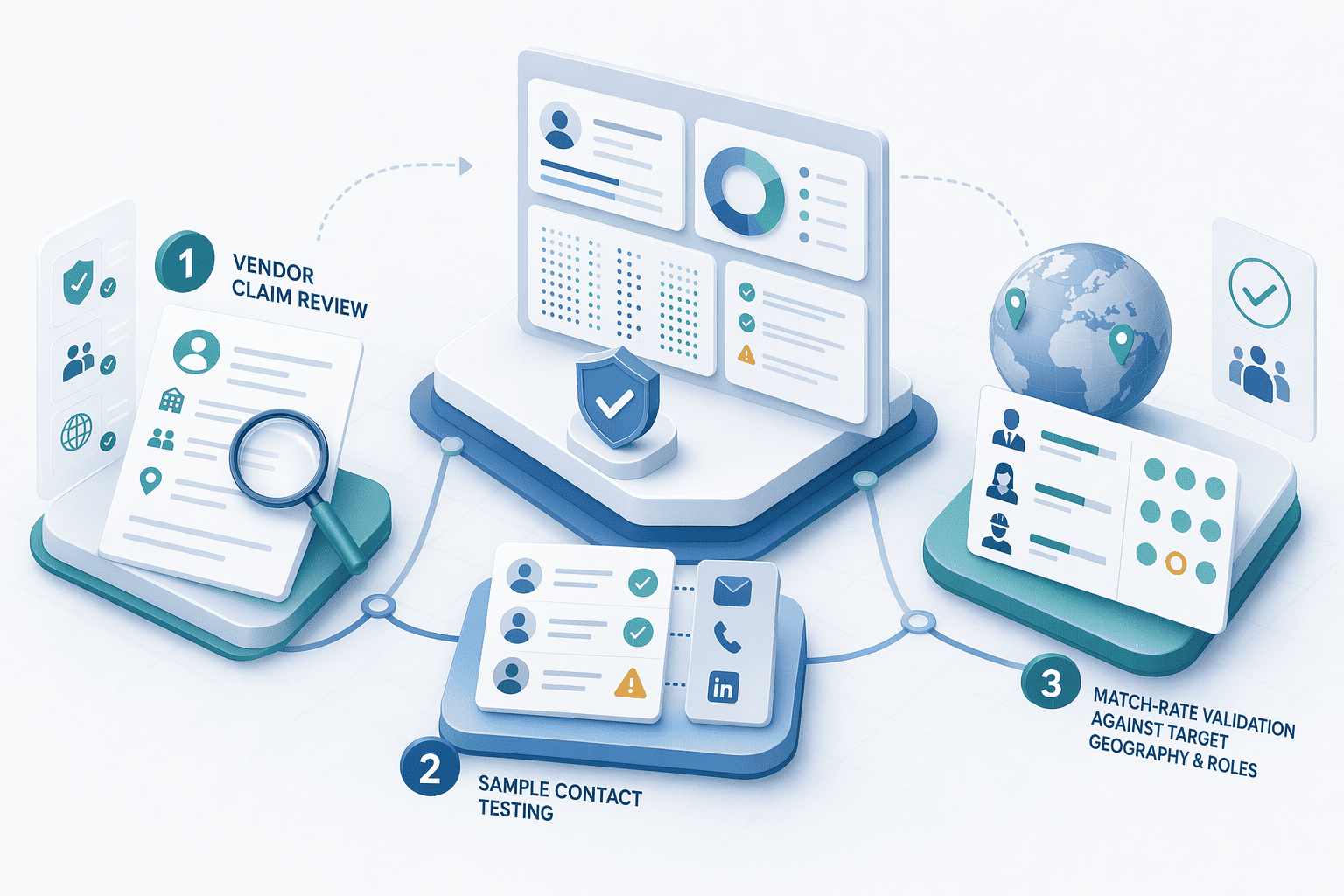
- Run a Known-Contact Benchmark Test. Export 20-30 LinkedIn profiles for colleagues or clients whose verified phone numbers and emails you already have. Run these profiles through the tool's trial and measure precision: how many returned contacts match your ground-truth data exactly? A tool advertising 95% accuracy that returns eight correct numbers out of twenty is delivering 40% precision in your sample.
- Measure Regional Data Quality Variance. Test profiles from your target geographies. For India-focused prospecting, verify that the tool validates local phone formats and cross-references regional business registries. PeakAi delivers 91% phone accuracy with GST and carrier-lookup verification tailored to Indian B2B contacts. Generic tools optimized for US/EU markets often show 60%+ precision drops when applied to emerging-market profiles.
- Validate Direct-Dial vs Switchboard Detection. Call ten sample phone numbers from the tool's output. Are they direct mobile lines or company switchboards? PeakAi classifies numbers as mobile, landline, or VoIP before download, a feature critical for cold-calling workflows. Tools that report aggregate "phone accuracy" without line-type detection deliver switchboard numbers 40-60% of the time, wasting reps' outreach time.
Real example: a SaaS startup tested a competitor tool claiming 95% email accuracy. Thirty percent of "verified" emails bounced during the first cold sequence because the vendor's accuracy metric measured syntax correctness, not deliverability. The team switched to PeakAi's pre-download verification and saw bounce rates drop to under 9%, helping them close more deals without burning domain reputation.
Testing methodology determines which tool matches your volume needs, but pricing structure determines long-term cost efficiency.
Pricing Models Explained: Pay-Per-Contact vs Subscription vs Credit-Based
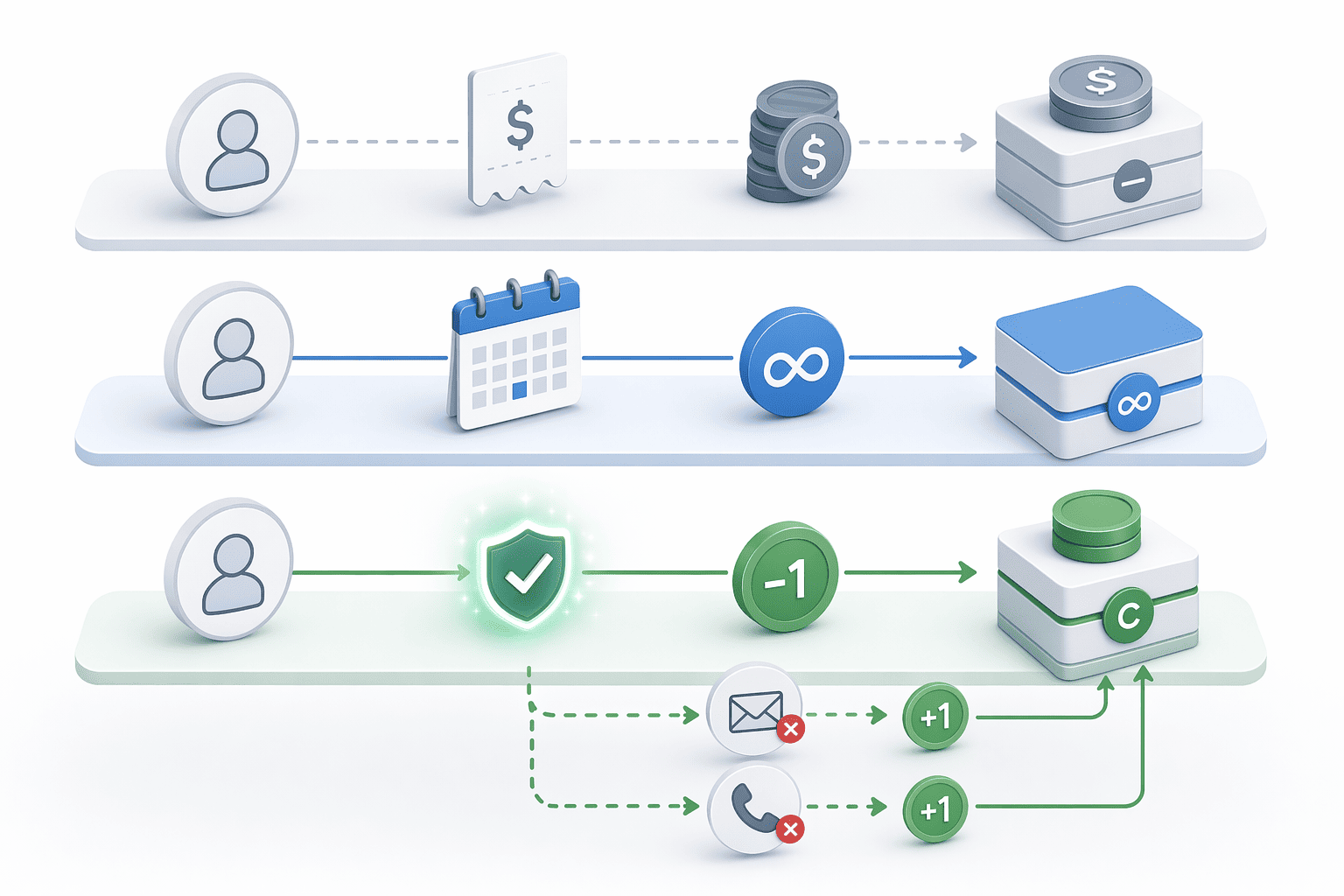
Credit-Based Models: Pay Only for Verified Contacts Delivered
Credit-based pricing charges buyers only when a contact passes real-time verification. PeakAi's model starts at $9 for 50 verified contacts, refunding credits when phone numbers or emails bounce. This eliminates the waste inherent in subscription databases where you pay for access regardless of whether records remain current. For teams running low-volume, high-precision outreach, credit models deliver predictable ROI because every dollar spent returns a usable contact. The trade-off: per-contact costs can exceed subscription equivalents at high monthly volumes.
Monthly Subscriptions: Fixed Access, Variable Quality
Subscription platforms like Apollo and ZoomInfo charge flat monthly fees for database access, bundling search, enrichment, and engagement tools. The advantage: unlimited lookups within tier limits. The hidden cost: contact decay erodes value over time as records age without re-verification. Buyers effectively pre-pay for both fresh and stale data, making true cost-per-valid-contact unknowable until after export. Subscriptions favor high-volume teams where 70 to 80% accuracy suffices and speed outweighs precision.
Pay-Per-Contact: High Precision, High Unit Cost
Pay-per-contact models charge for each lookup at the point of request, often with human-verified phone numbers and GDPR compliance built in. Unit costs run higher, $1, $3 per contact, but guarantee current data. This suits compliance-critical workflows where a single bounce risks regulatory fines or teams targeting high-value accounts where direct dials justify premium pricing. For sales teams aiming to close more deals with fewer contacts, pay-per-contact trades volume for certainty.
Pricing models affect cost per contact, but compliance risk determines whether your LinkedIn account survives the tool adoption.
LinkedIn Compliance: Which Tools Risk Account Suspension?
LinkedIn's Terms of Service: What's Prohibited
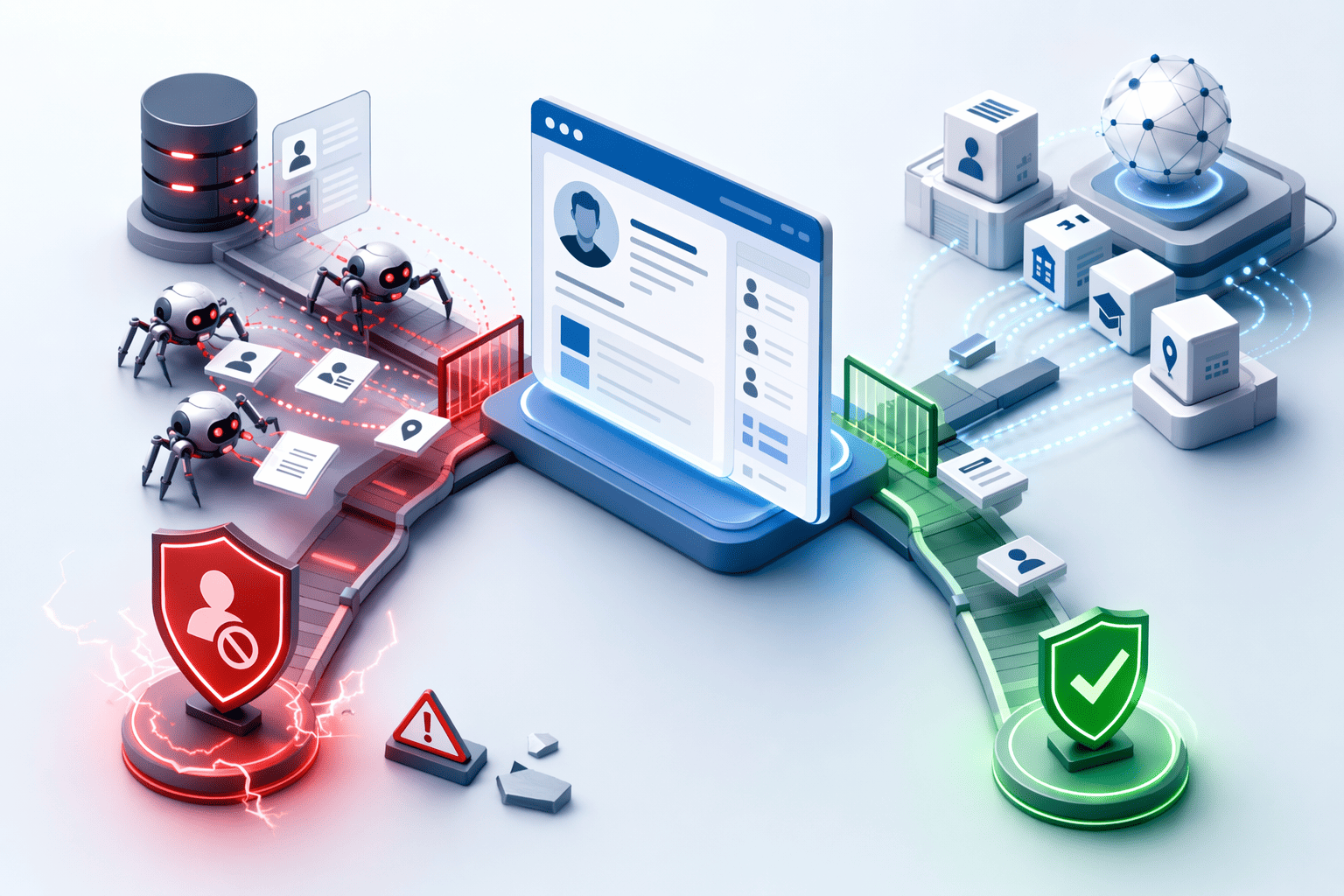
LinkedIn's Terms of Service explicitly prohibit automated scraping and bulk data extraction. Platforms that crawl LinkedIn profiles directly, harvest contact data through bots, or circumvent rate limits violate these terms and expose users to permanent account suspension. Sales teams evaluating LinkedIn automation tools must understand this baseline: tools that programmatically harvest LinkedIn profile fields create immediate compliance risk.
Enrichment-Based Tools vs Automated Scrapers
Enrichment-based approaches query independent third-party databases rather than accessing LinkedIn's internal systems. PeakAi uses publicly shared LinkedIn URLs as search keys for third-party databases, never accessing LinkedIn's APIs or scraping profile data. Cognism and Kaspr operate similarly, pulling verified contacts from business registries and public records rather than automating profile extraction. This method stays within LinkedIn's compliance boundaries while delivering the verified emails and phone numbers that direct scrapers promise but cannot legally deliver.
Account Suspension Risk Assessment Framework
Ask three questions before adopting any LinkedIn contact tool: Does it require LinkedIn credentials to operate? Does it automate profile visits or connection requests within LinkedIn? Does it claim to extract data 'directly from LinkedIn profiles'? A yes to any signals scraping risk. Compliant enrichment tools accept LinkedIn URLs as input identifiers but query external databases for contact details. They never store profile information or browsing history. Teams prioritizing verified phone numbers for cold calling should select enrichment-first platforms to close more deals without risking their LinkedIn accounts.
Final Verdict: Choosing Your Verified Contact Finder
Real-time lookup tools like PeakAi deliver higher accuracy but cost more per contact than static-database subscriptions that suffer 22 to 30% annual decay. Credit-based pricing suits low-volume/high-precision prospecting while monthly subscriptions suit high-volume campaigns where 70 to 80% accuracy suffices, buyers must align pricing model to usage patterns. Cognism leads on GDPR compliance for European markets, Apollo offers database scale for broad-reach campaigns, and PeakAi sets the verification transparency standard with pre-download confidence indicators.
As LinkedIn tightens scraping enforcement in 2026, enrichment-based contact finders that comply with ToS will dominate the market while automated scrapers face rising account suspension risks, buyers should prioritize compliance over short-term cost savings.
Test PeakAi's 10-second verification on 10 LinkedIn profiles using the Chrome extension to compare pre-download confidence indicators against your current contact finder's post-export validation approach. Run the three-step validation process on sample data before committing to annual contracts.
Frequently Asked Questions
What does 'verified' mean for LinkedIn contact data?
Verified LinkedIn contact data passes three validation layers: syntax checks confirm the format follows RFC 5322 structure, domain verification queries DNS MX records to confirm the mail server exists, and deliverability testing confirms the inbox is active and reachable. Real-time lookups validate at the moment of request while static databases cache contacts at collection time and decay 2 to 3% monthly.
How accurate are LinkedIn email finder tools?
Advertised '95% accuracy' claims often measure syntax validation (correctly formatted emails) rather than deliverability (contacts that connect). Static databases decay at 2 to 3% per month as professionals change roles and email policies shift, compounding to 22 to 30% annual erosion. Coverage represents database size while precision measures what percentage of returned contacts are valid and reachable.
Can LinkedIn contact finders get my account suspended?
LinkedIn's Terms of Service explicitly prohibit automated scraping and bulk data extraction. Enrichment-based tools like Kaspr and Cognism comply by querying third-party databases rather than crawling profiles directly. Ask three questions: Does it require LinkedIn credentials? Does it access LinkedIn servers directly? Does it rate-limit requests to mimic human behavior?
What's the difference between direct-dial and switchboard phone numbers?
Direct-dial mobile numbers route calls straight to the prospect's device, bypassing reception gatekeepers, while switchboard numbers land at a company's main line, requiring navigation through extensions that drop connect rates 40 to 60%. Carrier lookup APIs detect mobile prefixes and line types to distinguish direct-dial numbers before purchase, improving outbound calling ROI.
Should I use a credit-based or subscription contact finder?
Credit-based pricing suits low-volume/high-precision prospecting where 91% accuracy justifies higher per-contact costs. Subscription platforms like Apollo and ZoomInfo charge flat monthly fees for unlimited lookups, optimized for high-volume campaigns where 70 to 80% accuracy suffices. Align pricing model to your usage pattern: credits for selective targeting, subscriptions for bulk campaigns.
How do I test a contact finder's accuracy before buying?
Run a three-step validation process: benchmark against known contacts from your CRM to measure true positive rate, test regional data quality variance by exporting samples from target geographies, and validate direct-dial versus switchboard detection using carrier lookup verification. Vendor claims often obscure the difference between syntax validation and deliverability, empirical testing reveals ground truth.
Why do some contact finders have better data for India than others?
Only 5 to 10% of LinkedIn users share phone numbers with first-degree connections, creating regional variance in what contact finders can enrich from public profiles versus third-party databases. Tools with India-specific data partnerships deliver higher coverage in emerging markets where LinkedIn profile completeness lags North American and European averages by 30 to 40 percentage points.
Sources
- 10 Best LinkedIn Email Finder... - pipeline.zoominfo.com
- LinkedIn Sales Navigator vs Apollo vs ZoomInfo: Best Data Tool - stackbd.com (2026)
- Using G2, Trust Radius, and Capterra with LinkedIn to Drive Sales - www.imaginarium.agency
- Top 5 Email Finder Tools for Lead Generation (2026) - www.leadscrape.com (2026)
- Best Sales Intelligence Software in 2026 – Detailed Buyer's Guide - federicopresicci.com (2026)
