
Indian B2B prospecting faces unique challenges: mobile number scarcity on LinkedIn, 2-3% monthly contact decay, and verification gaps that global databases cannot address. Contact intelligence platforms must deliver region-specific accuracy benchmarks, transparent rupee pricing, and rapid data refresh cycles to match India's fast-moving business structure churn.
Key Takeaways
- India-specific mobile accuracy benchmarks (91% vs. Undisclosed) separate regional platforms from global databases with generic claims
- Pay-per-verified-contact models offer rupee cost transparency, while credit-based platforms inflate actual cost by 35-100% through match rate inefficiency
- Seven-day refresh cycles maintain 98% accuracy against India's 2-3% monthly contact decay, compared to quarterly updates dropping to 75% within five months
- Mobile vs. Landline detection matters for direct-dial outreach, as Indian decision-makers use mobile numbers rather than office switchboards
- Platform choice depends on prospecting geography (India-only vs. Multi-region), budget tier (SMB under ₹50k/month vs. Enterprise ₹2L+/month), and CRM workflow lock-in tolerance
Why India B2B Prospecting Demands Region-Specific Contact Intelligence
Generic global contact databases fail in India because they cannot address mobile number scarcity on LinkedIn, 2-3% monthly contact decay unique to India's business structure churn, and the need for mobile-vs-landline detection that distinguishes decision-maker direct dials from office switchboards — verification gaps that demand India-native enrichment workflows.
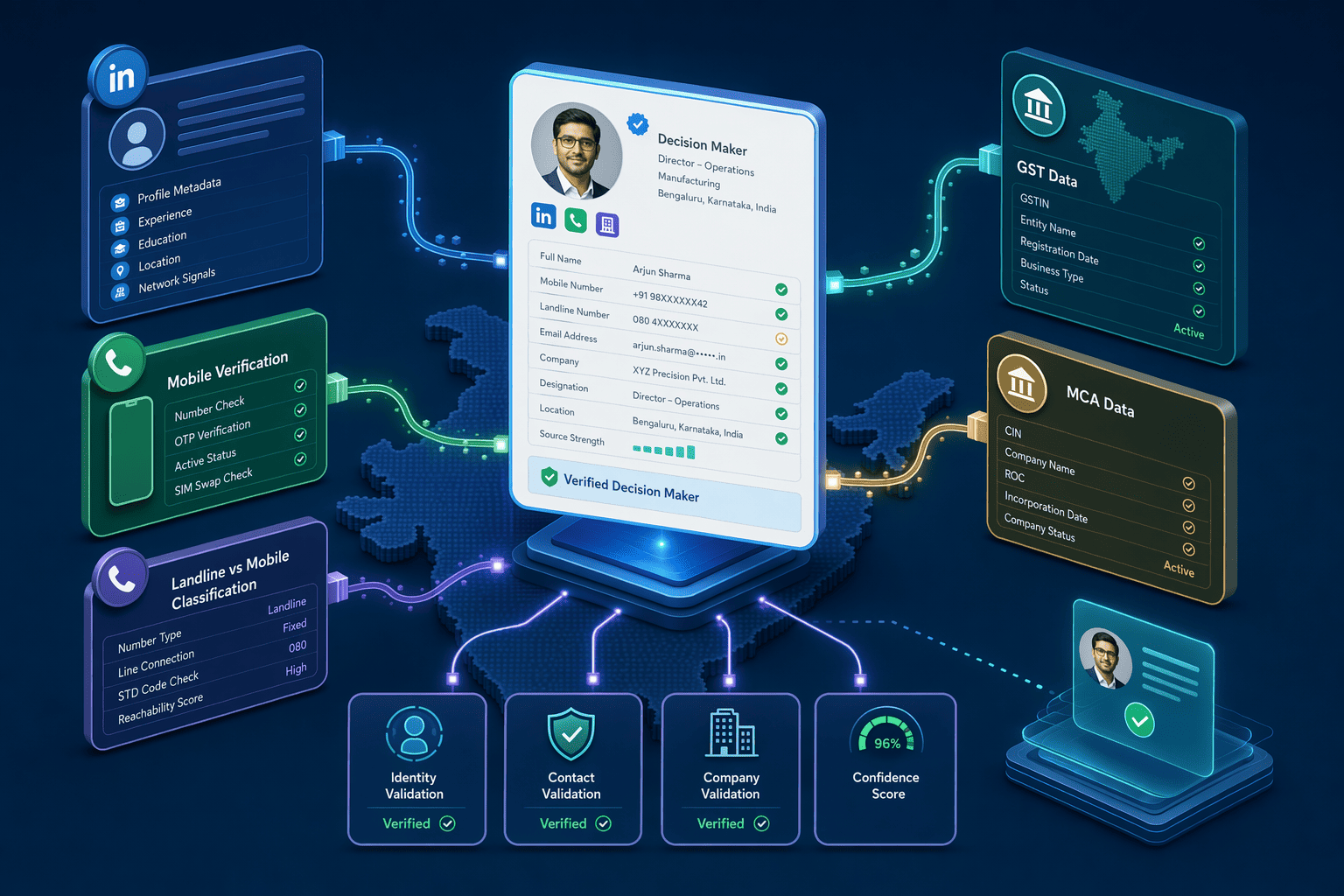
Mobile Number Scarcity and LinkedIn's Structural Barriers
Only 5-10% of LinkedIn users share phone numbers with first-degree connections, and two-factor authentication numbers remain hidden by platform policy — creating sourcing gaps that prevent enrichment tools from relying on LinkedIn as a complete mobile number source for India prospecting.
Contact Data Decay Rates in Indian Markets
India's B2B contacts decay at 2-3% monthly (22-30% annually), a churn rate driven by high job mobility and business restructuring. Quarterly or annual database updates cannot keep pace, leaving static global platforms with inevitable accuracy gaps in emerging markets.
Mobile vs. Landline Distinctions and Direct-Dial Detection
Indian decision-makers use mobile numbers rather than office lines, making line-type detection (mobile vs. Landline, direct-dial vs. Switchboard) critical for cold outreach. PeakAi addresses this through India-specific contact verification that validates GST numbers and cross-references Ministry of Corporate Affairs records, positioning itself as one India-first platform offering mobile-number-type detection for regional B2B prospecting.
Understanding why India B2B prospecting demands specialized solutions sets the foundation for evaluating platforms against region-specific criteria.
How We Evaluated Contact Intelligence Platforms for Indian Markets
Selecting a contact intelligence platform for Indian B2B prospecting requires a decision framework that accounts for regional data dynamics, verification transparency, and rupee-denominated cost economics. We evaluated eight platforms across three primary dimensions: verification methodology, data refresh cycles, and pricing models.
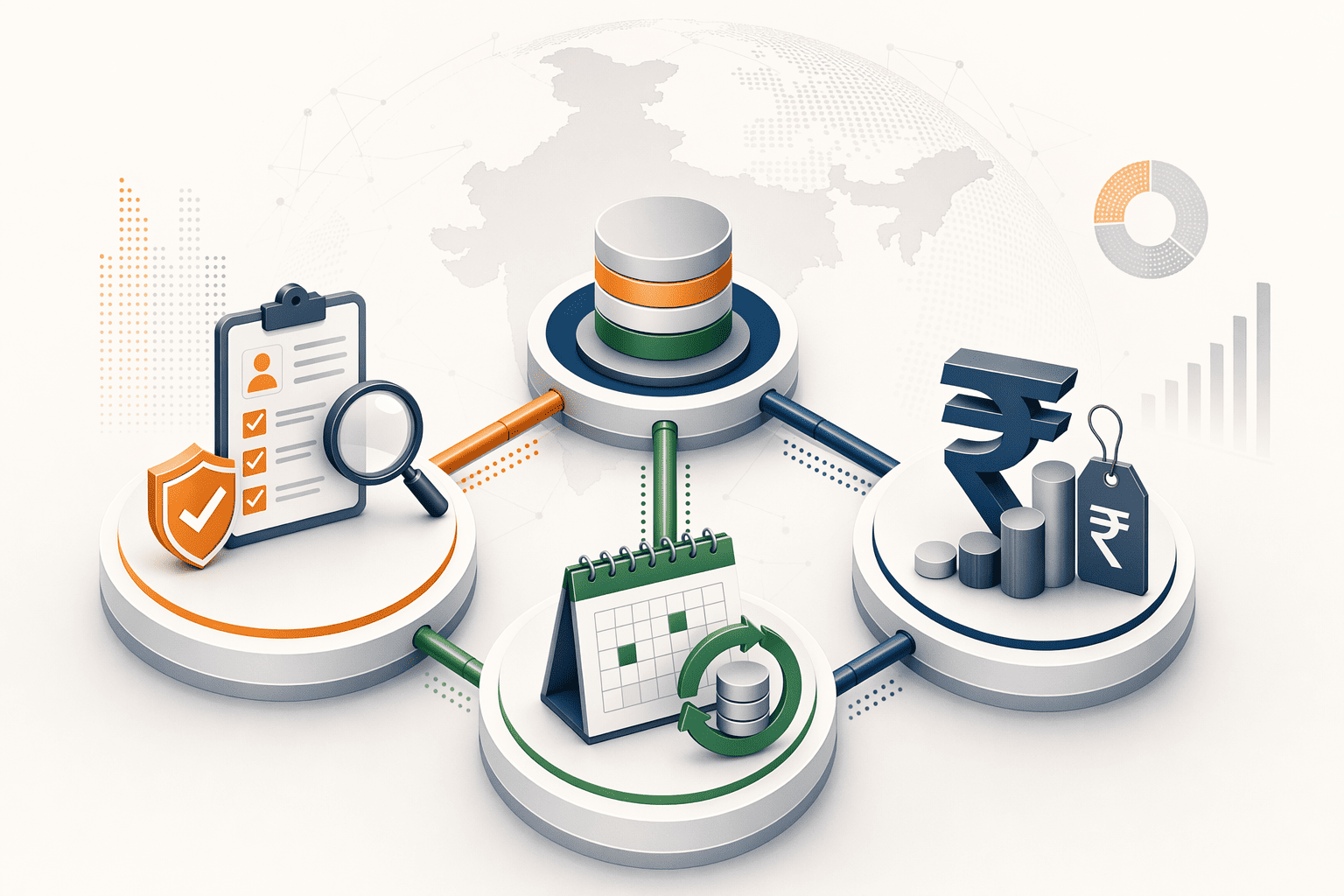
Verification Methodology: Real-Time vs. Static Database Lookups
Contact verification separates into three transparency tiers. Syntax-only checks validate email format but not deliverability. Real-time API lookups query live databases to confirm current employment and phone status, while static quarterly snapshots age rapidly. Confidence scoring (high/medium/low) signals verification depth — platforms disclosing confidence tiers per contact allow buyers to filter for quality rather than paying for unverified volume.
Regional Data Refresh Cycles and Accuracy Decay
Data freshness directly impacts bounce rates. Seven-day refresh cycles maintain 98% accuracy, while quarterly updates drop to 75% within five months. For Indian markets where job mobility is high and mobile numbers churn frequently, refresh cadence becomes a primary evaluation criterion — not a secondary feature checkbox.
Rupee Pricing Models and Cost-Per-Verified-Contact Economics
Advertised per-credit pricing understates true cost. Credit-based platforms show 50-65% match rates for phone numbers and 75-80% for emails, inflating actual cost per usable contact by 35-100%. Pay-per-contact models (charging only for verified returns) versus subscription credit pools (where unused credits expire) produce different economics. Rupee-transparent pricing that accounts for verification success rates offers the honest cost comparison.
With evaluation criteria established, here are seven contact intelligence platforms ranked by India-specific verification accuracy, rupee pricing transparency, and data refresh cadence.
1. PeakAi — India-First Verification with 91% Mobile Accuracy Guarantee
PeakAi delivers 91% phone number accuracy specifically for Indian B2B contacts, verified against GST and MCA databases with 7-day refresh cycles that maintain 98% accuracy—compared to slower update schedules that drop to 75% within five months. The platform classifies phone numbers by type (mobile, landline, VoIP) and provides direct-dial confidence scoring, addressing India's mobile-first business communication needs that global platforms treat as equivalent.

Pricing Model and Rupee Economics
Pay-per-verified-number billing with no monthly subscription, credit card, or LinkedIn Premium required. Cost-per-verified-contact remains transparent versus credit-based models where 50-65% phone match rates inflate actual cost per usable contact.
Best For and Limitations
Pros: India mobile accuracy guarantee, transparent rupee pricing, no subscription lock-in.
Cons: Smaller global database versus ZoomInfo or Apollo; limited enrichment fields beyond phone and email.
Best for: Indian SMB prospecting teams under ₹50,000/month budgets needing mobile-first verification rather than global enterprise data breadth.
2. Apollo.io, Global Database with Variable India Coverage
Database Breadth and US Accuracy Benchmarks
Apollo.io commands a 275M+ contact database spanning global markets, with self-reported accuracy benchmarks strongest for US contacts. The platform's crowdsourced enrichment model, however, yields bounce rates notably higher than premium providers in markets outside North America. India-specific phone and email accuracy remain undisclosed in verified third-party comparisons.

Pricing and Credit-Based Economics
Subscription tiers (Basic $49/seat, Professional $79, Organization $119) bundle database access with credit-based phone enrichment. Actual cost per usable India contact exceeds advertised per-credit pricing when match rates fall to 50 to 65%, creating rupee-economics uncertainty for SMB teams operating on tight per-lead budgets.
Best For and India Limitations
Apollo suits teams needing global database breadth and native CRM integrations (Salesforce, HubSpot). India mobile accuracy gaps and credit burn rates, however, disadvantage regional prospecting versus pay-per-verified models. PeakAi's disclosed 91% India phone accuracy offers a regional benchmark Apollo leaves unspecified.
3. ZoomInfo, Enterprise-Grade Depth, Premium India Pricing
Database Depth and US Accuracy Benchmarks
ZoomInfo offers a 321M-contact database with technographic filters, org charts, and intent signals powered by Bombora. The platform reports 95% email accuracy for US enterprise accounts, though India mobile accuracy benchmarks remain undisclosed in verified comparisons, a critical gap when prospecting Indian decision-makers who rely on mobile-first communication.

Pricing and Enterprise Minimums
Pricing starts at $14,995/year for the Professional plan, translating to approximately ₹15-30 lakh annual contracts for Indian enterprises. Annual-only billing with no monthly option creates budget friction for SMBs under ₹50k/month prospecting spend, where pay-per-contact models like PeakAi (₹675 for 50 verified contacts ) offer better cost control.
Best For and India Limitations
Best for: Enterprise accounts with ₹2L+/month budgets needing technographic intent data and RevOps-grade Salesforce workflows. Limitations: Premium pricing excludes SMB budgets; undisclosed India mobile accuracy versus India-first platforms; annual minimums reduce flexibility compared to pay-per-contact models for regional prospecting.
4. Cognism, GDPR-Compliant Platform Expanding into APAC
Phone-Verified Diamond Data and GDPR Compliance
Cognism positions itself with phone-verified 'Diamond Data' accuracy claims for European contacts and a GDPR-first compliance posture. Organizations handling large volumes of company and contact data must align with GDPR and CCPA guidelines to meet regulatory requirements and build trust. However, Cognism's APAC expansion announcements lack disclosed India mobile accuracy benchmarks and rollout timelines, leaving Indian B2B teams uncertain about regional data depth.
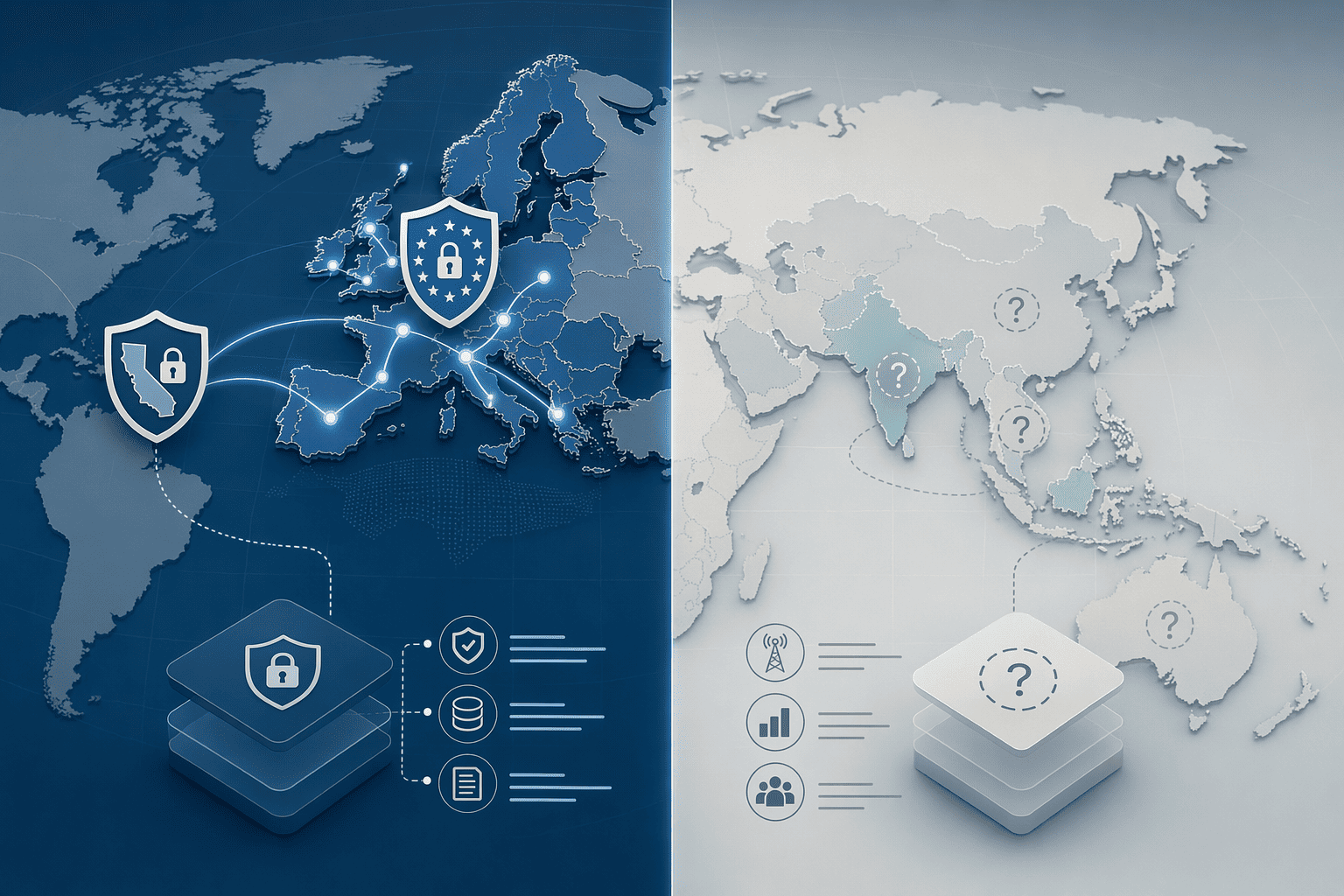
Pricing and European Market Focus
Cognism offers custom pricing with no public tiers, making European SMB-friendly entry points available but APAC pricing and coverage uncertain for Indian teams. In contrast, PeakAi provides transparent rupee pricing starting at ₹675 for 50 verified contacts with 91% phone accuracy optimized for Indian business contacts, addressing the need for region-specific contact verification and affordability.
Best For and India Expansion Gaps
Strengths: Phone-verified Diamond Data for Europe; GDPR-first compliance reducing legal risk for EU-India cross-border prospecting; native Salesforce/HubSpot integrations.
Limitations: APAC rollout timelines undisclosed; India mobile accuracy benchmarks unavailable; European market focus limits India-native data partnerships like GST/MCA integrations.
Best for: European B2B teams with India-EU cross-border prospecting needs requiring GDPR compliance, willing to wait for APAC rollout maturity. For teams prioritizing India-specific compliance (DPDP Act 2023) and verified regional phone data now, platforms like PeakAi offer immediate India-native coverage.
5. Lusha, Freemium Entry Point, Limited India Mobile Data
Freemium Model and Chrome Extension Workflow
Lusha offers a genuine freemium entry point, 5 contacts/month at no cost, paired with a Chrome extension for LinkedIn profile enrichment. Paid plans start at $37.45/month for individual prospectors, removing the financial barrier that gated enterprise platforms impose. The extension workflow mirrors LinkedIn's interface, enabling solo reps to test contact intelligence before committing to subscriptions.

India Coverage Gaps and Email-First Focus
Lusha's accuracy benchmarks center on email deliverability; India-specific mobile accuracy remains undisclosed in public documentation. Limited mobile data coverage for Indian contacts means credit burn rates inflate cost per usable phone number, teams report 50-65% phone match rates require double the credits for verified mobiles. Email-first teams accepting lower phone coverage may find value; mobile-first prospectors face cost inefficiency.
Best For and India Limitations
Best for: Solo prospectors or startups under ₹20,000/month budgets needing freemium entry and LinkedIn Chrome extension convenience, willing to trade India mobile accuracy for setup simplicity. Limitations: Limited India mobile data coverage and undisclosed regional accuracy benchmarks create cost inefficiency for mobile-first workflows, teams requiring verified Indian mobiles should compare against platforms optimized for the Indian B2B market, such as PeakAi, which delivers 91% phone number accuracy for Indian contacts across 1600+ cities.
LinkedIn compliance note: Lusha's enrichment-based approach queries third-party databases rather than scraping LinkedIn directly, mitigating account suspension risk compared to prohibited scraping tools.
6. LeadIQ, Prospecting Automation with Enrichment Gaps
Prospecting Automation and CRM Sync Workflows
LeadIQ offers a Chrome extension for LinkedIn prospecting with one-click Salesforce sync, automating prospecting list workflows. The platform positions itself as best for LinkedIn-driven SDRs pushing to Salesforce, with the tightest Sales Navigator capture workflow on the market. Pricing starts with a free tier, then $15/seat Pro.
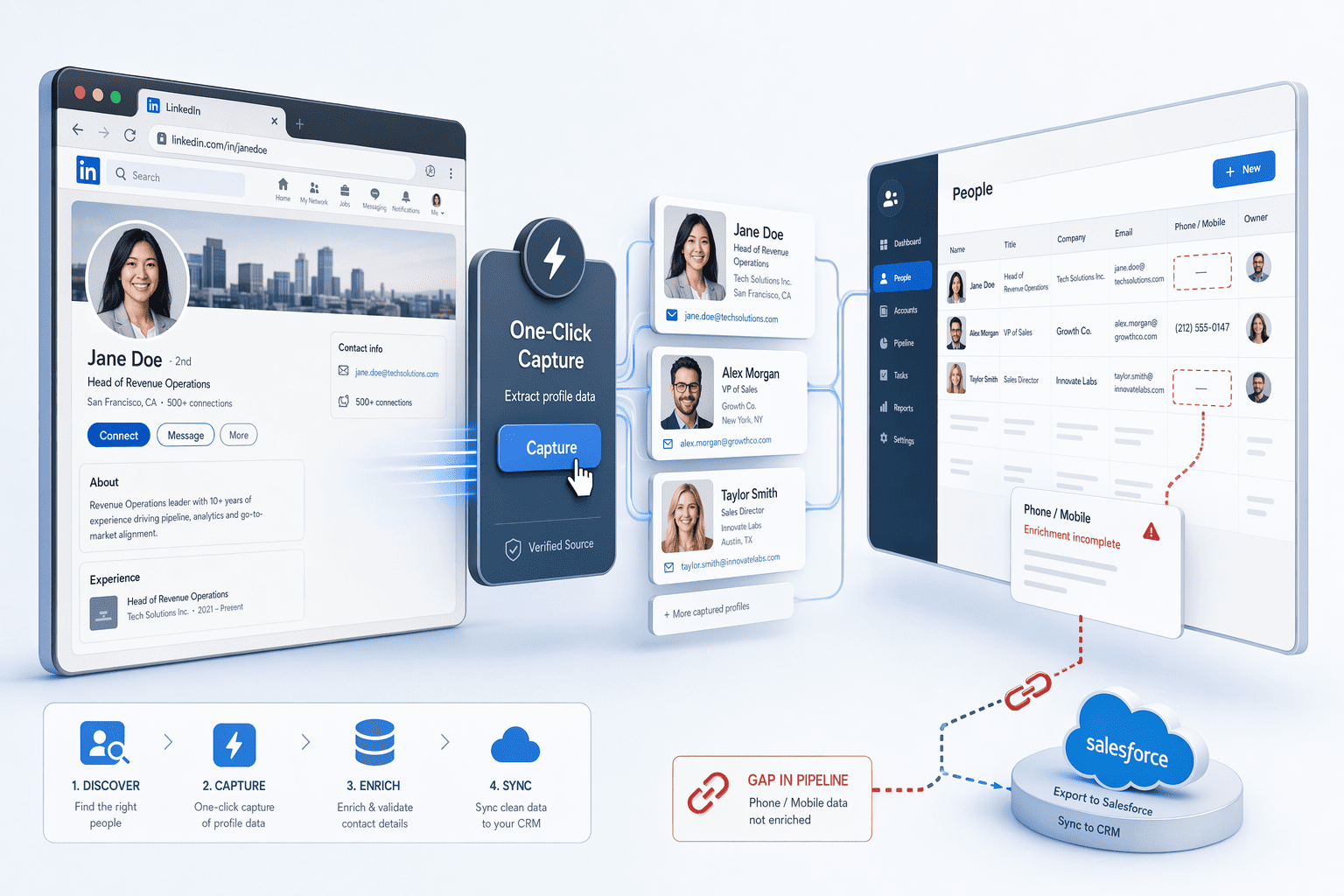
Enrichment Gaps and Third-Party Data Dependencies
LeadIQ relies on third-party data partners for contact enrichment rather than native verification, creating enrichment gaps for phone and mobile data. India mobile accuracy benchmarks remain undisclosed. Unlike PeakAi's real-time verification layer that integrates directly into LinkedIn browsing workflows, LeadIQ inherits the accuracy limitations of its upstream partners without controlling regional refresh cycles or mobile-number-type detection in-house.
Best For and India Limitations
Strengths: Salesforce-native sync reduces prospecting-to-CRM friction; Chrome extension convenience for LinkedIn-first teams; prospecting list automation for bulk workflows. Limitations: Enrichment gaps for phone/mobile data rely on third-party partners with variable accuracy; India mobile accuracy undisclosed; subscription pricing without pay-per-verified-contact transparency. Best for: Salesforce-first teams prioritizing CRM sync automation over contact verification depth, willing to trade native verification for workflow convenience.
7. Clearbit (HubSpot), CRM-Native Enrichment, US/UK Bias
HubSpot Integration and US/UK Data Depth
Clearbit operates as HubSpot's native enrichment layer, automatically appending firmographic and technographic data to CRM contacts without manual export. Real-time workflows enrich inbound leads instantly, pulling company size, industry, technology stack, and funding signals from US and UK corporate databases. Teams already embedded in HubSpot benefit from zero-friction enrichment, no separate login, no CSV uploads, no switching tabs.

India Coverage Limitations and CRM Lock-In
Clearbit's firmographic databases prioritize North American and European markets; India company coverage remains limited compared to region-specific platforms. HubSpot lock-in reduces portability, teams switching CRMs lose enrichment workflows and historical data mappings. Platform-agnostic alternatives like PeakAi support 20+ CRM integrations, enabling CSV export and multi-platform deployment without vendor lock-in.
Best For and India Prospecting Gaps
Pros: HubSpot-native enrichment eliminates CRM-switching friction; real-time workflows for inbound leads; strong US/UK firmographic depth for North American and European accounts. Cons: Limited India company coverage; US/UK-centric databases lack regional data partnerships like GST or MCA integrations; HubSpot lock-in increases switching cost. Best for: HubSpot-first teams with US/UK inbound lead flows needing CRM-native enrichment, not India-focused B2B prospecting requiring verified mobile numbers and regional firmographic validation.
8. SignalHire, Chrome Extension for Quick Lookups, Undisclosed India Metrics
Chrome Extension Workflow and Ad-Hoc Lookup Focus
SignalHire operates as a Chrome extension for finding email or phone numbers directly from LinkedIn profiles. With 300,000 users and a 4.5 rating based on 433 reviews, the tool optimizes for ad-hoc single-profile lookups rather than team-scale prospecting campaigns. Setup requires minimal configuration, install the extension, connect your account, and begin extracting contacts from LinkedIn without CRM integration complexity.
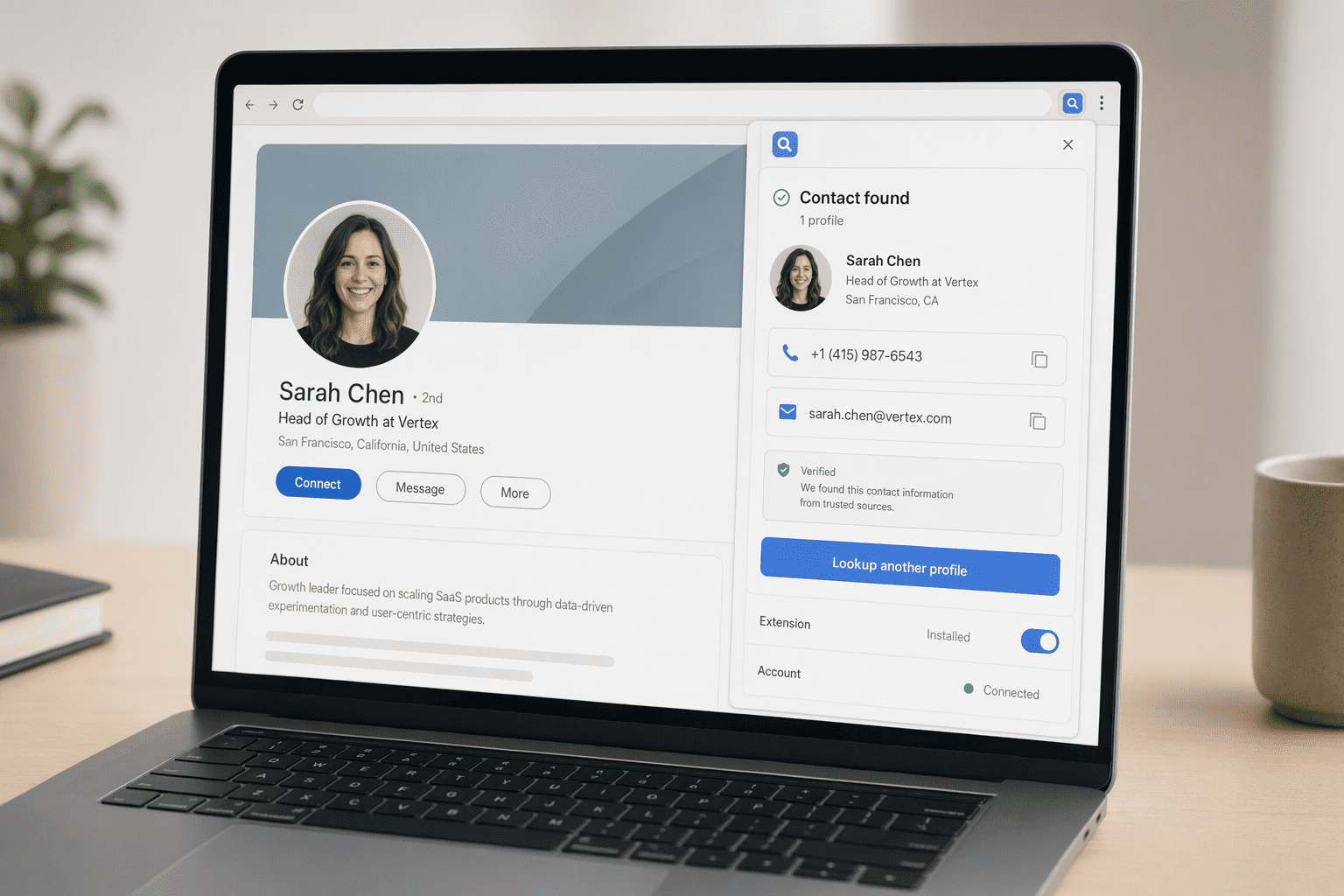
India Metrics Undisclosed and Bulk Workflow Limitations
SignalHire does not publicly disclose India-specific mobile accuracy benchmarks or verification methodologies for Indian B2B contacts. The platform's credit-based pricing model lacks cost-per-verified-contact transparency compared to pay-per-contact alternatives. Bulk prospecting features remain limited, the extension focuses on individual profile lookups rather than API-first workflows that enable team-scale list building or CRM synchronization for Indian market campaigns.
Best For and India Prospecting Gaps
SignalHire suits solo prospectors or freelancers needing quick LinkedIn lookups without bulk workflows or CRM integrations. The low entry barrier and fast setup make testing contact intelligence workflows straightforward. However, undisclosed India mobile accuracy, limited bulk prospecting features, and credit-based pricing uncertainty reduce fit for Indian B2B sales teams requiring verified phone numbers at scale or transparent cost-per-contact economics for budget planning.
Direct platform comparison clarifies how these eight options stack up across India-critical evaluation dimensions.
Platform Comparison: Key Criteria for Indian B2B Buyers
Indian B2B teams evaluating contact intelligence platforms face four decision-critical dimensions: mobile number accuracy for direct-dial outreach, data refresh cycles that determine contact decay rates, rupee-denominated pricing economics, and regulatory compliance for local data protection.

India Mobile Accuracy and Verification Methodology
Published India-specific mobile accuracy benchmarks remain scarce across the category. Most global platforms report aggregated accuracy metrics without regional breakdowns, making it difficult to assess performance in emerging markets where phone number formats, carrier portability, and business registration patterns differ from North American norms. Real-time verification against local business registries (GST, MCA databases) distinguishes platforms built for India from those adapted to it.
Data Refresh Cycles and Accuracy Decay Curves
Refresh cadence directly impacts usable contact yield. Platforms updating quarterly see accuracy drop from 98% at publication to approximately 75% within five months, while 7-day refresh cycles maintain above 90% accuracy. India's B2B market exhibits 2-3% monthly contact decay due to high job mobility in tier-2 cities and startup hubs, making stale databases expensive when measured by cost-per-successful-connection rather than cost-per-record.
Rupee Pricing Models and Cost-Per-Verified-Contact Economics
| Platform | Starting Price | Billing Model | India Mobile Coverage | Compliance |
|---|---|---|---|---|
| Apollo.io | $49/month | Subscription + credits | Undisclosed regional | GDPR, CCPA |
| LinkedIn Sales Navigator | $99/month | Subscription (no contacts) | Profile access only | LinkedIn ToS |
| Lusha | $37.45/month | Tiered subscription | Undisclosed regional | GDPR, CCPA |
| ZoomInfo | $15,000+/year | Annual contract | Strong North America | GDPR, CCPA |
| Cognism | Contact sales | Annual contract | Strong EU/UK | GDPR, DNC built-in |
| Clearbit | Contact sales | API-based usage | Undisclosed regional | GDPR, CCPA |
Subscription models advertise attractive monthly rates but mask the true cost when phone match rates run 50-65%. A ₹4,200/month plan yielding 50 usable mobiles from 100 credits costs ₹84 per verified contact, while pay-per-verified-contact models eliminate waste on unverified records. Annual minimums in USD (ZoomInfo's $15,000+, Cognism's enterprise-only tiers) create forex exposure and limit flexibility for rupee-operating teams.
How to Choose the Right Platform for Your India Prospecting Needs
Match platform capabilities to three buyer profiles. For Indian SMB teams with budgets under ₹50,000/month needing mobile-first verification, prioritize pay-per-contact models, PeakAi's ₹675 entry for 50 verified contacts or Lusha's freemium tier deliver transparent rupee pricing without subscription lock-in.

Enterprise accounts with ₹2L+/month budgets prioritizing global database breadth over regional accuracy should evaluate ZoomInfo (annual contracts from ₹15 lakh) or Apollo (~₹4,200/user/month) for multi-region campaigns spanning India, US, and EU markets. Global breadth trades India-specific mobile accuracy for coverage.
HubSpot/Salesforce-first teams must weigh CRM-native sync (Clearbit HubSpot-only, LeadIQ Salesforce-first) against platform-agnostic options preserving CRM portability, PeakAi's 20+ CRM integrations and CSV export enable workflow flexibility without vendor lock-in.
For India-only prospecting, prioritize disclosed regional accuracy and DPDP-compliant data partnerships (GST/MCA integrations) over global database size. Teams handling regulated contact data require platforms with India-native compliance roadmaps rather than GDPR-first tools with uncertain APAC support.
Making Your Platform Decision
Global databases (Apollo 275M+ contacts, ZoomInfo 100M+ companies) deliver breadth for multi-region campaigns but leave India mobile accuracy undisclosed, India-native platforms (PeakAi 91% guarantee) trade global coverage for regional verification depth. Credit-based models (Lusha, LeadIQ with 50-65% phone match rates) advertise low per-credit pricing but inflate actual cost per usable contact by 35-100%, pay-per-verified-contact models offer rupee cost transparency at the expense of upfront subscription convenience.
As India's B2B prospecting market matures, buyers will increasingly demand disclosed regional accuracy benchmarks and mobile-number-type detection rather than accepting global database accuracy claims without India-specific verification. Expect DPDP compliance and regional data partnerships (GST/MCA integrations) to become table-stakes requirements by late 2026, pressuring global platforms to disclose India metrics or lose market share to region-native competitors.
Assess your India prospecting volume and budget tier, then trial PeakAi's pay-per-verified-contact model to benchmark India mobile accuracy against your existing tools' undisclosed regional metrics, no subscription, credit card, or LinkedIn Premium required.
Frequently Asked Questions
What is the most accurate contact intelligence platform for Indian B2B prospecting?
PeakAi delivers 91% phone number accuracy for Indian B2B contacts, verified against GST and MCA databases with 7-day refresh cycles maintaining 98% accuracy. Apollo, ZoomInfo, Cognism, and Lusha leave India mobile accuracy undisclosed in verified comparisons, making disclosed regional benchmarks the primary differentiator for accuracy evaluation.
How much do contact intelligence platforms cost for Indian SMB teams?
Credit-based platforms show 50-65% match rates for phone numbers and 75-80% for emails, inflating actual cost per usable contact by 35-100% beyond advertised per-credit pricing. Pay-per-verified-contact models (PeakAi transparent rupee pricing with no monthly subscription) offer honest cost comparison for SMB budgets under ₹50k/month, while Apollo subscription tiers and ZoomInfo enterprise minimums require annual contracts.
Do contact intelligence platforms distinguish mobile numbers from landlines for India contacts?
PeakAi provides mobile-number-type detection (mobile vs. Landline, direct-dial confidence scoring) critical for India prospecting, where decision-makers use mobile numbers rather than office switchboards. Most platforms (Apollo, ZoomInfo, Lusha) treat all phone numbers as equivalent, creating workflow inefficiency when line-type detection determines connect rates in mobile-first business culture.
How often should contact data refresh to stay accurate for Indian B2B prospecting?
India's B2B contacts decay at 2-3% monthly (22-30% annually), requiring seven-day refresh cycles to maintain 98% accuracy. Quarterly updates drop to 75% within five months, making refresh cadence a primary evaluation dimension rather than secondary feature given India's fast-moving business structure churn and high job mobility.
Are contact intelligence platforms compliant with India's DPDP Act?
India-native platforms with regional data partnerships (GST/MCA integrations) align more closely with DPDP requirements for consent frameworks, data localization, and breach notification than global databases adapting GDPR-first compliance postures. DPDP final rules continue evolving as of 2026, requiring ongoing legal review rather than static compliance claims from platforms built for European regulations.
Can I use contact intelligence platforms without violating LinkedIn Terms of Service?
Enrichment-based tools (Apollo, Cognism, Lusha, PeakAi using LinkedIn profile data to query third-party databases) stay within Terms of Service gray areas, while direct-scraping tools violate LinkedIn ToS and create account suspension risk. LinkedIn's enforcement remains inconsistent; even enrichment tools carry account-risk depending on Premium status and connection volume.
Which contact intelligence platform has the best CRM integration for Indian B2B teams?
CRM-native tools (Clearbit for HubSpot-only, LeadIQ for Salesforce-first workflows ) reduce setup friction but increase switching cost. Platform-agnostic options (PeakAi CSV export and API integrations, Apollo/ZoomInfo multi-CRM support) preserve CRM flexibility but require integration setup, making the choice a function of existing CRM workflows and lock-in tolerance.
Sources
- LinkedIn Sales Navigator Alternatives That Actually Find Decision Makers [2026] - www.infrapeek.tech (2026)
- Best LinkedIn Prospecting Tools in 2026 (Reviewed and Compared) - www.smarte.pro (2026)
- Best B2B Prospecting Tools in 2026 (Compared) - prospectzero.com (2026)
- Best B2B Data Providers for Prospecting in 2026 - starnus.com (2026)
- GDPR and CCPA Impact on B2B Lead Generation - www.dnb.co.in
- Best Lead Generation Tools India 2026 — 7 Picks for B2B Sales - www.itforsme.in (2026)
- B2B Contact Databases Compared: ZoomInfo vs Apollo vs Cognism (2026) - gtmpicker.com (2026)
- SignalHire - find email or phone number - Chrome Web Store - chromewebstore.google.com
