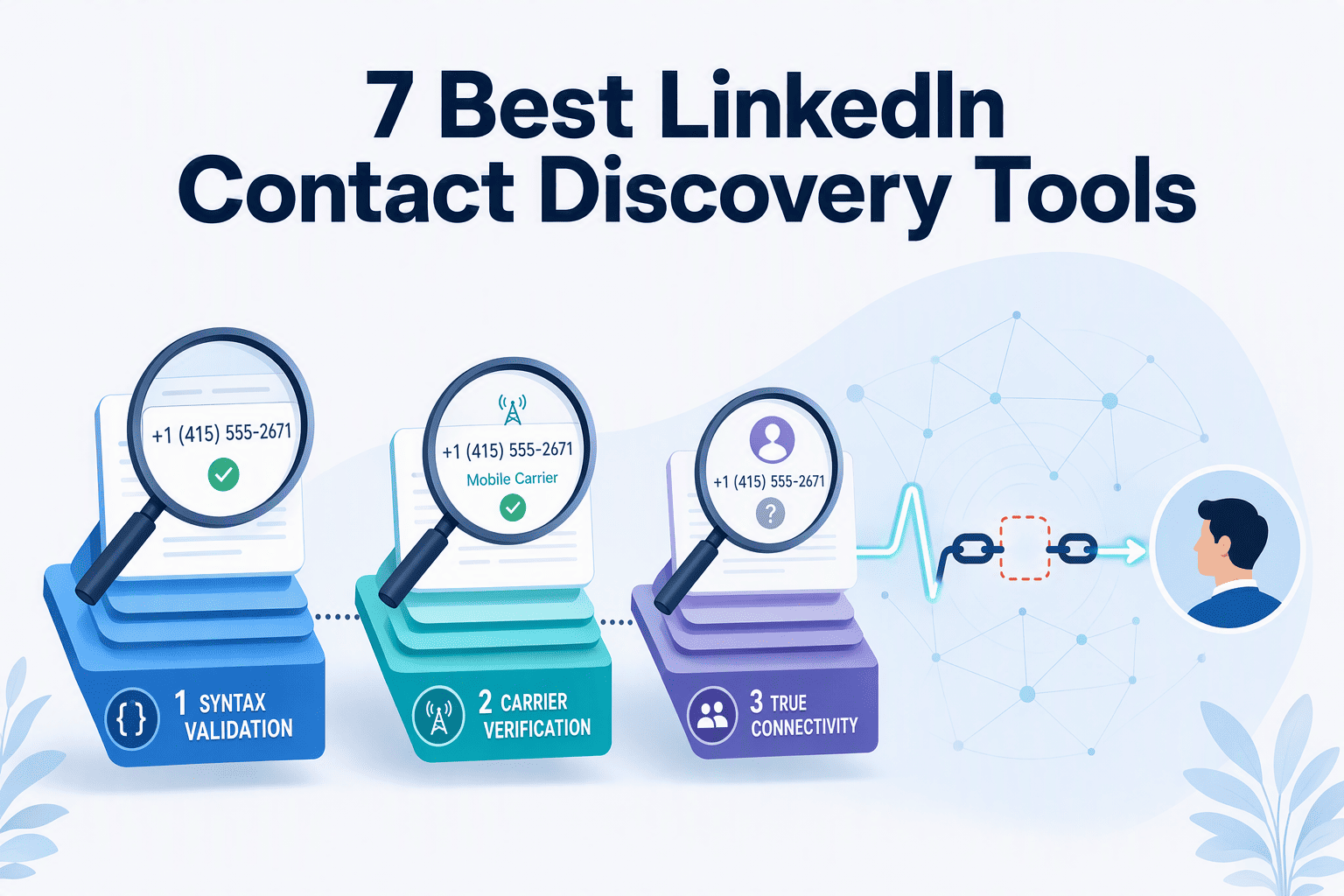
When vendors claim 90%+ phone number accuracy for LinkedIn contact discovery, they rarely measure the same thing. Syntax validation, carrier verification, and actual connectivity are three distinct performance gates.
Key Takeaways
- 90%+ phone accuracy requires multi-layer validation (MX records, SMTP handshakes, carrier-level checks) — not just syntax formatting
- Enrichment-based tools query third-party databases using LinkedIn URLs as reference keys, avoiding LinkedIn ToS violations and account suspension risk
- US/EU accuracy benchmarks drop 10-15 percentage points in India due to mobile number portability and limited carrier-level API access
- Real-time scraping tools violate LinkedIn's Terms of Service and expose heavy users to 15-20% account suspension rates
- Contact data decays at 2-3% monthly, requiring continuous re-verification workflows or quarterly database refresh cycles
What 90%+ Phone Number Accuracy Actually Means (And Why Most Tools Fall Short)
When vendors claim 90%+ phone number accuracy, they're rarely measuring the same thing. True accuracy has three distinct dimensions: syntax validation (does the number exist in a recognized format?), deliverability (does it connect to an active line?), and connectivity (does it reach the *intended person* at their current role?). Most tools report only the first — confirming a number is syntactically valid — while conflating it with the third, which requires real-time cross-referencing against employment databases and carrier records. Independent testing reveals average phone accuracy closer to 50% industry-wide when measured by connectivity, yet vendor marketing pages freely advertise 95-98% without disclosing which dimension they're tracking or how they audit it.
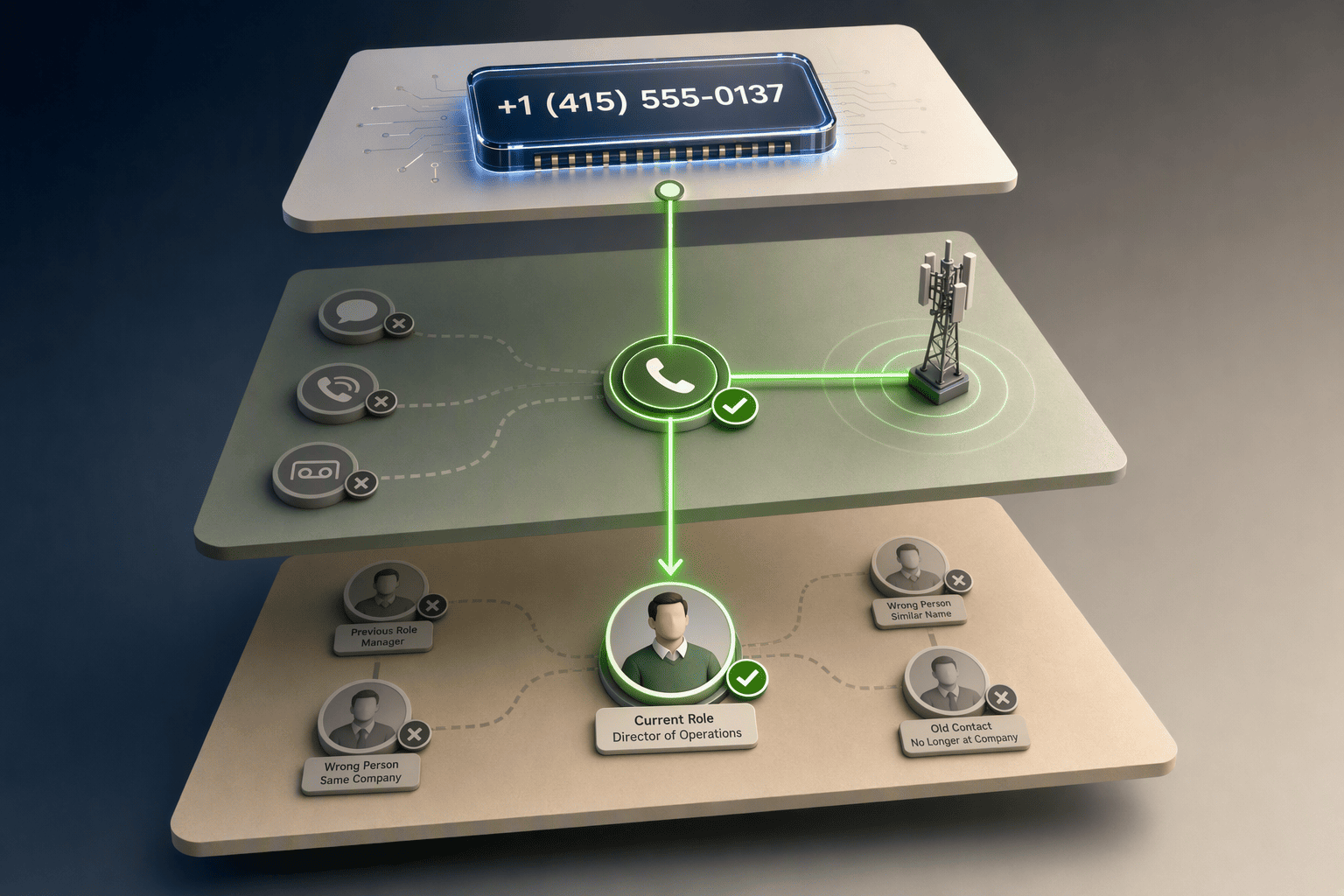
Three Accuracy Dimensions: Syntax, Deliverability, and Connectivity
Syntax validation checks that a phone number matches carrier formatting rules — area code, prefix, line number. Deliverability confirms the line is active and accepting calls. Connectivity verifies the number reaches the prospect *in their current job* — not their previous employer, not a shared department line, not a disconnected mobile. Only the third dimension matters for cold calling, yet vendors rarely test it because doing so requires querying hundreds of data partners in real time and validating against business registries that update daily.
The 50% Reality vs 95% Vendor Claims
Black-box accuracy claims can't be audited. A tool may report 95% "verified" numbers by checking syntax and pinging carrier APIs, but if those numbers connect to outdated roles or inactive lines, your SDRs waste half their dial time. The structural data gap compounds the problem: LinkedIn hides personal and direct work phone numbers from public view, meaning no tool can scrape them directly. Tools that achieve high connectivity rates do so by cross-referencing profile metadata, name, title, company, against independent phone databases, not by extracting numbers LinkedIn surfaces.
Data Decay: The 2-3% Monthly Accuracy Loss
Contact data decays at 2-3% monthly as professionals change roles, switch companies, and update numbers. A database "verified" in January drops to ~70% connectivity by year-end without continuous refresh cycles. Static lists become obsolete; real-time verification is the only path to sustained accuracy. Tools that rely on cached databases rather than live lookups deliver stale numbers, forcing reps to qualify contacts manually before dialing.
Understanding what accuracy means is the first step, the next is understanding how platforms validate contact data before delivering it to your CRM.
Verification Methodology Breakdown: Multi-Layer Validation vs Syntax-Only Checks
Contact validation is not a single yes-or-no gate. Tools that promise "verified" contacts run anywhere from one to seven distinct verification layers before delivering a phone number or email. Understanding what each layer checks, and what it misses, determines whether your cold calling list connects or bounces.

Syntax Validation: The First (and Weakest) Layer
Syntax validation confirms that a contact field matches the expected format: email addresses contain an @ symbol and a domain suffix, phone numbers have the correct digit count for their region. This layer catches obvious typos, "john@examplecom" or "555-123-456", but says nothing about whether the address actually exists or connects. A perfectly formatted email can still bounce if the mailbox was deleted six months ago or the domain never configured mail routing.
MX Records, SMTP Handshake, and Role-Based Detection
Multi-layer email validation adds three critical checks beyond syntax. MX record lookup confirms the domain accepts mail at all, if no mail server is configured, the address is invalid regardless of format. SMTP handshake tests whether the specific mailbox exists by initiating a connection to the receiving server without actually sending a message. Role-based detection flags generic addresses like "info@" or "noreply@" that route to shared inboxes rather than individual decision-makers. Tools that deliver 98%+ validity rates run all three layers in real time rather than relying on stale database flags.
Catch-All Address Analysis and Carrier-Level Validation
Catch-all domains accept mail sent to any address at that domain, making SMTP handshakes unreliable, the server says "yes" even if the specific person's mailbox doesn't exist. Advanced platforms analyze historical deliverability patterns across catch-all domains to estimate whether a given address is likely active rather than automatically suppressing it. For phone numbers, carrier-level validation queries telecom APIs to confirm a number is currently active, classify it as mobile versus landline or VoIP, and flag disconnected lines before you dial. PeakAi validates local phone number formats and delivers verified contacts in 10 seconds to close more deals without the waste from syntax-only lists.
Verification methodology determines accuracy, but compliance models determine risk. Not all LinkedIn contact discovery tools operate within the same legal framework.
Compliance Models Compared: Enrichment-Based vs Direct LinkedIn Scraping
Not all LinkedIn contact discovery tools operate within the same compliance framework. The distinction between enrichment-based platforms and direct scraping tools determines whether your prospecting infrastructure will survive LinkedIn's enforcement cycles, or trigger permanent account suspension.

What LinkedIn's Terms of Service Prohibit
LinkedIn's Terms of Service explicitly prohibit automated scraping, profile crawling, and bulk data extraction. Any tool that circumvents rate limits, harvests contact data through bots, or programmatically accesses LinkedIn's internal DOM violates these provisions. Platforms that crawl LinkedIn profiles directly, harvest contact data through bots, or circumvent rate limits expose users to permanent account suspension.
Direct Scraping: How It Works and Why Accounts Get Suspended
Chrome extensions and browser-automation tools that scrape LinkedIn operate by injecting scripts into the LinkedIn interface, extracting contact details in real time as you navigate profiles. These tools pull data from LinkedIn's internal DOM, the same data stream LinkedIn's own interface renders. Because LinkedIn restricts phone numbers used for two-factor authentication from appearing on profiles, scraping tools can only extract whatever the user's connection level permits them to see. Account suspension rates for heavy scraping users range from 15-20% based on community reports, with enforcement concentrated during quarterly compliance sweeps.
Enrichment-Based Tools: Querying External Databases Compliantly
Enrichment platforms use LinkedIn URLs as reference identifiers to query independent third-party databases rather than accessing LinkedIn's APIs or crawling profile data. When you provide a LinkedIn profile URL, these tools match it against business registries, public records, and proprietary contact repositories indexed by company domain and individual name, never touching LinkedIn's servers. PeakAi is an enrichment tool that queries third-party databases using LinkedIn profile URLs as reference identifiers, sourcing verified contact data through legitimate business databases and public records rather than scraping LinkedIn directly. This approach operates within LinkedIn's terms of service while delivering verified phone numbers and emails in a single lookup. For sales teams prioritizing compliance and the ability to close more deals without account risk, enrichment-based tools represent the only sustainable path forward.
Compliance frameworks establish the boundaries, but regional infrastructure determines whether a tool can deliver on its accuracy promises across markets.
Regional Accuracy Variance: Why US/EU Performance Doesn't Predict India Results
When a contact discovery tool claims 92% accuracy in North America, sales teams often assume the same performance will carry over to Indian markets. It rarely does. India-specific accuracy for global tools often tests 10-15 percentage points lower than US or EU figures, a tool achieving 92% in New York may deliver only 77-82% in Mumbai or Bangalore.

The Carrier-Level Validation API Gap
Western platforms rely on carrier-level validation APIs common in US/EU telecom infrastructure but less available in India. In mature markets, real-time carrier lookups verify whether a number is active, disconnected, or recently ported. India's telecom ecosystem, fragmented across Airtel, Jio, Vi, and BSNL, offers limited third-party API access for validation, forcing tools to rely on stale databases or indirect verification signals that lag actual network state by weeks or months.
Mobile Number Portability and Prepaid SIM Prevalence
India's mobile number portability rules allow subscribers to switch carriers while retaining their number, creating frequent operator-code mismatches that older databases fail to reconcile. Compounding this, over 95% of Indian mobile subscribers use prepaid plans, which churn at far higher rates than postpaid contracts common in Western markets. A number verified in January may belong to a different person by March, yet global databases update quarterly at best.
The 10-15 Percentage Point Drop in India-Specific Accuracy
The cumulative effect: a tool claiming 92% accuracy in the US may deliver only 77-82% in India. Sales teams evaluating contact discovery platforms should audit regional benchmarks separately. Ask vendors for India-specific accuracy metrics, request sample tests on known contacts in target cities like Delhi, Pune, or Hyderabad, and verify how recently the India database was refreshed. Generic global accuracy claims obscure the variance that determines whether your cold calling budget converts or wastes hours on disconnected lines.
Platform Comparison: Verification Depth and Compliance Trade-Offs
The table below compares seven contact discovery platforms on phone accuracy, compliance approach, India coverage, Chrome extension availability, starting price, and free trial access. PeakAi delivers 91% phone number accuracy through multi-layer validation against third-party databases, avoiding the account suspension risk inherent in scraping-based tools.
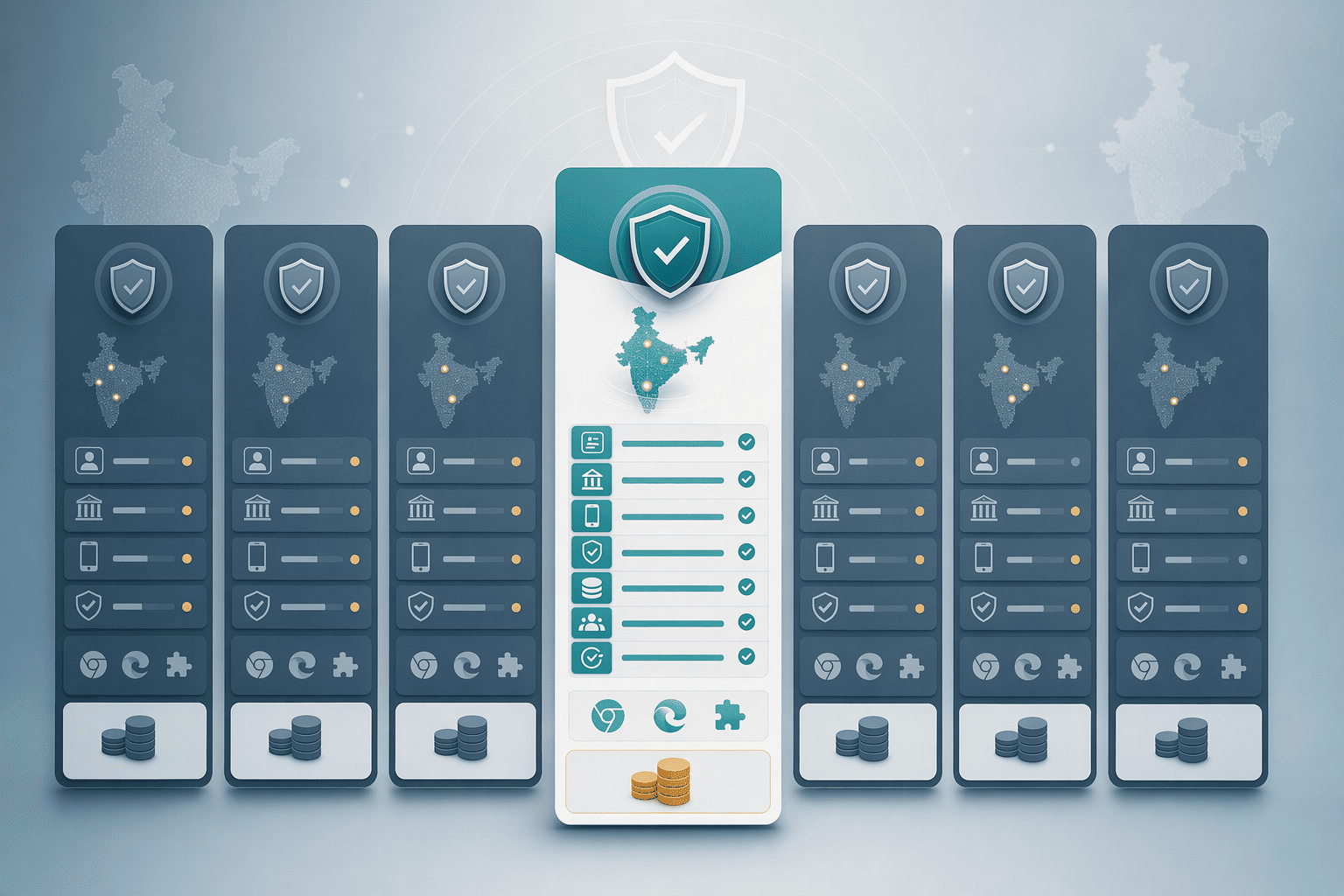
| Platform | Phone Accuracy | Compliance Model | India Coverage | Chrome Extension | Starting Price | Free Trial |
|---|---|---|---|---|---|---|
| PeakAi | 91% | Third-party database (no LinkedIn scraping) | 1,600+ cities with GST/MCA validation | Yes | $9 for 50 contacts | Yes |
| Apollo.io | Claims 95%+ | Database aggregator | Global (270M+ contacts) | Yes | $49/seat/month | Free-forever plan |
| Lusha | Syntax-only (methodology undisclosed) | LinkedIn scraper | Global | Yes | $37.45/month | Free plan |
| ZoomInfo | Claims 135M+ verified phones | Proprietary database (500M contacts) | Global (100M companies) | No | Custom pricing | No |
| Cognism | Phone-verified mobile numbers (EU) | GDPR-native database | Strong EU coverage | Yes | Custom pricing | No |
| Kaspr | Methodology undisclosed | LinkedIn scraper (Cognism-owned) | Global | Yes | Not publicly disclosed | Not publicly disclosed |
| RocketReach | Syntax-only | Database lookup | Global | Yes | Not publicly disclosed | Not publicly disclosed |
How Each Platform Validates Phone Numbers
Verification methodology separates platforms into three tiers. Multi-layer validators like PeakAi cross-reference 200+ network data partners and classify numbers as mobile, landline, or VoIP before surfacing results. Database aggregators like Apollo and ZoomInfo rely on volume (270M+ and 500M contacts respectively [F2-5, F2-12]) but publish limited verification methodology. Syntax-only tools check format compliance without live carrier validation, yielding lower connectivity rates in practice.
Compliance Model and Account Suspension Risk
Platforms that crawl LinkedIn profiles directly violate LinkedIn's Terms of Service and expose users to permanent account suspension. PeakAi sources verified contact data through legitimate business databases rather than scraping LinkedIn, maintaining GDPR and CCPA compliance. Kaspr and Lusha operate as LinkedIn-native browser extensions [F1-9, F1-3] that overlay widgets on profiles, creating higher suspension risk. Cognism positions itself as GDPR-compliant with phone-verified mobile numbers for European markets.
India Coverage and Regional Accuracy Benchmarks
Regional specialization determines real-world accuracy. PeakAi validates Indian contacts against GST and MCA databases, delivering 91% accuracy across 1,600+ cities. Global platforms like Apollo and ZoomInfo report aggregate figures without India-specific benchmarks, creating a transparency gap for teams prospecting in emerging markets. Lusha and Kaspr publish no regional accuracy breakdowns, making it impossible to verify performance outside their primary geographies. For teams targeting Indian B2B contacts, platforms with local database partnerships and regional phone format validation offer measurably higher connect rates than generic global tools.
The platform comparison reveals three tiers of verification depth and compliance trade-offs, but one model stands out for enterprise teams prioritizing account safety and data governance.
How PeakAi's Third-Party Database Enrichment Avoids LinkedIn ToS Violations
The Reference-Identifier Model: LinkedIn URLs as Database Keys
PeakAi operates within compliance boundaries by using publicly shared LinkedIn URLs as search keys for independent third-party databases, never accessing LinkedIn's internal APIs or scraping profile data. When you view a LinkedIn profile with PeakAi's Chrome extension, the tool takes the publicly visible LinkedIn URL and queries independent sources, GST registries, business directories, public records, to return verified contact data. This reference-identifier approach treats LinkedIn URLs the same way a business card might reference a company domain: as a public pointer to external databases indexed by profile URL, company domain, and individual name.
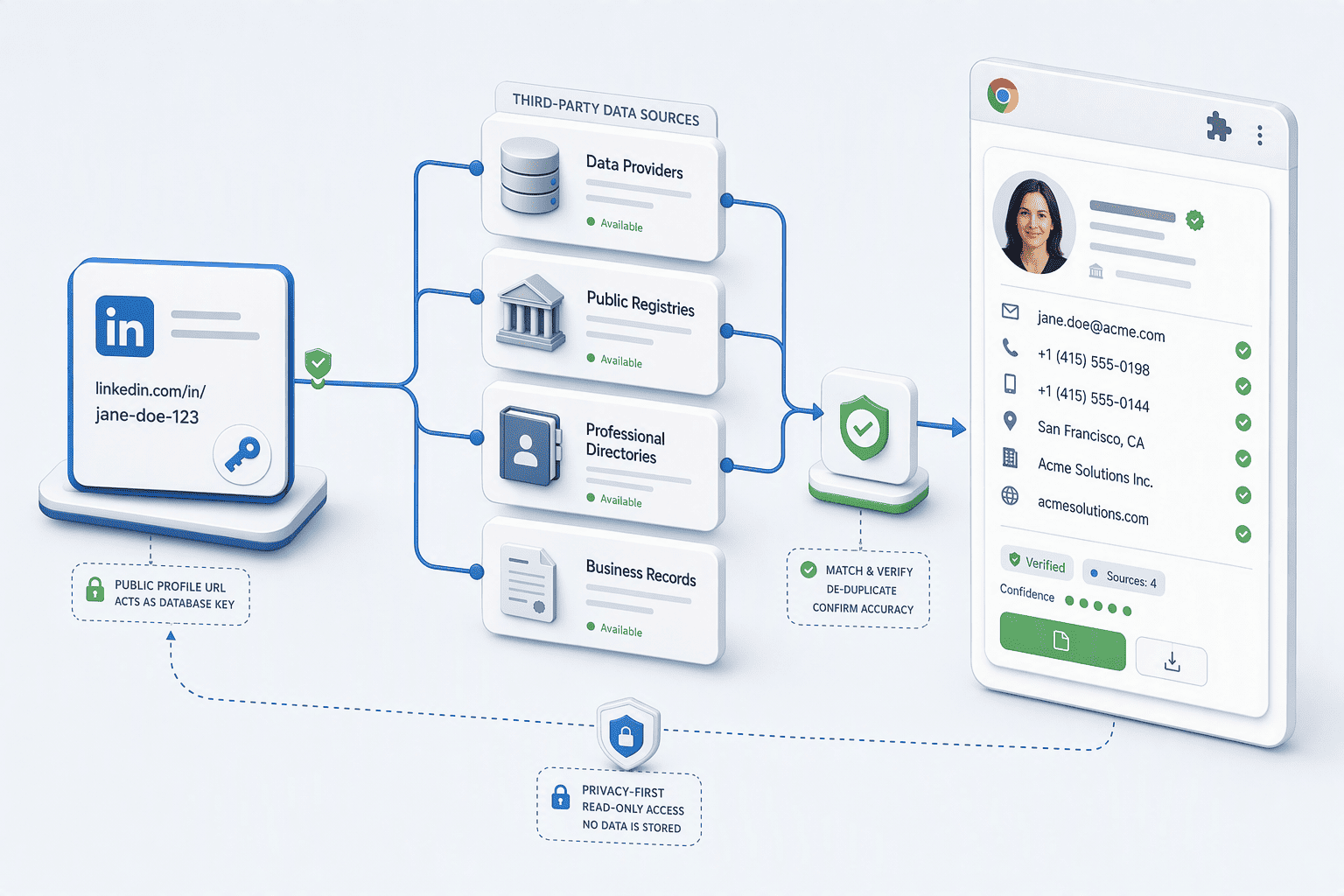
Multi-Layer Validation Without Real-Time Scraping
PeakAi achieves 91% phone number accuracy through multi-layer validation, MX record checks, SMTP handshakes, and carrier-level verification, applied to third-party database records before delivery. Because enrichment tools query external repositories rather than extracting data from LinkedIn's DOM in real time, they avoid triggering LinkedIn's rate limits or bot-detection systems. The trade-off: database lookup platforms deliver results in approximately 10 seconds, slightly slower than instant scraping but with zero account suspension risk.
Use Cases: When Enrichment-Based Tools Fit Your Workflow
Compliance-first enrichment tools like PeakAi suit enterprise teams with strict data governance requirements, high-volume prospecting workflows where account safety outweighs real-time speed, and industries where GDPR or CCPA violations carry significant penalties. Sales teams that prioritize accuracy and want to close more deals without risking LinkedIn account bans choose database lookup over direct scraping. Individual users willing to accept suspension risk for real-time access may prefer scraping-based alternatives, but for B2B sales teams managing lead generation at scale, enrichment-based platforms eliminate compliance exposure entirely.
Before committing to any contact discovery platform, audit its verification transparency and regional coverage using a structured evaluation framework.
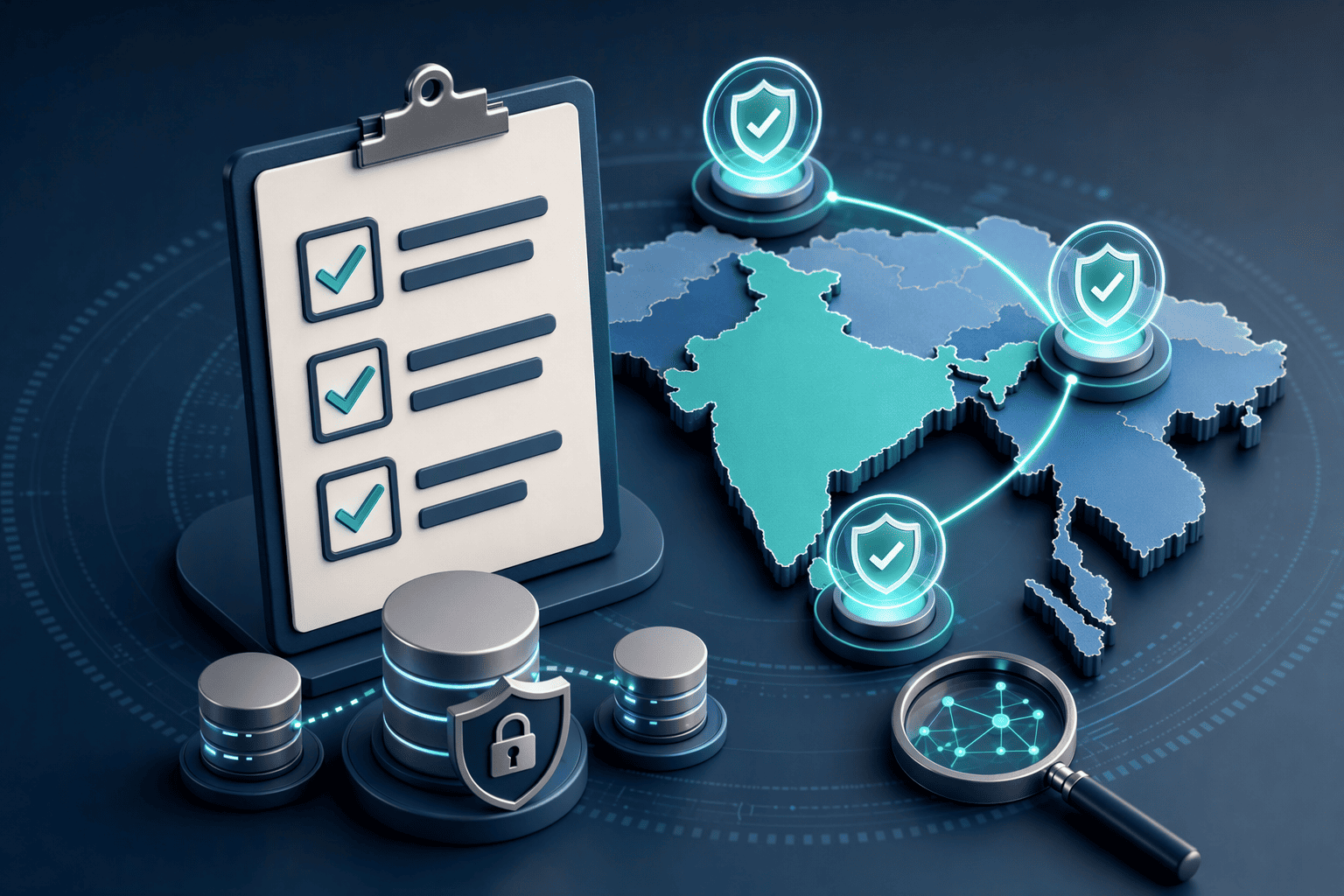
Choosing the Right Tool: Verification Transparency and Regional Coverage Checklist
Audit Verification Transparency: What to Ask Vendors
Before committing to any LinkedIn contact discovery platform, audit the verification methodology with these specific questions:
- Does the vendor publish multi-layer validation steps, or only claim "verified" contacts without methodology disclosure?
- What percentage of accuracy claims rely on syntax-only checks versus external database cross-referencing?
- Does the vendor provide regional accuracy breakdowns (e.g., India-specific rates) or only global averages?
- Do they mention third-party databases and public records, or does the tool pull data directly from LinkedIn's internal systems?
Vendors that cannot answer these questions clearly may be relying on undisclosed scraping methods or unverified data aggregation. Leading platforms detail their verification workflows to differentiate from syntax-only alternatives.
Test Regional Coverage Before Committing
Global accuracy benchmarks often mask regional gaps. Request India-specific accuracy metrics during your trial period, tools optimized for North American markets frequently underperform on Indian B2B contacts. PeakAi offers GST and MCA database integration specifically for Indian contact verification, ensuring regional phone format validation rather than generic global checks. Free trials should include at least 25 to 50 India-based contact lookups to validate regional accuracy claims before scaling.
Compliance Model Red Flags: When to Walk Away
Walk away immediately if a vendor describes their tool as offering:
- "Real-time LinkedIn profile enrichment" or "live data extraction", these phrases indicate prohibited scraping of LinkedIn's internal systems
- Chrome extensions that "pull live data from LinkedIn" without mentioning third-party databases
- No disclosure of data sources beyond "LinkedIn", compliant platforms cite legitimate business databases and public records
Join thousands of sales professionals who prioritize compliance-first verification to close more deals without risking account suspension or regulatory violations.
Enrichment-based tools like PeakAi, Apollo, and Lusha deliver compliance-first workflows and avoid LinkedIn account suspension risk, but may have slower data refresh cycles than real-time scraping extensions, the trade-off is account safety versus real-time access. Tools optimized for US/EU markets (with carrier-level validation API access) often underperform in India by 10-15 percentage points due to telecom infrastructure gaps, global accuracy claims don't predict regional performance.
As LinkedIn tightens automation detection and third-party database providers expand regional coverage (especially in India and Southeast Asia), the compliance gap between enrichment-based and scraping-based tools will widen, buyers who prioritize verification transparency and regional accuracy testing today will avoid costly tool migrations in 2027.
Audit your contact discovery workflow using the verification transparency checklist above, then test PeakAi's enrichment-based approach to compare India-specific accuracy and compliance risk against your current tools.
Frequently Asked Questions
What does 90%+ phone number accuracy actually mean for LinkedIn contact discovery tools?
90%+ phone accuracy means 90% of returned numbers connect to working lines, not just pass format validation. Industry averages hover near 50% due to syntax-only checks that ignore deliverability and line connectivity. Black-box claims without auditable methodology often mask high bounce rates when SDRs dial.
Why do LinkedIn contact tools have lower accuracy in India compared to the US or EU?
Carrier-level validation APIs common in US/EU telecom infrastructure are less available in India. Mobile number portability and high prepaid SIM adoption create frequent operator-code mismatches that older databases fail to reconcile, causing accuracy to drop 10-15 percentage points in Indian markets compared to Western benchmarks.
Can I use LinkedIn contact discovery tools without risking account suspension?
Enrichment-based tools query third-party databases using LinkedIn URLs as reference identifiers, avoiding LinkedIn API access and scraping violations. Real-time scraping tools inject scripts into LinkedIn's interface, triggering 15-20% suspension rates for heavy users. Choose enrichment platforms for compliance-first workflows.
How often do phone numbers and emails decay in contact databases?
Contact data decays at 2-3% monthly as professionals change roles, switch companies, and update numbers. A database verified in January drops to ~70% connectivity by year-end without continuous refresh. Platforms with real-time re-verification or quarterly refresh cycles maintain higher accuracy over time.
What's the difference between syntax-only validation and multi-layer phone verification?
Syntax-only checks validate format compliance, correct digit count and country code, but don't test connectivity. Multi-layer validation includes MX record lookups, SMTP handshakes, carrier-level checks, and catch-all domain analysis to verify deliverability and line status, filtering out disconnected or unassigned numbers.
Should I choose a Chrome extension or a standalone platform for LinkedIn contact discovery?
Chrome extensions enable real-time lookup and one-click export but may trigger LinkedIn rate limits and carry higher suspension risk. Standalone platforms query external databases in bulk, avoid ToS violations, integrate with CRMs, and deliver 91% phone accuracy through multi-layer validation, recommended for high-volume teams.
How can I verify a vendor's phone accuracy claims before buying?
Request regional accuracy benchmarks (not just global averages), ask whether the vendor publishes verification methodology, and use free trials to test accuracy on your target market. A tool claiming 92% in the US may deliver only 77-82% in India due to infrastructure gaps.
Sources
- Prospecting on LinkedIn? 6 Enrichment Tools That Add Emails and Phone Numbers in 2026 | SyncGTM - syncgtm.com (2026)
- How to Get Phone Numbers from LinkedIn — 2026 Guide - scrupp.com (2026)
- Best Contact Finding Tools for B2B Sales Teams in 2026 - lagrowthmachine.com (2026)
- The best contact sourcing tools (for cold email & calling) - fidforward.com
- How to Get Phone Numbers for Cold Calling - Accurate Append - accurateappend.com
- Best LinkedIn Contact Discovery Tools 2026 | High Accuracy - origami.chat (2026)
