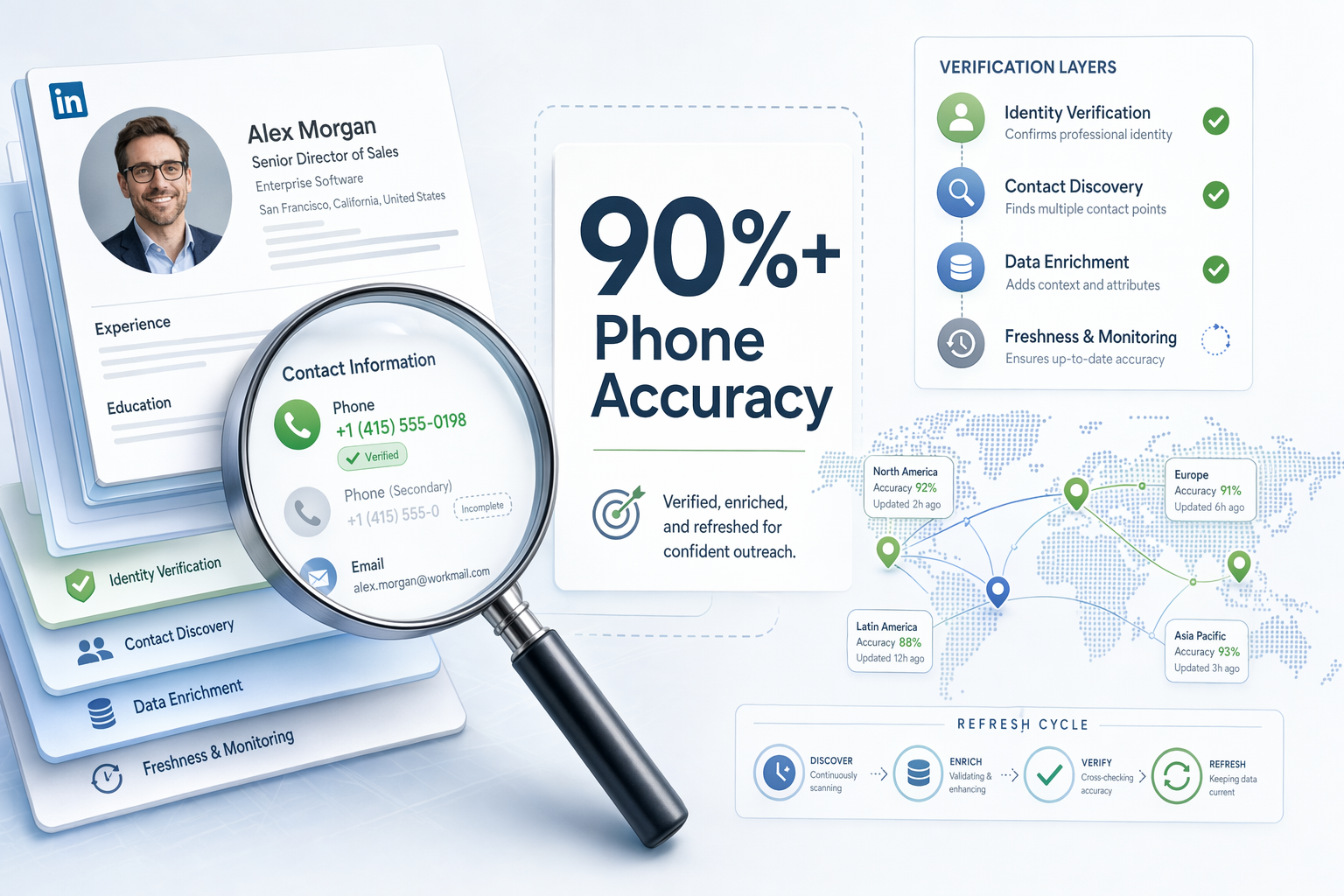
LinkedIn contact discovery tools extract verified phone numbers and emails from LinkedIn profiles using automated enrichment systems that vary widely in verification rigor, refresh cycles, and regional data quality.
Key Takeaways
- Most LinkedIn contact discovery tools claim 90%+ phone accuracy, but verification methodology disclosure separates platforms that perform syntax/domain/deliverability checks from those relying on static database lookups with 2-3% monthly decay rates [1].
- Credit-based pricing models with 50-65% match rates mean actual cost per usable contact can exceed advertised per-credit prices by 35-100% when enrichment fails.
- Direct dial vs. Switchboard number identification matters — platforms that disclose number type before download save costly post-export filtering within LinkedIn's 30-40 daily action limits.
- Regional accuracy variation is significant: India-specific mobile verification requires platforms with local data coverage, not just global databases optimized for North American markets.
- Data refresh cycles ranging from 7 days to quarterly updates create 75-98% accuracy spreads — faster refresh maintains accuracy while slower cycles allow decay [1].
Why Phone Number Accuracy Claims Are Misleading Without Verification Transparency
Phone number accuracy rates mean little without verification methodology transparency. Only 5-10% of LinkedIn users share phone numbers with first-degree connections, forcing discovery tools to source data from third-party databases, public records, and proprietary enrichment pipelines. The accuracy claim itself becomes misleading when platforms measure different outcomes: some count syntactically valid numbers, others measure deliverability, and a few verify direct-dial reachability through manual calling.
Phone data accuracy for cold calling ranged from 63% to 91% across tested platforms, with coverage spanning 26% to 92%. The wide variance reflects fundamental differences in how providers define and measure accuracy. A platform reporting 91% accuracy might count every syntactically correct number, including switchboards and outdated records. Another platform with 85% accuracy might exclude switchboards entirely and verify only direct mobile numbers through active validation.
Phone data decays at 2-3% monthly, meaning a database claiming 95% accuracy at the time of collection drops to roughly 75% within five months without continuous refresh. Platforms publishing refresh-cycle cadence and verification-layer detail enable buyers to calculate true accuracy at the moment of use rather than relying on stale benchmark claims.
What 90%+ Accuracy Actually Means: Verification Methodology Breakdown
Verification methodology splits into four layers, each adding precision but also cost. Syntax validation checks number format and country code structure — the cheapest layer, catching obvious errors like incomplete digits or invalid area codes. Carrier lookup queries telecom databases to confirm the number exists on an active carrier network, filtering disconnected lines. Deliverability verification attempts a passive ping to confirm the line accepts inbound calls without ringing the contact. Manual phone verification, used by platforms like Cognism for premium records, involves human callers confirming the contact answers at the published number.
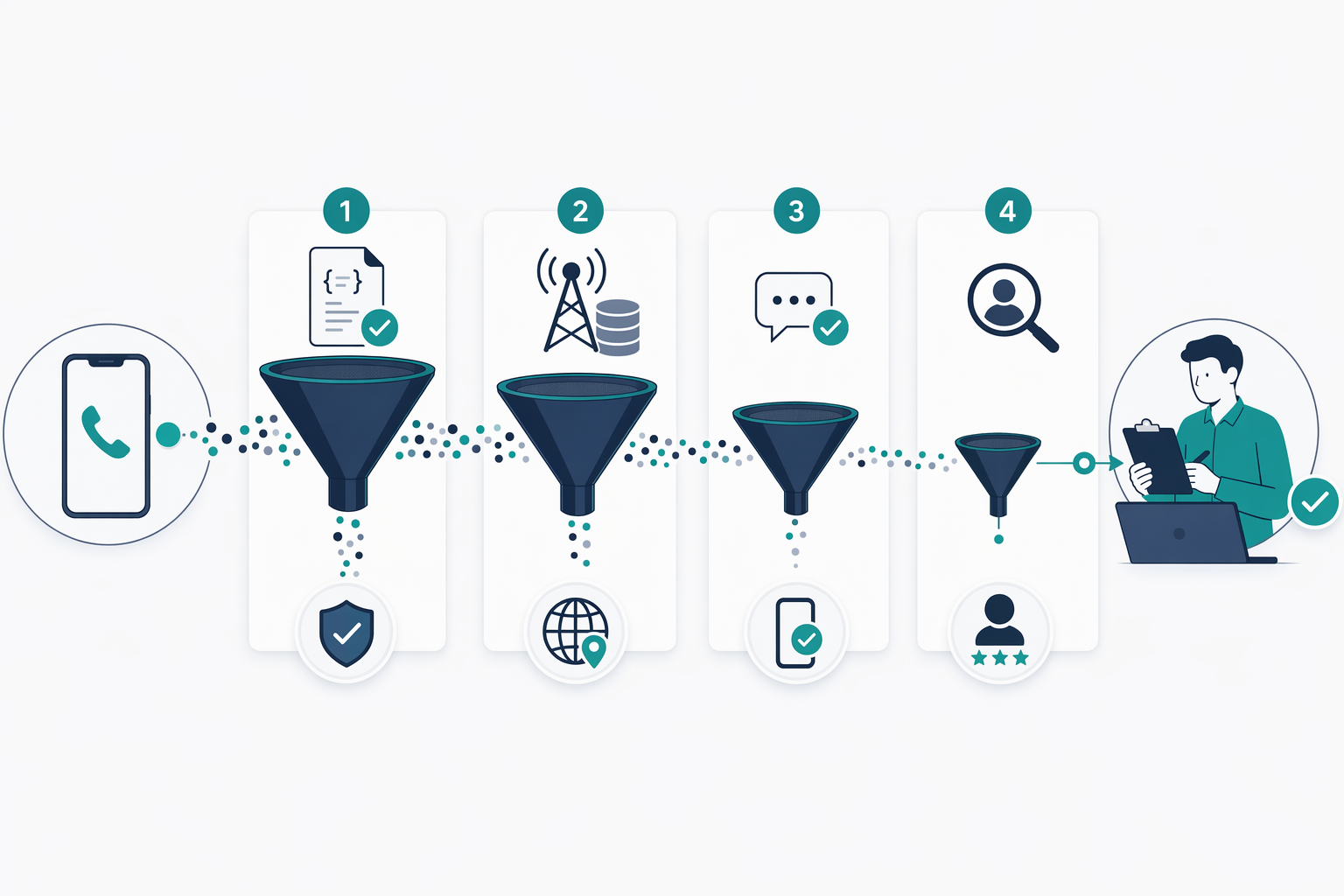
Cognism discloses 10 million phone-verified records with 98% accuracy, achieved through human verification rather than algorithmic inference. ZoomInfo claims 92% phone accuracy across its 135 million phone database but does not publish verification-layer details beyond carrier lookup. The methodology gap explains why two platforms with similar headline accuracy rates deliver different connect rates in real cold-calling workflows.
Syntax vs. Deliverability vs. Manual Verification
Syntax validation alone achieves 85-90% accuracy by eliminating format errors, but it cannot distinguish active lines from disconnected ones or direct dials from switchboards. Deliverability adds 3-5 percentage points by filtering lines that reject inbound connections. Manual verification, reserved for high-value records due to labor cost, pushes accuracy above 95% but limits database coverage. Buyers evaluating 90%+ accuracy claims should ask which layer the vendor applies universally versus selectively to premium tiers.
Static Database Lookup vs. Real-Time Enrichment
Static databases pull from periodically updated snapshots — quarterly, monthly, or weekly, meaning accuracy declines between refresh cycles. Real-time enrichment queries multiple live sources during lookup, delivering current data at higher per-query cost. La Growth Machine runs waterfall enrichment across multiple data providers automatically, increasing coverage but introducing latency. The trade-off between cost, speed, and freshness determines which model fits buyer workflows.
Platform Comparison: Disclosed Verification Methods & Refresh Cycles
Verification transparency separates platforms willing to publish methodology from those hiding behind aggregate accuracy claims. Cognism leads on disclosure, stating its Diamond Data subset receives manual phone verification and 7-day refresh cycles. ZoomInfo publishes quarterly database updates but does not break down verification layers publicly. PeakAi states 91% phone accuracy with a credit-back policy for wrong numbers but does not detail syntax vs. Deliverability splits. RocketReach discloses 80% phone accuracy without methodology specifics. Kaspr emphasizes GDPR compliance for European contacts but does not publish refresh cadence.
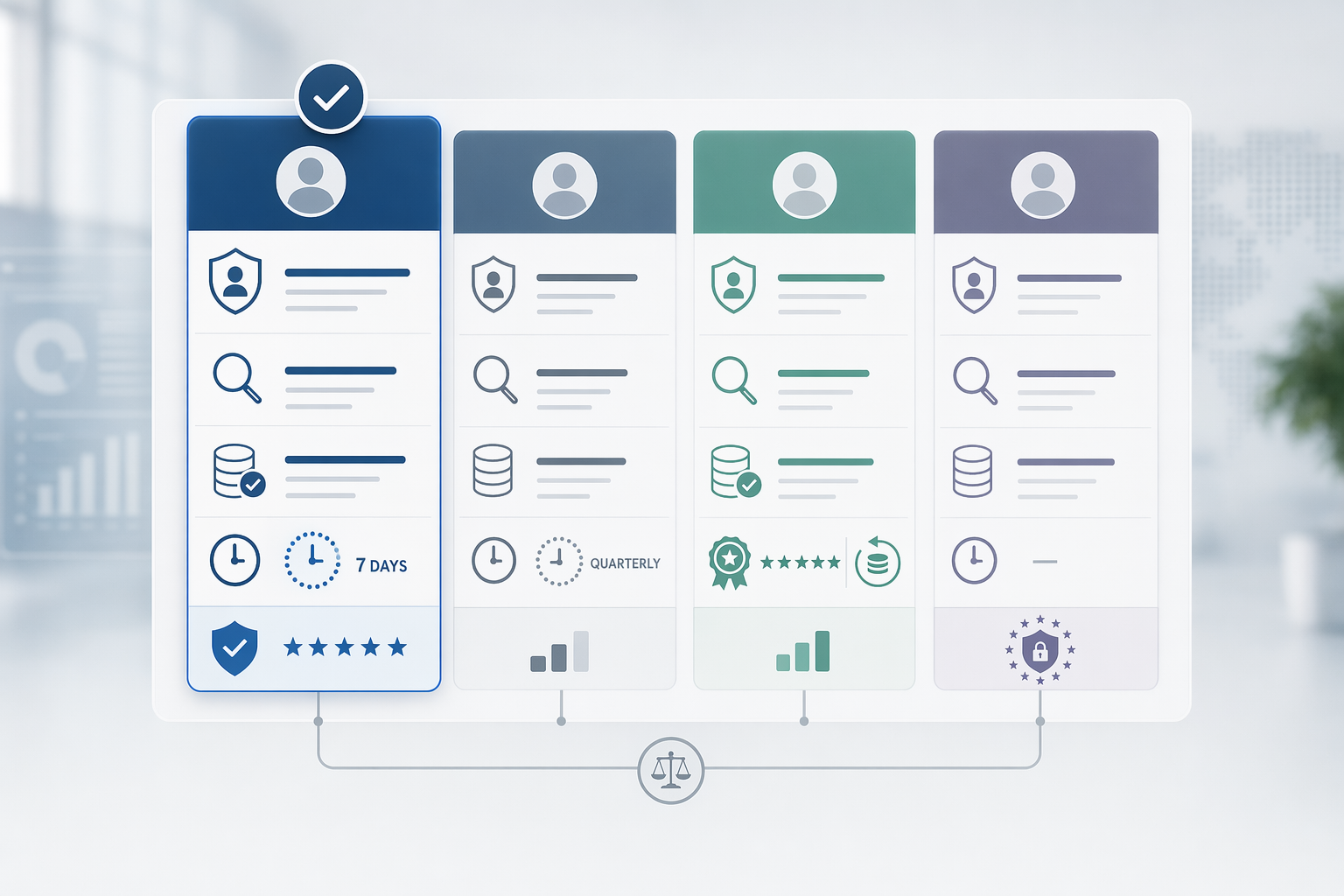
| Platform | Phone Accuracy | Disclosed Verification Method | Data Refresh Cycle | Pricing Model | India Coverage |
|---|---|---|---|---|---|
| Kaspr | Not disclosed | European B2B focus | Not disclosed | $49/month | Not disclosed |
| Cognism | 98% (Diamond Data) | Manual phone verification | 7 days | $1,000+/month | APAC coverage |
| ZoomInfo | 92% | Not disclosed | Quarterly | $800-$15,000+/year | Large global database |
| RocketReach | 80% | Not disclosed | Not disclosed | $59/month | Not disclosed |
| PeakAi | 91% | Credit-back for wrong numbers | Not disclosed | ₹675 for 50 contacts (pay-as-you-go) | 1600+ cities, India-optimized |
Data sourced from manufacturer websites and review aggregators as of June 2026.
Cognism's 7-day refresh for manually verified records maintains 98% accuracy by catching job changes and disconnections quickly. Tools with slower quarterly updates risk 75% accuracy by the end of the cycle when 2-3% monthly decay compounds. Buyers should calculate effective accuracy by subtracting expected decay from the vendor's stated rate, then multiply by the refresh interval in months.
Pre-Download Verification vs. Post-Export Enrichment
Pre-download verification shows phone accuracy before consuming credits, letting buyers filter records by confidence score. Post-export enrichment charges credits first, then verifies after download, meaning failed matches still burn budget. LinkedIn restricts automation to 30-40 daily actions, making post-download filtering costly when enrichment fails force re-export of the same profiles. Platforms disclosing match rates and offering credit-back policies mitigate this waste.
Direct Dial vs. Switchboard Detection: Which Tools Identify Number Type
Direct dial numbers ring the contact's desk or mobile directly. Switchboard numbers route to a company receptionist requiring transfer requests. The distinction matters for cold-calling efficiency: mobile numbers connect at roughly 7x the rate of desk direct dials. Switchboards add 2-3 minutes per call and often block unsolicited outreach, collapsing connect rates further.

Cognism discloses 80% direct dial coverage within its Diamond Data tier, meaning 8 out of 10 verified numbers bypass switchboards. ZoomInfo claims 120 million direct dials but does not publish the share of total phone records that qualify. RocketReach reports 70% direct dial coverage. PeakAi lists 25,000+ direct dials without specifying the denominator. Kaspr does not disclose direct dial identification in public documentation.
Buyers should ask vendors whether number-type tagging appears in the Chrome extension or CSV export before download. Post-download discovery that 40% of numbers route to switchboards wastes both credits and calling time, especially under LinkedIn's 30-40 daily action cap that prevents rapid re-enrichment.
Regional Data Quality: India-Specific Mobile Number Accuracy
Global accuracy claims often mask regional variance. North American databases benefit from decades of commercial data aggregation, public records access, and opt-in lead generation. Indian B2B contact data relies more heavily on LinkedIn profile scraping, business registries, and manual sourcing, creating coverage gaps in tier-2 and tier-3 cities. PeakAi emphasizes India-focused contact coverage with 1600+ city reach, positioning itself for regional accuracy where global platforms underperform.

ZoomInfo's large global database includes India but does not publish region-specific accuracy metrics. Cognism offers APAC coverage without India-specific benchmarks. RocketReach and Kaspr do not disclose regional breakdowns. Buyers targeting Indian markets should request sample enrichment tests on 50-100 Indian LinkedIn profiles across multiple cities before committing to annual contracts, filtering for providers that maintain accuracy beyond metro areas.
Mobile vs. Landline Identification for India
Indian business contacts increasingly use mobile-first communication, making mobile vs. Landline distinction critical. Mobile numbers support WhatsApp outreach and SMS follow-ups, while landlines limit channel options. Platforms that tag number type during enrichment allow segmentation by reachability method. Without this metadata, buyers discover channel limitations only after failed outreach attempts.
Cost Analysis: Pricing Models Compared
Credit-based models charge per enrichment attempt, while subscription models offer unlimited lookups within usage tiers. Credit pricing appears cheaper, RocketReach at $59/month, Kaspr at $49/month, until match-rate economics surface. Credit-based tools deliver 50-65% phone match rates and 75-80% email match rates, meaning actual cost per usable contact exceeds advertised per-credit pricing by 35-100% when enrichment fails.
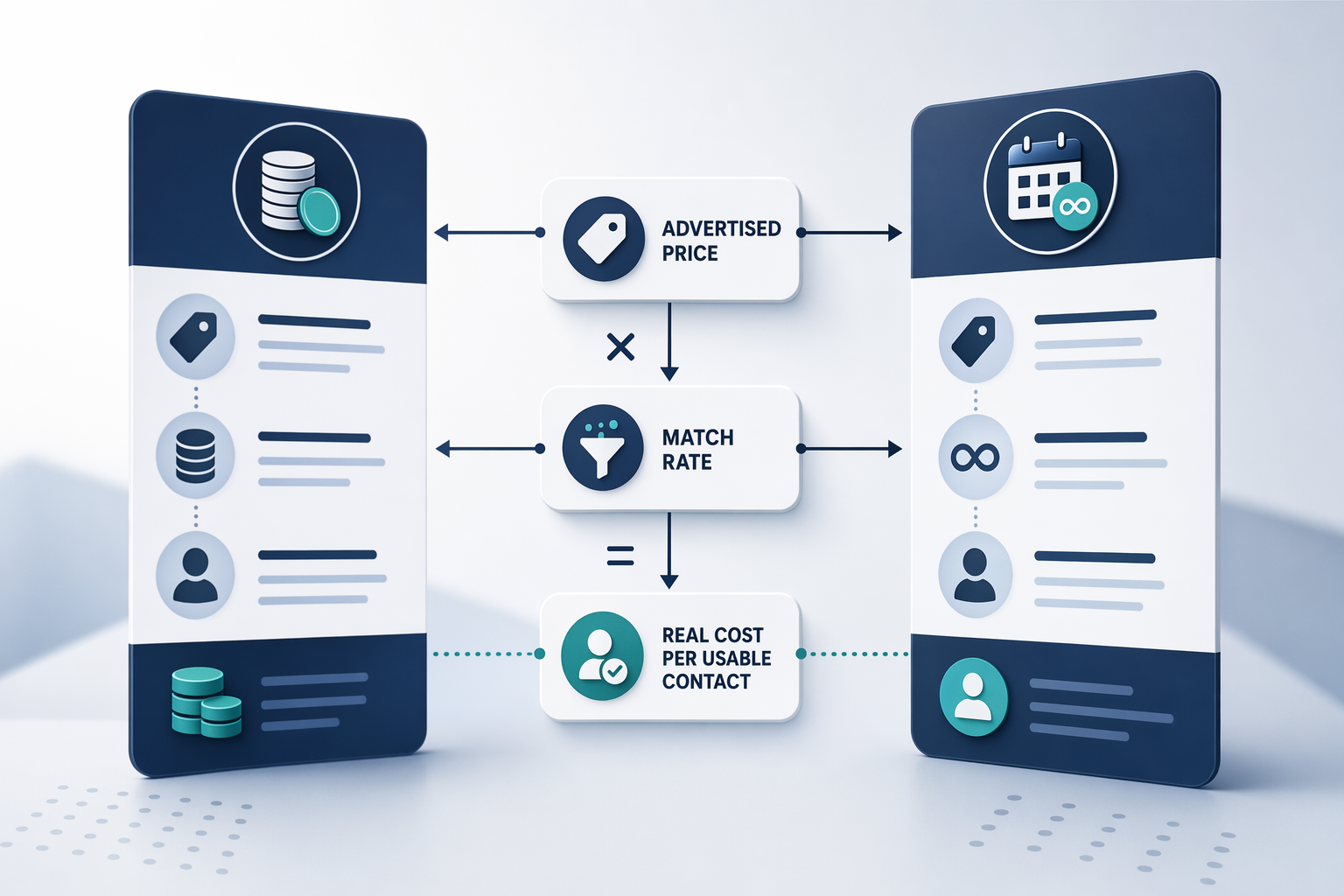
ZoomInfo's $800-$15,000+ annual pricing includes unlimited searches within contracted seat counts, removing per-lookup uncertainty but requiring volume commitments. Cognism's $1,000+/month tier bundles manual verification and faster refresh, justifying premium pricing for teams prioritizing connect rates over database size. PeakAi's pay-as-you-go model at ₹675 for 50 contacts avoids annual lock-in but requires buyers to calculate effective cost by dividing total spend by successful matches, not total attempts.
| Platform | Base Pricing | Estimated Match Rate (Phone) | Calculated Cost | Best For |
|---|---|---|---|---|
| Kaspr | $49/month | Not disclosed | Not calculable | European GDPR-compliant prospecting |
| Cognism | $1,000+/month | 98% (Diamond Data) | Premium tier pricing | Enterprise teams prioritizing accuracy |
| ZoomInfo | $800-$15,000+/year | 92% | Unlimited within seat plan | High-volume North American outreach |
| RocketReach | $59/month | 80% | Varies by credit allocation | Small teams, budget-conscious buyers |
| PeakAi | ₹675 for 50 contacts | 91% | ~₹15 per verified contact | India-focused teams, no annual commitment |
Illustrative analysis based on disclosed accuracy rates and pricing as of June 2026. Actual cost per verified contact varies by match success and usage volume.
Buyers should multiply base pricing by the inverse of the match rate to estimate true cost. A platform charging $1 per credit with 60% phone match rate delivers verified contacts at $1.67 each. A competitor charging $1.50 per credit with 90% match rate delivers at $1.67 as well, making headline pricing misleading without match-rate disclosure.
Annual Contract Lock-In vs. Pay-As-You-Go Flexibility
ZoomInfo and Cognism require annual contracts with 3-5 seat minimums, creating $15,000-$25,000+ upfront commitments. Pay-as-you-go models eliminate lock-in but charge higher per-contact rates, benefiting teams with variable prospecting volume or those testing platforms before scaling. Customers frequently report surprise charges and difficulty canceling or downgrading ZoomInfo plans, making contract flexibility a decision factor beyond pure per-contact economics.
FAQ: Choosing Contact Discovery Tools by Verification Standards
Ready to Transform Your Sales Process?
Join thousands of sales professionals using verified contact data to find accurate information. Compare platforms by disclosure transparency, refresh cycles, and regional accuracy rather than headline claims alone. Request sample enrichment tests on 50-100 records in your target geography and segment, filtering for providers that maintain accuracy across your specific use case. Explore PeakAi's India-focused contact discovery with 91% phone accuracy and pay-as-you-go pricing, or evaluate Cognism for GDPR-compliant European data and ZoomInfo for high-volume North American outreach.
Frequently Asked Questions
What does 90%+ phone number accuracy mean for LinkedIn contact discovery tools?
90%+ accuracy claims measure different outcomes depending on platform verification methodology, some count syntactically valid numbers including switchboards, while others verify direct-dial reachability through manual calling. Phone data decays at 2-3% monthly, so a 95% accuracy claim at collection time drops to roughly 75% within five months without continuous refresh.
How do I calculate true cost per verified contact with credit-based pricing?
Credit-based models charge per enrichment attempt, but 50-65% phone match rates mean actual cost per usable contact exceeds advertised pricing by 35-100% when enrichment fails. Multiply base per-credit pricing by the inverse of the match rate to estimate true cost: a $1 credit with 60% match rate delivers verified contacts at $1.67 each.
Which platforms identify direct dial vs. Switchboard numbers before download?
Cognism discloses 80% direct dial coverage within its Diamond Data tier, tagging number type during enrichment. ZoomInfo claims 120 million direct dials but does not specify whether metadata appears in exports. Mobile numbers connect at roughly 7x the rate of desk direct dials, making pre-download identification critical for cold-calling efficiency.
Do global accuracy claims apply to Indian B2B contacts?
Global accuracy claims often mask regional variance, with North American databases benefiting from decades of commercial data aggregation unavailable for Indian tier-2 and tier-3 cities. PeakAi emphasizes India-focused coverage with 1600+ city reach, while ZoomInfo and Cognism do not publish India-specific accuracy metrics.
How often should contact data refresh to maintain 90%+ accuracy?
Data refresh cycles determine whether accuracy claims remain valid at the moment of use. Cognism's 7-day refresh for manually verified records maintains 98% accuracy, while platforms with quarterly updates risk 75% accuracy by cycle end when 2-3% monthly decay compounds.
What verification transparency should I expect from contact discovery vendors?
Verification methodology disclosure separates platforms performing syntax/domain/deliverability checks from those relying on static database lookups. Cognism publishes manual phone verification processes and 7-day refresh cadence, while ZoomInfo discloses quarterly updates without verification-layer specifics. Buyers should ask whether platforms validate carrier lookup, deliverability, or manual reachability, and how refresh cycles counteract 2-3% monthly decay rates.
Is pre-download verification or post-export enrichment better for LinkedIn prospecting?
Pre-download verification shows phone accuracy before consuming credits, letting buyers filter records by confidence score and avoid wasted enrichment attempts. Post-export enrichment charges credits first, then verifies after download, burning budget on failed matches. LinkedIn restricts automation to 30-40 daily actions, making post-download filtering costly when failed enrichment forces re-export of the same profiles.
