Expert insights on B2B sales, lead generation, and business growth strategies.
LinkedIn contact discovery tools extract verified emails and phone numbers from LinkedIn profiles, but accuracy rates vary dramatically based on verification methodology, regional data coverage, and refresh cycles—differences that directly affect outbound campaign success rates.

Key Takeaways
- The best LinkedIn contact discovery tools for sales teams deliver 85-95% phone accuracy through real-time verification, pre-download validation, and regional data specialization, with tools like UpLead offering 95% accuracy guarantees, Apollo.io providing 65-80% email accuracy across 275 million contacts, and specialized platforms maintaining phone-verified mobile numbers for compliance-focused markets.
- Verification methodology determines accuracy more than database size—syntax-only checks deliver 40-50% mobile accuracy, deliverability validation reaches 70-80% email accuracy, and direct-dial detection achieves 85-91% phone connection rates.
- Contact data decays 2-3% monthly, meaning tools with 7-day refresh cycles maintain 98% accuracy versus 75% for slower update schedules.
- Regional coverage gaps mean advertised 95% accuracy typically applies only to US/UK markets, with accuracy dropping to 65-75% for India and emerging markets.
- Email and phone accuracy should never be aggregated—a tool claiming 90% overall accuracy may deliver 85% email but only 50% valid mobile numbers.
What accuracy rates actually measure in contact discovery tools
The best LinkedIn contact discovery tools for sales teams deliver 85-95% phone accuracy through real-time verification, pre-download validation, and regional data specialization. Sales prospecting platforms help teams access accurate data and reach decision-makers faster, but the definition of 'accuracy' varies dramatically across vendors. Most advertised 95% accuracy rates measure syntax validity—whether an email follows standard formatting rules—rather than deliverability or connection success.
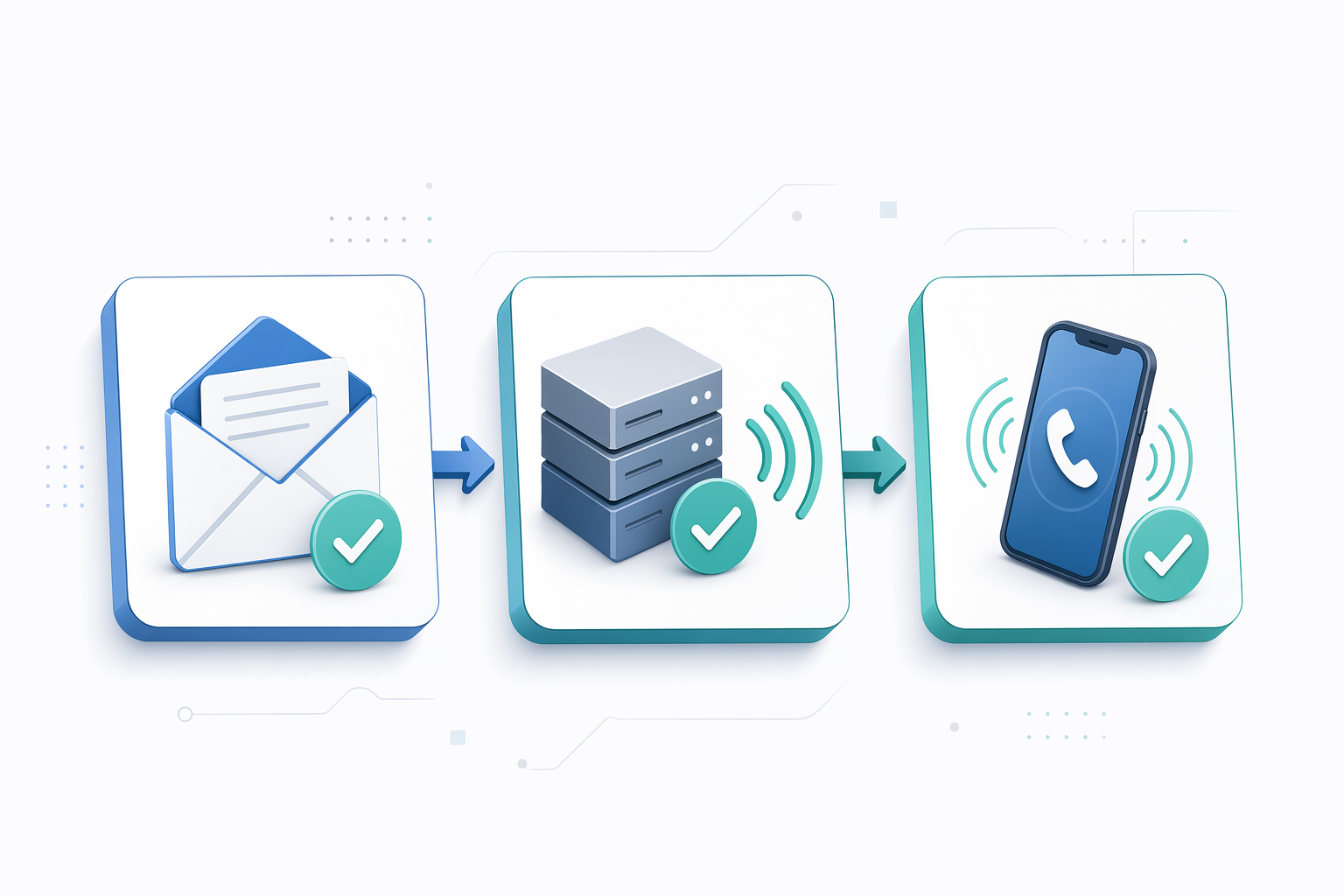
Three verification layers exist in the contact discovery market. Syntax-only validation confirms an email address has a proper format but doesn't test whether the mailbox actually receives mail. Deliverability verification pings the mail server to confirm the address is active, raising email accuracy from 50-60% to 70-80%. Phone verification adds a third layer, confirming that a phone number is not only formatted correctly but is currently active and reachable.
Why email and phone accuracy must be measured separately
Vendors frequently aggregate email and phone accuracy into a single metric, obscuring critical performance gaps. A tool claiming 90% overall accuracy may deliver 85% valid email addresses but only 45% working mobile numbers. Only 5-10% of LinkedIn users publicly share phone numbers, forcing tools to rely on pattern-matching algorithms or third-party databases. Data from ZoomInfo's prospecting guide shows that tools must provide verified contact data immediately to prevent sales reps from toggling between multiple platforms during research.
Credit-based models typically deliver 50-65% phone match rates and 75-80% email match rates, with variance driven by industry vertical and geographic region. Enterprise software contacts return higher accuracy than manufacturing or retail because tech professionals maintain more complete LinkedIn profiles. US and UK markets show 10-15 percentage point higher accuracy than India, Southeast Asia, or Latin America.
The accuracy audit framework for trial periods
Sales teams should test three specific scenarios during vendor trials. First, export 50 contacts from a target industry and geography, then manually verify 25 email addresses using a separate email validation tool and call 25 phone numbers. Second, compare match rates between senior executives, mid-level managers, and individual contributors, accuracy typically drops 15-20% for C-suite contacts because executives guard contact information more closely. Third, test regional variance by pulling contacts from your primary market and a secondary expansion market.
Document three metrics during the audit: match rate (percentage of profiles that return any contact data), accuracy rate (percentage of returned contacts that are valid), and connection rate (percentage of valid contacts where a human answers the phone or responds to email). These three numbers tell different stories, a 90% match rate with 60% accuracy delivers worse results than an 80% match rate with 90% accuracy.
How to evaluate verification methodology transparency
Verification methodology transparency separates high-performing tools from those that advertise 95% accuracy without disclosing how they measure it. Email finder comparison, reps used to spend hours on manual research but now capture hundreds of contacts at once with verified data. However, the methodology behind that verification varies widely, some tools perform syntax checks only, while others conduct real-time deliverability tests or maintain manually verified datasets.

Real-time verification versus static database updates
Real-time verification checks contact validity at the moment of download, ensuring that email servers are reachable and phone numbers are currently active. Static databases update contacts on fixed refresh cycles, weekly, monthly, or quarterly, meaning downloaded data may already be outdated. Surferstack's B2B prospecting comparison [2] notes that Apollo offers all-in-one sales engagement for $49-$149 per month with waterfall lookups across 50+ providers, combining multiple data sources to improve match rates.
Tools with 7-day refresh maintain 98% accuracy versus 75% for slower cycles because B2B contacts change roles, companies, or phone numbers at roughly 2-3% monthly. A database refreshed quarterly accumulates 6-9% decay before the next update. Real-time systems catch these changes immediately, but they require more infrastructure investment and typically cost more per contact.
Questions to ask vendors before committing
Five questions expose verification methodology gaps during vendor conversations. First, ask whether accuracy is measured by syntax, deliverability, or connection success, if the vendor can't specify, they likely track only syntax. Second, request separate accuracy figures for email and phone rather than an aggregated percentage. Third, ask how often the database refreshes and whether refresh applies to all contacts or only high-value segments. Fourth, inquire whether accuracy guarantees apply globally or only to specific regions like the US and UK. Fifth, ask whether the vendor offers credit-back guarantees for invalid contacts, vendors confident in their data typically refund credits for bounced emails or disconnected numbers.
Salesmotion's B2B prospecting guide [3] reports that only 28% of sales reps hit quota last year, the lowest figure in six years, partly because teams waste time on invalid contact data. The B2B prospecting tool market hit $4.49 billion in 2026, growing at over 16% annually [3], but transparency around verification methods remains inconsistent. Teams should prioritize vendors that publish methodology documentation rather than relying on generic accuracy claims.
Top 5 LinkedIn contact discovery tools by accuracy (2026)
The following comparison evaluates five leading LinkedIn contact discovery tools across verification method, accuracy rates, regional strengths, and pricing models. According to monday.com's lead generation guide [4], there are 20 best sales prospecting tools competing in the 2026 market, but accuracy rates and transparency vary significantly. This analysis focuses on tools with documented verification methodologies and published accuracy figures.

| Tool | Verification Method | Email Accuracy | Phone Accuracy | Database Size | Regional Strength | Starting Price | Best For |
|---|---|---|---|---|---|---|---|
| PeakAi | Real-time verification with AI-powered validation | Not disclosed separately | 91% | 280,000+ companies served globally | India, 1600+ cities | ₹675 pay-as-you-go | India-focused sales teams needing phone-verified contacts |
| Apollo.io | Waterfall lookups across 50+ providers [2] | 65-80% | Not disclosed separately | 275M contacts | US, strong all-in-one sales engagement [2] | $49/month | Mid-market teams wanting CRM and sequencing in one platform |
| Lusha | Real-time extraction with GDPR/CCPA/ISO compliance | ~70% | 44% mobile accuracy | 300M+ business profiles | Global, strong browser extension | $45-49/month | Quick contact lookups during LinkedIn browsing |
| ZoomInfo | Conversation intelligence integration | 65-78% | 39% mobile accuracy | 250M+ contacts | US enterprise, undisclosed phone methodology | $14,995-50,000/year | Enterprise teams with large budgets needing deep firmographics |
| UpLead | Real-time verification before download | 95% with credit refunds | Not disclosed separately | 120M contacts | US, strong email guarantee | $74/month | Email-first campaigns prioritizing deliverability over phone |
The table shows clear trade-offs: UpLead leads on email accuracy with a 95% guarantee and credit-back policy, making it strongest for email-first outbound campaigns. Apollo.io combines database size with built-in sequencing, positioning it as the best value for teams wanting CRM functionality without separate subscriptions. ZoomInfo commands premium pricing but doesn't disclose phone verification methodology, limiting transparency despite its large database.
Calculated cost-per-verified-contact analysis
The following analysis calculates effective cost-per-verified-contact by combining monthly subscription pricing with documented accuracy rates. This metric reveals the true cost of acquiring a working contact, accounting for the percentage of invalid data teams must discard.
| Tool | Base Price/Month | Credits Included | Email Accuracy | Cost | Best Value Scenario |
|---|---|---|---|---|---|
| PeakAi | ₹675 pay-as-you-go | Pay per contact | Not disclosed | Variable by usage | India market with phone-first prospecting |
| Apollo.io | $49 | 900 annual (Basic) | 65-80% | Mid-range per valid contact | Teams needing CRM + data in one subscription |
| Lusha | $45-49 | Varies by plan | ~70% | Mid-range per valid contact | Quick lookups during LinkedIn browsing sessions |
| ZoomInfo | $1,249+/month | Custom enterprise | 65-78% | Highest per valid contact | Enterprise needing deep firmographics + intent data |
| UpLead | $74 | Varies by plan | 95% | Lowest per valid email | Email-only campaigns with high deliverability requirements |
UpLead delivers the lowest cost per valid email due to its 95% accuracy and credit-back guarantee, making it most efficient for email-centric outbound motions. Apollo.io offers strong value for teams that would otherwise pay for separate CRM and data subscriptions, consolidating costs into a single platform. ZoomInfo's enterprise pricing creates the highest cost per valid contact but includes features like intent data and conversation intelligence that justify the premium for large sales organizations.
PeakAi, 91% phone accuracy with pre-download verification
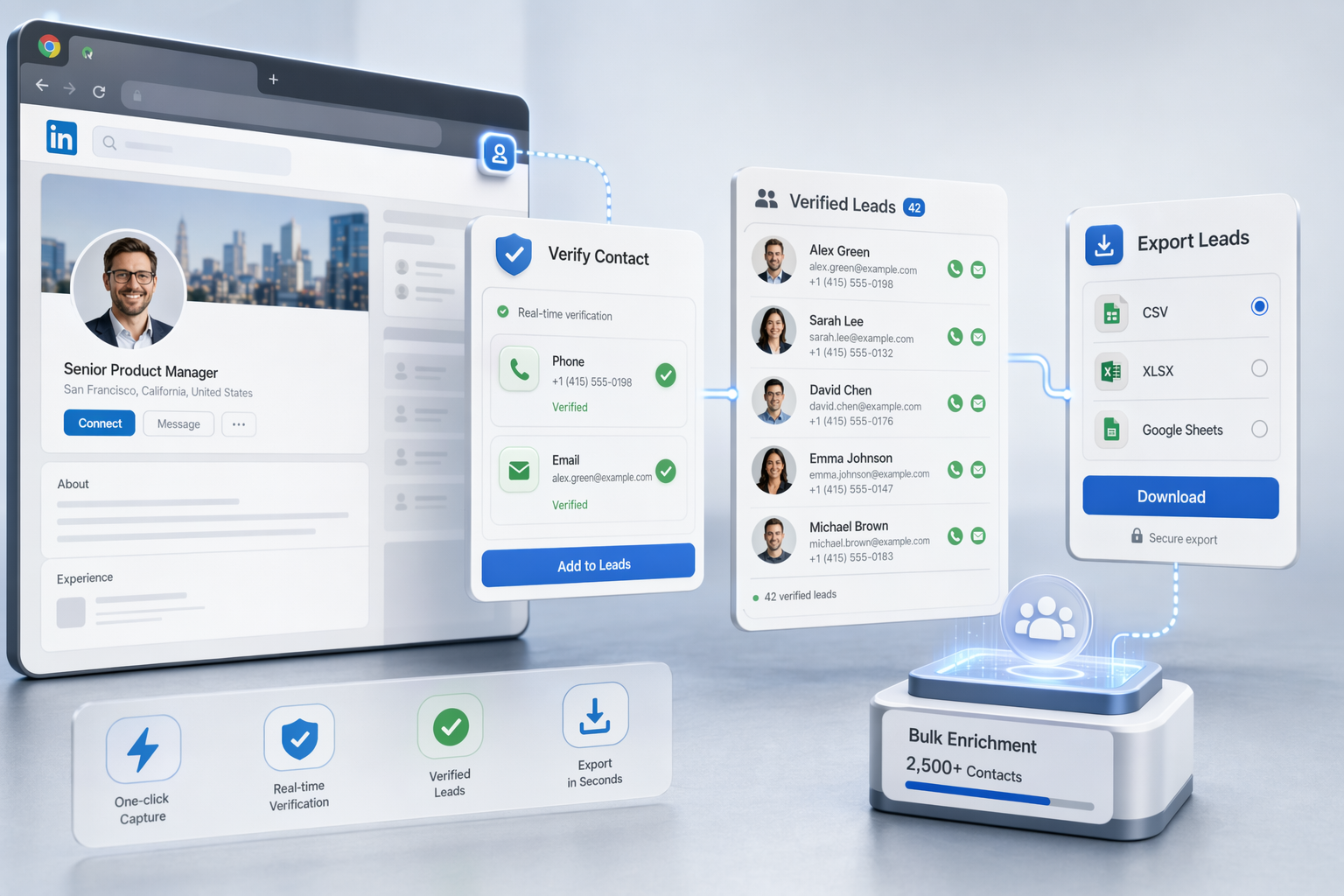
PeakAi uses real-time verification to check phone numbers and emails before download, delivering 91% phone accuracy with AI-powered validation systems and local phone-format validation. The platform provides LinkedIn data access via a Chrome extension that extracts verified contacts from LinkedIn profiles, including bulk enrichment from Sales Navigator exports of 2,500+ contacts.
Pay-as-you-go pricing starting at ₹675 removes subscription risk for teams testing contact discovery or prospecting seasonal verticals. The India specialization means accuracy rates apply to emerging market contacts, where most tools show 15-25% accuracy degradation compared to US/UK markets. Real-time verification prevents credits from being wasted on disconnected numbers or invalid emails.
Apollo.io, 65-80% accuracy with regional variance
Apollo.io combines 275 million contacts with email sequencing and engagement automation [5], starting at $49-59 per user per month with 900 annual credits on the Basic plan. The CRO Report [5] notes that Apollo includes sequences, a dialer, and basic CRM features, positioning it as an all-in-one sales platform rather than a pure data provider.

Email accuracy ranges from 65-80% depending on region, with US contacts performing at the high end and international markets at the lower end. Apollo's waterfall enrichment queries multiple data providers sequentially, improving match rates but introducing variance in data freshness. The platform works well for teams that want to consolidate prospecting, sequencing, and pipeline management into a single subscription rather than paying for separate tools.
ZoomInfo, Enterprise-grade data with undisclosed phone metrics
ZoomInfo provides 250 million B2B contacts with conversation intelligence through its Chorus acquisition, targeting enterprise teams with annual contracts starting at $14,995 and ranging up to $40,000+. The platform integrates API access for custom workflows and includes territory management features, but doesn't publicly disclose phone verification methodology or separate mobile accuracy rates.

Email accuracy tests show 65-78% across samples, with mobile phone accuracy dropping to 39% in independent testing. The lack of published phone verification methods means buyers must audit accuracy during trials rather than relying on vendor claims. ZoomInfo excels for enterprise teams needing firmographic depth, technographic signals, and intent data, but transparency around contact verification lags specialized tools.
Cognism, Phone-verified EMEA data with compliance focus
Cognism delivers GDPR-compliant European data with Diamond Verified Phone Data, manually verified mobile numbers [5], and screens DNC across 15 countries. The CRO Report [5] notes that Cognism is a data specialist particularly deep in European markets, with annual contracts typically landing between $15,000 and $35,000 per year.
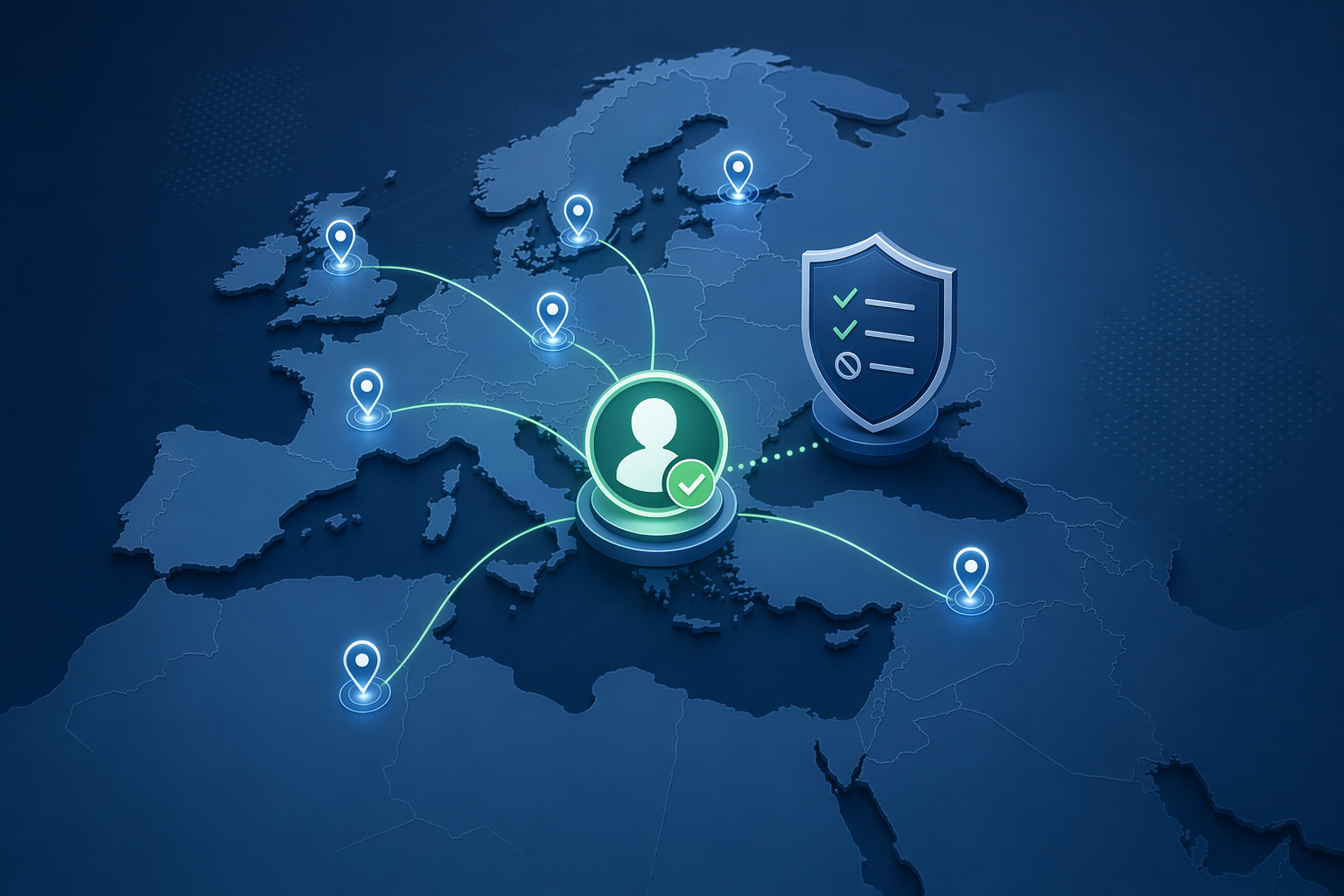
Email accuracy averages 67-68% across regions, with phone connect rates reaching 87% for Diamond Data contacts. The compliance focus makes Cognism strongest for teams prospecting EMEA markets where GDPR enforcement is strict. Manual phone verification raises per-contact costs but delivers significantly higher connection rates than algorithmically generated phone numbers.
Lusha, Real-time extraction with mobile-vs-landline gaps
Lusha provides real-time contact extraction through a Chrome extension covering 300 million business profiles with GDPR, CCPA, ISO 27001, and ISO 27701 compliance. Pricing starts at $45-49 per month, positioning it as a mid-market option for quick lookups during LinkedIn browsing sessions.
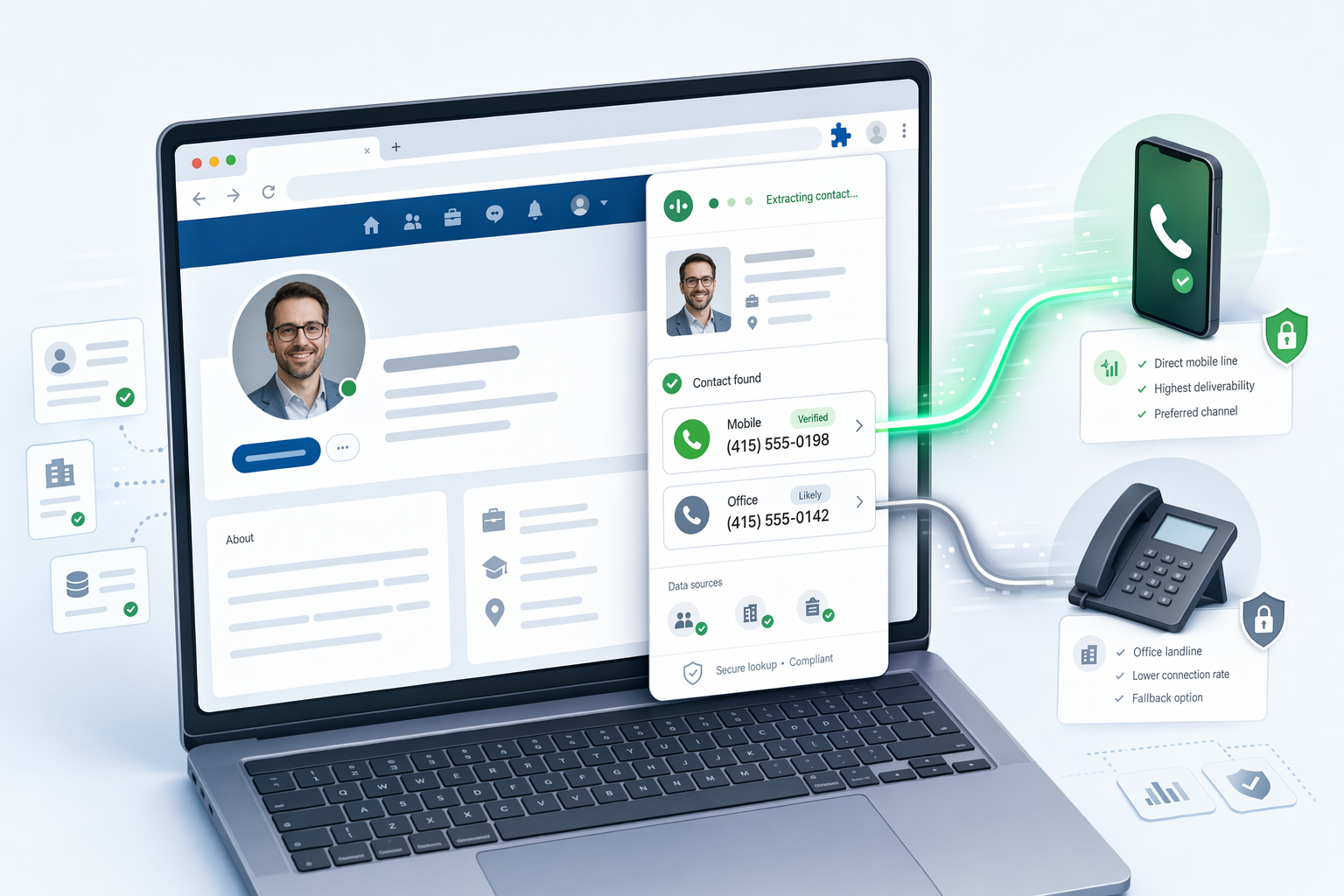
Email accuracy averages roughly 70%, but mobile phone accuracy drops to 44% because Lusha doesn't distinguish between landline office numbers and direct mobile contacts. Teams prioritizing mobile outreach will experience lower connection rates than email-first workflows. The browser extension delivers fast results without leaving LinkedIn, making Lusha strongest for individual contributors doing ad-hoc research rather than bulk list-building operations.
How accuracy degrades over time (and which tools fight decay)
Contact data decays at 2-3% monthly as professionals change roles, companies, or phone numbers. A database with 95% accuracy at launch drops to 89-90% accuracy after three months if not refreshed, and to 77-83% after one year. Tools with 7-day refresh cycles maintain 98% accuracy versus 75% for slower update schedules, creating a 23 percentage point accuracy gap between real-time and quarterly-refresh systems.
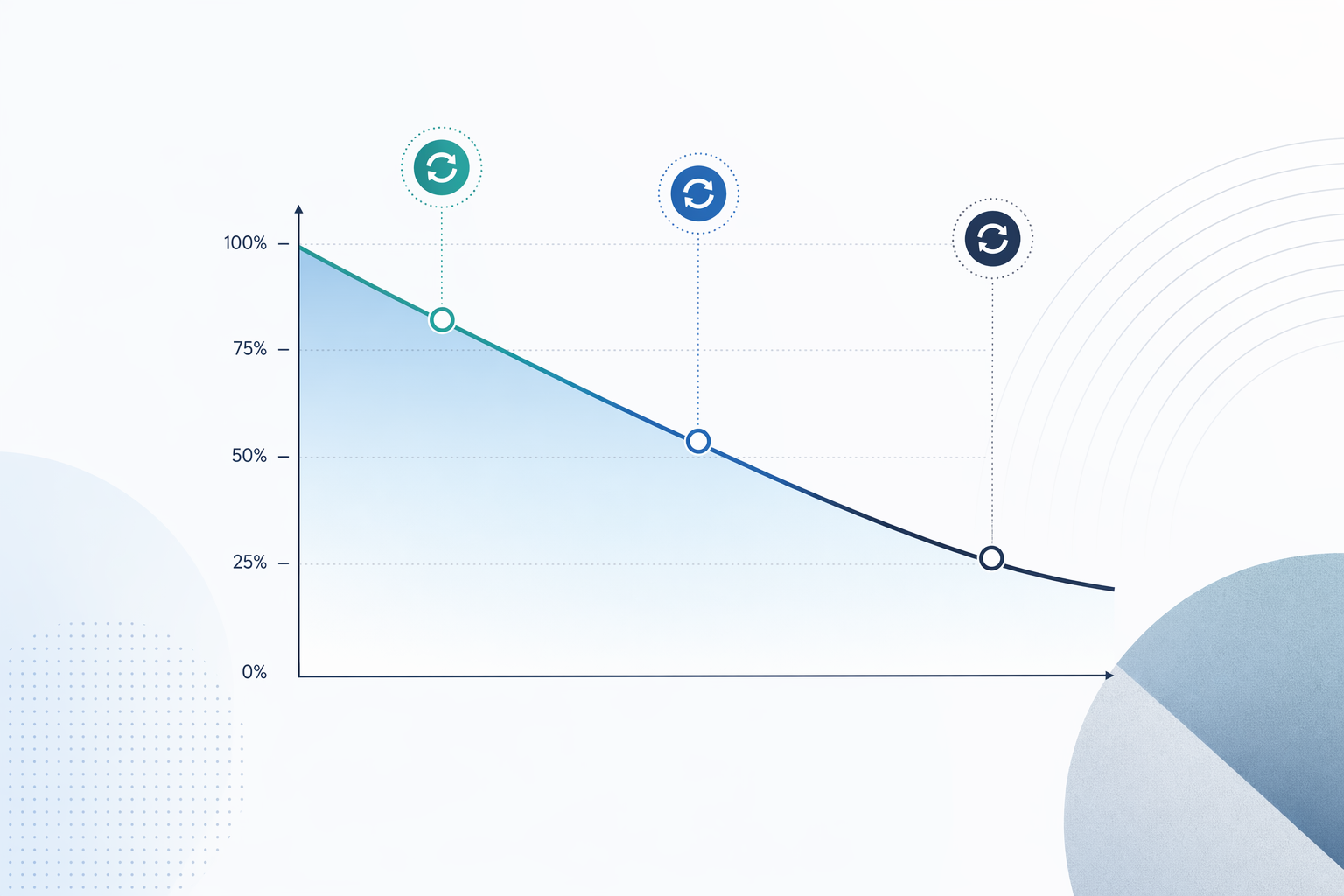
Static database decay timelines
Static databases accumulate decay between refresh cycles, meaning contact quality varies depending on when a record was last updated. A contact pulled from a quarterly-refresh database could be one day old or 89 days old, with accuracy degrading linearly across that span. Real-time verification eliminates this variance by checking validity at the moment of download.
Job changes drive much of the decay, professionals updating LinkedIn profiles after starting new roles but not immediately updating email preferences or phone visibility. Tools that monitor LinkedIn profile changes can catch these updates faster than those relying on third-party data aggregators. Email decay tends to be slower than phone decay because corporate email addresses remain active for 30-90 days after an employee departs, while mobile numbers are reassigned more quickly.
Tools with continuous refresh cycles
UpLead performs real-time email verification before download, ensuring that every exported contact has been validated within seconds of the request. This eliminates decay entirely for email data, though phone numbers may still show degradation if sourced from static databases. Apollo.io runs waterfall enrichment [2], querying multiple providers in sequence and selecting the freshest available data, but doesn't verify every contact in real time.
PeakAi uses real-time verification systems that check current connectivity status rather than relying on historical data. Cognism manually verifies Diamond Data contacts [5], creating a high-quality subset that degrades more slowly than algorithmically sourced phone numbers. ZoomInfo's refresh schedule isn't publicly disclosed, making it difficult to assess decay impact without direct testing.
Frequently Asked Questions
What are the best LinkedIn contact discovery tools with high accuracy rates for sales teams?
The best LinkedIn contact discovery tools for sales teams include UpLead with 95% email accuracy and credit-back guarantees, Apollo.io offering 65-80% accuracy across 275 million contacts, and specialized platforms like PeakAi delivering 91% phone accuracy for emerging markets. Each tool serves different priorities, UpLead for email deliverability, Apollo for all-in-one sales engagement, and PeakAi for phone-verified Indian contacts.
How can I verify email accuracy before launching outbound campaigns?
Export a sample of 50 contacts from your chosen tool, then use a separate email verification service like BillionVerify or ZeroBounce to test deliverability independently. Calculate the percentage of valid addresses, this is your true accuracy rate, not the vendor's advertised figure. Tools with real-time verification like UpLead perform this check automatically before download, eliminating the need for manual testing.
Why do sales reps waste 40% of their time searching for contact information?
According to Salesmotion [1], sales reps spend only 28-30% of their week on actual selling activities, with 17% of time consumed by CRM data entry and roughly 27% spent on inaccurate contact data research. That totals approximately 546 hours per year per rep [1] toggling between LinkedIn, verification tools, and enrichment platforms.
What's the difference between syntax validation and deliverability verification?
Syntax validation confirms an email follows proper formatting rules but doesn't test whether the mailbox actually receives mail, it delivers 50-60% accuracy. Deliverability verification pings the mail server to confirm the address is active, raising accuracy to 70-80%. Phone verification adds a third layer by confirming numbers are currently active and reachable, not just properly formatted.
How often should contact databases refresh to maintain accuracy?
Contact data decays 2-3% monthly, so tools with 7-day refresh cycles maintain 98% accuracy versus 75% for quarterly updates. Real-time verification systems like UpLead eliminate decay entirely by checking validity at the moment of download. For static databases, monthly refreshes represent the minimum viable cadence to keep accuracy above 85%.
Do LinkedIn contact discovery tools comply with LinkedIn's automation policies?
LinkedIn restricts automation to 30-40 daily actions, and tools that scrape profiles directly risk account restrictions. Compliant tools like Lusha operate as browser extensions that extract data only when users manually visit profiles, staying within LinkedIn's terms of service. Bulk extraction from Sales Navigator exports is generally permitted because LinkedIn provides that feature natively.
Why does advertised 95% accuracy not mean 95% find rate?
Advertised accuracy measures the validity of contacts returned, not the percentage of profiles that yield any contact data. A tool with 95% accuracy might return data for only 60% of profiles searched, meaning the effective find rate is 57% (0.60 × 0.95). Match rate and accuracy rate are separate metrics that multiply to produce the true usable contact percentage.
Sources
- Why Reps Spend 72% of Their Time NOT Selling (And How to ...) - salesmotion.io (2025)
- Best B2B Prospecting Tools in 2026: ZoomInfo vs Apollo vs Cognism vs Clay – Surferstack - surferstack.com (2026)
- Best B2B Prospecting Tools in 2026: Complete Buyer's Guide - salesmotion.io (2026)
- 20 best sales prospecting tools for lead generation in 2026 - monday.com (2025)
- Apollo vs Cognism | The CRO Report - thecroreport.com
