LinkedIn contact discovery tools extract business emails and phone numbers from professional profiles, with accuracy rates varying dramatically based on verification methodology, data sourcing compliance, and refresh cycles.

Key Takeaways
- The best LinkedIn contact discovery tools for sales teams achieve 85–98% email accuracy and 40–85% phone coverage by combining real-time verification, multi-source cross-referencing, and 90-day refresh cycles to counter 2–3% monthly contact decay.
- Verification methodology transparency matters more than database size — tools using real-time cross-referencing outperform static database lookups that don't account for data decay rates.
- Compliance risks vary dramatically by sourcing method — LinkedIn's Terms of Service explicitly prohibit automated scraping, creating account suspension risks that compliance-first tools avoid by using legitimate business databases instead [4].
- Cost-per-verified-contact ranges from free tiers with limited credits to $49 to 149 per user monthly, with specialized platforms offering better ROI through credit refund policies that exclude unverifiable or outdated contacts [5].
- India's Digital Personal Data Protection Act 2023 requires explicit consent for processing contact data, making GDPR-compliant verification processes key for B2B sales teams operating in or targeting Indian markets [4].
What Makes a LinkedIn Contact Discovery Tool 'High Accuracy' in 2026
The best LinkedIn contact discovery tools for sales teams achieve 85 to 98% email accuracy and 40 to 85% phone coverage by combining real-time verification, multi-source cross-referencing, and 90-day refresh cycles to counter 2 to 3% monthly contact decay. 30 to 40% of business contact data becomes outdated annually, making verification methodology the primary differentiator between tools that deliver accurate contacts and those that burden sales teams with bounce rates exceeding 30%.

Verification Methodology: Real-Time Cross-Referencing vs. Static Database Lookups
Most contact discovery platforms fall into two verification categories. Static database tools store pre-collected contact information and validate it against internal records, refreshing data on fixed schedules. Real-time cross-referencing platforms query multiple independent sources simultaneously when a user requests a contact, comparing results to identify the most current information. Contact data decays at roughly 2% per month, meaning static databases lose reliability quickly without aggressive refresh cycles.
Phone Number Accuracy vs. Email Accuracy Trade-offs
Phone number verification presents unique challenges. Only 5 to 10% of LinkedIn users share phone numbers with first-degree connections, and less than 1% with second or third-degree contacts. Tools claiming 90%+ phone coverage typically aggregate data from business registries, conference attendance lists, and verified user contributions rather than extracting directly from LinkedIn profiles. Email accuracy rates consistently exceed phone accuracy because corporate email patterns follow predictable formats that can be validated through domain records and SMTP checks.
Data Freshness and 90-Day Refresh Cycles
Contact freshness directly impacts outbound success rates. Sales teams report that outdated contact data forces reps to spend roughly 40% of their time searching for accurate information instead of selling [3]. Platforms with 90-day refresh cycles maintain higher accuracy than those updating quarterly or annually, but the most effective tools verify contacts in real-time at the moment of export rather than relying solely on scheduled database updates.
Compliance-First Evaluation Framework for Contact Finders
Compliance risks separate LinkedIn contact discovery tools into two operational categories: those that scrape LinkedIn profiles in violation of the platform's Terms of Service, and those that source data from legitimate business databases. LinkedIn explicitly prohibits automated data extraction from its platform, creating account suspension risks for sales teams using non-compliant tools. According to Surferstack [4], tools that pull contact data through LinkedIn's internal APIs or scrape profile pages expose users to immediate account termination, while database-sourced platforms avoid this risk entirely by aggregating information from public business registries, conference directories, and opt-in data contributions.

DPDP Act and GDPR Consent Requirements
India's Digital Personal Data Protection Act 2023 requires explicit consent for processing personal contact information, mirroring GDPR's consent framework but with India-specific enforcement mechanisms. B2B sales teams operating in India or targeting Indian prospects must verify that their contact discovery tools source data through legitimate business channels rather than unauthorized scraping. Tools compliant with both GDPR and DPDP Act typically document their data sourcing methodology, offer opt-out mechanisms, and provide audit trails showing how contacts entered their databases.
Account Suspension Risk Assessment by Tool Category
Chrome extensions that extract contact data directly from LinkedIn profile pages carry the highest suspension risk. LinkedIn's automated detection systems flag patterns like rapid profile viewing, bulk data exports, and API calls from unauthorized applications. Database enrichment tools that operate independently of LinkedIn, accepting a company name or domain as input rather than requiring a LinkedIn profile URL, carry minimal account risk because they never interact with LinkedIn's platform. Sales teams should evaluate whether a tool requires active LinkedIn session authentication or Sales Navigator access, both signals of direct LinkedIn integration that violate platform policies.
Apollo.io, Best for Salesforce/HubSpot CRM Integration
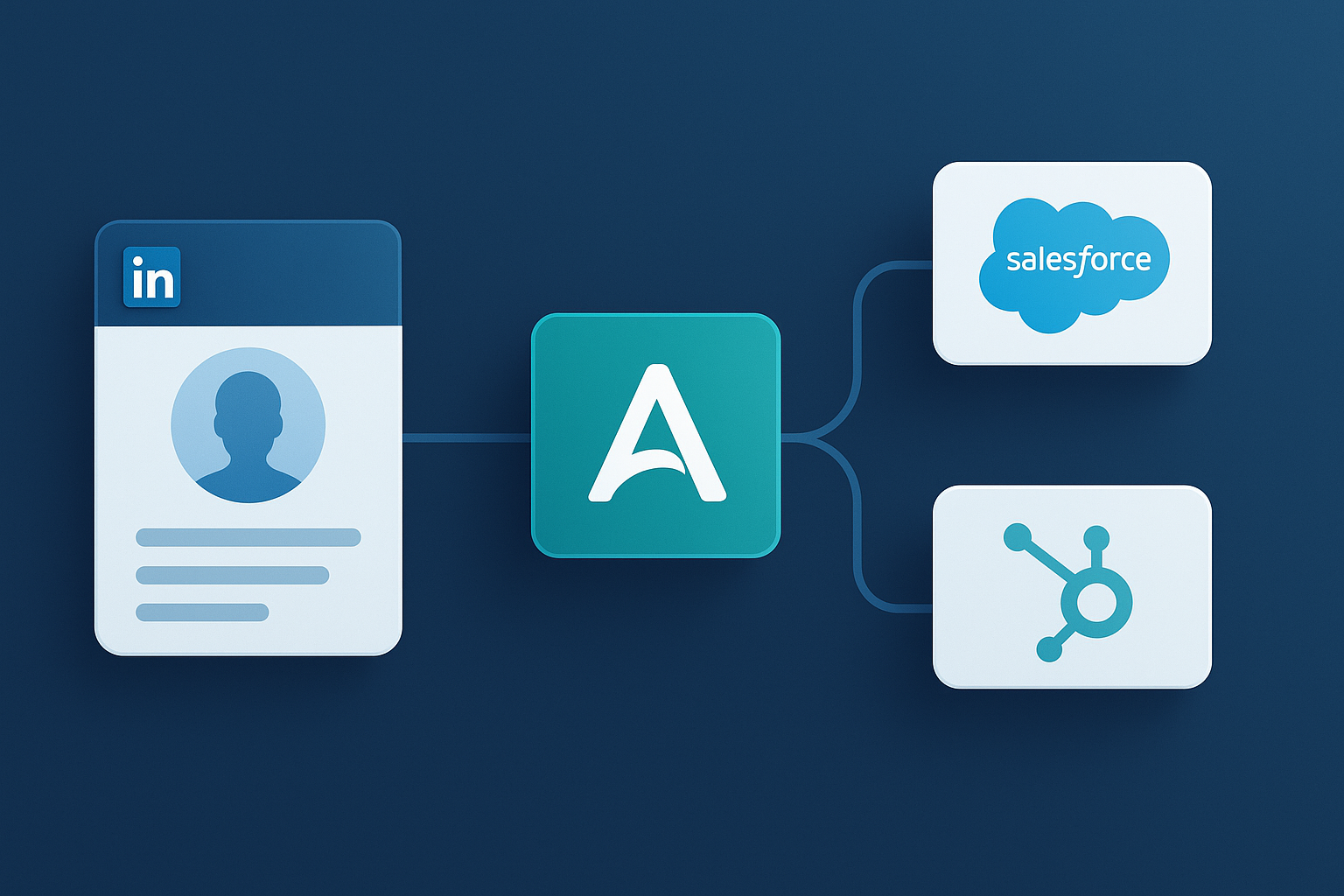
Apollo.io combines a contact database of 275 million business profiles with native CRM sync capabilities, making it the strongest option for teams already using Salesforce or HubSpot. Apollo offers 100 million verified business contacts across 14 million company profiles, with pricing starting at $49 per user monthly. The platform's Chrome extension provides instant contact enrichment from LinkedIn profiles, though this direct integration creates the LinkedIn Terms of Service compliance concerns outlined above.
Accuracy and Coverage
Independent testing cited by Surferstack [4] shows Apollo achieves 87% email accuracy and 44.5% direct dial coverage for U.S. Contacts, with international data showing more gaps. For India-focused teams, Apollo's coverage in non-tech verticals and founder-led companies without formal LinkedIn profiles remains limited. The platform offers a free plan with 50 email credits monthly, making it accessible for initial pilot testing.
CRM Integration Depth
Apollo's bidirectional sync with Salesforce and HubSpot automatically updates contact records, logs activity, and triggers workflows based on engagement signals. This eliminates manual CSV exports and reduces CRM data entry time, which according to Salesmotion [2] consumes 17% of a sales rep's week on average. The platform includes built-in email sequencing and call tracking, positioning it as an all-in-one sales engagement solution rather than a pure contact discovery tool.
Lusha, Best for Real-Time LinkedIn Contact Extraction
Lusha specializes in real-time contact enrichment through its Chrome extension, which overlays contact data directly onto LinkedIn profiles and company websites. The platform offers 50 free email credits monthly and starts at $49 per user for paid plans. Lusha's strength lies in its direct dial phone number coverage, which multiple sources cite as significantly higher than competitors for European markets where GDPR-compliant data sourcing is mandatory.
Verification Speed and Accuracy
Lusha reports 85% email accuracy according to independent analysis, with phone number coverage ranging from 40 to 55% depending on geography. The platform verifies contacts in seconds rather than requiring batch processing, making it ideal for sales reps who need immediate contact information during active prospecting sessions. However, this real-time extraction from LinkedIn profiles raises the same Terms of Service compliance concerns that affect Apollo and similar tools.
GDPR Compliance for European Prospecting
Lusha holds GDPR, CCPA, ISO 31700, and SOC 2 Type 2 certifications, positioning it as a compliance-first option for teams prospecting into European markets. The platform provides detailed data sourcing documentation and opt-out mechanisms that meet GDPR's consent requirements. For B2B sales teams targeting both European and Indian markets, Lusha's compliance framework aligns with DPDP Act requirements as well.
Hunter.io, Best for Email-Only Prospecting (No Phone Numbers)
Hunter.io focuses exclusively on email discovery and verification, delivering 90%+ accuracy rates by narrowing its scope. The platform does not provide phone numbers, making it unsuitable for multi-channel outbound strategies but ideal for teams running purely email-based campaigns. Pricing starts at $34 monthly with a free plan offering 50 credits per month.
Email Pattern Recognition and Domain Verification
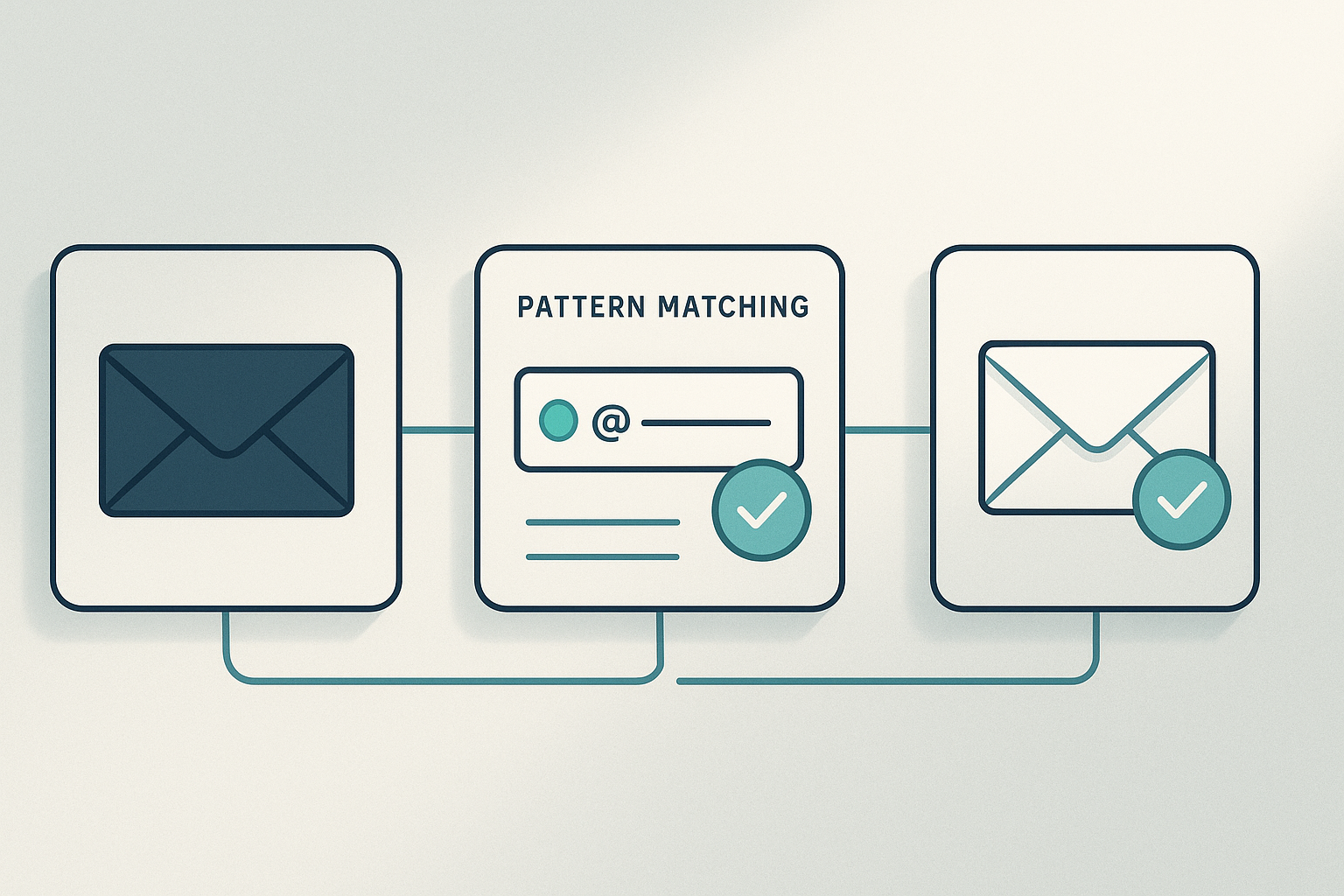
Hunter.io analyzes corporate email patterns by scanning publicly available sources and validating results through SMTP checks. This methodology achieves higher accuracy than tools attempting to provide both email and phone data simultaneously. The platform's Chrome extension works on both LinkedIn and company websites, extracting domain-based contacts without requiring direct LinkedIn profile access.
Best Use Cases and Limitations
Hunter.io excels for SDR teams running high-volume cold email campaigns where phone numbers are unnecessary. The platform's limited find rate, it returns results for fewer prospects than full-database tools, means it works best when paired with a secondary tool for phone enrichment. For compliance-conscious teams, Hunter's domain-based approach avoids LinkedIn scraping entirely, reducing account suspension risk to zero.
Kaspr, Best for LinkedIn Sales Navigator Users Needing Phone Numbers
Kaspr positions itself as the dedicated phone number solution for LinkedIn Sales Navigator users, offering 50 to 85% phone coverage that varies by region. The platform provides a free tier with 5 email and 5 phone credits monthly, with paid plans scaling based on credit consumption rather than per-user seats. Email accuracy ranges from 75 to 87%, slightly lower than email-focused competitors but offset by stronger phone number coverage.
Sales Navigator Integration
Kaspr's Chrome extension overlays contact data directly onto Sales Navigator search results and profile pages, streamlining the workflow for teams already paying for LinkedIn's premium prospecting tool. This tight integration makes contact export frictionless but inherits the same LinkedIn Terms of Service compliance risks as other Chrome extension tools that extract data from LinkedIn's interface.
Phone-First Prospecting Workflow
For sales teams running phone-first outbound motions, Kaspr's higher direct dial coverage justifies its lower email accuracy. The platform excels in European markets where mobile phone numbers are more commonly shared in business contexts. U.S. And Asia-Pacific coverage remains lower, with India-specific data availability not widely documented in public sources.
PeakAi, Best for Verified Phone Numbers with Multi-Source Cross-Referencing
PeakAi offers India-focused contact verification with GST and MCA database integration, covering 1600+ cities with credit-based pricing starting at ₹675 for 50 contacts. The platform combines real-time verification with multi-source cross-referencing, validating phone numbers through independent business registries rather than relying on a single static database. PeakAi verifies contacts in 10 seconds, processing requests at the moment of export to ensure data freshness.

Compliance-First Data Sourcing
PeakAi operates within compliance boundaries by never accessing LinkedIn's internal APIs or scraping profile data. Instead, the platform aggregates contact information from public business registries, GST filings, and MCA records, all legitimate sources that carry zero LinkedIn account suspension risk. For Indian B2B sales teams, this sourcing methodology aligns with DPDP Act consent requirements while delivering contacts that competitors sourcing from LinkedIn scraping cannot legally provide.
India Market Coverage and Verification Accuracy
Global contact databases often show gaps in India coverage for non-tech verticals and founder-led companies. PeakAi's Chrome-extension workflow is designed for LinkedIn-native prospecting, allowing users to identify prospects on LinkedIn and then verify their contact information through independent business databases. This two-step process avoids LinkedIn scraping while still enabling LinkedIn-based prospecting workflows.
How to Choose the Right Tool for Your Sales Team's ICP
Selecting a contact discovery tool requires mapping your ideal customer profile geography, industry vertical, and contact data priorities to each platform's core strengths. Sales teams should evaluate four primary dimensions: data coverage for their target market, verification methodology transparency, compliance risk tolerance, and CRM integration requirements.
| Tool | Starting Price | Email Accuracy | Phone Coverage | Best For |
|---|---|---|---|---|
| PeakAi | ₹675 for 50 contacts | Real-time verification (10 sec) | Multi-source cross-referencing | India-focused B2B teams needing DPDP-compliant verified phone numbers |
| Apollo.io | $49/user/month | 87% | 44.5% | Salesforce/HubSpot users needing native CRM sync and all-in-one sales engagement |
| Lusha | $49/user/month | 85% | 40-55% | Real-time LinkedIn extraction with GDPR-compliant European phone coverage |
| Kaspr | Free tier available | 75-87% | 50-85% (region varies) | Sales Navigator users prioritizing direct dial phone numbers over email accuracy |
| Hunter.io | $34/month | 90%+ (limited find rate) | No phone data | Email-only campaigns avoiding LinkedIn integration entirely |
Geographic Coverage Trade-offs
Tools optimized for U.S. Markets often show significant accuracy drops in Europe, Asia-Pacific, and emerging markets. Apollo's international data has more gaps and outdated information compared to its North American coverage. Teams prospecting into India should prioritize platforms with explicit India coverage documentation and local business registry integrations, as global databases frequently lack current contact information for Indian SMBs and founder-led companies outside major tech hubs.
Phone vs. Email Priority Decision
Sales teams running multi-channel outbound need both email and phone coverage, but no single tool excels equally at both. Tools processing entire Sales Navigator search pages deliver hundreds of contacts at once but often sacrifice accuracy for volume. Email-first teams should prioritize Hunter.io or Apollo for 85%+ email accuracy, accepting lower phone coverage. Phone-first teams prospecting enterprise accounts benefit from Kaspr or specialized phone verification platforms, tolerating slightly lower email accuracy in exchange for direct dial coverage.
Pilot Testing Framework
Run a 30-day pilot with 100-200 contacts matching your ICP. Track email bounce rate, phone connect rate, and time spent on manual verification. Calculate cost-per-verified-contact by dividing total platform cost by the number of contacts that successfully reached decision-makers. According to Salesmotion [2], sales reps currently waste 27.3% of their time on inaccurate contact data, equating to roughly 546 hours per year per rep. A tool reducing this waste by even 50% delivers measurable ROI within one quarter.
Conclusion
Choosing the right LinkedIn contact discovery tool requires balancing accuracy, compliance risk, and geographic coverage against your team's specific prospecting workflow. Email-first campaigns benefit from Hunter.io's 90%+ accuracy and zero LinkedIn integration risk, while phone-prioritizing teams gain from Kaspr's direct dial coverage or PeakAi's multi-source verification for Indian markets. Apollo delivers the strongest all-in-one solution for teams already using Salesforce or HubSpot, though its LinkedIn integration carries compliance trade-offs that compliance-conscious teams should evaluate carefully.
The contact discovery space is shifting toward real-time verification and compliance-first data sourcing as regulations like India's DPDP Act and Europe's GDPR enforcement tighten. Tools that source from legitimate business registries rather than scraping LinkedIn will increasingly differentiate themselves on legal risk mitigation, not just accuracy percentages. Sales teams should prioritize platforms documenting their data sourcing methodology and offering audit trails showing how contacts entered their databases.
Start by running a 30-day pilot with 100-200 contacts matching your ICP. Track email bounce rate, phone connect rate, and hours saved on manual verification to calculate cost-per-verified-contact. If your team prospects into India or requires DPDP-compliant verification with GST and MCA database integration, explore PeakAi's credit-based pricing and 10-second real-time verification workflow. For teams prioritizing CRM integration over India-specific coverage, test Apollo or Lusha through their free tiers before committing to annual contracts.
Frequently Asked Questions
What are the best LinkedIn contact discovery tools with high accuracy rates for sales teams?
The best tools achieve 85 to 98% email accuracy through real-time verification and multi-source cross-referencing. Apollo.io leads for CRM integration, Lusha excels in GDPR-compliant European markets, Hunter.io delivers the highest email-only accuracy, Kaspr provides strongest phone coverage for Sales Navigator users, and PeakAi specializes in India-focused compliance-first verification with GST and MCA database integration [4].
How can I verify email accuracy before launching outbound campaigns?
Use dedicated email verification services like ZeroBounce, NeverBounce, or Hunter Verify to validate lists before sending [1]. These tools perform SMTP checks, detect disposable addresses, and flag role-based emails. Run verification on every list before upload to avoid bounce rates exceeding 5%, which damages sender reputation and reduces inbox placement rates over time.
Why do sales reps waste 40% of their time searching for contact information?
According to AI Sales Stack [3], 40% of a sales rep's time goes to searching for prospects rather than selling. Contact data decays at 2% monthly, forcing reps to manually verify outdated information. Using tools with 90-day refresh cycles and real-time verification eliminates most of this waste by delivering accurate contacts at the moment of export.
What compliance risks do LinkedIn contact discovery tools create?
LinkedIn's Terms of Service prohibit automated scraping, creating account suspension risks for tools that extract data directly from profile pages [4]. India's DPDP Act and Europe's GDPR require explicit consent for processing contact data. Use tools sourcing from legitimate business databases rather than LinkedIn scraping to avoid compliance violations and account termination.
Which contact discovery tool offers the best India market coverage?
Global tools like Apollo show gaps in India coverage for non-tech verticals and founder-led companies outside major hubs. PeakAi specializes in Indian B2B markets with 1600+ city coverage through GST and MCA database integration, providing DPDP-compliant verification that competitors sourcing from LinkedIn scraping cannot legally deliver. Pricing starts at ₹675 for 50 verified contacts.
How much do high-accuracy contact discovery tools cost per verified contact?
Pricing models vary from per-user subscriptions ($34 to 149 monthly) to credit-based consumption (₹675 for 50 contacts). According to Salesmotion [5], cost-per-verified-contact ranges from $0.85 to 1.50 for specialized platforms compared to $2 to 4 from enterprise solutions. Calculate true cost by dividing monthly spend by contacts that successfully reached decision-makers, excluding bounced emails and disconnected numbers.
Can I use Apollo.io and Hunter.io together for better coverage?
Layering tools increases coverage but also raises costs and compliance complexity. Use Apollo for CRM-synced prospecting and bulk phone enrichment, then verify emails through Hunter before sending. This two-step workflow reduces bounce rates below 5% while maintaining multi-channel coverage. For India-focused teams, consider adding a compliance-first tool with local registry access for contacts Apollo cannot verify.
Sources
- Best Email Verification Tools for Outbound Teams - Folderly - folderly.com
- Why Reps Spend 72% of Their Time NOT Selling (And How to Fix It) - salesmotion.io
- 40% of Sales Rep Time Is Spent Searching for Someone to Call - aisalesstack.ai
- B2B Prospecting Tools Compared: Clay vs ZoomInfo vs Cognism in 2026 - surferstack.com (2026)
- Best B2B Prospecting Tools in 2026: Complete Buyer's Guide - salesmotion.io (2026)
