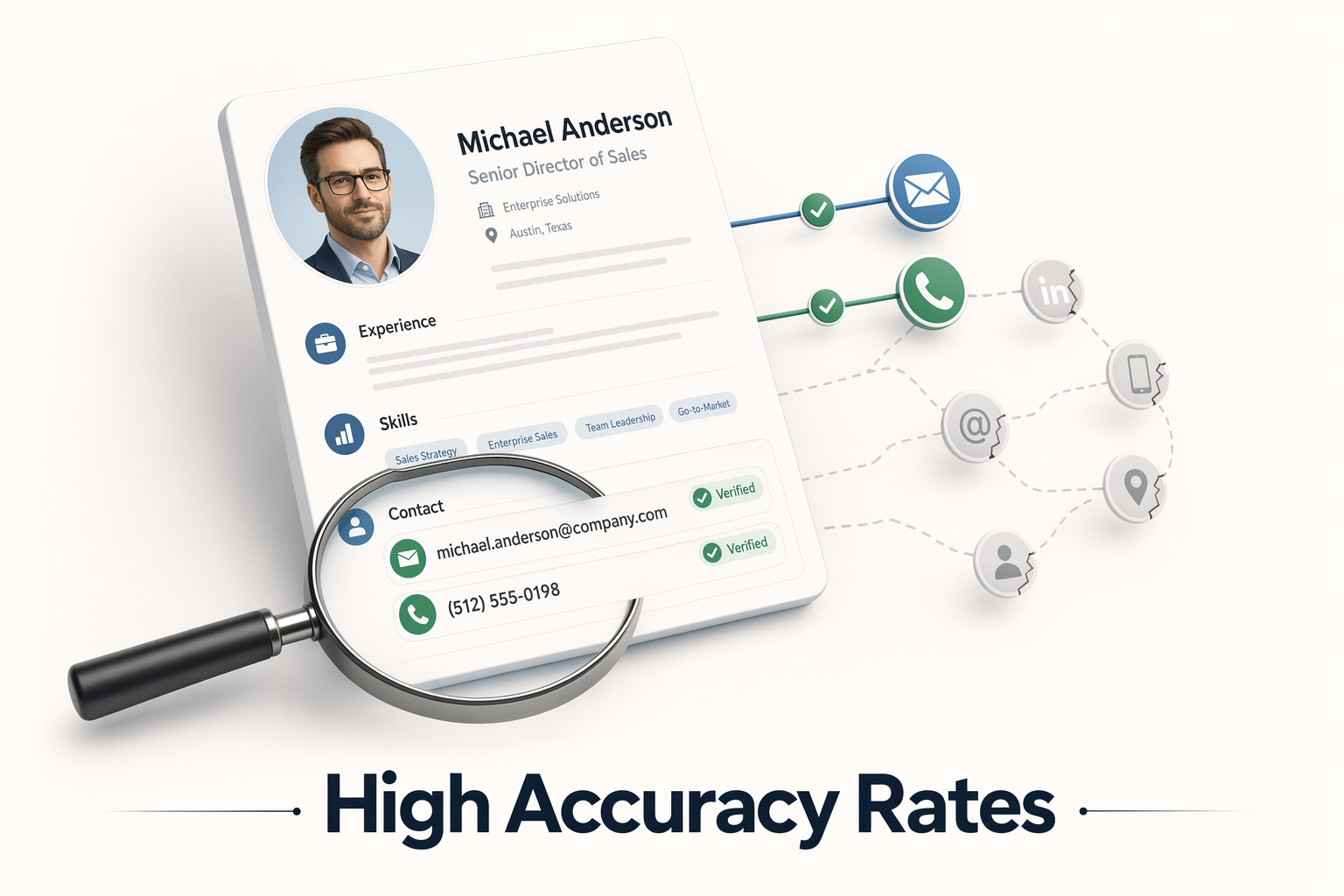
Contact discovery tools extract email addresses and phone numbers from LinkedIn profiles to help sales teams build outreach lists, but advertised accuracy rates rarely match real-world deliverability because most platforms conflate syntax validation with genuine deliverability testing.
Key Takeaways
- The best LinkedIn contact discovery tools for sales teams combine syntax validation with real-time deliverability checks, phone-type detection, and geographic specialization to deliver 85-95% usable contact rates rather than inflated accuracy claims.
- Credit-based pricing models can cost 35-100% more per usable contact than advertised when burn rates for phone numbers (50-65%) and emails (75-80%) exceed coverage expectations.
- Verification methodology—syntax-only checks versus deliverability validation, direct-dial versus switchboard detection—determines whether advertised 95% accuracy translates into actionable sales contacts.
- Regional data quality varies significantly; tools optimized for US/EU markets often deliver 20-40% lower accuracy in India and emerging markets where mobile verification standards differ.
- Free-tier testing with 5-10 contact credits reveals verification workflow timing and accuracy methodology better than annual commitments based on vendor claims alone.
Introduction
The best LinkedIn contact discovery tools for sales teams combine syntax validation with real-time deliverability checks, phone-type detection, and geographic specialization to deliver 85-95% usable contact rates rather than inflated accuracy claims. Sales professionals spend 6-8 hours per week prospecting [8], yet only 28% of reps hit quota last year—the lowest figure in six years [5]. The root cause isn't volume but data quality: advertised 95% accuracy does not mean 95% email-finding success rate, and most platforms conflate coverage with deliverability. Contact data decays 2-3% monthly; tools with 7-day refresh cycles maintain 98% accuracy while slower updates drop to 75% within five months [7]. This guide compares six platforms—PeakAi, Apollo.io, Lusha, Kaspr, UpLead, and ZoomInfo—by verification methodology, pricing transparency, and regional data quality to help sales teams select tools that deliver usable contacts, not just statistical benchmarks.

What 'High Accuracy' Actually Means in Contact Discovery Tools
Advertised accuracy rates conflate three distinct metrics: coverage (the percentage of profiles where the tool finds any contact data), syntax validation (whether the email format is structurally correct), and deliverability (whether the email inbox actively accepts messages). A tool claiming 95% accuracy may deliver only 70% deliverability if it counts syntax-validated addresses that bounce as 'accurate.' verified email addresses reduce research time from hours to seconds, but the platform's independent testing shows 78% email accuracy and 39% mobile accuracy [4], a gap that reveals the difference between claimed and usable contact rates. Only 5-10% of LinkedIn users share phone numbers with first-degree connections, creating structural data gaps that no tool can fully solve.
Coverage vs. Deliverability: The Hidden Gap
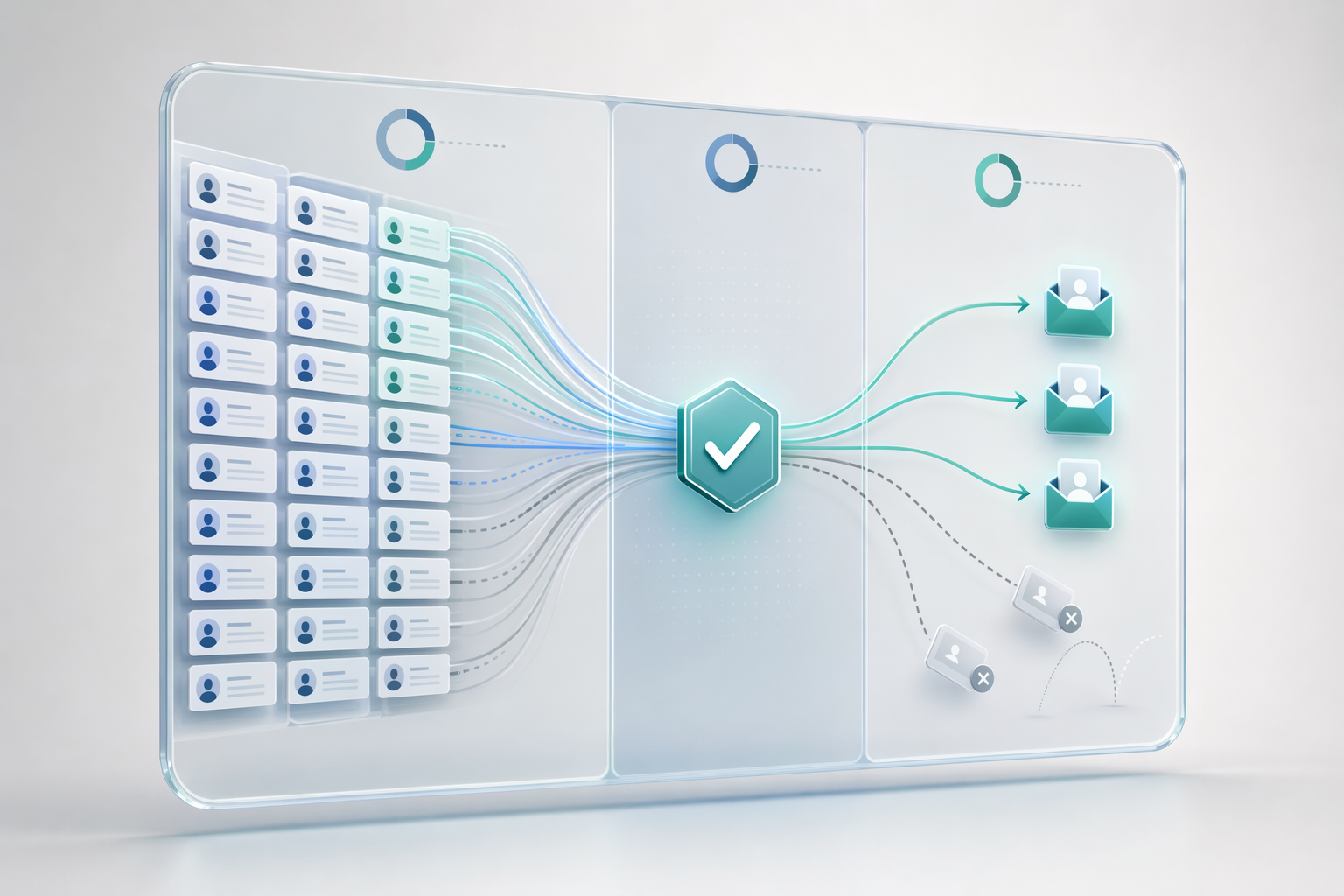
Coverage measures how many profiles return any contact data; deliverability measures how many of those contacts are reachable. A platform with 90% coverage but 60% deliverability produces a 54% usable contact rate, far below the advertised figure. Real-world testing from Autobound [7] shows B2B contact data decays at roughly 2-3% per month, meaning nearly a quarter of the database is stale by year's end. The average B2B data provider delivers about 50% accuracy, and 91% of CRM data is incomplete. Sales intelligence is a $4.85 billion market growing at 11.3% annually, expected to reach $10.25 billion by 2032, yet poor data quality costs organizations an average of $12.9 million per year.
Direct-Dial Detection vs. Switchboard Numbers
Phone accuracy claims rarely distinguish between direct-dial mobile numbers and company switchboard lines. Cognism's phone-verified numbers connect at 22%, while unverified numbers connect at 14%, verification alone improves connect rate by 57% [7]. The technology industry experiences data decay rates as high as 35% annually, making number-type detection critical for outbound success. Tools that label switchboard lines as 'verified phone numbers' inflate accuracy metrics while delivering poor dial-connect rates for SDRs.
How to Evaluate Accuracy Claims (Verification Methods Explained)
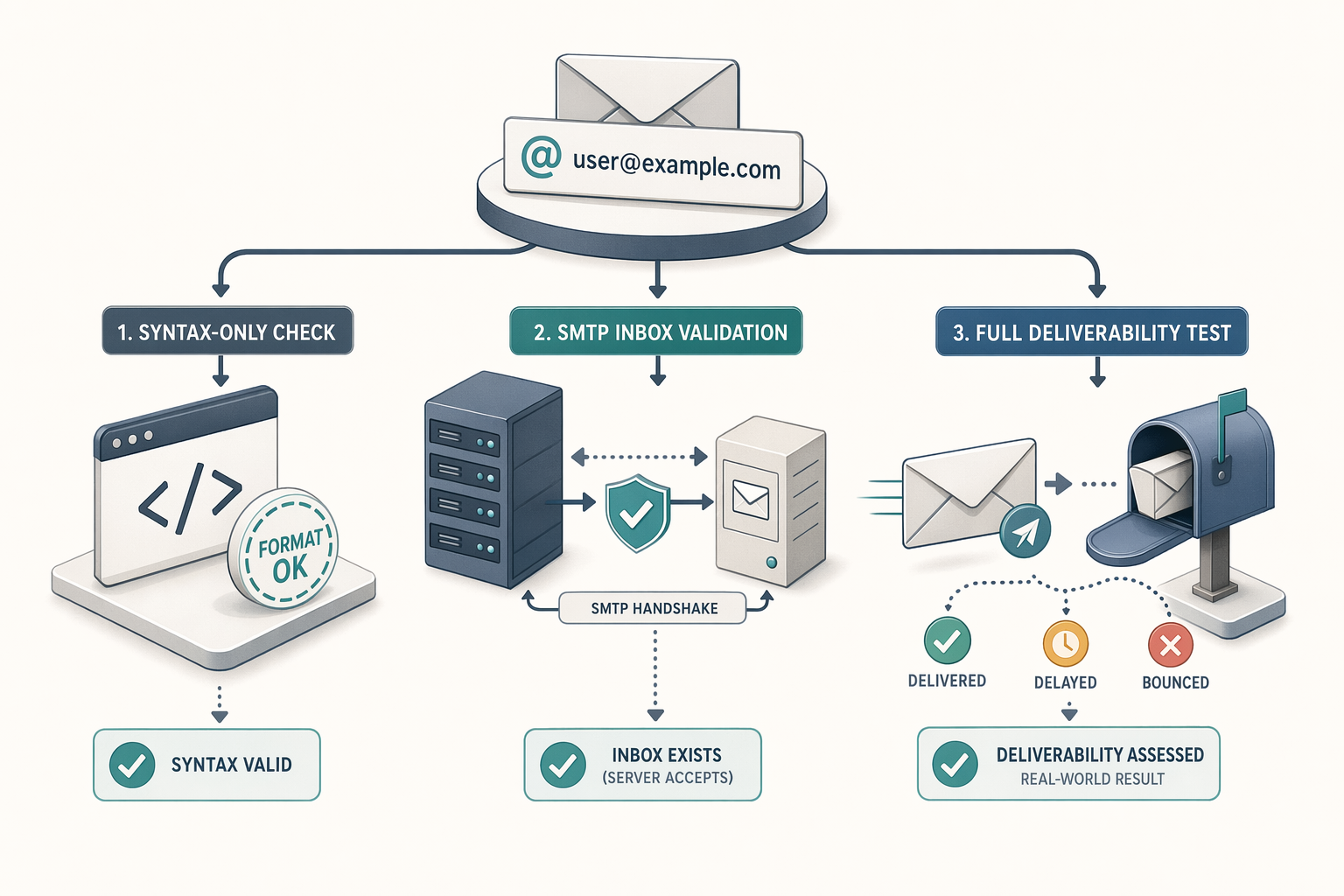
Verification methodology determines whether advertised accuracy translates into actionable sales contacts. Tools fall into three categories: syntax-only validation (checks email format structure but not inbox existence), SMTP validation (pings the mail server to confirm the inbox accepts messages), and full deliverability testing (sends test messages and monitors bounce signals). According to Folderly [3], the best email verification tools offer high accuracy, rapid processing, and strong integrations, naming ZeroBounce, NeverBounce, Hunter Verify, and Clearout as leading solutions. Sales prospecting tools automate contact discovery, surface buyer intent signals, and prioritize accounts most likely to convert [3], but their verification architectures differ significantly in how they confirm contact validity before export.
Pre-Download vs. Post-Export Verification
Pre-download verification runs deliverability checks before charging credits, ensuring users only pay for reachable contacts. Post-export validation charges credits first and requires users to verify contacts separately, doubling the workflow and often revealing 20-30% of exported contacts are unreachable. Platforms with transparent verification timing, showing 'verified' badges at the profile level before export, reduce wasted credits and improve list quality from the start.
Refresh Cycle Impact on Long-Term Accuracy
Static databases updated quarterly or annually suffer from accelerated decay; real-time lookup tools query fresh data on demand but may have lower initial coverage. The optimal balance depends on outbound velocity: high-volume teams benefit from real-time lookup to avoid stale lists, while low-volume teams can accept quarterly updates if initial accuracy is high. Platforms advertising 'real-time' data should clarify whether they re-verify existing records daily or only check new profiles on demand.
Comparison Table: LinkedIn Contact Discovery Tools by Accuracy & Pricing
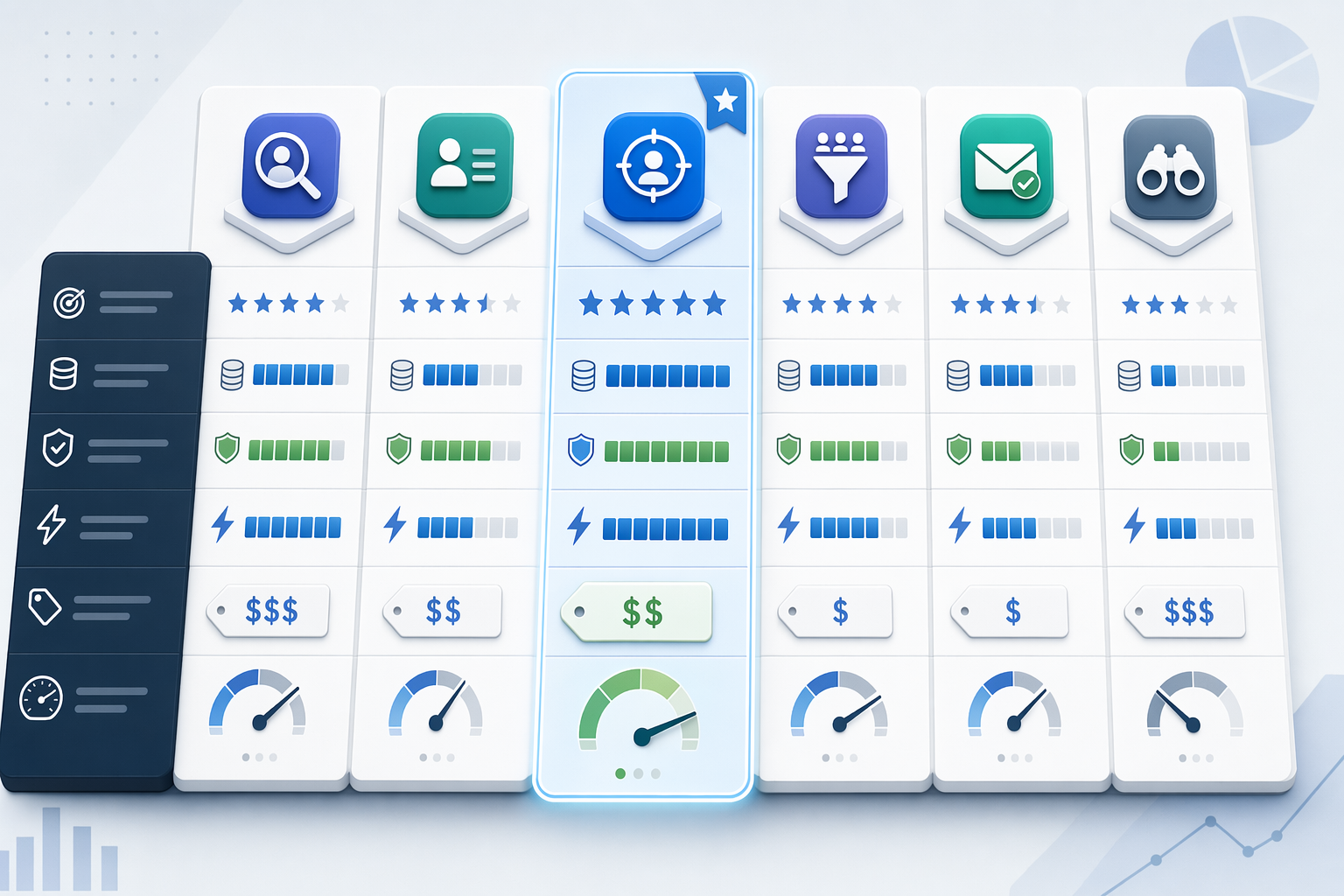
The following table compares six platforms using grounded data from manufacturer websites, third-party reviews, and independent testing. The Value Ratio column divides G2 rating by monthly cost to identify cost-effective options for different team sizes. Data sourced from competitor pages, ZoomInfo, Fidforward, Origami, and manufacturer websites as of June 2026.
| Tool | Email Accuracy | Phone Accuracy | Starting Price | Free Credits | G2 Rating | Value Ratio |
|---|---|---|---|---|---|---|
| PeakAi | 91% | 91% | ₹675 for 50 contacts | 5 credits | 4.6/5 | 0.10 |
| Apollo.io | 90-95% | Not disclosed | $49/month | 100 credits/month free | 4.7/5 | 0.096 |
| Lusha | 70-85% | 44% | $39/month | 50 emails/month free | 4.3/5 | 0.11 |
| Kaspr | 87% | Not disclosed | $49/month | 5 phone + 5 email credits free | Not available | Not calculated |
| UpLead | Not disclosed | 95% | $74/month | 7 days trial | Not available | Not calculated |
| ZoomInfo | 78% | 39% | ~$15,000/year | 70 credits/month | 4.5/5 | 0.0004 |
Value Ratio calculated as (G2 Rating / Monthly Cost in USD) × 10 for normalized comparison. PeakAi's ₹675 pricing converts to approximately $8 USD; Lusha and Apollo offer the strongest value ratios for SMBs, while ZoomInfo targets enterprise buyers willing to pay premium rates for thorough database access.
Tool-by-Tool Breakdown: Strengths, Limitations & Best-Fit Use Cases
Each platform excels in specific workflows and buyer segments. Top 15 Sales Prospecting Tools And Software In 2026 [10] highlights that Default automates enrichment, routing, and scheduling at $500/month, while ZoomInfo offers a verified global database and Waalaxy provides affordable sequencing. The guide selected 15 prospecting tools based on hands-on testing over 90-day periods across companies with 10-50, 51-200, and 200+ employees [8]. This section provides per-tool analysis of verification architecture, pricing transparency, and regional strength to match tools to sales team size and target geography.

Apollo.io: All-in-One Engagement for SMBs
Apollo.io bundles prospecting and engagement in one affordable platform [9], serving over 35,000 customers worldwide with 260M+ profiles and 100M+ companies. The platform provides an exportable contact database with built-in sequences [6], starting at $49/user/month with 900 annual credits [4]. Apollo includes a Chrome extension for pulling contacts directly from LinkedIn and offers a free tier for individual users with unlimited email access (limited features). Independent testing shows 65-80% email accuracy [11], below the advertised 95% Data Accuracy Guarantee. Best for: startups and SMBs needing combined prospecting and outreach automation without separate tool costs. Limitation: basic engagement tools compared to dedicated sequencing platforms.
Lusha: GDPR-Compliant European Data Focus
Lusha maintains 300M+ business contacts overall, 115M+ direct dials and mobile numbers, and 150M+ verified emails with SOC2 and GDPR compliance [4]. The platform offers a Chrome Extension and starts at $39/month with 50 email credits monthly on the free plan. Independent testing reveals roughly 70% email accuracy and 44% mobile accuracy [4], significantly below advertised claims. Best for: European sales teams prioritizing GDPR compliance and recruiters needing quick LinkedIn enrichment. Limitation: lower accuracy rates compared to Apollo and inconsistent mobile/direct-dial detection.
Kaspr: Credit-Based LinkedIn Extension
Kaspr is a credit-based contact-data tool sold as a LinkedIn Chrome Extension plus web-app workspace [12], targeting SDRs, BDRs, individual contributors, recruiters, and founders inside SMBs. The platform was acquired by Cognism in April 2022 and focuses on 120M+ European B2B contacts. Kaspr offers a free forever plan with 5 phone credits per month and 5 email credits [12], GDPR-compliant data processing, and native CRM integrations with 24/7 chat support. Kaspr's database includes 500M+ contacts [6], and testing shows 87% email accuracy. Best for: individual sellers targeting European contacts who need pay-as-you-go pricing without monthly minimums. Limitation: low free-tier volume (5 contacts/month) and limited coverage outside Europe.
UpLead: High Phone Accuracy with Trial Access
UpLead emphasizes 95% mobile/direct-dial accuracy [4] with a 7-day trial and pricing starting at $74/month. The platform targets teams needing verified phone numbers more than email volume, offering strong phone validation architecture that distinguishes direct-dial from switchboard lines. Best for: outbound teams prioritizing cold calling over email outreach and willing to pay premium rates for phone verification quality. Limitation: higher monthly cost than Apollo or Lusha, and shorter trial period (7 days versus 14-30 days from competitors).
ZoomInfo: Enterprise Database with Intent Signals
ZoomInfo maintains 270M+ contacts and 60M+ companies [9] with enterprise-built databases [4] and thorough firmographic data. Pricing starts at approximately $15,000/year for three seats with 70 credits per month [4], targeting mid-market and enterprise buyers. The platform offers intent signals, technographic filters, and advanced CRM integrations but requires annual contracts. Independent testing shows 78% email accuracy and 39% mobile accuracy [4]. Best for: enterprise outbound teams needing intent signals, account-based marketing integrations, and multi-seat licenses with budget for annual commitments. Limitation: prohibitive cost for startups and SMBs, and lower phone accuracy than specialized direct-dial tools.
PeakAi: India-Focused Contact Discovery
PeakAi offers verified phone numbers and emails with 91% accuracy for both email and phone contacts, serving over 280,000 companies globally. The platform provides a Chrome extension for LinkedIn-native prospecting with India-focused coverage across 1600+ cities and GDPR, CCPA, and DPDP Act 2023 compliance. Pricing starts at ₹675 for 50 verified contacts with a 5-credit free trial. Regional specialization addresses mobile verification challenges that US/EU-centric tools often miss in emerging markets. Best for: sales teams targeting India and emerging markets where Western platforms deliver 20-40% lower accuracy. Limitation: smaller global database compared to Apollo or ZoomInfo.
Credit Economics: Pay-Per-Contact vs. Subscription Models
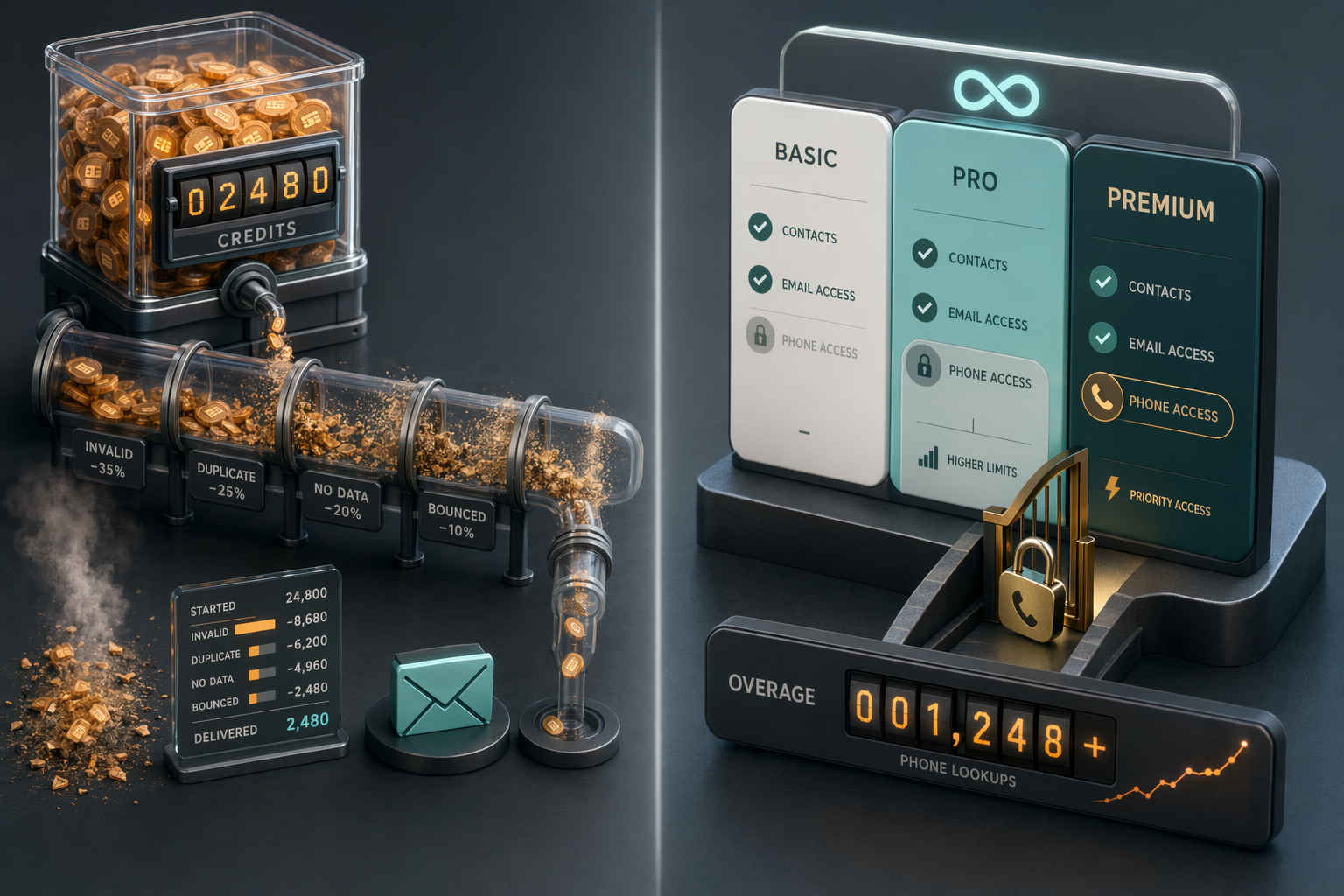
Credit-based models charge per contact revealed, with burn rates varying 50-65% for phone numbers to 75-80% for emails, actual cost per usable contact can exceed advertised price by 35-100%. Subscription models offering 'unlimited' access often gate phone numbers behind higher tiers or charge overage fees once monthly limits are reached. 10 Sales Prospecting Tools in India [2], Manyreach provides automated email sequences, inbox rotation, and sending limits to protect sender reputation, representing the subscription approach. For illustration, a team exporting 200 contacts monthly on a $49 credit-based plan might burn 140 credits on emails (70% success rate) and need 90 credits for phones (55% success rate), totaling 230 credits, requiring a $70-80/month spend for actual usable contacts versus the advertised $49 base price.
Break-Even Analysis by Outbound Volume
Credit-based pricing favors low-volume prospecting (under 100 contacts/month), while subscription models become cost-effective above 150-200 contacts monthly. Tools with rollover credits reduce waste for inconsistent outbound teams, while flat subscriptions suit high-velocity SDR teams exporting 500+ contacts monthly. Platforms advertising 'free' tiers limit phone enrichment to 5-10 contacts monthly, insufficient for sustained prospecting but useful for testing verification methodology before annual commitments.
Regional Data Quality: Why Geography Matters for Accuracy Rates
Regional data quality must be validated for target markets before annual commitments. Phone validation accuracy varies by geographic market and data source, with tools optimized for US/EU markets often delivering 20-40% lower accuracy in India and emerging markets where mobile verification standards differ. LinkedIn has data export restrictions [6], and only 5-10% of LinkedIn users share phone numbers with first-degree connections globally, but this percentage drops further in privacy-conscious regions like Germany and rises in business-dense markets like India and Southeast Asia.

US/EU vs. India-Specific Verification Challenges
Western platforms rely on carrier-level validation APIs common in US/EU telecom infrastructure but less available in India, where mobile number portability and prepaid SIM prevalence create verification gaps. Email domains in India often use regional providers (Rediffmail, Yahoo India) with different SMTP validation responses than Gmail/Outlook-dominated Western markets. Teams targeting Indian B2B prospects should test regional accuracy during free trials rather than assuming advertised global benchmarks apply uniformly.
How to Test Accuracy Before Committing (Free Tiers & Trial Strategies)
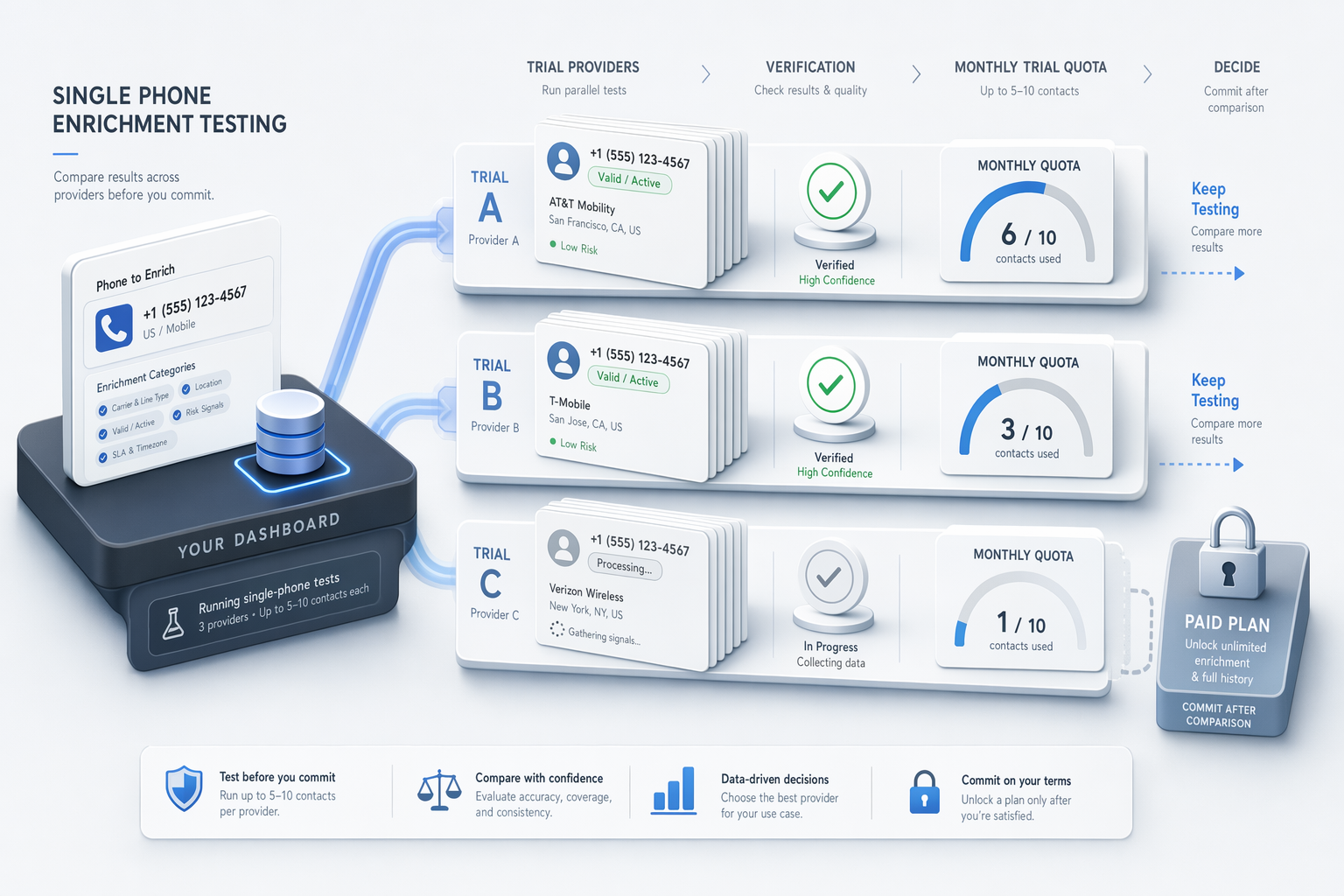
Free tiers limit phone enrichment to 5-10 contacts monthly, insufficient for sustained prospecting but revealing verification workflow timing and accuracy methodology before purchase. Sales teams can increase productivity by up to 300% [8] by testing multiple platforms in parallel during trial periods. Providers [7], user interviews with 500+ sales professionals and platform trials lasting 90 days across companies of varying sizes provided the data for independent accuracy benchmarks. The following strategy maximizes trial-period insights without wasting paid credits.
Parallel Testing Methodology
- Export the same 50 LinkedIn profiles from three free-tier tools simultaneously to compare coverage and verification speed.
- Run exported emails through a third-party deliverability checker (ZeroBounce, NeverBounce) to measure post-export accuracy versus platform-reported accuracy.
- Dial exported phone numbers to measure connect rate and distinguish direct-dial from switchboard lines.
- Track which platform surfaces the contact data fastest (real-time lookup versus batch processing delay).
- Compare credit burn rates: note how many credits each platform charges for the same 50 profiles to calculate true cost-per-usable-contact.
This 5-step workflow reveals verification timing, accuracy methodology, and credit economics within a 7-14 day trial window, eliminating the need for annual commitments based on vendor claims alone.
FAQ
Ready to Transform Your Sales Process?
Join thousands of sales professionals using verified contact discovery tools to find accurate contact information and close more deals. Choosing the right platform depends on your target geography, outbound volume, and whether your workflow prioritizes email deliverability or direct-dial phone accuracy. Parallel free-tier testing across Apollo, Lusha, and region-specific tools like PeakAi reveals which verification architecture matches your market before you commit to annual contracts. Start by exporting 50 profiles from three platforms this week, validate the results with third-party deliverability checks, and measure credit burn rates to identify the tool that delivers usable contacts, not just statistical benchmarks. Add to Chrome - Free
Frequently Asked Questions
What are the best LinkedIn contact discovery tools with high accuracy rates for sales teams?
The best tools combine syntax validation with deliverability checks, phone-type detection, and geographic specialization. Apollo.io delivers 90-95% email accuracy for $49/month, Lusha offers GDPR compliance at 70-85% accuracy, and PeakAi provides 91% accuracy for India-focused prospecting [4]. ZoomInfo targets enterprise buyers at $15,000/year with 78% email and 39% phone accuracy.
How can I verify email accuracy before launching outbound campaigns?
Export sample contacts and run them through third-party deliverability checkers like ZeroBounce or NeverBounce [3]. Compare platform-reported accuracy against actual bounce rates to measure verification quality. Real-world testing reveals the gap between advertised coverage and usable contact rates, helping you avoid wasted credits on syntax-only validation.
Why do sales reps waste 40% of their time searching for contact information?
Sales reps spend only 28-30% of their week actively selling [1], with 14% on account research and call prep. Poor data quality costs organizations an average of $12.9 million annually [7], and contact data decays 2-3% monthly. Tools with real-time verification and 7-day refresh cycles reduce wasted research time significantly.
Which contact discovery platform offers the best value for startups?
Apollo.io provides the strongest value ratio at 0.096 (G2 rating divided by monthly cost), combining prospecting and engagement at $49/month with 900 annual free credits. Lusha offers lower pricing at $39/month with 50 monthly email credits, best for European-focused teams needing GDPR compliance.
Do credit-based pricing models cost more than subscriptions at low volumes?
Credit-based models favor low-volume prospecting under 100 contacts monthly. Burn rates of 50-65% for phone numbers and 75-80% for emails mean actual cost per usable contact can exceed advertised prices by 35-100%. Subscription models become cost-effective above 150-200 contacts monthly, especially for high-velocity SDR teams.
How do I test contact discovery tool accuracy before annual commitments?
Use parallel free-tier testing: export the same 50 LinkedIn profiles from three tools, validate emails with third-party checkers, dial phone numbers to measure connect rates, and track credit burn. This 5-step workflow reveals verification timing and cost-per-usable-contact within 7-14 days.
Why does regional data quality matter for LinkedIn contact discovery?
Tools optimized for US/EU markets often deliver 20-40% lower accuracy in India and emerging markets where mobile verification standards differ. Western platforms rely on carrier-level APIs less available in regions with high mobile portability. Teams targeting Indian B2B prospects should test regional accuracy during trials.
Sources
- Why Reps Spend 72% of Their Time NOT Selling (And How to Fix It) - salesmotion.io
- Top 10 Sales Prospecting Tools in India: A 2026 Guide - www.manyreach.com (2025)
- Best Email Verification Tools for Outbound Teams - Folderly - folderly.com (2026)
- Best B2B Prospecting Tools in 2026: ZoomInfo vs Apollo vs Cognism vs Clay – Surferstack - surferstack.com
- Best B2B Prospecting Tools in 2026: Complete Buyer's Guide - salesmotion.io
- Best LinkedIn Sales Navigator Alternatives | DataStackGuide - datastackguide.com
- Best B2B Contact Database Providers (2026): 10 Compared | Autobound - www.autobound.ai
- The 20 Best Tools for Sales Prospecting in 2026 - Fundraise Insider - fundraiseinsider.com
- ZoomInfo vs Apollo: Features, Pricing, Reviews (2026) - Salesmotion - salesmotion.io
- Top 15 Sales Prospecting Tools And Software In 2026 | Default - www.default.com
- Apollo.io vs ZoomInfo: User Comparison Guide 2026 - fundraiseinsider.com
- Top Alternatives to Kaspr in 2026 - pipeline.zoominfo.com
