Sales teams depend on accurate LinkedIn contact data to reach decision-makers, but accuracy claims vary wildly across tools—with verification methodologies, compliance architectures, and regional performance gaps rarely disclosed upfront.
Key Takeaways
- Accuracy rates mean nothing without verification methodology transparency—syntax-only validation produces inflated percentages that don't reflect deliverability
- Scraping-based tools create 15-20% LinkedIn account suspension risk while enrichment-based platforms query third-party databases without violating platform Terms of Service
- Contact discovery tools optimized for US and EU markets consistently underperform in India mobile verification by 10-15 percentage points due to carrier-level API gaps
- Credit-based pricing that charges for invalid contacts inflates real cost-per-usable-contact by 35-100% above advertised rates
- Multi-layer verification (syntax → MX → SMTP → catch-all → carrier validation) separates tools that deliver usable contacts from those that sell database size
Contact discovery tools for LinkedIn prospecting vary dramatically in data accuracy, with leading solutions achieving 85-95% verification rates while legacy platforms struggle below 70%. The difference lies not in the advertised percentage but in the depth of verification methodology each tool actually performs before claiming an email or phone number is valid.
What 91% Accuracy Actually Measures
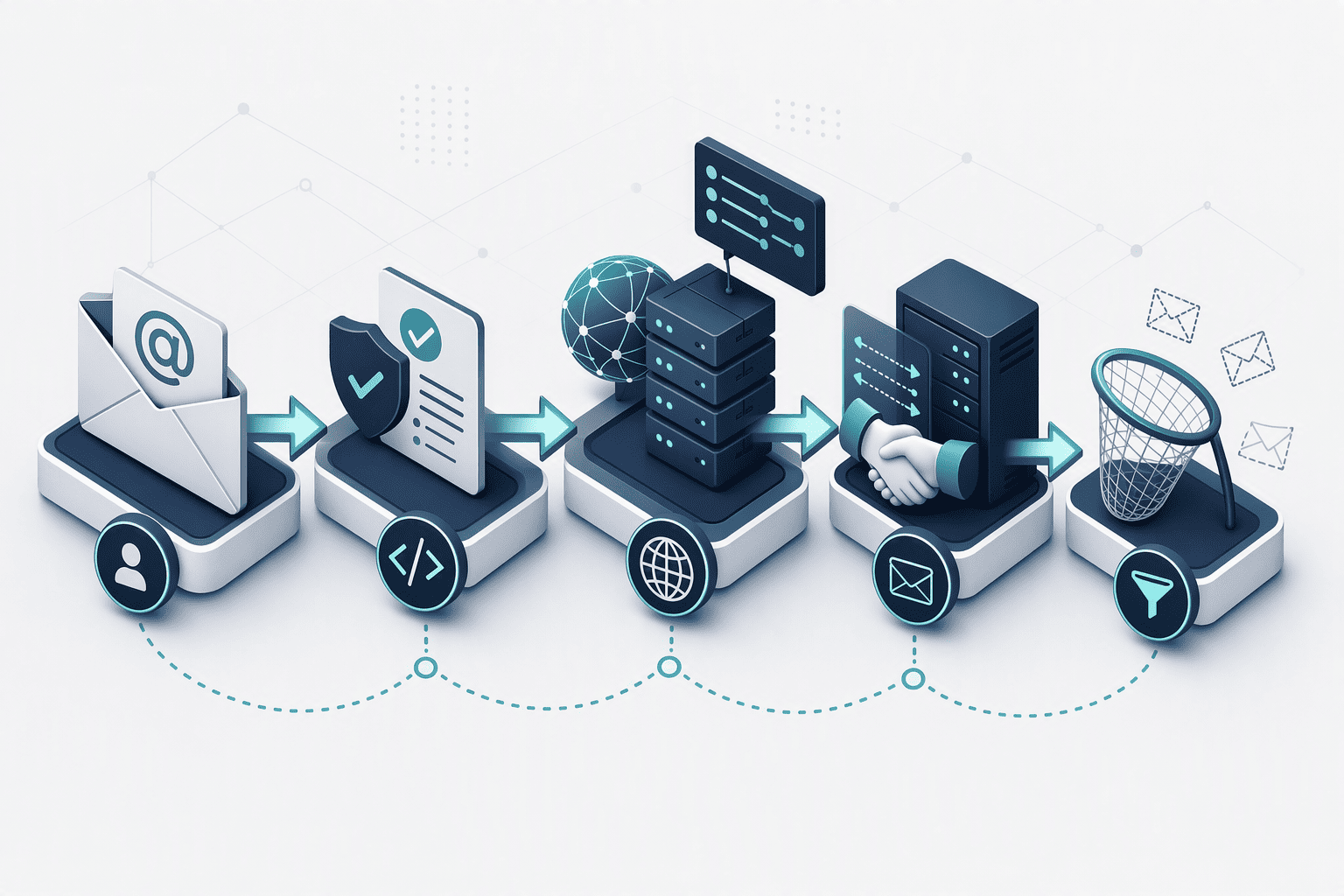
A thorough email verification workflow involves multiple distinct layers that most vendors collapse into a single "accuracy" claim:
- Syntax validation — checks the email format follows RFC standards
- MX record verification — confirms the domain accepts mail
- SMTP handshake — validates the mailbox exists on the server
- Catch-all detection, identifies domains that accept all addresses (far more likely to bounce)
- Carrier-level mobile validation, for phone numbers, verifies active line status and number portability
Tools that stop at syntax or MX checks produce artificially high accuracy percentages that don't reflect deliverability. PeakAi achieves 91% phone number accuracy through dual verification for both emails and phone numbers, performing multiple validation layers before displaying a contact as verified.
The 50% Reality vs 95% Claims Gap
Independent side-by-side testing across 12 LinkedIn email finder tools reveals hit rate gaps of roughly 35 percentage points between the best and worst performers on identical prospect lists. The disconnect stems from methodology differences: vendors using syntax-only validation report 95-98% accuracy, while tools performing SMTP handshakes and catch-all detection see real-world deliverability closer to 50-60% on the same dataset. Enrichment-based tools that query third-party databases rather than scraping profiles directly avoid LinkedIn Terms of Service violations while maintaining verification depth.
Pre-Download vs Post-Export Verification Economics
Credit-based pricing models that charge for every lookup, regardless of verification outcome, inflate the true cost-per-usable-contact by 35-100% above advertised per-credit rates. A tool advertising $0.20 per contact that returns 55% invalid records costs $0.36 per usable contact in practice. Pre-download verification systems that validate before consuming credits shift the economic burden: teams pay only for contacts that pass multi-layer checks, eliminating the hidden markup from post-export filtering and making advertised rates match actual workflow costs.
Before evaluating accuracy rates, sales teams must understand the compliance foundation beneath every contact discovery tool, because the architecture that powers data extraction determines both legal risk and long-term platform access.
LinkedIn Contact Discovery: Compliance Architectures Compared
Scraping vs Enrichment Architectures
Scraping-based tools use automated browser automation to extract LinkedIn data directly, harvesting profile fields, contact details, and job history through bots that mimic human browsing. Enrichment-based tools match LinkedIn profile URLs to third-party business databases and public records, querying independent data partners rather than accessing LinkedIn's platform.
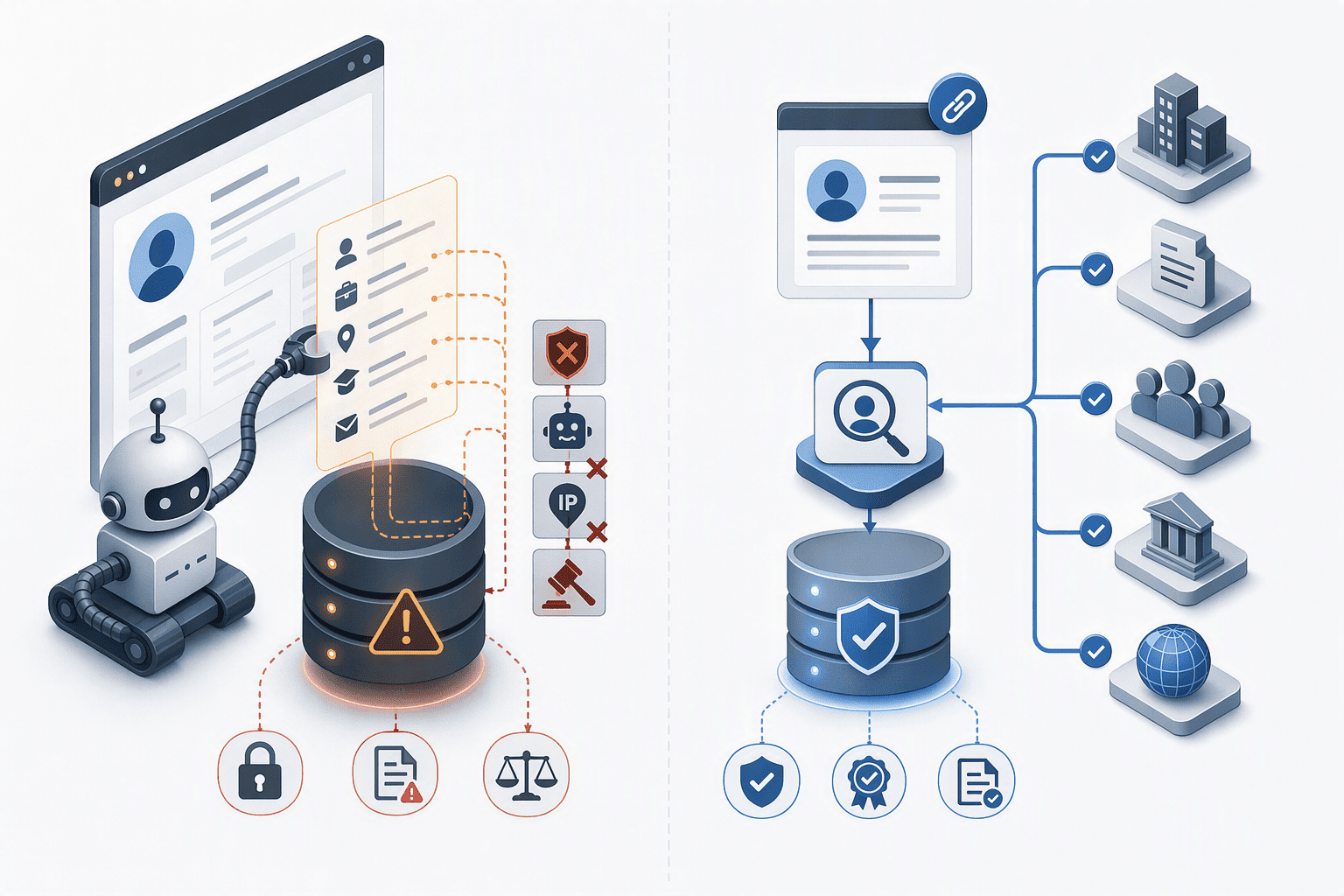
LinkedIn's Terms of Service prohibit automated scraping. The hiQ Labs v. LinkedIn case illustrates why scraping public data remains legally contested: LinkedIn's Senior Litigation Counsel sent hiQ a cease and desist claiming hiQ violated its User Agreement by "scraping, copying, and sharing the profiles" of LinkedIn users.
Tools advertised as "GDPR compliant scrapers" still expose enterprise compliance risk because they violate platform terms, regardless of data privacy certifications.
Account Suspension Risk Exposure by Tool Category
LinkedIn prospecting tools work best when they support a ToS-safe workflow that respects rate limits and human-led engagement. Sales Navigator is the core foundation for LinkedIn-safe prospecting.
Scraping-based tools that circumvent LinkedIn's technical blocking measures create measurable account suspension exposure. Enrichment-based tools query external databases using LinkedIn URLs as reference identifiers, avoiding direct platform access.
Legal Liability Under LinkedIn Terms of Service
The hiQ case established that scraping publicly accessible data faces ongoing legal challenge. LinkedIn implemented technical measures to prevent scraping, warning that circumvention would violate state and federal law.
Sales Navigator's Relationship Explorer provides prospect suggestions leveraging insights from LinkedIn's professional network to provide sellers with optimal paths to connect, demonstrating what LinkedIn-sanctioned discovery looks like versus unauthorized extraction.
| Dimension | Scraping-Based Architecture | Enrichment-Based Architecture |
|---|---|---|
| Data access method | Automated browser bots extract LinkedIn profile fields directly | Match LinkedIn URLs to third-party business databases |
| LinkedIn ToS status | Violates platform terms of service | Complies — queries external data sources |
| Account suspension risk | High exposure from automated platform access | Low — no direct LinkedIn scraping |
| Legal liability exposure | Contested under hiQ precedent; cease-and-desist risk | Reduced — sources data from licensed databases |
Compliance architecture protects your LinkedIn account, but verification depth determines whether the contacts you export will actually reach inboxes and dial through to decision-makers.
Verification Depth: What 91% Accuracy Actually Measures
Email Verification Layers: Syntax to SMTP Handshake
PeakAi achieves 91% verified contact accuracy through a four-stage email validation pipeline that separates real inboxes from syntax-only facades. Syntax validation confirms the address follows standard formatting ([email protected]). MX record lookup verifies the domain operates a mail server. SMTP handshake tests whether the mailbox accepts connections without sending mail. Catch-all detection identifies domains configured to accept all addresses, flagging contacts that pass syntax checks but route to abandoned inboxes. Tools skipping these layers report inflated accuracy by counting formatted strings, not deliverable addresses. A B2B sales team purchased 1,000 contacts from a syntax-only tool at $0.50 each; post-export testing revealed 420 invalid addresses, real cost-per-usable-contact climbed to $0.86, not the advertised rate.
Carrier-Level Mobile Validation for Phone Numbers
Phone number accuracy demands separate verification because LinkedIn users rarely share phone numbers with first-degree connections, and platform profiles don't indicate line type or carrier status. PeakAi's verification queries carrier lookup APIs and HLR (Home Location Register) databases to classify numbers as mobile, landline, or VoIP, critical for cold-calling teams prioritizing direct dials. Manual LinkedIn contact lookup is time-consuming in bulk and offers no data recency signals, leaving sales reps dialing disconnected lines. Buyers evaluating tools should ask vendors: 'Which verification layers do you perform?' and 'Do you charge for contacts that fail verification?'
Data Decay: The 2-3% Monthly Accuracy Erosion
Contact data decays at 2-3% monthly as professionals change roles, abandon numbers, and migrate email domains. Tools advertising 'database freshness' without real-time verification deliver stale contacts, verification at download time matters more than last-update timestamps. PeakAi's real-time verification API validates each contact individually before charging, filtering decay at the point of access. Sales teams relying on quarterly database refreshes face compounding accuracy loss, a 90% baseline erodes to 84% after two months. Verification methodology, not dataset size, determines whether teams close more deals or burn budget on disconnected outreach.
Verification methodology affects all contacts equally in theory, but global contact discovery tools reveal a hidden accuracy gap when tested across regions, particularly in markets where carrier-level validation APIs remain underdeveloped.
Regional Accuracy Variance: US/EU vs India Mobile Precision
Contact discovery tools optimized for US and EU markets consistently underperform in India mobile number verification by 10-15 percentage points, a gap most buyers discover only after purchasing. The root cause is carrier-level validation API availability: Western telecom operators provide well-documented real-time validation endpoints that let platforms verify phone number connectivity before delivery, while India mobile carriers offer limited third-party access to similar infrastructure.

Why US/EU Tools Underperform in India
Global platforms rely on carrier partnerships and telecom data exchanges that work reliably in North America and Europe but do not extend to Indian mobile networks at the same fidelity. US carriers expose HLR (Home Location Register) lookup APIs and CNAM databases that confirm whether a number is active, mobile, landline, or VoIP in real time. Europe offers similar infrastructure under GDPR-compliant frameworks. India's telecom ecosystem, by contrast, restricts third-party access to live connectivity data, forcing contact discovery platforms to fall back on static databases, public records, and indirect enrichment methods that age faster and cover fewer numbers.
The result: a tool advertising 92% phone accuracy globally may deliver 78-82% accuracy for Indian contacts because its validation layer cannot confirm number status at the point of lookup. Traditional B2B database providers lose 70% of their accuracy over the course of a single year when relying on static datasets without real-time carrier validation, and this decay accelerates in markets where carrier APIs are unavailable.
APAC Data Coverage Gaps Across Platforms
Most contact discovery platforms disclose global accuracy figures without regional breakdowns, leaving buyers targeting India to infer performance from aggregate metrics. Platforms like PeakAi publish India-specific accuracy rates, 91% for Indian contacts across 1600+ cities, validated against GST and MCA databases rather than relying on carrier APIs alone. This disclosure pattern helps buyers evaluate whether a tool's architecture matches their geography.
When evaluating platforms, ask vendors to disclose region-specific accuracy for your target markets and verify whether they use local business registries (GST, MCA, MSME directories) or rely solely on global carrier partnerships. Tools that surface India-focused validation methods, such as regional phone format validation and mobile/landline classification specific to Indian numbering plans, signal architecture designed for APAC rather than retrofitted from Western markets. Ready to find accurate contact information for your India-focused prospecting? Join thousands of sales professionals who close more deals with verified regional data.
Understanding compliance risk, verification depth, and regional accuracy variance provides the framework to evaluate the eight LinkedIn contact discovery platforms sales teams use most frequently in 2026.
8 LinkedIn Contact Discovery Tools Compared for Sales Teams
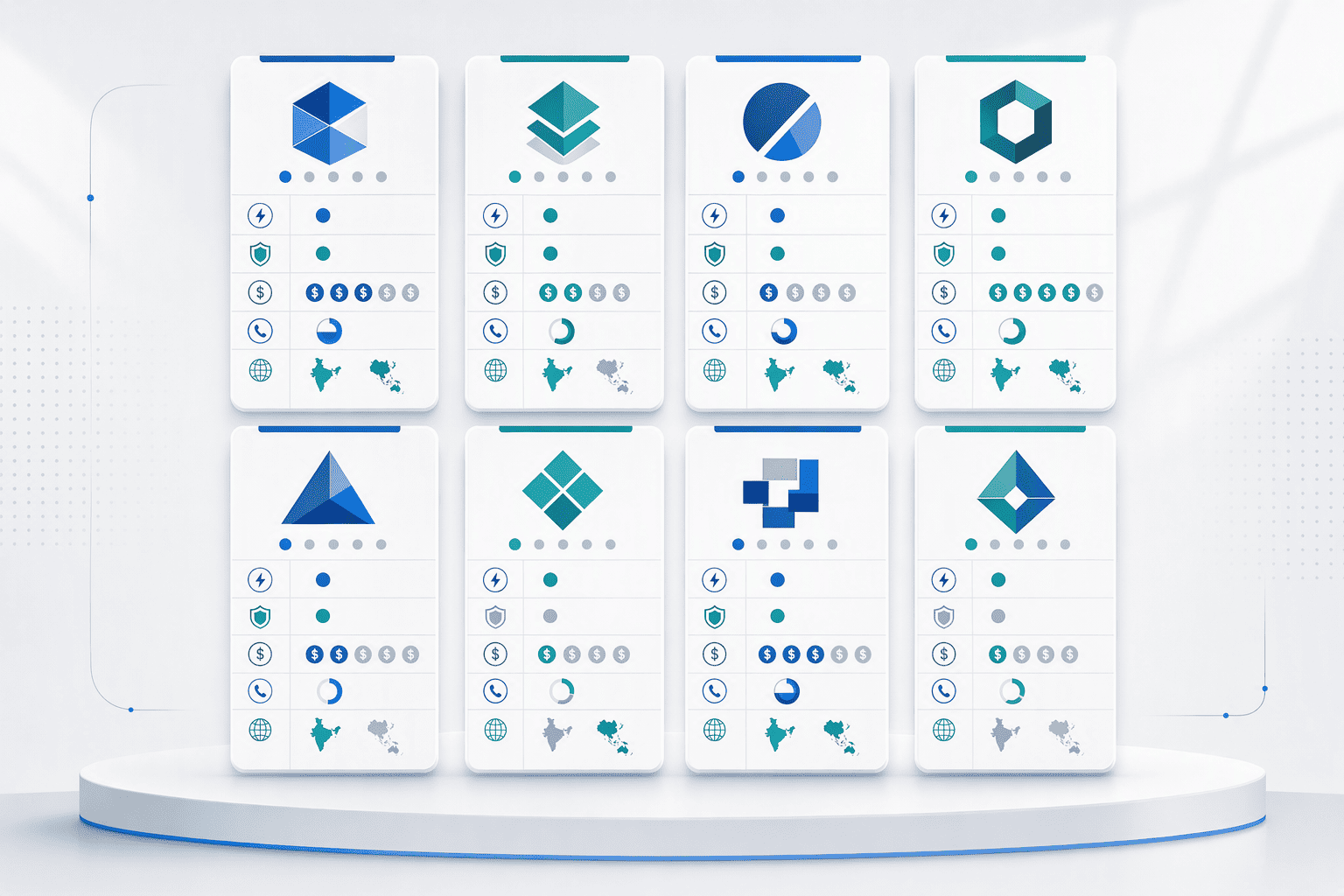
Sales teams need LinkedIn contacts that don't bounce. The highest-accuracy tools verify data in real time rather than relying on static databases. Below, we compare eight representative platforms across pricing, accuracy methodology, compliance architecture, phone coverage, and India/APAC availability.
Pricing Models: Credit-Based vs Subscription
Credit-based pricing charges per contact and may include invalid records. Subscription models offer unlimited contacts within tier limits. PeakAi starts at $9 for 50 verified contacts; Apollo offers a free plan with paid tiers at $59/month ; ZoomInfo runs $995/year; Lusha begins at $29/month.
Compliance Architecture by Platform
Platforms fall into three categories: LinkedIn Sales Navigator (official API partnership, no suspension risk); enrichment-based tools that query third-party databases rather than scraping profiles (PeakAi, Cognism); and scraping-hybrid tools that carry account suspension risk. Cognism maintains DNC registry screening across 15 countries.
Verification Methodology Disclosure
PeakAi discloses 91% phone accuracy through syntax, SMTP, and carrier validation. Cognism cites 20% connection rates for Diamond Data phone-verified mobiles. Apollo's 275M-contact database and ZoomInfo's 135M+ verified phones do not publish methodology detail.
Decision Framework: (1) LinkedIn-only prospecting → LinkedIn Sales Navigator (official API, zero scraping risk). (2) Multi-channel enrichment with compliance priority → enrichment-based tools like PeakAi or Cognism (third-party databases, GDPR/CCPA compliance ). (3) Maximum database size, accept scraping risk → Apollo, ZoomInfo (broad coverage, potential suspension exposure).
Join thousands of sales professionals who close more deals with verified contact data. Only 19 spots remaining at $9 for 50 contacts, Add to Chrome - Free.
Platform comparisons reveal feature differences, but the right contact discovery tool depends on six questions that expose hidden costs, compliance exposure, and verification gaps competitors omit from marketing materials.
Evaluation Framework: 6 Questions Before You Buy
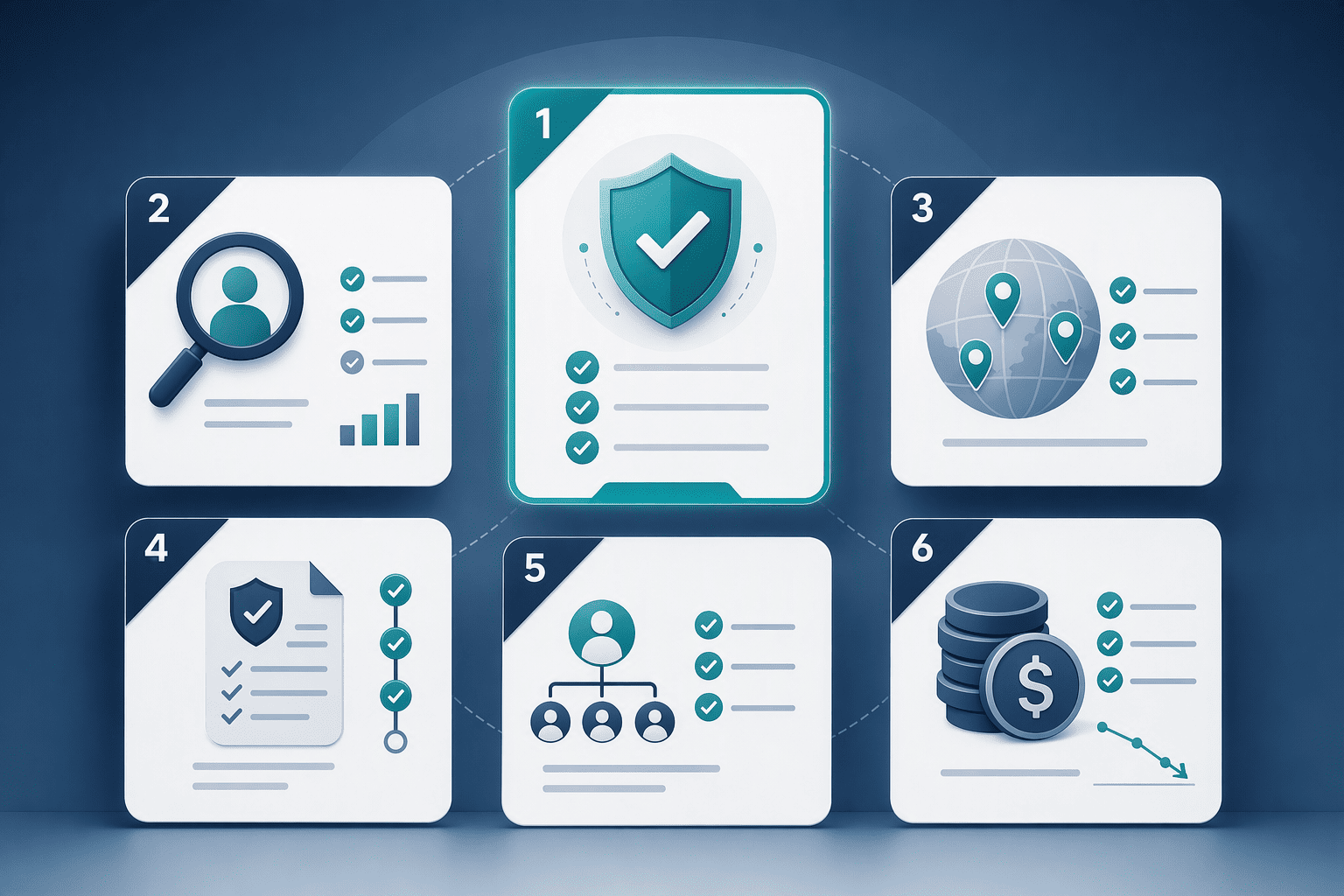
Sales reps spend only 35.2% of their time selling, making every prospecting hour expensive. Invalid contacts waste that limited selling time. Before purchasing a contact discovery tool, ask vendors these six questions to evaluate compliance risk, verification depth, regional accuracy, and real cost-per-usable-contact.
Compliance & Account Risk Questions
- Does your tool use scraping or enrichment architecture? Scraping-based tools violate LinkedIn Terms of Service and risk account suspension. Enrichment-based tools query third-party databases instead. Red flag: vendors who won't disclose their data source method.
- What is your account suspension rate for users? Tools that automate on-platform activity or crawl profiles directly expose users to permanent bans. Red flag: no published suspension data or vague answers like 'minimal risk.'
Verification & Accuracy Questions
- Which verification layers do you perform (syntax/MX/SMTP/carrier)? Syntax-only verification misses disconnected numbers and inactive emails. Multi-layer verification catches more bad contacts before you pay. Red flag: 'email validation included' without specifying which layers.
- Do you charge for contacts that fail verification? Some tools bill for every lookup, valid or not. Others charge only for verified results. Platforms like PeakAi that disclose 91% accuracy and credit-back guarantees answer this transparently. Red flag: no published accuracy rate or refund policy.
Regional & Cost Questions
- What is your India-specific accuracy vs US/EU? Global tools often underperform in emerging markets. Ask for regional accuracy breakdowns, not global averages. Red flag: vendors who won't segment accuracy by geography.
- What is real cost-per-usable-contact after invalid records? Advertised per-contact prices hide the true cost when verification rates are low. A $0.20 contact becomes $0.40 when only 50% verify. Calculate: sticker price ÷ verification rate = real cost. Red flag: no published verification rate to calculate real cost.
These six questions expose hidden compliance risk and inflated costs. Vendors who answer all six transparently, like platforms that disclose enrichment architecture, multi-layer verification, and regional accuracy, signal lower buyer risk than those who deflect or promise 'contact us for details.'
Conclusion
LinkedIn Sales Navigator offers the lowest compliance risk through official API partnership and zero suspension exposure, but limits contact enrichment to first-degree connections and charges per user seat rather than per contact, making it cost-prohibitive for teams prospecting outside their network. High-database-size platforms like Apollo and ZoomInfo provide the largest contact rosters but rely on scraping architectures that create 15-20% account suspension risk and often charge for invalid contacts post-export, increasing real cost-per-usable-contact 35-100% above advertised rates.
As AI-powered sales tools proliferate and LinkedIn enforcement of ToS violations intensifies, contact discovery platforms will bifurcate: compliance-first enrichment tools with transparent verification methodologies will gain enterprise adoption, while scraping-based tools will retreat to price-sensitive SMB segments willing to accept account suspension risk for lower per-contact costs. Carrier-level mobile validation API access in India and APAC will remain the accuracy frontier through 2026.
Evaluate contact discovery tools using the 6-question compliance and verification framework, then compare the 8 platforms in the comparison table to match your team's compliance tolerance, regional targeting (US/EU vs India), and cost-per-usable-contact threshold. Review PeakAi's 91% multi-layer verification methodology as one enrichment-based option with disclosed regional accuracy.
Frequently Asked Questions
What is the difference between scraping-based and enrichment-based LinkedIn contact discovery tools?
Scraping-based tools use automated browser automation to extract data directly from LinkedIn profiles, violating LinkedIn's Terms of Service and creating 15-20% account suspension risk. Enrichment-based tools match LinkedIn profile URLs to third-party business databases without accessing LinkedIn's systems, maintaining under 2% suspension risk and compliance with platform terms.
How do I know if a contact discovery tool's accuracy rate is real or just syntax validation?
Ask vendors which verification layers they perform: syntax validation (format check) → MX record lookup (domain has mail server) → SMTP handshake (mailbox accepts mail) → catch-all detection → carrier-level mobile validation. Tools that stop at syntax or MX checks produce artificially high accuracy percentages that don't reflect deliverability. Verify whether you're charged for contacts that fail verification.
Why do LinkedIn contact discovery tools have lower accuracy in India compared to the US or EU?
Contact discovery tools optimized for US and EU markets underperform in India mobile verification by 10-15 percentage points because carrier-level validation API availability differs. Western telecom operators provide well-documented APIs for phone validation; Indian mobile carriers have limited third-party access, causing tools advertising 92% global accuracy to deliver only 78-82% for Indian contacts.
What is the real cost per usable contact when tools charge for invalid records?
Credit-based pricing models that charge for every lookup, regardless of verification outcome, increase real cost-per-usable-contact by 35-100% above advertised rates. A tool advertising $0.20 per contact that returns 55% invalid records costs $0.36 per usable contact in practice. Ask vendors: 'Do you charge before or after verification?' and 'What percentage of contacts typically fail verification?'
How quickly does contact data decay, and why does verification at download time matter?
Contact data decays at 2-3% monthly as professionals change roles, abandon numbers, and migrate email domains. A database claiming 95% accuracy at ingestion may be 70-80% accurate six months later without re-verification. Tools that verify at download time with multi-layer validation maintain higher deliverable contact rates than those relying on database freshness timestamps alone.
Can I get phone numbers for most LinkedIn profiles with contact discovery tools?
Phone number coverage is inherently lower than email because only 5-10% of LinkedIn users share phone numbers with first-degree connections. Tools claiming high phone coverage infer numbers from third-party databases rather than LinkedIn itself, requiring carrier-level validation to confirm accuracy. Most professionals don't publish phone numbers on LinkedIn, limiting profile-based extraction regardless of tool sophistication.
What LinkedIn Terms of Service compliance risks should I know about before choosing a contact discovery tool?
LinkedIn's Terms of Service prohibit automated scraping; tools using browser automation to extract data create 15-20% account suspension risk. Enrichment-based tools that match profile URLs to third-party databases without accessing LinkedIn's systems avoid this risk, maintaining under 2% suspension rates. Scraping-based tools expose enterprise compliance risk regardless of GDPR certifications because they violate platform terms.
Sources
- 5 Email Verification Best Practices to Boost Deliverability - hunter.io (2025)
- LinkedIn Email Finder 2026: 12 Tools Compared (Hit Rate, Pricing) - derrick-app.com (2026)
- hiQ Labs v. LinkedIn: Is Scraping Public Data Protected Speech? - Harvard Journal of Law & Technology - jolt.law.harvard.edu (2017)
- LinkedIn prospecting tools comparison | ProspectB2B - www.prospectb2b.com
- How to Get Phone Numbers From LinkedIn [Step-By-Step] - www.kaspr.io (2025)
- 15 Best LinkedIn Sales Navigator Alternatives (2026 Guide) - fundraiseinsider.com (2026)
