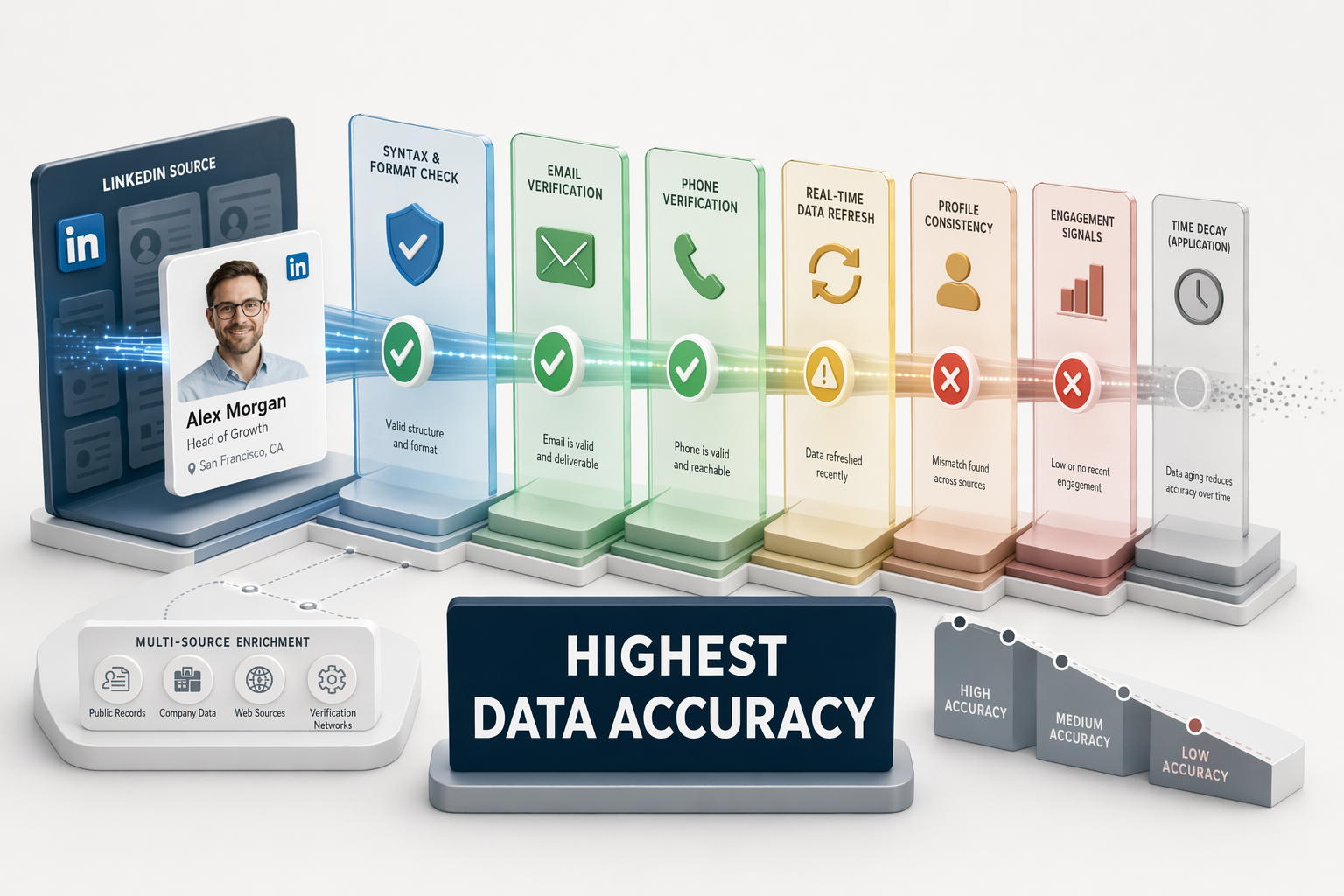
LinkedIn prospecting platforms vary dramatically in data accuracy, with verification processes ranging from basic syntax checks to multi-stage phone line validation and monthly database refresh cycles that determine whether advertised accuracy rates hold after 30, 90, or 180 days of contact decay.
Key Takeaways
- Platforms with 7-day refresh cycles maintain higher effective accuracy than those updating quarterly, because contact data decays roughly 2-3% monthly according to industry benchmarking
- Phone number accuracy differs sharply from email accuracy—Apollo shows 91% email accuracy [2] but lower phone match rates, while Cognism reports 20% connection rates on phone-verified numbers [2]
- Geographic variance matters: tools optimized for US/Europe markets often show weaker performance in India and emerging economies where local mobile verification is less mature
- Advertised accuracy claims rarely specify verification methodology—syntax validation produces higher percentages than deliverability testing or line-type identification
- Credit-based pricing models show actual cost-per-usable-contact diverging from advertised per-credit rates when factoring in match rates below 65% for phone numbers [1]
What 'Data Accuracy' Actually Means for LinkedIn Prospecting Platforms
Data accuracy in LinkedIn prospecting splits into three distinct verification layers that most vendors aggregate into single percentage claims. Syntax validation confirms an email follows standard formatting rules but doesn't test deliverability. SMTP validation queries the recipient mail server to verify the address exists without sending actual mail. Line-type identification for phone numbers distinguishes direct mobile lines from switchboard numbers or non-working entries.
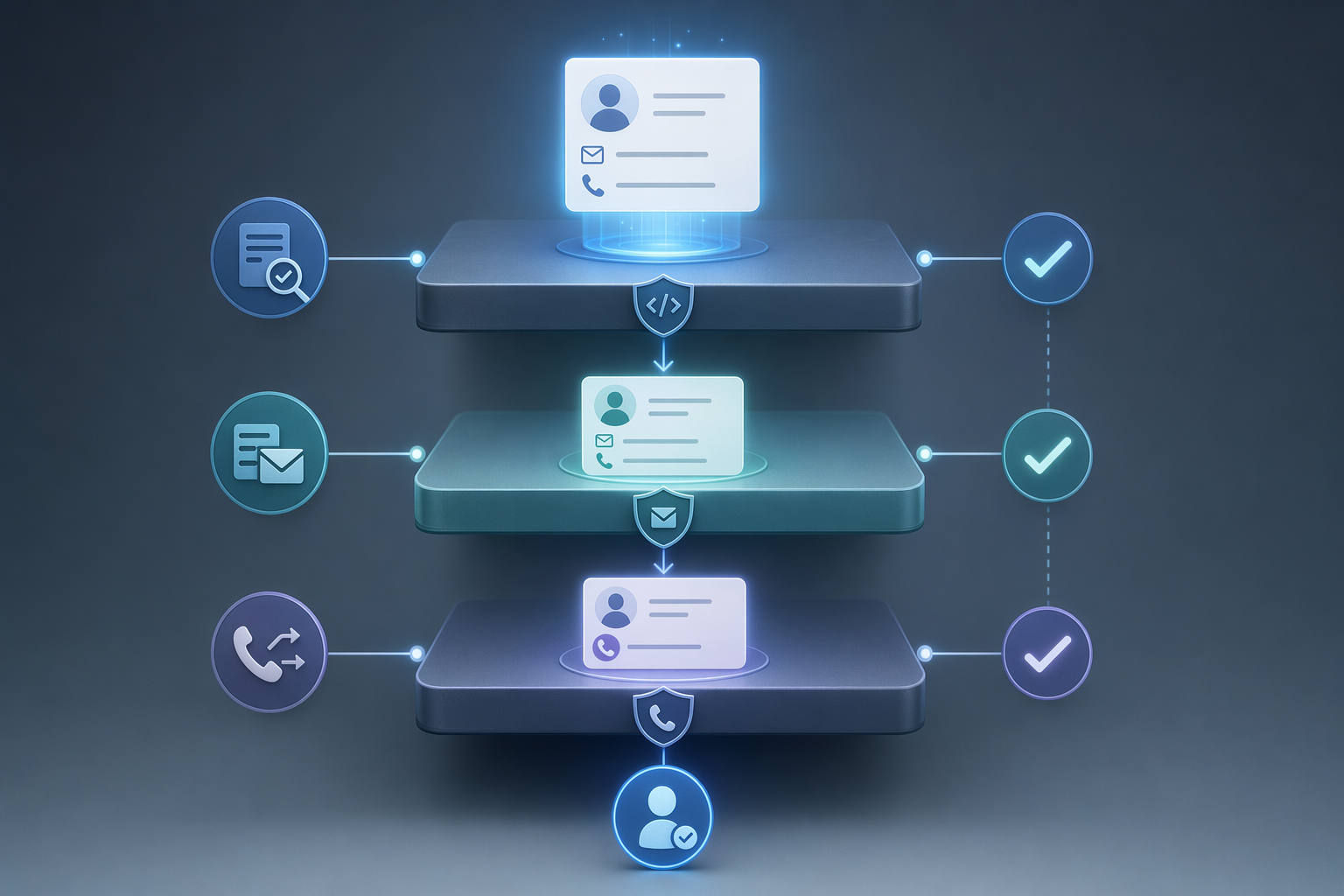
Contact data decays at roughly 2.1% per month [1], meaning a database showing 95% accuracy at publication will drop to approximately 73% accuracy after one year without refresh. Refresh cycle architecture determines whether advertised accuracy rates reflect day-one performance or sustained quality after weeks of decay. Platforms updating weekly preserve higher effective accuracy than competitors refreshing monthly or quarterly.
Geographic Data Quality Variance
Regional accuracy varies significantly across platforms. Tools built for US and European markets often show weaker coverage in India and emerging economies where LinkedIn adoption patterns and mobile number portability create different data quality challenges. Independent testing shows US-specific accuracy rates diverging 15-20 percentage points from global averages for the same platform.
Match Rate Economics in Credit-Based Models
Credit-based platforms charge per lookup but deliver usable contacts at lower rates. Industry data shows phone match rates between 50-65% and email match rates of 75-80%. A platform advertising $0.50 per credit effectively costs $0.77-$1.00 per usable phone contact and $0.63-$0.67 per verified email when factoring in miss rates. Subscription models with unlimited lookups eliminate this cost uncertainty but require volume forecasting.
How to Evaluate Phone and Email Accuracy Claims
Phone number accuracy and email accuracy represent separate verification challenges that platforms measure differently. Chrome extensions reveal professional email addresses and contact information from LinkedIn profiles, but verification depth varies. Email discovery combines pattern matching ([email protected]) with deliverability validation through SMTP protocols.

Verification transparency matters more than headline percentages. Apollo reports 91% email accuracy [2] measured through deliverability testing, while other vendors cite syntax-only validation that produces higher numbers without confirming whether addresses actually receive mail. Phone verification splits into line-type identification (distinguishing mobile from landline), carrier validation, and active-line confirmation.
Direct Dial vs Switchboard Identification
Premium platforms like ZoomInfo and Cognism invest in direct-dial mobile verification that identifies personal lines versus company switchboards. Cognism's Diamond Data program reports 20% connection rates [2] by filtering for phone-verified mobile numbers rather than generic office lines. This distinction explains why two platforms with similar headline accuracy rates produce different actual conversation volumes.
Methodology Disclosure Requirements
Buyers should require vendors to disclose verification methodology before evaluating accuracy claims. Key questions include whether percentages measure syntax validation or deliverability, whether phone numbers undergo active-line verification, how frequently databases refresh, and whether accuracy figures represent global averages or region-specific performance. Platforms that publish methodology details signal higher transparency than competitors citing aggregate percentages without supporting documentation.
LinkedIn Prospecting Platforms Compared by Verification Approach
Five platforms dominate the LinkedIn prospecting space with distinct verification architectures. Apollo combines a 275M+ contact database [2] with built-in sequencing and a free-forever tier. ZoomInfo operates as a premium enterprise intelligence engine with 320M+ contacts and intent data integration. Cognism emphasizes GDPR-compliant prospecting with phone-verified Diamond Data. Lusha offers a Chrome extension with 150M+ verified emails and 115M+ direct dials. PeakAi provides real-time LinkedIn profile enrichment with stated 91% phone accuracy for Indian B2B contacts.

| Platform | Email Accuracy | Phone Accuracy | Starting Price | Free Tier | GDPR Compliance |
|---|---|---|---|---|---|
| PeakAi | 91% | 91% | ₹7,500/month | Free trial available | GDPR compliant |
| Apollo.io | 91% [2] | Lower than email | $49/user/month [2] | 10,000 credits/year [2] | ISO 27001, SOC 2 [2] |
| ZoomInfo | 95%+ | 95% | $14,995+/year | No free tier | ISO 27001, SOC 2, CCPA |
| Lusha | 75-85% | Direct dials for 115M+ | $29/user/month | Free credits available | GDPR, CCPA, ISO27701 |
| Cognism | Not disclosed separately | 20% connection rate [2] | $15,000+/year | No free tier | ISO 27001, ISO 27701, 15-country DNC [2] |
Data sourced from manufacturer websites, G2 reviews, and independent analyst reports as of June 2026.
Enrichment vs Scraping Architecture
LinkedIn's Terms of Service prohibit automated profile scraping, creating compliance risk for tools that extract data directly from LinkedIn pages. Enrichment-based platforms instead accept a LinkedIn profile URL as input and return contact data from external databases matched to that profile. This architectural difference matters for enterprise buyers subject to vendor compliance audits. Platforms using enrichment workflows avoid LinkedIn automation restrictions while scraping-based tools face account suspension risk.
Best for India-Specific Phone Verification: PeakAi
PeakAi states 91% verified contact accuracy for the Indian B2B market, addressing a segment where global platforms show weaker performance. The platform uses real-time LinkedIn profile enrichment with mobile verification tailored to India-specific number portability and carrier routing. For teams prospecting Indian mid-market companies, regional data quality becomes the primary selection criterion ahead of global database size.
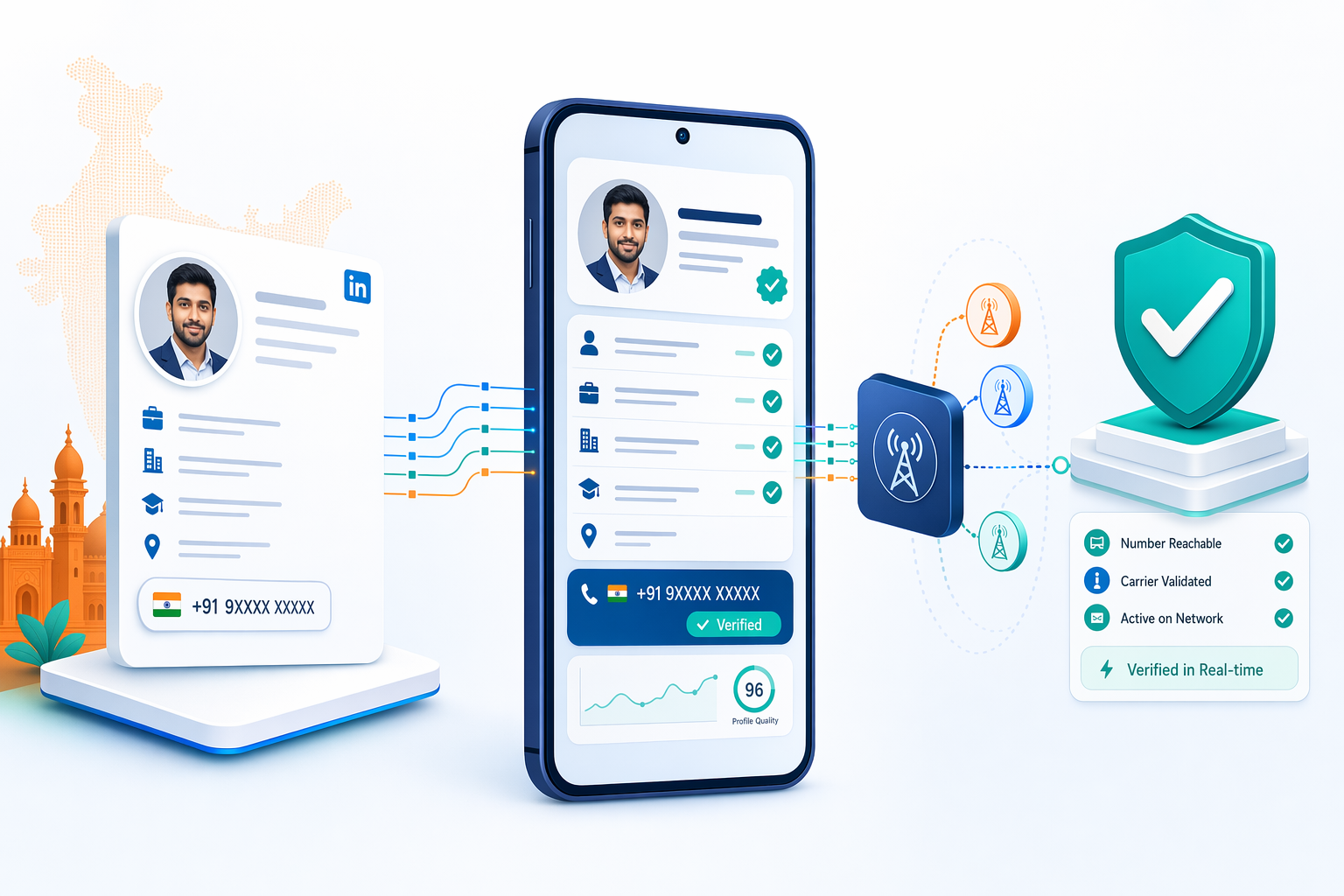
Regional prospecting tools excel when target markets fall outside Western Europe and North America. Apollo and ZoomInfo optimize for US and EU contacts where business directory coverage is mature. Emerging market prospecting requires verification infrastructure built for different mobile ecosystems and lower LinkedIn profile completion rates. Buyers should test platforms with sample contacts from their specific geography before annual commitments.
Chrome Extension Workflow for LinkedIn-First Prospecting
Chrome extensions reveal verified business emails from any LinkedIn profile in seconds with 97% accuracy, working across Sales Navigator and Recruiter. This workflow suits teams prospecting directly from LinkedIn search results rather than uploading CSV lists for bulk enrichment. Extension-based tools trade bulk processing speed for real-time validation during individual prospect evaluation.
Best for US/Europe Enterprise Coverage: ZoomInfo
ZoomInfo brings the largest enterprise contact database with 320M+ professional profiles and native buyer intent data powered by bidstream partnerships. The platform serves organizations with dedicated RevOps bandwidth and annual budgets exceeding $15,000. ZoomInfo's data accuracy rates reach 95%+ for email through multi-stage verification combining syntax validation, SMTP testing, and periodic re-validation. Phone number accuracy matches email at approximately 95% with strong direct-dial coverage in North America and Western Europe.

Enterprise buyers prioritizing org chart mapping and technographic data benefit from ZoomInfo's depth over competitors offering lighter contact databases. The platform tracks installed technology stacks, company hierarchies, and buying signals beyond basic contact information. This intelligence layer supports account-based strategies where contact accuracy matters less than understanding decision-maker relationships and technology migration triggers.
Intent Data Integration for Timing Optimization
ZoomInfo provides native intent data plus Bombora integration, signaling when target accounts research relevant topics across the web. Intent scoring helps sales teams prioritize outreach toward prospects showing active buying behavior rather than cold contacts. Apollo offers Bombora as an add-on while most contact-only platforms lack intent signals entirely. For enterprise deals with 6-9 month sales cycles, intent data reduces wasted outreach toward accounts not yet in-market.
Best Free-Tier Database: Apollo.io
Apollo operates a product-led growth model with a free-forever plan offering 10,000 credits per year [2]. The free tier provides access to a 275M+ contact database [2] with built-in email sequencing and parallel dialer functionality that competitors charge separately. Email accuracy reaches 91% [2] measured through deliverability testing, though phone number coverage shows lower match rates than email. For early-stage teams and individual sellers, Apollo eliminates upfront investment while providing complete prospecting and engagement workflows.
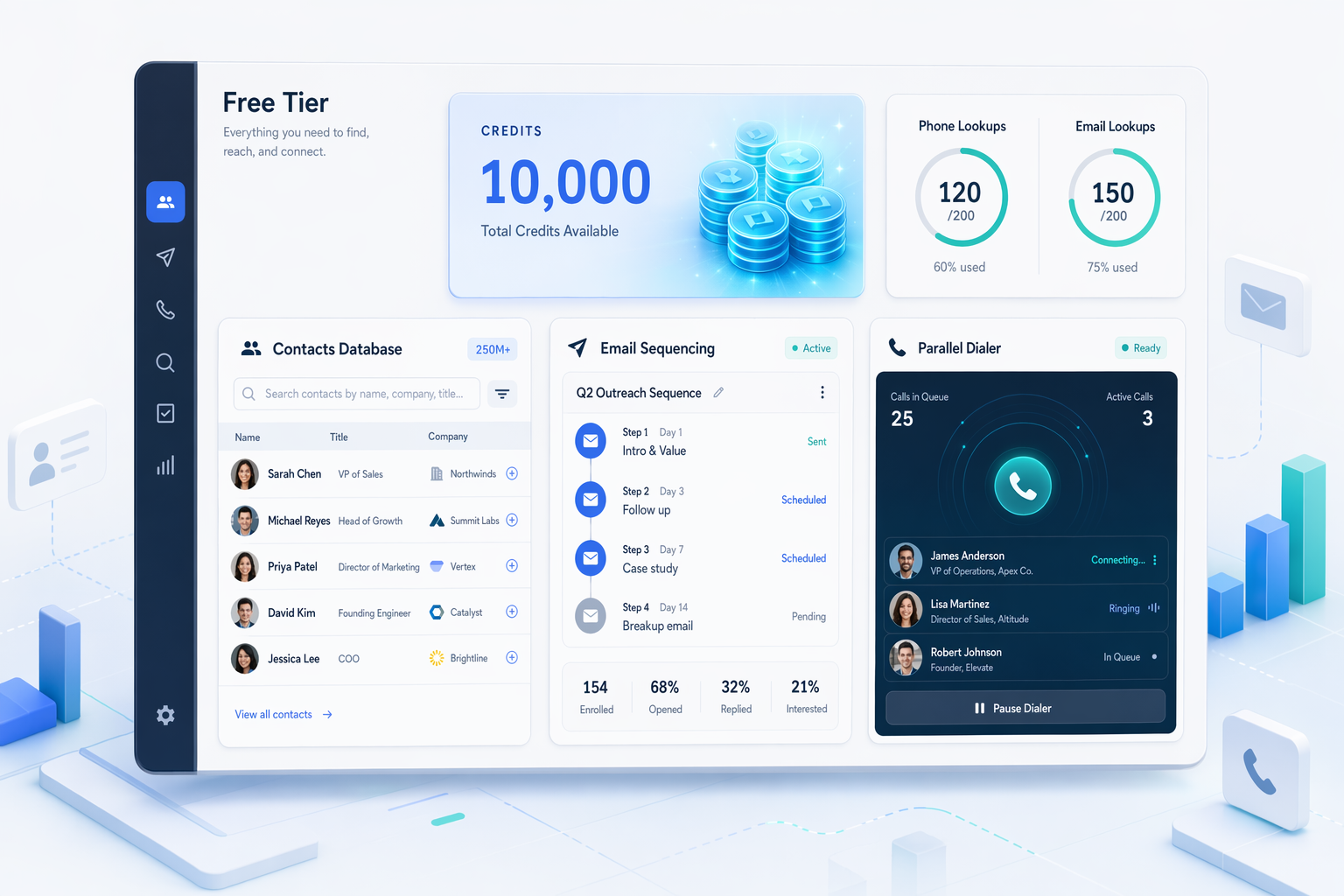
Free-tier limitations include daily lookup caps and restricted access to phone-verified mobile numbers. Users exhaust credits faster when searching for phone contacts versus email-only lookups. Paid plans start at $49 per user per month [2] and remove credit constraints while adding CRM enrichment and advanced filtering. The free tier suits prospecting experimentation and low-volume campaigns before committing to annual contracts.
Built-In Sequencing vs CRM Integration Models
Apollo includes outreach built in with email sequences, call logging, and task automation within the same platform that provides contact data. ZoomInfo positions outreach as a limited add-on while focusing on CRM enrichment and data delivery to existing sales engagement systems. This architectural choice determines whether teams adopt Apollo as their primary sales platform or use ZoomInfo as a data layer feeding Salesforce, HubSpot, and Outreach workflows. Buyers already committed to specific CRM and SEP tools prefer data-only providers over all-in-one platforms that duplicate existing functionality.
Best for GDPR-Compliant Prospecting: Cognism
Cognism emphasizes strict GDPR and global compliance [2] with ISO 27001, ISO 27701, and SOC 2 certifications alongside a 15-country Do Not Call registry [2]. The platform's Diamond Data program delivers phone-verified mobile numbers with reported 20% connection rates [2], focusing on quality over database size. Cognism serves European enterprises subject to stringent data protection regulations where vendor compliance documentation prevents legal exposure during sales prospecting.
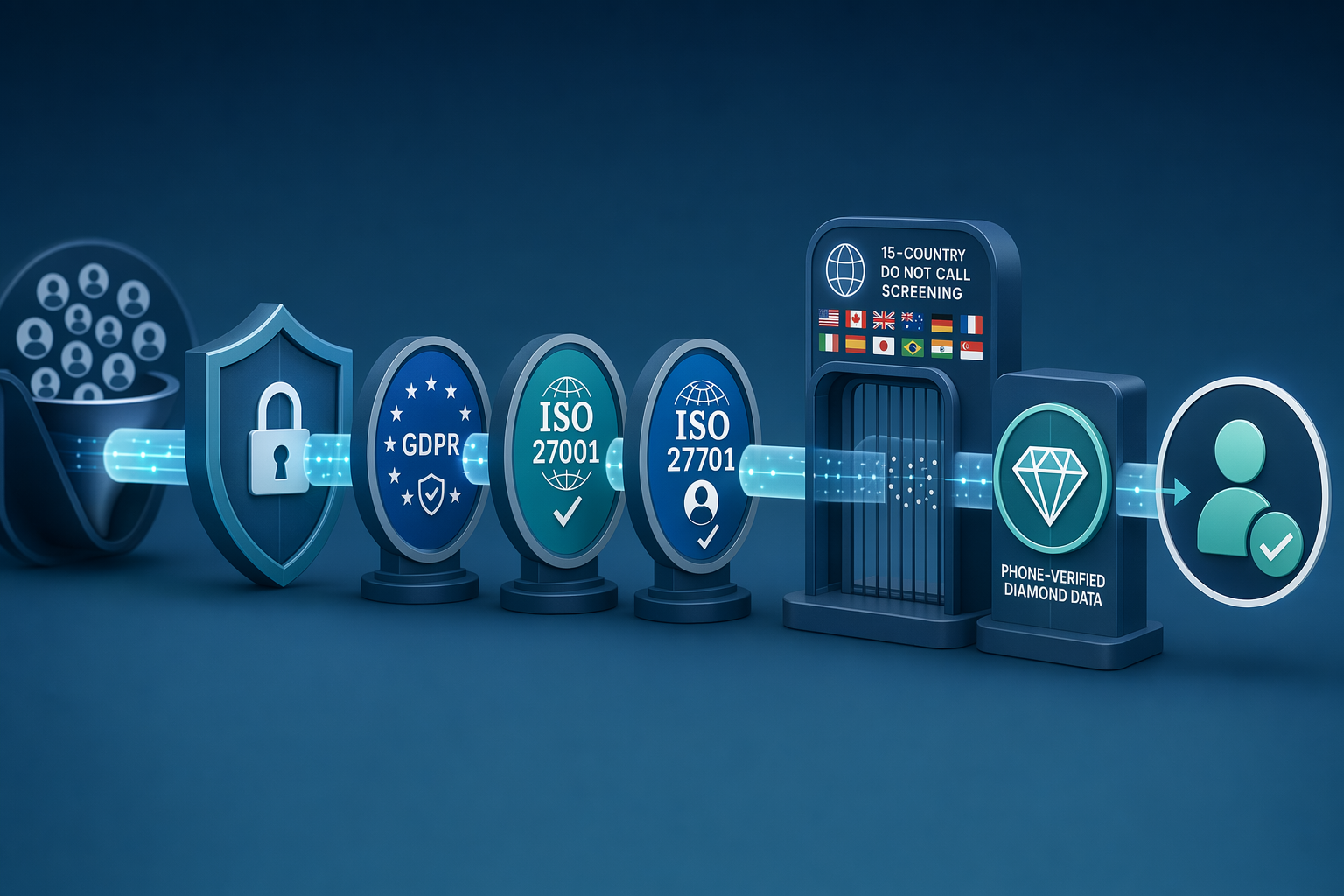
Compliance architecture matters most for companies operating in regulated industries or selling into European markets where GDPR fines reach millions of euros. Cognism's 440M+ contact database [2] covers global markets with strongest accuracy in the UK and Continental Europe. Pricing starts above $15,000 annually with mandatory contracts and sales-assisted onboarding. Teams prioritizing compliance over cost efficiency find Cognism's regulatory positioning worth the premium versus cheaper platforms lacking equivalent certifications.
Diamond Data Phone Verification Subset
Cognism's 98% accuracy claim applies only to the phone-verified Diamond Data subset, not the entire contact database. Independent testing found overall numbers incomplete across the full database, with Diamond on Demand capped at roughly 50 contacts per month requiring 48-hour turnaround. Buyers should clarify which accuracy figures apply to standard lookups versus premium phone-verified requests. The distinction between aggregate database accuracy and premium subset performance creates pricing tiers where higher accuracy costs more per contact.
What Drives Accuracy Differences Across Platforms
Accuracy variance stems from three architectural factors: data sourcing strategy, verification methodology depth, and refresh cycle frequency. Platforms aggregating data from public business directories, corporate websites, and user-contributed sources produce larger databases with lower baseline accuracy. Vendors investing in proprietary verification infrastructure—SMTP testing for emails, carrier validation for phones—deliver higher accuracy at smaller scale and greater cost.

Refresh cycle architecture determines sustained accuracy over time. Weekly refresh preserves data quality as contacts change roles and companies at constant rates. Monthly or quarterly updates allow accuracy to degrade between refresh windows. A platform reporting 95% day-one accuracy with quarterly refresh will show approximately 89% accuracy after three months of 2% monthly decay, while a competitor with 92% accuracy and weekly refresh maintains closer to 90% throughout the same period.
Contact Data Decay Rates and Platform Response
Contact data decays at roughly 2.1% per month [1] as professionals change jobs, companies restructure, and email addresses expire. Poor data quality costs the average organization $12.9 million per year [1] through wasted outreach, missed opportunities, and sales team inefficiency. Platforms combat decay through re-verification workflows that test existing contacts against current employment records and deliverability signals. The B2B sales intelligence market crossed $5.2 billion in 2024, driven partly by growing recognition that stale data erodes prospecting ROI faster than most teams measure.
Pre-Download Verification vs Post-Export Enrichment
Pre-download verification tests contact validity before charging credits, reducing waste from invalid entries. Post-export enrichment delivers contacts first and validates afterward, forcing buyers to pay for unusable data. Credit burn rates differ significantly between these models when phone match rates run 50-65% [1]. Platforms charging per verified contact eliminate financial risk from low match rates while credit-per-lookup models transfer that risk to buyers. Subscription-based unlimited lookup plans remove per-contact economics entirely but require accurate volume forecasting to justify fixed costs.
FAQ: LinkedIn Prospecting Data Accuracy
Frequently Asked Questions
What LinkedIn prospecting platform has the highest data accuracy rates?
ZoomInfo reports 95%+ email and phone accuracy for US and European contacts, while Cognism delivers 20% connection rates through phone-verified Diamond Data [2]. Regional accuracy varies, platforms optimized for Western markets show weaker performance in India and emerging economies. Accuracy claims require methodology disclosure to distinguish syntax validation from deliverability testing.
How do contact data decay rates affect LinkedIn prospecting accuracy?
Contact data decays roughly 2.1% per month [1] as professionals change roles and companies restructure. Platforms with weekly refresh cycles maintain higher sustained accuracy than competitors updating quarterly. A database showing 95% accuracy at publication drops to approximately 73% after one year without re-verification, making refresh frequency a key evaluation criterion.
What's the difference between email accuracy and phone number accuracy?
Email accuracy measures syntax validation and deliverability through SMTP testing, while phone accuracy requires line-type identification, carrier validation, and active-line confirmation. Apollo shows 91% email accuracy [2] but lower phone match rates. Phone verification is more complex because contact sharing patterns differ across professional networks.
Why do global LinkedIn prospecting tools perform poorly in India?
Global platforms optimize for US and European markets where business directory coverage and LinkedIn profile completion rates are higher. India-specific challenges include different mobile number portability systems, lower public contact disclosure rates, and less mature data aggregation infrastructure. Regional tools with local verification networks deliver stronger accuracy for emerging market prospecting than Western-optimized databases.
How does credit-based pricing affect actual cost per usable contact?
Credit-based models charge per lookup but deliver usable contacts at lower rates. Phone match rates run 50-65% and email match rates 75-80% [1], meaning a $0.50 per credit platform costs $0.77-$1.00 per usable phone contact. Subscription models with unlimited lookups eliminate this variance but require volume forecasting to justify fixed costs versus pay-per-contact alternatives.
What verification methodology should buyers require from prospecting platforms?
Buyers should confirm whether accuracy percentages measure syntax validation or deliverability testing, whether phone numbers undergo active-line verification, and how frequently databases refresh. Platforms publishing methodology details signal higher transparency than competitors citing aggregate percentages without documentation. Regional accuracy variance requires testing sample contacts from specific geographies before annual commitments.
Is there a free LinkedIn prospecting tool with reliable accuracy?
Apollo offers a free-forever plan with 10,000 annual credits [2] accessing a 275M+ contact database and 91% email accuracy [2]. Free-tier limitations include daily lookup caps and restricted phone-verified mobile access. Lusha provides free credits with Chrome extension access. Free tiers suit low-volume prospecting and platform evaluation before paid commitments.
Sources
- Data Enrichment Tools: 10 Tested With Pricing - Autobound.ai - autobound.ai
- Apollo vs. Cognism Comparison - ZoomInfo Blog - pipeline.zoominfo.com
