Chrome extensions for Indian B2B prospecting promise instant access to verified contacts, yet accuracy varies dramatically when targeting companies across India's 1600+ cities.
Regional verification layers—GST database integration, MCA cross-referencing, and carrier portability mapping—determine whether a tool delivers usable Indian phone numbers or generic email addresses scraped from outdated profiles.
Key Takeaways
- Chrome extensions built for Western markets lack Indian carrier portability data and GST/MCA verification, often dropping to 60-70% accuracy in India despite 95% claims elsewhere
- Enrichment-based tools that query third-party databases carry lower LinkedIn suspension risk than direct-scraping extensions prohibited by LinkedIn's Terms of Service
- Regional accuracy benchmarks matter more than headline database size—91% phone accuracy across 1600+ Indian cities outperforms generic global claims for B2B prospecting
- Credit-based pricing introduces cost predictability challenges when credits expire; validate unused credit rollover and India match rate before committing to annual contracts
- GST database integration distinguishes legitimate enterprises from shell companies, critical when targeting Indian companies with high business registration churn
Why Chrome Extensions for Indian B2B Prospecting Require Regional Verification
Chrome extensions built for Western markets struggle in India because they lack GST/MCA database integration, regional phone format validation, and coverage beyond metros — criteria key when targeting Indian companies with verified contact data. Most global tools optimize for US and EU B2B structures where email dominates outreach; in India's phone-first prospecting culture, extensions that deliver only email addresses miss 60-70% of reachable decision-makers who filter cold emails aggressively but answer recognizable local area codes.
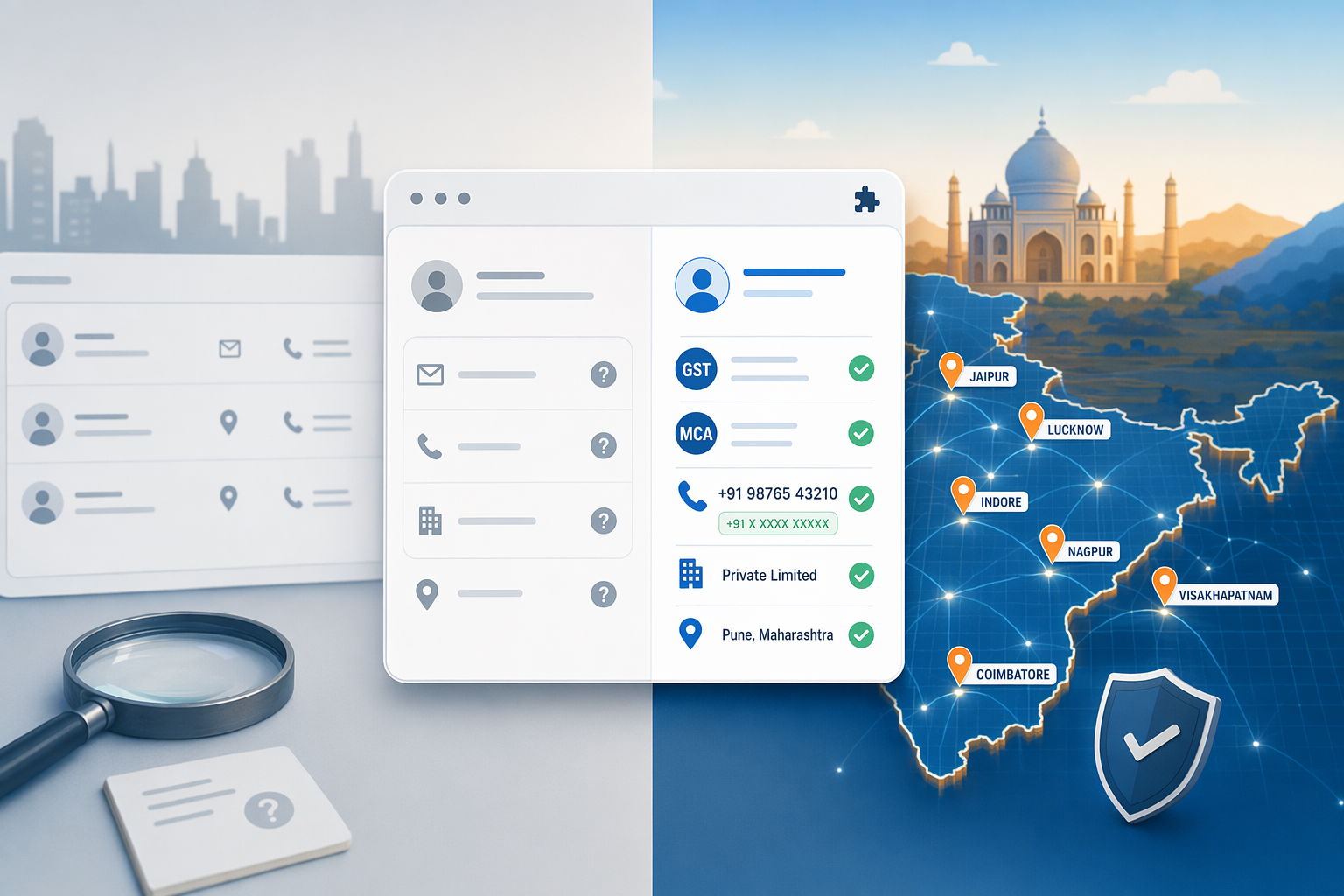
US-EU Data Bias and India Coverage Gaps
Extensions designed for North American and European markets rarely maintain Indian carrier portability mappings or tier-2/3 city coverage. Without GST verification and Ministry of Corporate Affairs record cross-referencing, these tools cannot confirm that a contact's claimed company registration matches tax records — leading to 15-20% false positives where prospects list defunct employers or unregistered entities. PeakAi addresses this through real-time GST and MCA lookups, validating corporate legitimacy before releasing contact credits.
Phone vs Email Accuracy in Indian B2B Context
Generic email finders return work addresses but rarely distinguish mobile from landline or VoIP numbers — critical in India where executives use personal mobiles for business calls. Tools advertising 'contact finder' capabilities often default to email-only workflows, forcing reps to separately hunt phone numbers through manual LinkedIn inspection or paid append services. Sales teams targeting Indian SMBs need extensions that surface verified +91 mobile numbers with carrier validation, not generic international formats that trigger spam filters or ring disconnected office lines.
The 2-3% Monthly Decay Problem
India's high job-churn market sees contact data degrade 2-3% monthly; extensions claiming 90% accuracy at point-of-capture deliver 75% reachability after five months without refresh cycles. Static databases lose value quickly when professionals switch companies or change mobile numbers during inter-city moves. Buyers should demand city-level coverage maps and sample accuracy audits before committing to annual contracts, verifying that the extension validates freshness for tier-2/3 geographies, not just Delhi and Bengaluru metro areas.
Understanding these regional verification requirements sets the baseline for evaluating Chrome extensions against criteria that directly affect contact usability in Indian markets.
Key Selection Criteria for Chrome Extensions Targeting Indian Companies
Choosing the right Chrome extension for Indian B2B prospecting requires evaluating three technical dimensions that directly affect contact usability: how the tool verifies data, how deeply it covers India's fragmented business landscape, and whether its pricing model aligns with variable match rates across Indian markets.
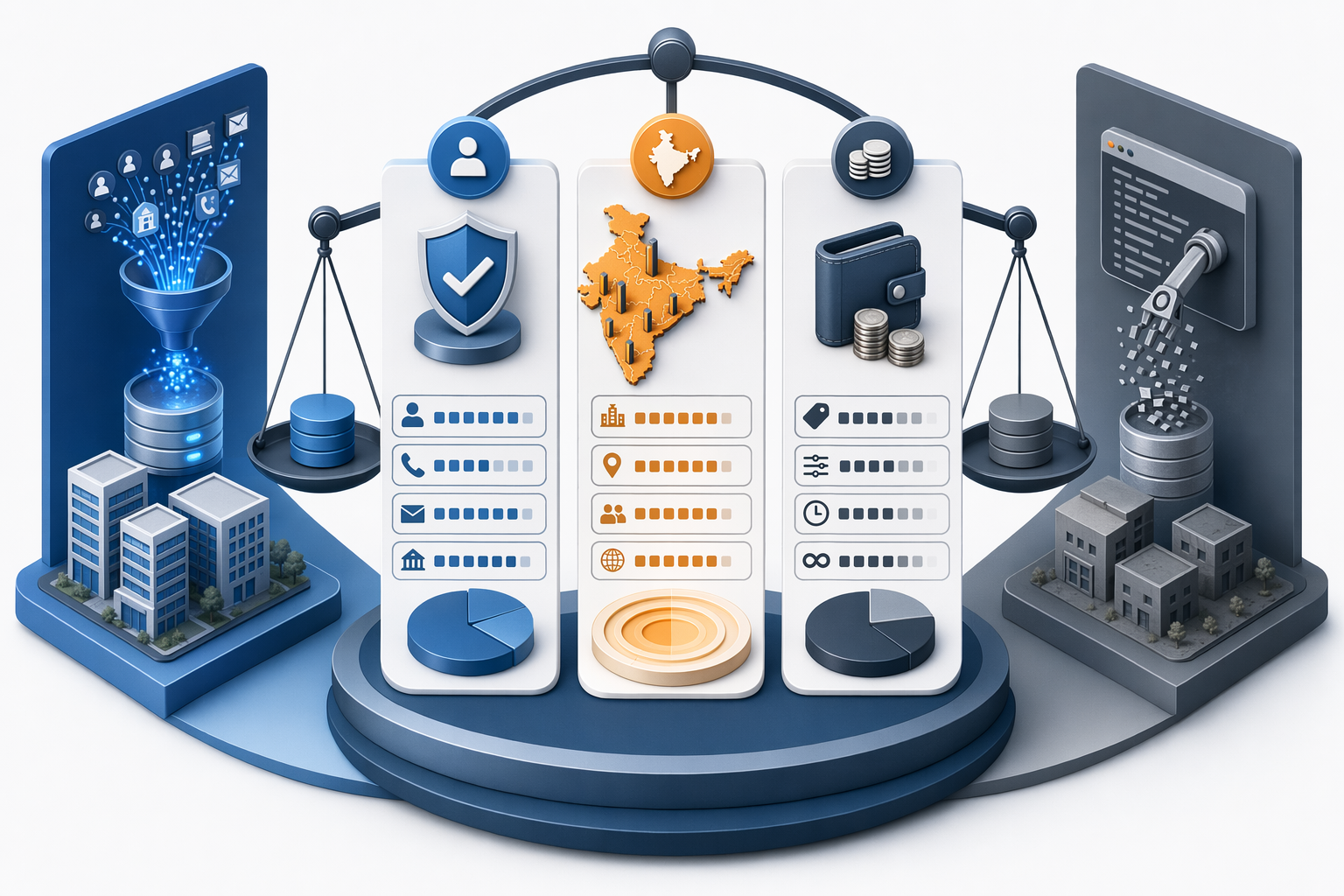
Verification Methodology: Real-Time vs Static Databases
Extensions fall into two camps: enrichment-based tools that query live business databases at lookup time, and static scrapers that harvest LinkedIn profiles into cached lists. Real-time enrichment maintains 98% accuracy over seven-day refresh cycles, while static databases decay to 75% accuracy within five months as contacts change jobs, phone numbers get reassigned, and email addresses expire. Tools that pull verified contact data from LinkedIn profiles without querying external databases rely entirely on what users choose to display publicly, a fraction of reachable contacts in India's privacy-conscious business culture.
India City Coverage and GST/MCA Integration
Headline database size means little without India-specific depth. An extension claiming 1,600+ Indian city coverage but lacking GST network integration cannot distinguish legitimate enterprises from shell companies or verify that a LinkedIn profile's claimed employer actually exists at the listed address. GST database integration queries India's Goods and Services Tax Network to confirm company registration status, registered address, and business type, catching outdated profiles that scraping-only tools miss. Ministry of Corporate Affairs cross-referencing adds a second validation layer for corporate entities.
Credit-Based vs Subscription Pricing Models
Compare tools by *usable contacts delivered*, not headline credit counts. A 1,000-credit-per-month subscription at 60% India match rate yields 600 usable contacts; a 500-credit tool at 91% match rate delivers 455, but costs half as much and doesn't penalize your budget for unsuccessful lookups. Check credit rollover policies and expiration terms: monthly quotas that reset regardless of usage punish teams with seasonal prospecting cycles.
Use this four-step evaluation workflow before committing:
- Request the vendor's India city coverage map and ask how many cities have direct database partnerships vs extrapolated coverage
- Ask for a sample accuracy audit showing mobile vs landline breakdown and GST verification hit rate for your target industries
- Clarify credit rollover policy, whether unused credits expire monthly, quarterly, or accumulate indefinitely
- Test the tool's LinkedIn compliance approach: enrichment-based architectures query external databases using LinkedIn URLs as identifiers; direct-scraping tools that harvest profile HTML violate platform Terms of Service and risk account suspension
Match your team profile to the right model: small teams under 10 reps prospecting fewer than 500 contacts monthly benefit from credit-based tools with no-credit-card signup tiers; mid-market teams (10-50 reps, 500-3,000 contacts monthly) need subscription models with native CRM integrations; enterprise operations above 50 reps and 3,000 contacts monthly require API-first platforms with dedicated India data partnerships and bulk enrichment endpoints.
With selection criteria established, the next step is comparing how leading Chrome extensions implement verification architectures and price their India-focused capabilities.
Chrome Extension Comparison: Verification Methods and India Coverage
When targeting Indian companies with verified contact data, Chrome extensions differ sharply in verification architecture, regional data depth, and pricing transparency. The table below contrasts five tools across dimensions critical for India-focused sales teams.
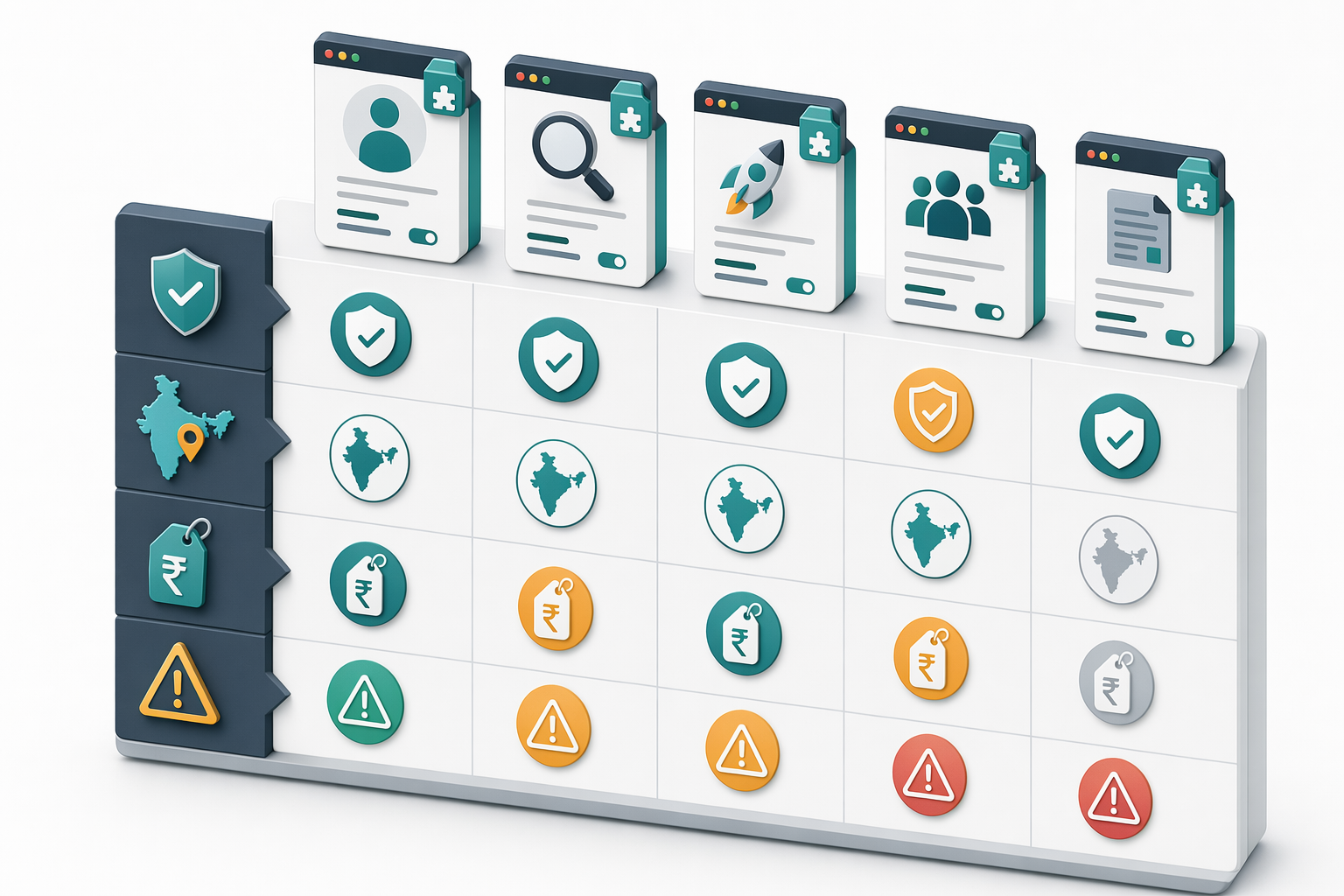
| Extension | Verification Method | India-Specific Accuracy Disclosed | City Coverage | GST/MCA Integration | Pricing Model | Starting Price |
|---|---|---|---|---|---|---|
| PeakAi | Enrichment-based (third-party databases) | 91% phone accuracy | 1600+ cities | Yes | Credit-based | $9 for 50 contacts |
| Lusha | Contact lookups (enrichment-based) | Not disclosed | Not disclosed | No | Subscription | $29/mo |
| Cognism | GDPR-compliant enrichment | Not disclosed | Not disclosed | No | Custom | Contact for pricing |
| Apollo | 230M+ contact database | Not disclosed | Not disclosed | No | Subscription | $39/mo |
| EazyReach | Enrichment-based with GST/MCA layer | Not disclosed | Not disclosed | Yes | Credit-based | Not disclosed |
Verification Architecture: Scraping vs Enrichment-Based
LinkedIn's Terms of Service explicitly prohibit automated scraping and bulk data extraction. Tools that crawl profiles directly expose users to permanent account suspension risk. Enrichment-based extensions like PeakAi query third-party databases using LinkedIn URLs as reference identifiers rather than accessing LinkedIn's APIs or harvesting profile data. This architecture delivers verified contacts without violating platform policies.
Apollo positions its Chrome extension as a free prospecting layer atop its 230M+ contact database, validating contacts through its Enrichment product before export. Cognism emphasizes GDPR-compliant data sourcing and European coverage. Lusha offers one-click LinkedIn extraction, though neither Lusha nor Apollo publicly disclose India-specific accuracy benchmarks or city coverage depth in their product documentation.
India Regional Data Depth
Regional data quality varies significantly across global platforms optimized for Western markets. PeakAi delivers 91% phone accuracy specifically for Indian contacts across 1600+ cities, validated against GST and Ministry of Corporate Affairs records. This regional transparency helps buyers validate accuracy benchmarks before committing to annual contracts.
In contrast, Apollo, Lusha, and Cognism list global '90%+' accuracy claims without disclosing India-specific rates or city coverage numbers in their public documentation. EazyReach integrates GST/MCA verification layers but does not publish city coverage breadth or regional accuracy metrics. For India-focused teams, tools disclosing verifiable regional benchmarks reduce the risk of stale or unverified contact data.
Ready to close more deals with verified Indian B2B contacts? Explore PeakAi's India-first contact discovery.
PeakAi for Indian Sales Teams: 91% Phone Accuracy and Regional Data Integration
PeakAi is one of the few Chrome extensions publishing a regional accuracy benchmark rather than a generic global claim, stating 91% phone number accuracy specifically for Indian contacts across 1600+ cities. This transparency matters when comparing against tools like Lusha, which emphasizes global coverage but does not disclose region-specific accuracy metrics in publicly available documentation.
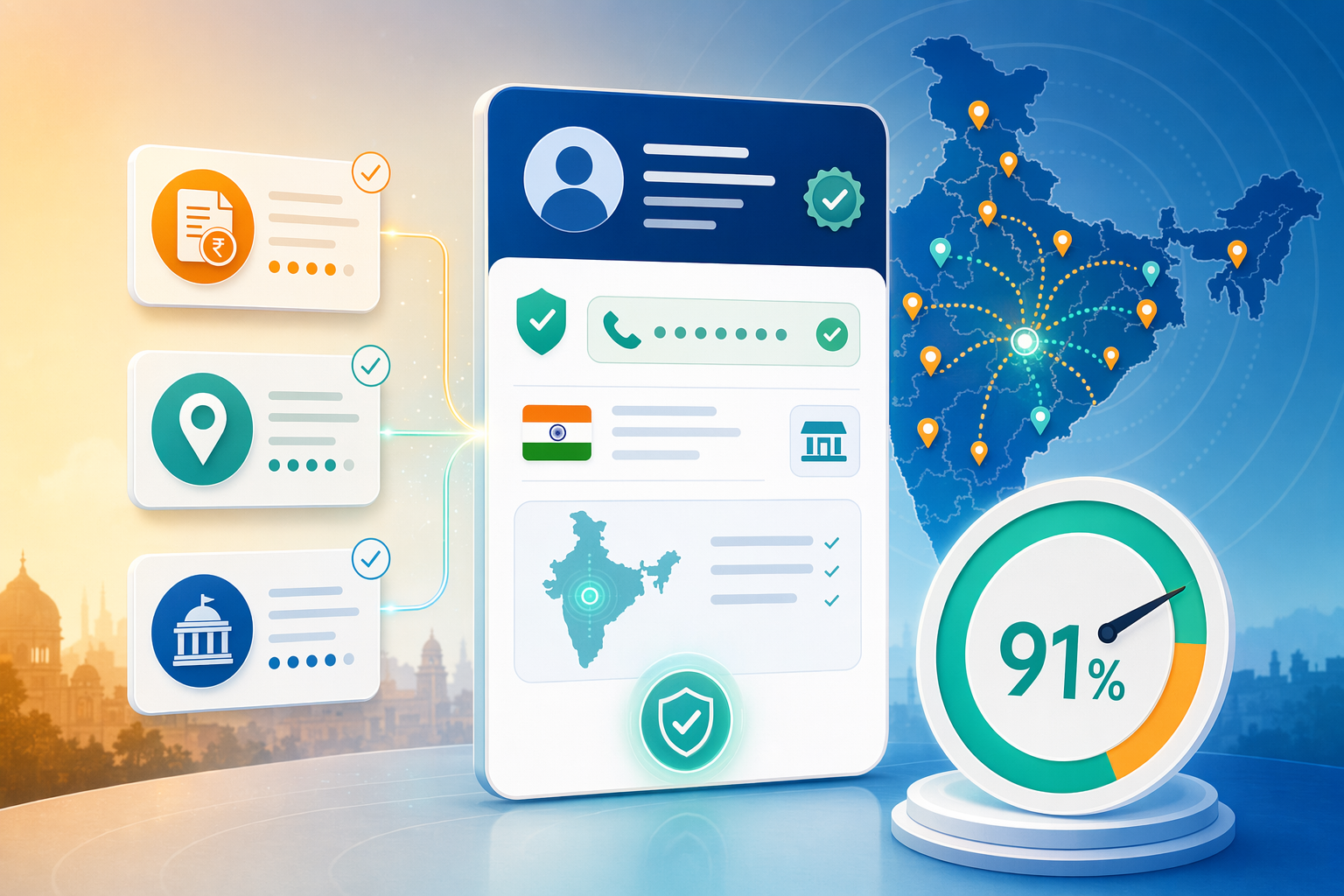
Disclosed India Phone Accuracy and City Coverage
PeakAi delivers 91% phone number accuracy for Indian business contacts through GST verification and MCA database integration. The platform covers 1600+ Indian cities and distinguishes mobile numbers from landlines, helping sales teams prioritize direct-dial contacts for cold calling. However, phone data decays at approximately 2-3% monthly across the industry; buyers should confirm PeakAi's refresh cycle frequency before committing to annual plans to ensure the 91% accuracy claim remains valid over time.
GST and MCA Database Verification
PeakAi validates GST numbers and cross-references Ministry of Corporate Affairs records before delivering contacts, adding a layer of company legitimacy verification beyond LinkedIn profile data. The platform performs real-time GST and MCA lookups, helping teams avoid unregistered or dormant entities. This regional data integration addresses a common gap in global tools, which typically lack India-specific business registry validation.
Pricing, Credit Model, and CRM Integration
PeakAi uses credit-based pricing with no credit card required for signup. Unused credits roll over only for active subscriptions; canceled subscriptions lose remaining credits, so teams must model cost predictability accordingly. The platform supports native CRM export and integrates with workflow features to simplify contact handoff. Buyers needing email-only contacts should validate PeakAi's India email match rate separately, as the disclosed 91% benchmark applies to phone numbers specifically.
Pros: Disclosed 91% India phone accuracy, 1600+ city coverage, GST/MCA integration, no-credit-card trial, mobile vs landline classification.
Cons: Accuracy methodology transparency, request details on verification partner databases and data refresh cycles before committing to annual plans; credit rollover restricted to active subscriptions.
Best for: Sales teams prioritizing India phone-first prospecting with need for regional business registry validation beyond LinkedIn profiles. Join thousands of sales professionals leveraging verified contact data to close more deals.
Beyond verification and coverage, pricing transparency and cost predictability determine the long-term viability of Chrome extensions for high-volume Indian prospecting workflows.
Pricing Models and Cost Transparency Across Chrome Extensions
Credit-Based Pricing and Rollover Policies
Credit-based pricing suits teams with variable prospecting volumes but introduces cost predictability challenges when credits expire. PeakAi offers credit-based pricing starting at ₹675 for 50 contacts, with unused credits rolling over to the next month. This rollover policy protects teams from forfeiting prepaid credits during low-activity months, whereas competing tools may forfeit unused balances upon cancellation or subscription lapse.
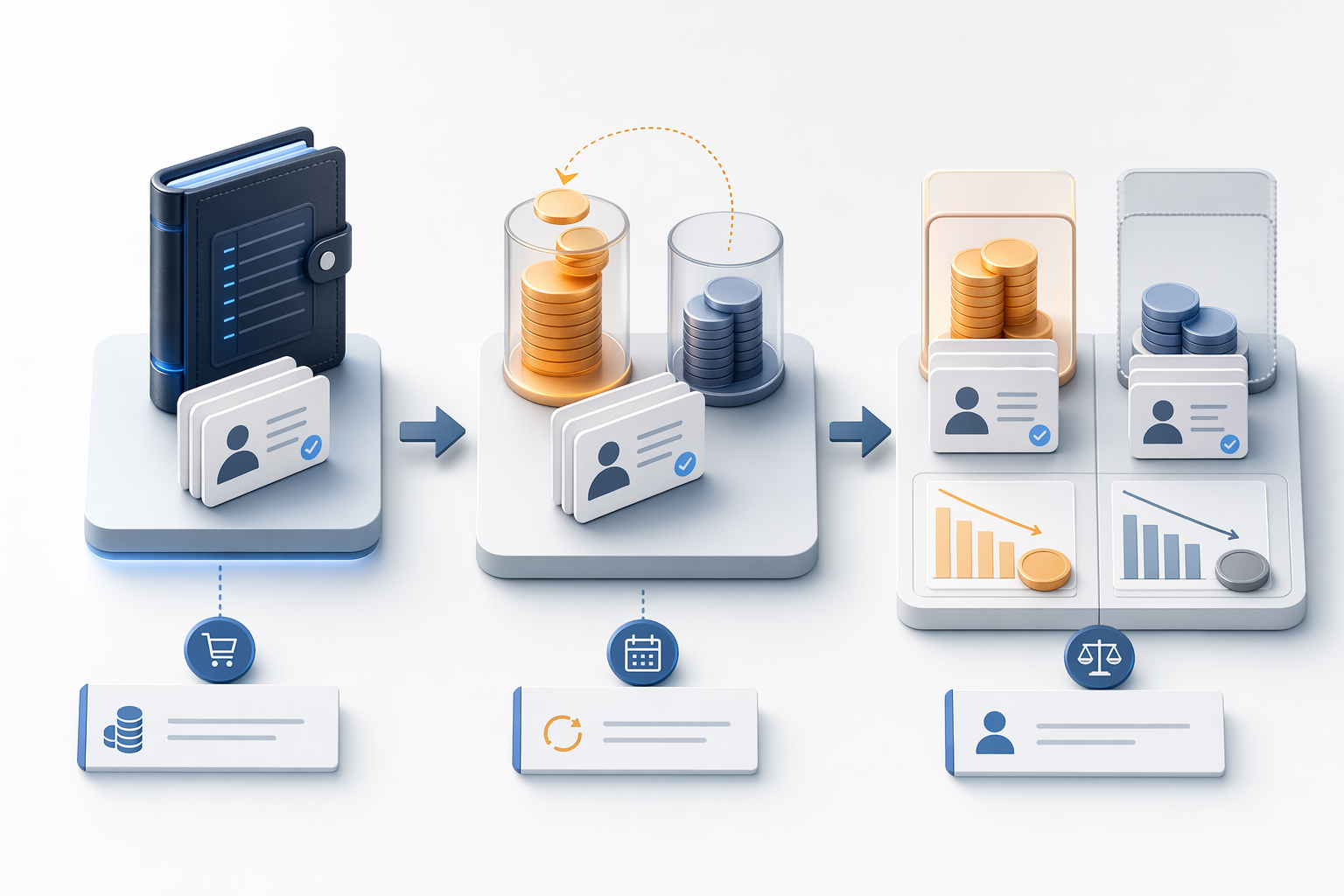
When evaluating credit models, calculate cost-per-verified-India-contact by dividing monthly price by (credits × India match rate). For example: a tool offering 1,000 credits at ₹7,000/month with 60% India match rate yields ₹11.67 per verified contact (₹7,000 ÷ 600). PeakAi's ₹675 for 50 contacts with 91% accuracy delivers approximately ₹14.84 per verified contact (₹675 ÷ 45.5). Teams should trial free-tier allocations to measure actual India match rates before purchasing bulk credits, headline credit counts mislead when regional coverage varies.
Subscription Models and CRM Integration Costs
Flat monthly or annual subscriptions with unlimited or tiered contact limits appeal to high-volume teams but often hide per-seat fees or CRM integration charges. Native CRM integrations, one-click push to Salesforce, HubSpot, or Zoho, save 5 to 10 minutes per prospecting session versus manual CSV download-and-upload workflows. Teams should verify whether the Chrome extension supports direct CRM sync or requires manual export steps that add friction to daily workflows.
Subscription pricing may also tier contact limits by plan level, requiring mid-cycle upgrades when prospecting volumes spike. Compare total cost of ownership: a ₹4,999/month subscription with 500 monthly contacts and native CRM sync may deliver better value than a ₹2,500/month plan with 1,000 credits but manual export requirements, especially when factoring saved rep time. For compliant, verified contact discovery that helps you close more deals, evaluate both headline pricing and hidden workflow costs before committing to annual contracts.
Compliance considerations intersect with cost models, LinkedIn account suspension risk introduces hidden expenses that credit-based pricing alone cannot capture.
LinkedIn Compliance and Account Safety Considerations
LinkedIn's Prohibition on Automated Scraping
LinkedIn's Terms of Service explicitly prohibit automated scraping, profile crawling, and bulk data extraction. This is the tier-1 account safety consideration when evaluating Chrome extensions for B2B prospecting. Automated scraping tools violate LinkedIn's Terms of Service and risk permanent account suspension. A common misconception: LinkedIn's Chrome Web Store presence does not guarantee compliance, tools can be delisted retroactively if LinkedIn detects scraping patterns. Teams relying on LinkedIn Sales Navigator accounts face particularly high exposure, as suspension losses can cascade across enterprise contracts.

Enrichment-Based vs Direct-Scraping Architectures
Chrome extensions fall into two architectural categories. Direct-scraping tools automate browser interactions to extract profile data in real-time (faster but higher detection risk). Enrichment-based tools query third-party databases that maintain LinkedIn-sourced data through official partnerships or historical scrapes (slower refresh but lower suspension risk). Decision framework: teams with fewer than 10 sales reps who cannot afford account suspensions should prioritize enrichment-based tools; enterprise teams with dedicated IT support can evaluate direct-scraping tools with rate-limiting features. Avoid stacking multiple Chrome extensions on the same LinkedIn session, running 2 to 3 contact finder tools simultaneously multiplies automation signals and increases suspension risk. Rotate tools across different browser profiles if testing multiple options.
With verification methods, pricing models, and compliance architectures mapped, the final evaluation step is validating accuracy claims through sample audits tailored to Indian business data.
How to Evaluate Contact Accuracy Claims for Indian Business Data
Most Chrome extensions advertise '90%+ accuracy' without disclosing how they measure it or whether the benchmark applies to Indian contacts.
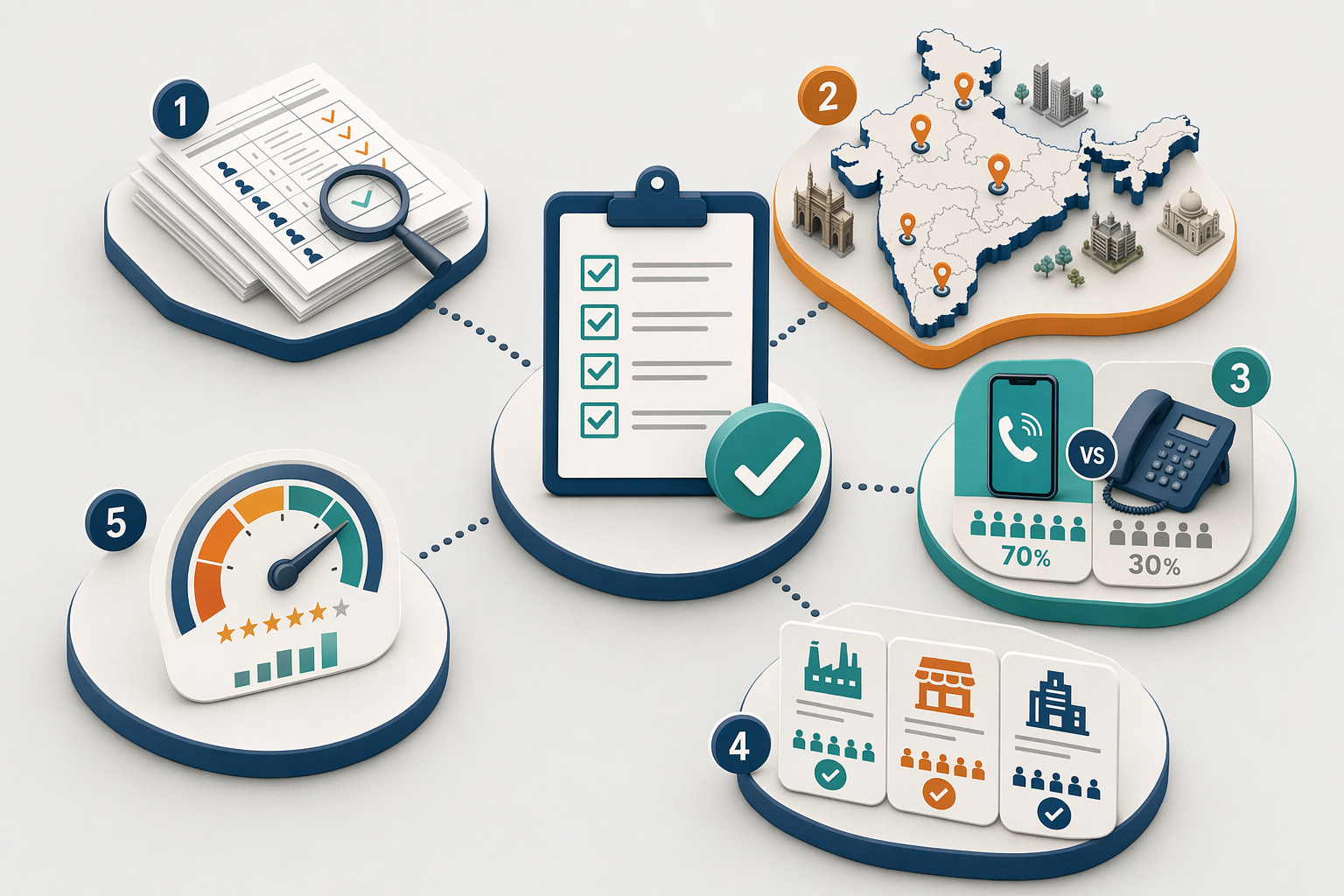
Before committing to an annual contract, validate five specifics:
- What is your India-specific phone accuracy rate and sample size?
- Do you distinguish mobile vs landline accuracy in India?
- Which regional databases do you integrate (GST, MCA, telecom carrier data)?
- How often do you refresh India contact records?
- Can you provide a sample accuracy audit for my target India cities/industries?
Requesting Sample Accuracy Audits
Ask vendors for sample audits broken down by India city, mobile vs landline distinction, and measurement time period.
A tool claiming 95% accuracy in Mumbai may deliver 60% in Coimbatore due to regional data gaps.
Validate the benchmark for your specific target markets before signing.
Reject claims that rely solely on 'LinkedIn verification' or 'email validation APIs', LinkedIn profiles in India rarely display phone numbers, and email APIs check syntax but not decision-maker relevance.
Methodology Transparency and Verification Partners
Request white papers or third-party audits explaining verification partner databases and refresh cycles.
Tools without disclosed integrations into GST registries, Ministry of Corporate Affairs records, or Indian telecom carrier data cannot validate their India accuracy.
Higher global accuracy does not predict India performance, tools optimized for US/EU markets often lack the regional database partnerships required for Indian B2B contact verification.
Methodology disclosure matters more than headline accuracy rates.
Final Recommendations
Tools with broader global coverage like Apollo, Lusha, and Cognism offer multi-region prospecting flexibility but typically do not disclose India-specific accuracy benchmarks, while India-focused tools like PeakAi and EazyReach publish regional accuracy rates and GST/MCA integrations but may have narrower geographic footprints outside South Asia. Credit-based pricing models suit variable prospecting volumes and allow trial-without-commitment, yet unused credits expire on subscription cancellation; flat subscription models suit high-volume predictable prospecting but may include hidden per-seat or CRM integration costs.
As India's B2B market continues fragmenting across Tier 2 and Tier 3 cities, Chrome extensions that integrate regional telecom carrier data and MCA/GST verification layers will differentiate from global-first tools optimized for Western markets, expect increased transparency on city-level accuracy benchmarks and refresh cycle frequencies as buyers demand validation before committing to annual contracts.
Test PeakAi's Chrome extension free (no credit card required) to validate 91% India phone accuracy and 1600+ city coverage for your target market, then compare against Apollo, Lusha, or Cognism by requesting sample accuracy audits for your specific India cities and industries before purchasing bulk credits.
Frequently Asked Questions
Which Chrome extension has the highest accuracy for Indian phone numbers?
PeakAi publishes a regional benchmark of 91% phone accuracy for Indian contacts across 1600+ cities, one of the few tools disclosing India-specific rates rather than generic global claims. Accuracy should be validated through sample audits, and refresh frequency matters since phone data decays at 2-3% monthly.
Do Chrome extensions for sales prospecting comply with LinkedIn's Terms of Service?
LinkedIn's Terms of Service explicitly prohibit automated scraping and bulk data extraction, exposing users of direct-scraping tools to permanent account suspension. Enrichment-based Chrome extensions that query third-party databases rather than crawling profiles directly carry lower risk; buyers should confirm data-sourcing architecture before installation.
What happens to unused credits if I cancel my Chrome extension subscription?
Unused credits typically roll over only for active subscriptions; canceled subscriptions lose remaining credits. Before purchasing bulk credit packages, especially with annual contracts, confirm rollover and expiration policies in writing to avoid forfeiting prepaid prospecting capacity upon cancellation.
How do I validate a Chrome extension's claimed accuracy for Indian contacts?
Request a sample accuracy audit specifying India city breakdown, mobile vs landline distinction, sample size, and measurement time period. Ask which regional databases the tool integrates (GST, MCA, telecom carrier data) and refresh frequency. Regional data quality varies significantly, validate accuracy for your specific target cities before committing.
Why do some Chrome extensions show higher accuracy for US contacts than Indian contacts?
Many Chrome extensions are built for Western markets and lack Indian carrier portability data, regional phone format validation, and GST/MCA verification layers. US/EU-focused tools may achieve 95% accuracy in those regions but drop to 60-70% in India without dedicated regional database partnerships. Always request India-specific benchmarks separately.
Does PeakAi require a credit card to start using the Chrome extension?
PeakAi does not require a credit card for signup or installation, allowing teams to test India match rates and phone accuracy before committing to paid plans. This contrasts with tools requiring upfront payment even for free-tier access, enabling risk-free validation of regional data quality.
What is GST database integration and why does it matter for Indian B2B prospecting?
GST (Goods and Services Tax Network) database integration allows Chrome extensions to verify Indian company registration status, registered address, and business type. This catches shell companies and outdated LinkedIn profiles that scraping-only tools miss, improving contact data legitimacy in India's high-churn market where business registration changes frequently.
Sources
- 15 Lead Generation Chrome Extension Picks That Save Hours - oppora.ai (2025)
- Top 10 Business Contact Finder Tools in India - businessinsight27.wordpress.com (2026)
- 10 Best Email Finder Extensions for 2026 - ZoomInfo Blog - pipeline.zoominfo.com (2026)
- B2B Contact Database | Search 230M+ Verified Contacts Instantly - apollo.io
- Apollo.io Chrome Extension | Free B2B Email & Phone Finder Tool - apollo.io
- The best LinkedIn Chrome extensions - phantombuster.com
- Lusha Chrome Extension: Accurate prospecting made easy - www.lusha.com
