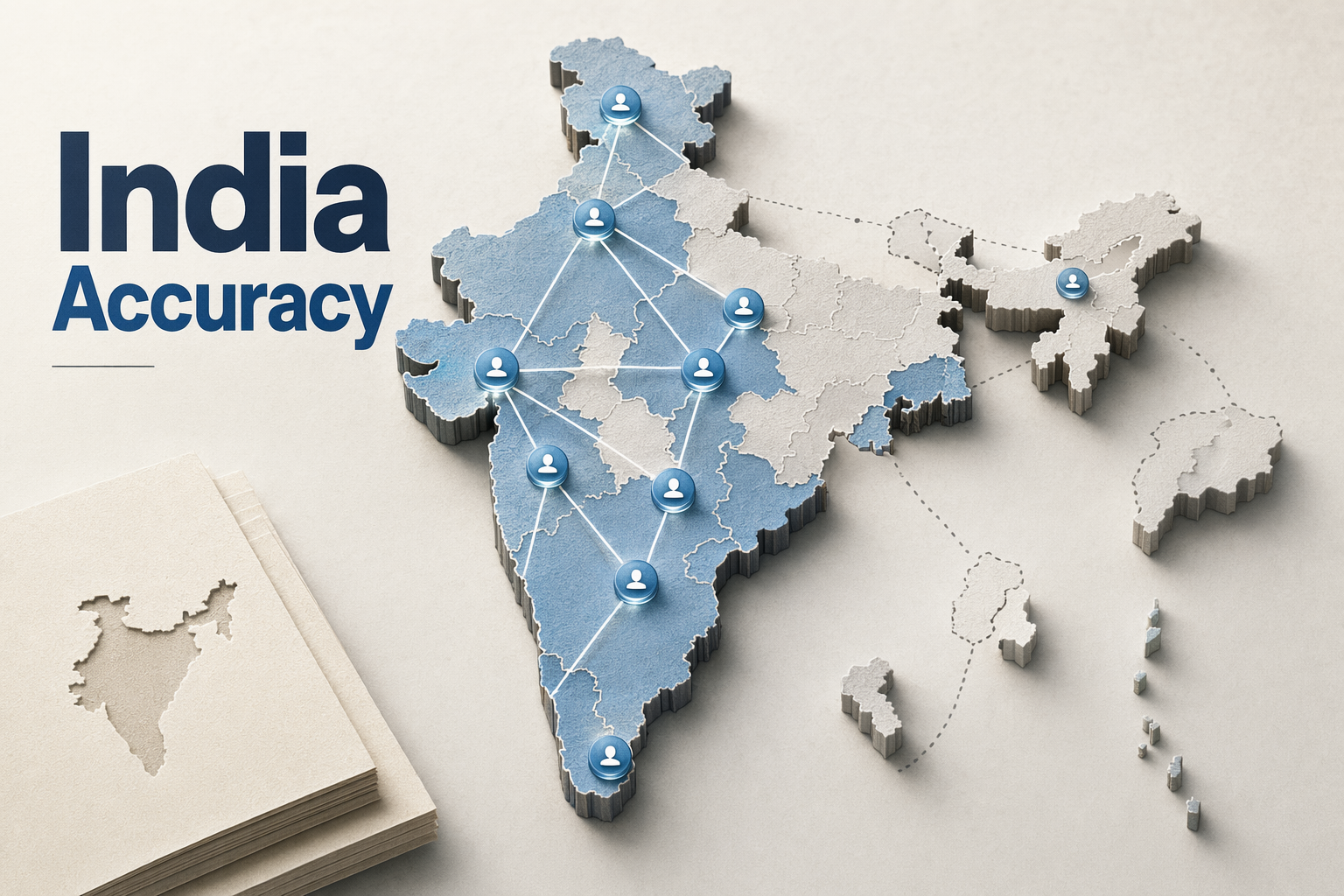
Global contact discovery platforms advertise 85–95% accuracy, but those figures rarely break down performance by region. Indian B2B teams face unique verification challenges: limited phone coverage on LinkedIn, faster mobile number decay, and platforms optimized for Western markets.
Key Takeaways
- Email accuracy ranges from 85–95% for top platforms, but phone accuracy lags 15–30 percentage points due to limited LinkedIn phone sharing
- Contact data decays at 2–3% monthly; platforms with 7-day refresh cycles maintain 98% accuracy versus 75% for quarterly updates
- Global platforms optimize for Western markets—India-specific validation and verification methodology transparency are rare
- Pre-purchase testing with 50-contact samples from your target Indian geography reveals real-world accuracy before annual commitments
- Real-time validation eliminates wasted credits on disconnected numbers that plague static contact databases
Why Contact Data Accuracy Claims Need Regional Validation
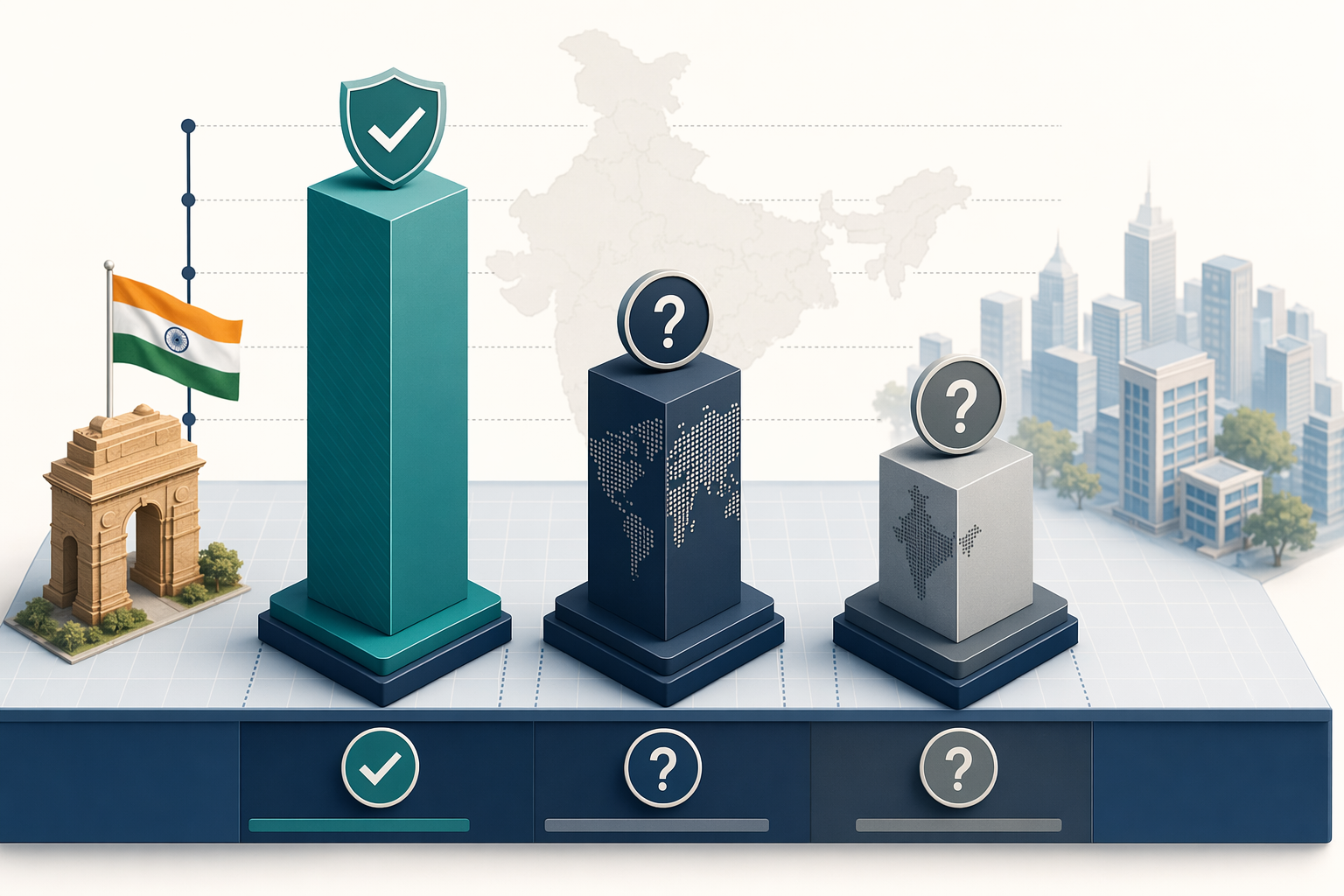
Global contact discovery platforms report 85 to 95% email deliverability, but those figures rarely break down performance by market. PeakAi achieves 91% phone accuracy for Indian B2B contacts, while Apollo reports 65 to 80% phone accuracy and Lusha ranges from 82 to 88% primarily in US markets. The gap between advertised accuracy and India-specific validation determines whether your team reaches decision-makers or burns credits on disconnected landlines.
The Gap Between Advertised Accuracy and India Performance
Most LinkedIn prospecting tools optimize for Western markets where contact verification, regional business structures, and affordability requirements differ fundamentally from Indian B2B environments. A platform advertising 90% global email accuracy may deliver 75% accuracy in Tier-2 Indian cities because its data partners lack coverage of GST-registered MSMEs or regional telecom providers. Large database size does not by itself prove Indian mobile accuracy, a 300-million-contact database sourced primarily from US SEC filings and European business registries will underperform a 50-million-contact database enriched with MCA and GST validation layers. Existing guides emphasize price over regional validation, leaving buyers to discover accuracy gaps only after purchasing annual subscriptions.
Monthly Contact Data Decay: The 2-3% Reality
Phone data decays at approximately 2 to 3% monthly as people change jobs and numbers. For a 10,000-contact database, that compounds to 240 to 360 outdated records after 12 months, assuming zero acquisition of new stale data. Traditional contact databases updating quarterly or annually cannot keep pace with this decay rate. A tool claiming 90% accuracy at database-build time drops to 68 to 72% accuracy after six months without real-time verification. This matters more in India where job mobility in startup hubs like Bengaluru and Gurugram accelerates contact churn beyond Western averages.
Verification vs Coverage: Understanding the Distinction
High email-verification accuracy does not equal high phone-finding success rates. A platform may achieve 95% email deliverability by validating SMTP handshakes but still fail to surface direct mobile numbers for 60% of profiles because LinkedIn users do not publicly list phone numbers. Profile discovery success differs from reachable contact discovery, finding a LinkedIn profile is the starting point, not the outcome. Tools sourcing contact data through legitimate business databases and public records rather than scraping LinkedIn directly cross-reference multiple data partners to fill gaps where LinkedIn profiles show job titles but omit phone numbers. Verification accuracy varies by geographic market and data source, so a vendor's US phone accuracy does not predict its India mobile accuracy.
Understanding why advertised accuracy differs from real-world performance requires examining how platforms verify phone and email data for Indian contacts.
How to Evaluate Phone and Email Verification for Indian Markets
Phone-finding success rates lag email discovery by 15-30 percentage points across most contact platforms. The gap widens in India, where verification methodology and refresh frequency determine whether your sales team calls live prospects or disconnected numbers.
Phone Accuracy vs Email Accuracy: Two Distinct Metrics
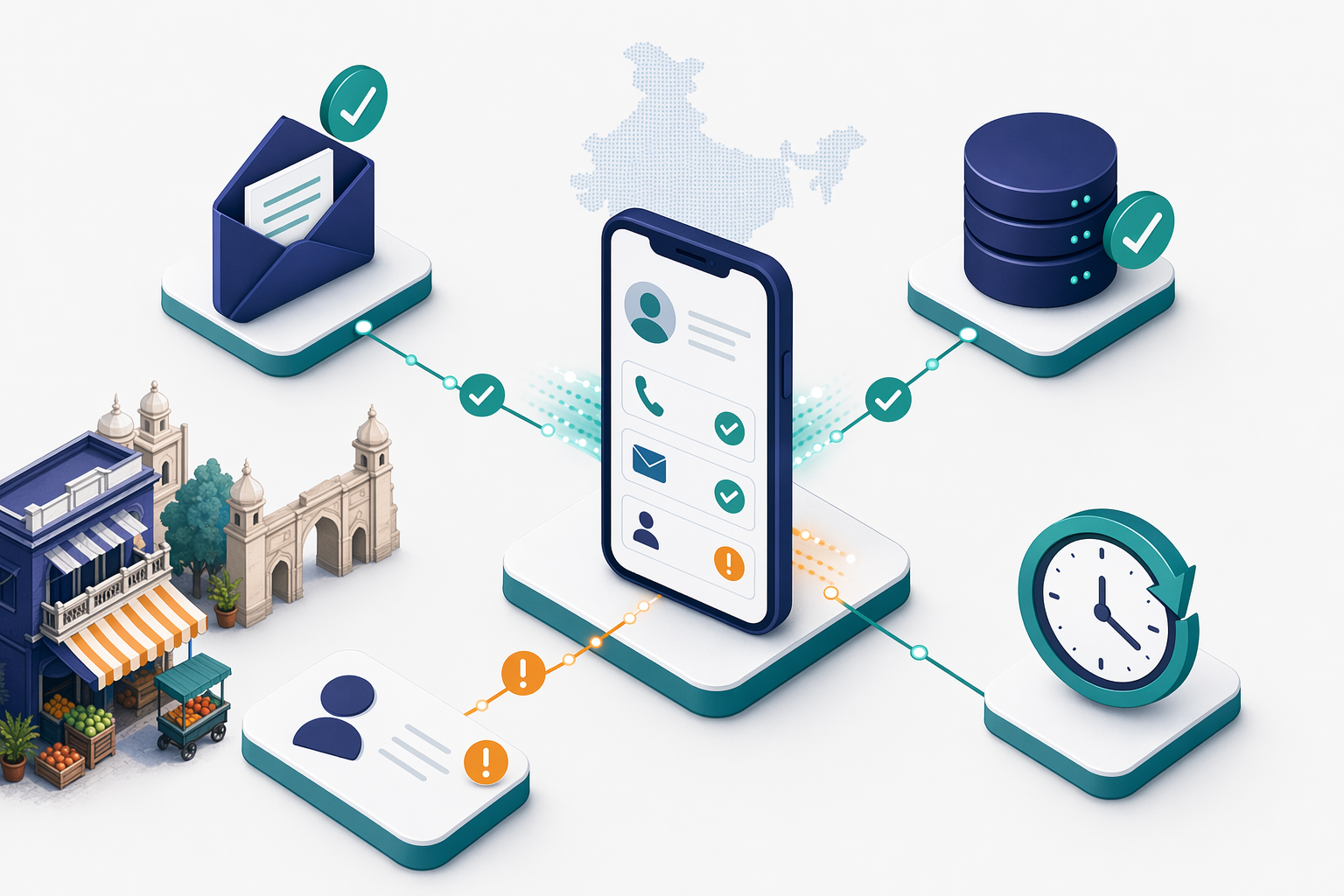
Only 5-10% of LinkedIn users share phone numbers with first-degree connections. The visible-field bottleneck means platforms must query external databases to surface direct dials. Credit-based models typically deliver 50-65% match rates for phone numbers and 75-80% for emails, the 15-30 point gap reflects data scarcity, not platform quality.
Email deliverability and phone reachability decay at different rates. A contact's email may remain valid for 18 months after a job change, but their direct dial often disconnects within 90 days. Buyers who assume one accuracy figure applies to both channels waste budget calling numbers that never ring.
Verification Methodology Transparency vs Undisclosed Metrics
Platforms that disclose their verification process, direct dial detection, mobile vs switchboard classification, real-time API checks, signal confidence in their data quality. Those that hide methodology often conflate email accuracy with phone accuracy or apply global benchmarks to regional markets where performance diverges.
Ask: Do you distinguish direct dials from switchboard numbers? Do you classify contacts as mobile, landline, or VoIP? Do you cross-reference Indian GST and MCA databases to verify company affiliation? Platforms that answer 'yes' to all three give your team callable leads. Those that dodge the questions deliver database records, not dial-ready contacts.
Compliance-focused platforms operate within LinkedIn's 30-40 daily action limits and source data from legitimate business registries rather than aggressive scrapers that risk account suspension. Verification methodology transparency protects both data quality and your team's LinkedIn standing.
Real-Time Validation vs Quarterly Batch Updates
Platforms with 90-day refresh cycles deliver contacts that were accurate three months ago, not when your SDR picks up the phone. Real-time validation checks numbers at export, flagging disconnections and do-not-call registry matches before your team wastes calls.
Batch-updated databases force your team to act as the verification layer. Real-time platforms push that cost upstream to the vendor, where it belongs. The difference matters most in high-velocity markets like India, where direct dials churn faster than quarterly updates can catch.
Before committing to an annual contract, test accuracy for your specific Indian market segment. Regional data quality varies; a platform strong in Bangalore may underperform in tier-2 cities. Four questions protect your budget:
- Do you disclose phone accuracy separately from email?
- What is your verification methodology, direct dial detection, mobile vs switchboard classification, real-time API checks?
- How often do you refresh India contact data, real-time validation or quarterly batch updates?
- Can I test accuracy for my specific Indian market segment before signing an annual contract?
Platforms that answer all four transparently earn your trust. Those that deflect reveal gaps in coverage, methodology, or both.
With evaluation criteria established, comparing disclosed accuracy rates and verification methods reveals significant gaps between platforms.
Platform Comparison: Disclosed Accuracy Rates and Verification Methods
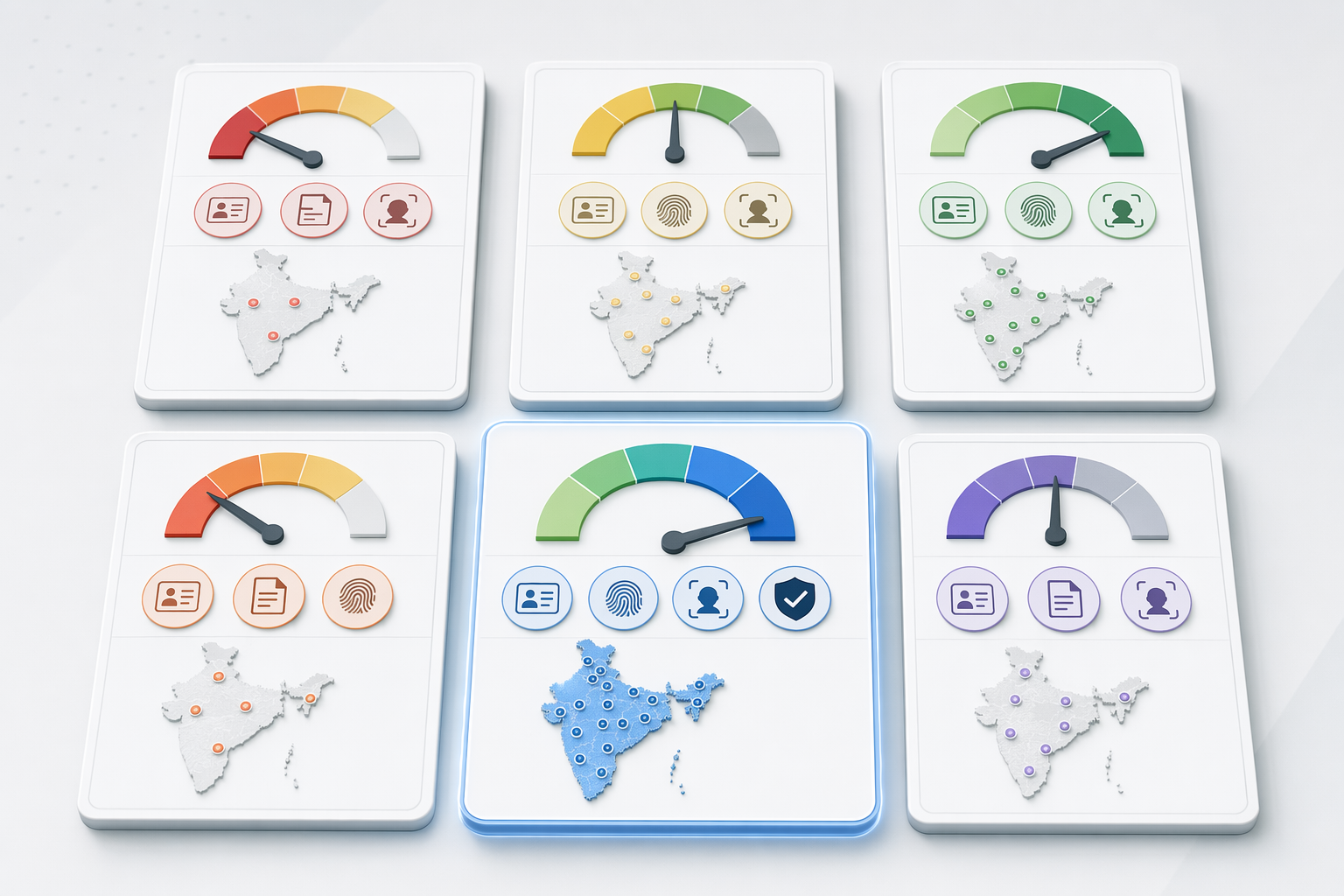
Most comparisons of contact discovery platforms focus on feature parity rather than India-specific accuracy verification. Below, we present a six-platform comparison anchored on disclosed accuracy rates, verification methodology transparency, and India market coverage, the dimensions that matter most when your pipeline depends on verified mobile numbers.
| Platform | Disclosed Accuracy | India Coverage | Verification Method | Data Refresh | Starting Price |
|---|---|---|---|---|---|
| PeakAi | 91% (India phone) | 1600+ cities | GST/MCA cross-reference | Real-time | $9/50 contacts |
| Apollo | 90%+ (email, US) | Global | Multi-source database | Quarterly | $49/user/month |
| ZoomInfo | 90%+ (email) | Global | Proprietary crawl + intent | 90-day cycle | $15,000+/year |
| Lusha | 85%+ (email) | Global | Chrome extension lookup | Monthly | $29/user/month |
| Cognism | Not disclosed | EMEA/US focus | Intent + firmographic | Not disclosed | Contact for pricing |
| Tomba | Not disclosed | Domain-based | SMTP + pattern match | On-demand | Free tier available |
Comparison data sourced from manufacturer websites and review aggregators as of May 2026. Accuracy claims are methodology-based ranges or category averages, not guaranteed outcomes for every contact lookup.
Accuracy Rate Disclosures: What Platforms Publish
Apollo, ZoomInfo, and Lusha publish email accuracy figures in the 85 to 90%+ range, but these metrics reflect US-market validation and do not separately disclose phone number accuracy or India-specific performance. Independent data-quality tests often reveal gaps between advertised and tested accuracy, a 1,200-contact sample across six industries showed fill-rate and deliverability variance that platform marketing pages do not surface.
PeakAi states 91% phone number accuracy specifically for Indian contacts across 1600+ cities, verified against GST and MCA databases, a disclosed minimum rather than an undisclosed average. Cognism and Tomba do not publish accuracy figures, leaving buyers to infer quality from reviews or trial experience.
Verification Methodology: Transparency Breakdown
ZoomInfo operates a proprietary database of over 300 million contacts built from web crawls, contributory networks, and intent signals, but the platform does not disclose phone coverage metrics separately from email or detail how numbers are validated for mobile-vs-landline classification. Apollo sources from 275M+ contacts with multi-channel sequences, yet phone validation steps remain opaque in public documentation.
Lusha delivers contact data via Chrome extension lookup, optimized for quick one-off searches rather than bulk verification workflows. Tomba relies on SMTP validation and pattern-matching for domain-based emails, with no phone enrichment disclosed. By contrast, PeakAi cross-references contacts against India's GST registry and Ministry of Corporate Affairs databases before delivering results, enabling pre-download verification, contacts are validated before credit deduction, not after export.
India Coverage and Regional Data Quality
Global platforms like ZoomInfo and Apollo optimize for Western markets; their India representation relies on the same crawl-and-contribute pipelines used globally, with no disclosed validation against local registries. Lusha's 100M+ contact database includes international coverage, but geographic accuracy breakdowns are not published, leaving India-market performance unverified.
PeakAi delivers India-focused contact verification with GST and MCA database integration, explicitly validating local phone formats and classifying numbers as mobile, landline, or VoIP. This regional specificity addresses a structural gap: existing India-focused tool lists catalog platforms by feature breadth but do not compare accuracy methodologies or publish verification-source transparency.
For teams targeting Indian B2B prospects, a disclosed accuracy minimum tied to regional validation is more operationally useful than an undisclosed global average. When your cold-calling success depends on verified mobiles, the platform's verification methodology, not just its contact-count headline, determines pipeline quality.
Static accuracy figures lose meaning without understanding how quickly contact data decays and how often platforms refresh their databases.
Refresh Cycles and Data Decay: Why Real-Time Validation Matters
Contact data accuracy decays faster than most sales teams realize. Platforms with real-time verification maintain higher match rates than those relying on quarterly batch updates, and the gap compounds over time, directly impacting the effective cost per verified contact.

7-Day Refresh vs Quarterly Batch Updates: The Accuracy Gap
Tools with 7-day refresh cycles maintain 98% accuracy, while platforms relying on quarterly updates drop to 75% within five months. That 23-percentage-point gap translates directly into wasted credits and failed dials. When a quarterly-refresh platform charges 1 credit per contact but only delivers a 75% phone match rate, your effective cost-per-verified-phone becomes 1.33 credits, a 33% penalty invisible in the headline pricing.
PeakAi's real-time validation eliminates the wasted dials on disconnected numbers that plague teams using outdated contact databases. By cross-referencing multiple data sources at the moment of lookup, real-time systems catch job changes, mobile-number reassignments, and deactivated lines before they enter your CRM, turning your incomplete contact lists into powerful strategic assets.
How to Calculate Effective Cost-Per-Verified-Contact
Credit-based platforms charge per contact returned, not per contact verified. When phone match rates hover at 55 to 65% and email match rates at 75 to 80%, the real cost per verified phone becomes base-credit-cost ÷ 0.60, and per verified email becomes base-credit-cost ÷ 0.78. A platform charging $0.50 per contact credit with 60% phone coverage delivers verified phones at $0.83 each, 66% higher than the advertised rate.
Subscription models spread the cost across all lookups, but the penalty is the same: paying for 1,000 monthly credits when only 600 yield verified phones means 400 wasted credits every cycle. Real-time verification platforms close that gap by validating before charging, ensuring teams only pay for contacts that can actually be reached, helping sales professionals close more deals without burning budget on dead leads.
Before committing to any platform, buyers must validate regional performance through structured pre-purchase testing.
Regional Data Quality: What to Ask Before Annual Commitments
Testing Accuracy for Your Specific Indian Market Segment
Before committing to an annual contract, run a pre-purchase validation test. Global accuracy averages often mask regional variability, a platform reporting 90% worldwide may deliver 60% in India if it lacks local data partnerships. Follow this five-step checklist:
- Request a sample test of 50 contacts from your target Indian industry and geography, do not accept generic demos or Western market examples.
- Verify phone numbers manually by calling or sending a WhatsApp message; check whether you reach a mobile, landline, or disconnected number.
- Check email deliverability by running a small test campaign and tracking bounce rates, inbox delivery matters more than contact volume.
- Ask for India-specific accuracy breakdowns by state and industry, not aggregated global figures.
- Confirm refresh frequency and verify it in the contract, quarterly updates may be too slow for fast-moving Indian SMBs and MSMEs.
PeakAi offers a 91% India-verified accuracy baseline with pre-download verification, GST validation, and Ministry of Corporate Affairs cross-referencing. Test it alongside competitors, platforms that cannot demonstrate India-specific validation steps typically recycle Western data sources that underperform in emerging markets.
Compliance Risk: Enrichment vs Direct LinkedIn Scrapers
India's Digital Personal Data Protection Act reshapes how organizations handle personal data. Platforms fall into two compliance categories: enrichment-based tools that query independent third-party databases, and direct LinkedIn scrapers that extract profile data via automation. The latter violates LinkedIn's Terms of Service and triggers account suspension risk.
PeakAi uses legitimate business databases and public records rather than scraping LinkedIn directly, avoiding the 30-40 daily action limits that flag bot behavior. Apollo.io and ZoomInfo similarly rely on enrichment databases; lower-cost tools that promise unlimited lookups often scrape aggressively and put your LinkedIn account at risk. Before signing, ask vendors to document their data sourcing methodology and confirm DPDP Act compliance, vague answers signal prohibited scraping.
Join thousands of sales professionals who validate contact accuracy before committing, testing 50 sample contacts costs less than one month's subscription and prevents year-long accuracy disappointment.
Global platforms with large contact databases offer broad coverage but often lack India-specific phone validation, regional specialists like PeakAi trade database size for higher India-verified accuracy (91% mobile). Credit-based pricing models suit teams with variable contact needs but carry higher effective cost-per-verified-contact when match rates are low (50 to 65% for phones), subscription models with real-time validation reduce waste.
As India's B2B sales ecosystem matures, buyers will increasingly demand regional accuracy guarantees and verification methodology transparency. Platforms that disclose India-specific metrics and refresh cycles daily will displace static global databases that rely on undifferentiated global accuracy claims.
Test PeakAi's 91% India-verified mobile accuracy with a free trial, or use the comparison table above to evaluate alternatives. Validate accuracy for your specific Indian market segment before annual commitment, 50-contact sample tests reveal real-world performance that advertised global figures obscure.
Frequently Asked Questions
What is the average contact data accuracy rate for Indian B2B markets?
Top-tier platforms report 85 to 95% email deliverability, while mid-tier tools range 65 to 80%. Phone accuracy typically falls 15 to 30 percentage points lower because only 5 to 10% of LinkedIn users share phone numbers. PeakAi achieves 91% phone accuracy for Indian contacts through regional validation.
How much does contact data decay each month?
Contact data decays at approximately 2 to 3% monthly as people change jobs and mobile numbers. For a 10,000-contact database, that compounds to 240 to 360 outdated records after 12 months, assuming zero acquisition of new stale data during that period.
Why do global contact discovery platforms underperform in India?
Global platforms optimize for Western markets where LinkedIn phone sharing is higher and business structures differ. Many platforms achieve 95% email deliverability through SMTP validation but fail to surface direct mobile numbers for 60% of Indian profiles because users don't publicly list phone numbers.
What is the difference between email accuracy and phone accuracy?
Email accuracy measures deliverability of found emails (75 to 80% match rates), while phone accuracy measures both finding success and number validity (50 to 65% match rates). Only 5 to 10% of LinkedIn users share phone numbers, forcing platforms to query external databases for direct dials.
How often should contact data be refreshed to maintain accuracy?
Tools with 7-day refresh cycles maintain 98% accuracy, while platforms relying on quarterly updates drop to 75% within five months. That 23-percentage-point gap translates directly into wasted credits and failed dials. Real-time validation on export is the gold standard.
Are contact discovery tools compliant with LinkedIn's Terms of Service?
Enrichment-based tools query independent third-party databases and generally comply with LinkedIn's Terms of Service. Direct LinkedIn scrapers extract profile data via automation and risk account restrictions, LinkedIn limits automation to 30 to 40 daily actions. India's Digital Personal Data Protection Act imposes additional compliance requirements.
How can I test contact accuracy before signing an annual contract?
Request a 50-contact sample test from your specific Indian industry and geography. Manually verify phone numbers and email deliverability, and ask for India-specific accuracy breakdowns, not global averages. Compare results against the platform's advertised rates to identify discrepancies before commitment.
Sources
- Best B2B Data Providers for Contact Accuracy in 2026 - Unify - www.unifygtm.com (2026)
- B2B Data Enrichment Tools: ZoomInfo, Apollo, Cognism, Lusha | GrowthTech Spotlight - www.growthtechspotlight.com (2026)
- Affordable LinkedIn Contact Discovery Tools for Startups 2026 - origami.chat (2026)
- How To Get Emails From LinkedIn | GrowMeOrganic - www.growmeorganic.com (2026)
- Top 10 Business Contact Finder Tools in India to Generate High Quality Leads - businessinsight27.wordpress.com (2026)
- Clearbit vs ZoomInfo vs Lusha: Data Quality Test - adv.me (2026)
- 11 Best ContactOut Alternatives in 2026 (LinkedIn) - www.enrich.so (2026)
- B2B Data Enrichment: Better Data, Better Pipeline - Salesmotion - salesmotion.io
- RocketReach alternatives 2026: 8 tools ranked by segment fit - www.datalane.com (2026)
- Data Privacy Compliance in India: A Practical Guide - Salesforce - www.salesforce.com (2026)
