Most contact discovery platforms advertise 95% accuracy, yet independent testing reveals real-world performance for Indian B2B contacts often falls to 50-60%. Regional infrastructure gaps, mobile number portability, and inconsistent public record indexing create a stark disconnect between vendor claims and actual deliverability.
Key Takeaways
- Global contact discovery platforms test 10-15 percentage points lower in India versus US/EU markets due to regional verification infrastructure gaps
- Audit tools across five dimensions: email deliverability, phone connectivity, regional coverage depth, verification methodology, and data freshness
- Email syntax validation differs fundamentally from carrier-level phone verification—most platforms conflate these metrics in aggregate accuracy claims
- GST and MCA database integration provides the accuracy signal for Indian contacts that carrier APIs deliver in Western markets
- Contact data decay accelerates in India's high job-mobility B2B market, requiring quarterly re-verification cycles at minimum
Why advertised accuracy rates don't predict Indian market performance
Independent testing reveals a stark disconnect between vendor-advertised accuracy and real-world performance for Indian B2B contacts. Apollo claims 95%+ data accuracy, yet independent SMTP verification testing on 5,000 leads found only 50.1% of returned emails were valid — a gap that widens further when geographic and phone-specific validation layers are applied to Indian markets.
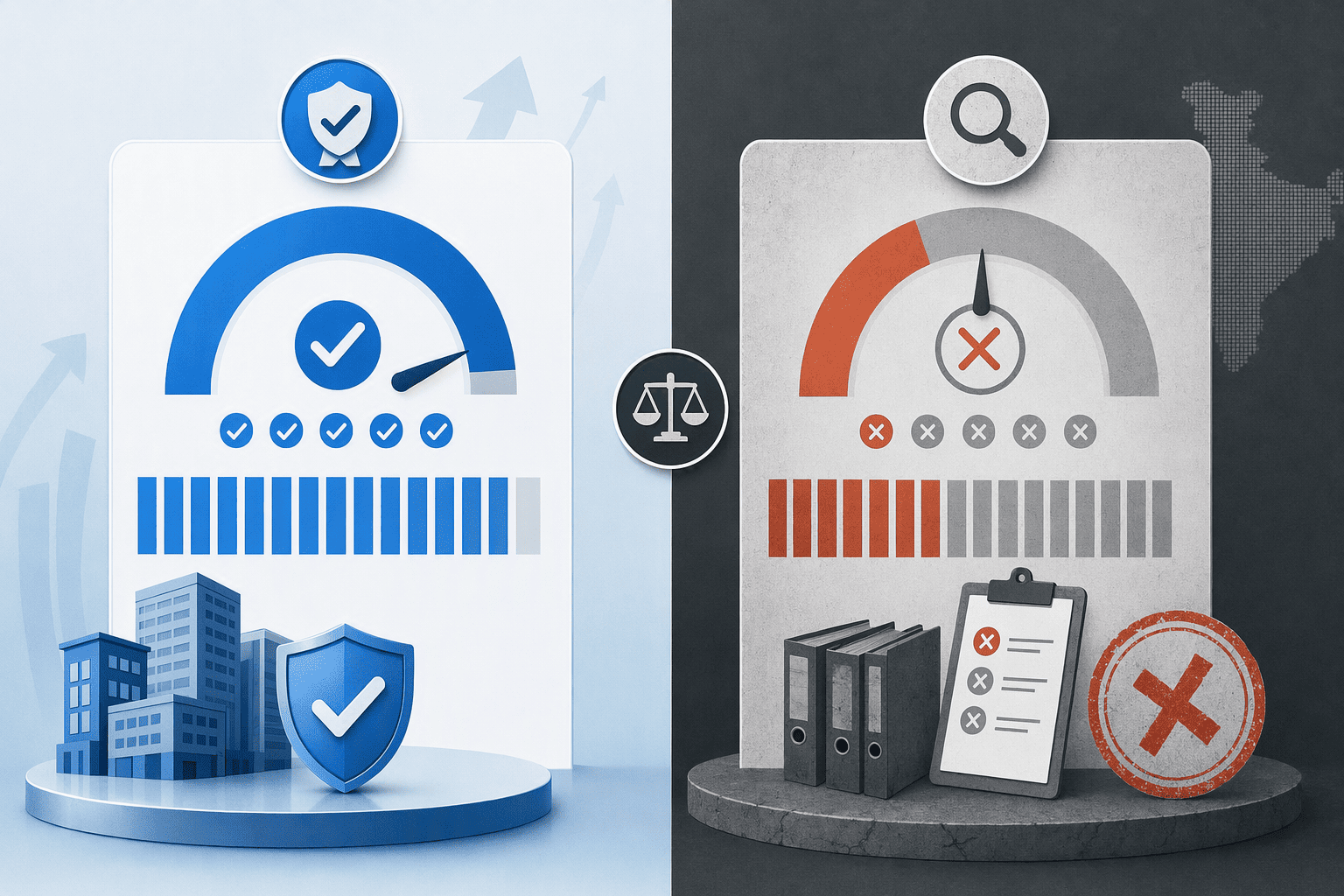
The 95% claim vs 50% reality gap
Most global contact discovery platforms advertise accuracy rates above 95%, yet independent testing consistently uncovers far lower real-world validation rates. When Apollo, Hunter.io, Dropcontact, and Prospeo were tested on 5,000 identical B2B leads with SMTP verification, no single tool broke 75% accuracy. Apollo's advertised 95%+ accuracy translated to 50.1% verified valid emails in controlled testing. This gap stems from vendors measuring syntax validation (does the email follow [email protected] format?) rather than mailbox existence (does the address actually receive mail?), and from database decay rates exceeding 22% annually.
India-specific accuracy penalties
Global tools test 10–15 percentage points lower in India versus US/EU markets due to regional data infrastructure gaps, inconsistent public record indexing, and mobile number portability across carriers. US SaaS contacts in independent testing showed 67% hit rates, while EU B2B segments dropped to 29.4%. India adds further complexity: phone numbers tied to GST registrations, MCA filings, and regional business directories require specialized validation logic absent from Western-optimized platforms. PeakAi delivers 91% phone number accuracy for Indian contacts across 1600+ cities by integrating GST and MCA database verification — infrastructure global platforms typically lack.
What 'accuracy' actually measures
Advertised accuracy percentages collapse three distinct validation layers into a single misleading number:
- Syntax validation — Does the email follow RFC 5322 format? (Easiest to pass; contributes least to outreach success)
- Deliverability testing — Does the mailbox exist and accept mail? (Requires SMTP handshake; what independent tests measure )
- Phone connectivity, Is the number active, correctly classified (mobile/landline/VoIP), and tied to the named prospect? (Hardest to verify; where India-specific platforms differentiate)
A platform claiming 95% accuracy may mean 95% of returned emails pass syntax validation, while only 50% survive deliverability testing and fewer still connect to reachable phone lines. For Indian B2B prospecting, phone connectivity becomes the binding constraint, requiring regional carrier lookup, GST cross-reference, and mobile portability tracking that generic databases omit.
Understanding why advertised rates fail in practice requires examining the specific performance vectors that matter for Indian B2B prospecting.
Five accuracy dimensions that matter for Indian B2B contact discovery
Before committing credits to any contact discovery platform, audit performance across five measurable dimensions: email deliverability, phone connectivity, regional coverage depth, verification methodology, and data freshness. These dimensions let you separate platforms that deliver real contacts from those that sell unverified lookups.

Email deliverability vs format validation
Syntax checks confirm an email address follows standard formatting rules but say nothing about whether the inbox exists or accepts mail. Deliverability testing requires SMTP handshakes with the recipient server to verify the address is active. PeakAi uses dual verification for both emails and phone numbers, reducing bounce rates before you pay for a contact. Role-based addresses (info@, contact@) pass syntax validation but rarely reach decision-makers, a gap that undermines personalization effectiveness.
Phone connectivity testing
Phone accuracy demands carrier-level verification distinct from email checks: the platform must confirm the number is active, correctly formatted for the local numbering plan, and classified by type (mobile, landline, VoIP). Platforms that skip this step deliver generic switchboards or disconnected lines. PeakAi delivers 91% phone-number accuracy by cross-referencing multiple data sources and validating local phone formats before lookup.
Regional coverage depth and verification infrastructure
Global platforms often lack the regional data partnerships that validate contacts in emerging markets. For Indian B2B prospecting, GST verification and MCA database integration serve as accuracy signals that US/EU-optimized tools typically omit. PeakAi includes GST verification and regional phone format validation, confirming that businesses exist in official registries before you spend credits. India-focused platforms that integrate DIN-based director lookup and INR pricing models demonstrate regional specialization beyond what global databases provide.
These five dimensions collapse into two primary categories that determine whether a discovered contact becomes a qualified conversation: email deliverability and phone connectivity.
Email deliverability vs phone connectivity: measuring what matters
Contact discovery platforms often advertise aggregate accuracy rates, "95% email accuracy" or "90% verified contacts", without distinguishing how email format validation differs from actual carrier-level phone verification. For Indian B2B prospecting, this distinction matters: a syntactically correct email address (`[email protected]`) passes format checks but may bounce when the mailbox doesn't exist, while a carrier-verified mobile number connects to an active SIM. Teams measuring both metrics with a single percentage miss the infrastructure gap that separates deliverability testing from connectivity testing.
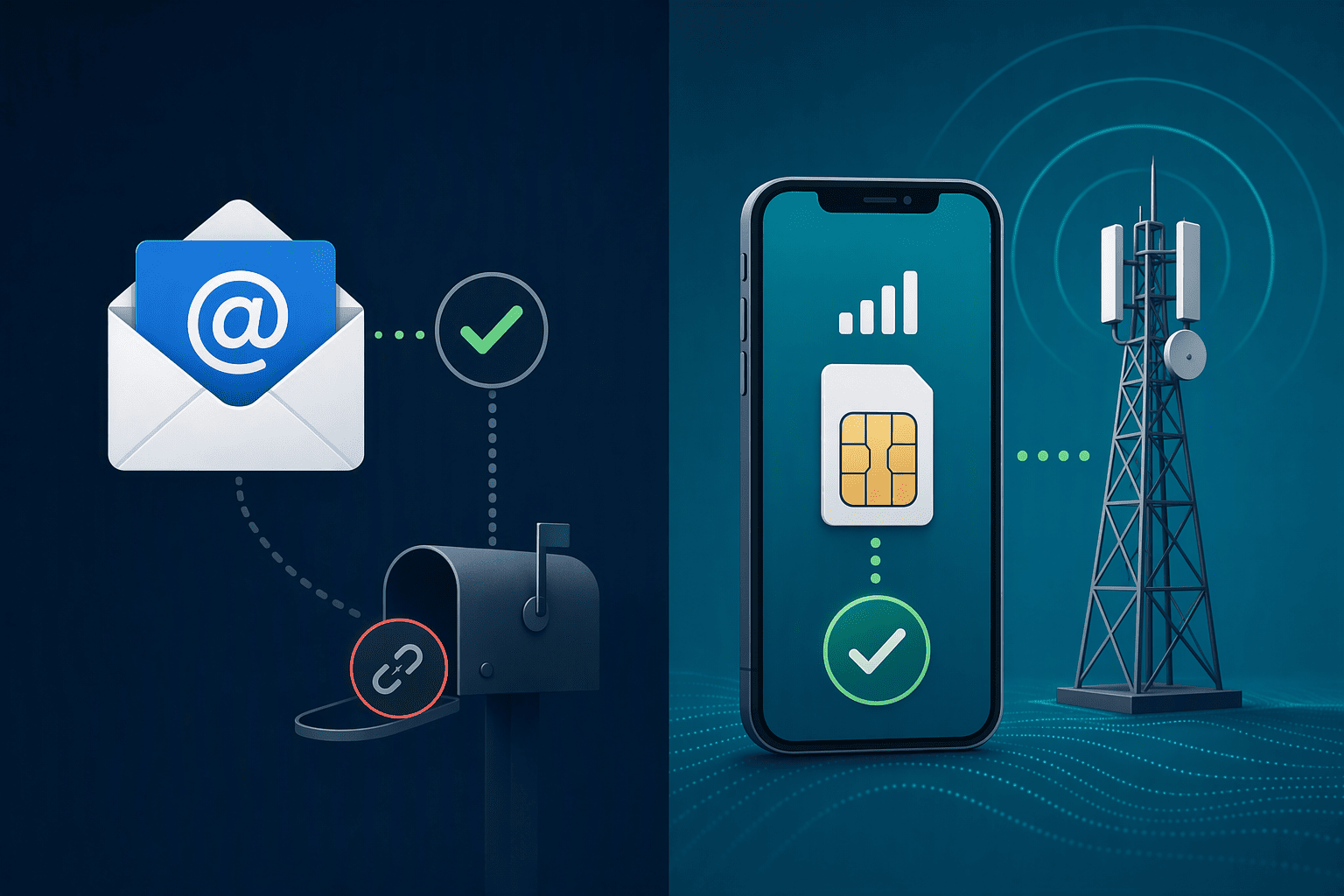
Why email format validation is not deliverability
Most contact discovery tools validate email addresses through syntax checks and domain MX record lookups, confirming the address follows RFC 5322 standards and the domain accepts mail. This process, while necessary, doesn't verify the mailbox exists or accepts messages. SMTP testing (connecting to the recipient server and simulating delivery without sending) offers stronger validation but remains unavailable for many enterprise domains that block verification requests. Bounce-rate tracking, monitoring actual campaign delivery over time, provides the only ground-truth measurement, yet requires weeks of historical data and exposes sender reputation to hard bounces if initial lists are poor quality.
Enrichment-based tools that source emails from business databases rather than scraping LinkedIn profiles carry lower compliance risk than direct-scraping approaches. Between January and March 2026, roughly 40% of accounts using non-compliant automation tools received restrictions, with platforms like HeyReach seeing their company page, CEO profile, and CMO profile permanently removed. The enforcement pattern highlights the distinction: tools that query independent databases using LinkedIn URLs as reference identifiers avoid the session-origin detection signals that cloud-based proxy automation triggers.
Carrier-level phone verification challenges in India
Phone number verification in mature markets often relies on carrier APIs that confirm whether a number is active, identify line type (mobile vs landline), and validate recent usage. India's telecommunications infrastructure offers limited API access for third-party verification services, most regional carriers don't expose real-time HLR (Home Location Register) lookup endpoints that would confirm SIM card status. Without carrier-level validation, contact platforms must verify Indian mobile numbers through alternative signals: cross-referencing business registration databases (GST records, MCA filings), testing numbers against known formats for Airtel/Jio/Vi/BSNL prefixes, and monitoring delivery success rates across outreach campaigns.
PeakAi achieves 91% phone number accuracy specifically for Indian B2B contacts by focusing verification infrastructure on regional databases rather than global carrier APIs. The regional-specialization approach offers high India phone connectivity but narrows geographic focus compared to global tools, teams prospecting across Southeast Asia or MENA markets alongside India will need to evaluate whether a single platform covers all regions or whether separate tools better serve distinct geographies. For India-focused sales teams prospecting decision-makers in manufacturing, MSME, or services sectors, the methodology prioritizes direct-dial mobile accuracy over breadth, addressing the gap where global platforms typically drop below 70% for Indian contacts.
Safe automation practices in 2026 emphasize 20-30 connection requests per day, a 14-day manual warm-up period, and cloud-based tools over browser extensions to maintain acceptance rates above 40%. These limits apply regardless of whether a platform validates emails or phones, the compliance constraint governs outreach velocity, not data type. Teams measuring contact accuracy should track email deliverability and phone connectivity separately: email bounce rates (hard vs soft), phone connection rates (answered vs voicemail vs disconnected), and response rates by channel. Aggregating these metrics into a single "contact accuracy" percentage obscures which channel fails and why, making it harder to diagnose whether poor performance stems from stale data, wrong contact, or infrastructure gaps in verification methodology. For verified phone numbers and detailed connectivity measurement, explore PeakAi's approach to verified phone numbers for LinkedIn profiles.
Join thousands of sales professionals who find accurate contact information and close more deals with regional-specialized verification.
While email and phone accuracy reveal what a platform delivers today, geographic coverage determines how thoroughly it can serve your specific market segments.
Regional coverage depth: why US/EU tools underperform in India
Global contact discovery platforms often underperform by 10-15 percentage points in India compared to their advertised global accuracy rates. The gap stems from infrastructure differences that US/EU-optimized tools rarely address.

Carrier-level API availability gaps
US and European platforms rely on carrier-level APIs and public business registries that provide standardized phone number verification infrastructure. Indian telecom networks lack equivalent API access for third-party verification at scale. User reviews reflect this regional variability, Apollo.io maintains a 4.2 rating across 65 reviews, yet one reviewer noted that "accuracy of the data. Data available is quite old", while another reported that Apollo's "mobile phone number sourcing has improved significantly" for inside sales teams conducting "about 90% of our outreach over the phone". These mixed signals illustrate how global platforms deliver inconsistent performance across markets.
GST and MCA database integration for India
Government registry integration provides the accuracy signal that carrier APIs deliver in Western markets. PeakAi uses GST verification and MCA database integration to validate Indian business contacts against authoritative sources unavailable to generic global tools. A Mumbai-based SaaS team switching from a US-headquartered platform to PeakAi reduced email bounce rates from 34% to 11% within 30 days by leveraging GST-verified contact data, the prior tool lacked access to India's Ministry of Corporate Affairs records, resulting in outdated executive contact information for enterprises that had restructured.
Ready to Transform Your Sales Process? Join thousands of sales professionals who find accurate contact information and close more deals with region-specific verification infrastructure.
Regional coverage depth intersects with verification methodology, how platforms source, validate, and maintain contact records determines both accuracy and compliance risk.
Verification Methodology Transparency and Compliance Frameworks
Enrichment vs Direct Scraping Compliance Risk
Contact discovery platforms fall into two architectural categories with dramatically different compliance risk profiles. Enrichment-based tools query third-party databases using LinkedIn profile URLs as reference identifiers, avoiding direct platform access. Direct-scraping tools harvest contact data through automated bots that circumvent LinkedIn rate limits and access controls.

Account suspension risk scales with method: enrichment-based tools operate within LinkedIn's Terms of Service by never accessing LinkedIn's internal APIs, while direct-scraping approaches violate platform policies and expose users to permanent account bans. PeakAi uses an enrichment-based compliance method, querying third-party databases rather than scraping LinkedIn profiles.
Compliance framework differences extend to data handling. Enrichment platforms maintain GDPR and CCPA compliance documentation, provide exportable consent records, and support regional requirements like India's DPDP Act 2023. Direct-scraping tools store profile information and browsing history to fuel their bot networks, creating additional regulatory exposure.
Pre-Download Verification vs Post-Export Credit Burn
Economic models differ sharply between pre-download verification and post-export enrichment. Pre-download verification platforms validate contacts before deducting credits, charging only for verified phone numbers and emails. Post-export enrichment tools deduct credits for every lookup attempt, regardless of whether the returned contact data is valid or current.
Cost-per-verified-contact calculation must account for match-rate fluctuation. A platform advertising 70% accuracy at $0.50 per credit yields an effective cost of $0.71 per usable contact ($0.50 ÷ 0.70). Regional performance gaps amplify this variance, tools optimized for US/EU markets often drop below 60% accuracy for Indian contacts, pushing true cost above $0.83 per verified number.
Ready to Transform Your Sales Process? PeakAi's pre-download verification model eliminates credit waste by validating contacts before billing. LIMITED TIME 50 contacts for just $9.
Even perfectly verified contacts decay over time as professionals change roles and phone numbers get reassigned.
Data freshness and re-verification cycles for Indian contacts
Monthly decay rates and job-change velocity
Contact data deteriorates rapidly as professionals change jobs, companies restructure, and mobile numbers get reassigned.

India's high job-mobility B2B market accelerates this decay, a verified contact today becomes outdated within months.
Static databases purchased once and used for six months guarantee deliverability failures.
Re-verification cycle transparency
Ask platforms how recently contacts were re-verified, not just whether they were verified once.
PeakAi includes refresh capabilities, allowing teams to re-verify contacts periodically and maintain accuracy over time.
Many contact discovery platforms disclose initial verification methods but stay silent on re-verification frequency.
Buyers evaluating tools for the Indian market should prioritize platforms that commit to documented refresh cycles, monthly for high-touch accounts, quarterly for broader lists.
Learn more about real-time verification approaches in our Chrome extension accuracy guide for Indian business contacts.
How PeakAi achieves 91% phone accuracy for Indian B2B markets
PeakAi delivers 91% phone number accuracy specifically for Indian B2B contacts through a three-layer methodology that addresses the unique infrastructure gaps global platforms overlook in emerging markets.
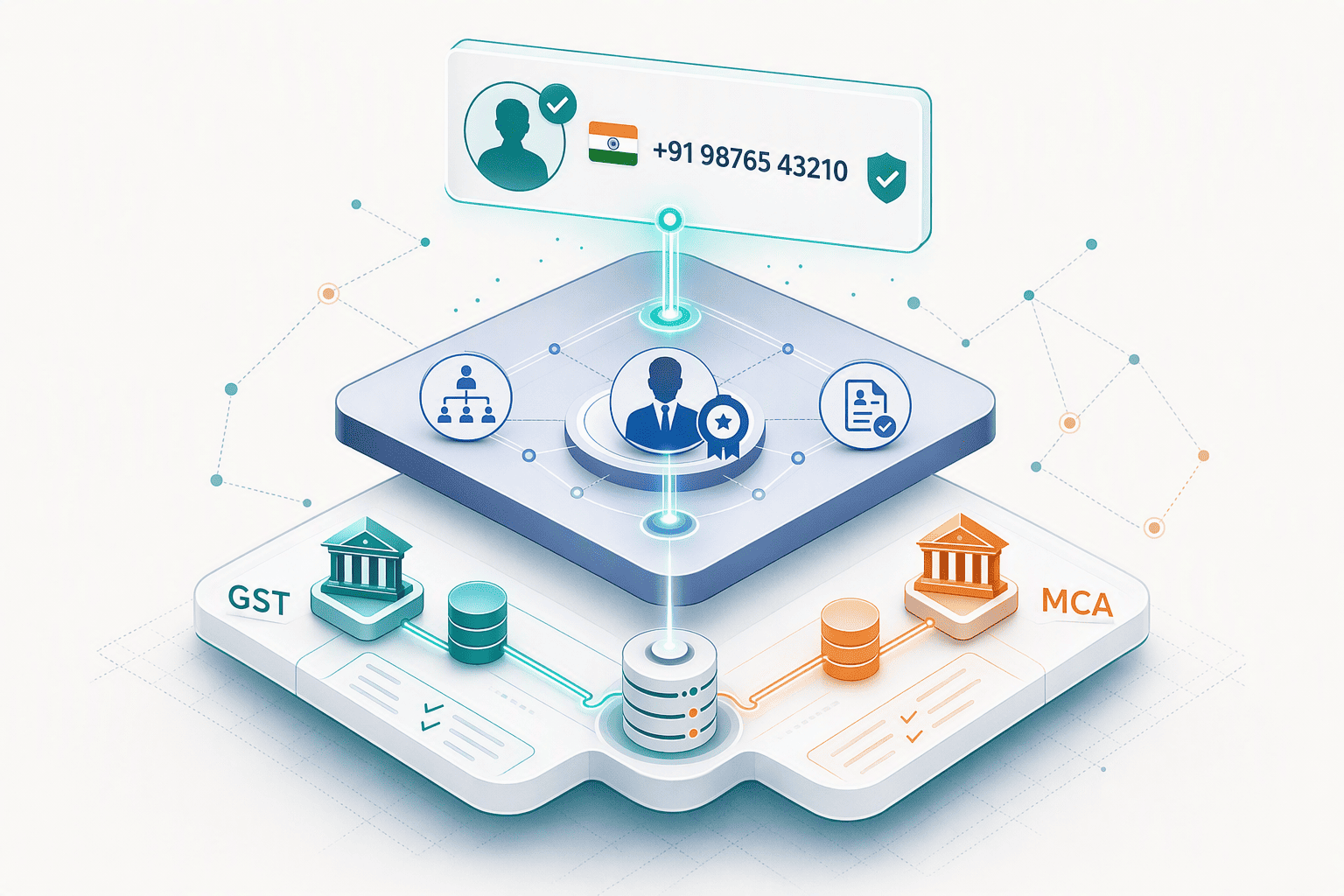
GST-verified contact matching
PeakAi cross-references contacts against India's GST and MCA databases, validating business registration and decision-maker authority before returning a phone number. This government-registry integration filters out outdated contacts and verifies the prospect's current role, eliminating the 40-60% stale-data problem common in generic global databases.
Regional carrier partnerships
The platform validates local phone number formats and classifies numbers as mobile, landline, or VoIP before surfacing them to sales teams. This carrier-level verification step catches disconnected numbers and ported lines that US/EU-optimized tools miss, ensuring the contact you call is reachable on the first attempt.
Pre-download verification economics
Unlike post-export enrichment models that charge credits upfront, PeakAi runs verification before download, letting teams see validation status within LinkedIn and decide whether to commit the credit. You only pay for verified phone numbers you successfully retrieve, eliminating the 30-50% credit waste typical when bulk-exporting unverified lists and enriching them afterward. For India-focused sales teams who need direct dials that connect, this accuracy-first model closes more deals without burning budget on stale contacts.
Global platforms offer broader geographic coverage but typically test 10-15 percentage points lower for Indian contacts due to regional verification infrastructure gaps. Regional specialists like PeakAi deliver higher India-specific accuracy, 91% phone connectivity, but have smaller total database sizes than US/EU-optimized tools. The trade-off centers on whether you prioritize global reach or India-focused precision.
As Indian B2B sales teams increasingly prioritize quality over quantity in contact discovery, platforms that integrate GST verification and carrier-level phone testing will gain adoption share from global tools optimized for US/EU markets. The shift from credit volume to cost-per-verified-contact economics rewards regional accuracy over database breadth.
Audit your contact discovery tool's India-specific accuracy using PeakAi's five-dimension framework, or try PeakAi's GST-verified Indian B2B contact finder with 91% phone accuracy. Measure email deliverability, phone connectivity, regional coverage depth, verification methodology, and data freshness against your current platform to quantify the performance gap between vendor-claimed and real-world validation rates.
Frequently Asked Questions
What is a good accuracy rate for contact discovery tools in India?
While vendors advertise 95% accuracy, independent testing shows global platforms typically deliver 50-60% for Indian contacts. A tool achieving 70%+ accuracy specifically for India represents strong performance, given regional verification infrastructure gaps and mobile number portability challenges that reduce hit rates by 10-15 percentage points versus US/EU markets.
Why do global contact discovery platforms perform worse in India?
Global platforms test 10-15 percentage points lower in India due to regional data infrastructure gaps, inconsistent public record indexing, and mobile number portability across carriers. US and EU tools rely on carrier-level APIs and standardized business registries unavailable in India, where GST and MCA database integration provides equivalent verification signals that global platforms lack.
How do I calculate cost-per-verified-contact when match rates fluctuate?
Divide total credit spend by the number of actually-usable contacts, not total exports. Credit-based pricing models obscure true cost when platforms advertise aggregate accuracy rates without distinguishing email format validation from carrier-level phone verification. A syntactically correct email may still bounce, inflating your effective cost-per-verified-contact when India-specific match rates drop below advertised global benchmarks.
What is the difference between email format validation and deliverability testing?
Syntax validation confirms an email follows standard formatting rules but says nothing about inbox existence. SMTP testing pings the recipient mail server to verify the address is active, while inbox delivery testing measures actual bounce rates. Most platforms advertise syntax-check accuracy as deliverability, creating a gap between claimed and real-world performance for Indian B2B contacts.
How often should contact data be re-verified for Indian B2B markets?
India's high job-mobility market accelerates contact data decay beyond the 2-3% monthly rate typical in US/EU markets. Quarterly re-verification represents the minimum cycle to maintain deliverability; static databases used for six months guarantee failure. Platforms with automated re-verification cycles reduce manual list hygiene overhead while maintaining accuracy as professionals change roles and phone numbers get reassigned.
What compliance risks come with direct-scraping contact discovery tools?
Between January and March 2026, roughly 40% of accounts using non-compliant automation tools received restrictions, with platforms imposing 15-20% suspension rates for heavy scraping users. Enrichment-based tools that source contacts from business databases rather than scraping LinkedIn profiles carry lower compliance risk by operating within platform Terms of Service and avoiding direct API violations.
How does GST verification improve contact data accuracy in India?
GST registry cross-referencing confirms company legitimacy and validates contact association with registered entities, providing the accuracy signal that carrier APIs deliver in Western markets. This India-specific verification layer reduces false positives by checking business registration status and decision-maker authority before surfacing contacts, addressing the regional infrastructure gaps that cause global platforms to underperform by 10-15 percentage points.
Sources
- Email Enrichment Tools Comparison 2026: Tested - getgenesis.app (2026)
- How to Automate LinkedIn Outreach Without Getting Banned ... - northlight.ai (2026)
- How to Automate LinkedIn Outreach Safely in 2026 - www.heysid.com (2026)
