
Introduction
Your sales pipeline stalls the moment your team dials a dead number. For Indian sales and recruitment teams, that happens every day. Most global contact databases fall apart when you need a clean Indian mobile number or a direct dial that actually rings.
The gap is not volume. It is verification that understands the Indian numbering ecosystem, mobile series prefixes, DND scrubbing, and the reality of recycled prepaid SIMs. A 2026 evaluation by Pintel.ai found that over a third of India-focused B2B contact lists contain at least one dead field, usually a phone number, when sourced from general-purpose databases.
PeakAi and UpLead both market verified Indian business contacts. Their methods differ sharply. PeakAi verifies phone numbers against live carrier and telecom authority signals in India. UpLead applies a global verification stack that validates format, domain, and activity but lacks India-specific carrier integration.
This piece compares the two platforms on the metric that matters for Indian dialing, how many contacts connect on the first attempt.
Key Takeaways
Here are the non-negotiable truths about contact accuracy in the Indian market right now.
- Verification methodology beats database size every time: A platform like PeakAi, built on real-time carrier and registry validation, outperforms global giants with 600M+ records that rely on stale scraped data.
- Pre-verification claims need scrutiny: UpLead claims a 95%+ accuracy rate by checking every contact pre-download, but independent validation of these numbers for the Indian market is sparse.
- Compliance is the first filter: Using unverified LinkedIn scrapers in India invites legal risk under the IT Act and SPAM regulations. You need tools that source data from regulatory-aligned channels.
- Pay-per-export fits Indian SMBs best: Flexible credit models at roughly ₹1 to ₹2 per contact eliminate the waste of rigid subscriptions, giving you maximum value for spot-check enrichment.
What Defines Accuracy in India's Contact Discovery Market

Accuracy is not a single percentage on a sales page. It is a composite of three hard metrics: direct-dial phone validity, email deliverability, and record freshness. A platform that only checks if an email domain accepts mail ignores the mobile-first reality of Indian business. Real accuracy means the number rings the decision-maker's device, the email lands in the primary inbox, and the job title reflects their current role.
Most vendors broadcast a single accuracy figure without disclosing their methodology. Advertised percentages can be misleading because some vendors measure only syntax validation. A vendor claiming 95% accuracy might be checking only if an email address is formatted correctly, not if it reaches a human. Ask hard questions about what the number actually measures.
In the Indian context, accuracy also demands regional depth. India's mid-market is notorious for non-standardized titles. Relying on title-keyword matching alone misses 30 to 50% of relevant contacts and surfaces false positives that do not match your ideal customer profile. True accuracy platforms use multi-signal verification, including real-time SMTP checks and phone network pings, to validate identity beyond a job title string.
Ultimately, accuracy is about cost avoidance. Poor data quality costs organizations an average of $12.9 million annually. Chasing dead ends is not a minor inefficiency. It is a direct hit to your revenue.
The Verification Gap: Why India-Focused Tools Outperform Global Databases
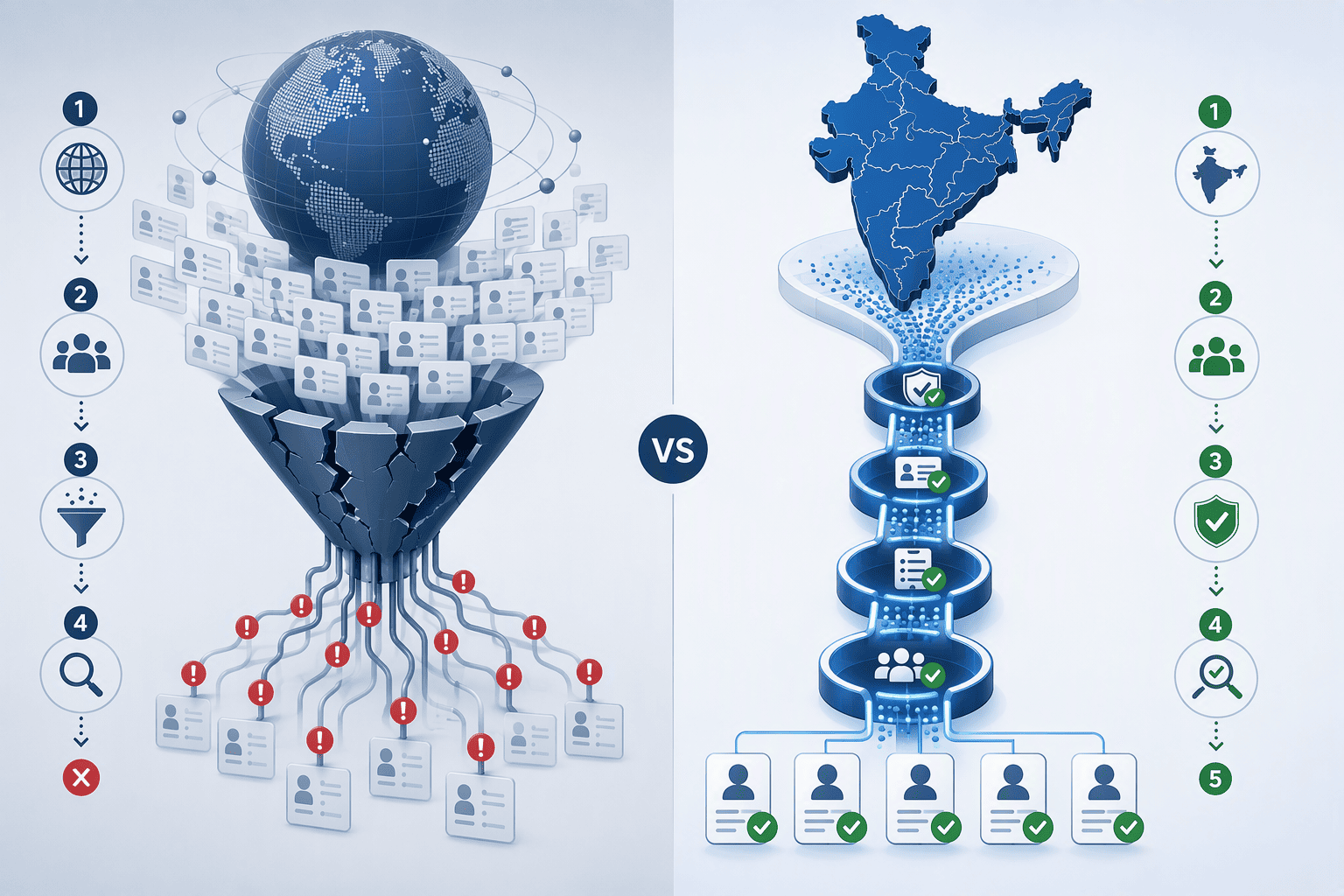
The core problem is a structural data sourcing gap between global aggregators and India-native platforms. One team found that 37% of their contact data was invalid before they switched to India-specific databases.
- Global databases prioritize scale over signal: ZoomInfo offers 600M+ records, and Apollo.io provides a free tier with 265M+ contacts. These numbers are massive, but they consistently miss direct-dial accuracy for Indian SMBs.
- India-specific tools bypass stale scraped data: PeakAi prioritizes local carrier data and regulatory-compliant sources. Instead of aggregating outdated LinkedIn scrape results, tools built for India query external databases like business registries and telecommunications records to verify contacts in real time.
- Global platforms lack APAC depth: Lead411 covers roughly 70 to 80% of its database in the US and Canada, leaving its coverage for India thin and unreliable. For Indian teams, a database that is not built on local infrastructure is just an expensive list of wrong numbers.
- Regional decision-maker identification matters: An India-optimized tool like PeakAi identifies regional decision-makers across 1,600+ cities, far surpassing the granularity global databases can offer for the subcontinent.
Multi-Layer Verification Methods for Indian Contacts
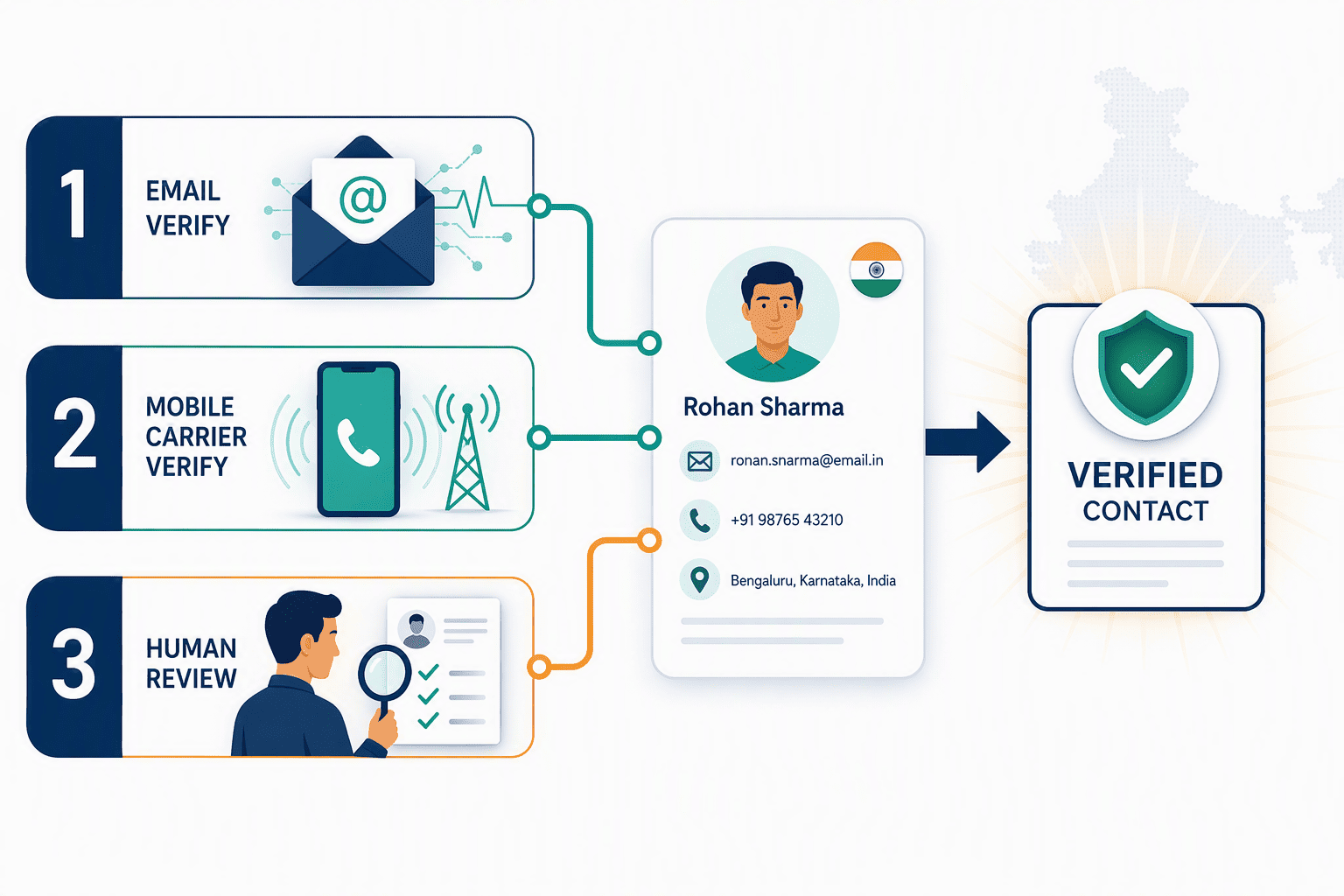
High-accuracy platforms do not trust a single data point. They run a verification sequence that hits the address from three angles.
- Real-time SMTP checks: Confirm the mail server accepts messages for the address without actually sending one.
- Phone network pings: Use carrier-level validation to confirm a number is active and belongs to the right network circle.
- Human validation: Handles the edge cases that trip up automation.
PeakAi applies dual verification for both emails and phone numbers, checking deliverability and number status before you ever hit export. Without multiple layers, you are gambling. A syntax check alone tells you nothing about whether a human reads the inbox.
India-Specific Compliance: Navigating the IT Act and SPAM Regulations
Slapping a Chrome extension onto LinkedIn and hitting 'export' is a legal minefield in India. Compliant platforms like PeakAi avoid this risk by operating outside the LinkedIn ecosystem for data sourcing through several key mechanisms:
- Data sourcing: Uses publicly shared LinkedIn URLs as search keys to query independent third-party databases and public records rather than scraping the profile itself
- Terms of Service compliance: The enrichment logic never scrapes the profile directly, so it avoids LinkedIn Terms of Service violations
- Audit trail: Each exported record carries a compliance timestamp and data-source attribution, giving your team a trail that scrapers cannot provide
The IT Act and SPAM regulations govern every commercial communication you send. When you use a tool that scrapes LinkedIn directly, you are sourcing data in violation of platform terms and, more critically, without consent frameworks required by Indian law. Scraping-based extraction is a fast track to account suspension and potential legal action.
Comparing Pricing Models and Value for Indian Teams
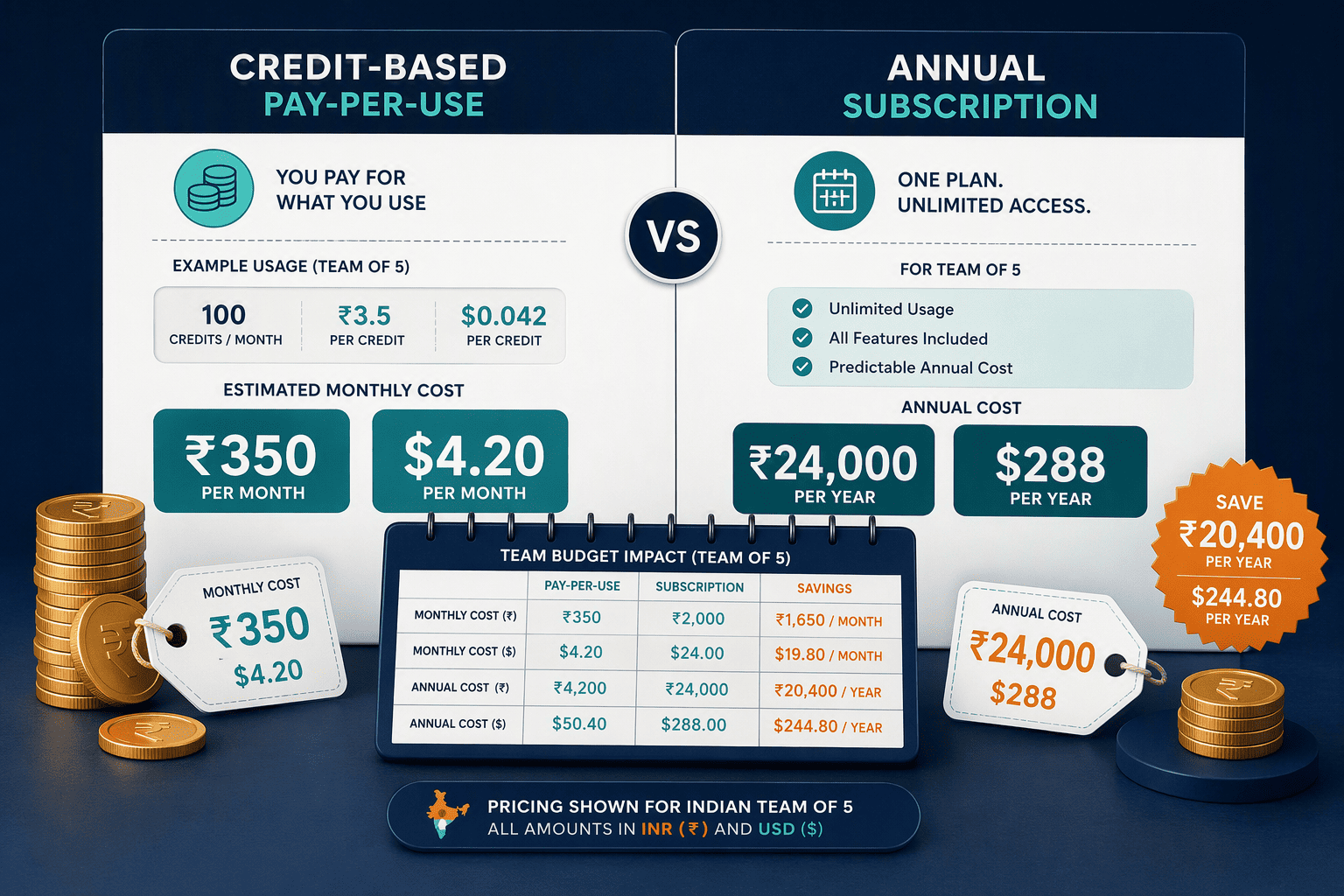
Indian teams need flexible spending, not annual lock-ins. The pricing gulf between pay-per-export and subscription models is vast.
PeakAi uses a credit system that translates to paying only for what you use, starting at $9 for 50 contacts or roughly ₹675. Each credit is approximately $0.18, and the platform throws in a 100-credit back guarantee for incorrect numbers. This is lethal for small and mid-sized teams running targeted ABM plays who cannot afford to sink $1,500 into an annual contract. You get real-time validation and CRM export capabilities without the financial bloat.
Global subscriptions take a different approach. UpLead starts at $99 per month, and Apollo.io is priced at $49 per user per month. These models make sense for teams running high-volume, global outbound motions. For India-first teams enriching a few hundred targeted contacts monthly, PeakAi's pay-per-verified-contact model delivers stronger unit economics. You avoid paying for bulk data credits that expire or for contact records in markets you never prospect into.
CRM Integrations and Workflow Automation Capabilities
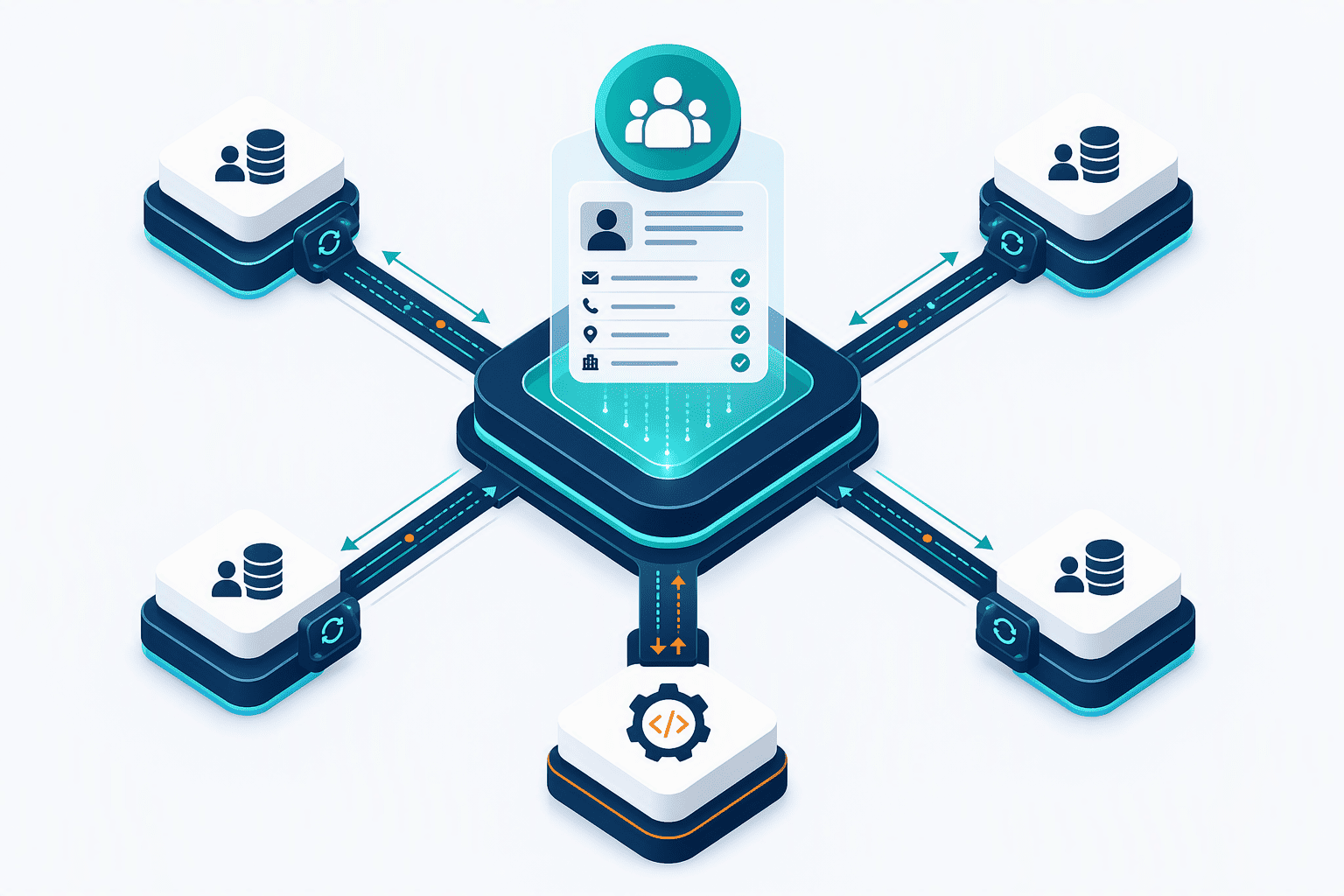
Any platform's accuracy is useless if its data stays stuck on a screen. Here is how the leading platforms plug into the Indian sales stack.
| Integration | PeakAi | UpLead | Apollo.io |
|---|---|---|---|
| Native CRM Support | 20+ integrations, including native support for Salesforce, HubSpot, Pipedrive, and Zoho CRM | Salesforce, HubSpot, Zoho CRM, and others | Salesforce and HubSpot primarily |
| API Access | API available for custom enrichment workflows | API access on higher-tier plans | API available for programmatic contact pulling |
| LinkedIn Workflow Fit | Chrome extension that respects rate limits and operates with confidence-based signaling | Chrome extension for single-click export | Built-in browser extension and full sales engagement platform |
| Automation Depth | n8n integration allows connection to thousands of apps; instant credit top-ups keep lists flowing automatically | Scheduled list refreshing and real-time email verification triggers | Advanced sequencing triggers and automated A/B testing within the platform |
| Data Export & Enrichment | Verifies and exports full contact records in under 10 seconds with a compliance timestamp | Verified leads exportable directly to CSV or CRM with no manual cleaning needed | Combines contact export with a built-in email sequencer for immediate campaign launches |
Conclusion
For pure verified accuracy on Indian mobile numbers and emails, PeakAi is the precision tool. It solves the verification gap by pulling fresh carrier and registry data instead of re-serving stale global records. Its pay-per-export model fits Indian budget realities.
Don't be distracted by database size. Ask the vendor to prove their verification trail for your specific target cities and sectors before you spend a single rupee.
Frequently Asked Questions
Which contact discovery platforms offer the highest verified accuracy rates for Indian business contacts in 2026?
PeakAi and UpLead are the two leading platforms for verified accuracy in India. PeakAi uses real-time dual verification for emails and phone numbers across 1,600+ cities. UpLead claims 95%+ accuracy by pre-verifying every contact, though independent Indian-market benchmarks remain limited.
How does PeakAi compare to global tools like Apollo.io or SignalHire for India-specific phone and email verification?
Global tools like Apollo.io and SignalHire offer enormous databases but lack depth in direct-dial verification for Indian SMBs. PeakAi is optimized specifically for the Indian market, using local carrier pings and business registry cross-referencing that global platforms do not prioritize.
What verification methods do the most accurate platforms use to ensure valid Indian phone numbers and email addresses?
The most accurate platforms use three layers:
- Real-time SMTP checks: confirm email deliverability.
- Phone network pings: verify mobile number activity.
- Manual validation: applies for high-value leads.
Why do some India-focused tools achieve better direct-dial accuracy than global databases like ZoomInfo?
India-focused tools query local carrier data, telecommunications databases, and public records in real time. Global databases like ZoomInfo rely on scaled aggregated and scraped data that is often stale, missing direct-dial numbers for the fragmented Indian mid-market.
What compliance risks should Indian sales and recruitment teams consider when using LinkedIn contact finder tools?
Using scraping-based LinkedIn tools violates platform terms and Indian IT Act and SPAM regulations, risking permanent account suspension and legal penalties. Compliant tools use LinkedIn URLs only as search keys to query independent public databases without scraping profile data.
What pricing models do the most accurate Indian contact discovery platforms use, and which offers the best value for small teams?
PeakAi uses a pay-per-export credit model starting at roughly ₹1 to ₹2 per contact, ideal for teams doing spot-check enrichment under 500 contacts monthly. Global platforms like UpLead start at $99 per month, which suits higher-volume, cross-border outbound teams.
Sources
- How to Evaluate Indian Company & Contact Databases for Sales - pintel.ai
- Best Tools For Contact Discovery | Landbase - www.landbase.com
- Best Contact Discovery Tools for 2026 - www.therankmasters.com
- Apollo vs SignalHire: Features & Pricing Compared (2026) | Apollo - www.apollo.io
