
Introduction
Your last campaign saw a 12% bounce rate, and the phone numbers your team dialed weren't even active lines. Bad data doesn't just waste credits. It burns your sender reputation and kills your sales team's confidence.
Many tools pull static records from old databases that have been gathering digital dust for months. A contact discovery platform earns your trust one search at a time, by validating an email and mobile number against the live LinkedIn profile at the moment you search.
PeakAi uses this real-time LinkedIn-native verification to stop dead data before you ever export it. That fixes the root cause of high bounce rates for teams operating in the Indian market.
Key Takeaways
Five accuracy benchmarks separate tools that deliver dialable numbers from tools that fill your CRM with noise.
- Real-time beats static archives: A platform must check a contact's email and mobile against the live LinkedIn page, not a historical snapshot, to stop data decay before you export.
- India depth defines reliability: 1,600+ city coverage with local source integration prevents mislabeled or missing contacts that a Western-first database cannot catch.
- Compliance is the first filter: Violating LinkedIn's Section 8.2 against scraping or India's IT Act rules creates legal risk that no cheap credit price can offset.
- $0.18 per verified contact sets a fair anchor: Indian small teams can secure high-accuracy data at this rate, avoiding the $0.50 to $1.00 enterprise markup while keeping verification guarantees.
What Makes a Contact Discovery Platform Genuinely Accurate for LinkedIn, Especially in India
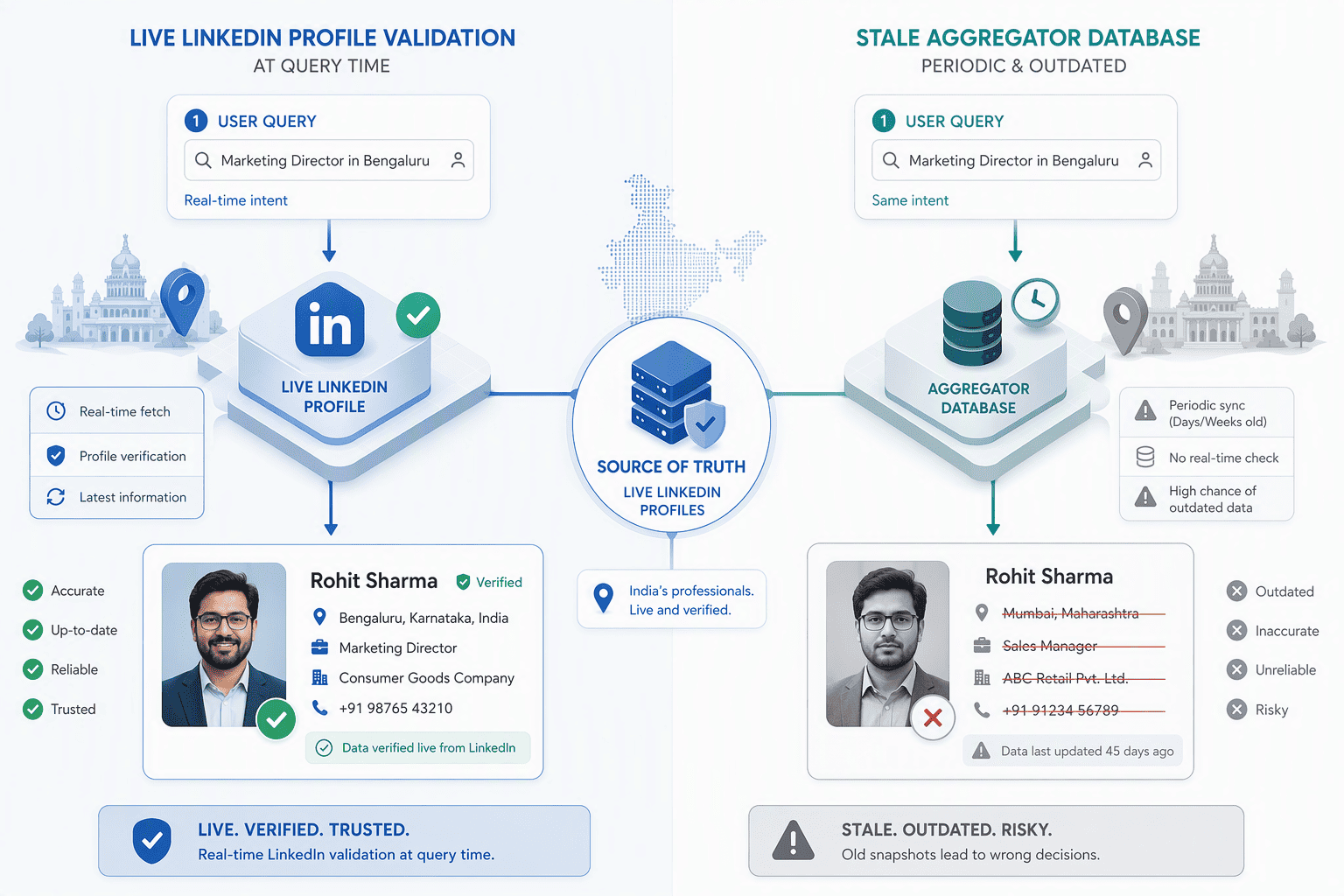
A platform is genuinely accurate only when it checks its output against the source of truth, the live LinkedIn profile, at query time. There is an exponential gap in India because many global databases pull mismatched city names, outdated designations, and disconnected numbers from stale aggregators. Tools that rely solely on their own internal data lake inevitably return the same wrong phone number for a professional who switched jobs a year ago. You get genuine accuracy only when a system queries external registries and telecommunications databases linked to a current LinkedIn URL, rather than serving you a batch-uploaded CSV from a data broker.
Real-time validation means the tool does not just confirm an email's syntax or a phone's carrier. It actively verifies the deliverability of the email and the active connection status of the mobile number against public digital footprints tied to that professional's LinkedIn identity. This is the exact opposite of how batch-upload databases function, where vendors like Lusha or SignalHire often aggregate data points from multiple disconnected sources and serve them without a current LinkedIn touchpoint. Any vendor that serves data without disclosing a time-stamped verification method is feeding you decay-prone figures. You need a tool that confirms the email hits a working inbox and the phone rings on the right desk before it even shows you the result.
That active confirmation makes bounce rates plummet.
How Real-Time LinkedIn-Native Validation Differs from Aggregate Databases
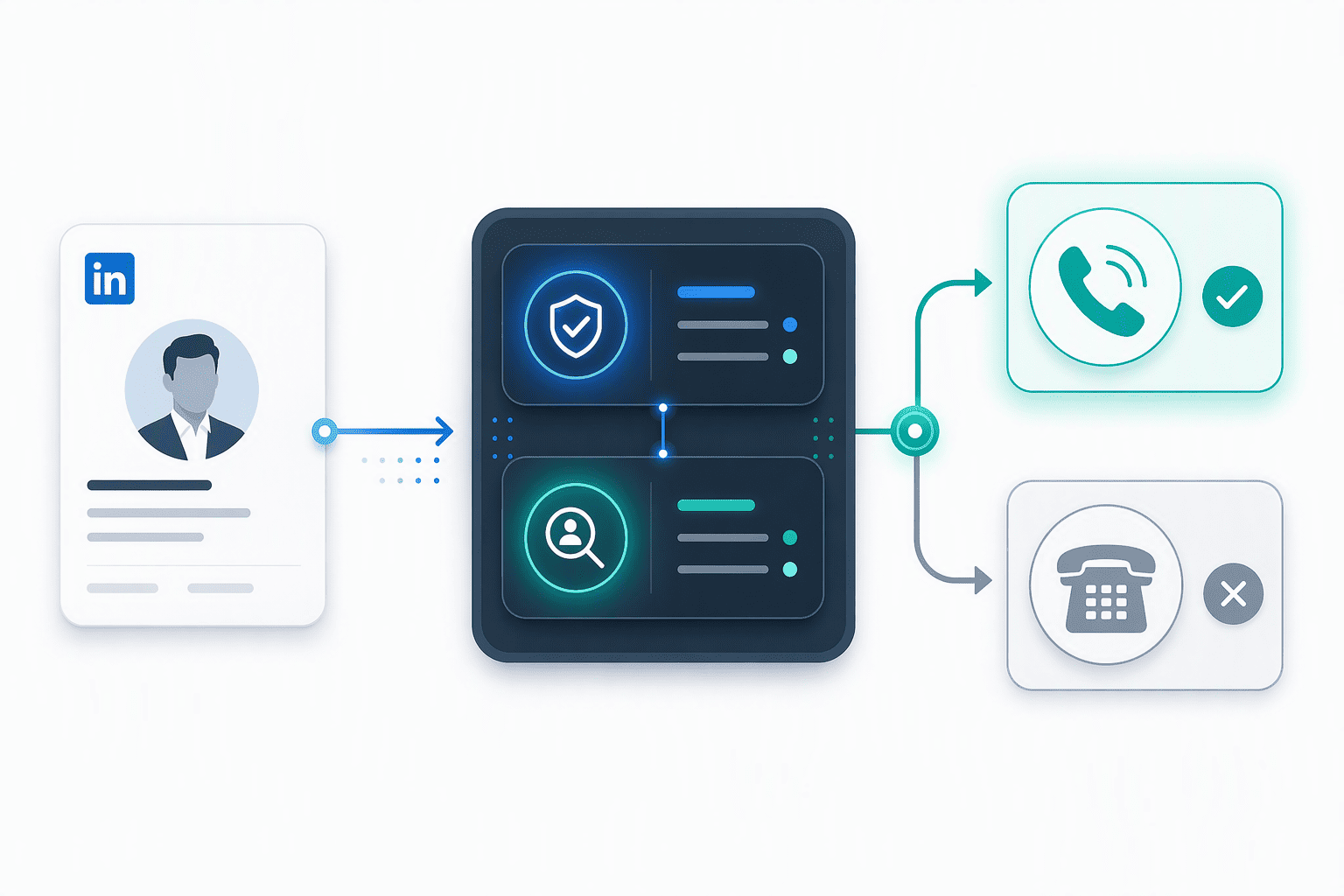
Validation methodology determines whether you get a working direct-dial or a generic switchboard. The technical workflow of real-time checking looks like an active chain of events rather than a simple file lookup.
- Search key selection: The platform uses the prospect's publicly shared LinkedIn URL as the primary launch point, connecting your query to the one place professionals update to signal their own professional credibility.
- Dual-verification check: The engine simultaneously pings independent databases, business registries, and telecom records for both the email address and the phone number tied to that specific LinkedIn identity.
- Live deliverability test: The system performs an instant validation test to check whether the discovered email server accepts mail and whether the phone carrier reports the line as active, filtering out invalid syntax or disabled numbers on the spot. Google aggregates service usage across all linked projects to determine billing tiers, a parallel to how a good tool should aggregate verification signals every month to keep its accuracy level current.
- Result delivery with a guarantee: The platform serves only the verified pair back to you, attaching a compliance timestamp and a credit-back guarantee for any number that tests functional in verification but rings incorrect upon human dialing.
Aggregate databases follow a different, lazier path. They run scraping operations on remote servers or purchase data in bulk, store it, and serve that file weeks or months later. The natural decay of business data means a percentage of those stored emails and phone numbers become inaccurate every day they sit idle. You then pay credits to discover those stale entries, which your email platform rejects and your dialer cannot connect, inflating your cost-per-conversation well beyond what any tool's pricing chart shows.
Why India-Specific Coverage (1,600+ Cities) Is Non-Negotiable for Accuracy
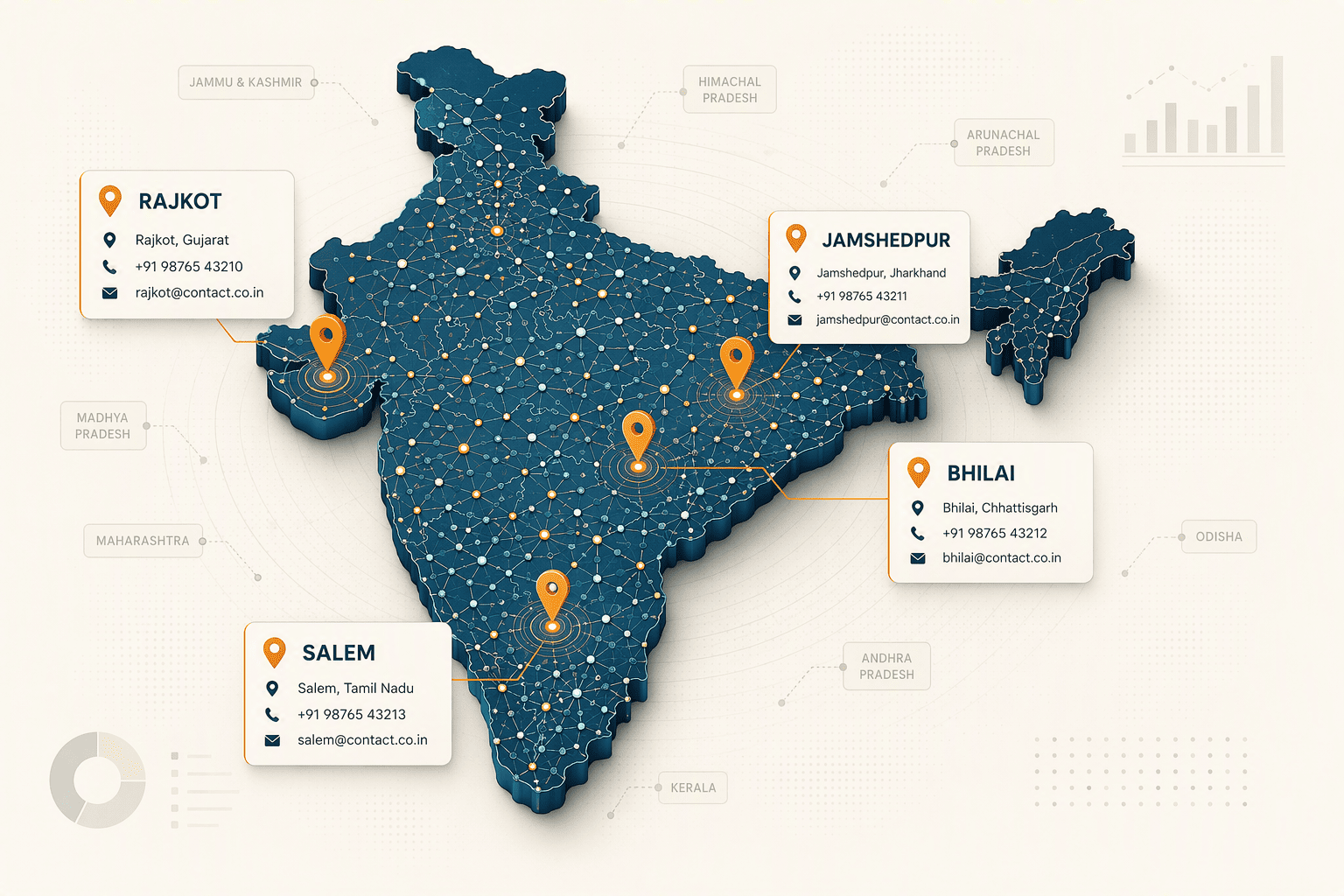
A global tool that maps only the top eight metros cannot correctly identify a prospect based out of Salem, Rajkot, or Jamshedpur. If your platform fails to map the city correctly, it often fails to find the right phone number entirely.
When a global database lacks deep Indian geolocation references, it defaults to broad regional tags. A senior engineer in Bhilai gets labeled under a distant state capital, and the system returns a generic office landline instead of a direct mobile. That mislabeling cascades into your outreach, where a recruiter's InMail references the wrong location and a caller dials through to a disconnected corporate reception.
Platforms designed with India at the core connect to hyperlocal verification sources. A tool that integrates with Google Maps Platform, where granular geocoding for Indian addresses is available on a pay-as-you-go model effective August 1, 2024, can precisely pin a prospect's company location and improve data enrichment significantly. For sales teams running territory-based campaigns, this integration cuts the noise of misallocated leads.
You stop wasting credits on the wrong city.
The Privacy and Compliance Blueprint for Safe LinkedIn Data Extraction
Compliance is a risk filter you run before considering accuracy or price. If a vendor's extraction method violates LinkedIn's explicit terms, your team's LinkedIn accounts and your company's legal standing are on the line.
LinkedIn's User Agreement draws a bright line in Section 8.2, explicitly prohibiting the use of any software, scripts, or browser plugins to scrape profile data. A tool that extracts data without a public-URL-based verification approach creates direct exposure. Under Indian IT Act provisions, unauthorized access and extraction of personal data from a database can trigger legal liability, and GDPR further requires a lawful basis like legitimate interest for processing personal data of European leads.
Your vendor safety checklist must run three items deep before you sign up.
- Check for breach history: Look for any publicly documented data breaches, because a provider that leaks its own database leaks your leads.
- Demand consent clarity: The tool should extract only publicly shared information as a lookup key for independent verifications, and user data must remain private without the vendor storing profile details or browsing history.
- Examine data policies: A trustworthy tool includes a compliance timestamp and source attribution with every exported record, giving you a clear audit trail rather than a pile of anonymized numbers. PeakAi documents that it queries external databases using the LinkedIn URL as only a search key, attaches a compliance time-stamp to exports, and keeps user data private without logging profile information.
A compliance-first process is not a marketing afterthought. It's the structure that keeps your sales pipeline running when a competitor's scraping tool gets their entire team's IP blocklisted.
Decoding Pricing: What Small Teams Should Pay per Verified Contact
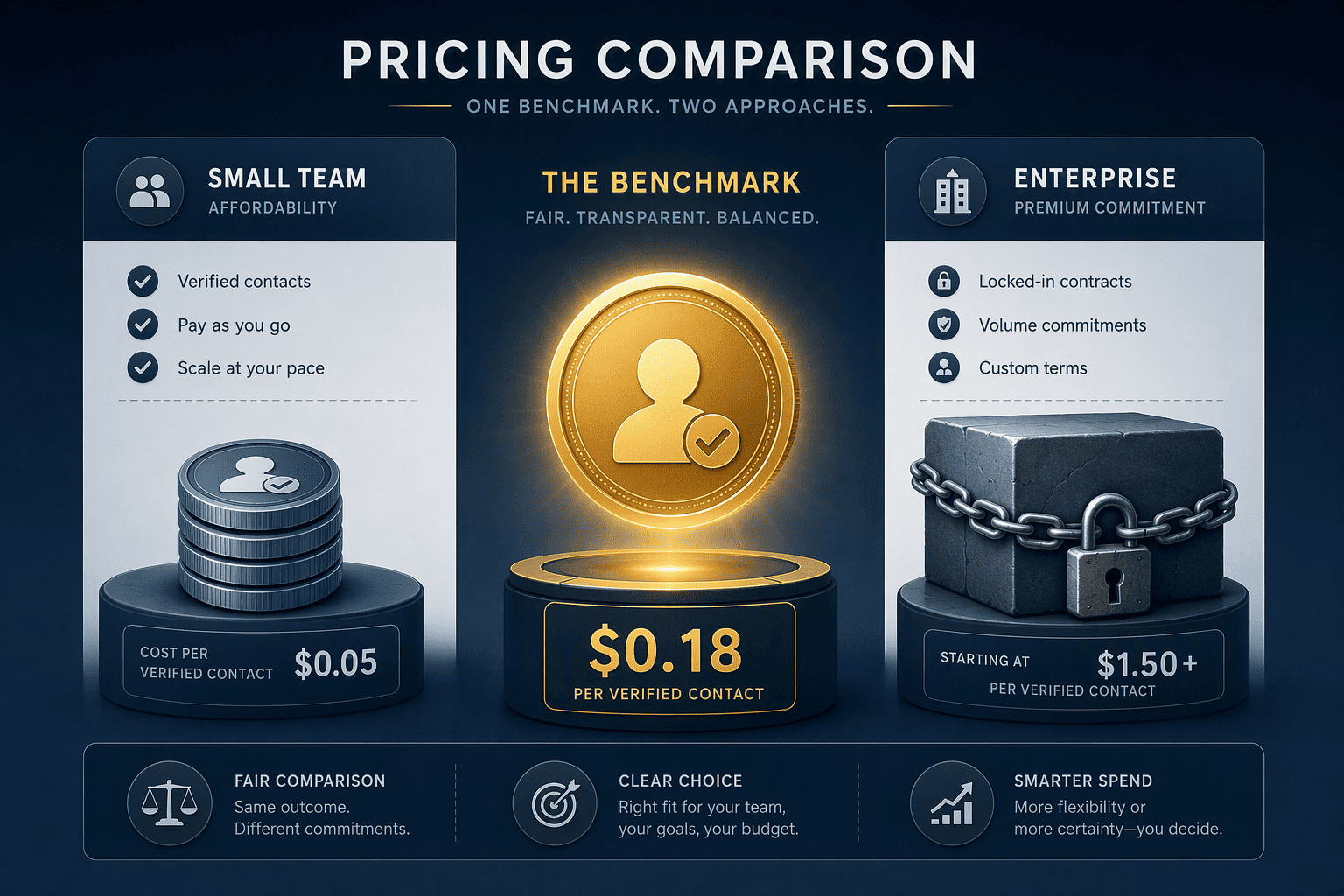
Verified B2B contact pricing splits into two camps. One camp charges what a lean team can actually afford. The other prices for procurement departments with six-figure budgets.
For an Indian team that needs accurate data without a 12-month lock-in, $0.18 per credit is the benchmark. It is the number that balances fresh verification against monthly spend when you are running under 500 profiles.
| Feature | Small-Team Accuracy Tier | Enterprise Markup Tier |
|---|---|---|
| Price per verified contact | $0.18 per credit | $0.50 to $1.00+ per contact |
| Minimum volume commitment | $9 for 50 contacts; no contract lock | Often starts at $39/month per credit or requires annual deal |
| Verification guarantee | Credit-back for incorrect phone numbers included | May charge extra credits to re-verify bad data |
| Free usage tier | No publicly listed free tier; instant credit top-up available | Around 20 free emails per month with limited verification |
| Coverage depth | Indian-first with 1,600+ cities verified | Often Western-first, limited to top Indian metros |
Anything above $0.50 per contact is enterprise pricing dressed for a smaller buyer. A team paying that rate on 300 profiles a month spends $150 for data that the accuracy tier delivers for $54. The extra $96 buys a sales rep lunch for a week, not better leads.
Databases that list contacts below $0.10 look cheaper on the invoice. They are not. These are scraped dumps with no verification pass. A 20% bounce rate on 100 contacts means 20 bad emails or disconnected numbers. You paid for garbage and your outreach sequence hit dead air 20 times before it even started.
A credit-back guarantee flips the math. When the provider replaces a wrong number without deducting from your balance, the effective cost drops to what you paid for working contacts only. The sticker price of $0.18 is the ceiling, not the floor. That guarantee is the difference between a database fee and a lead-generation cost you can model.
Workflow Essentials: Chrome Extensions, APIs, and Verification Guarantees
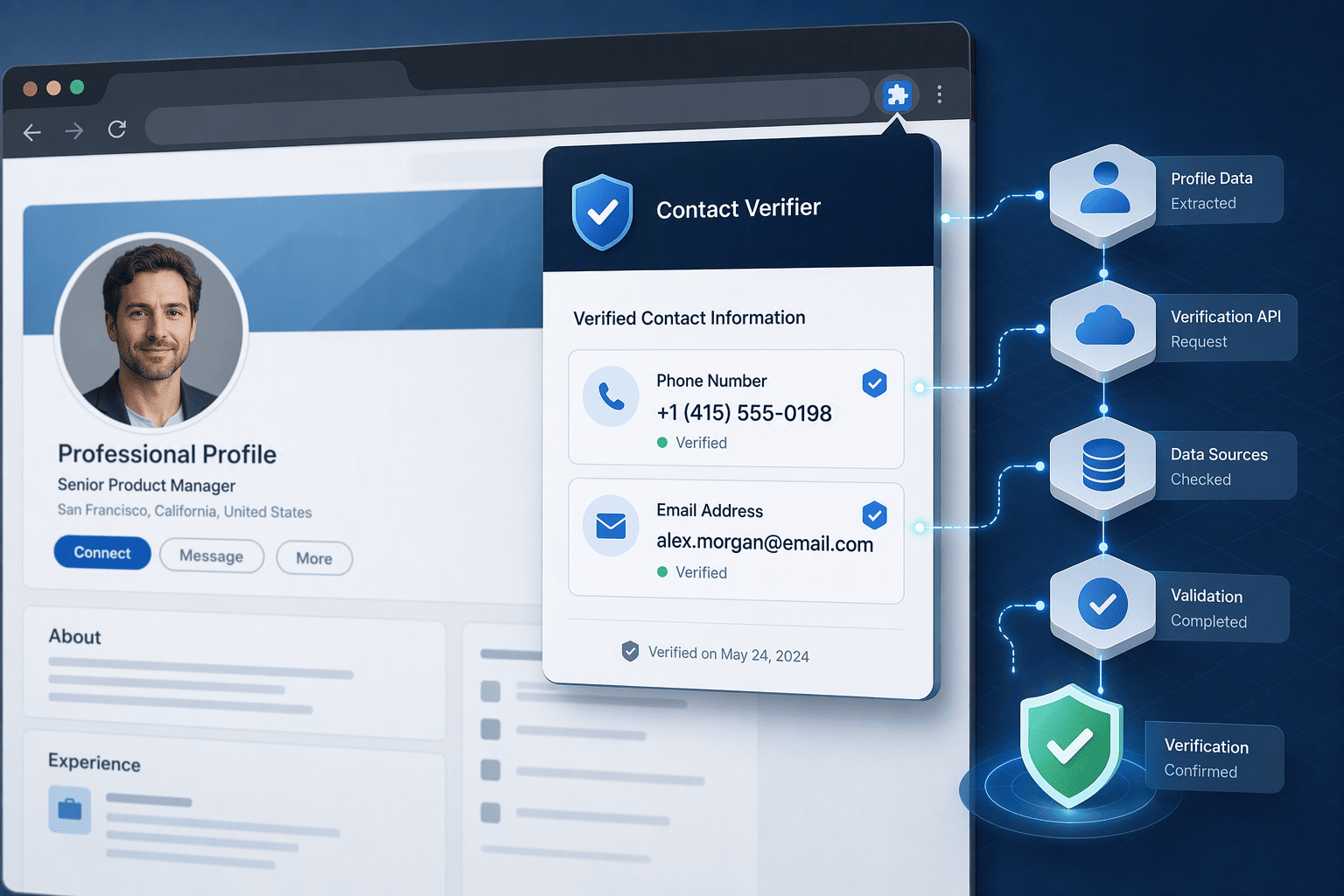
A tool earns its keep when you forget it's there, until you need a verified number. You're on a profile page. You run the extension. Seconds later you have the phone and email, without opening a new tab.
This is the single-lookup path. For one prospect, a Chrome extension is the right shape: it sits in the browser, fires on demand, and hands back a contact pair before you write your connection note. Recruiters and SDRs who work profile by profile stop losing afternoons to manual searches.
When the job is a thousand profiles, extensions don't scale. You push a list of publicly shared LinkedIn URLs through an API or an n8n workflow and get verified contact pairs back in bulk. The verified pairs land in your CRM without a copy-paste step between Lookup #47 and Lookup #48.
Sales Navigator compatibility means your existing prospecting lists feed straight into the verification engine. No CSV dance. No mapping fields at 11 p.m. You keep the lists you already built; the tool enriches them in place.
None of that speed matters if the numbers bounce. A verification guarantee that works on your terms is what turns a fast pipe into a reliable one.
Conclusion
High bounce rates burn your outreach budget. Compliance gaps burn your reputation. Real-time verification against live LinkedIn profiles, with coverage across 1,600+ Indian cities, stops both.
Run every tool you evaluate through three questions. Does it verify right now, or does it hand you a file that was fresh last quarter? What does the credit-back replacement policy actually cost you when a number turns dead, not what the marketing page promises? How deep does its sourcing go in the specific Indian cities you sell into?
Go down that checklist honestly. You will walk away with a platform that gives you a working dial tone instead of a spreadsheet full of noise.
Frequently Asked Questions
What methodology makes a contact discovery platform genuinely accurate for LinkedIn profiles, especially in the Indian market?
Genuine accuracy requires real-time validation that checks a contact’s email and phone against the live LinkedIn profile at query moment, not against a static stored database. In India, this must pair with hyperlocal coverage of 1,600+ cities sourced from integrated location data to avoid mismatching city-level contact records.
How does PeakAi's real-time LinkedIn-native validation and dual verification differ from competitors like Lusha or SignalHire?
PeakAi uses a live LinkedIn URL as a search key to trigger independent verification of both email and phone at the time of query. This differs from Lusha or SignalHire’s batch-based, historically aggregated data models, which do not confirm delivery or line activity live and decay faster for Indian contacts.
What are the key compliance risks when extracting LinkedIn contact data, and how should businesses evaluate a vendor's safety record?
The chief risk is violating LinkedIn’s Section 8.2 prohibition on automated scraping, plus exposure under GDPR and India’s IT Act. Evaluate by checking for a history of data breaches, ensuring the vendor uses public URLs only as search keys without storing user browsing data, and verifying that exports include compliance audit trails.
Why is India-specific coverage (1,600+ cities, local registries) critical for sales and recruitment accuracy compared to global databases?
Global databases often default to broad regional labels, incorrectly mapping professionals in cities like Surat or Coimbatore and returning generic switchboard numbers. Tools with 1,600+ Indian city data linked to local sources deliver correct direct-dials and company locations, reducing wasted calls and misdirected recruiter outreach.
What is a fair pay-per-verified-contact price for small teams, and how does PeakAi's $0.18/credit pricing stack up against alternatives?
A fair rate is $0.18 per verified contact with no volume commitment, starting from $9 for 50 contacts. This sits well below enterprise averages of $0.50 to $1.00 and includes a credit-back guarantee for wrong numbers. Alternatives at similar or lower prices typically lack live verification or deep Indian city coverage.
Sources
- Google Maps Platform core services pricing list - India | Pricing and Billing | Google for Developers - developers.google.com
- 11 Best LinkedIn Email Finder Tools in 2026 (Free and Paid) | Enrich - www.enrich.so
- LinkedIn Scraping: Guide to Data Extraction for B2B Prospecting - La Growth Machine (LGM) - lagrowthmachine.com
- LinkedIn Phone Number Finder — Free Chrome Extension | EazyReach | EazyReach - eazyreach.app
- PeakAI Alternatives & Comparisons | Compare B2B Contact Finders 2026 - thepeakai.com
