Contact discovery platforms use multiple verification methods to extract emails and phone numbers from LinkedIn profiles, but coverage and accuracy vary significantly based on the tool's data sources and compliance architecture.
Key Takeaways
- Yes, several specialized tools find both emails and phone numbers from LinkedIn profiles, but only 5-10% of LinkedIn users share phone numbers with first-degree connections and less than 1% share them beyond that network tier [1].
- Phone number accuracy depends on multi-source verification — tools that cross-reference legitimate business databases deliver 90%+ accuracy, while single-database lookups often return outdated or incorrect numbers.
- LinkedIn's Terms of Service explicitly prohibit automated scraping, so compliance-first tools use enrichment layers that query external databases rather than extracting data directly from LinkedIn.
- Contact data decays at roughly 2-3% monthly for static databases [4], making refresh cycles and verification guarantees critical evaluation criteria.
- Credit-based pricing models ($0.85–1.50 per verified contact) deliver significant cost savings versus annual subscriptions that charge $2–4 per contact [1].
- Yes, several tools find both emails and phone numbers from LinkedIn profiles, but phone number availability and verification quality differ dramatically across platforms. Only 5-10% of LinkedIn users share phone numbers with first-degree connections, and less than 1% share them with second- or third-degree contacts. Tools that promise universal phone availability are either scraping data in violation of LinkedIn's Terms of Service or relying on outdated databases with high error rates. The strongest options use multi-source cross-referencing to verify phone numbers through legitimate business databases, achieving 90%+ accuracy for the subset of contacts where phone data genuinely exists. According to Pin [2], B2B contact data decays at roughly 2.1% per month overall, with numbers going stale at roughly 18% annually. This makes data freshness cycles and refund guarantees for incorrect data critical decision factors when evaluating platforms.
What Makes a LinkedIn Contact Finder Compliant vs. Risky?
LinkedIn TOS Prohibition and Account Suspension Risk
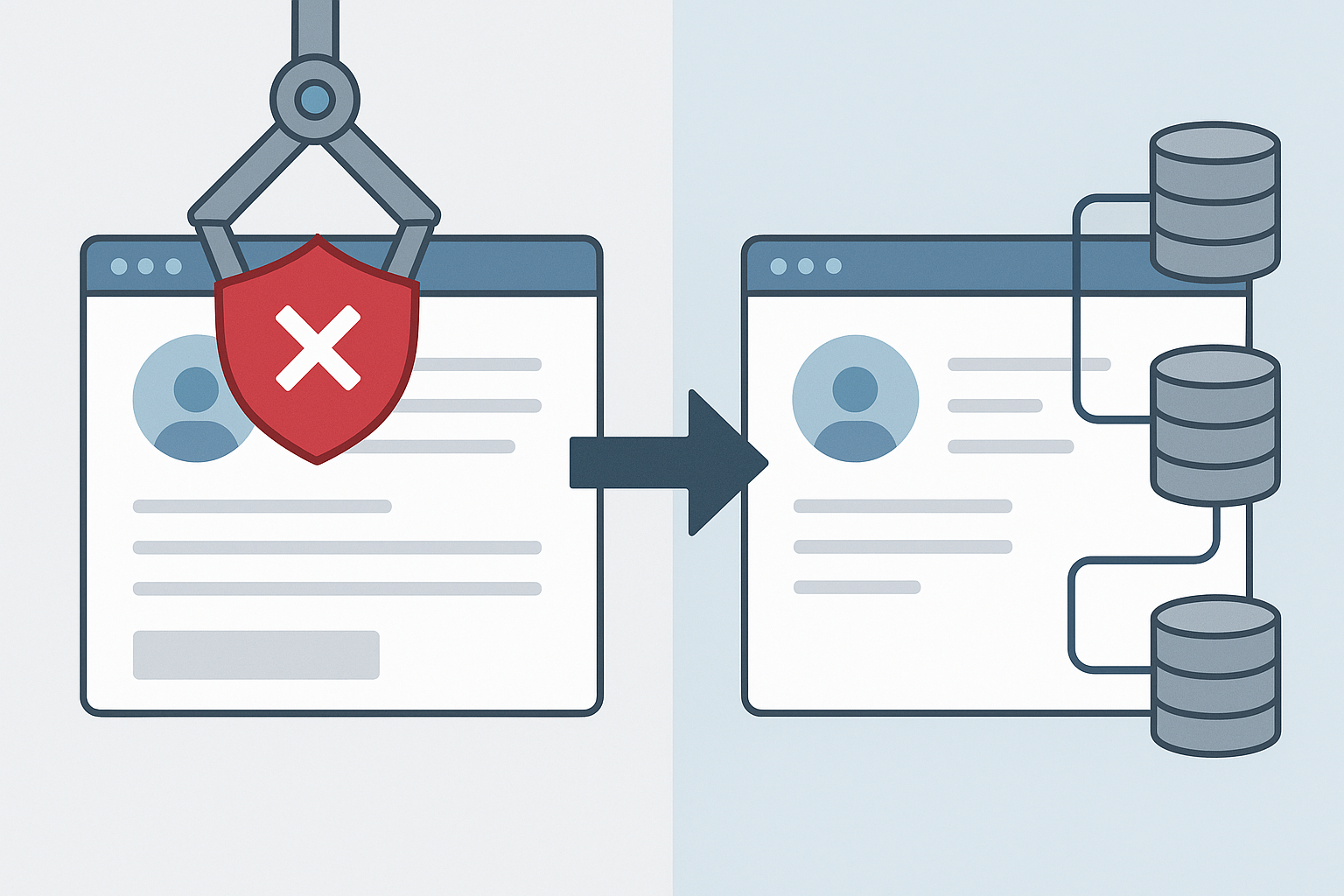
LinkedIn's Terms of Service explicitly prohibit automated scraping of profile data. Tools that extract phone numbers or emails directly from LinkedIn pages expose users to account suspension. Compliant alternatives operate as enrichment layers that accept a LinkedIn profile URL as input, then query external business databases to retrieve contact information without ever accessing LinkedIn's servers programmatically. According to Datalane [3], public profiles, Sales Navigator views, and recruiter views return different metadata, which means scraping tools often deliver inconsistent results depending on the user's LinkedIn subscription tier. The compliance-first architecture avoids this inconsistency by relying on third-party databases that aggregate contact information from business registries, verified directories, and opt-in sources.
Enrichment Layer Architecture vs. Direct Scraping
Enrichment-layer tools accept minimal input — a name, company, or LinkedIn URL — and return verified contact data sourced from external databases. Direct scrapers parse LinkedIn HTML and extract whatever phone or email appears on the page. The distinction matters because enrichment layers can deliver phone numbers even when the LinkedIn profile shows none, by cross-referencing the person's name and company against business registries. Waterfall enrichment runs queries through multiple data providers to maximize coverage. This approach reduces dependency on LinkedIn's displayed information and shifts verification responsibility to the database providers, who maintain freshness cycles and refund policies for incorrect data.
Phone Numbers vs. Emails: Why Most Tools Prioritize Email
Phone Number Scarcity on LinkedIn Profiles
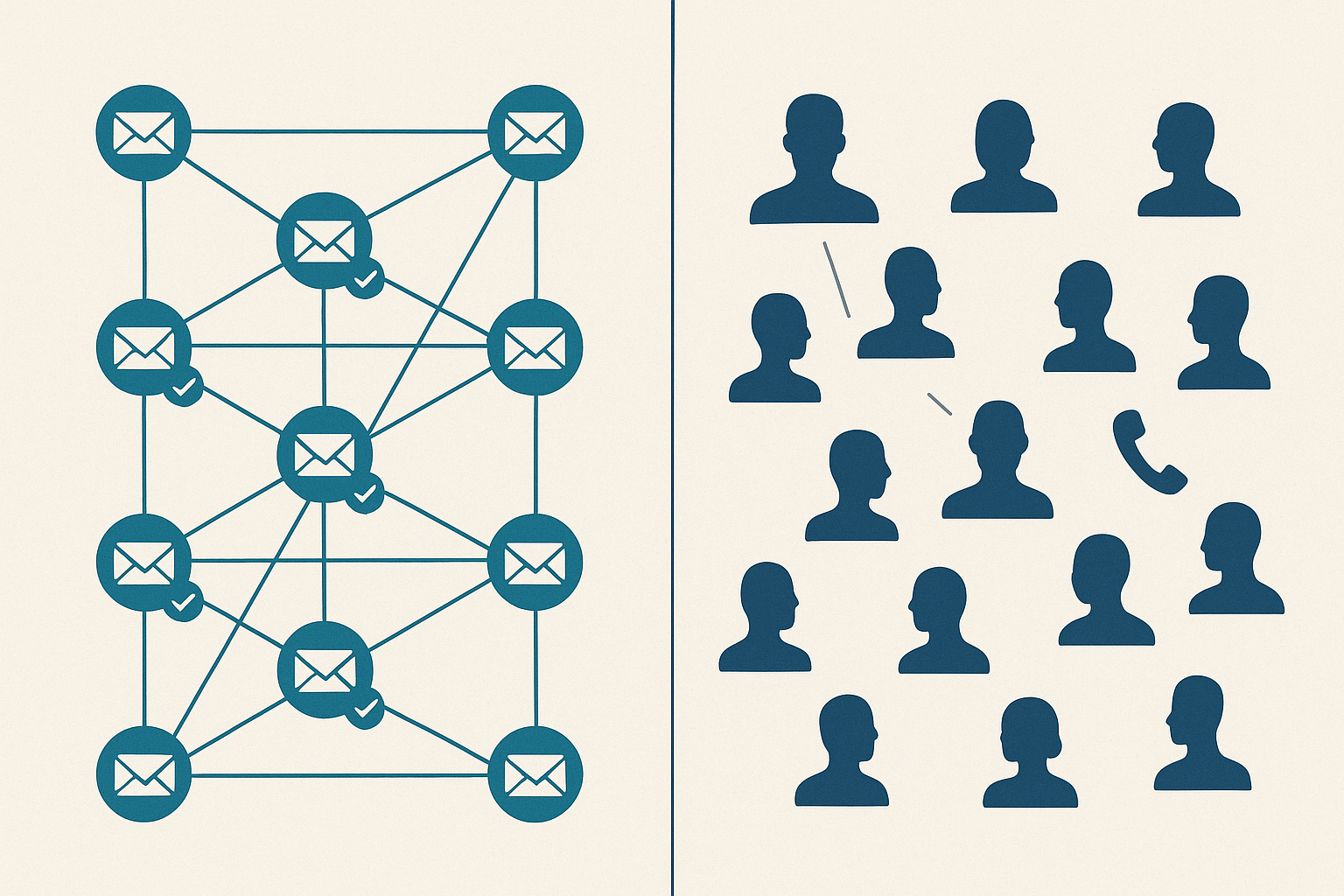
Email addresses follow predictable patterns ([email protected]) that tools can generate and verify at scale. Phone numbers have no standard format beyond country codes, and users rarely publish them on LinkedIn. Only 5-10% of LinkedIn users share phone numbers with first-degree connections, and less than 1% share them with second- or third-degree contacts. This scarcity explains why most LinkedIn contact finders emphasize email discovery first and treat phone numbers as a premium add-on. Tools that advertise high phone coverage rates typically aggregate data from multiple external sources, business registries, corporate directories, and public records, rather than relying on LinkedIn profile data alone.
Direct Dial vs. Switchboard Quality
A direct dial number connects immediately to the individual's desk or mobile line. A switchboard number routes through a company receptionist. Many contact databases list switchboard numbers as 'verified' phone data because the number technically connects, but it adds friction to outreach workflows. Cognism wins on phone-verified mobile numbers and enterprise EU data quality, indicating that specialist platforms invest in mobile-number verification specifically. Sales teams evaluating tools should confirm whether 'phone coverage' means direct dials or includes switchboard numbers, since the distinction affects connect rates and outreach efficiency.
How Contact Verification Quality Impacts Your Outreach ROI
Multi-Source Cross-Referencing vs. Single-Database Lookup
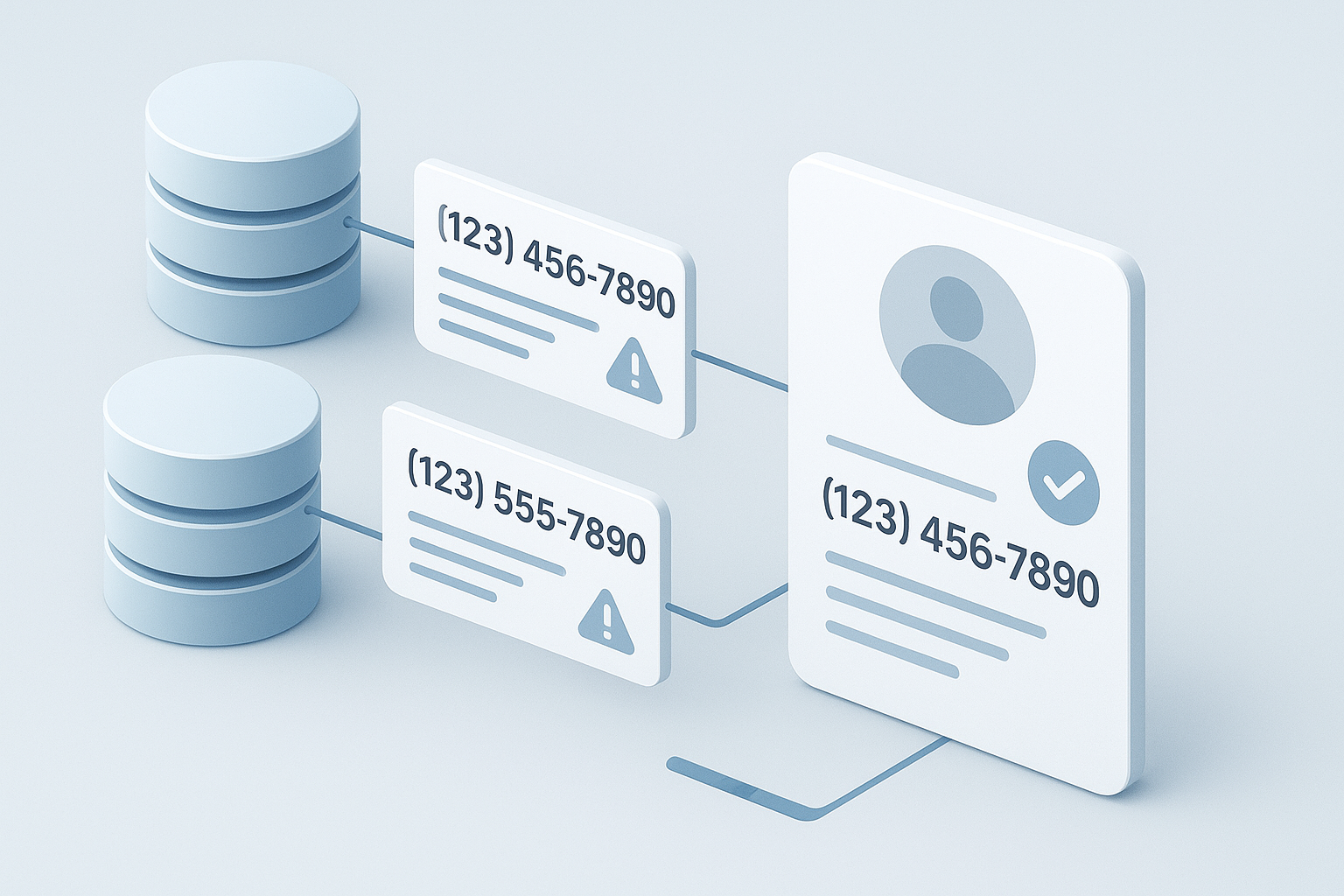
Single-database tools query one provider and return whatever result exists, regardless of freshness. Multi-source platforms cross-reference results from three or more databases and flag discrepancies. When two sources agree on a phone number and a third returns a different value, the tool can apply confidence scoring or trigger manual verification. According to Pin [2], B2B contact data decays at roughly 2.1% per month, which means a database updated quarterly carries 6-7% stale data by the end of the refresh cycle. Multi-source verification reduces this risk by prioritizing the most recently updated record across providers.
The 2-3% Monthly Contact Decay Problem
Static databases grow stale quickly. People change jobs, phone numbers get reassigned, and email domains expire. B2B contact data decays at roughly 2.1% per month, meaning a 12-month-old database has lost nearly a third of its accuracy. Tools that offer 90-day refresh cycles keep decay below 10%, which is the threshold where bounce rates start affecting sender reputation. Buyers should ask vendors how often they update their underlying data and whether they offer credit refunds for incorrect contacts. Platforms that charge per verified contact have stronger incentives to maintain accuracy than subscription models that bill regardless of data quality.
LinkedIn Terms of Service: What 'No Scraping' Actually Means
Automated Data Extraction Prohibition
LinkedIn's Terms of Service prohibit using bots, scrapers, or automated scripts to extract profile data. This includes Chrome extensions that parse LinkedIn pages to capture email addresses or phone numbers visible on the profile. Tools marketed as 'LinkedIn email finders' that operate via browser extension are often in violation of this policy, even if the data extracted is publicly visible [3]. Extensions pull verified contact data from LinkedIn profiles and overlay contact information in the browser, but this overlay functionality depends on either scraping LinkedIn HTML or accessing LinkedIn's private API without authorization. Users risk account suspension when LinkedIn detects automated activity patterns, such as rapid profile views or bulk data export.
What Compliance-First Tools Do Differently
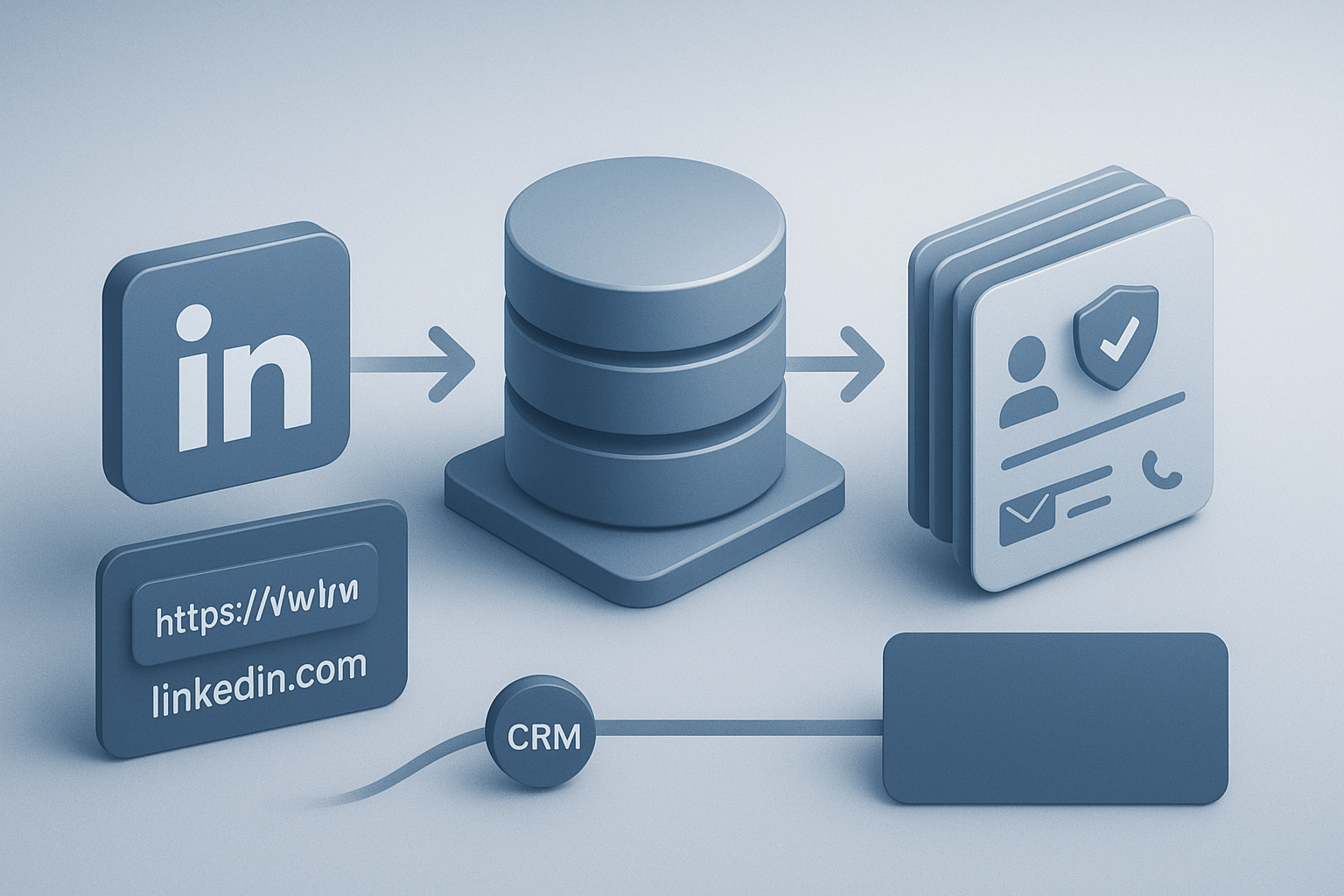
Compliant tools never log into LinkedIn or access LinkedIn pages programmatically. Instead, they accept a LinkedIn profile URL or a person's name and company as input, then query third-party business databases to retrieve contact information. This architecture keeps the tool's servers separate from LinkedIn's infrastructure and shifts legal responsibility to the database providers, who source contact data from business registries, corporate websites, and opt-in directories. The platform provides real-time enriched data without using any database, verifying information at the moment of query rather than storing stale records. This approach avoids both LinkedIn TOS violations and the data decay problem that affects static databases.
Compliance-First Alternatives: Tools That Don't Risk Your Account
Enrichment Platforms with External Database Sourcing
Apollo.io operates as a sales intelligence platform with a database of 210 million contacts and 35 million companies. It accepts LinkedIn URLs as input but retrieves contact data from its proprietary database rather than scraping LinkedIn pages. The platform includes built-in email deliverability guardrails, indicating that verification happens at the database level before results are surfaced to users. Apollo.io charges subscription fees starting at $59 per seat monthly and offers a free tier with 5 mobile credits per month and 100 emails per day. The platform integrates with CRMs and supports bulk enrichment, making it suitable for teams that need to enrich large contact lists without manual LinkedIn lookup.
SignalHire provides a Chrome extension that finds email and phone numbers from LinkedIn profiles, with 10 free monthly contact credits. The extension verifies contact data in real-time and supports bulk export. SignalHire has 300,000 users and a 4.5 rating from 424 reviews. SignalHire operates on a credit-based model with pricing starting around ₹4,700 per month. The platform emphasizes GDPR compliance and sources data from multiple business registries, reducing reliance on LinkedIn-displayed information.
Lusha offers a Chrome extension that reveals verified contact data on LinkedIn, CRM systems, and supported company sites. The free plan includes 40 credits per month, and the platform focuses on B2B prospecting with integration into GTM systems. Lusha uses pattern-based email verification and cross-references phone numbers through business directories. Lusha has 400,000 users and a 4.6 rating from 1,800 reviews. The platform's strength lies in its free-tier generosity and GDPR coverage for European markets.
Pay-Per-Contact Credit Models
PeakAi provides verified phone numbers and emails in 10 seconds without leaving LinkedIn. The platform operates on a credit-based model with pricing starting at ₹675 for 50 contacts, and offers a free trial with 5 free credits. The platform emphasizes 90-day data refresh cycles to prevent the 2-3% monthly decay problem, and provides a 100% credit refund guarantee for incorrect data.
EazyReach offers free starter credits and cross-validated phone numbers from multiple sources. The platform supports LinkedIn profile enrichment and direct dial numbers, with a Chrome extension for in-browser lookup. Pricing starts around ₹2,417 per month, and the platform has a 4.6 rating. EazyReach's multi-source validation reduces the risk of outdated phone numbers by comparing results across databases before surfacing the contact to users.
Pricing Models & Hidden Costs: Credit-Based vs. Subscription
Subscription Lock-In and Unused Credits
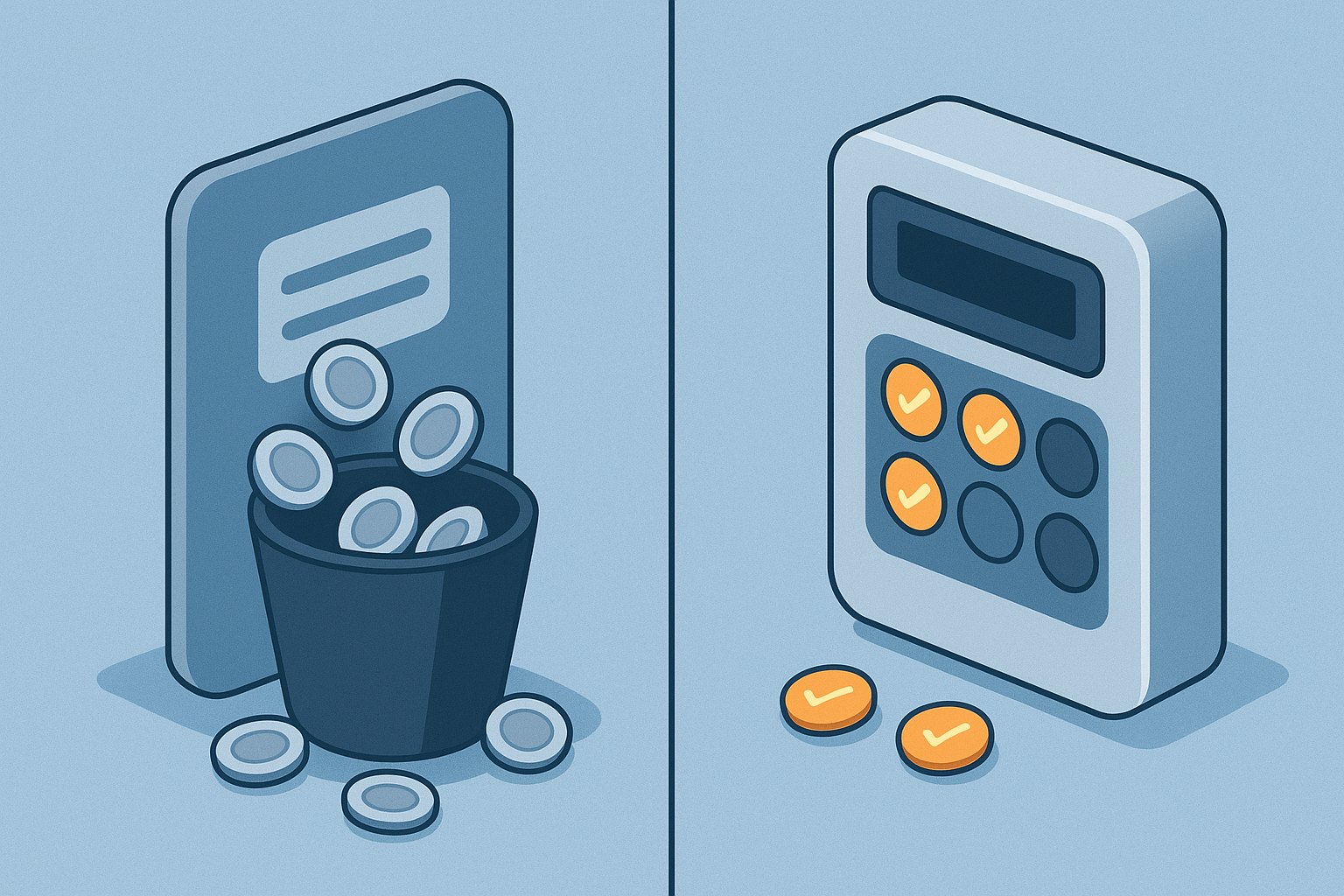
Annual subscription models charge upfront fees regardless of usage. A team that purchases 10,000 contacts but only enriches 4,000 in the first six months pays for 6,000 unused credits. Over 600,000 companies use the platform, but pricing starts at $59 per seat with no refund for unused queries. Credit-based models charge only for verified contacts retrieved, which eliminates waste for seasonal or project-based prospecting. Buyers should calculate cost-per-verified-contact by dividing the monthly subscription fee by the number of contacts they realistically expect to enrich, then compare that figure to per-credit pricing from pay-as-you-go platforms.
Cost-Per-Verified-Contact Economics
Cost-per-verified-contact ranges from $0.85 to $1.50 for specialist platforms versus $2 to $4 for enterprise solutions. This cost differential stems from database maintenance overhead, enterprise platforms maintain broader coverage but spread fixed costs across fewer high-volume customers, while specialist platforms target specific geographies or industries with focused databases. For teams enriching fewer than 500 contacts monthly, credit-based pricing delivers better ROI than subscription models. For teams enriching 5,000+ contacts monthly, annual subscriptions with volume discounts often become more cost-effective despite the upfront commitment.
| Platform | Pricing Tier | Free Plan / Credits | Finds Email & Phone | Verified Direct Dial | Chrome Extension | Cost |
|---|---|---|---|---|---|---|
| PeakAi | Low tier | 5 free credits | Yes | Verification varies | Yes | Low |
| Hunter.io | Low tier | 25 searches | Email-focused | Not specified | Not specified | Low |
| Apollo.io | Medium tier | 5 mobile credits/month, 100 emails/day | Yes | Yes | Yes | Medium |
| Lusha | Medium tier | 40 credits/month | Yes | Not specified | Yes | Medium |
| SignalHire | Medium-High tier | 10 free monthly credits | Yes | Yes | Yes | Medium-High |
| EazyReach | Medium tier | Free starter credits | Yes | Yes | Yes | Medium |
Illustrative Analysis: Data sourced from vendor websites and Chrome Web Store listings as of May 2026. Tiers represent relative pricing positions based on publicly available plan structures.
Decision Framework: Which Tool Type Fits Your Use Case?
Best for High-Volume Enterprise Prospecting
Teams enriching 5,000+ contacts monthly need platforms with broad database coverage and CRM integration. Apollo.io fits this use case with its 210 million contact database and built-in sales automation features. Companies using the platform report 70% increases in sales leads and 4x SDR efficiency. The subscription model makes sense at this volume because per-contact costs drop below $1 when amortized across thousands of queries. RocketReach serves a similar segment with extensive global phone and email coverage and 90-98% deliverability on verified emails, though it is trusted by 95% of the S&P 500, indicating enterprise positioning.
Best for Compliance-Conscious Teams in Regulated Industries
Regulated industries, financial services, healthcare, legal, face stricter data sourcing requirements and higher penalties for TOS violations. Dropcontact differentiates itself as a GDPR-native alternative that provides real-time enrichment without storing contact data. The platform avoids database-driven approaches entirely, which eliminates the risk of serving stale records and reduces compliance surface area. The platform is 100% GDPR compliant, a critical feature for European teams or companies handling EU prospects. Lusha also emphasizes GDPR coverage and has solid compliance documentation for European markets.
Best for Small Teams with Tight Budgets
Credit-based platforms with generous free tiers suit teams enriching fewer than 200 contacts monthly. Lusha offers 40 free credits per month, which covers typical SDR prospecting volume for small teams. SignalHire provides 10 free monthly credits and charges per verified contact beyond that threshold. These models eliminate the upfront commitment of annual subscriptions and align costs directly with usage, which reduces financial risk for early-stage teams testing outreach channels.
Best for Region-Specific Prospecting
Global platforms often lack deep coverage in emerging markets where business registries are fragmented or not digitized. PeakAi cites regional coverage and integrates GST and MCA data for verification, which addresses a gap that global tools leave open. Teams prospecting in India, Southeast Asia, or Latin America should evaluate whether the platform sources data from local business registries or relies solely on Western databases with limited regional penetration. According to Pin [2], the platform offers an 850M+ profile database, but global scale does not guarantee depth in specific geographies.
Frequently Asked Questions
Is there a tool that finds both emails and phone numbers from LinkedIn profiles?
Yes, several tools find both emails and phone numbers from LinkedIn profiles, including Apollo.io, SignalHire, Lusha, and PeakAi. Phone number availability is limited because only 5-10% of LinkedIn users share phone numbers with first-degree connections. Tools use external business databases rather than scraping LinkedIn directly to avoid Terms of Service violations.
Why do contact discovery tools give me outdated phone numbers?
B2B contact data decays at roughly 2.1% per month [2], meaning databases updated annually carry 20-25% stale records. Tools that refresh data every 90 days keep decay below 10%. Multi-source platforms cross-reference results from three or more databases to flag discrepancies and prioritize the most recent records.
Will using a LinkedIn contact finder get my account suspended?
Tools that scrape LinkedIn pages directly violate LinkedIn's Terms of Service and risk account suspension [3]. Compliant tools operate as enrichment layers that query external databases using a LinkedIn URL as input, without accessing LinkedIn's servers. Platforms like Dropcontact and PeakAi use this architecture to avoid TOS violations.
What is the difference between credit-based and subscription pricing for contact finders?
Credit-based models charge per verified contact retrieved, typically $0.85 to 1.50 per contact. Subscription models charge monthly or annual fees for a set allocation, often $2 to 4 per contact when amortized. Credit-based pricing eliminates waste for teams enriching fewer than 500 contacts monthly, while subscriptions benefit high-volume users.
How accurate are phone numbers from LinkedIn contact discovery tools?
Accuracy depends on verification methodology. Tools that cross-reference multiple business databases achieve 90%+ accuracy for verified direct dials. Single-database lookups often return switchboard numbers or outdated mobile lines. Platforms offering credit refunds for incorrect data have stronger incentives to maintain verification quality than subscription models.
Can I find phone numbers for LinkedIn profiles outside my network?
Less than 1% of LinkedIn users share phone numbers with second- or third-degree connections. Contact discovery tools retrieve phone numbers from external business databases rather than LinkedIn profiles, so network connection tier does not affect availability. Coverage depends on whether the person's phone number exists in public business registries or opt-in directories.
What is multi-source cross-referencing for phone verification?
Multi-source cross-referencing queries three or more databases for the same contact and compares results. When sources agree, the tool returns the number with high confidence. When sources conflict, the platform flags the discrepancy or triggers manual verification. This reduces the 2-3% monthly decay rate by prioritizing recently updated records.
Sources
- How to Find Someone by Their Cell Phone Number: B2B Decision Maker Discovery - databar.ai
- 10 Best Phone and Multi-Channel Contact Finders for Recruiters in 2025 - Pin - www.pin.com
- How to find an email from LinkedIn: tools and honest limits | Datalane Blog - www.datalane.com
- Find Anyone's Email Address (Most Accurate, Fast & Free Ways) - clearout.io
