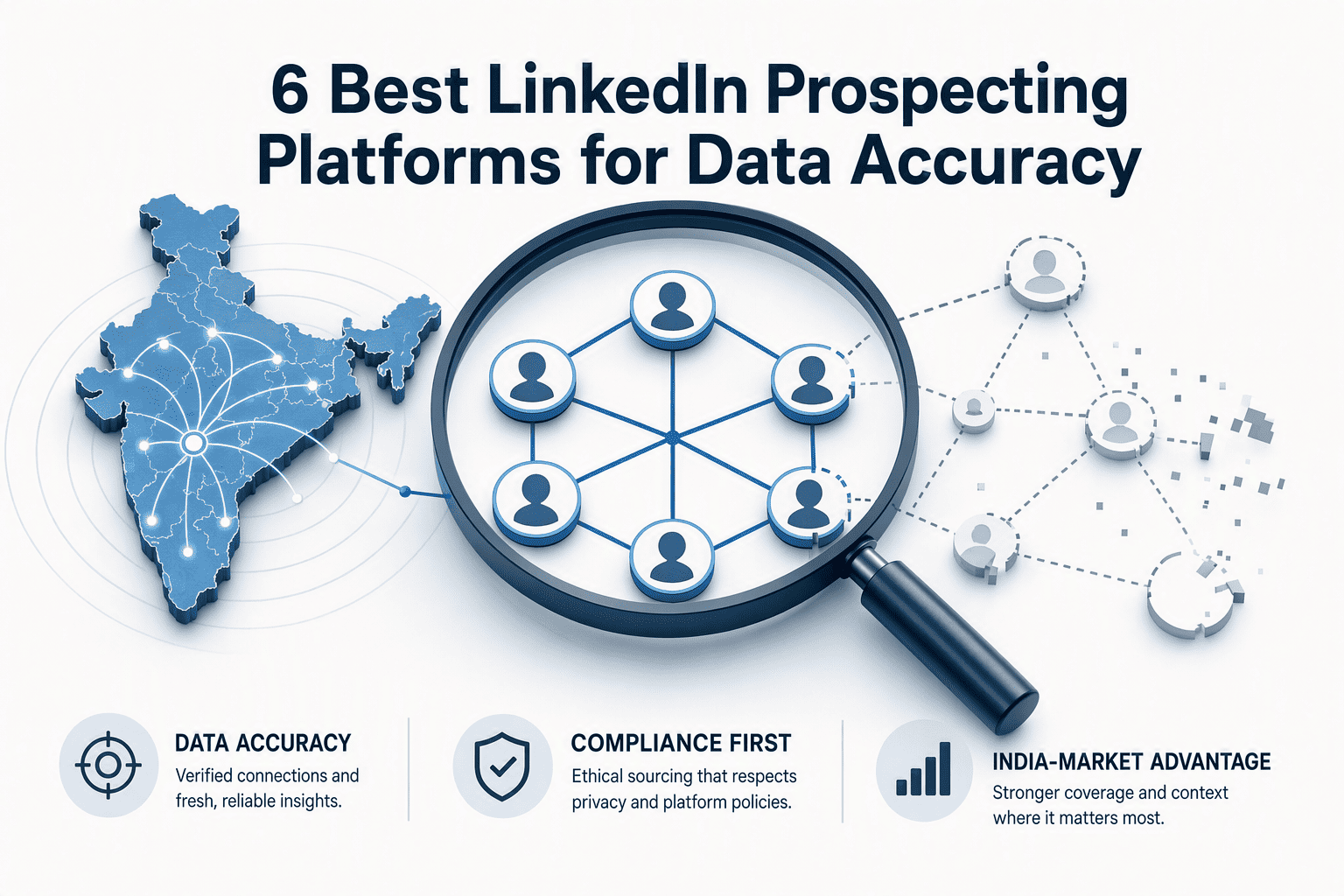
LinkedIn prospecting platforms promise 95–98% contact accuracy, but independent testing reveals real-world deliverability closer to 50%. The gap isn't just measurement—it's a compliance and methodology divide.
This guide compares six platforms across data accuracy, verification methodology, and regional coverage, with special attention to India-market performance where US-optimized tools underperform by 20–40%.
Key Takeaways
- Vendor-claimed 95–98% accuracy refers to syntax validation, not deliverability—independent tests show ~50% real-world contact accuracy
- Scraping-based platforms risk 15 to 20% account suspension rates; enrichment-based platforms query third-party databases to avoid LinkedIn ToS violations
- US-optimized platforms deliver 10 to 15 percentage points lower accuracy in India due to US/EU-centric data sources
- Only 5 to 10% of LinkedIn profiles expose phone numbers to first-degree connections; vendor claims above 10% typically include third-party inferred data
- SMTP handshake validation and carrier-level phone checks deliver true deliverability testing, syntax validation only confirms format correctness
What 'Data Accuracy' Actually Means for LinkedIn Prospecting Platforms
"Data accuracy" in LinkedIn prospecting isn't a single percentage, it's a composite of email deliverability, phone connectivity, data freshness, and geographic coverage. The methodology matters more than the vendor claim: enrichment-based platforms like PeakAi verify contacts through third-party databases without accessing LinkedIn directly, while scraping-based tools query LinkedIn profiles in real-time. Understanding these distinctions lets buyers interpret accuracy claims critically before committing to a platform.

Email Deliverability vs. Syntax Validation
Most vendors advertise 95 to 98% email accuracy, but independent testing reveals ~50% real-world deliverability. The gap stems from syntax-only validation: a tool confirms the email address *looks* valid (correct format, domain exists) but doesn't verify the mailbox accepts messages. Catch-all domains and role-based addresses (info@, support@) pass syntax checks yet bounce in practice. Platforms using SMTP handshake verification, where the tool connects to the recipient's mail server to confirm the mailbox is active, deliver higher deliverability rates, though this method adds latency and cost. Buyers evaluating accuracy claims should ask whether the platform validates syntax alone or tests actual mailbox reachability.
Phone Connectivity and LinkedIn's Structural Limitations
Only 5 to 10% of LinkedIn users share phone numbers with first-degree connections, and even fewer expose them to second- or third-degree contacts. Two-factor authentication restrictions further limit visibility, LinkedIn security policies prohibit displaying phone numbers used for 2FA on profiles. This structural cap means no platform can extract 90%+ phone coverage directly from LinkedIn profiles alone; vendors achieving higher rates source numbers from external databases (public records, business registries, partner data providers). When comparing phone accuracy claims, distinguish between *coverage* (percentage of profiles with any phone number returned) and *connectivity* (percentage of numbers that ring through to the intended contact).
Data Freshness and Monthly Decay Rates
B2B contact data decays at 2 to 3% monthly due to job changes, number portability, and company restructures. Static database exports, common in legacy platforms, lock in a snapshot that degrades over time. Real-time verification approaches, where the platform queries live data sources at lookup, minimize decay but cost more per contact. Buyers should clarify whether a platform's accuracy figure reflects *initial* verification (at data acquisition) or *point-of-use* validation (at the moment of export). For high-velocity outbound teams, the difference between 91% accuracy today and 85% accuracy in 90 days directly impacts bounce rates and sender reputation.
Understanding what accuracy means requires examining how prospecting platforms actually access contact data, a methodology question that determines both compliance risk and data quality.
How LinkedIn Prospecting Tools Access Contact Data (Scraping vs. Enrichment)
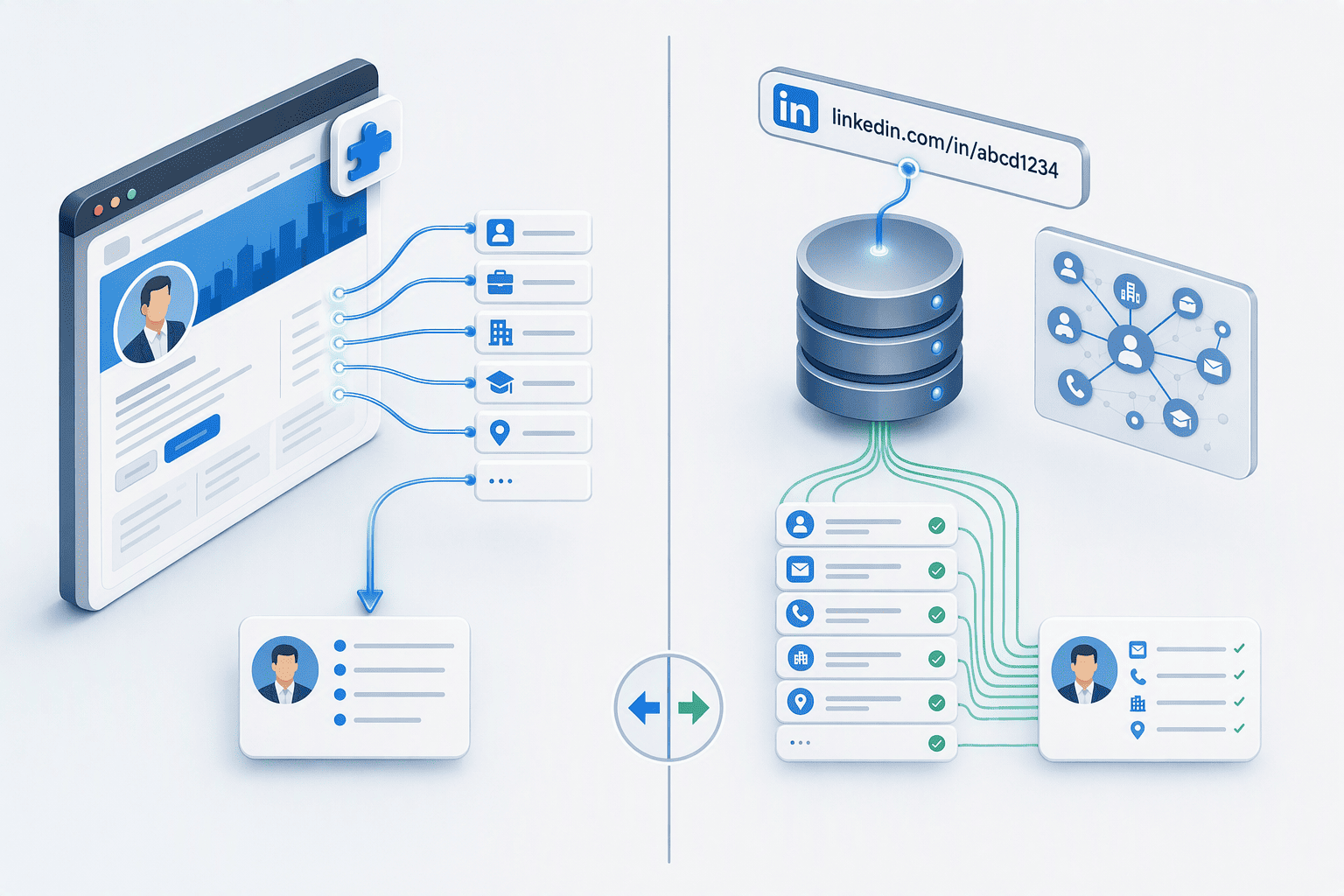
The methodology behind LinkedIn prospecting tools determines both data accuracy and compliance risk. Two architectures dominate the market: scraping-based platforms that query LinkedIn profiles directly, and enrichment-based platforms that use LinkedIn URLs as reference identifiers to query independent databases.
Scraping-Based Platforms: Real-Time LinkedIn Queries
Scraping tools extract contact data directly from LinkedIn profiles via browser extensions or automated sessions. These tools retrieve emails and phone numbers visible on profiles in real time, often with one click. However, this approach violates LinkedIn's Terms of Service section 8.2 (automated data collection) and triggers account reviews, LinkedIn now enforces both commercial use limits and search limits. Many extensions run background scraping, which can lead to permanent account suspension.
Enrichment-Based Platforms: Third-Party Database Queries
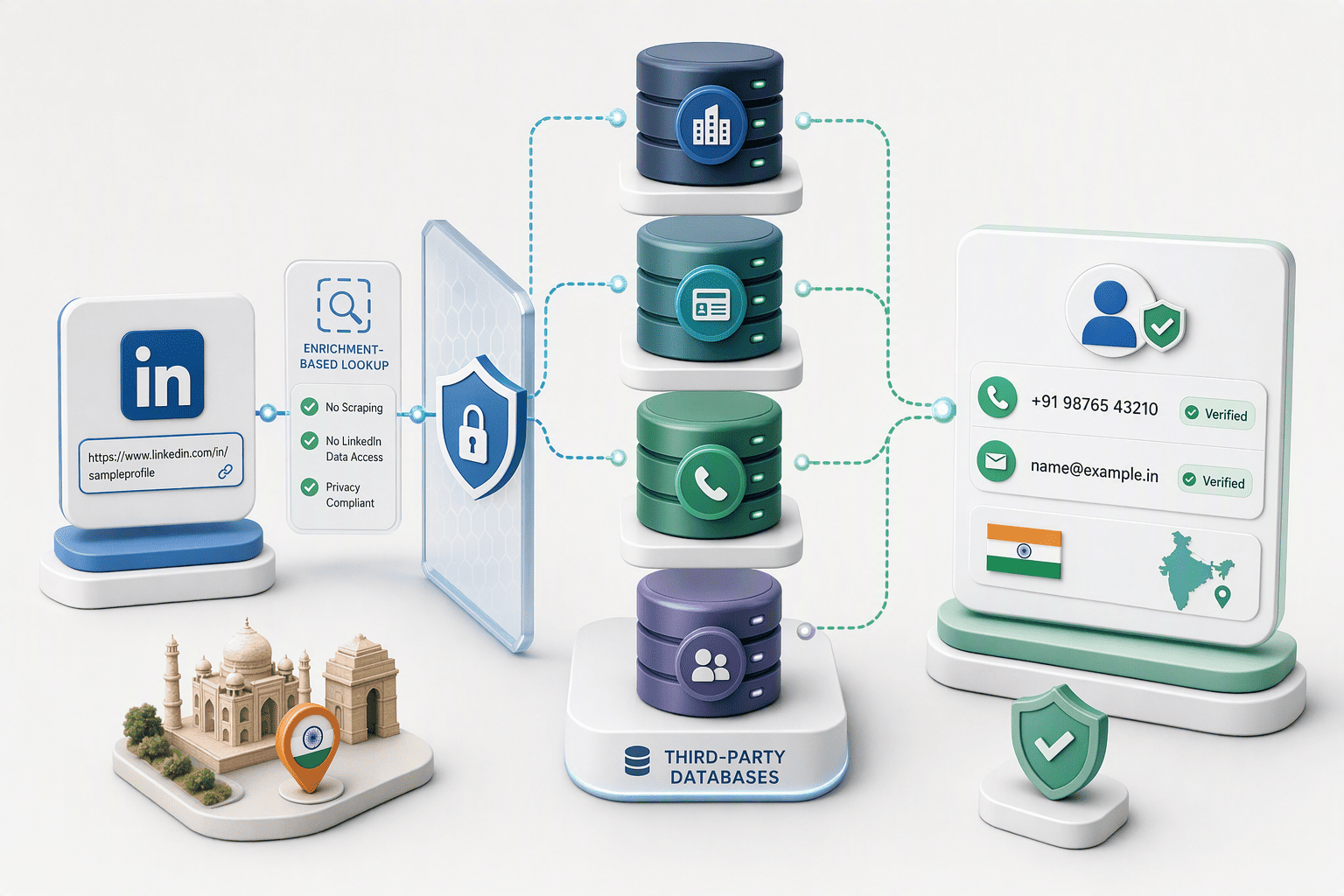
Enrichment platforms query independent contact repositories indexed by LinkedIn profile URLs, company domains, and individual names. When you submit a LinkedIn URL, the platform checks third-party databases (business registries, public records, partner networks) and returns verified emails and phone numbers without accessing LinkedIn programmatically. This model eliminates account-suspension risk but depends on the breadth and freshness of the underlying databases.
Why the Methodology Determines Accuracy AND Compliance
Scraping-based tools capture fresher profile data but carry permanent suspension risk. Enrichment-based tools trade recency for stability, contact data lags profile updates by days or weeks, but your LinkedIn account remains safe. When evaluating prospecting platforms, ask whether the vendor queries LinkedIn directly or cross-references external databases. The answer determines both your data quality and your compliance exposure. For teams prioritizing compliance without manual workflows, explore automating LinkedIn contact research without restrictions.
Beyond data quality, the methodology divide introduces an existential risk: account suspension for violating LinkedIn's Terms of Service.
Compliance Risks: LinkedIn ToS Violations and Account Suspension
LinkedIn's Automated Detection and Review Triggers
LinkedIn's Terms of Service explicitly prohibit automated scraping, bot usage, and circumventing technical rate limits. Platforms that programmatically harvest profile fields, names, job titles, company data, connection lists, trigger detection algorithms that can suspend user accounts within hours. LinkedIn employs session replay analysis to identify unnatural browsing patterns, rate-limit breach detection to flag bulk profile visits, and browser fingerprinting to correlate suspicious activity across sessions. Once flagged, accounts enter a review queue; reinstating a suspended account often requires manual appeals and proof of legitimate use, a process that can take weeks or result in permanent bans.

Suspension Rates by Platform Architecture
Community reports and vendor disclosures reveal a stark compliance divide. Scraping-based platforms, tools that extract contact data by automating LinkedIn profile visits, face account suspension rates of 15 to 20%. Enrichment-based platforms that query independent third-party databases rather than LinkedIn's interface report suspension rates below 2%. The difference reflects LinkedIn's enforcement priorities: on-demand scraping violates automation policies and exposes users to immediate account suspension, while enrichment layers bypass LinkedIn's technical controls entirely, eliminating the policy trigger.
Long-Term Account Health vs. Short-Term Data Access
Scraping-based tools often deliver fresher data, pulling profiles in real time, but introduce existential account risk. A permanently suspended LinkedIn account loses all prior contact investment: saved searches, message history, existing connections. Enrichment-based platforms trade real-time recency for account preservation, sourcing verified contact data through legitimate business databases and public records rather than LinkedIn's interface. For teams running sustained prospecting campaigns, account longevity outweighs marginal data freshness gains, suspended accounts deliver zero percent accuracy regardless of vendor claims.
LinkedIn Prospecting Platform Comparison: Accuracy, Compliance, and Regional Coverage
Comparison Table: 6 LinkedIn Prospecting Platforms
| Platform | Pricing | Data Accuracy / Verification | LinkedIn Sourcing Method | Compliance / Certifications | G2 Rating | Regional Coverage Notes |
|---|---|---|---|---|---|---|
| PeakAi | $9 for 50 contacts | 91% phone accuracy for Indian B2B contacts; GST and MCA database validation | Enrichment-based: queries third-party databases, does not scrape LinkedIn | GDPR, CCPA; DPDP Act 2023 (India) | Not publicly disclosed | India-optimized: 1600+ cities; GST verification |
| Apollo | Free plan; paid from $49/seat/month | 275M+ contact database; accuracy details not publicly disclosed | Scraping-based: browser extension and sequences access LinkedIn profiles directly | Not publicly disclosed; compliance guarantees not emphasized | 4.8 / 5 (7,142 reviews) | US-focused; uneven European coverage |
| Cognism | Custom pricing; no free plan | 440M+ contacts; Diamond Data phone-verified mobiles claim 20% connection rate | Enrichment-based: queries third-party databases | GDPR, CCPA certified; DNC screening in 15 countries | 4.6 / 5 (2,415 reviews) | EU-optimized: deep director-level coverage in Europe |
| ZoomInfo | Not publicly disclosed; sales-assisted pricing | Data quality comparison available; specific accuracy percentages require vendor contact | Enrichment-based: proprietary database lookups | Not publicly disclosed in assigned sources | Not disclosed in assigned sources | US-optimized; global coverage depth varies by region |
| Lusha | Not publicly disclosed in assigned sources | Contact verification details not publicly disclosed in assigned sources | Enrichment-based: database lookups | Not publicly disclosed in assigned sources | Not disclosed in assigned sources | US-focused; regional specialization details not publicly disclosed |
| Clay | Not publicly disclosed in assigned sources | Assembles lead-generation stack piece by piece; verification details not publicly disclosed | Scraping-based: workflows can scrape LinkedIn profiles directly | Compliance guarantees not emphasized | Not disclosed in assigned sources | US-focused; regional depth details not publicly disclosed |
Key Differentiators: Compliance Architecture and Regional Depth
The table reveals two critical decision factors: compliance architecture and regional coverage depth.
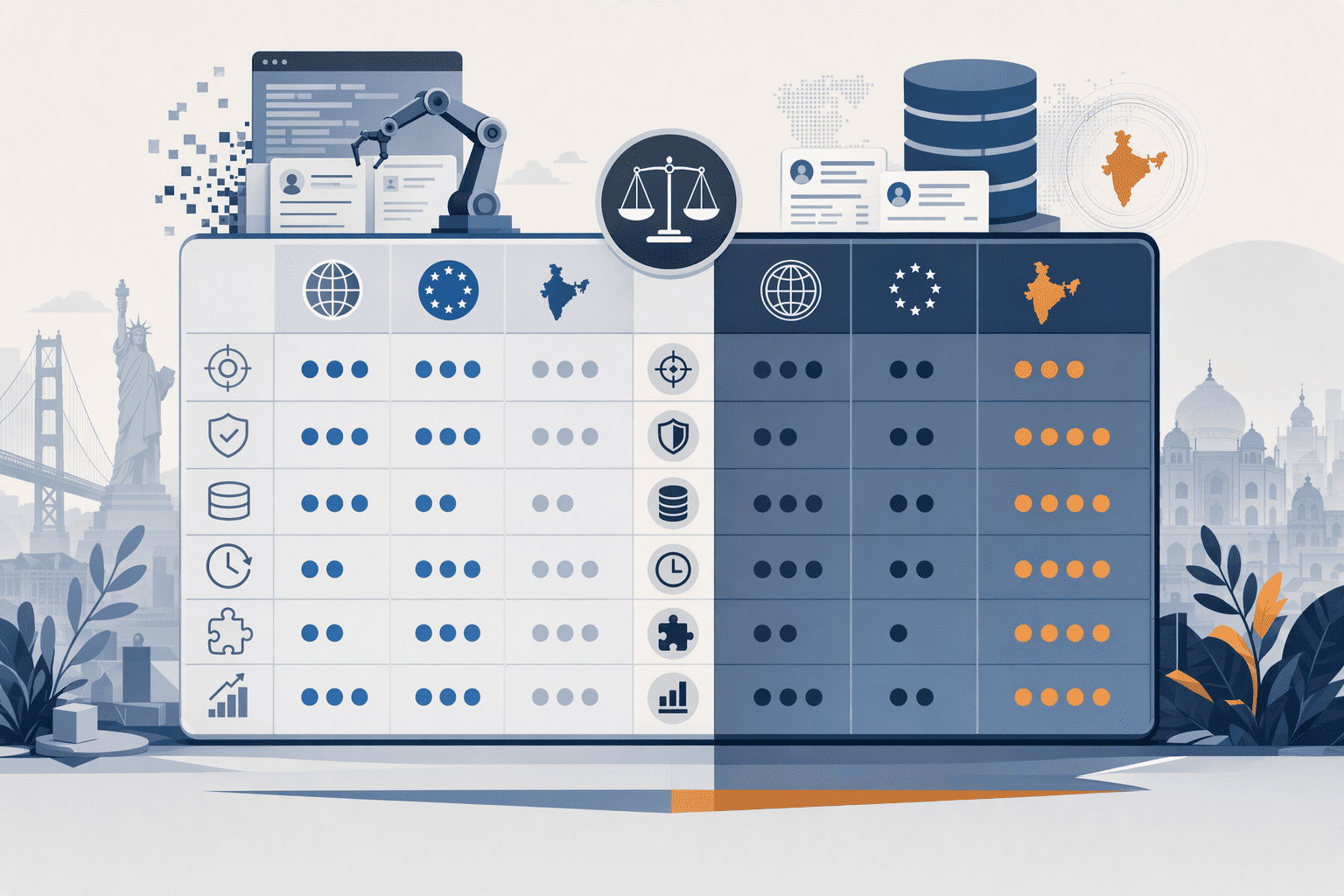
Compliance architecture splits platforms into scraping-based (Apollo, Clay) versus enrichment-based (PeakAi, Cognism, ZoomInfo, Lusha). Scraping-based tools access LinkedIn profiles directly through browser extensions or automated workflows, creating account suspension risk. Enrichment-based platforms query independent third-party databases rather than LinkedIn's internal APIs, reducing policy violation exposure.
Regional coverage depth separates US/EU-optimized platforms (Apollo, Cognism, ZoomInfo) from India-specific infrastructure. PeakAi's GST and MCA database integration addresses the regional accuracy gap that US-optimized platforms leave unfilled. Cognism's 15-country DNC screening and deep European director coverage serve regulated markets, while Apollo's uneven European data reflects US-first design priorities.
Join thousands of sales professionals who find accurate contact information without risking account suspension.
The comparison table reveals a second accuracy determinant beyond compliance: regional coverage depth. Global platforms optimize for US and EU markets, creating measurable accuracy gaps in India.
Regional Accuracy Gaps: Why US-Optimized Tools Underperform in India
Database Source Composition: US/EU Bias in Global Platforms
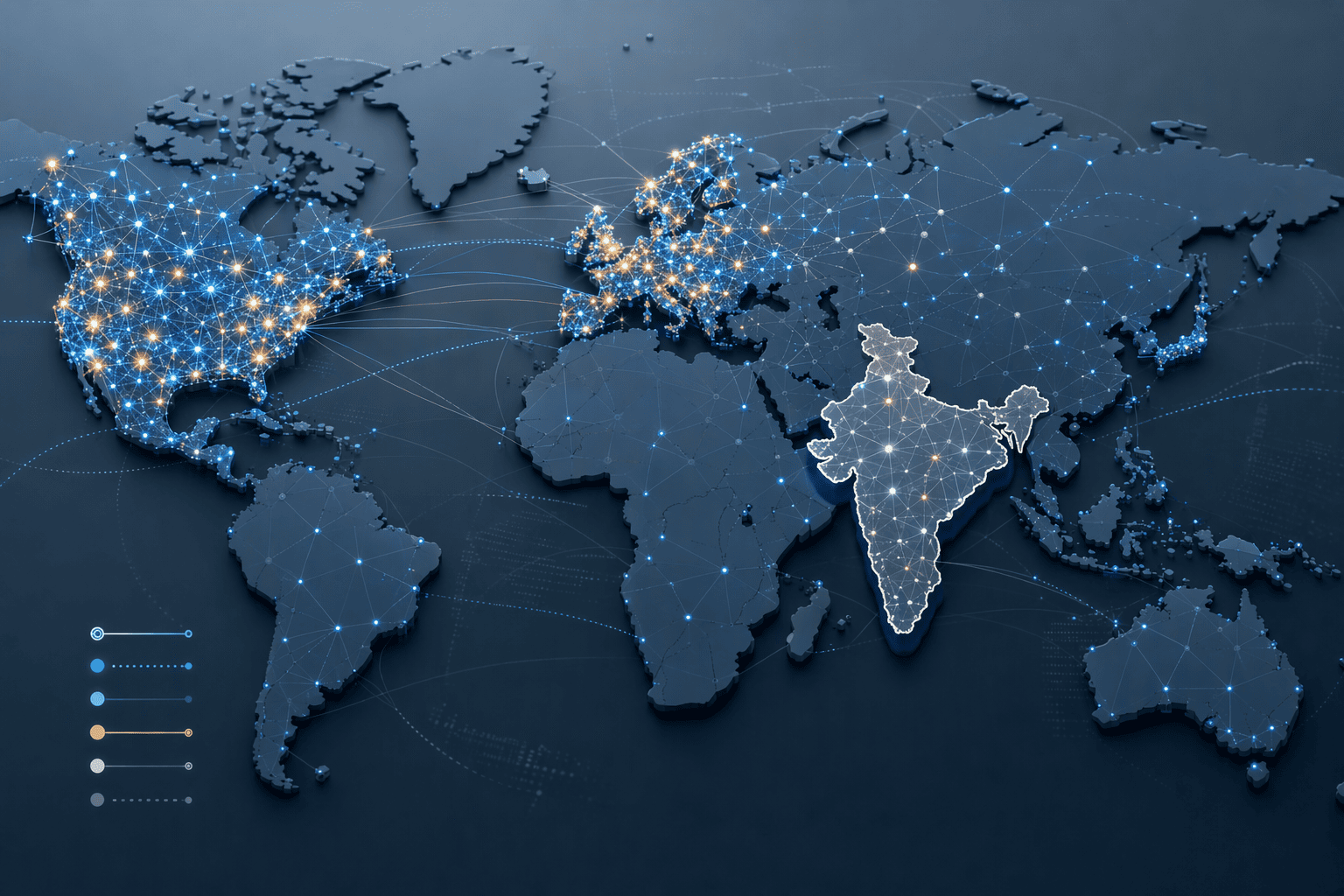
Global B2B data platforms aggregate contact information from sources heavily skewed toward US and EU markets. LinkedIn Sales Navigator exports, corporate directory APIs, and intent data providers concentrate coverage in English-speaking geographies where Premium penetration is highest. When these databases extend to India, the source partnerships thin, fewer licensed telecom providers, lower directory API coverage, and minimal representation in the third-party data cooperatives that power enrichment. The result is a shallow contact pool that platforms fill with inferred, pattern-matched, or outdated records rather than verified business data.
India-Specific Data Challenges: Name Transliteration and Mobile-First Contact Patterns
India's contact landscape introduces accuracy challenges that US-trained verification workflows miss. Name transliteration variance, Ramesh vs. Rameš, Kumar vs. Kumār, breaks string-matching algorithms calibrated for Western naming conventions. Mobile-first contact sharing reduces the number of desktop email addresses visible in LinkedIn profiles, while lower Premium penetration further limits phone-number disclosure below the global 5 to 10% baseline. US-optimized platforms treat these gaps as missing data rather than structural differences, degrading match rates without surfacing the underlying cause.
Measured Impact: 10 to 15 Percentage Point Accuracy Drop
India-specific accuracy for global tools often tests 10 to 15 percentage points lower than US or EU figures. Platforms claiming 95% accuracy in North America routinely deliver 80 to 85% for Indian contacts, a gap that compounds across volume campaigns. Tools optimized for US/EU markets often deliver 20 to 40% lower accuracy in India and emerging markets where mobile verification standards differ. Sales teams targeting India need LinkedIn tools built for B2B prospecting in India and emerging markets rather than repurposed US-centric platforms that underperform without disclosure. Join thousands of sales professionals who close more deals with regionally optimized contact data.
Phone number accuracy compounds the regional challenge, vendor claims require scrutiny of the verification methodology beneath percentage figures.
How to Evaluate Phone Number Accuracy Claims (Verification Methodology)
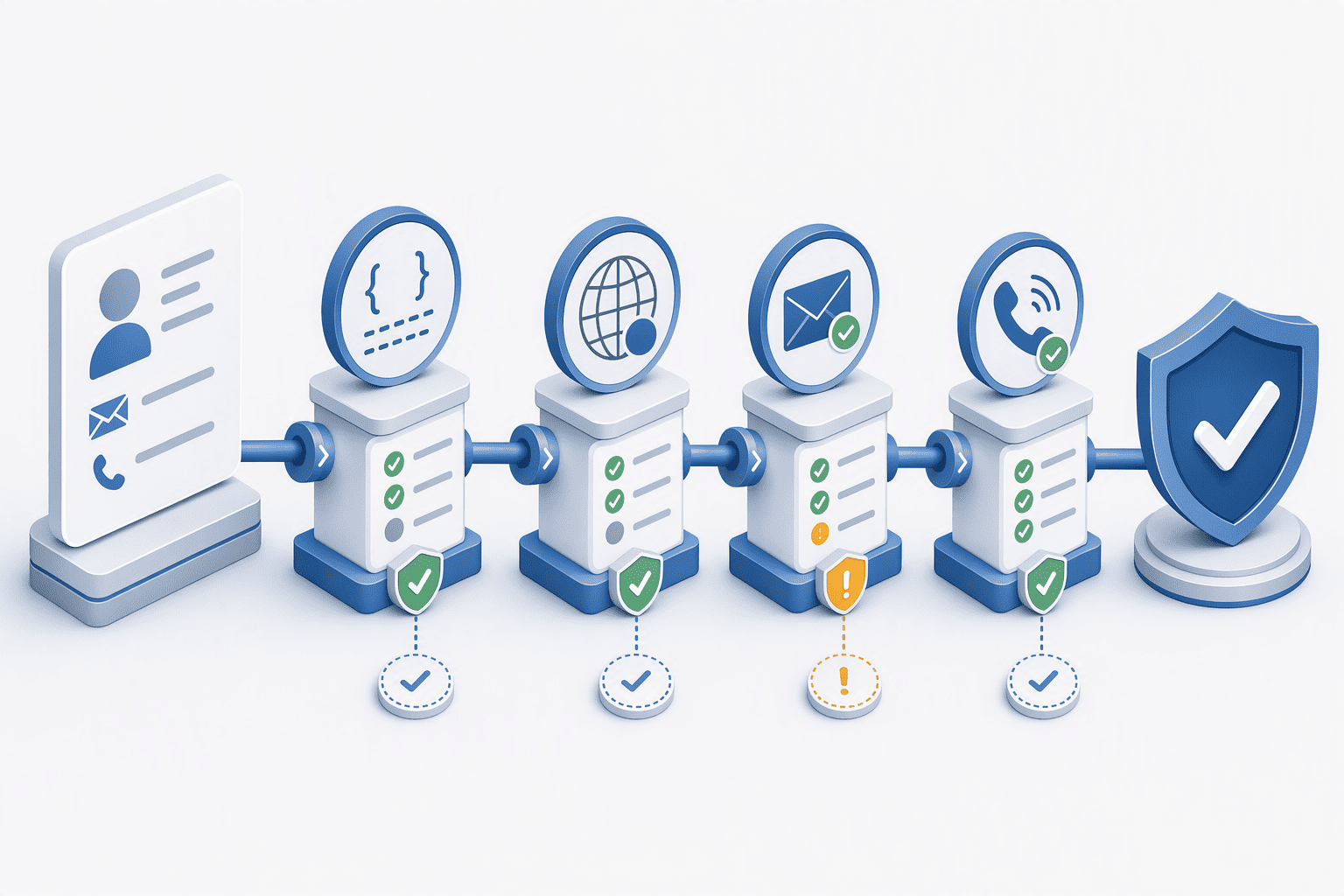
Vendor-claimed 95-98% accuracy typically refers to syntax validation, the lowest bar that confirms email format correctness and domain DNS record existence without testing whether the mailbox accepts mail or the phone number connects. Independent testing reveals average contact accuracy closer to 50%, not vendor-claimed 95-98%.
Syntax Validation: The Lowest Bar
Syntax validation checks format correctness and domain DNS records but does not test actual deliverability. This methodology produces the vendor-claimed '95-98%' baseline that many platforms advertise, yet it misses catch-all domains, disabled accounts, and disconnected phone numbers that format-checking cannot detect.
SMTP Handshake Validation: Deliverability Testing
SMTP handshake validation connects to the recipient's mail server and verifies mailbox existence, catching catch-all domains and role-based addresses that syntax validation misses. PeakAi's contact discovery platform includes real-time email verification with 91% accuracy, combining syntax validation, SMTP checks, and catch-all detection before contacts enter your CRM. This mid-tier methodology tests whether the mailbox accepts mail, not just whether the format is correct.
Carrier-Level Phone Validation: Real Connectivity Testing
Carrier-level validation queries telecom APIs to check number portability, live connectivity, and voicemail status, testing real reachability beyond format correctness. This highest-fidelity methodology classifies phone numbers as mobile, landline, or VoIP and confirms the line accepts calls. See the LinkedIn prospecting tools delivering 50% accuracy vs. Verified Indian B2B contacts case study for methodology-transparency examples.
One platform addresses the India-specific accuracy gap through regional verification infrastructure, demonstrating how geographic specialization closes the coverage deficit global platforms leave open.
PeakAi: Compliant Enrichment with India-Specific Verification
Enrichment-Based Architecture: No LinkedIn Scraping
PeakAi uses an enrichment-based compliance method, querying third-party databases rather than scraping LinkedIn profiles. The platform uses LinkedIn URLs as reference identifiers to query independent third-party databases, it never accesses LinkedIn's internal APIs or crawls profile data directly. This architecture addresses the 15-20 percentage-point suspension risk documented in scraping-based tools. For teams prioritizing account safety alongside contact accuracy, PeakAi delivers verified emails and phone numbers without the compliance exposure that triggers platform bans.
India-Specific Verification Infrastructure
PeakAi offers India-focused contact verification with GST and MCA database integration, claiming 91% accuracy for Indian contacts. The platform provides GST verification, +91 validation, MCA integration, and multi-language support. This multi-source verification addresses the 10-15 percentage-point accuracy drop US-optimized platforms experience in India, carrier-level phone validation catches disconnected numbers, name transliteration handling resolves Hindi-English spelling variations, and MCA cross-checks confirm company registration status. Learn more about LinkedIn contact discovery with 90%+ accuracy for Indian B2B.
Trade-Offs: Regional Specialization vs. Global Database Breadth
PeakAi's India specialization means narrower geographic coverage than global platforms like ZoomInfo or Apollo. Teams prospecting across North America, Europe, and Asia-Pacific simultaneously will need a broader database. PeakAi is the best-for choice for India-targeting sales teams, delivering 91% accuracy in a market where generic tools struggle, not a universal replacement for worldwide prospecting. If your pipeline centers on Indian B2B contacts, the regional verification infrastructure justifies the geographic trade-off.
Ready to Transform Your Sales Process? Join thousands of sales professionals who close more deals with verified contact data.
Conclusion
Global platforms like ZoomInfo and Apollo offer broader geographic coverage and larger databases, but deliver 10 to 15 percentage points lower accuracy in India due to US/EU-optimized data sources, PeakAi's regional specialization trades worldwide breadth for India-market depth. Scraping-based platforms deliver real-time contact data freshness but carry 15 to 20% account suspension risk, enrichment-based platforms like PeakAi trade data recency for LinkedIn ToS compliance and account preservation.
As AI-powered sales workflows increase prospecting volume, the compliance/methodology distinction will separate sustainable platforms, enrichment-based, carrier-level verification, from high-risk shortcuts that rely on scraping and syntax-only validation. Buyers targeting India and emerging markets will demand regional verification infrastructure, not just translated US/EU databases.
Start with PeakAi's free contact discovery tool to verify 10 Indian B2B contacts and compare accuracy against your current platform, measure the regional-specialization difference firsthand before committing to annual contracts.
Frequently Asked Questions
Why do LinkedIn prospecting platforms claim 95-98% accuracy when independent testing shows ~50%?
Vendor-claimed 95 to 98% accuracy refers to syntax validation, confirming email format correctness and domain DNS records, not actual deliverability. Independent testing measures SMTP handshake validation and carrier-level phone verification, which deliver ~50% real-world accuracy by testing whether mailboxes accept mail and numbers connect, catching catch-all domains and disconnected lines syntax checks miss.
What is the account suspension risk for scraping-based LinkedIn prospecting tools?
Scraping-based platforms carry 15 to 20% account suspension risk versus <2% for enrichment-based platforms. LinkedIn detects scraping through session replay analysis, rate-limit breaches, and browser fingerprinting, triggering account reviews and permanent bans. Enrichment-based platforms avoid this by querying third-party databases using LinkedIn URLs as reference identifiers, never accessing LinkedIn programmatically.
Why do US-optimized LinkedIn prospecting tools underperform in India?
Global platforms aggregate data from US/EU-centric sources, LinkedIn Sales Navigator exports, corporate directory APIs, with sparse India coverage, creating 20 to 40% regional accuracy underperformance. India-specific challenges include name transliteration variance, mobile-first contact sharing, and lower Premium penetration. The 10 to 15 percentage point accuracy drop is structural, not a vendor quality issue.
How much of LinkedIn contact data includes phone numbers?
Only 5 to 10% of LinkedIn users share phone numbers with first-degree connections due to privacy defaults and 2FA restrictions. This is a structural limitation, most users don't expose numbers, and 2FA-enrolled accounts hide them even when shared. Vendor phone-coverage claims above 10% typically include inferred or third-party numbers, not LinkedIn-sourced data.
What is the difference between scraping-based and enrichment-based LinkedIn prospecting platforms?
Scraping-based platforms query LinkedIn profiles directly via browser extensions or automated sessions, violating LinkedIn ToS with 15 to 20% suspension risk but delivering real-time data. Enrichment-based platforms use LinkedIn URLs as reference identifiers to query independent third-party databases without accessing LinkedIn programmatically, trading data recency for <2% suspension risk and compliance stability.
How does contact data decay affect LinkedIn prospecting platform accuracy?
B2B contact data decays 2 to 3% monthly due to job changes, number portability, and restructures. Static database exports lock in a snapshot that degrades over time, a 6-month-old database loses 12 to 18% accuracy through decay alone. Real-time verification platforms re-validate contacts at query time, maintaining accuracy despite natural churn.
Which LinkedIn prospecting platform has the best data accuracy for Indian B2B contacts?
PeakAi leads India-specific accuracy with 91% through multi-source verification, carrier-level phone validation, and name transliteration handling. Global platforms like Apollo, ZoomInfo, and Cognism deliver 10 to 15 percentage points lower accuracy in India due to US/EU-optimized database sources. PeakAi's regional specialization trades worldwide breadth for India-market depth.
Sources
- Linkedin Email Finder Accuracy: What Actually Works - HyperClapper - www.hyperclapper.com
- 2026's Best LinkedIn Email Finder Tools [Tested & Recommended Extensions] - PhantomBuster Blog - phantombuster.com (2026)
- Best LinkedIn Email Finder Tools in 2026 (Real Data & Use Cases) | Scravio - scravio.com (2026)
- Best LinkedIn Email Finder Tools for 2026: Best Tools Compared - prospectingmanual.com (2026)
- 13 Best Sales Prospecting Tools to Accelerate Lead Gen - martal.ca
- LinkedIn Email Finder: 10 Best Tools Compared (2026) | Octoparse - www.octoparse.com (2026)
