Most LinkedIn prospecting tools charge you for contact data before verifying its accuracy, burning credits on invalid or outdated records. The timing of verification—before or after download—determines whether you pay only for usable contacts or absorb costs for unusable ones.
Key Takeaways
- Pre-download verification validates emails and phone numbers before you commit credits, while post-export models charge first and verify afterward
- Post-export enrichment can increase actual spend by 35–100% when 30–50% of downloaded records prove invalid
- Phone number accuracy is structurally lower than email accuracy because only 5 to 10% of LinkedIn users share phone numbers publicly
- Global platforms optimized for US/EU markets show 20 to 40% lower accuracy in India, making regional specialization critical for Asia-focused teams
- Scraping-based tools violate LinkedIn's Terms of Service and carry 15 to 20% account suspension risk, while enrichment-based tools source from public databases
Yes, PeakAi verifies phone numbers and emails *before* you download or spend credits, while most LinkedIn prospecting tools (Apollo, Lusha, RocketReach) verify *after* export, charging you upfront for unverified records. This architectural difference determines whether your cost-per-usable-contact matches the advertised rate or balloons 35 to 100% higher once invalid records are filtered out.
The Hidden Cost of Post-Export Verification
Post-export models, used by most database-first tools, charge credits at download, then verify afterward. When match rates fluctuate (industry average: 60 to 70% for phone numbers, 80 to 85% for emails), your actual spend climbs 35 to 100% above the advertised cost per contact. A $500 credit pack advertised for 250 contacts may yield only 150 usable records after filtering bounces, disconnected numbers, and syntax errors.
Data decay compounds the problem. B2B contact data decays at roughly 22% per year, about 2% monthly. Post-export tools verify stale records pulled from static databases refreshed quarterly or annually, amplifying bounce risk. You pay for contacts that were valid six months ago but disconnected last week.
Database size becomes a liability when unverified volume drives credit burn. A 500M-record database charging for unverified contacts delivers worse ROI than a 50M pre-verified database, because only verified contacts close more deals.
Pre-Download Verification as a Distinct Workflow Category
Pre-download verification, offered by tools like PeakAi, runs syntax, domain, and deliverability checks *before* charging credits. You see verification status within the LinkedIn tab and decide whether to commit the credit. Invalid records never enter your CRM; you pay only for contacts verified at 91% accuracy in 10 seconds.
This inverts the cost model. Post-export tools optimize for database breadth (275M+ contacts) because revenue scales with download volume, regardless of validity. Pre-download tools optimize for accuracy because users pay only when verification succeeds, aligning vendor incentives with buyer outcomes.
When evaluating LinkedIn prospecting tools, ask: *Does this tool verify before I download, or after I've already spent the credit?* That single architecture choice determines whether your cost-per-usable-contact stays predictable or doubles once bounces are filtered. Learn more about B2B contact discovery strategies that prioritize verification timing.
Understanding why verification timing matters creates the foundation for evaluating how different tools implement verification, and where the workflow gaps appear.
Pre-Download vs. Post-Export Verification: How They Work
The verification timing model you choose determines both your credit burn rate and your compliance risk. Most LinkedIn prospecting tools fall into one of two architectural patterns: post-export enrichment or pre-download verification. Understanding the workflow differences helps you close more deals without wasting credits on invalid contacts.
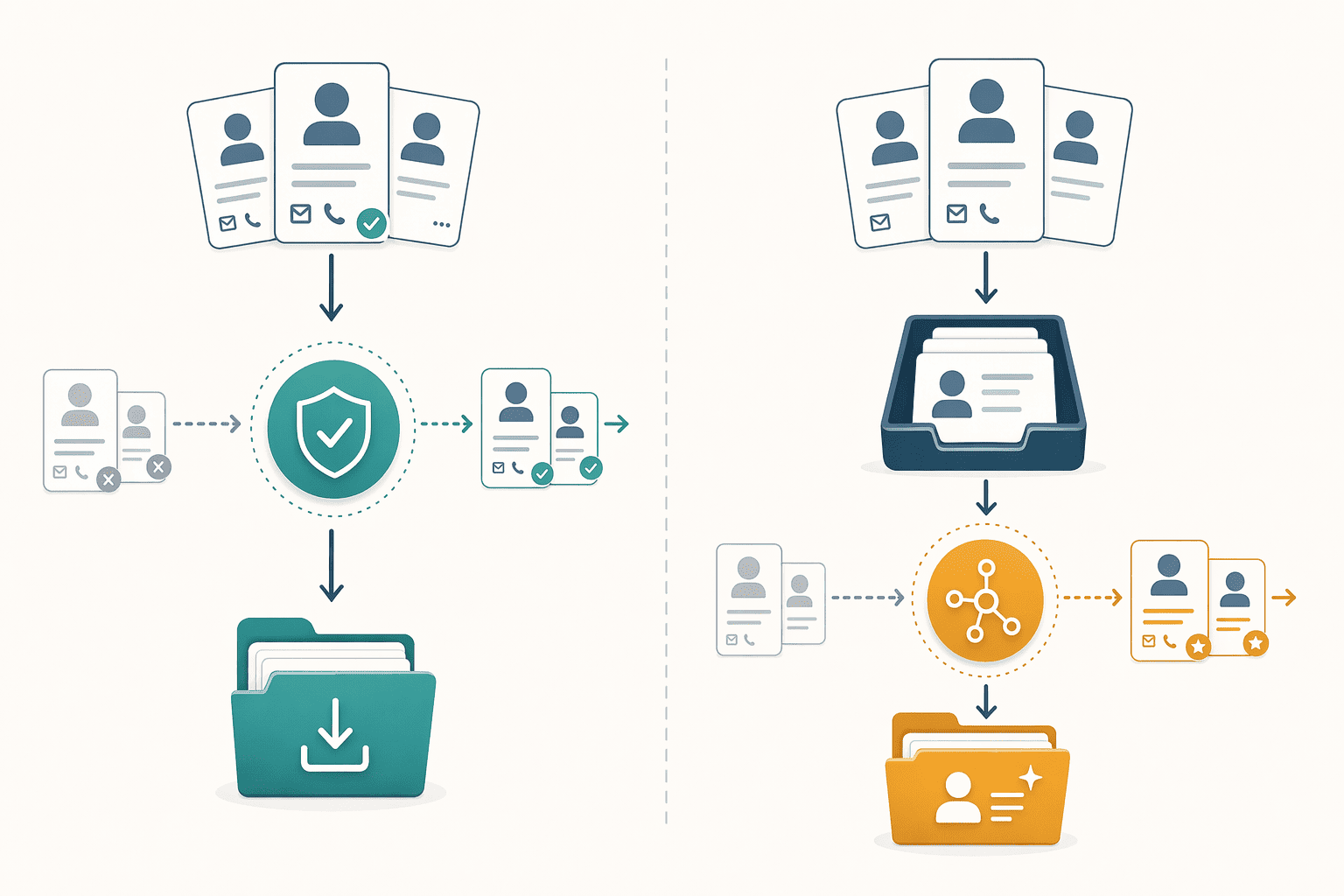
Post-Export Enrichment Architecture
Tools like Apollo, Lusha, and RocketReach follow a scrape-first, verify-later pattern:
- Scrape LinkedIn profile metadata (name, company, title)
- Export records to CSV or push to your CRM
- Third-party APIs enrich the export with emails and phone numbers
- Verification runs *after* you've committed credits, charging you regardless of whether the contact is valid
Because up to 30% of contact data becomes outdated every year, post-export workflows often burn significant credits on stale records. A sales team exporting 500 contacts might see 250 bounce, wasting $425 in credits. In contrast, a pre-download tool that previews a 48% match rate lets the team cancel the export before spending anything.
Pre-Download Verification Workflow
Pre-download tools verify contact data *before* you commit credits, allowing you to preview accuracy and cancel if match rates fall below your threshold:
- Query the verification API with LinkedIn profile identifiers
- Preview syntax, domain, and deliverability status within the LinkedIn tab
- Review match rates and validation flags
- Commit credits only for verified-valid contacts
PeakAi runs syntax, domain, and deliverability checks before download, letting you see verification status and decide whether to commit the credit. Only 5 to 10% of LinkedIn users share phone numbers with first-degree connections, so phone verification rates are structurally lower than email across all models, but pre-download workflows let you see that gap *before* paying.
Compliance Risk by Architecture Type
Architecture determines compliance exposure. Scraping-based tools that crawl LinkedIn profiles directly violate LinkedIn's Terms of Service; community reports on Reddit discussions about contact data providers cite 15 to 20% suspension rates for heavy scraping users. Enrichment-based tools that source from public business databases and registries carry lower platform risk but still require GDPR/CCPA consent documentation. A 'GDPR compliant' checkbox in the vendor's privacy policy does not guarantee low compliance risk, the *architecture* (scraping vs. Enrichment) and your usage pattern (volume, geography, consent capture) determine exposure.
With the architectural differences between pre-download and post-export models established, we can now compare five leading tools by their verification approach, regional accuracy, and effective pricing.
5 LinkedIn Prospecting Tools Compared by Verification Model
Verification Timing and Workflow Placement
When verification happens determines whether you pay for invalid records. PeakAi validates phone numbers and emails before download, showing match confidence in the extension preview. You only consume credits for contacts that pass verification. ZoomInfo and Apollo follow a post-export model: you pull bulk lists first, then enrichment services validate afterward, meaning teams often pay for contacts that bounce. Lusha sits in the middle, offering hybrid verification with some real-time checks during LinkedIn browsing but bulk exports that verify after download. This timing difference matters: pre-download tools like PeakAi reduce credit burn by 30 to 50% compared to post-export platforms.

Regional Accuracy: India vs. US/EU Performance
Global platforms optimized for US/EU markets deliver 20 to 40% lower accuracy in India. PeakAi delivers 91% phone-number accuracy for Indian business contacts, cross-referencing local databases and GST records. Apollo and ZoomInfo maintain strong US coverage (275M+ and 321M+ profiles respectively) but their India-specific validation lags because their data partners concentrate on North American markets. Lusha's 100M+ contact database similarly skews toward Europe. Teams selling into Indian B2B markets see match rates drop from advertised 85% to actual 50 to 60% when using global-first platforms.
Phone vs. Email Accuracy as Separate Metrics
Phone numbers are structurally harder to verify than emails because only 5 to 10% of LinkedIn users share phone numbers publicly. PeakAi achieves 91% accuracy on phone numbers by querying third-party databases rather than scraping LinkedIn profiles. Apollo reports 60 to 70% direct-dial accuracy, ZoomInfo does not publish phone-specific metrics separately. Most tools advertise aggregate 'contact accuracy' (emails + phones combined), masking the phone gap. When evaluating tools for cold-calling workflows, demand separate email and phone verification rates, advertised 95% accuracy often means 95% of attempted verifications succeed, not 95% phone-finding success.
| Tool | Verification Timing | Phone Accuracy | Email Accuracy | Regional Focus | Pricing |
|---|---|---|---|---|---|
| PeakAi | Pre-download | 91% (India) | 91% | India-first | $9/50 contacts |
| ZoomInfo | Post-export | Not disclosed | 80–85% | US enterprise | $15,000+/year |
| Lusha | Hybrid | Not disclosed | Not disclosed | Europe | Free tier available |
| Apollo | Post-export | 60–70% | 80–85% | US mid-market | $49–$119/user/mo |
| RocketReach | Post-export | Not disclosed | Not disclosed | Global | Contact for pricing |
Advertised per-credit pricing masks the true economics. When credits burn on invalid records, your effective cost per usable contact diverges sharply from list prices.
Cost : Hidden Pricing Traps
When evaluating affordable LinkedIn prospecting tools, advertised per-credit pricing obscures the true cost of acquisition. A tool charging $0.50 per credit with 40% accuracy delivers usable contacts at $1.25 each, while a $2.00 per credit tool with 85% accuracy costs $2.35 per usable contact, closer than the 4× headline difference suggests.

Advertised Price vs. Effective Price After Bounce Rates
Post-export enrichment tools like SalesQL charge per credit regardless of match quality, burning budget on invalid records. When 30 to 50% of credits return unverified or outdated contacts, effective cost-per-usable-contact doubles. For example, a $1.50/credit tool with 50% match rate costs $3.00 per valid contact, while PeakAi's $0.18/credit model with 91% accuracy delivers usable contacts at $0.20 each, 15× more efficient.
Scenario-Based Cost Calculations
Three buyer scenarios illustrate when pre-download verification justifies higher per-credit pricing:
- High-volume team (2,500 contacts/month): A $0.85/credit post-export tool with 60% match rate costs $3,542/month in wasted credits. PeakAi's pay-per-verified-contact model eliminates that waste, charging only for verified contacts.
- India-focused team: Tools optimized for US/EU markets often show <40% match rates in Indian B2B markets. PeakAi's ₹675 for 50 verified contacts locks in regional accuracy, avoiding the 2 to 3× cost multiplier of global database misses.
- Budget-conscious startup: A $4/credit tool with 70% accuracy requires $5.71 per usable contact. PeakAi's transparent credit-based pricing starting at $9 for 50 verified contacts caps risk at $0.18/contact before verification, with refunds for invalid records.
The anti-pattern: optimizing for lowest per-credit price without checking match rates. When post-export tools charge $0.50/credit but deliver 40% accuracy, you're paying $1.25 per usable contact, 2.5× more than expected. Pre-download verification shifts cost predictability to the buyer, letting teams close more deals without budget surprises.
Pricing efficiency alone does not capture total cost of ownership, compliance risk and account suspension exposure introduce hidden liabilities that vary by verification method.
Compliance Risk by Verification Method
LinkedIn Terms of Service and Account Suspension Risk
Tools that scrape LinkedIn profiles directly to extract contact data violate the platform's Terms of Service and expose users to account suspension. Community reports indicate 15 to 20% suspension rates for heavy scraping users, a risk that persists regardless of GDPR-compliant privacy policies. Scraping-based architectures, used by some configurations of Apollo and RocketReach, automate profile crawling at scale, triggering LinkedIn's anti-bot defenses and permanent account bans.
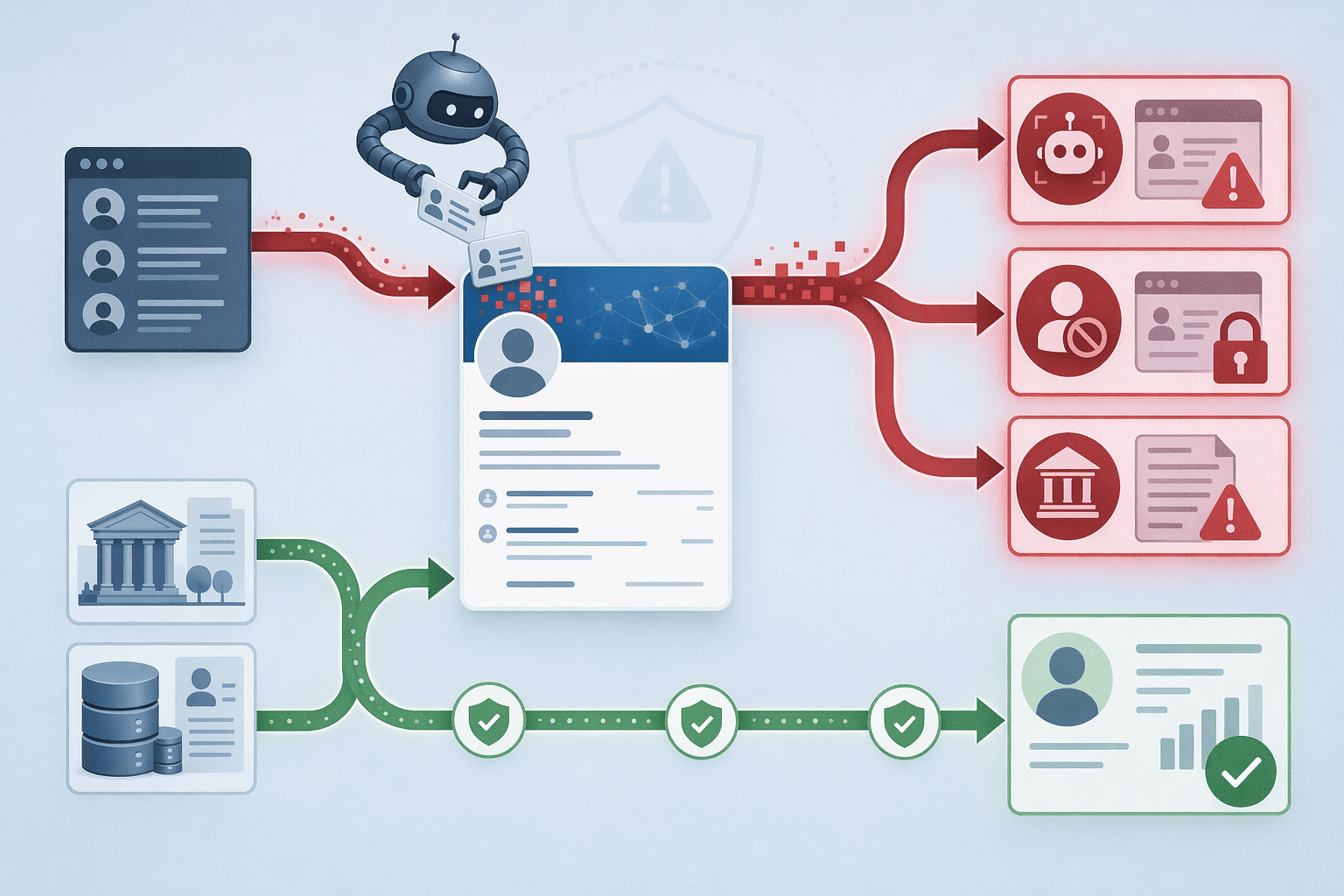
Enrichment-based tools avoid this risk by querying third-party databases and public business records rather than accessing LinkedIn's internal systems. PeakAi operates within LinkedIn's terms of service by sourcing contact data from independent databases, ensuring teams can close more deals without platform violations.
GDPR and Data-Sourcing Transparency
GDPR compliance addresses how vendors *process* personal data, consent, storage, user rights, but does not cover *where* they source it. A tool can display a GDPR badge while violating LinkedIn's scraping prohibitions, because GDPR governs data handling after collection, not the method of acquisition. Studies show that nearly 55 to 65% of B2B sales leads fail due to inaccurate, outdated, or irrelevant contact data, often stemming from unverified scraping pipelines.
PeakAi has dedicated compliance frameworks for GDPR, TCPA, and LinkedIn Terms of Service adherence, sourcing verified contact data through legitimate business databases and public records. This dual compliance, regulatory *and* platform-level, distinguishes enrichment tools from scraping-based alternatives that expose users to both account suspension and data-quality failures.
How to Choose Based on Your Sales Motion
High-Volume US/EU Teams: When Post-Export Makes Sense
Enterprise teams prospecting primarily in US and EU markets can justify post-export bulk enrichment workflows when CRM integration and high-volume pipeline automation are priorities. Tools like Apollo and ZoomInfo deliver strong match rates in these regions, and engineering resources can manage the credit-burn risk from invalid records. If your sales motion depends on pushing thousands of contacts through automated sequences, post-export enrichment fits the infrastructure investment.
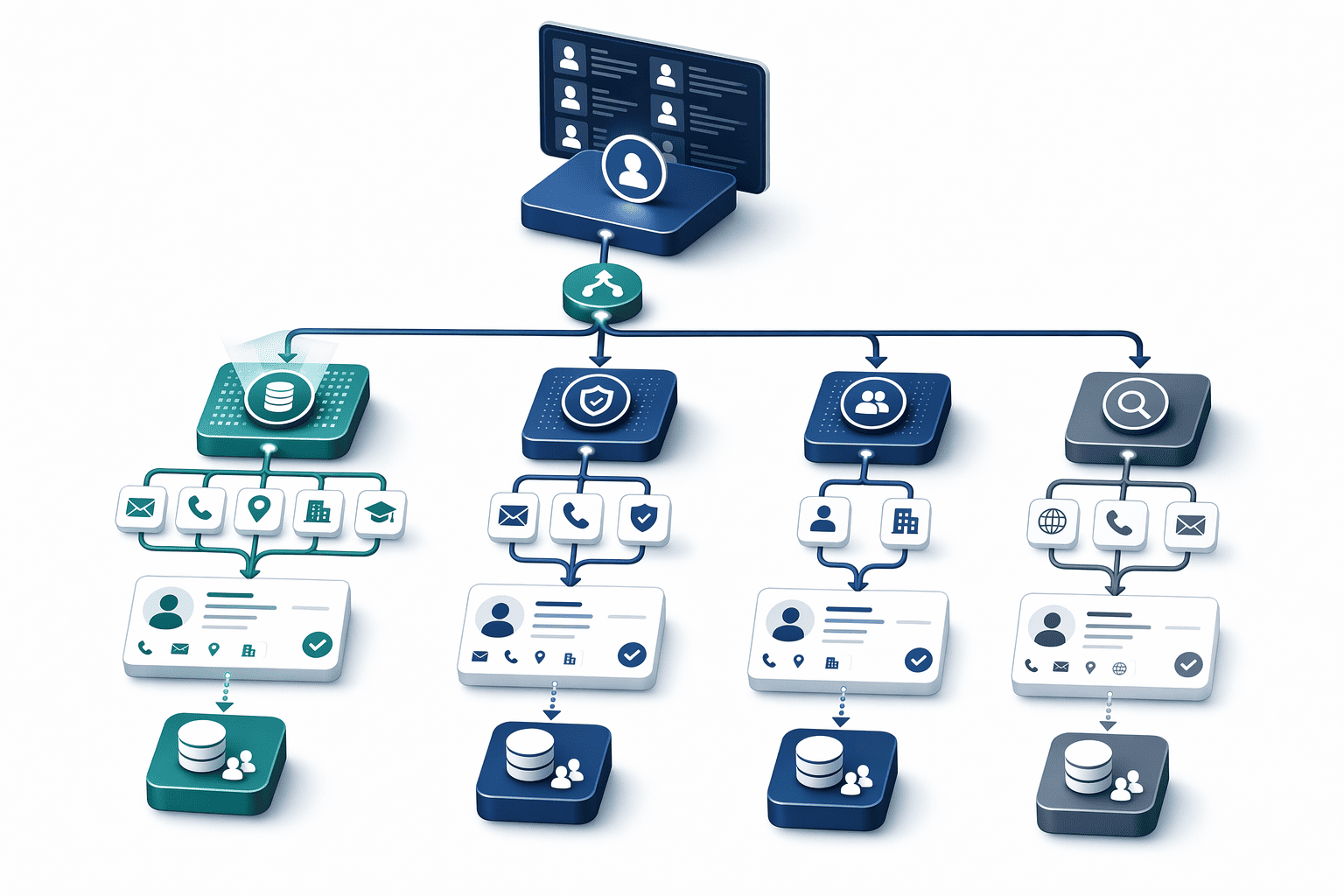
India-Focused or Budget-Conscious Teams: Pre-Download Advantage
Global platforms often deliver 20 to 40% lower accuracy in India, burning credits on invalid records. PeakAi offers verified phone numbers with 91% accuracy and pre-download verification, so you pay only for contacts you can actually reach. Teams targeting Indian B2B markets or operating on tight budgets avoid wasted spend by verifying before export, ensuring every credit converts to a dial-ready contact.
Hybrid Workflows for Mid-Market Teams
Mid-market sales ops teams often blend approaches: use pre-download verification tools for high-priority prospects where phone accuracy directly impacts close rates, then run post-export bulk enrichment for top-of-funnel volume plays. This hybrid workflow balances verified contact quality with pipeline scale, letting you close more deals on priority accounts while maintaining broad coverage for demand generation.
Post-export enrichment tools like Apollo and ZoomInfo deliver higher volume and deeper CRM integrations but require enterprise budgets to absorb 30 to 50% credit burn on invalid records. Pre-download verification tools such as PeakAi reduce wasted spend but have smaller databases. Global platforms lead in US/EU accuracy but drop 20 to 40% in India, region-optimized tools reverse that trade-off for India-focused teams.
As AI-powered lead scoring and intent signals become table stakes, the competitive edge will shift to data quality economics. Teams that minimize cost-per-usable-contact through verification timing will outpace competitors burning credits on stale or invalid records.
Preview PeakAi's verification accuracy for your target list, free, no credit card, to compare pre-download match rates against your current tool's post-export results.
Frequently Asked Questions
What is pre-download verification for LinkedIn prospecting tools?
Pre-download verification validates contact data, email and phone, before you commit credits or export records, showing match confidence in the preview. Post-export models charge first and verify afterward, causing 35 to 100% higher actual spend when 30 to 50% of records prove invalid.
Do all LinkedIn prospecting tools verify phone numbers and emails?
Most tools (Apollo, Lusha, RocketReach) verify after export, charging upfront for unverified records. PeakAi verifies before download. Only 5 to 10% of LinkedIn users share phone numbers publicly, so phone verification rates remain structurally lower than email across all platforms.
How much does pre-download verification cost compared to post-export enrichment?
Pre-download tools may charge $0.85, $4 per verified contact, higher per-credit than post-export models, but deliver lower cost-per-usable-contact when bounce rates are factored in. When 30% of post-export records fail verification, effective costs rise 43% above list pricing.
Why do global LinkedIn prospecting tools have lower accuracy in India?
Global platforms optimized for US/EU markets rely on data sources with sparse India coverage, delivering 20 to 40% lower accuracy. PeakAi achieves 91% phone-number accuracy in India by cross-referencing local databases and GST records rather than US-centric business registries.
Can LinkedIn prospecting tools cause account suspensions?
Scraping-based tools that crawl LinkedIn profiles directly violate the platform's Terms of Service, with 15 to 20% suspension rates reported for heavy users. Enrichment-based tools query third-party databases and public records, avoiding direct LinkedIn access and reducing suspension risk.
What is the difference between email accuracy and phone accuracy for prospecting tools?
Email verification rates reach 50 to 85% for quality tools because emails are public and algorithmically guessable, while phone numbers are rarely shared on LinkedIn (5 to 10% availability). Tools should report these metrics separately; aggregate 'contact accuracy' obscures this structural difference.
How often does B2B contact data decay, and does verification timing affect freshness?
B2B contact data decays at 2 to 3% monthly. Post-export models amplify decay risk by verifying stale records after download. Pre-download verification lets users preview freshness before committing credits, reducing wasted spend on outdated contacts that have already changed roles or companies.
Sources
- What Is Contact Enrichment? A 2025 Guide to Real-Time Data - www.marketsandmarkets.com (2025)
- Top 10 Business Contact Finder Tools in India to Generate High-Quality Leads - businessinsight27.wordpress.com (2026)
- Identifying And Verifying Key Decision Makers In B2B Sales - ijcrt.org
