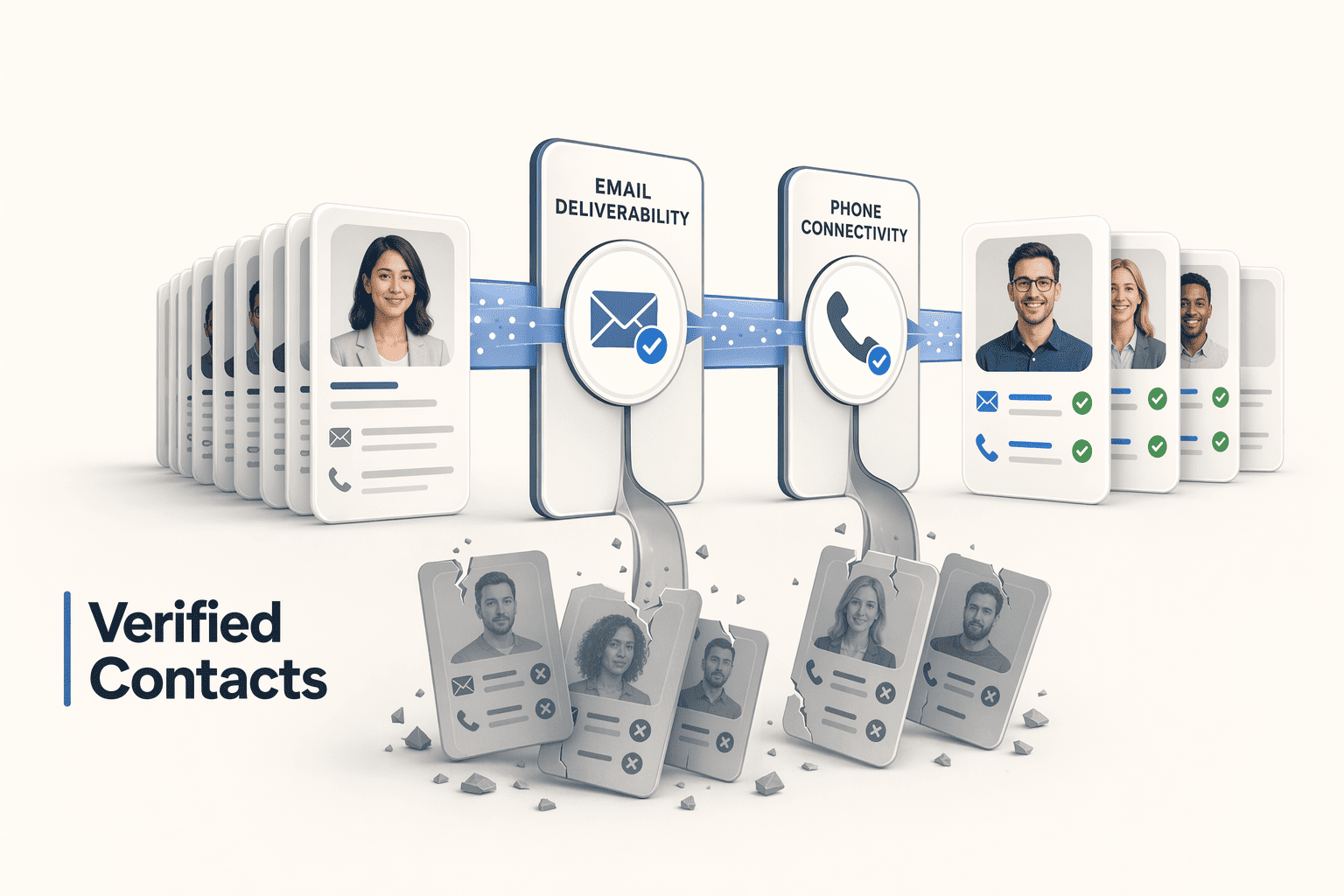
Most LinkedIn prospecting tools charge you for every contact exported—verified or not. Pre-download verification platforms validate email deliverability and phone connectivity before you commit credits, reducing wasted spend on dead leads.
Key Takeaways
- Pre-download verification platforms (Apollo, Cognism, ZoomInfo, RocketReach, LeadVector) validate contacts before export, but verification methodology varies from scraping-based to enrichment-based approaches
- Independent testing reveals 50% average real-world accuracy for phone numbers in emerging markets versus vendor claims of 95-98%, with global tools dropping below 70% for Indian contacts
- Scraping-based tools carry 15-20% account suspension risk under LinkedIn ToS, while enrichment-based architectures reduce compliance risk to under 2%
- Contact data decays at 2.1% monthly as professionals change jobs, requiring continuous re-verification to maintain accuracy
- Only 5-10% of LinkedIn users share phone numbers with first-degree connections, creating structural data gaps no tool can fully eliminate
Yes — platforms like PeakAi, Apollo, and Cognism verify contact data before you download it, letting you see validation status within the LinkedIn interface and decide whether to commit credits. This contrasts sharply with post-export enrichment, where tools deliver bulk contact lists and verify afterward — often charging for invalid records.
Pre-Download Validation: What It Means
Pre-download verification means the platform validates email deliverability, phone line type, and formatting before you export the contact. You see a confidence score or verification badge directly in the LinkedIn tab, then choose whether to spend a credit. PeakAi, for instance, runs syntax, domain, and deliverability checks before download. Post-export enrichment reverses the order: you download unverified leads first, upload the CSV to an external enrichment service, and pay for every row processed — regardless of whether the email bounces or the phone disconnects.
Compliance and Cost Tradeoffs
Verification timing also determines compliance risk. Scraping-based architectures — tools that crawl LinkedIn profiles directly, violate LinkedIn's Terms of Service and expose users to 15 to 20% account suspension rates. Enrichment-based platforms query third-party business databases rather than scraping profiles, reducing suspension risk to under 2%. This design choice means no tool can extract 90%+ phone coverage directly from LinkedIn profiles alone, accuracy above platform visibility floors requires external data enrichment.
Cost transparency suffers when verification happens after export. Match-rate fluctuations, the percentage of uploaded rows that return valid contacts, can obscure true cost-per-usable-contact by 35 to 100%. Credit-based pricing paired with pre-download validation eliminates this guesswork: you pay only for verified records you choose to download, making it easier to close more deals without budgeting for waste.
Understanding when verification happens is only half the equation, compliance risk and cost structure determine which approach fits your workflow and budget.
Pre-Download vs Post-Export Verification: Compliance and Cost Tradeoffs
Structural Data Gaps No Tool Can Solve
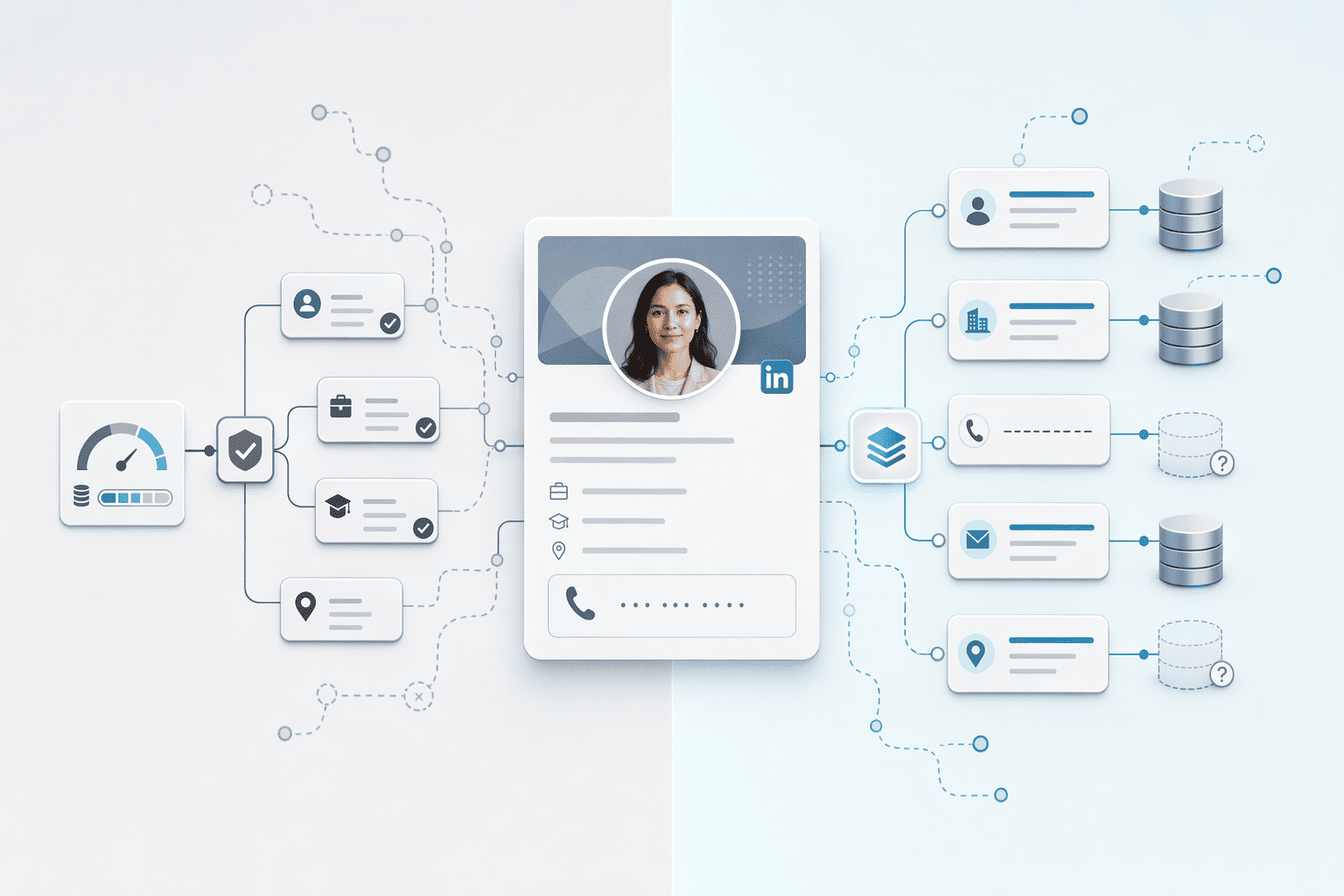
Only 5 to 10% of LinkedIn users share phone numbers with first-degree connections, and even fewer expose them to second- or third-degree contacts. This structural limitation affects every prospecting tool, regardless of whether verification happens before download or after export. Tools that promise thorough phone coverage must source data from third-party databases and public records rather than LinkedIn's visible profile fields. The platform restricts phone numbers used for two-factor authentication from appearing on profiles, further shrinking the visible pool. No enrichment architecture can overcome this gap; teams must accept that direct-dial coverage will always be partial when starting from LinkedIn as the identifier source.
Independent Testing vs Vendor Claims
Many vendors advertise 95 to 98% accuracy rates, but independent testing reveals average real-world accuracy closer to 50% for phone numbers in emerging markets. The gap stems from methodology: tools often measure email format validation (syntax, MX records, SMTP handshake) rather than phone connectivity. A tool claiming 97%+ deliverability may achieve that threshold for emails while phone-specific validation lags far behind. Email verification can confirm an address exists and accepts mail without proving the recipient monitors the inbox, and phone validation faces even steeper challenges, landline vs mobile classification, VoIP detection, and regional number-portability rules all introduce error. Teams evaluating tools should request separate accuracy metrics for emails vs phones, ask how the vendor defines "verified," and test a sample batch in their target geography before committing to volume pricing.
Monthly Data Decay and Re-Verification
B2B contact data decays at roughly 2.1% per month as professionals change jobs, update email domains, or switch mobile numbers. A verified contact list degrades to 75% accuracy within one year without re-enrichment. Pre-download verification offers a snapshot at lookup time but provides no ongoing freshness guarantee; post-export workflows that re-verify before each campaign incur higher per-contact costs but reduce bounce rates and protect sender reputation. The optimal refresh cadence depends on campaign velocity, high-volume outbound teams benefit from monthly batch re-verification, while account-based teams prospecting a stable target list can stretch to quarterly. Tools that integrate GST and MCA database checks add compliance depth for India-specific prospecting, aligning with DPDP Act 2023 requirements that mandate explicit consent for processing personal data.
Six platforms stand out for validating contacts before you export, though their verification depth, regional coverage, and pricing models differ significantly.
6 LinkedIn Prospecting Tools That Verify Before Download
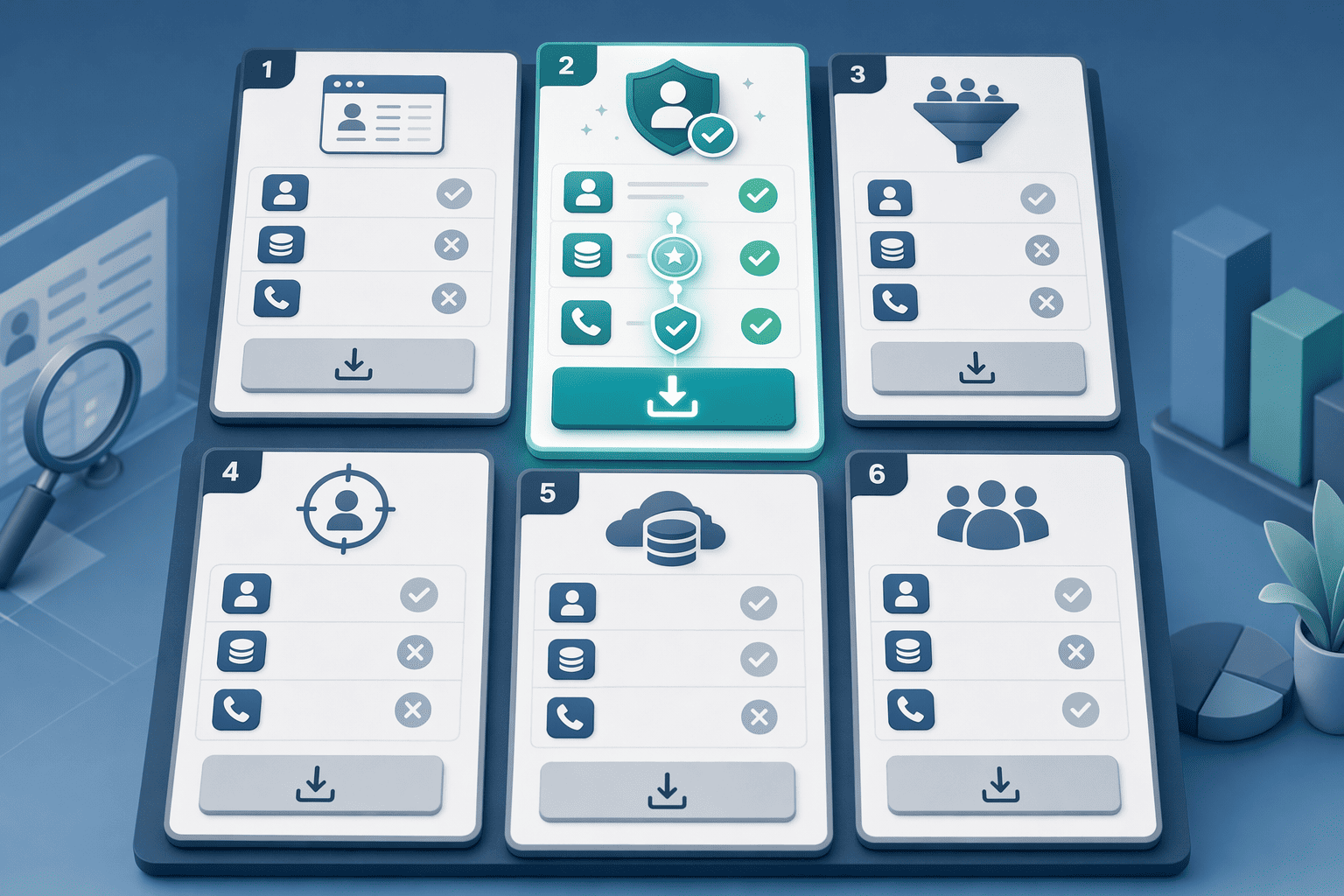
Pre-download verification separates tools that validate contact data *before* you consume a credit from those that charge for every record, valid or not. The six platforms below query third-party databases or proprietary networks to confirm email deliverability and phone connectivity at the moment of lookup, rather than exporting unverified lists for later cleanup.
Comparison Overview: Pricing, Accuracy, and Free Trials
| Platform | Starting Price | Free Plan/Trial | Verified Email | Verified Phone | Bulk Export | CRM Integrations | Email Accuracy | G2 Rating |
|---|---|---|---|---|---|---|---|---|
| PeakAi | $9 / 50 contacts | Yes (trial credits) | Yes | Yes (91% India) | Yes | Yes | 91% (India) | N/A |
| LeadVector | Contact for pricing | No | Yes | Yes | Yes | Limited | Not disclosed | N/A |
| ZoomInfo | Contact for pricing | No | Yes | Yes | Yes | Yes | Not disclosed | N/A |
| RocketReach | Contact for pricing | Limited trial | Yes | Yes | Yes | Yes | Not disclosed | N/A |
| Apollo.io | Free tier available | Yes (free tier) | Yes | Limited | Yes | Yes | Not disclosed | 4.6/5 |
| Cognism | Contact for pricing | No | Yes | Yes (EMEA focus) | Yes | Yes | Not disclosed | N/A |
The table illustrates the core trade-off: platforms optimized for global enterprise coverage (ZoomInfo, Cognism, RocketReach) require sales conversations for pricing, while region-specific tools (PeakAi) publish transparent per-contact rates. SalesQL offers a similar pre-download verification model for LinkedIn profiles globally, though it's not included in the primary comparison set above.
PeakAi: India-Specific Accuracy for B2B Contacts
PeakAi delivers 91% phone number accuracy for Indian B2B contacts by cross-referencing GST and MCA databases in real time. The platform queries third-party business databases using LinkedIn URLs as reference identifiers, it does not access LinkedIn's internal APIs or scrape profile data directly. This enrichment-based approach sidesteps the compliance risks associated with on-platform automation while maintaining regional specialization that global tools often lack.
Strengths: Regional data partnerships (GST verification, local phone format validation), transparent credit pricing ($9 for 50 verified contacts), pre-download verification that charges only for successful lookups. Limitations: Third-party database dependency means coverage gaps for contacts absent from public registries; no global enterprise integrations beyond standard CRM APIs. Best for: Indian B2B prospecting teams prioritizing cost-per-usable-contact over global breadth, especially when targeting MSMEs with incomplete LinkedIn profiles.
Apollo, Cognism, ZoomInfo: Global Coverage with India Gaps
Global platforms excel at enterprise CRM integrations and broad database reach (Apollo's 275M+ contacts), but accuracy for Indian B2B contacts drops below 70% without regional specialization. ZoomInfo positions itself as an all-in-one AI GTM platform with proprietary intelligence layers, yet pricing opacity and annual contract requirements create friction for mid-market Indian teams. Cognism's EMEA-centric database delivers strong UK/French/German phone coverage but treats India as a secondary market. The verification timing differs too: Apollo and ZoomInfo typically verify in bulk post-export, charging for the full list before validation, whereas PeakAi validates at lookup and consumes credits only on verified finds.
LeadVector and RocketReach: Niche Positioning
LeadVector and RocketReach occupy the mid-tier: broader than India-specific tools, narrower than global suites. Both gate pricing behind sales conversations and lack the regional database partnerships (GST, MCA) that drive PeakAi's India accuracy claim. RocketReach offers a limited trial; LeadVector provides no public free tier. For teams prospecting outside India or needing multi-region coverage without enterprise budgets, these platforms bridge the gap, but neither publishes phone-specific accuracy metrics for emerging markets.
Ready to close more deals with verified Indian B2B contacts? Explore PeakAi's LinkedIn contact discovery tools or dive deeper into B2B contact discovery strategies for India.
Add to Chrome - Free
Vendor accuracy claims sound impressive on paper, but independent testing and verification methodology tell a different story.
How to Evaluate Phone and Email Accuracy Claims
Email Format Validation vs Phone Connectivity
When vendors claim 95 to 98% email verification accuracy, they're often measuring syntax and domain checks, not whether the mailbox is active or the phone number connects. Email verification tools distinguish between format validation (confirming [email protected] follows standard patterns), domain-level validation (checking MX records exist), and SMTP-level deliverability (confirming the mailbox accepts mail). Phone connectivity adds another layer: a number may exist in a database but route to a switchboard, be deactivated, or belong to a former employee.
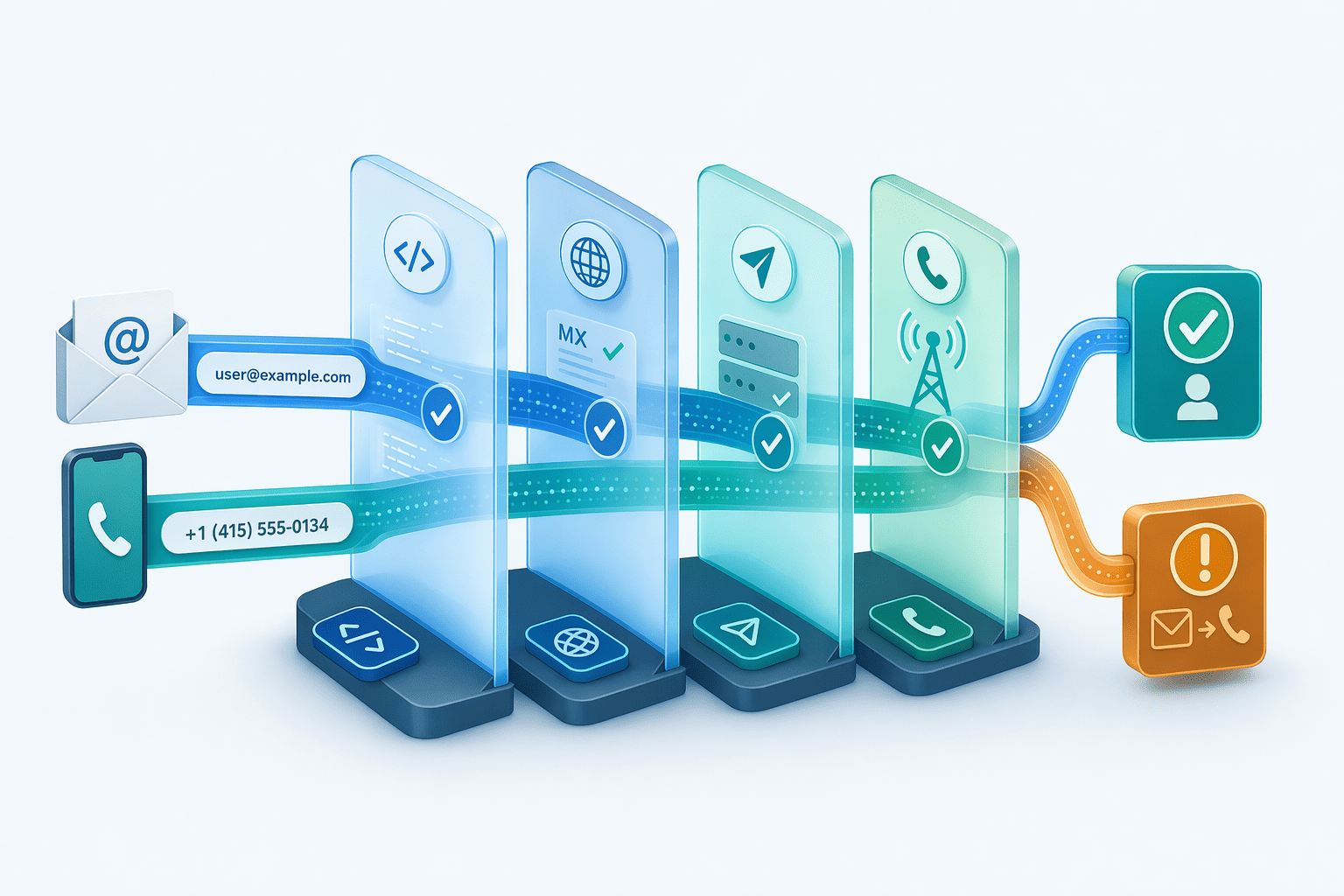
PeakAi's real-time verification system achieves 91% phone number accuracy by cross-referencing multiple data sources beyond LinkedIn's visible profile fields, using dual verification for both emails and phone numbers. Many competitors measure email syntax validation but do not test phone reachability, inflating apparent accuracy figures. Always ask vendors: does the 95% measure format checks, or does it measure successful outbound connections?
Testing Match Rates on Your Target Segment
Vendor-provided accuracy claims reflect their entire database; your segment may perform differently. Use this three-step framework to test real-world yield before committing to a contract:
- Export a 50 to 100 contact sample from your ICP segment. Sales Navigator identifies the right contacts by title, seniority, and company, but does not provide email addresses, you need a separate finder tool to resolve contact data, then verify output before any outreach or CRM import.
- Cross-check against known contacts or manual validation. Call 10 to 15 phone numbers yourself; send test emails to another 10 to 15 addresses. Track how many connect to the decision-maker (not a switchboard) and how many emails bounce or land in spam.
- Measure usable-contact yield, not just format-valid emails. If the vendor delivered 95 syntactically correct emails but only 50 reached inboxes and 30 phones connected to real prospects, your true accuracy is 30 to 50%, not 95%. This gap between claimed and realized accuracy is why teams often find more deals with transparent providers than with vendors advertising the highest top-line numbers.
Ready to Transform Your Sales Process? Test PeakAi's 91% phone accuracy on your own segment, LIMITED TIME 50 contacts for just $9. Only 19 spots remaining! Click to claim your verified contacts and close more deals.
Global platforms optimized for US and EU markets frequently stumble when prospecting Indian B2B contacts, revealing systematic data gaps that regional specialization addresses.
India-Specific Verification Challenges and Regional Data Gaps
Why Global Tools Drop Below 70% for Indian Contacts
Global LinkedIn prospecting platforms frequently achieve sub-70% accuracy for Indian business contacts when they lack regional specialization. The accuracy gap stems from three core deficiencies: sparse third-party database coverage for Indian markets, absence of GST and MCA (Ministry of Corporate Affairs) validation layers, and US/EU data prioritization in their aggregation pipelines.
Real-world prospectors encounter this gap daily. In a recent Reddit thread, an Indian B2B marketer asked for "reliable B2B data provider to get bulk corporate contacts in India" for HR Heads, Legal Heads, and CEOs across 100-5000 employee companies. The poster noted being "overwhelmed with options and not sure which ones are legit", a sentiment echoed across sales teams targeting pan-India markets where "manual research across websites and LinkedIn can take hours" and "often yields outdated or incorrect data".
One commenter cut to the solution: "LinkedIn Sales Nav + automation beats any provider for Indian market". This reflects the accuracy ceiling challenge, global databases without India-specific enrichment layers struggle to deliver verified emails, phone numbers, and professional profiles at scale.
GST Validation and Regional Database Coverage
GST (Goods and Services Tax) verification and MCA database integration serve as regional accuracy levers that India-focused platforms deploy but global tools omit. PeakAi offers India-focused contact verification with GST and MCA database integration, claiming 91% accuracy for Indian contacts. This approach cross-references company registration data, tax filings, and professional network signals to validate contact authenticity before download, a stark contrast to platforms that deliver bulk lists and verify afterward, "often charging for invalid records."
Tools that use "multiple data sources and verification algorithms" without India-specific layers face a hard ceiling. By integrating GST verification and validating +91 phone number formats against MCA databases, regional specialists close more deals by ensuring contact data matches India's business registration infrastructure rather than extrapolating from global patterns.
Conclusion
Global platforms like Apollo, ZoomInfo, and Cognism offer enterprise CRM integrations and broad coverage but achieve sub-70% accuracy for Indian contacts without regional specialization; PeakAi prioritizes India-specific accuracy (91% claim) through regional database partnerships and GST validation. Scraping-based tools deliver real-time LinkedIn profile data but carry 15-20% account suspension risk, while enrichment-based platforms reduce compliance risk to under 2% by querying third-party databases instead of scraping LinkedIn directly.
As India's B2B SaaS ecosystem grows and DPDP Act 2023 compliance requirements tighten, regional contact verification platforms will increasingly differentiate on GST validation, local database partnerships, and compliance-first architectures, global tools will either invest in regional specialization or cede emerging-market accuracy leadership to India-first competitors.
Test PeakAi's India-specific accuracy with a free sample export and compare match rates against your own target segment to validate regional performance claims.
Frequently Asked Questions
Is there a LinkedIn prospecting tool that verifies phone numbers and emails before download?
Yes, platforms like PeakAi, Apollo, Cognism, ZoomInfo, RocketReach, and LeadVector validate contacts before export. However, independent testing reveals average real-world accuracy closer to 50% for phone numbers in emerging markets versus vendor claims of 95-98%, with methodology gaps between email format validation and actual deliverability.
What's the difference between pre-download and post-export verification?
Pre-download verification validates email deliverability, phone line type, and formatting before export, showing confidence scores directly in the LinkedIn interface so you choose whether to spend a credit. Post-export enrichment downloads unverified leads first, then enriches externally, wasting credits on invalid contacts.
Why do global LinkedIn prospecting tools underperform in India?
Global platforms achieve sub-70% accuracy for Indian business contacts due to sparse third-party database coverage, absence of GST and MCA validation, and prioritization of US/EU markets. Regional tools address this gap through local database partnerships and government registry cross-checks.
What is the real accuracy of LinkedIn contact verification tools?
Independent testing reveals average accuracy closer to 50% for phone numbers in emerging markets versus vendor claims of 95-98%. Many tools measure email format validation (syntax, MX records, SMTP handshake) rather than phone connectivity or actual deliverability, inflating reported accuracy rates.
What are the compliance risks of scraping-based LinkedIn prospecting tools?
Scraping-based architectures violate LinkedIn's Terms of Service and expose users to 15-20% account suspension rates. Enrichment-based tools query third-party databases instead of crawling LinkedIn profiles directly, reducing compliance risk to under 2% while maintaining verification capabilities.
Why do only 5-10% of LinkedIn users share phone numbers?
Only 5-10% of LinkedIn users share phone numbers with first-degree connections, with even fewer exposing them to second- or third-degree contacts. This structural limitation affects every prospecting tool, requiring third-party database enrichment to fill gaps, but regional database coverage varies significantly.
How does contact data decay affect LinkedIn prospecting accuracy?
B2B contact data decays at roughly 2.1% per month as professionals change jobs, update email domains, or switch mobile numbers. A verified contact list degrades to 75% accuracy within one year without re-enrichment, requiring platforms that refresh data daily or weekly.
Sources
- Best Contact Finding Tools for B2B Sales Teams in 2026 - lagrowthmachine.com (2026)
- Data Quality Management: The Complete B2B Guide (2026) - derrick-app.com (2026)
- High-Conversion B2B Prospecting on LinkedIn | PDF - www.scribd.com
- Top 10 Business Contact Finder Tools in India to Generate High-Quality Leads - businessinsight27.wordpress.com (2026)
- Need recommendations for B2B contact data providers in India (HR/Legal/CEO contacts) - www.reddit.com
