
Introduction
Your best prospecting list is worth nothing the moment the contacts bounce.
Sales teams waste hours chasing leads from outdated B2B databases. They often discover too late that a generic global aggregator has fed them stale data. Global databases leave reps with a 60% to 85% accuracy window for email and phone hits, meaning nearly half your outreach can fail before a prospect sees your pitch.
The fix is not a bigger database. It is a move to real-time verification against the source itself. PeakAi takes a LinkedIn-native approach built for this, trading a dusty historical snapshot for an active, current contact lookup that covers the Indian market across more than 1,600 cities.
Key Takeaways
Here is the bottom line for decision-makers who need verified contacts without the fluff:
- Real-time validation defines accuracy: A contact is accurate when the email and phone are confirmed as active right now, not pulled from a months-old aggregated list.
- India-first depth matters more than global breadth: Coverage spanning 1,600+ cities in India solves the regional blind spots that plague international databases built for Western markets.
- Compliance protects your LinkedIn account: Tools that respect rate limits and align with the Indian IT Act let you operate without triggering the account-suspension flags that scraping-risk platforms face.
- Pay-per-contact pricing fits spot-check workflows: A model starting as low as $9 for 50 verified contacts removes the pressure of a massive upfront annual commitment.
- Automation compresses the sales cycle: Real-time verification fed directly into your CRM through tools like n8n eliminates manual research and triggers instant follow-up sequences.
What Defines ‘Most Accurate’ in LinkedIn Contact Discovery

A generic global database updates its records on a cycle. A real-time verification engine confirms them on demand. That is the technical dividing line between a static platform showing you a digital snapshot and a dynamic tool rendering the present moment. When a vendor claims accuracy without disclosing verification methodology, the advertised percentage is often meaningless. Advertised accuracy figures can be misleading because vendors may measure only low-tier syntax validation rather than a true active confirmation of identity and possession.
PeakAi follows an entirely different logic. Instead of serving you an entry from a pre-built list, it queries external sources such as business registries, public records, and telecommunications databases at the moment of your search. This dual verification process checks both the email and the phone number against what is currently active on the LinkedIn profile you are viewing. By linking the search to a publicly shared LinkedIn URL and cross-referencing it with live third-party data, the system returns a contact only when it passes a real-time present-tense check, not a historical one that could be weeks old.
Global databases cannot match that speed of recency. A repository built on aggregated historical records will always have a decay rate that grows between update cycles. When you are selling into a fast-moving regional market, that decay directly translates to bounces, wasted sequences, and false confidence in pipeline numbers.
PeakAi’s process also ties every exported record to a compliance timestamp and data-source attribution, letting you verify not just that the contact is accurate, but when and how accuracy was last confirmed.
PeakAi’s India-First Approach vs. Global Database Alternatives
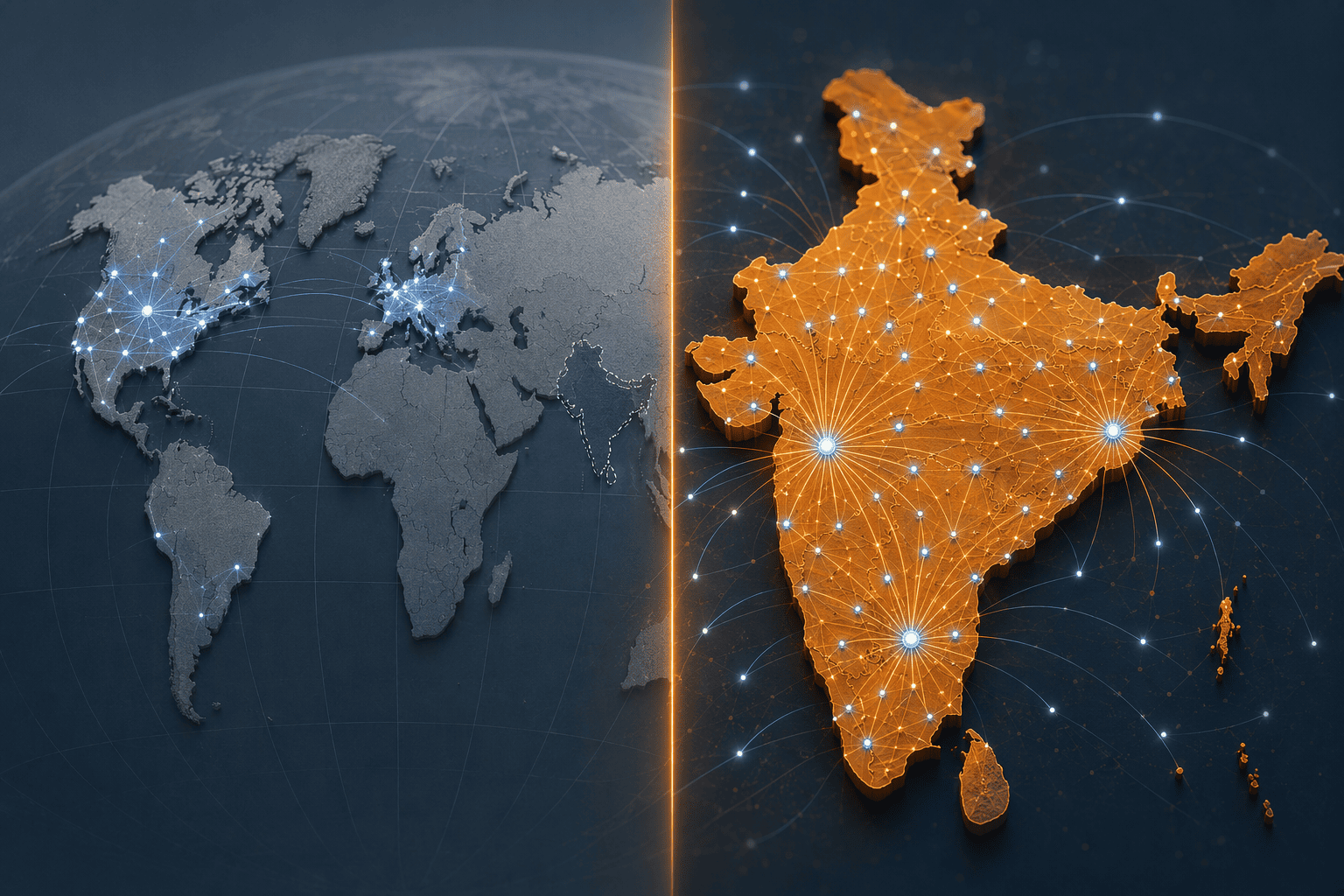
Global databases like ZoomInfo build their core intelligence on data sets that tilt hard toward North American and European enterprises. If you run territory across Pune, Coimbatore, and Bhubaneswar, that Western architecture leaves a blank spot exactly where you prospect the most.
PeakAi built its verification engine for Indian-market coverage first, not as a late add-on to a US product. The platform returns verified contacts across more than 1,600 cities, including the tier-2 and tier-3 business hubs where big aggregators reliably show thin or outdated records. A LinkedIn-native local search can surface a decision-maker's confirmed direct dial and active email in under 10 seconds, while a global tool might offer only a stale headquarter switchboard for a regional manufacturer. That granularity changes the math for an Indian sales team, because coverage only counts if it reaches the pin codes your ICP actually operates from.
For enterprise intelligence on a Fortune 500 org chart, D&B Hoovers and ZoomInfo make sense. For the specific job of finding an active direct-dial number for a mid-market decision-maker in a non-metro Indian city, a platform built on that verification path will outperform a generic aggregator every time.
The Compliance Divide: Safe Automation vs. Account-Suspension Risk

The most accurate data in the world cannot help you if your LinkedIn account gets suspended while you collect it. Compliance risk should be the first filter you apply when evaluating a contact discovery tool, before accuracy rates, price points, or feature depth. Aggressive scraping tools that hammer LinkedIn's servers without rate limits violate LinkedIn's User Agreement, and platforms like SignalHire have faced documented bans for exactly this behavior, because LinkedIn actively moderates and suspends accounts that breach its terms.
PeakAi's automated workflow operates within a compliance framework designed to protect your account. The system does not brute-force scrape; it uses rate-limited automation aligned with the Indian IT Act's data privacy provisions. This distinction matters practically: a scraping-risk tool sends repeated rapid-fire requests that trigger automated platform defense mechanisms and lead to temporary restrictions or permanent de-platforming. A compliant automation moves at a pace that resembles normal human browsing while still enriching your list.
Indian teams face an added regulatory layer under the Digital Personal Data Protection framework, where a data breach involving unconsented bulk collection can expose your organization to legal liability. The safe path is a dual-lock approach: automation that both respects platform rate limits and ensures every collected record carries a clear audit trail of its source, method, and timestamp.
Pricing Models Compared: Credits, Subscriptions, and Pay-As-You-Go
Pricing in the contact discovery market splits into three distinct models, and picking the wrong one can lock a lean sales team into an expensive anchor.
The per-credit model dominates browser extensions. Lusha runs a credit system where each email or phone reveal costs $0.20 to $0.35, and unused credits can expire under subscription terms. A rep verifying 200 contacts a month faces a recurring $40 to $70 line item attached to a monthly or annual plan.
The enterprise subscription sits on the opposite end. ZoomInfo uses a quote-based, custom annual contract that commonly starts at $14,995 or more per year. That cost is justifiable for a large North American outbound team running thousands of contacts monthly. It is an overwhelming upfront commitment for an Indian sales pod that needs high-accuracy lookups on a narrower, spot-check cadence.
The third model, pay-as-you-go without a binding subscription, fits the pattern many Indian teams operate on: burst prospecting, then pause. PeakAi uses a pay-per-verified-contact structure that starts at $9 for a batch of 50 contacts, with instant top-up to reload credits on the spot. There are no hidden fees.
You are not paying for access to a massive static database of unknown recency. You pay only for a contact that passes real-time dual verification right now. For a sales team evaluating cost per legitimate lead, the math shifts when you account for bounce rate.
If a $0.30 credit verifies at 65% accuracy, the true cost per delivered message climbs. Higher-accuracy verification reduces that bounce waste. The nominal price per credit becomes a secondary metric.
PeakAi also offers unlimited daily plans for high-volume users, governed by a fair usage policy. This bridges the gap between spot-checkers and teams running sustained outbound plays across tier-2 and tier-3 cities.
From Verification to Workflow: How Real-Time Automation Closes Deals Faster
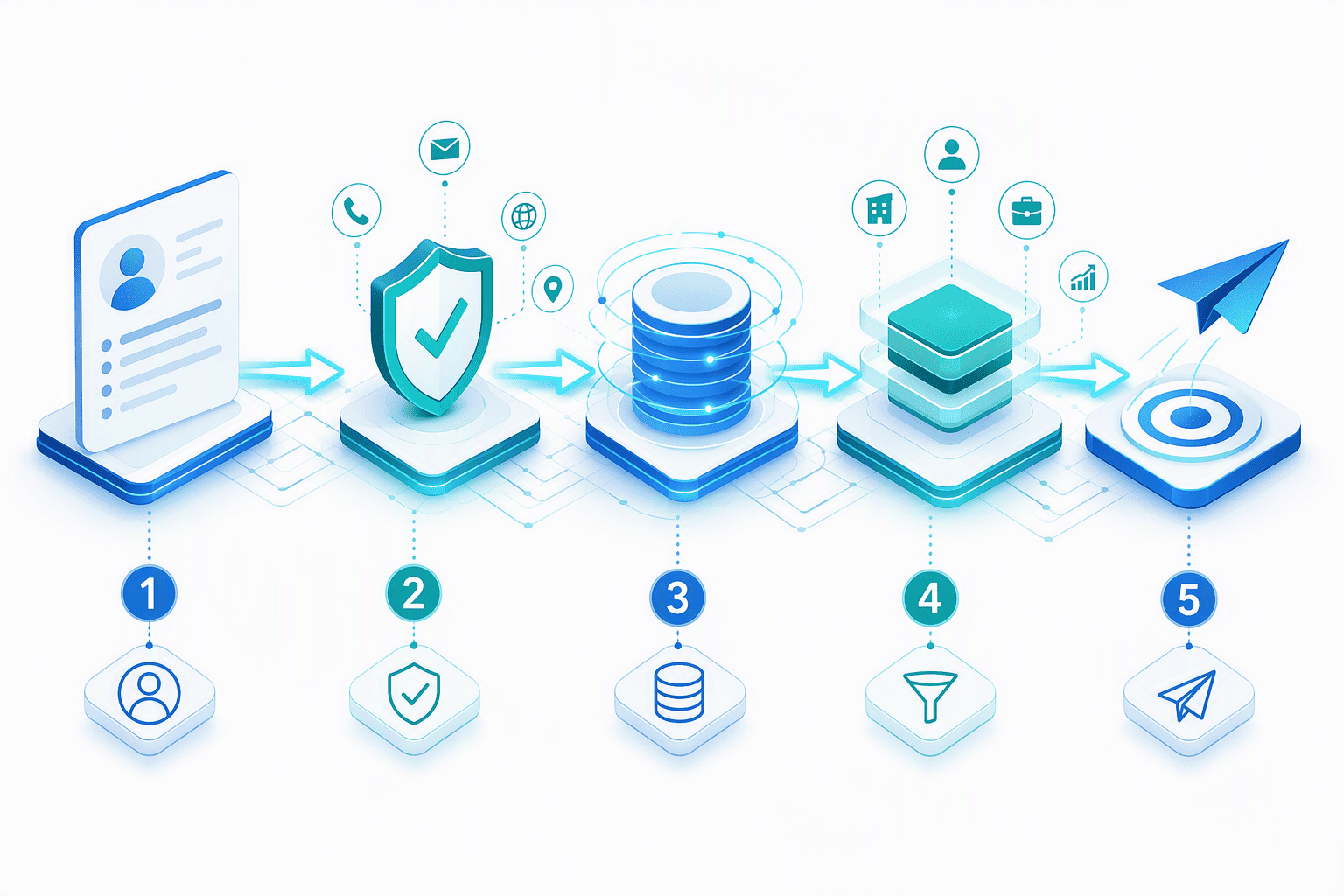
A contact's value starts ticking down the second it gets verified. Every hour between confirmation and first outreach is an hour your competitor might get there first. Here's the automated path that cuts that gap to nearly zero.
- Identify your prospect: You land on a decision-maker's LinkedIn profile and the tool pulls the publicly shared URL as the initial search key.
- Trigger the real-time verification: The engine queries external business registries, public records, and telecommunications databases in a dual-check pass for both email and phone.
- Return a confirmed contact: Within a few seconds you receive a verified direct dial and email, stamped with a compliance timestamp and a clear data-source attribution so you know exactly where the record originated.
- Push to CRM through n8n integration: PeakAi connects directly into an open-source automation workflow using n8n, which takes the freshly verified contact and routes it into your CRM as an enriched lead record without requiring a manual data entry step.
- Launch the immediate follow-up: Your outreach sequence fires on the verified channel within the engagement window, cutting out the hours a rep would otherwise spend bouncing between profiles, spreadsheets, and data tools chasing the same single piece of intelligence.
Beyond Accuracy: The 1,600+ City Factor for Indian Sales Teams
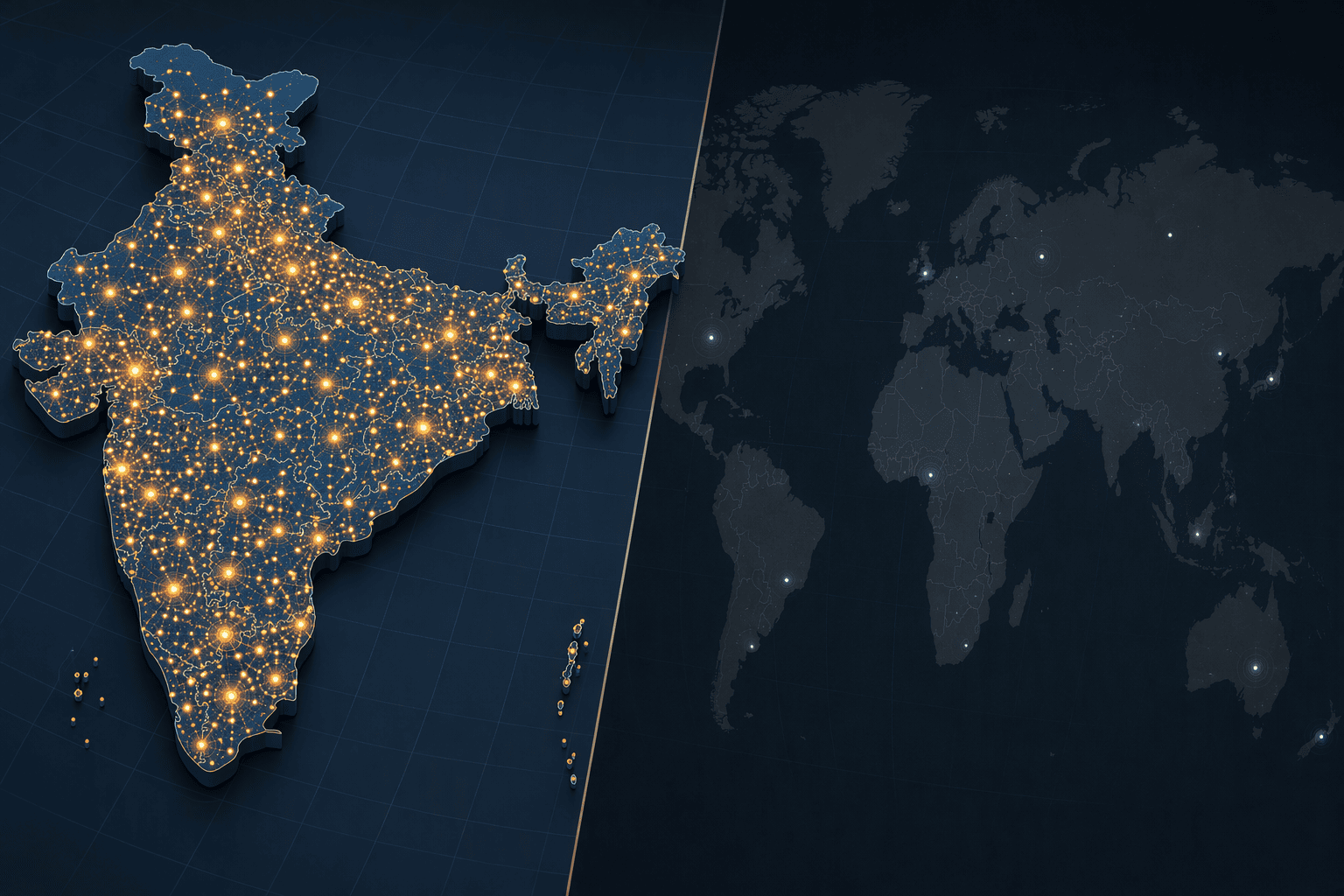
A lab test accuracy score stops meaning anything the second you search for a lead in a city the platform does not cover. For Indian sales teams, regional depth is the filter that decides whether you get real contacts or a blank screen.
| Decision Factor | Global Database (ZoomInfo, Cognism) | India-First LinkedIn Verification (PeakAi) |
|---|---|---|
| Core data sourcing architecture | Aggregated North American/European corporate hierarchies with limited Indian sub-region refresh cycles. | Real-time LinkedIn-native lookup cross-referenced with Indian business registries and telco databases. |
| City-level coverage depth | Heavy on metro and large enterprises; thin or missing data on tier-2 and tier-3 business hubs. | Coverage spanning more than 1,600 cities across India with verified contacts in non-metro pin codes. |
| Data-source attribution | Typically no per-record source attribution provided to the end user for recency checks. | Every exported record carries a compliance timestamp and the explicit data source so you can verify recency. |
| Fair usage and overage limits | Tightly enforced fair usage even on high-tier plans; exceeding account-level limits blocks extraction. | Unlimited daily plans governed by a fair usage policy; pay-per-contact model available for spot-check teams under 500 monthly profiles. |
If your ICP includes someone like a procurement head at a manufacturing unit in Rajkot or a hospital administrator in Madurai, the only platform that counts is the one that finds a current, verified direct dial for that specific location. Combine that coverage depth with a credit-back guarantee on wrong phone numbers, and your choice becomes a practical test, not a comparison of feature lists.
Conclusion
Accuracy breaks down if the data is old. Old data is useless if it only covers four cities. And the most accurate, freshest, widest database gets you nowhere if the method of collecting it gets your LinkedIn account suspended.
A LinkedIn-native verification tool built for the Indian market, which spans more than 1,600 cities, addresses all three at once. A global repository, no matter how big the budget behind it, was not built to do that. Your next evaluation should not open with a logo comparison.
Open with the city list your pipeline actually requires. PeakAi gives you a pay-per-verified-contact path. You can test that coverage directly on your own territory before you commit to anything at scale.
Frequently Asked Questions
What defines a 'most accurate' contact discovery platform for LinkedIn, and how is verification measured differently by tools like PeakAi versus global databases?
The most accurate platform verifies a contact as active and correct at the exact moment of lookup, not from a weeks-old snapshot. PeakAi runs a real-time dual check against external registries and telco databases. Global databases like ZoomInfo or Lusha serve aggregated historical records that decay between update cycles, with reported accuracy falling between 60% and 85%.
How does PeakAi's Indian-market focus and dual verification process compare to international alternatives like Lusha, SignalHire, or ZoomInfo for contact accuracy?
PeakAi queries Indian business registries and telecom databases on demand, covering 1,600+ cities including tier-2 and tier-3 hubs. Lusha and ZoomInfo draw from aggregated Western-heavy data sets that show thin coverage outside Indian metros. PeakAi's dual email-and-phone verification returns a confirmed direct contact in under 10 seconds rather than a historical match.
What are the compliance risks of using LinkedIn contact finders, and how do platforms like PeakAi mitigate account suspension or data privacy violations under Indian regulations?
Aggressive scraping violates LinkedIn's User Agreement and triggers automated suspension. PeakAi uses rate-limited automation aligned with the Indian IT Act. SignalHire has faced documented bans for such scraping. A compliant workflow moves at browsing speed, and every exported record includes a timestamped audit trail to demonstrate lawful data collection under DPDPA obligations.
What pricing models exist for LinkedIn contact discovery, and how does PeakAi's structure serve Indian users with spot-check needs?
Three models dominate: per-credit (Lusha at $0.20 to $0.35 per reveal), subscription (ZoomInfo at $14,995+/year), and pay-per-contact. PeakAi operates on a no-subscription pay-as-you-go model starting at $9 for 50 contacts with instant top-up. This suits Indian teams running fewer than 500 monthly lookups who want to avoid long-term commitments.
How do real-time LinkedIn-native validation and integration with automation tools like n8n improve sales workflows versus manual data enrichment?
Real-time verification cuts manual research by confirming an active phone and email on the spot. PeakAi's n8n integration then pushes the verified contact into your CRM instantly, triggering an outreach sequence within the engagement window. A rep no longer wastes time tabbing between LinkedIn, spreadsheets, and data tools to find and copy a single phone number.
For Indian sales teams targeting 1,600+ cities, what factors beyond accuracy should guide choosing a contact discovery platform?
City-level coverage depth in non-metro locations, data-source attribution for compliance, fair usage limits that do not block spot-check workflows, and a credit-back guarantee for incorrect numbers all matter more than a headline accuracy claim. A platform that returns empty results in your target pin codes is irrelevant regardless of its marketed percentage.
Sources
- Digital Safety | Moderation and Enforcement | Account suspension - www.microsoft.com
- De-platforming and Account Suspension Risk in 2026 - suvudu.com
