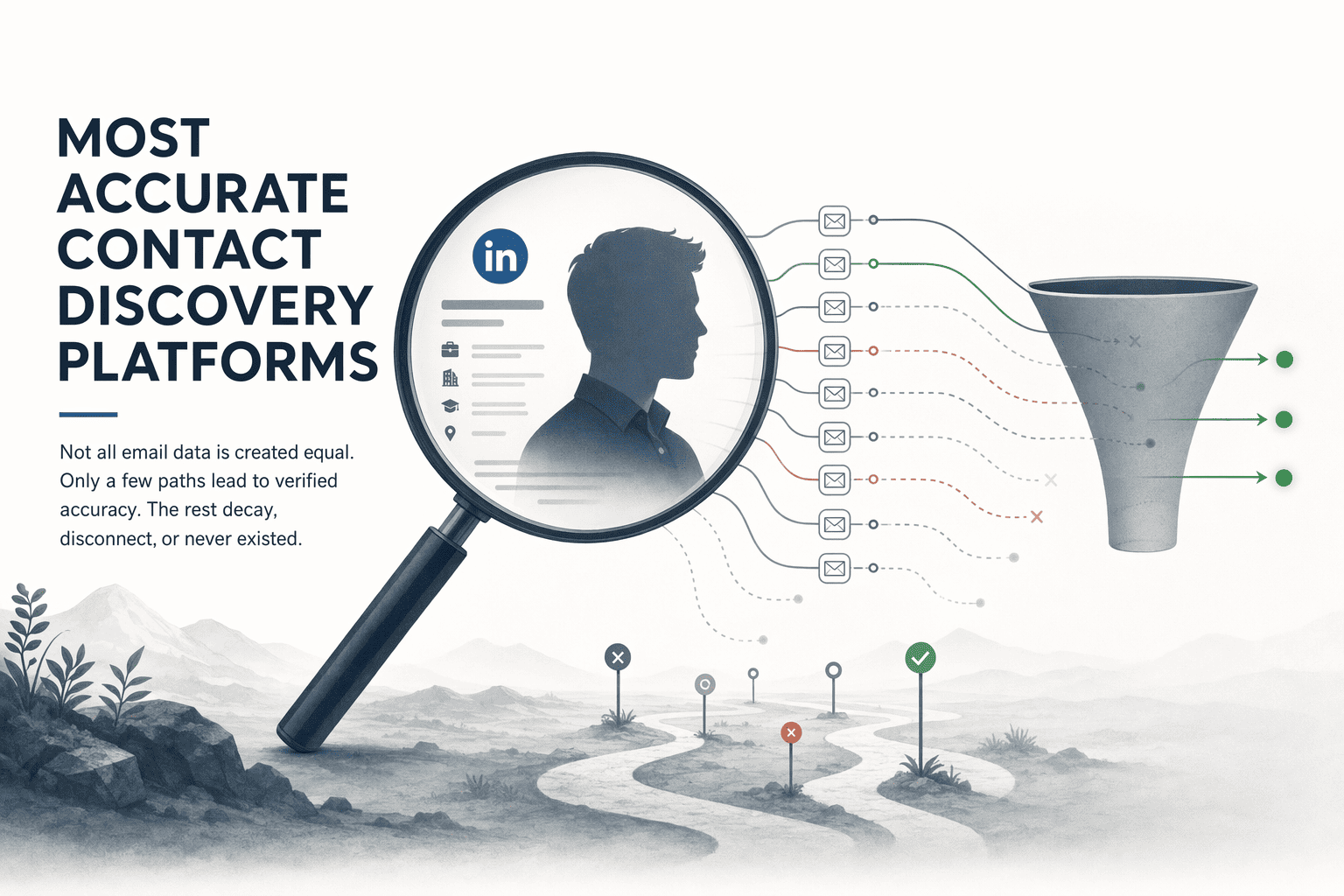
Contact discovery platforms promise 95%+ accuracy, yet independent testing reveals averages closer to 50%. The gap stems from verification methods—syntax validation versus genuine deliverability testing.
Pre-download verification models that test emails before charging outperform post-export enrichment, but regional accuracy gaps and data decay complicate vendor comparisons.
Key Takeaways
- Vendor accuracy claims conflate syntax validation with deliverability—SMTP handshake testing reveals 60-70% accuracy on datasets vendors rate 95%+
- Pre-download verification platforms surface deliverability before charging, while post-export models inflate cost-per-verified-contact by 35-100% when match rates drop
- Contact data decays 2-3% monthly, eroding static database accuracy faster than real-time enrichment models
- Regional gaps exist: platforms delivering 90% accuracy in the US typically fall to 75-80% in India due to lower LinkedIn profile density
- Testing platforms with 20-30 known contacts before purchase measures match rate, deliverability, and regional variance—the only way to validate vendor claims
Why 'Most Accurate' Contact Discovery Claims Rarely Match Real-World Results
No platform delivers 95%+ accuracy in real-world use because vendor claims conflate email-format validation with genuine deliverability. Pre-download verification models that perform SMTP handshakes and catch-all detection before you export contacts outperform post-export enrichment tools that rely on syntax checks alone. Understanding the structural data gaps—LinkedIn shows phone numbers to only 5-10% of first-degree connections—reveals why accuracy floors exist that no scraper can overcome.
The Accuracy Claim Gap: Syntax Validation vs Deliverability Testing
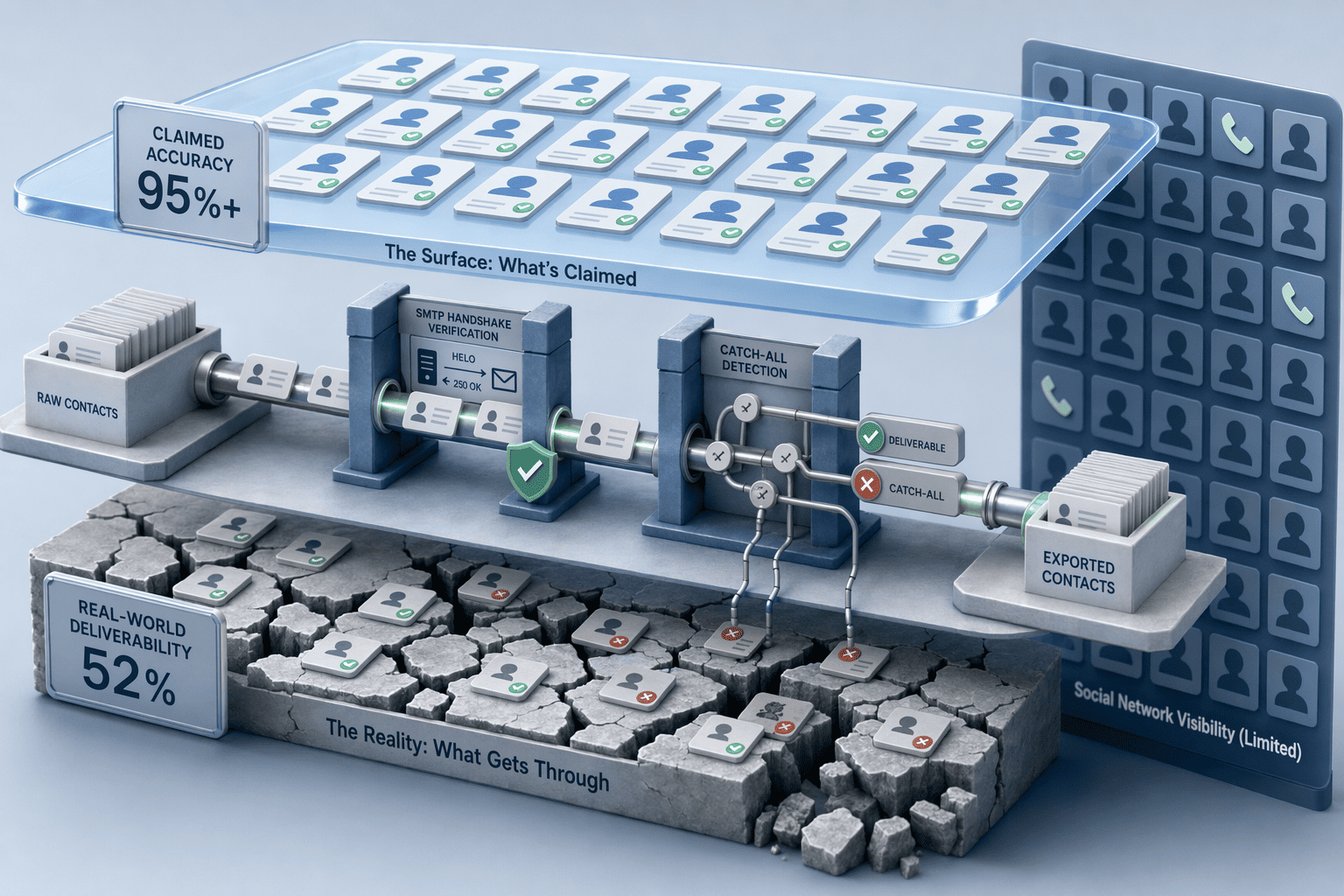
Accurate email discovery is important for effective LinkedIn lead generation, yet most vendor accuracy percentages measure syntax validation—confirming an address follows the [email protected] pattern, not whether the mailbox accepts messages. Three-tier verification exists: syntax checks (pattern matching), SMTP handshakes (server-level acceptance), and catch-all detection (identifying domains that accept all addresses). Tools advertising 95%+ accuracy often report syntax-only pass rates, while genuine deliverability testing reveals bounce rates above 20% on the same dataset. PeakAi's 91% accuracy claim combines syntax validation, SMTP checks, and catch-all detection before download, positioning pre-verification as the method that surfaces undeliverable contacts before they enter your CRM.
Why Independent Testing Shows 50% Averages vs 95%+ Claims
Independent testing consistently reveals average accuracy closer to 50% across contact discovery platforms, versus vendor marketing claims of 95-98%. The gap stems from methodology transparency: vendors count syntax-valid emails as 'found' while independent audits measure deliverability by sending test campaigns and tracking bounce rates. When researchers test tools against existing contact lists, where ground truth is known, find rates drop to 50-60% for verified emails and 30-40% for direct-dial phone numbers. The platforms that disclose verification steps (SMTP validation, catch-all filtering, real-time lookups across 200+ data partners) perform 15-25 percentage points above those offering post-export batch enrichment with undisclosed sourcing.
The Structural Data Gap: LinkedIn's 5-10% Phone Number Visibility
Only 5-10% of LinkedIn users share phone numbers with first-degree connections, creating an unsolvable accuracy floor no tool can overcome through profile scraping alone. LinkedIn restricts phone numbers used for two-factor authentication from appearing on profiles, and most professionals never add a public contact number. Platforms claiming 70%+ phone discovery rates source numbers from external business registries, telecom databases, and public records, not LinkedIn itself. This structural limitation means verification timing matters: tools that query third-party databases in real time and validate number format before download help teams close more deals by surfacing which contacts lack verified phones upfront, preventing wasted outreach cycles on profiles where no direct-dial number exists in any accessible registry.
Understanding why accuracy claims fall short requires examining the verification methods platforms use, and what each layer actually tests.
The 4 Contact Discovery Verification Methods (And What They Actually Test)
Not all 'verified email' claims mean the same thing. A tool that runs only syntax checks will report 95%+ accuracy on a list where 40% of addresses bounce. A tool that performs SMTP handshakes on the same dataset reports 60 to 70% accuracy, because it actually tests deliverability. Understanding which verification layers a platform uses is the difference between paying for contacts you can reach and paying for formatted strings that look like email addresses.
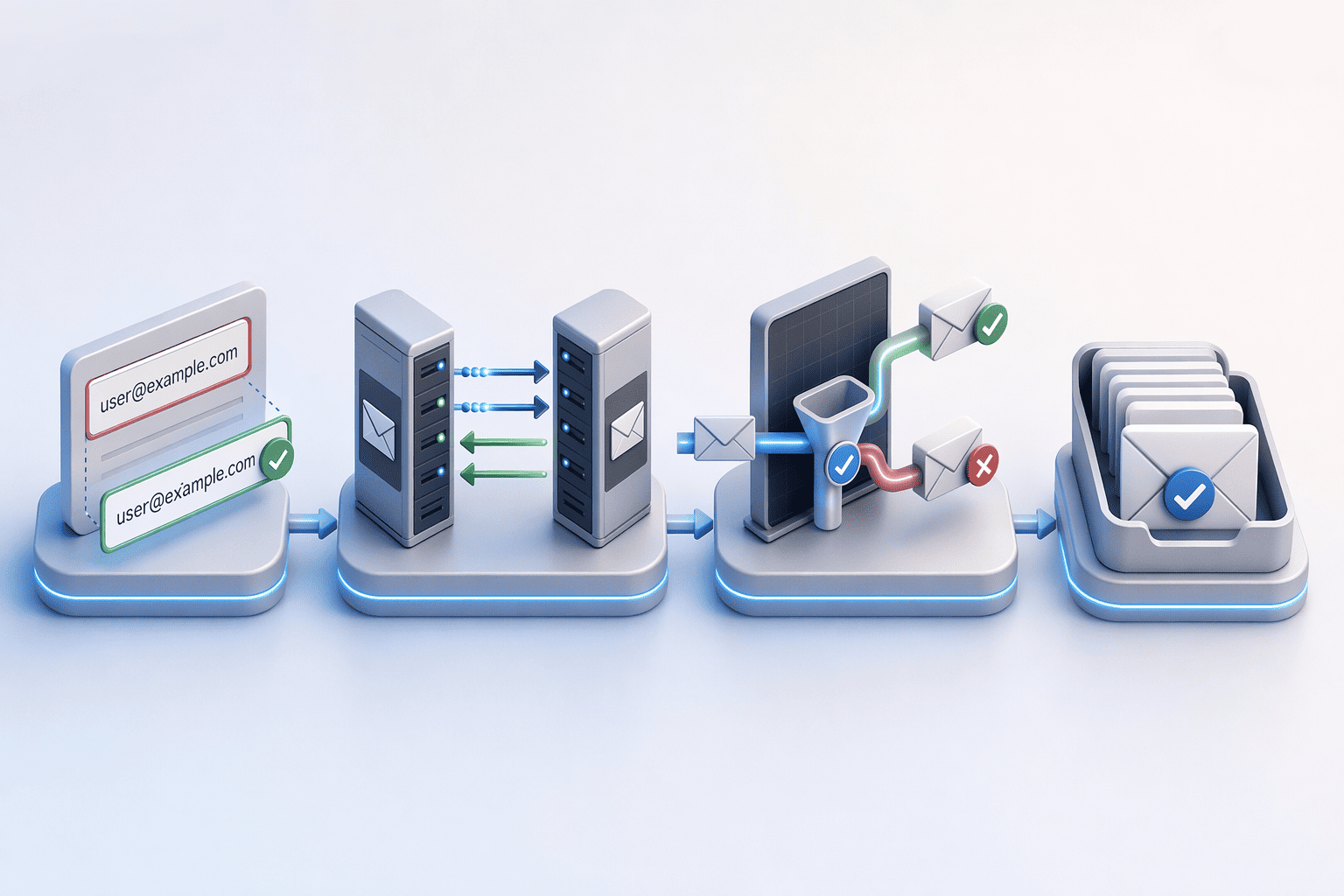
Below are the four verification methods contact discovery platforms apply, what each layer tests, and how timing (pre-download vs post-export) affects what you pay for.
Syntax Validation: Format Checks Without Connectivity Testing
Syntax validation is regex-based pattern matching. The tool checks whether an email address follows standard formatting rules: `[email protected]` with valid characters, no spaces, and a recognized TLD. This layer catches typos like `user@@domain.com` or `user@domaincom` but does nothing to confirm the mailbox exists or accepts mail.
What syntax validation does surface: addresses with malformed structure that would hard-bounce on send. What it misses: inactive mailboxes, catch-all domains that accept any prefix, role addresses monitored by no one, and addresses retired years ago. A platform that stops at syntax validation delivers high volume but cannot guarantee deliverability.
SMTP Handshake and Catch-All Detection: Deliverability Layer
SMTP handshake verification pings the recipient's mail server to confirm the address exists and can receive mail. The tool initiates a connection with the MX record, simulates a send without delivering a message, and records the server's response. A `250 OK` signals a valid mailbox; a `550` rejection means the address does not exist.
Catch-all domain detection identifies servers configured to accept mail for any prefix, `[email protected]` will pass SMTP validation even if no one monitors the inbox. Platforms that run both SMTP handshakes and catch-all detection flag these addresses separately, so you know when an 'accepted' email may still go unread.
Tools that skip SMTP validation treat every syntactically correct address as verified. The result: inflated match rates and higher bounce rates once you send.
Pre-Download Verification vs Post-Export Enrichment Models
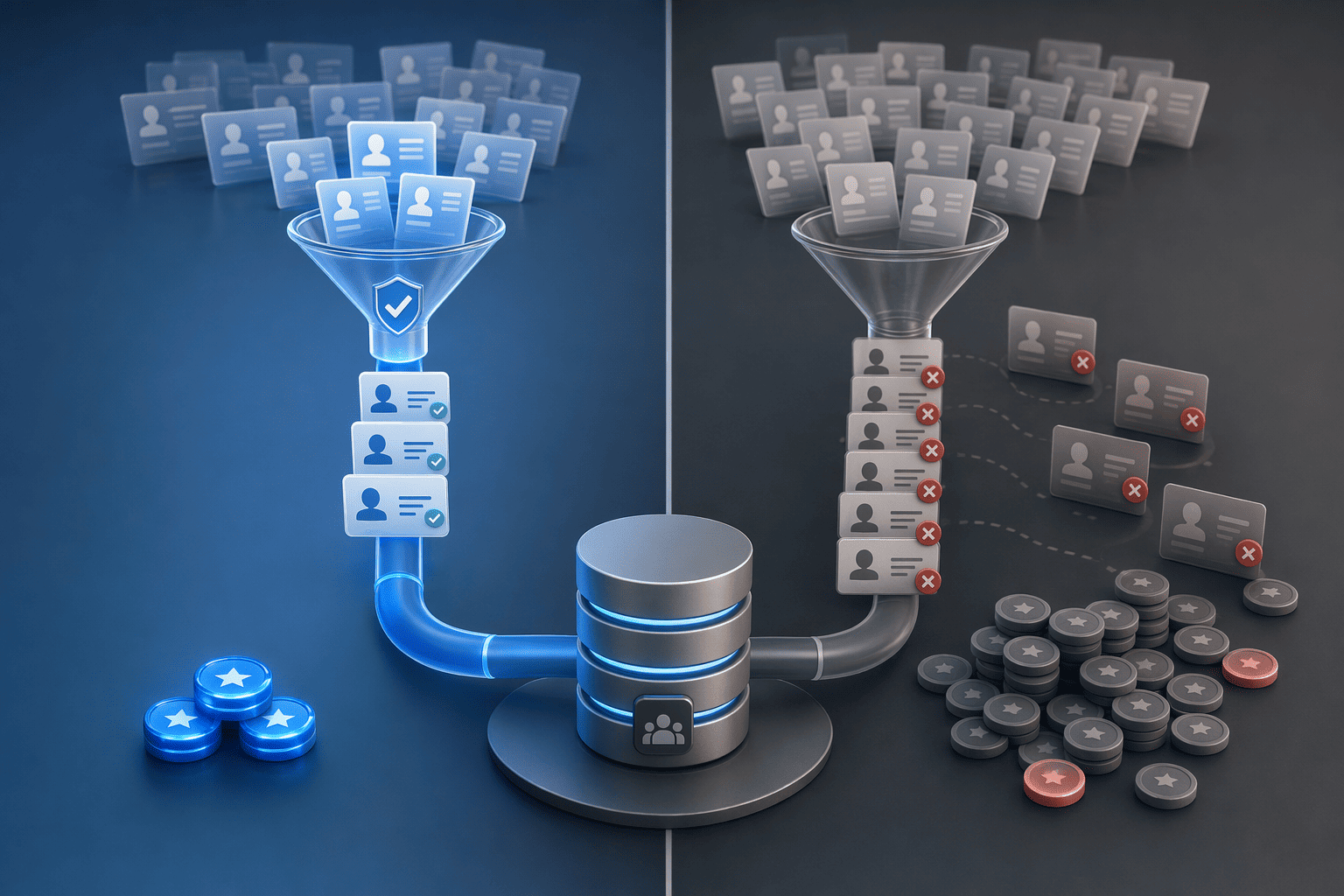
Pre-download verification surfaces accuracy before you pay. The platform runs syntax checks, SMTP handshakes, and catch-all detection in real time, then shows you only the contacts that passed. You are charged per verified record, not per lookup attempt. PeakAi uses dual verification for both emails and phone numbers, flagging invalid data at the point of capture.
Post-export enrichment charges you for all attempts and reports deliverability after export. You upload a list of LinkedIn URLs or names, the platform appends contact data to every row, and you receive a CSV with accuracy scores attached. Unverified or low-confidence matches still consume credits. This model works when you need coverage over precision, but it transfers verification risk to the buyer, you pay first, validate later.
Platforms that offer verified contact discovery before credit deduction reduce wasted spend and protect sender reputation by keeping invalid addresses out of your CRM from the start.
Expert insights on B2B sales tools show that verification methodology is the structural tradeoff buyers must understand when evaluating contact discovery platforms, not headline accuracy percentages or database size. The layer a platform validates at determines what 'verified' actually means.
Verification methods determine technical accuracy, but pricing models dictate whether you pay for undeliverable contacts, a distinction that triples true acquisition costs.
Pre-Download vs Post-Export Verification: Cost and Risk Comparison
Credit-Based Pricing and True Cost-Per-Usable-Contact
Credit-based pricing models can mask the true cost of contact discovery when match rates fluctuate. Post-export platforms charge a credit whether the phone number is found or not, meaning your actual cost per usable contact can be 35 to 100% higher than the advertised per-credit price. For example, if a platform charges $0.50 per credit and delivers a 60% match rate, your real cost per verified phone number is $0.83, not $0.50. Teams evaluating vendors should calculate (advertised per-credit price) ÷ (actual match rate) = true cost to avoid budget overruns. Pre-download verification platforms show verification status before committing a credit, letting you skip no-match results and pay only for verified contacts. PeakAi charges only when verification confidence is high, reducing credit waste on unverified records.
Data Decay and Refresh-Cycle Impact on Accuracy Claims
Contact data decays at approximately 2 to 3% monthly, eroding the accuracy of static databases over time. Post-export tools that pull from pre-cached datasets accumulate this decay, records verified six months ago may now route to disconnected numbers or outdated email addresses. Real-time enrichment models query live data sources at lookup time, reducing exposure to stale records. Static databases require manual refresh cycles to counteract decay, whereas waterfall enrichment systems hit multiple providers in priority order and return the first current match. Teams prioritizing phone accuracy for cold calling should evaluate how frequently a vendor refreshes its contact pool and whether verification happens at query time or relies on stored snapshots.
LinkedIn Compliance: Enrichment vs Scraping and Account Suspension Risk
Account suspension rates for heavy scraping users range from 15 to 20% based on community reports, while enrichment-based tools reduce risk to under 2%. Platforms that crawl LinkedIn profiles directly to extract contact data violate LinkedIn's Terms of Service and expose users to permanent bans. Enrichment-based platforms cross-reference LinkedIn profile identifiers (name, company, title) with independent third-party databases rather than accessing LinkedIn's internal systems, keeping lookup activity off LinkedIn's radar. For compliance-conscious teams, the distinction matters: scraping tools automate on-platform actions that trigger LinkedIn's anti-bot detection, whereas database-lookup platforms never authenticate with LinkedIn or access profile data through LinkedIn's APIs. Sales teams should verify whether a vendor's architecture relies on scraping or external enrichment before committing to find accurate contact information and close more deals without risking account suspension.
Before committing budget to any platform, run a controlled accuracy test using known LinkedIn contacts to measure real-world performance.
How to Test Contact Discovery Accuracy Before Committing Budget
Running a pre-purchase accuracy test with a known sample of LinkedIn profiles is the only way to validate vendor claims before signing a contract. Most platforms advertise 90%+ accuracy, but those figures often conflate email discovery (which can be inferred from domains) with phone-number connectivity (which is structurally constrained by LinkedIn's 5-10% visibility rate). The methodology below isolates match rate, deliverability, and regional variance so you can project real-world performance.
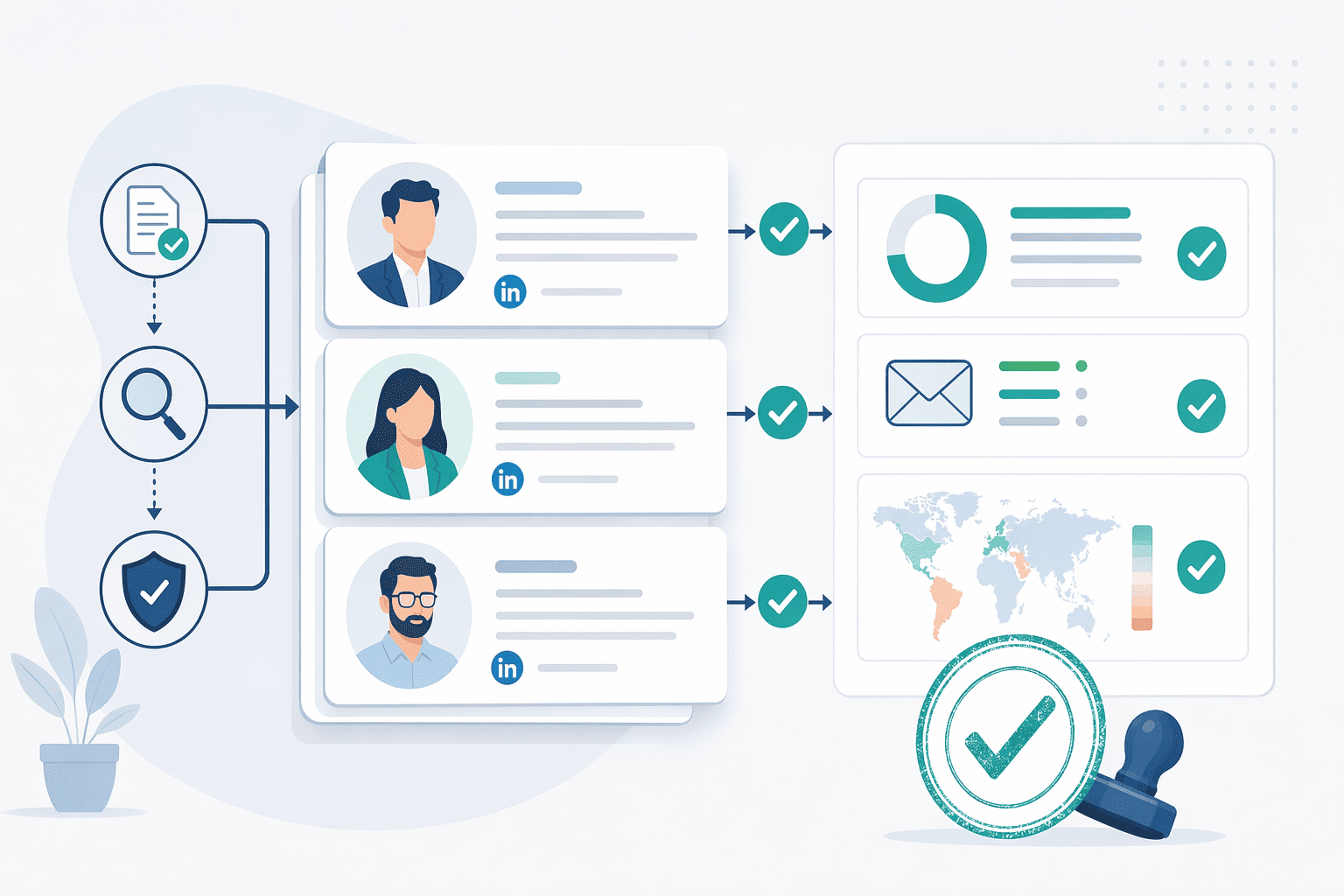
Building a Known-Sample Test Set from Your LinkedIn Network
Export 20-30 first-degree connections whose emails and phone numbers you already know from direct outreach or CRM records. This ground-truth dataset lets you measure whether the platform returns the correct contact details. Avoid testing only on high-visibility C-suite profiles, include mid-level individual contributors, regional contacts, and India-based prospects to reflect your typical target personas. Platforms often achieve 80%+ match rates on executives with public contact info but drop to 40-50% on less-visible roles.
What to Measure: Match Rate, Deliverability, and Regional Variance
Track three dimensions during your test: (1) match rate, did the tool find a contact record at all, (2) deliverability, did the email bounce when you sent a test message, and (3) regional accuracy, how do results differ between US/EU profiles and Indian B2B contacts. Distinguish phone-number connectivity from email deliverability in your calculations; vendors often aggregate these into a single 'accuracy' metric, but phone accuracy is structurally lower (LinkedIn hides most numbers) than email (which can be pattern-matched from domains). LinkedIn email and phone finder tools vary widely in their regional coverage, test your actual target markets, not just generic samples.
Free Trial and Credit Allocation Strategies
Structure your test using free-tier credits or trial periods without committing to a subscription. Allocate at least 15-20 lookups to typical prospect personas rather than vanity tests on easy-to-find profiles. PeakAi delivers verified contact data with 91% accuracy by querying independent databases rather than scraping LinkedIn directly, and offers a $9 starter pack to close more deals without subscription lock-in. After running your sample through 2-3 platforms, calculate cost-per-verified-contact (total spend divided by deliverable emails/phones) to compare actual unit economics across vendors.
With testing methodology established, the next step is comparing how leading platforms verify contacts, price credits, and handle compliance risk.
Platform Comparison: Verification Methods, Accuracy Claims, and Pricing Models
PeakAi, Apollo, ZoomInfo, Lusha, Kaspr, LeadIQ, Clay: Side-by-Side
| Platform | Starting Price | Verification Method | Accuracy Claim | India Coverage | G2 Rating |
|---|---|---|---|---|---|
| PeakAi | $9 for 50 contacts | Pre-download real-time lookup + dual verification | 91% phone & email | Yes, specialized | Not rated |
| Apollo | $49/seat/month | Syntax + SMTP handshake | 70-85% email | Global database | 4.8 |
| Lusha | Contact for pricing | Syntax + provider lookup | Not publicly disclosed | Global database | 4.3 |
| Kaspr | Contact for pricing | Real-time provider waterfall | Not publicly disclosed | EU-focused | 4.4 |
| LeadIQ | Contact for pricing | Syntax + Salesforce sync | Not publicly disclosed | Global database | 4.2 |
| ZoomInfo | Contact for pricing | Multi-source verification | 80-90% email, 65-75% phone | Global database | 4.4 |
| Clay | Contact for pricing | 75+ provider orchestration + verification waterfall | 85-95% with verification | Via providers | 4.9 |
Verification-Method Column: What Each Platform Actually Tests
The verification-method column reveals how platforms validate contacts before delivery. PeakAi performs pre-download real-time lookup with dual verification for both emails and phone numbers. Apollo uses syntax validation combined with SMTP handshake checks. SalesQL and similar platforms verify data in real time across multiple providers. Clay orchestrates verification across 75+ data providers using waterfall logic. ZoomInfo applies multi-source verification at the enterprise data-foundation level. Syntax-only methods catch format errors but miss catch-all addresses and inactive mailboxes, teams prioritizing accuracy should verify SMTP handshake or pre-download lookup is included.

Best-For Recommendations by Use Case and Risk Tolerance
For teams prioritizing LinkedIn compliance and pre-download accuracy, PeakAi delivers verified contacts in 10 seconds without account-suspension risk. Apollo fits SMB and mid-market outbound teams needing one tool for contact data, email finding, and sequencing at $49/seat/month. ZoomInfo serves enterprise sales teams requiring the deepest contact data, phone numbers, and org charts. Clay fits GTM engineering teams building sophisticated, automated enrichment systems using multiple data sources. Kaspr and Lusha offer LinkedIn-native pickers for individual prospectors needing instant emails and phone numbers with solid GDPR coverage for European markets. LeadIQ suits teams prospecting directly from LinkedIn with built-in Salesforce sync. For India-focused outreach, PeakAi provides specialized verification with GST and regional phone-format validation unavailable in global platforms.
Ready to Transform Your Sales Process? Join thousands of sales professionals who find accurate contact information and close more deals with verified data.
Platform comparisons reveal verification differences, but geographic testing uncovers another accuracy variable: regional data density and profile completeness.
Regional Accuracy Gaps: Why US/EU Performance Doesn't Predict India Results
The 10-15 Point Accuracy Drop in India vs US/EU Markets
A global platform advertising 90% email accuracy in the United States typically delivers 75-80% in India. This 10-15 percentage point accuracy drop stems from structural differences in how LinkedIn networks mature across geographies. North American and Western European profiles benefit from higher job-change documentation frequency, more consistent email-domain standardization ([email protected] patterns), and LinkedIn network density that platforms optimize for first. When these same platforms extend coverage to India and other emerging markets, the underlying data infrastructure, built for mature Western networks, underperforms. Sales teams relying solely on vendor-reported global accuracy figures often discover lower match rates in non-US markets during real-world prospecting.

Why Global Databases Underperform in Emerging Markets
Global contact discovery platforms optimize data collection and verification pipelines for geographies where LinkedIn adoption is deepest and profile completeness highest. In India, however, four factors degrade performance: (1) LinkedIn network density remains lower than in the US or EU, reducing the volume of profile updates platforms can harvest; (2) job-change documentation lags behind Western markets, leaving employment records stale; (3) email-domain standardization is less consistent, breaking pattern-matching algorithms calibrated for Western corporate email conventions; (4) phone-number visibility is structurally lower, as Indian professionals share mobile numbers less frequently on public profiles. Platforms that claim strong global coverage often mean geographic breadth, not uniform accuracy across regions. Buyers targeting India should test platforms on India-based LinkedIn profiles during free trials, following the testing methodology for B2B prospecting in India to verify advertised rates translate to the actual market.
India Billing and Regional Support Availability
Beyond accuracy, practical market access matters. PeakAi and a handful of competitors offer INR pricing and local payment methods, reducing foreign-exchange friction for India-based buyers. Most global platforms require USD or EUR billing, adding 3-5% currency-conversion overhead and complicating procurement for teams operating under India budgets. Regional support availability also varies, platforms optimized for US/EU time zones may not staff customer success teams aligned with IST business hours. For sales teams prospecting primarily within India, tools with dedicated India infrastructure deliver both accuracy and operational fit that generic global platforms struggle to match. Join thousands of sales professionals who find accurate contact information and close more deals by choosing platforms purpose-built for their target geography.
Conclusion
Post-export enrichment tools (Apollo, ZoomInfo database tiers) deliver higher match rates on US/EU profiles but charge for undeliverable contacts, true cost-per-verified-contact can run 35-100% above advertised pricing when regional accuracy drops. Pre-download verification models (PeakAi, LeadIQ real-time lookup) surface deliverability before credit deduction but may show lower match rates upfront, transparency advantage comes at the cost of smaller initial result sets.
As LinkedIn tightens scraping enforcement and data privacy regulations expand, enrichment-based platforms that query third-party databases (rather than direct scraping) will become the compliance-safe default, buyers should prioritize verification method and regional testing over advertised accuracy percentages.
Test PeakAi's 91% pre-download verification accuracy using the 4-step known-sample methodology, export 20-30 contacts, run them through the free trial, and measure deliverability on your target regions before committing budget.
Frequently Asked Questions
What is the most accurate contact discovery platform for LinkedIn profiles?
No platform delivers 95%+ accuracy in real-world use, independent testing shows 50% averages. Pre-download verification models like PeakAi (91% claim with upfront SMTP handshake validation) outperform post-export enrichment that charges for undeliverable contacts. Prioritize platforms using SMTP handshake or real-time lookup over syntax-only validation.
How can I test contact discovery accuracy before buying?
Export 20-30 first-degree LinkedIn connections whose emails you know. Run them through platform free trials, measuring (1) match rate, (2) deliverability via test sends, and (3) regional variance. Calculate cost-per-verified-contact by dividing total credits by deliverable matches. Test on typical prospect personas, mid-level ICs and India-based profiles, not high-visibility executives.
What is the difference between email syntax validation and deliverability testing?
Syntax validation uses regex to check email format ([email protected]). SMTP handshake tests whether the mail server accepts messages. Catch-all detection identifies domains accepting all addresses. Vendors conflate these tiers, syntax-only tools report 95%+ accuracy while SMTP handshake platforms show 60-70% on identical datasets, revealing genuine deliverability gaps.
Why does contact data accuracy decay over time?
Professionals change jobs, update emails, and switch phone numbers at 2-3% monthly. Static databases accumulate this decay, records verified six months ago may route to disconnected numbers. Real-time enrichment models query fresh data and reduce refresh-cycle gaps, maintaining higher deliverability than pre-cached datasets that age between updates.
How much does contact discovery cost per verified contact?
Actual cost equals advertised per-credit price divided by match rate. Post-export platforms charge whether contacts are found or not, when match rates fluctuate, true cost-per-usable-contact inflates 35-100% above advertised pricing. Pre-download verification models surface accuracy before payment, avoiding credit burn on no-match results and undeliverable emails.
Does LinkedIn contact discovery accuracy differ by region?
Yes, India-specific accuracy drops 10-15 percentage points below US/EU figures. Global platforms optimize for geographies with higher LinkedIn adoption and profile completeness. Test platforms on India-based profiles during free trials using the 20-30 known-contact methodology to measure regional variance before committing budget to vendors citing US/EU benchmarks.
What is the LinkedIn account suspension risk with contact discovery tools?
Heavy scraping users face 15-20% suspension rates, while enrichment-based tools reduce risk below 2%. Direct scraping violates LinkedIn Terms of Service, triggering permanent bans. Enrichment platforms query third-party databases without crawling LinkedIn, offering compliance-safe access. Choose enrichment-based tools like PeakAi to minimize account-suspension exposure.
Sources
- LinkedIn Email Finder Accuracy: What Actually Works - HyperClapper - www.hyperclapper.com
- 6 Best Email Finder Tools In 2026 (Ranked By Accuracy) - www.emailchaser.com (2026)
- Best Contact Finding Tools for B2B Sales Teams in 2026 - lagrowthmachine.com (2026)
- 10 Best LinkedIn Email Finders and Scrapers (2026) - emailanalytics.com (2026)
- What Is Data Decay? B2B Contact Data Risks & How to Reduce It - www.emarketnow.com (2026)
- How to Extract Emails from LinkedIn: Methods & Tools - connectsafely.ai (2026)
- How to Get Phone Numbers from LinkedIn — 2026 Guide - scrupp.com (2026)
- Best Contact Discovery Tools for 2026 - www.therankmasters.com (2026)
- 15 Best LinkedIn Sales Navigator Alternatives (2026 Guide) - fundraiseinsider.com (2026)
- zoominfo vs cognism vs apollo - which one and why? : r/CRM - www.reddit.com
