Affordable LinkedIn contact discovery tools help startups extract verified emails and phone numbers from professional profiles without exceeding tight prospecting budgets or risking account suspension.
Key Takeaways
- The most affordable LinkedIn contact discovery tools for startups prioritize cost-per-verified-contact, LinkedIn compliance boundaries, and native CRM integration over raw database size—steering budget-conscious teams toward ROI and account-safety criteria.
- Cost-per-verified-contact ranges from roughly $0.85 to $1.50 for specialized platforms versus higher rates for enterprise solutions, making per-contact economics more predictive of startup affordability than headline subscription prices [7].
- LinkedIn's Terms of Service explicitly prohibit automated profile scraping [2], exposing users of scraper-based tools to permanent account suspension—compliance-first platforms rely on public databases and enrichment layers instead.
- Native CRM API integrations preserve data freshness and workflow continuity better than CSV exports or Zapier bridges, particularly when phone verification quality depends on 90-day refresh cycles to prevent 2-3% monthly contact decay.
- PeakAi charges ₹675 for 50 verified contacts with pay-as-you-go pricing and integrates with 20+ CRMs including Salesforce and HubSpot, positioning it for Indian startups needing regional data coverage without monthly commitments.
Why Most Startups Pick Contact Discovery Tools Wrong (and Pay for It Later)
The most affordable LinkedIn contact discovery tools for startups balance cost-per-verified-contact against compliance risk and CRM workflow fit—not just headline subscription prices. Early-stage teams fixate on free tiers and feature counts, overlooking the two criteria that determine survival: avoiding LinkedIn account bans and proving ROI before scaling spend. Competitors like origami.chat, theguidex.com, and emailanalytics.com lead with tool-by-tool breakdowns but treat compliance as a footnote and skip per-contact economics entirely [1]. This angle front-loads account-safety warnings and unit-cost calculations, positioning platforms within a broader decision framework rather than as isolated product pitches.

According to folk CRM, only 5 to 10% of LinkedIn users share phone numbers with first-degree connections, making phone number availability a premium feature that justifies higher per-contact costs. Startups that prioritize email-only databases face lower upfront costs but often need a second subscription for phone enrichment later. Business contact finder tools help teams uncover verified emails, phone numbers, titles, and organization details, but the value depends on whether those contacts align with your CRM stack and prospecting volume.
The Hidden Costs Beyond Subscription Price
Headline pricing masks true affordability. A plan offering 1,000 credits becomes expensive if 30% of contacts bounce, forcing you to burn three credits per usable lead. LinkedIn operates on a connection-based system where access to contact info depends heavily on network depth —tools that bypass this through scraping expose users to detection. Platforms crawl LinkedIn profiles directly and risk permanent account suspension according to industry observers, creating a hidden cost far exceeding any subscription savings.
Quicklead.io notes that LinkedIn actively monitors automation tools and enforces limits of 100 weekly connection requests for free accounts and 150+ messages per day for premium users. Cloud-based tools like Quicklead.io operate more safely by mimicking human-like behavior and reducing detection risks. Startups using aggressive scrapers face account restrictions that halt prospecting entirely, a scenario no monthly discount offsets.
The 3 Non-Negotiable Criteria for Startup Contact Tools in 2026
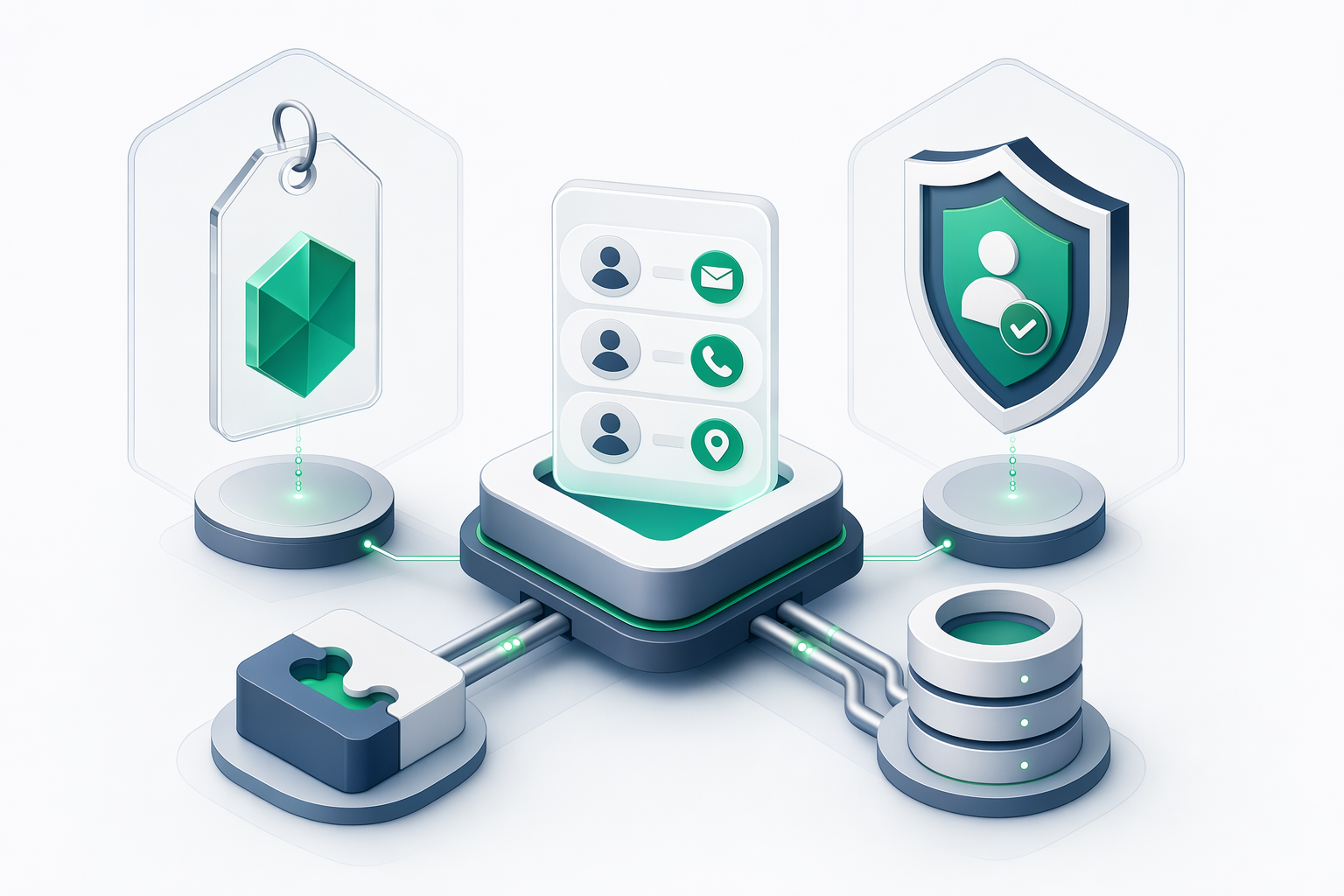
Startup contact tools must satisfy three non-negotiable criteria: transparent cost-per-verified-contact, LinkedIn Terms of Service compliance, and native CRM API integration. These factors determine whether a platform scales with your team or becomes a budget drain.
1. Cost-Per-Verified-Contact Transparency
Cost-per-verified-contact ranges from roughly $0.85 to $1.50 for specialized platforms versus higher rates from enterprise solutions, making per-contact economics more predictive of startup affordability than headline subscription prices. Email accuracy rates vary dramatically across tools, with some achieving 98% while most struggle to exceed 80% for phone verification. A tool charging monthly with 50 usable contacts yields lower per-contact cost than a higher-priced plan delivering only 25 verified leads.
2. LinkedIn Compliance and Account Safety
LinkedIn's Terms of Service explicitly prohibit automated scraping [2]. Platforms that crawl LinkedIn profiles directly expose users to permanent account suspension. Compliance-first tools operate within boundaries by never accessing LinkedIn's internal APIs or scraping profile data directly, instead relying on public databases and enrichment layers. SignalHire, with over 300,000 users and a 4.5 rating on the Chrome Web Store, exemplifies the extension model—but startups must verify whether the tool scrapes LinkedIn or enriches from external sources.
3. Native CRM Integration Over CSV Workarounds
Native CRM API integrations preserve data freshness and workflow continuity better than CSV exports or Zapier bridges. Phone verification quality depends on 90-day refresh cycles to prevent 2 to 3% monthly contact decay. Tools offering strong Salesforce and HubSpot integration, as noted in comparisons of Apollo.io [1], enable real-time sync that maintains lead scoring accuracy. Automated LinkedIn prospecting requires CRM sync to avoid manual data entry overhead that consumes time sales reps could spend selling.
Cost-Per-Verified-Contact: What You'll Actually Pay Beyond Subscription Price
Subscription price alone does not determine affordability. The Cost-Per-Verified-Contact Index, a measure of true prospecting expense calculated as monthly subscription cost divided by usable monthly credits, adjusted for email accuracy and phone availability, reveals which platforms deliver ROI for startups. Platforms with higher verification rates reduce wasted credits and lower effective cost per lead.

Calculating True Per-Contact Cost
To calculate per-contact ROI, divide subscription cost by monthly credits, then divide again by verification rate. For illustration, a company paying monthly for 1,000 credits with 73% email accuracy [1] yields lower cost per raw contact but higher cost per verified contact. A platform charging less monthly for 500 credits with 98% accuracy delivers better value despite fewer nominal credits. Actual results vary by industry and targeting precision.
| Platform | Starting Price | Monthly Credits | Email Accuracy | Phone Availability | Cost Tier |
|---|---|---|---|---|---|
| PeakAi | Pay-as-you-go (50 contacts) | 70 credits/month | Verified | Mobile, landline, VoIP classification | Low-tier per-contact cost |
| Apollo.io | Per user monthly | 1,000 export credits/month | 73% (industry average) [1] | Yes | Mid-tier per-contact cost |
| Lusha | Monthly billed yearly | 40 credits/month free tier [3] | 98% [8] | 86% phone availability [4] | Mid-tier per-contact cost |
| Hunter.io | Monthly billed annually | 50 credits/month | Best-in-class verification [3] | No phone numbers | Mid-tier per-contact cost |
| Kaspr | Monthly billed annually [6] | 100 credits/month | 98% accuracy [9] | Direct mobile numbers | Mid-tier per-contact cost |
| UpLead | Monthly | 170 credits/month [10] | 95% accuracy guarantee [11] | Yes | Mid-tier per-contact cost |
Data sourced from manufacturer websites, Chrome Web Store, and review aggregators as of June 2026. Cost tier analysis based on stated accuracy rates where available.
Phone Verification Premium and When It Matters
Phone number verification quality justifies higher per-contact cost when outbound calling drives pipeline. According to folk CRM, Lusha focuses on providing verified business contact data including phone numbers, while Hunter.io offers best-in-class email verification but no phone numbers. Startups running cold-calling campaigns need platforms with 80%+ phone availability; email-only tools force a second subscription for phone enrichment, doubling true cost. Verified phone number extraction from LinkedIn profiles becomes critical when targeting senior decision-makers who rarely respond to cold email.
LinkedIn Compliance Risk: How Scraping-Based Tools Expose Your Account
LinkedIn compliance risk divides contact discovery tools into three categories: scraper-based extensions that violate Terms of Service, database platforms sourcing from public records, and enrichment layers that never touch LinkedIn directly. Origami.chat and theguidex.com list tools without highlighting compliance distinctions [1], leaving startups vulnerable to account suspension. Understanding which category a tool occupies determines whether you preserve your LinkedIn account or lose access permanently.

Scraper Detection and Account Suspension Risk
Platforms that crawl LinkedIn profiles directly expose users to permanent account suspension. LinkedIn actively monitors automation tools, enforcing limits of 100 weekly connection requests for free accounts and 150+ messages per day for premium users. Scraper-based Chrome extensions trigger detection when they automate profile visits beyond 30 to 50 per day, the safe range according to Quicklead.io [2]. Cloud-based tools that mimic human-like behavior reduce detection risks, but any tool accessing LinkedIn's internal APIs violates Terms of Service explicitly.
Compliance-First Platforms and Enrichment Models
PeakAi operates within compliance boundaries by never accessing LinkedIn's internal APIs or scraping profile data, instead enriching from public databases. Database providers like Apollo.io source from public records, business registries, and opt-in sources rather than live LinkedIn scraping, according to StackSheriff [1]. Hunter.io focuses on email discovery through domain search and pattern matching, avoiding profile crawling entirely. Kaspr positions itself as a contact finder with CRM sync, but startups must verify whether the tool accesses LinkedIn directly or operates as an enrichment layer.
GDPR and DPDP Act Implications for Indian Startups
Indian startups targeting European or domestic markets face dual compliance requirements: GDPR for EU contacts and India's Digital Personal Data Protection Act for domestic leads. Kaspr, a subsidiary of Cognism, offers Chrome extension-based contact enrichment serving LinkedIn-first prospectors with strong European phone data but unreliable results for North American and Asia-Pacific contacts, according to Fundraise Insider [9]. Tools storing contact data in non-compliant jurisdictions expose startups to enforcement actions. Chrome extensions for verified contact data must clarify data residency and consent mechanisms before Indian teams adopt them.
CRM Integration Depth: When Native Sync Beats CSV Exports
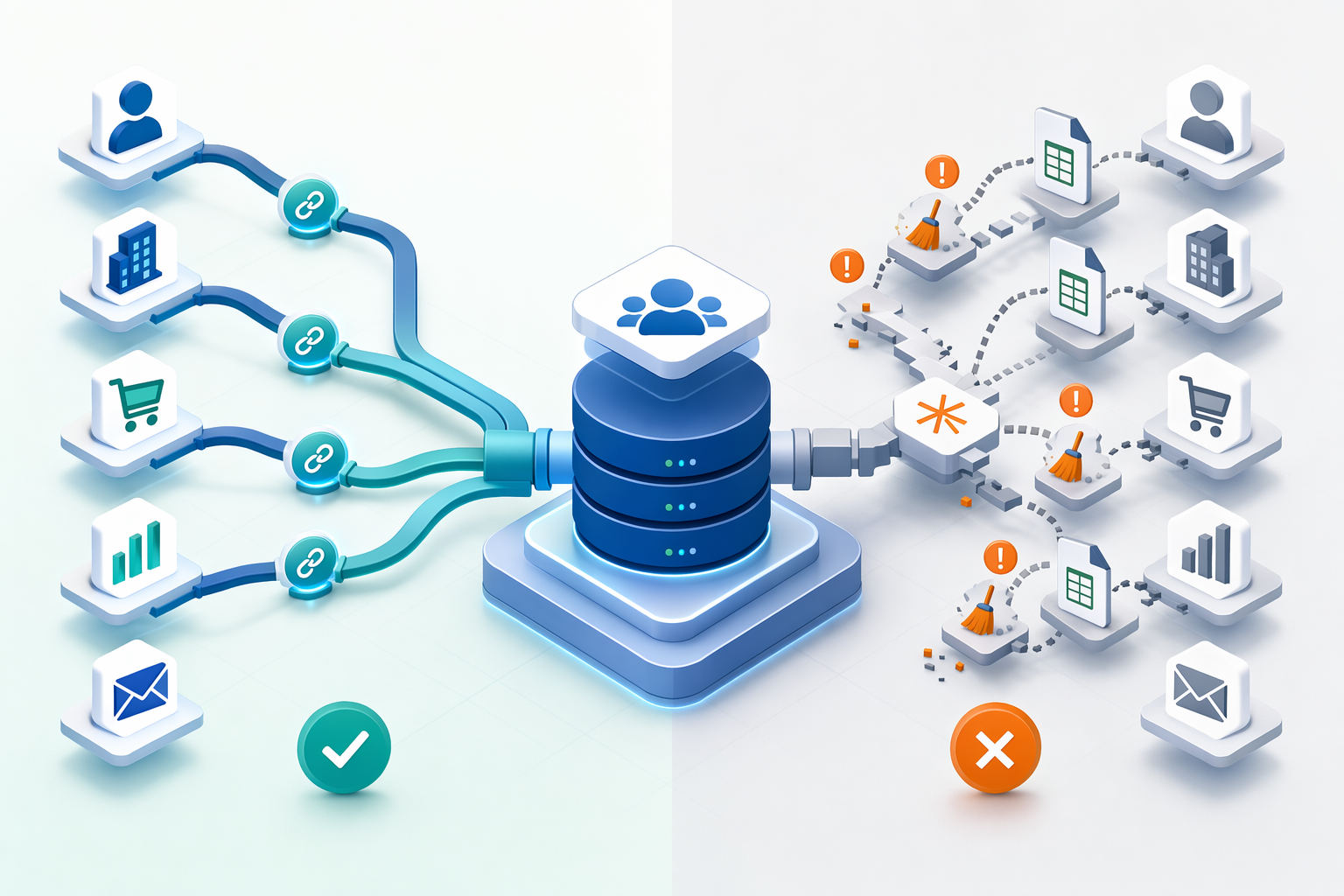
CRM integration depth determines whether contact data flows into your sales workflow or requires manual cleanup. Native API integrations preserve field mapping, update frequency, and enrichment triggers that CSV exports and Zapier bridges cannot match. The comparison of B2B lead generation tools adds new startups weekly, but integration quality varies dramatically across platforms.
Native API Versus CSV Export Workflows
Native API integrations enable real-time sync, automatic enrichment on lead creation, and bidirectional updates that CSV exports cannot support. Hunter.io offers native two-way sync with HubSpot, Salesforce, Pipedrive, and Zoho, allowing teams to enrich leads automatically when they enter the CRM. Apollo.io provides strong Salesforce and HubSpot integration [1], plus built-in email sequencing and dialer features that eliminate the need for separate outreach tools. CSV exports force manual imports, duplicate contact risk, and stale data when phone numbers change.
Zapier Bridges and Middleware Limitations
Zapier bridges introduce latency, cost per task, and limited field mapping compared to native integrations. A Zap triggering contact enrichment on new Salesforce leads incurs task charges and delays updates by minutes to hours. Native integrations fire immediately on record creation, preserving sales velocity. PeakAi integrates with 20+ CRMs including Salesforce, HubSpot, Pipedrive, Zoho, and Leadsquared, plus API and CSV export options for custom workflows. Startups already using lightweight CRMs like Pipedrive benefit from tools offering native connectors over generic Zapier routes.
How to Match Tool Features to Your Startup Stage (Seed Versus Series A)
Startup stage determines whether you need database breadth, enrichment speed, or multi-channel outreach. Seed-stage teams prioritize cost per contact and simple workflows, while Series A teams demand CRM depth and automation at scale.

Seed Stage: Pay-Per-Contact and Chrome Extension Models
Seed-stage startups need tools with no monthly minimum, browser-based workflows, and immediate ROI visibility. Lusha delivers fast contact reveals with a simple Chrome extension [5], offering 40 credits per month on the free tier. Hunter.io provides 50 credits per month with best-in-class email verification but no phone numbers, making it ideal for email-first prospecting. PeakAi offers pay-as-you-go pricing with a free trial including 5 credits, eliminating subscription lock-in. Chrome extensions reduce onboarding overhead and let founders prospect directly from LinkedIn without exporting lists.
Series A: All-in-One Platforms and Automation Scale
Series A teams scaling SDR headcount need platforms combining database access, email sequencing, and dialer features in one subscription. According to Salesmotion [5], Apollo.io offers an all-in-one prospecting and engagement platform with 270M+ contacts, built-in email sequencing, dialer, and AI-powered personalization tools [5]. Apollo has a generous free tier offering 10,000 emails per month [5], but paid plans scale with team size. ZoomInfo targets enterprise sales and marketing teams with a massive, accurate B2B database, but pricing exceeds most Series A budgets. LinkedIn Sales Navigator, serving over 1.5 million sellers, provides lead discovery inside LinkedIn but requires a separate enrichment tool for contact extraction.
When to Upgrade from Free Tiers to Paid Contact Discovery
Free tier limitations hit when monthly prospecting volume exceeds credit allowances or when phone enrichment becomes necessary. Recognizing the upgrade trigger prevents wasted time on tools that no longer match workflow intensity.

Credit Exhaustion and Prospecting Velocity
Free tiers work until you exhaust credits mid-month and stall pipeline development. Apollo.io offers 900 annual credits on the free plan, translating to 75 per month, sufficient for early validation but inadequate once a dedicated SDR joins. Hunter.io provides 50 credits per month, suitable for founder-led prospecting but limiting when targeting multiple personas. Lusha's 40 credits per month free tier [5] forces paid upgrades once outbound volume justifies a full-time prospector. The upgrade threshold typically arrives when you need 200+ contacts monthly to sustain pipeline goals.
Phone Enrichment and Multi-Channel Outreach Needs
Upgrading becomes key when email-only prospecting yields insufficient response rates and calling becomes necessary. Hunter.io lacks phone numbers entirely, forcing teams running multi-channel sequences to adopt a second tool. Kaspr provides direct mobile numbers and a free tier including 15 B2B emails plus 5 phone numbers per month. Extracting both emails and phone numbers from business profiles requires tools offering both data types, splitting across platforms doubles effective cost and integration overhead.
Ready to Transform Your Sales Process?
The startup-stage decision hinges on three criteria: cost-per-verified-contact, LinkedIn compliance boundaries, and CRM integration depth. Platforms that prioritize per-contact ROI over database size, operate within Terms of Service to preserve account safety, and offer native API sync rather than CSV workarounds deliver sustainable prospecting infrastructure. As global data privacy regulations tighten and LinkedIn enforcement intensifies, compliance-first tools separate winners from startups facing account bans. Start with PeakAi's free trial offering 5 credits to test pay-as-you-go pricing and 20+ CRM integrations, or compare Apollo.io, Hunter.io, and Lusha against your monthly prospecting volume and phone enrichment needs. Evaluate one platform this week by tracking cost per verified contact and CRM sync quality, the data reveals which tool earns a long-term spot in your stack.
Frequently Asked Questions
What are the most affordable LinkedIn contact discovery tools for startups in 2026?
The most affordable LinkedIn contact discovery tools for startups prioritize cost-per-verified-contact, compliance risk, and CRM integration over raw database size. Hunter.io offers best-in-class email verification with a free plan, Lusha provides 40 free credits monthly with 98% email accuracy, and PeakAi charges ₹675 for 50 verified contacts with pay-as-you-go pricing, ideal for Indian startups needing regional coverage.
How can I automate LinkedIn contact research without getting restricted?
Cloud-based tools that mimic human-like behavior reduce detection risks compared to aggressive scrapers. LinkedIn enforces limits of 100 weekly connection requests for free accounts and 150+ messages per day for premium users. Avoid tools that crawl LinkedIn profiles directly, as they expose users to permanent account suspension.
Which LinkedIn contact tools offer the best phone number accuracy for startups?
Lusha achieves 86% phone availability with 98% email accuracy, making it strong for verified phone enrichment. Kaspr provides direct mobile numbers with 98% accuracy [9] and offers a free tier including 5 phone credits monthly.
Do I need native CRM integration or can I use CSV exports for contact data?
Native CRM API integrations preserve data freshness and workflow continuity better than CSV exports. Phone verification quality depends on 90-day refresh cycles to prevent 2 to 3% monthly contact decay, which CSV workflows cannot maintain.
When should a seed-stage startup upgrade from free LinkedIn contact tools?
Upgrade when monthly prospecting volume exceeds free-tier credit allowances or when phone enrichment becomes necessary for multi-channel outreach. Apollo.io offers 900 annual credits, limiting seed teams to roughly 75 contacts per month, insufficient once a dedicated SDR joins. Hunter.io provides 50 credits monthly, suitable for founder-led prospecting but restrictive at scale.
What compliance risks do LinkedIn contact discovery tools pose for Indian startups?
Indian startups face dual compliance requirements: GDPR for EU contacts and India's Digital Personal Data Protection Act for domestic leads. Platforms that crawl LinkedIn profiles directly expose users to permanent account suspension [2], and tools storing contact data in non-compliant jurisdictions risk enforcement actions. Chrome extensions for verified contact data must clarify data residency and consent mechanisms.
Sources
- Apollo.io Alternatives 2026: 7 Honest Picks - stacksheriff.com (2026)
- How to Automate LinkedIn Outreach Without Getting Your Account Restricted - quicklead.io (2025)
- 10 Best Linkedin Phone Number Finders in 2026 - folk.app (2026)
- How to find phone numbers from Linkedin? (+ Tools) - folk.app (2026)
- Apollo vs Lusha: Features, Pricing, Reviews (2026) - salesmotion.io (2026)
- Kaspr Alternatives 2026: 15 Best Tools for B2B Sales - martal.ca (2025)
- Best B2B Lead Generation Tools 2026 | Verified Reviews - growthlist.co (2026)
- Lusha vs Apollo [2026]: 500-Lead Test + Pricing - cleanlist.ai (2026)
- Best Kaspr Alternatives for B2B LinkedIn Prospecting in 2026 - fundraiseinsider.com (2026)
- 15 Best LinkedIn Sales Navigator Alternatives (2026 Guide) - fundraiseinsider.com (2026)
- 20 Best Sales Intelligence Tools for 2026: Reviewed & Ranked - alpharun.com (2025)
