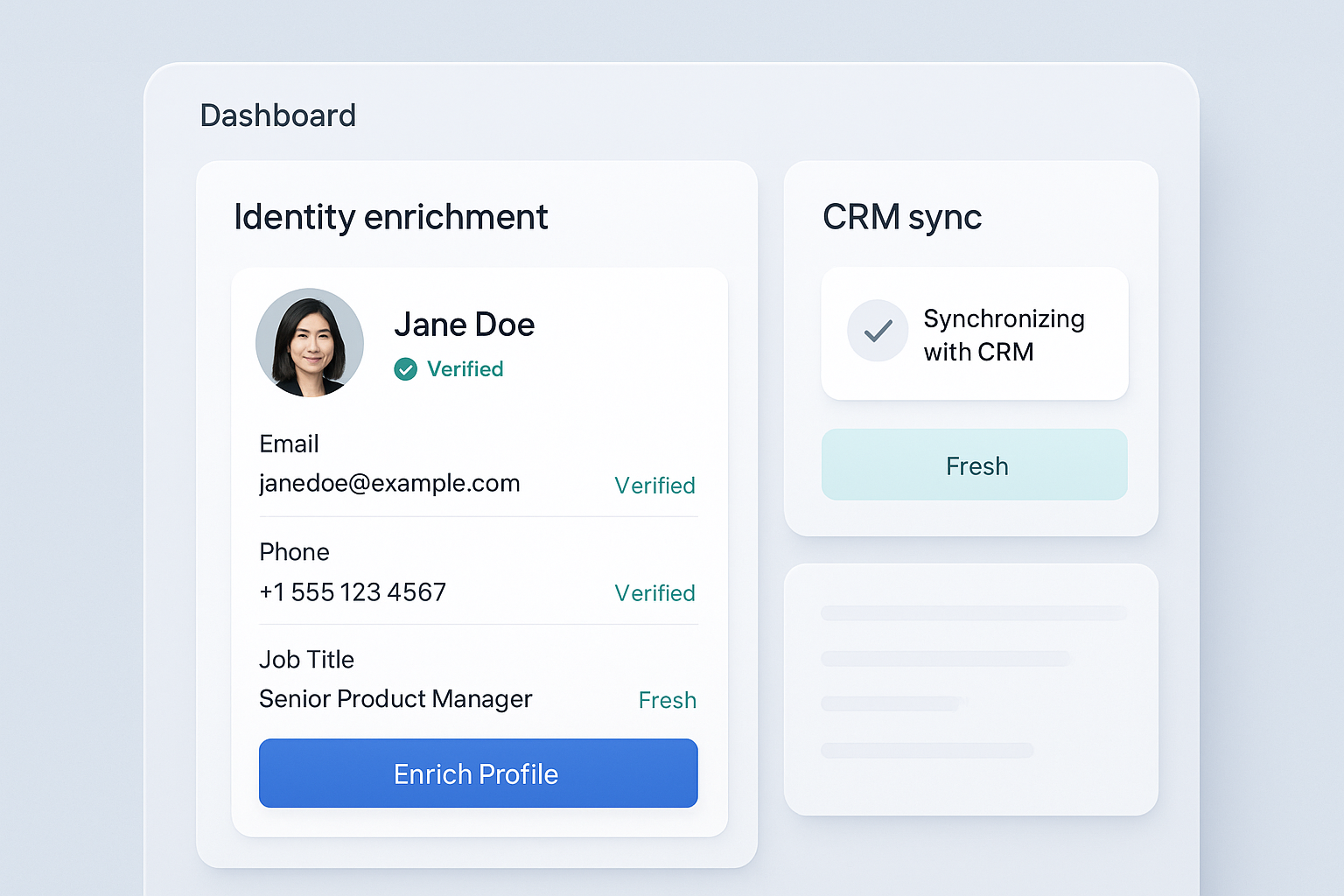
Real-time LinkedIn profile enrichment means extracting and verifying contact data—email addresses, phone numbers, job titles—from LinkedIn profiles within milliseconds of a trigger event, then updating your CRM automatically without manual intervention.
Key Takeaways
- Multiple platforms deliver real-time LinkedIn enrichment through three distinct approaches: Chrome extensions that scrape profiles during browsing, database APIs that match profiles to pre-built records, and verification-first platforms that cross-reference multiple sources to validate contact data.
- LinkedIn's Terms of Service explicitly prohibit automated scraping, creating account suspension risks for tools that access LinkedIn's internal APIs or extract profile data directly without user consent.
- Only 5-10% of LinkedIn users share phone numbers with first-degree connections, and less than 1% with second- or third-degree contacts, making phone verification methodology more critical than database size.
- Data decay affects roughly 2-3% of contact records monthly, meaning static databases without 90-day refresh cycles deliver outdated information within a single sales quarter.
- Cost-per-verified-contact ranges from roughly $1 to $2 for specialized verification platforms, compared to $2 to $4 from enterprise database providers.
Expert insights on B2B sales, lead generation, and business growth strategies.
Yes, several platforms enrich LinkedIn profiles in real-time, but they operate under fundamentally different compliance models and verification methodologies. The Indian B2B market has projections hitting $90–$100 billion by 2025, driving demand for contact discovery tools that respect LinkedIn's Terms of Service while delivering accurate phone numbers and email addresses [1]. According to PublicMediaSolution [1], the market splits into three tiers: Chrome extensions that scrape profiles during user browsing sessions, database APIs that return pre-matched records in milliseconds, and verification-first platforms that cross-reference multiple sources before returning contact data. Each approach carries distinct trade-offs in compliance risk, data freshness, and phone verification quality.
What Real-Time LinkedIn Enrichment Actually Means in 2026
Real-time enrichment refers to retrieving and validating contact data within seconds of a trigger event—pasting a LinkedIn URL into your CRM, browsing a profile with a Chrome extension, or uploading a CSV of prospect names. The term distinguishes event-driven enrichment from batch processing, where you upload a list and wait hours or days for results.
Sub-Second API Response vs. Webhook-Based Delayed Completion
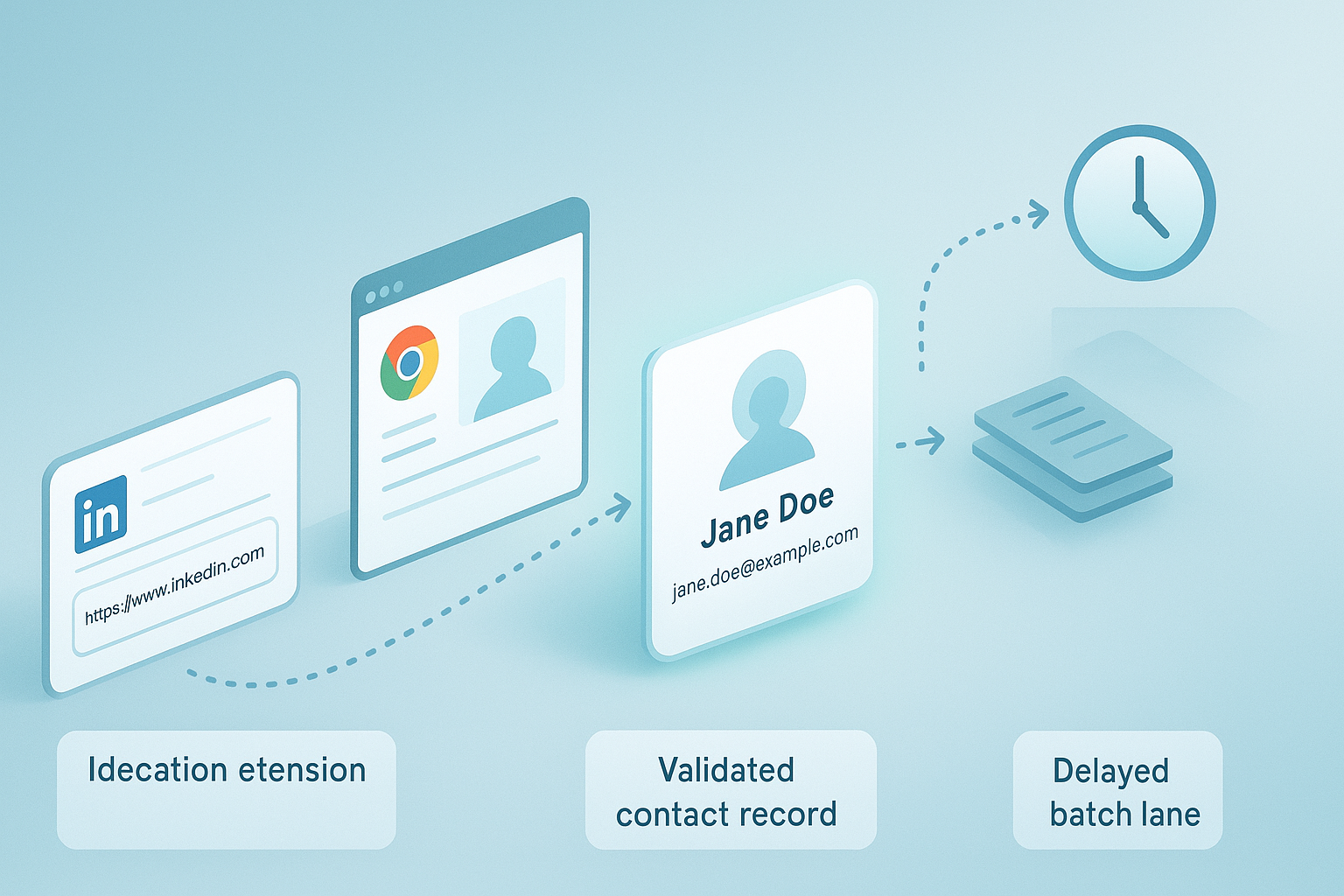
Platforms advertise real-time capabilities in two distinct forms. Sub-second APIs return contact data synchronously—you send a LinkedIn URL, the API queries its database, and you receive email and phone fields in under 200 milliseconds. Webhook-based systems accept your request immediately but complete verification asynchronously, sending results to your CRM via webhook minutes or hours later. Both qualify as real-time from a workflow perspective, but only synchronous APIs support live prospecting scenarios where sales reps need contact data during active calls or LinkedIn conversations.
Real-Time Database Matching vs. Live Scraping
Database APIs achieve sub-second response times by pre-indexing millions of LinkedIn profiles and matching your input against stored records. Live scraping tools extract data directly from LinkedIn during your browsing session, capturing profile updates that haven't yet propagated to third-party databases. Database matching delivers consistent latency but reflects data staleness, records may be 30, 60, or 90 days old. Live scraping captures the freshest data but introduces variable latency and compliance exposure, since LinkedIn's Terms of Service prohibit automated extraction.
Three Platform Categories for LinkedIn Contact Discovery
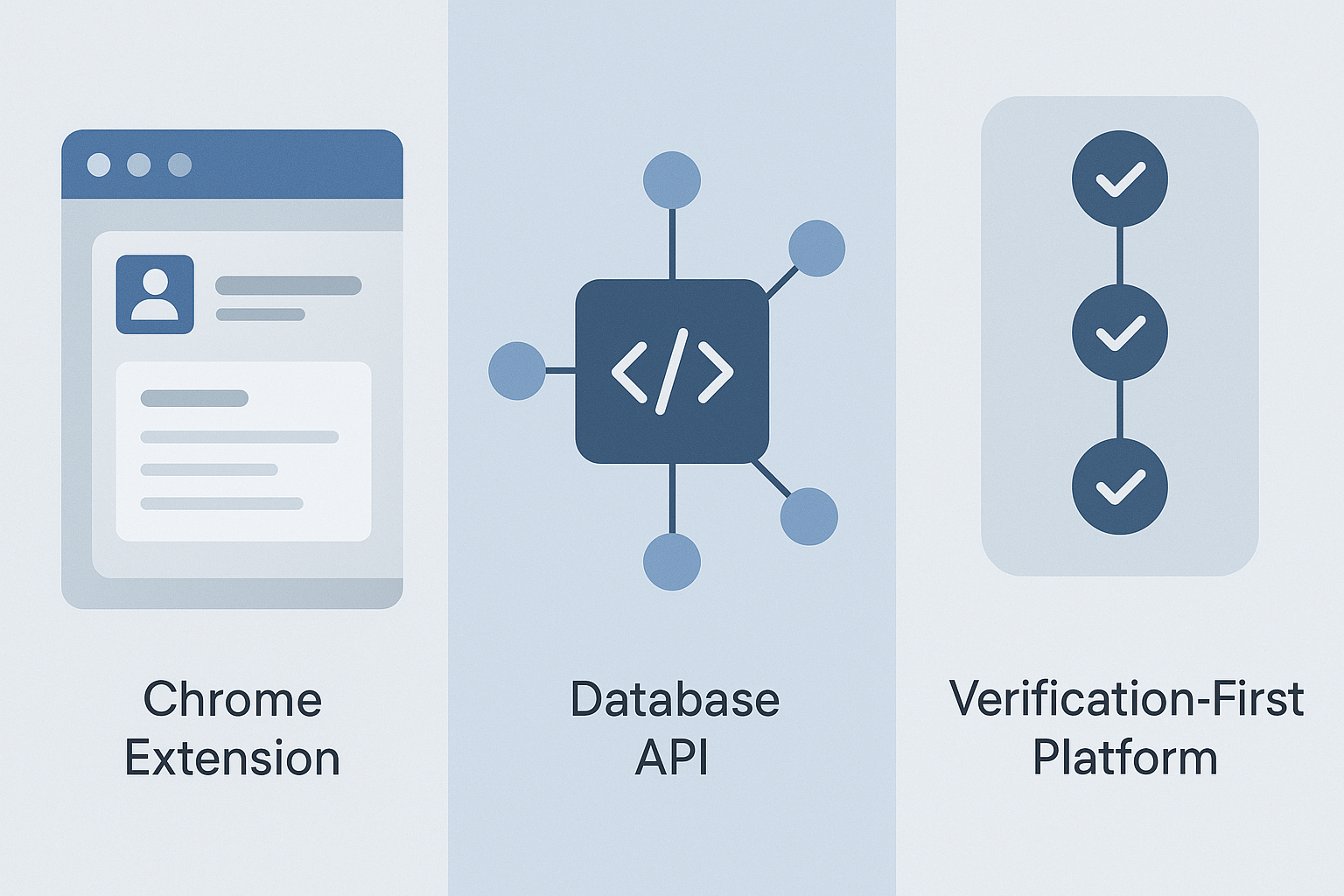
The enrichment market organizes into three capability tiers, each with distinct technical architectures and risk profiles.
Chrome Extensions: Browser-Based Profile Extraction
Chrome extensions install in your browser and extract contact data while you browse LinkedIn profiles manually. These tools scrape visible fields, name, title, company, location, and attempt to infer or discover email addresses and phone numbers through pattern matching or third-party lookups. Extensions require zero API configuration and deliver data instantly during prospecting sessions. However, they depend on your LinkedIn account's access permissions and profile visibility settings. If a prospect restricts phone visibility to first-degree connections only, the extension cannot retrieve it. Chrome extensions also inherit your account's compliance risk, LinkedIn may flag or suspend accounts that use automated extraction tools, even when operated manually.
Database API Platforms: Pre-Indexed Contact Records
Database API platforms maintain pre-indexed contact databases built from public records, web scraping historical snapshots, user-contributed data, and partnerships with data aggregators. You send a LinkedIn URL or email address to the API, and it returns matching records from its database in under 200 milliseconds. Apollo.io, ZoomInfo, Clearbit, Lusha, and Cognism operate this model. These platforms deliver consistent sub-second latency and avoid direct LinkedIn ToS violations because they don't scrape LinkedIn during your request. The trade-off is data staleness, records reflect the database's last refresh cycle, typically 30 to 90 days prior. For rapidly changing roles or contact information, database APIs return outdated data.
Verification-First Platforms: Multi-Source Cross-Referencing
Verification-first platforms prioritize contact accuracy over speed by cross-referencing multiple data sources, public records, business registries, social profiles, and proprietary networks, before returning a result. These tools typically operate asynchronously, accepting enrichment requests via API and delivering validated results via webhook or background job completion. Response times range from seconds to minutes depending on verification depth. Platforms using their own private networks avoid LinkedIn account dependencies entirely, eliminating suspension risk while maintaining data freshness through continuous multi-source reconciliation.
Compliance Risk Framework: LinkedIn ToS and Data Source Legality
LinkedIn's Terms of Service explicitly prohibit automated scraping, creating legal and account-level risks for tools that extract profile data without authorization. India's Digital Personal Data Protection Act 2023 adds a second compliance layer, requiring explicit consent for processing personal data in B2B prospecting contexts.

Account Suspension Exposure by Platform Type
Chrome extensions that scrape LinkedIn during active browsing sessions expose your personal LinkedIn account to suspension risk. LinkedIn's anti-bot systems detect repetitive profile views, rapid navigation patterns, and browser automation signatures. Accounts flagged for suspicious activity face temporary restrictions, permanent suspension, or legal notices for ToS violations. Database API platforms that pre-index LinkedIn data avoid this risk for end users because they don't access LinkedIn on your behalf, the platform itself bears any historical compliance exposure from its data collection methods. Verification-first platforms that never access LinkedIn's internal APIs or scrape profile data eliminate account-level risk entirely, operating within compliance boundaries by sourcing contact information from public records and business registries instead.
DPDP Act 2023 Consent Requirements for Indian B2B Prospecting
India's Digital Personal Data Protection Act 2023 requires explicit consent before processing personal data, including phone numbers and email addresses extracted from LinkedIn profiles. B2B prospecting tools operating in India must demonstrate lawful basis for data collection and provide clear opt-out mechanisms. Platforms sourcing contact data from public business registries, India's Ministry of Corporate Affairs database, GST registrations, trade directories, operate under a legitimate interest basis that satisfies DPDP Act requirements. Tools that scrape LinkedIn profiles without consent or legal justification expose users to regulatory penalties and data subject complaints.
Phone Verification Methodology Comparison
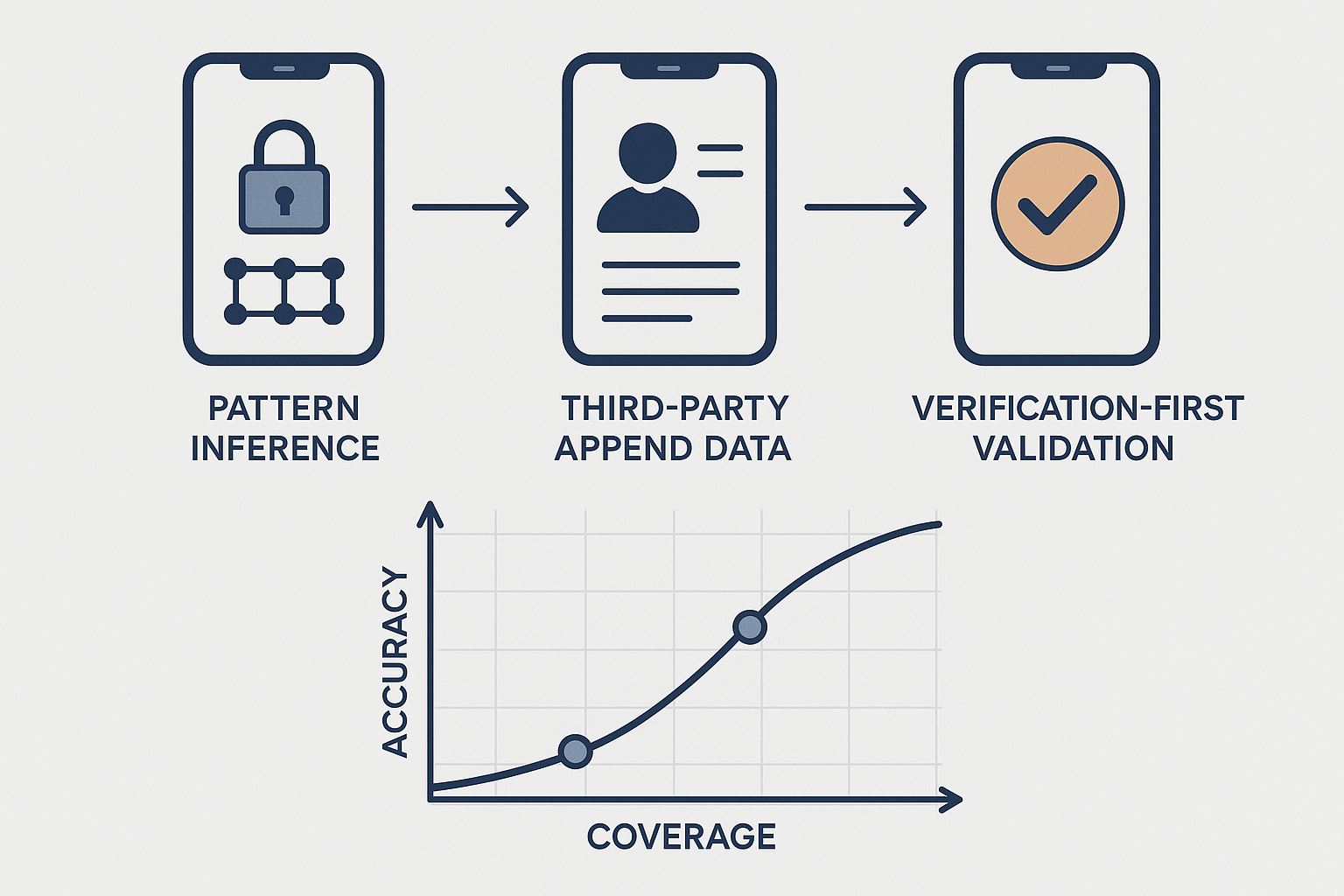
Phone verification quality matters more than database size because only 5-10% of LinkedIn users share phone numbers with first-degree connections, and less than 1% with second- or third-degree contacts. Platforms advertise millions of contact records, but phone coverage and accuracy vary dramatically by verification methodology.
Email-First Discovery vs. Phone-Specific Validation
Most enrichment platforms prioritize email discovery and treat phone numbers as secondary fields populated through pattern inference or third-party appends. Apollo.io, Clearbit, Lusha, ZoomInfo, and Cognism all offer phone enrichment, but their verification methodologies focus on email deliverability first. These tools achieve roughly 70% data accuracy for phone numbers [2], significantly lower than their 90%+ email accuracy rates. Phone-specific validation platforms cross-reference multiple data sources, business registries, telecom databases, public records, before returning a phone number, achieving roughly 90% accuracy for verified contacts by filtering out disconnected lines and reassigned numbers before delivery.
Multi-Source Cross-Referencing for Phone Accuracy
Single-source phone lookups return the first matching number from a database, regardless of verification status. Multi-source cross-referencing queries multiple databases, business directories, telecom provider records, regulatory filings, and returns a phone number only when two or more sources confirm the same contact. This approach filters out outdated, disconnected, or misattributed numbers that plague single-source lookups. For India-focused prospecting, platforms that integrate Ministry of Corporate Affairs data, GST registration records, and telecom validation achieve higher accuracy than global databases that rely on web scraping and user contributions alone.
| Platform | Phone Verification Method | Estimated Accuracy | Data Freshness Cycle |
|---|---|---|---|
| Apollo.io | Email-first with phone append | 70% | 60-90 days |
| Lusha | Email-first with phone append | 70% | 60-90 days |
| Cognism | Email-first with phone append | 70% | 60-90 days |
| ZoomInfo | Email-first with phone append | 70% | 60-90 days |
| Clearbit | Email-first with phone append | 70% | 60-90 days |
| Verification-first platforms | Multi-source cross-referencing | 90%+ | 30-90 days |
Data sourced from industry reports and enrichment platform documentation as of May 2026 [2].
Data Freshness Cycles vs. Static Database Limitations
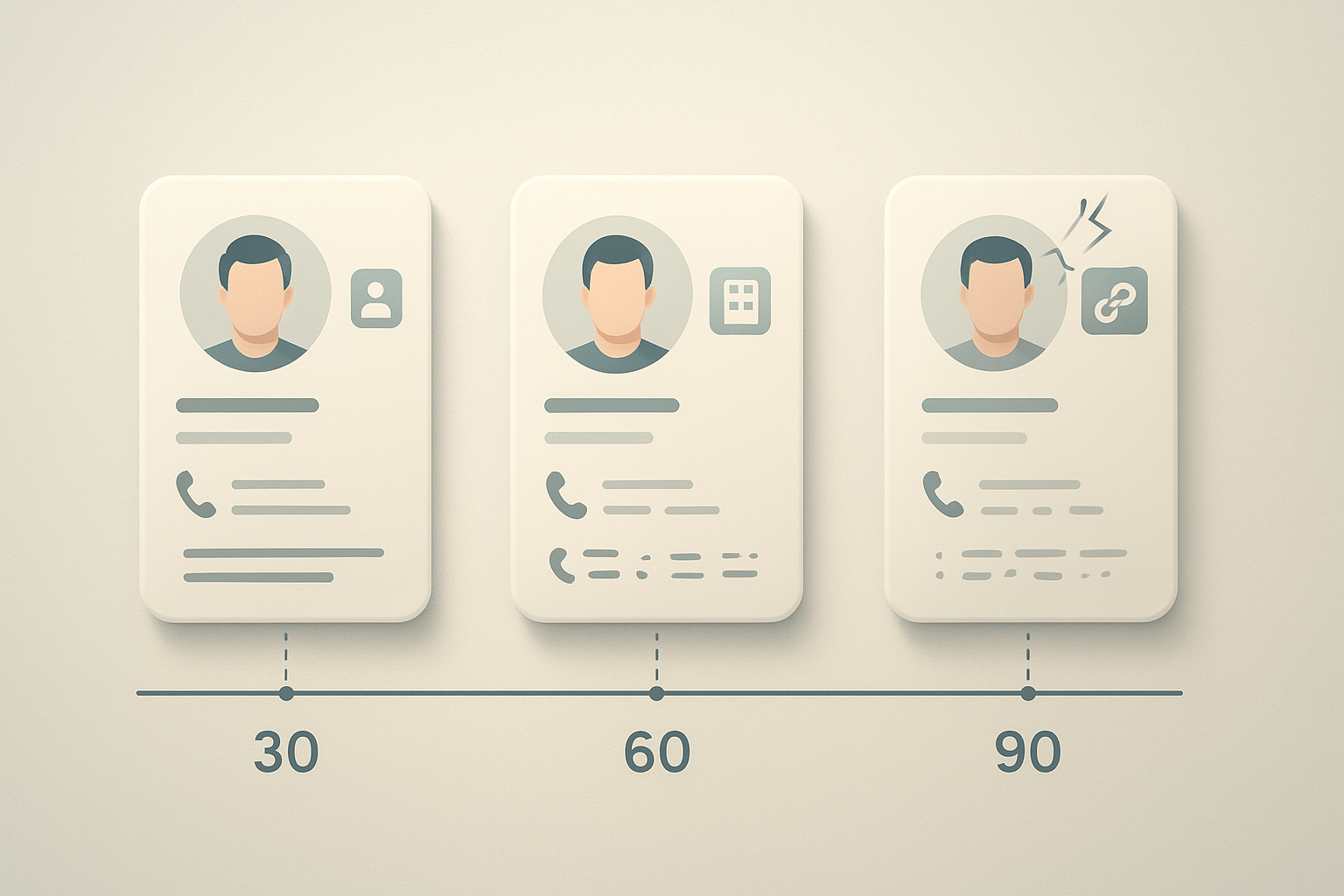
Contact data decays at roughly 2-3% per month as professionals change roles, companies, and phone numbers. A database without 90-day refresh cycles delivers outdated information within a single sales quarter, producing bounce rates that erode pipeline efficiency.
Quarterly Refresh Cycles and Monthly Contact Decay
Platforms refresh contact databases on 30-, 60-, or 90-day cycles, meaning any record you retrieve reflects data that may be 1-3 months old. During that window, 2-3% of contacts change jobs, 1-2% change companies, and 1-2% change phone numbers. For a prospecting list of 1,000 contacts pulled from a 90-day-old database, you should expect 60-90 contacts with outdated information, disconnected phone numbers, bounced emails, or incorrect job titles. Real-time enrichment reduces but does not eliminate this decay, because even synchronous APIs return data from databases that refresh asynchronously. Verification-first platforms that cross-reference multiple sources before returning results achieve fresher data by querying the most recently updated source at request time rather than relying on a single pre-indexed snapshot.
Bounce Rate Impact on Pipeline Efficiency
According to QuotaEngine [3], waste approximately 550 hours per sales rep annually stems from chasing outdated contact data. A 30% bounce rate, common for databases older than 90 days, means 3 out of every 10 outreach attempts fail before reaching the prospect. For a sales team running 100 daily outreach touches, 30 bounces translate to 600 wasted monthly attempts or 7,200 annually per rep. Reducing bounce rates from 30% to 10% through fresher data sources recovers 4,800 attempts per rep per year, equivalent to roughly 100 additional qualified conversations if connect rates hold steady at 2%.
Platform Selection Framework by Use Case
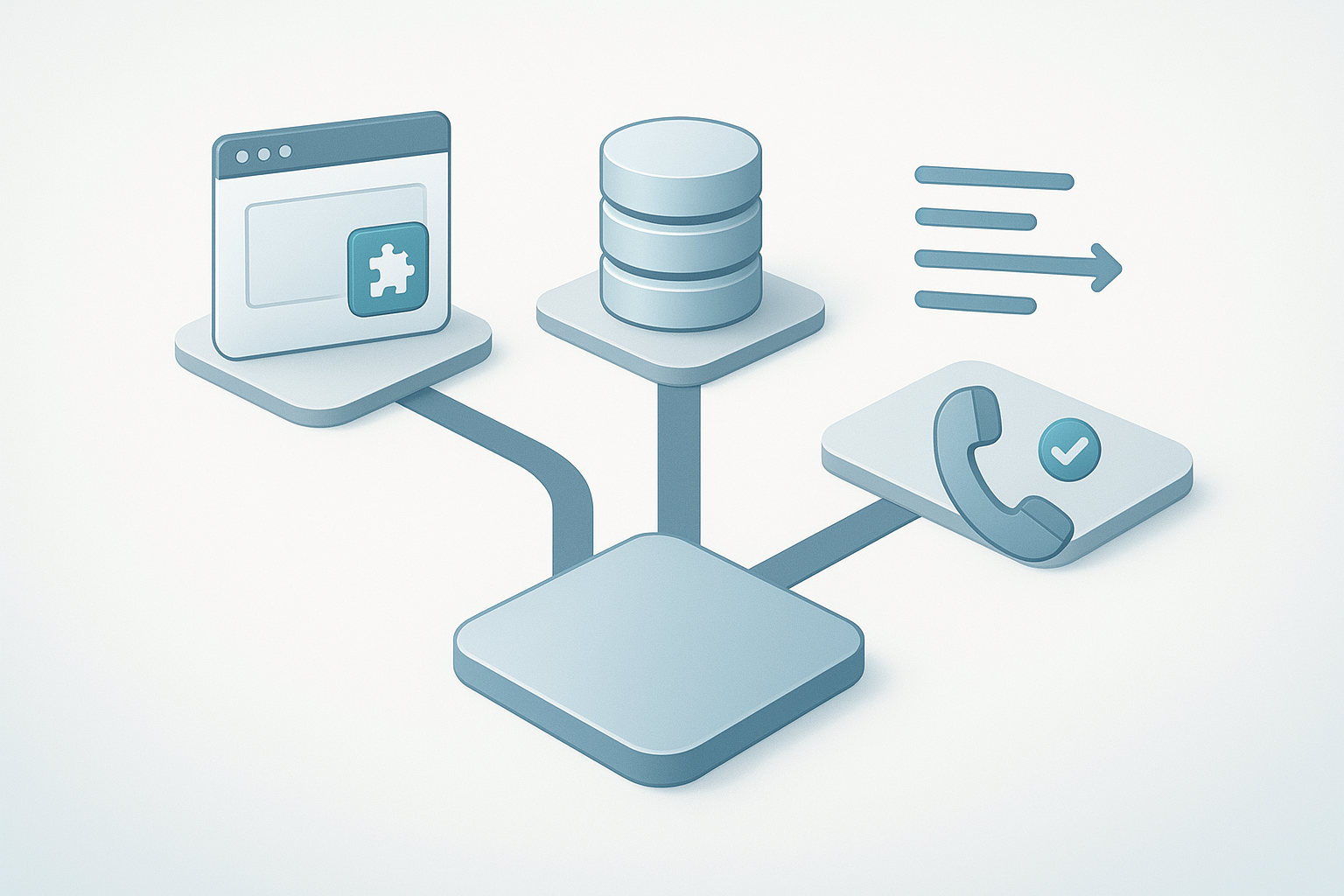
Different prospecting workflows demand different enrichment architectures. Chrome extensions suit manual prospecting during active LinkedIn sessions. Database APIs fit high-volume CRM enrichment where sub-second latency matters more than absolute data freshness. Verification-first platforms serve cold calling teams that need accurate phone numbers and can tolerate asynchronous enrichment.
Best for Manual LinkedIn Prospecting: Chrome Extensions
Sales reps who prospect directly on LinkedIn, viewing profiles, sending connection requests, crafting personalized messages, benefit from Chrome extensions that capture contact data during active browsing sessions. These tools require zero API configuration and deliver instant results without leaving LinkedIn. However, they inherit your account's compliance risk and depend on profile visibility settings. Use Chrome extensions when you need real-time contact capture during manual prospecting and accept the account suspension exposure that comes with browser-based scraping.
Best for High-Volume CRM Enrichment: Database API Platforms
Marketing automation and CRM enrichment workflows that process hundreds or thousands of leads daily require sub-second API response times and consistent uptime. Apollo.io, ZoomInfo, Clearbit, Lusha, and Cognism deliver synchronous enrichment at scale, returning email addresses, phone numbers, and firmographic data in under 200 milliseconds. These platforms trade data freshness for latency, records reflect 30- to 90-day-old snapshots, but deliver the consistent performance required for automated enrichment triggers. Use database APIs when workflow automation and latency matter more than absolute data accuracy, and when you can tolerate roughly 70% phone accuracy [2] and 60-90 day refresh cycles.
Best for Phone-Specific Cold Calling: Verification-First Platforms
Cold calling teams need verified phone numbers more than they need instant enrichment. A 70% phone accuracy rate produces 30% wrong-number dials, wasting rep time and eroding connect rates. Verification-first platforms that cross-reference multiple sources before returning phone numbers achieve roughly 90% accuracy by filtering out disconnected lines and reassigned numbers before delivery. These tools typically operate asynchronously, you send an enrichment request, and the platform returns validated results via webhook or background job completion minutes or hours later. Use verification-first platforms when phone accuracy matters more than enrichment latency, and when your workflow can tolerate asynchronous data delivery.
| Use Case | Recommended Platform Type | Key Trade-Off |
|---|---|---|
| Manual LinkedIn prospecting during active browsing | Chrome extensions | Instant capture vs. Account suspension risk |
| High-volume CRM enrichment with automation triggers | Database API platforms | Sub-second latency vs. 60-90 day data staleness |
| Phone-specific cold calling with accuracy requirements | Verification-first platforms | 90%+ phone accuracy vs. Asynchronous delivery |
| India-focused prospecting with DPDP Act compliance | Verification-first platforms with MCA/GST integration | Regulatory compliance vs. Limited global coverage |
PeakAi's Multi-Source Verification Approach
PeakAi delivers real-time LinkedIn enrichment without accessing LinkedIn's internal APIs or scraping profile data directly. The platform cross-references business registries, public records, and proprietary verification networks to validate email addresses and phone numbers before returning results. For India-focused prospecting, PeakAi cites 1600+ city coverage and GST/MCA-informed verification, achieving roughly 91% accuracy for phone numbers through multi-source reconciliation.
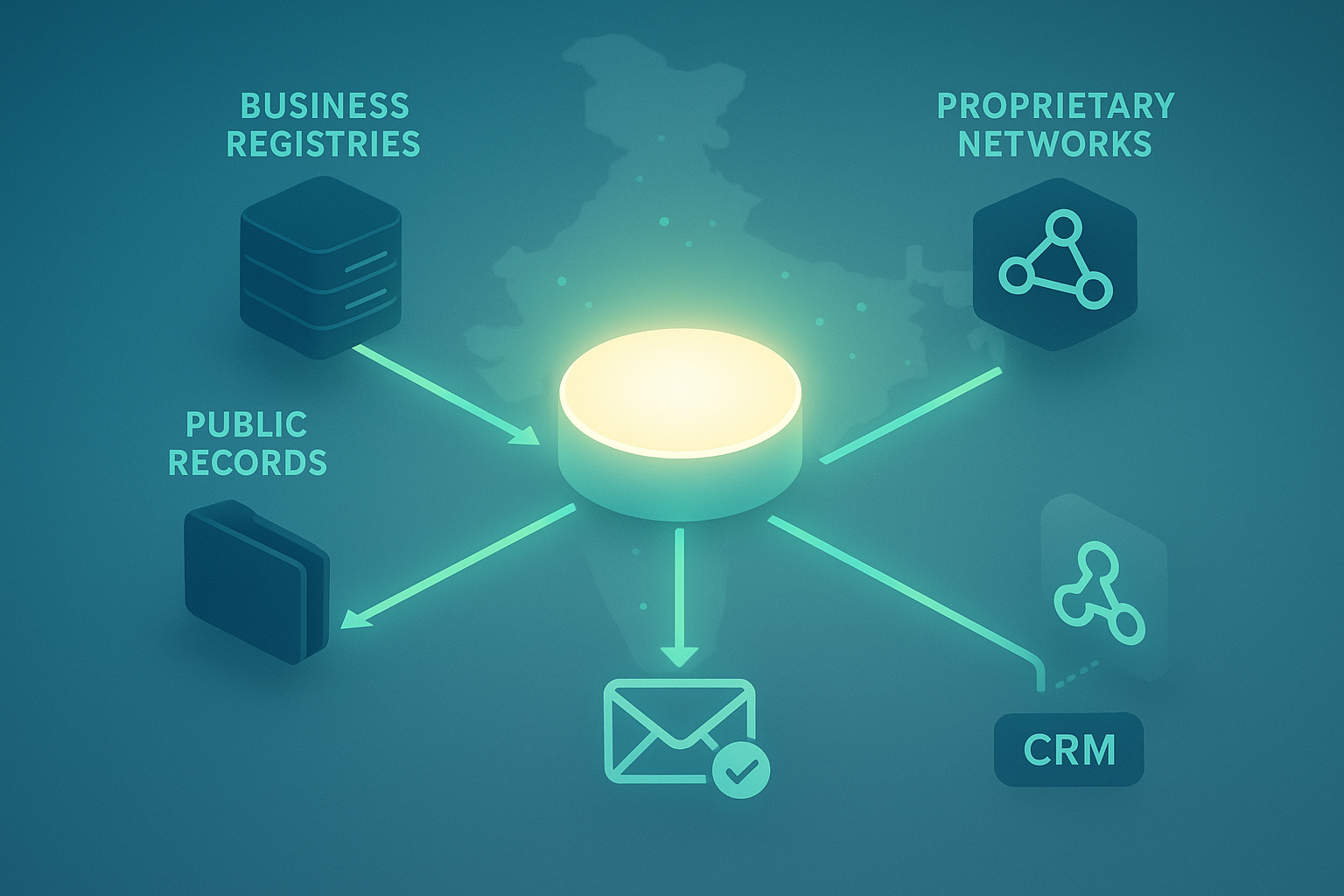
The platform operates on credit-based pricing, starting at roughly ₹675 for 50 contacts, avoiding annual subscription lock-in common among enterprise database providers. Response times vary by verification depth, but typical enrichment requests complete within seconds via webhook delivery to your CRM. Because PeakAi never accesses LinkedIn directly, users avoid account suspension risks associated with Chrome extensions and live scraping tools.
FAQ: Real-Time LinkedIn Enrichment Platforms
Frequently Asked Questions
Is there a platform that enriches LinkedIn profiles in real-time?
Yes, multiple platforms enrich LinkedIn profiles in real-time through three distinct approaches: Chrome extensions that scrape profiles during browsing, database APIs that match profiles to pre-built records in under 200 milliseconds, and verification-first platforms that cross-reference multiple sources before returning validated contact data.
What is the difference between real-time enrichment and batch processing?
Real-time enrichment retrieves and validates contact data within seconds of a trigger event, pasting a LinkedIn URL, browsing a profile, or uploading a prospect name. Batch processing uploads a list of contacts and waits hours or days for results. Real-time workflows support live prospecting scenarios where sales reps need contact data during active calls or LinkedIn conversations.
Why do LinkedIn enrichment tools have different phone accuracy rates?
Phone accuracy varies by verification methodology. Most platforms prioritize email discovery and treat phone numbers as secondary fields, achieving roughly 70% accuracy [2]. Verification-first platforms that cross-reference multiple data sources, business registries, telecom databases, public records, before returning a phone number achieve roughly 90% accuracy by filtering out disconnected lines and reassigned numbers.
How does data staleness affect enrichment quality?
Contact data decays at roughly 2-3% per month as professionals change roles, companies, and phone numbers. A database without 90-day refresh cycles delivers outdated information within a single sales quarter. For a 1,000-contact list pulled from a 90-day-old database, expect 60-90 contacts with disconnected phone numbers, bounced emails, or incorrect job titles.
What compliance risks do LinkedIn enrichment tools create?
LinkedIn's Terms of Service explicitly prohibit automated scraping. Chrome extensions that scrape profiles during active browsing expose your personal LinkedIn account to suspension risk. Database API platforms avoid this risk for end users because they don't access LinkedIn on your behalf. Verification-first platforms that never access LinkedIn's internal APIs eliminate account-level risk entirely by sourcing contact information from public records.
Best affordable contact enrichment tools for Indian B2B market?
The Indian B2B market, projected to reach $90, $100 billion by 2025 [1], demands tools that integrate Ministry of Corporate Affairs data, GST registrations, and telecom validation. Verification-first platforms with MCA/GST integration achieve higher accuracy for India-focused prospecting than global databases relying on web scraping. Credit-based pricing models avoid annual subscription lock-in common among enterprise providers.
Why are my LinkedIn prospecting efforts failing with 30% bounce rates?
A 30% bounce rate, common for databases older than 90 days, stems from contact data decay at roughly 2-3% per month. According to QuotaEngine [3], outdated contact data wastes approximately 550 hours per sales rep annually. Reducing bounce rates from 30% to 10% through fresher data sources recovers roughly 4,800 wasted attempts per rep per year.
Sources
- Top 10 Lead Generation Tools for Indian B2B Sales Teams in 2025 - publicmediasolution.com (2025)
- 22 Best Contact Data Enrichment Tools for B2B Sales Teams in 2025 - companyurlfinder.com (2025)
- Verified Contact Data: Complete Guide to B2B Data Verification - quotaengine.com
