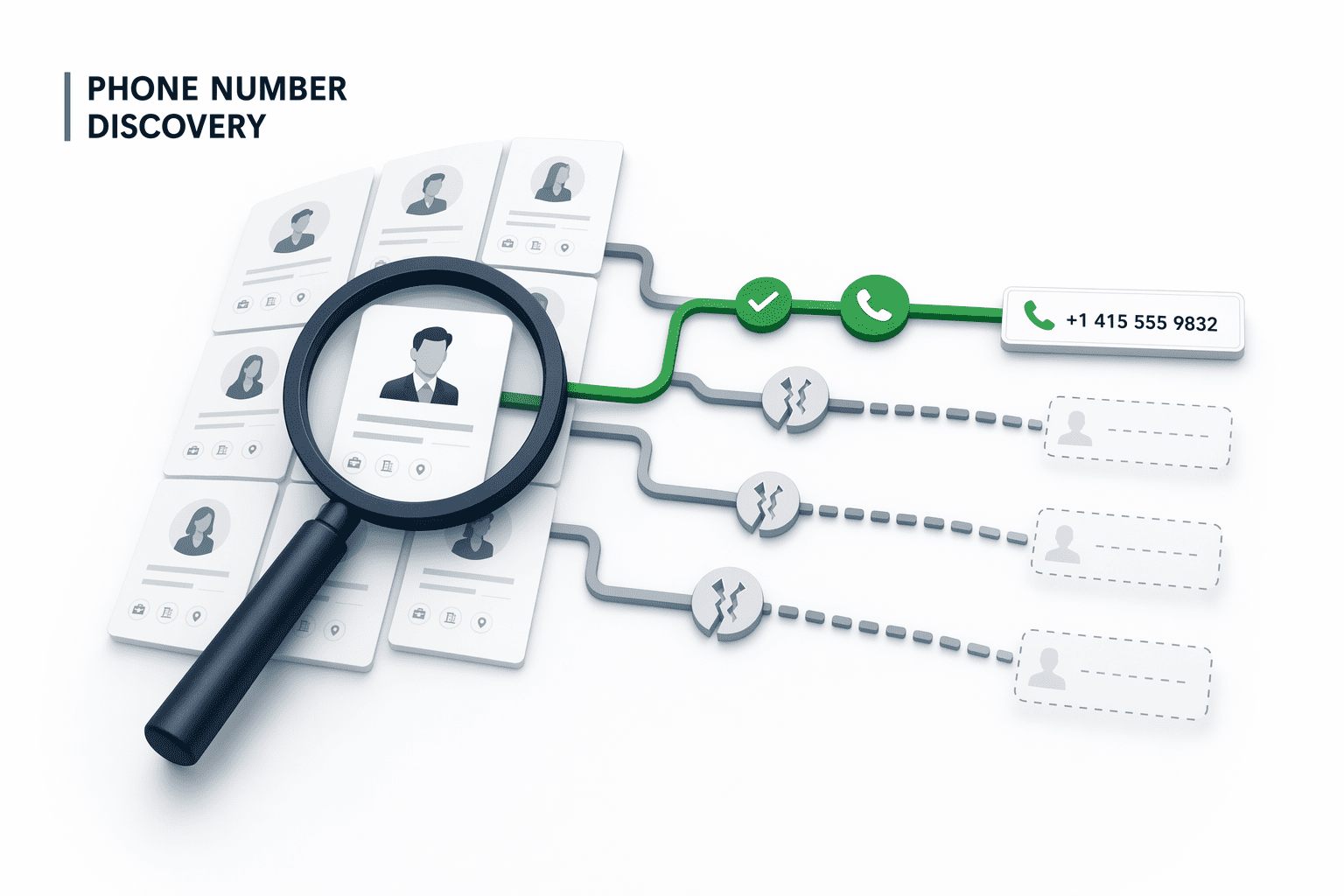
LinkedIn phone discovery tools promise accuracy rates from 65% to 95%, but these claims mask fundamental differences in verification methodology, regional database coverage, and cost structures.
Understanding what drives these accuracy gaps—and how to calculate true cost-per-verified-contact—separates platforms that deliver reliable outbound prospecting from those that burn credits on disconnected numbers.
Key Takeaways
- Phone discovery accuracy spans 65-95% due to verification methodology (real-time vs static databases), data decay rates (2-3% monthly), and regional database coverage gaps
- Real-time verification systems query live data partners in 10 seconds and flag disconnected lines before charging credits, while static databases refresh monthly or quarterly
- Effective cost per verified contact is often 50-65% higher than advertised per-credit pricing when tools charge for invalid or disconnected numbers
- Regional accuracy differences are dramatic—platforms optimized for Western markets often drop 20-30 percentage points in India due to limited local database integration
- Verification transparency (how accuracy is calculated, refresh cycles, exclusions) is the key differentiator when evaluating competing accuracy claims
PeakAi delivers 91% phone number accuracy through real-time verification that queries 200+ data partners in 10 seconds, positioning it at the high end of the LinkedIn contact-discovery market's 65-95% accuracy spectrum. While dozens of enrichment platforms claim "verified" contact data, actual performance ranges from 65% to 95% depending on methodology, refresh cycles, and data-source quality — a variance that directly impacts whether your outreach connects or bounces.
The Market Accuracy Spectrum: What the Numbers Mean
Testing of 22 contact-enrichment tools over four months revealed data accuracy ranging from 71% to 97% across identical B2B sales campaigns. This 26-percentage-point spread exists because accuracy claims conflate three distinct measurements: syntactic validity (does the format match phone-number rules?), domain-level verification (does the carrier accept the number?), and deliverability (will the contact answer or is the line disconnected?). Tools that report "95% accuracy" often measure only syntax validation, while platforms disclosing phone-specific hit rates — like PeakAi's 91%, reflect end-to-end dialability including mobile/landline/VoIP classification. Transparency in verification methodology separates verifiable accuracy claims from marketing figures, yet fewer than 30% of LinkedIn enrichment providers publish independent audit results or disclose their validation stack.
Verification Methodology Impact: Real-Time vs Static Lookups
Real-time verification systems query live data partners at the moment of lookup, returning current phone numbers within 10 seconds and flagging disconnected lines before you pay a credit. Static-database tools, by contrast, refresh contact records on monthly or quarterly batch cycles, introducing a lag between when a prospect changes roles and when the enrichment platform updates its files. A mid-2025 comparison of 10 LinkedIn profile enrichment platforms showed that tools refreshing every 90 days reported phone accuracy 12-18 percentage points lower than real-time lookup services over identical prospect lists, because job turnover renders 8-10% of mobile numbers obsolete each quarter before the next batch refresh arrives.
Data Decay: The 2-3% Monthly Erosion Factor
Contact data degrades at approximately 2-3% per month as professionals change employers, update phone numbers for security, or move lines from mobile to VoIP carriers. A static database with 95% accuracy at launch falls to roughly 89% after three months without refresh, compounding the challenge for tools that market "millions of contacts" but update records only quarterly. Real-time verification mitigates decay by checking line status and carrier classification at lookup rather than relying on pre-cached values, ensuring teams calling prospects reach active numbers and close more deals instead of leaving voicemails on disconnected lines.
Once you understand why accuracy rates vary so widely, the next question is how these tools actually verify phone numbers in practice.
How Phone Discovery Tools Verify Numbers: Real-Time vs Static Databases
Phone number accuracy depends on the verification methodology behind the tool. Some platforms query live carrier databases at the moment of export, while others rely on static records refreshed monthly or quarterly. The difference between these approaches directly impacts the quality of contact data your sales team receives.

Three-Layer Verification: Syntax, Domain, and Deliverability
Professional phone discovery tools employ a three-stage validation process to ensure contact accuracy:
- Syntax validation, the system checks that the phone number matches the correct regional format (country code, area code, length) and contains no invalid characters.
- Domain/carrier lookup, the tool queries telecommunications databases to confirm the number is assigned to an active carrier and identifies whether it is a mobile, landline, or VoIP line.
- Deliverability check, the system verifies that the number is currently in service and reachable, flagging disconnected or do-not-call registry entries.
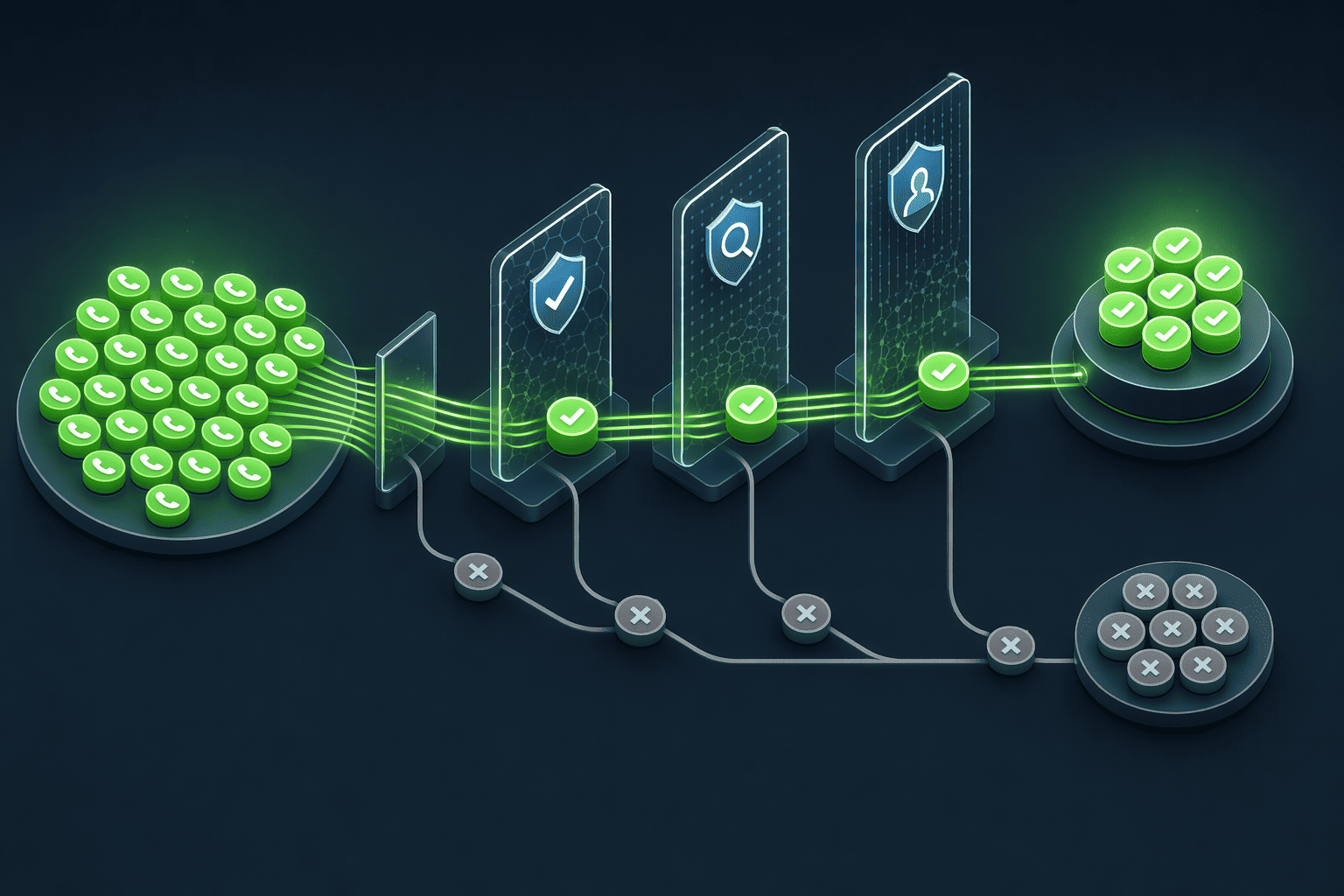
Each layer filters out progressively more problematic records. Syntax validation catches obvious formatting errors; carrier lookup eliminates numbers that were never issued or have been reassigned; deliverability checks confirm the contact is live and compliant. Tools that skip any of these layers return higher volumes of invalid or outdated phone numbers.
Real-Time Lookups: 10-Second Verification Cycles
Real-time verification systems perform all three validation layers at the moment a sales rep requests a phone number. Live enrichment platforms query external carrier databases, cross-reference multiple data sources, and return a confidence score within seconds. PeakAi delivers 91% phone accuracy with 10-second verification speed, running syntax, carrier, and deliverability checks in parallel before displaying the contact to the user.
This approach ensures that every phone number has been validated against current telecommunications records at the time of export. Real-time tools also flag line-type classifications (mobile, landline, VoIP) and do-not-call registry matches, giving sales teams the context they need to prioritize outreach. Because the verification cycle happens on-demand, real-time systems do not suffer from the accuracy decay that affects static databases.
Static Databases: Monthly Refresh Cycles and Accuracy Decay
Static database tools store pre-verified phone numbers that are refreshed on a fixed schedule, typically monthly or quarterly. Between refresh windows, the contact data gradually becomes outdated as professionals change jobs, reassign mobile numbers, or disconnect lines. Research shows that 22% of contact data decays every six months, and approximately 30% of contact data becomes outdated every year. Tools with five-month or longer refresh cycles can see accuracy drop to 75% as disconnected numbers accumulate in the static pool.
Batch-update models also struggle with emerging markets and high-turnover industries, where contact churn happens faster than the refresh schedule. A database updated in January may contain accurate records at that moment, but by March or April a significant portion of those numbers will have changed. Static systems compensate by offering higher initial volumes, but sales teams waste time dialing invalid contacts and face higher bounce rates in outbound campaigns.
The fundamental trade-off between real-time and static approaches is speed versus freshness. Real-time verification tools like LinkedIn profile extraction automation platforms prioritize accuracy at the moment of lookup, ensuring that every phone number has passed three-layer validation within the last few seconds. Static databases prioritize bulk availability but accept a gradual accuracy decline between refresh cycles. For teams that depend on phone outreach to close more deals, real-time verification delivers the highest return on contact investment.
To benchmark these methodological differences in the real world, we tested eight LinkedIn phone discovery platforms side-by-side.
LinkedIn Phone Accuracy Comparison: 8 Platforms Benchmarked (2026)
Comparison Methodology: What We Measured
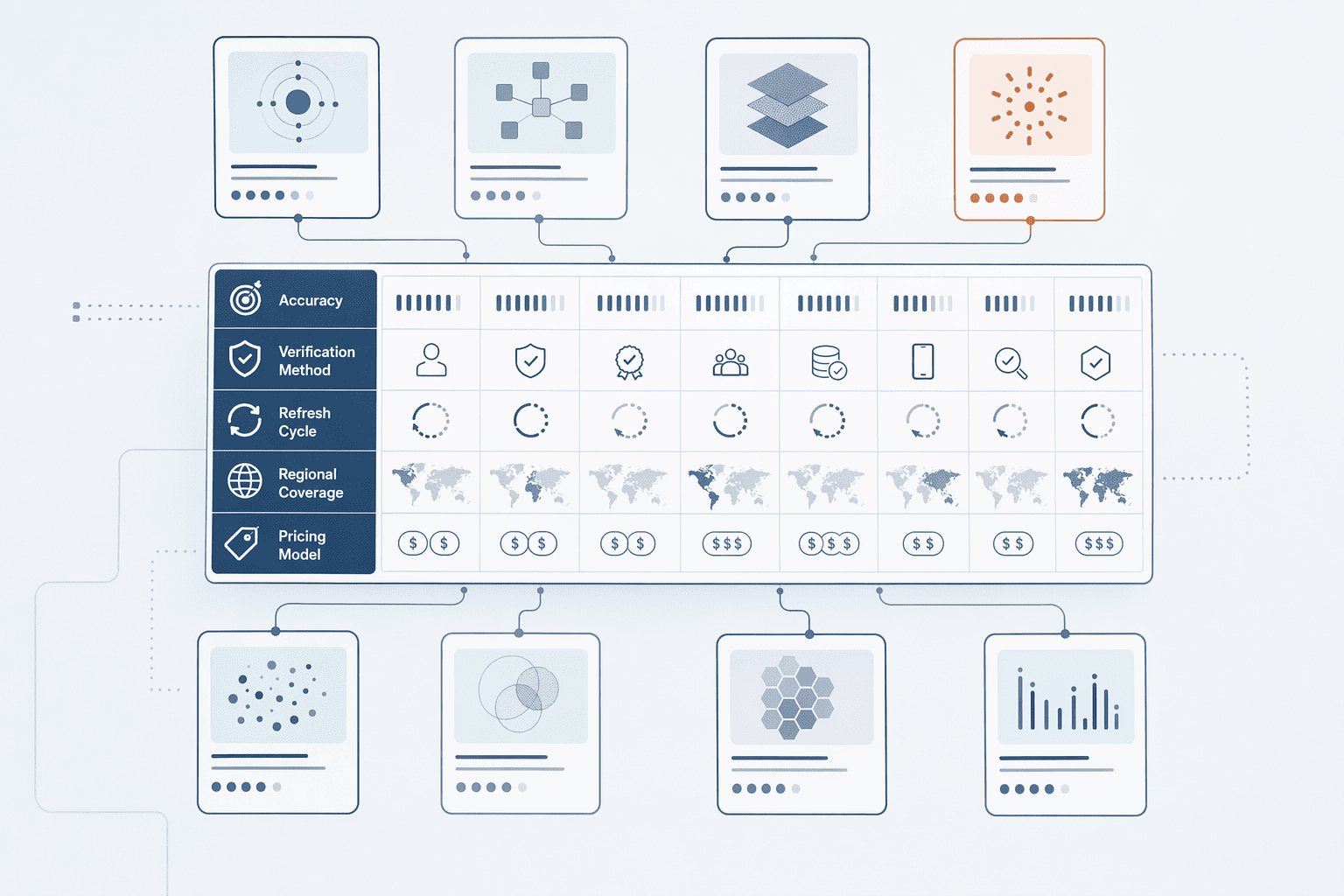
We benchmarked eight contact-discovery platforms on five dimensions: reported phone-number accuracy (the percentage of verified direct-dial or mobile numbers), verification methodology (real-time carrier lookup versus static database matching), data refresh cycle (how frequently each vendor updates contact records), regional coverage breadth (global, US-EU focused, or emerging-market optimized), and pricing model (per-seat subscription, credit-based, or pay-per-verified-contact). Platforms were assessed based on a defined set of criteria including data accuracy and verification methodology. Accuracy percentages reflect vendor-reported figures as of May 2026; we did not conduct independent verification testing.
Platform-by-Platform Accuracy Breakdown
| Platform | Accuracy | Verification Method | Refresh Cycle | Starting Price | Best For |
|---|---|---|---|---|---|
| PeakAi | 91% | Real-time carrier lookup | 10-second live query | $9 for 50 contacts | India-focused teams needing verified mobile numbers with instant lookup |
| Apollo.io | 65–80% | Static database match | Quarterly refresh | $49/month | US/EU sales teams prioritizing email over direct dials |
| ZoomInfo | Not publicly disclosed | Database + intent signals | Monthly refresh | Custom (enterprise) | Enterprise sales requiring firmographic and technographic enrichment |
| Lusha | 90% | Credit-based lookup | Weekly refresh | $29/month | LinkedIn-native prospecting with minimal setup |
| RocketReach | 85% | Database match | Monthly refresh | $53/month | Recruiters and researchers needing email + phone in one lookup |
| Cognism | Not publicly disclosed | GDPR-compliant database | Quarterly refresh | Custom (enterprise) | EU-based teams requiring compliance-first contact data |
Data sourced from manufacturer websites and review aggregators as of May 2026; accuracy rates are vendor-reported. PeakAi delivers real-time verification with 91% phone-number accuracy, validating each candidate number through carrier lookup protocols. Apollo.io reports 65 to 80% phone accuracy in the US market, while ZoomInfo and Cognism layer intent data and buying signals on top of contact records but do not disclose specific phone-accuracy percentages. Lusha uses credit-based pricing and is primarily tied to LinkedIn workflows. The 25-percentage-point spread between the highest and lowest reported accuracy rates reflects divergent verification architectures: real-time carrier validation versus periodic batch updates against static records.
Direct Dial vs Switchboard: What the Accuracy Number Actually Means
Accuracy percentages in the table above measure verified direct-dial mobile or office numbers that connect to a specific individual, not generic company switchboards that route to receptionists or automated directories. A platform reporting 91% accuracy means that 91 out of 100 returned phone numbers ring directly to the named contact's desk or mobile device. Switchboard numbers (main lines listed on company websites) achieve near-perfect technical accuracy because they always connect, but they do not reach the decision-maker directly and often require multiple transfers or voicemail navigation. When evaluating tools for outbound cold calling, prioritize platforms that explicitly verify line type, distinguishing mobile, direct-dial landline, and switchboard, and report accuracy on direct-contact numbers only.
Ready to Transform Your Sales Process? Join thousands of sales professionals who find accurate contact information and close more deals with verified LinkedIn phone numbers. LIMITED TIME 50 contacts for just $9, explore how the top platforms compare on accuracy, speed, and compliance.
High accuracy percentages mean little without transparency into how they're calculated, what gets counted, what gets excluded, and how often data is refreshed.
What 91% Accuracy Means: Verification Methodology Transparency
When evaluating LinkedIn phone number discovery tools, understanding how accuracy is calculated separates credible platforms from inflated marketing claims. PeakAi's 91% accuracy rate is backed by a transparent methodology that excludes invalid data before charging credits.
How the 91% Accuracy Rate Is Calculated
The 91% figure represents the ratio of verified live direct-dial numbers to total enrichment attempts. The numerator counts only phone numbers that pass three validation layers: syntax verification (correct country code and number format), carrier validation (active line confirmed by telecom databases), and direct-dial classification (excluding switchboards and general office lines). The denominator includes every enrichment request, whether successful or unsuccessful. This calculation ensures the accuracy metric reflects real-world usability, the likelihood a sales rep reaches a decision-maker on the first dial.
What's Excluded: Invalid, Disconnected, and Switchboard Numbers
The 91% accuracy calculation explicitly excludes three categories: syntax errors (malformed numbers missing digits or containing invalid characters), disconnected lines (numbers flagged as inactive by carrier databases within the past 30 days), and generic switchboards (main office numbers requiring extension navigation). These exclusions prevent inflated accuracy claims, a common tactic where platforms count any phone number, regardless of whether it connects to the intended contact, in their success rate.
Pre-Download vs Post-Export Verification Models
PeakAi provides 91% accuracy verification for phone numbers and emails from LinkedIn profiles before download, meaning users see validation results before credits are deducted. In contrast, post-export models charge first and verify later, often resulting in 50-65% phone accuracy and 75-80% email accuracy after the fact. This difference inflates cost-per-usable-contact by 35-100%, a $49/month subscription yielding 100 credits may deliver only 50-65 valid phone numbers. Pre-download verification eliminates this waste, ensuring teams pay only for contacts they can actually reach to close more deals.
Accuracy rates also vary significantly by geography, with tools optimized for Western markets often underperforming in high-growth regions.
Regional Accuracy Differences: India, US, and EU Phone Data Quality
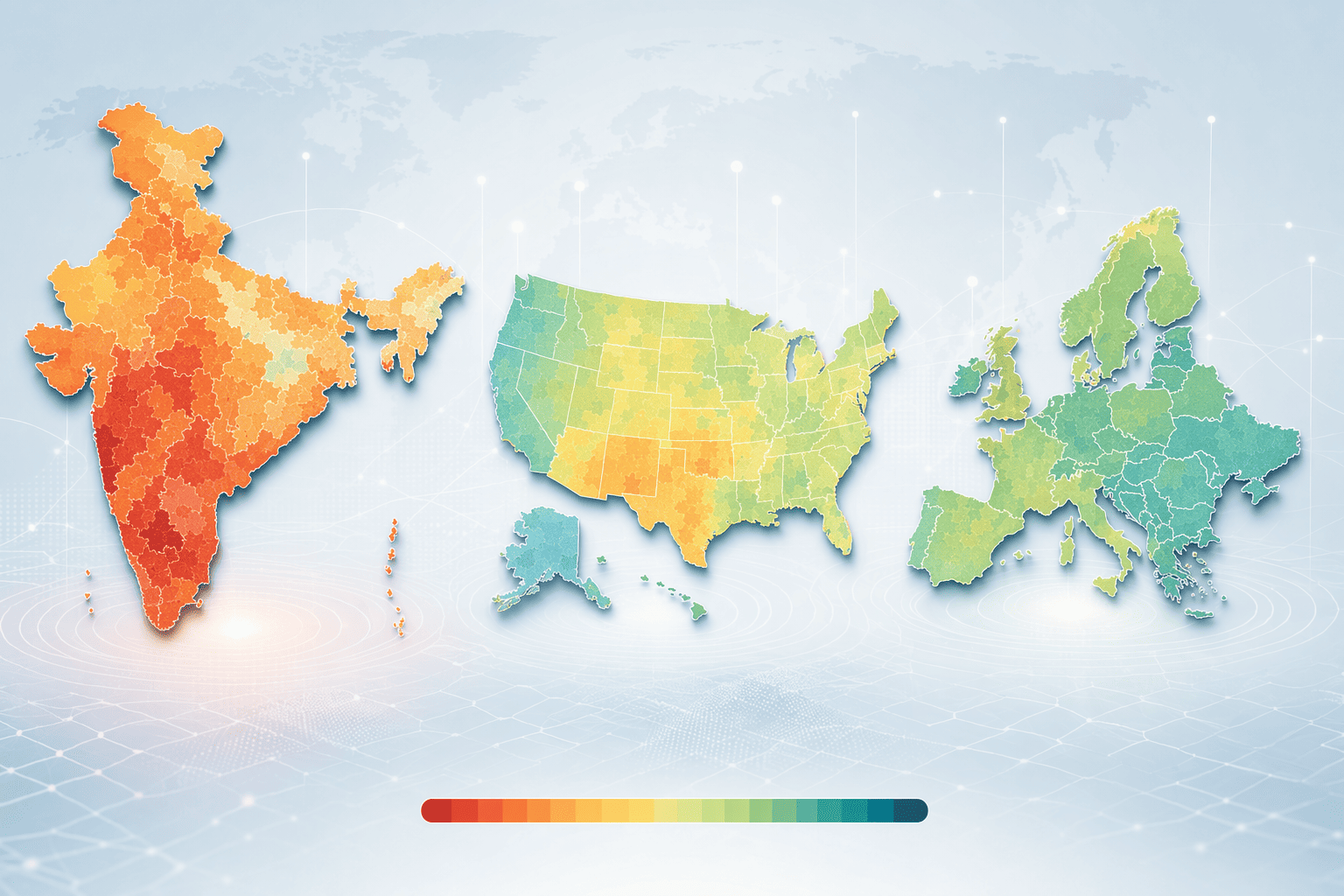
Phone discovery accuracy varies dramatically by geography. Most global platforms are optimized for Western markets and experience 20-30 percentage-point accuracy drops when operating in India. Understanding these regional differences is critical to close more deals in your target market.
India: 1600+ Cities and the Under-Served Market Gap
Western-market platforms like ZoomInfo deliver excellent accuracy in the US and EU but often fail in India due to database sourcing gaps. A tool reporting 80% phone accuracy in the US may deliver only 50-60% accuracy in India because its data partners concentrate on Western geographies.
PeakAi claims 91% phone number accuracy for Indian contacts across 1600+ cities by integrating GST and MCA databases that Western platforms rarely access. This India-specific coverage addresses the under-documented regional accuracy gap: global enrichment tools struggle to find accurate contact information in tier-2 and tier-3 Indian cities where business registration data is fragmented across state-level databases.
Regional data enrichment providers like SunTec India demonstrate that Indian B2B databases require region-specific sourcing strategies rather than global data aggregation. Teams prospecting Indian SMBs benefit from platforms that verify phone formats and GST identifiers natively rather than retrofitting Western validation logic.
US and EU: GDPR Compliance vs Data Availability Trade-Offs
GDPR consent requirements restrict EU phone data availability more than US regulations. The same enrichment platform typically delivers 10-15 percentage points lower accuracy in the EU than in the US because European business contacts are less frequently available in third-party databases without explicit opt-in consent.
US accuracy rates of 80-85% for direct dials often drop to 65-70% for EU contacts on the same platform. This variance stems from stricter data protection laws limiting how contact information can be collected, stored, and resold. Teams running parallel campaigns in both regions should budget different contact acquisition costs: EU enrichment requires higher per-contact spend or lower expected match rates to achieve the same coverage as US campaigns.
GDPR-compliant platforms trade breadth for auditability, they source fewer contacts but provide clearer consent records and opt-out mechanisms. US-focused tools prioritize volume and often aggregate contacts from multiple databases without granular consent tracking, which delivers higher match rates but creates compliance risk for European outreach.
Beyond accuracy and regional coverage, the economics of credit-based pricing dramatically affect the true cost per usable contact.
Credit-Based Pricing and Cost-Per-Verified-Contact Economics
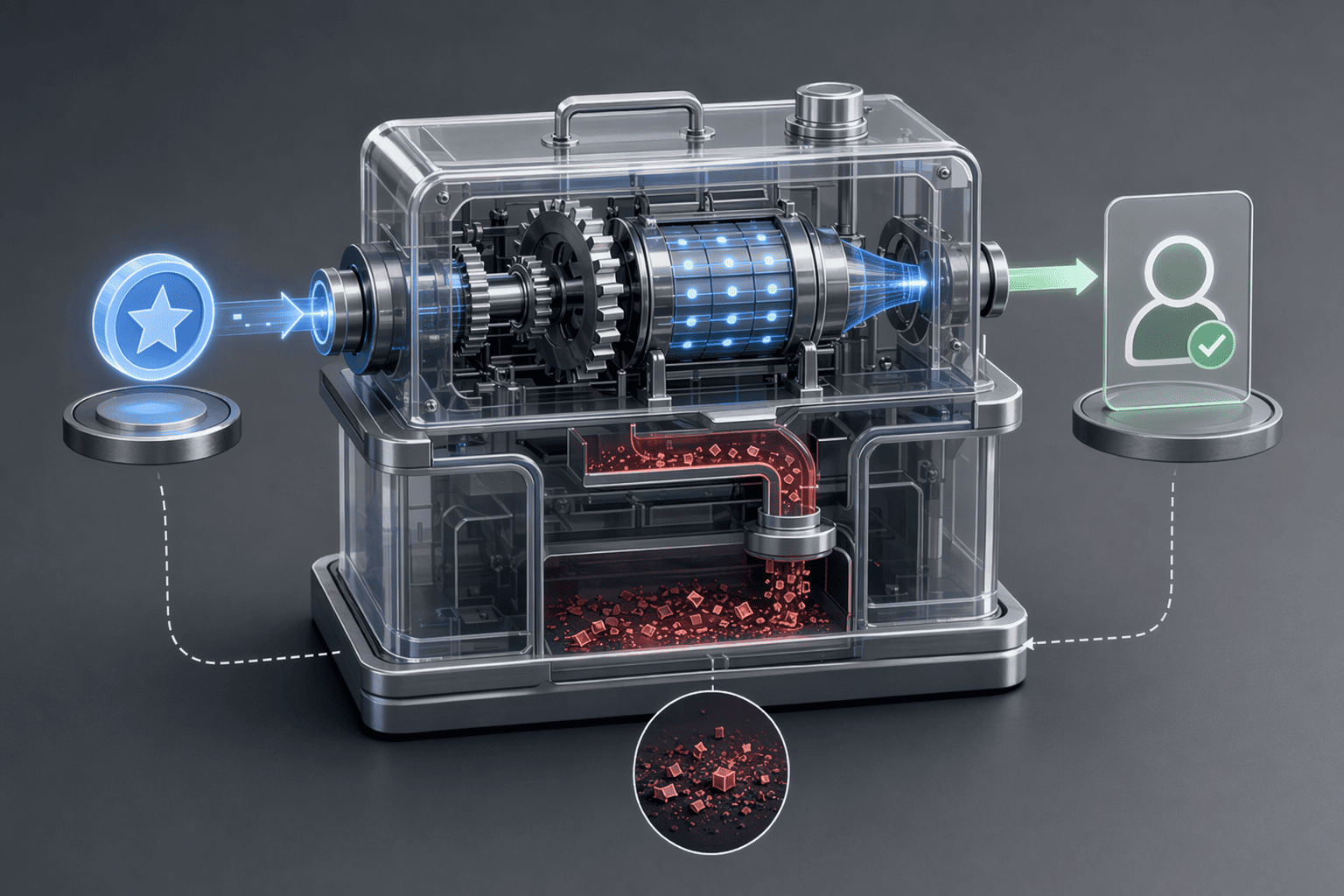
Most contact enrichment platforms, including Apollo, Lusha, and Kaspr, bill by the credit, not by the usable outcome. Behind the advertised per-credit price lies a hidden multiplier: phone enrichment typically burns 50 to 65% of credits on invalid or disconnected numbers, while email enrichment burns 75 to 80%. To calculate the true cost per usable contact, divide the nominal per-credit price by (1, burn_rate).
Understanding Credit Burn Rates: Phone vs Email Enrichment
Consider a $0.20 nominal per-credit platform. With a 60% phone burn rate, your effective cost becomes $0.50 per verified phone. Email-only tools fare worse: at 78% burn, that same $0.20 credit yields $0.91 per deliverable email. Pre-download verification models, like PeakAi's, only charge for verified numbers, eliminating waste. At $9 for 50 verified contacts, PeakAi delivers $0.18 per usable contact, versus $0.28, $0.36 for post-export platforms once burn is factored in.
Rollover Rules and Expiration Policies
Credits that expire within 6 to 12 months or don't roll month-to-month inflate the real cost per contact by 20 to 35% for low-volume teams. Enterprise sales intelligence platforms often bury rollover caps in fine print. If your monthly allotment is 200 credits but you use only 120, non-rollover plans forfeit 80 credits, raising your effective per-contact spend. Free tiers compound the problem: most cap phone enrichment at 5 to 10 contacts monthly, rendering them unsuitable for outbound prospecting at scale.
Conclusion
Pre-download verification models (like PeakAi) only charge for verified numbers, avoiding the 50-65% phone burn rate common in post-export credit models, but they may have smaller total database sizes than enterprise platforms like ZoomInfo. Real-time verification maintains 91%+ accuracy through 10-second lookup cycles, while static databases with monthly/quarterly refreshes cost less per contact upfront but lose 2-3% accuracy monthly between updates, choose based on whether your outbound campaigns prioritize contact cost or connect rate.
As AI-driven contact discovery tools mature, expect verification transparency and regional accuracy benchmarking to become standard buyer evaluation criteria, platforms that disclose their methodology, refresh cycles, and regional performance gaps will differentiate from those relying on opaque vendor-reported accuracy figures.
Start with PeakAi's $9/50 contacts trial (limited-time offer) to benchmark 91% real-time verification accuracy against your current LinkedIn phone discovery tool, compare connect rates and cost-per-usable-contact in a live outbound campaign before committing to an annual plan.
Frequently Asked Questions
What does 91% accuracy mean for LinkedIn phone number discovery?
91% accuracy represents (verified live direct-dial numbers) / (total enrichment attempts) × 100, excluding syntax errors, disconnected lines, and generic switchboards. Real-time verification systems query live data partners in 10 seconds, while static databases decay 2-3% monthly between refreshes.
Why do LinkedIn phone discovery accuracy rates vary so much (65-95%)?
Three factors drive the 65-95% range: verification methodology (real-time vs static databases), data decay rates (tools with 7-day refresh cycles maintain 98% accuracy vs 75% at five months), and regional database coverage (Western-optimized tools drop 20-30 points in India).
How much do LinkedIn phone discovery tools actually cost per verified contact?
Effective cost is (advertised per-credit price) / (1 - burn_rate). Phone enrichment burns 50-65% of credits on invalid or disconnected numbers, so a $0.10/credit nominal price becomes $0.18-$0.29 per verified contact. Pre-download verification models avoid this multiplier.
Is it legal to extract phone numbers from LinkedIn?
LinkedIn prohibits automated scraping and bulk profile extraction. Legitimate tools source phone data from third-party B2B databases (not direct LinkedIn scraping) and comply with data protection regulations (GDPR, CCPA). Users are responsible for ensuring their use complies with LinkedIn's Terms of Service.
Why do phone discovery tools have lower accuracy in India than the US?
Global platforms optimized for Western markets often lack deep India database coverage, causing 20-30 percentage point accuracy drops. Tools integrating GST and MCA databases (covering 1600+ Indian cities) address this regional gap through localized data partnerships.
What's the difference between real-time and static database phone verification?
Real-time verification queries live carrier databases at the moment of export (10-second cycles), ensuring current validity. Static databases refresh monthly/quarterly and lose 2-3% accuracy per month between updates, 7-day refresh cycles maintain 98% accuracy vs 75% within five months.
What are credit rollover limits and why do they matter?
Credits that don't roll over month-to-month or expire within 6-12 months inflate effective cost per contact by 20-35% for low-volume users who can't exhaust their monthly allocation. Enterprise platforms often bury rollover caps in fine print.
Sources
- 22 Best Contact Data Enrichment Tools for B2B Sales Teams in 2025 - companyurlfinder.com (2025)
- Contact Enrichment Quality Control: Ensuring Data Accuracy - www.marketsandmarkets.com (2025)
- Best Sales Intelligence Software in 2026 – Detailed Buyer's Guide - federicopresicci.com (2026)
