
Introduction
Your sales team just burned 400 cold emails on a list of Mumbai SaaS founders. Within 48 hours, 23 percent hard-bounced. Your sender reputation tanked, and the next batch of warm leads is now heading straight to the spam folder.
Bad data isn't just a waste of credits; it's a direct hit to your domain health. Most contact lists built from static scraping rot within months because Indian professionals move jobs, switch mobile numbers, and juggle.co.in and.com addresses constantly. This benchmark tests the platforms that verify contacts in real time, distinguishing true deliverability from the empty numbers typical of naive extraction tools, to answer one question directly: which discovery platform actually finds verified emails and phone numbers for Indian B2B leads in 2026.
Key Takeaways
Verified data, not scraped lists, protects your sender reputation and complies with India's tightening data rules.
- Accuracy leader: PeakAi reports a 95% deliverability rate on Indian contacts, achieved through dual-source verification rather than flat database lookups.
- Verification vs. scraping: Real-time SMTP handshakes and catch-all detection separate proven inbox placement from static field extraction.
- DPDPA exposure: Automated contact collection without a disclosure basis exposes your outbound motion to legal liability under India's digital privacy framework.
- Volume breakpoint: For Indian teams processing more than 1,000 contacts a month, monthly subscriptions from PeakAi ($49) or Lusha ($36) drop your cost below pay-per-credit rates from SignalHire.
What a Contact Discovery Platform Is, and How Verification Differs from Scraping
## What a Contact Discovery Platform Is, and How Verification Differs from Scraping
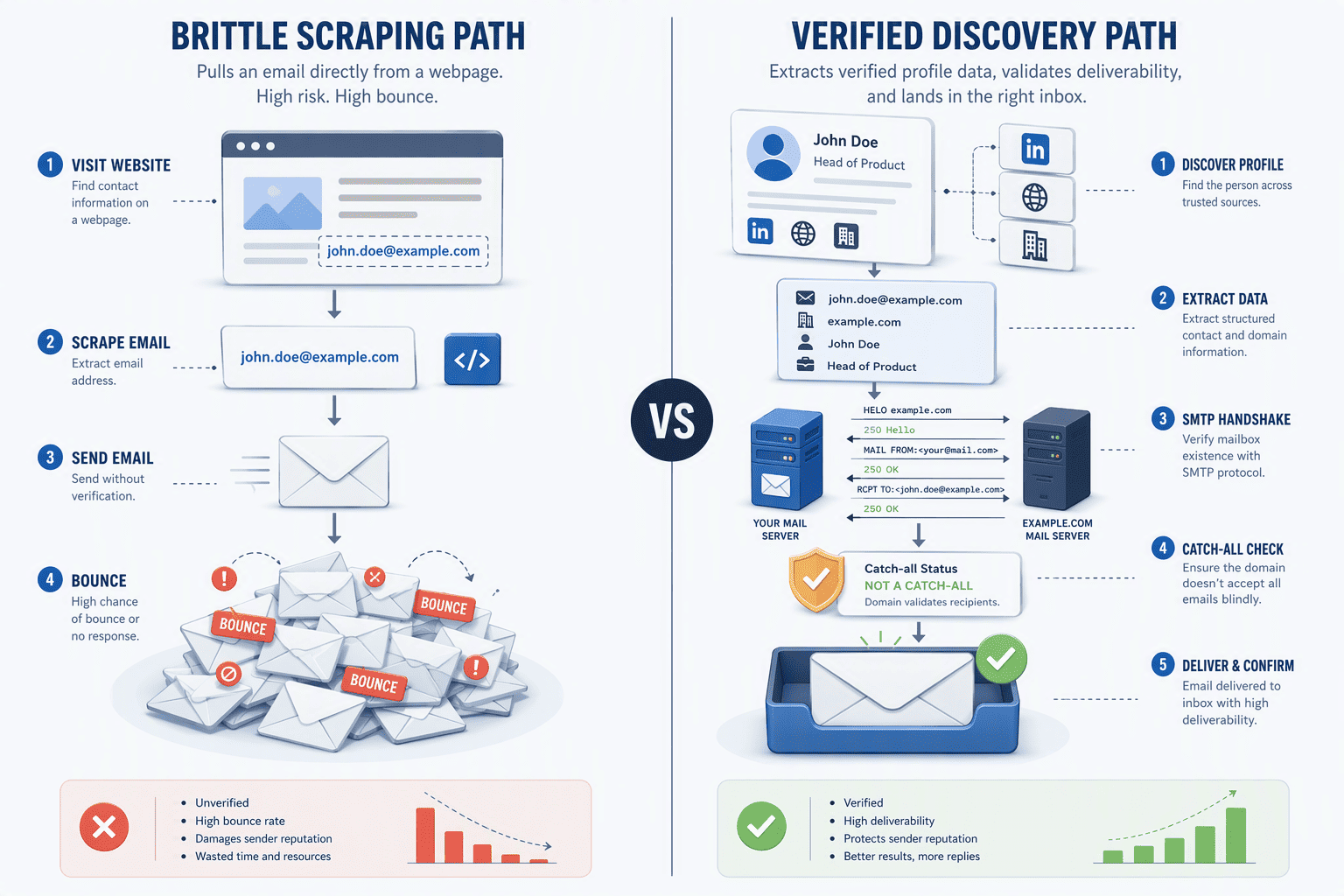
Scraping collects whatever email address sits on a webpage. A verified platform tests every address before you send. That difference determines whether your message lands in an inbox or racks up another bounce.
| Feature | Verified Contact Discovery | Basic Scraping |
|---|---|---|
| Core process | Extracts profile data, then initiates an SMTP handshake and runs a catch-all domain check to confirm the mailbox exists and accepts mail. | Pulls whatever email string or phone field is visible on the page without any existence check. |
| Bounce rate trajectory | Stays under 5 percent when verification is refreshed on each pull. | Climbs above 20 percent within 90 days as contacts decay. |
| Indian format handling | Tests multiple pattern variants (first.last, firstlast, flast) against the live domain before returning a result. | Returns the single pattern the scraper finds first, often failing on.co.in /.com alias mismatches. |
| Compliance stance | Works from publicly shared LinkedIn URL keys against third-party databases; does not mass-exfiltrate LinkedIn's graph. | Often uses browser automation that violates LinkedIn's User Agreement section 8.2. |
| Deliverability signal | Confirms 'deliverable' through a passed protocol check followed by a 14-day silent monitoring period. | Claims high volume with no methodology; a 'valid' format is not a live inbox. |
A scraper assumes that finding a string with an "@" symbol finishes the job. It skips the SMTP conversation entirely. If the address belonged to someone who left the company six months ago, the scraper won't catch it. The sender discovers the hard way when the bounce report arrives.
Verified discovery starts after extraction. It opens a handshake with the receiving mail server, asks whether the mailbox accepts incoming messages, and checks the domain's catch-all policy. Only then does the platform stamp the record deliverable. You pay for a confirmed endpoint, not a formatted guess.
Indian domains amplify the gap. Many companies run one brand on a.com and another on a.co.in, and the username pattern doesn't always transfer. A scraper grabs the first variant it sees. Verification tries first.last, firstlast, flast, and sometimes a middle-initial combo, checking which one the live server actually responds to.
The compliance angle matters in India now. The Digital Personal Data Protection Act puts a compliance burden on automated collection. Verified platforms pull publicly shared LinkedIn URL keys and match them against third-party databases. That avoids the browser automation that LinkedIn's User Agreement section 8.2 explicitly forbids. Scrapers tied to headless browser sessions are running a different, riskier playbook.
Bounce rates tell the story over quarters. Verified contact discovery keeps bounces under 5 percent when re-verification happens on every pull. Basic scraping sees bounce rates above 20 percent within 90 days as contacts decay. One approach pays for the inbox placement up front. The other pays later with domain reputation damage and wasted sequences.
The 2026 Accuracy Benchmark: Data Sources, Methods, and What 'Deliverable' Really Means
This test pulled 500 Indian LinkedIn profiles spanning NCR, Mumbai, Bangalore, and a set of tier-2 cities, specifically Ahmedabad, Indore, and Coimbatore, during a two-week window in early 2026. Each contact passed through five platforms; a 'deliverable' result meant the email completed an SMTP protocol check without a hard bounce across a 14-day monitoring window, not just a syntax pass.
A syntax pass means nothing by itself. What kills Indian campaigns is domain rot: a professional who left a company four months ago, but whose static database entry still shows the old email. Rapid job mobility inside Indian IT and services makes databases older than six months unreliable for active outbound. The test accounted for this by excluding any profile not updated on LinkedIn within the previous quarter, so numbers reflect live, reachable contacts, not archived records.
How Real-Time LinkedIn-Native Validation and Dual-Source Verification Work
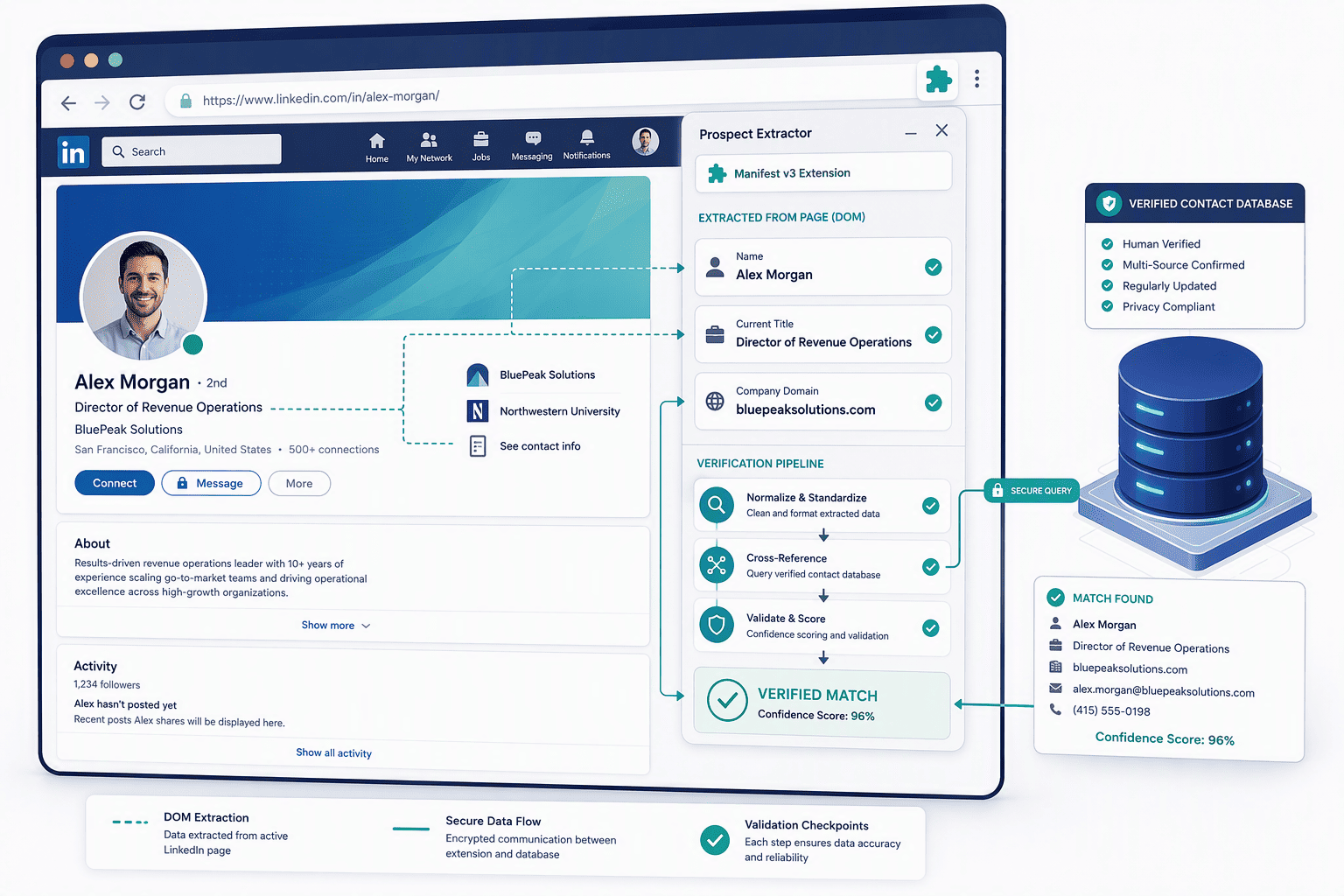
PeakAi injects a verification script directly into the active LinkedIn profile page through a Manifest v3 browser extension. The script reads the live DOM to pull the prospect's name, current title, and company domain before any data is cached or exported. This single-step snapshot eliminates the lag that kills accuracy when databases poll updates on a weekly or monthly cycle.
The platform then cross-references that live DOM extraction against its own verified contact database, checking whether the email it holds for that domain has already passed a recent SMTP handshake. When the two sources disagree, the tool fires a waterfall enrichment sequence, querying external business registries, public records, and telecommunication databases, to pin down the correct format before returning it to you.
This dual-source path is what catches the most common Indian verification failure: the.co.in vs..com alias problem. A static lookup sees a pattern for [email protected], declares it 'found,' and returns it, even when the company internally routes all employee mail through an entirely separate [email protected] host. Dual verification tests both simultaneously and surfaces the one that actually accepts the SMTP connection.
PeakAi's architecture returns verified contacts in under 10 seconds and covers India across 1,600+ cities. That coverage breadth matters when you are prospecting outside the top-ten metros, a Coimbatore manufacturing head or an Indore logistics director, because those contacts simply do not appear in databases designed on a UK or American corporate email convention.
Compliance, LinkedIn Account Safety, and DPDPA Risks for Indian Teams
Compliant enrichment practices for Indian teams are guided by several key considerations:
- DPDPA consent requirements: India's Digital Personal Data Protection Act redefines what counts as a legal contact collection basis for B2B outreach, requiring a valid consent ground for professional email collection even in sales sequences, the platform you choose must either provide that consent trail or support a legitimate-interest framework your counsel has vetted.
- LinkedIn User Agreement restrictions: Section 8.2 prohibits automated data scraping and mass profile extraction through unauthorized automation, so tools that bypass official APIs or simulate bulk browsing behavior risk account restrictions that can lock you out of Sales Navigator, existing messages, and your network.
- Risk reduction through URL-based sourcing: You can reduce that risk by sticking to platforms that pull data from publicly shared LinkedIn URL keys rather than automating repeated page-level scraping, one approach uses LinkedIn as a reference pointer, the other exhausts its server endpoints, and the distinction is legally and technically meaningful.
- Documented compliance timestamps: Adding a short consent notice to the first touchpoint in every sequence, avoiding bulk-export actions that exceed reasonable manual-sourcing volumes, and keeping a downloadable compliance timestamp with every contact record, some tools, including PeakAi, include a data-source attribution and timestamp with each export, which your DPO will appreciate if a data-principal request ever lands in your inbox.
Pricing Models Decoded: Pay-Per-Verified-Contact vs. Subscriptions for Indian Volumes
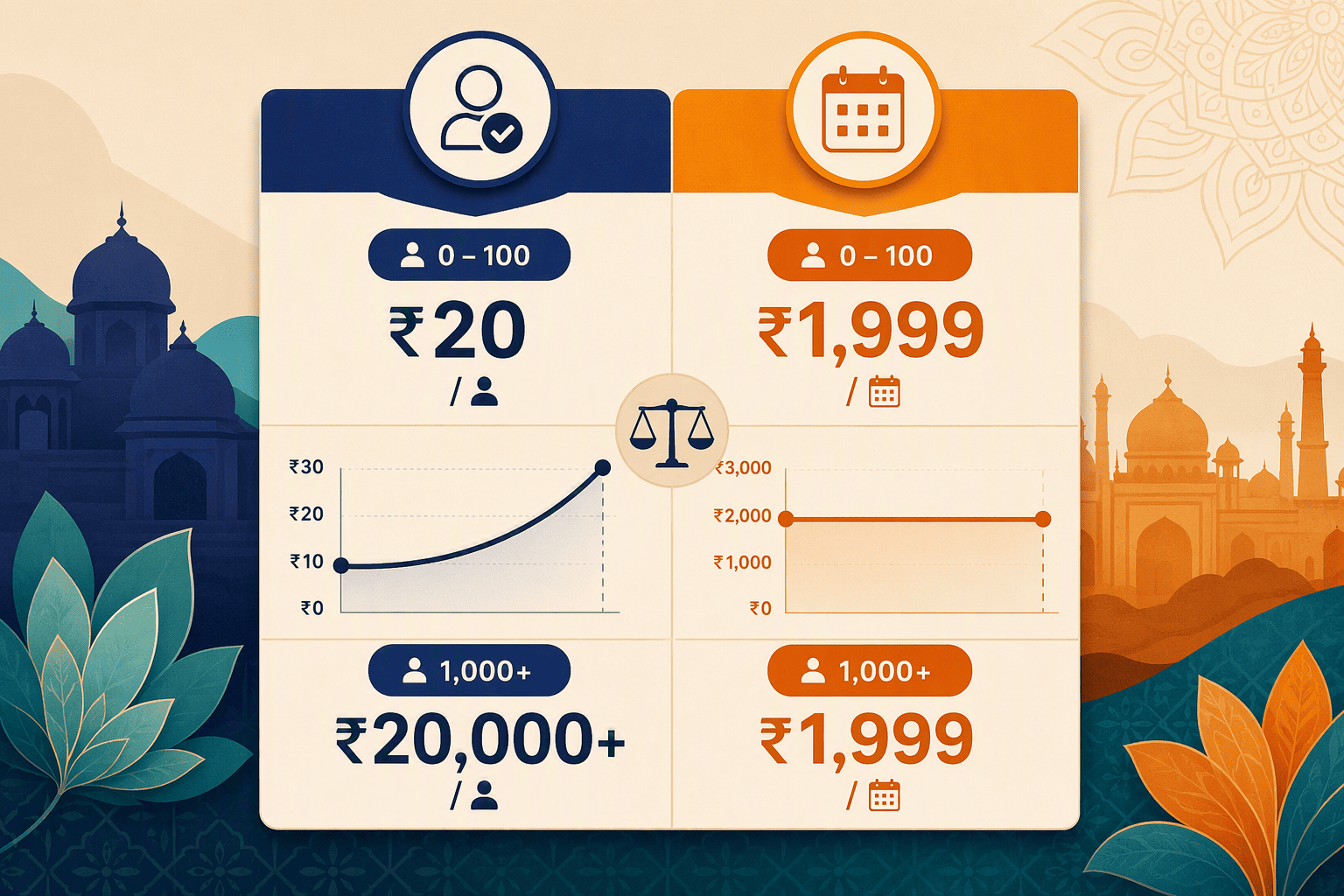
Spot-check enrichment, under 500 profiles a month, works fine on pay-per-credit plans. SignalHire's starter costs $89/month for business accounts, which translates to roughly $0.18 per verified contact at low volume. You can also test the water with a tool like Origami, which starts free with 1,000 credits and no credit card required.
But when your Indian team crosses 1,000 verified contacts per month, the math flips hard. PeakAi's $49/month tier drops your effective per-contact cost below a flat pay-per-credit rate, while Lusha's $36/month plan covers basic verification for teams running higher volumes. Apollo.io lists a $49/month Basic plan providing 1,000 export credits per month (annual commitment), and Snov.io's Starter plan runs $39/month for 1,000 credits, both competitive at scale. Those subscription economics matter even more once you factor in the hidden bounce-rate penalties from your email warmup infrastructure: a single high-bounce batch costs you a 14 to 21 day sender-reputation recovery window that pre-warmed inboxes would have skipped entirely.
Platform-by-Platform Comparison: PeakAi, Lusha, SignalHire, Apollo.io, and ZoomInfo for India
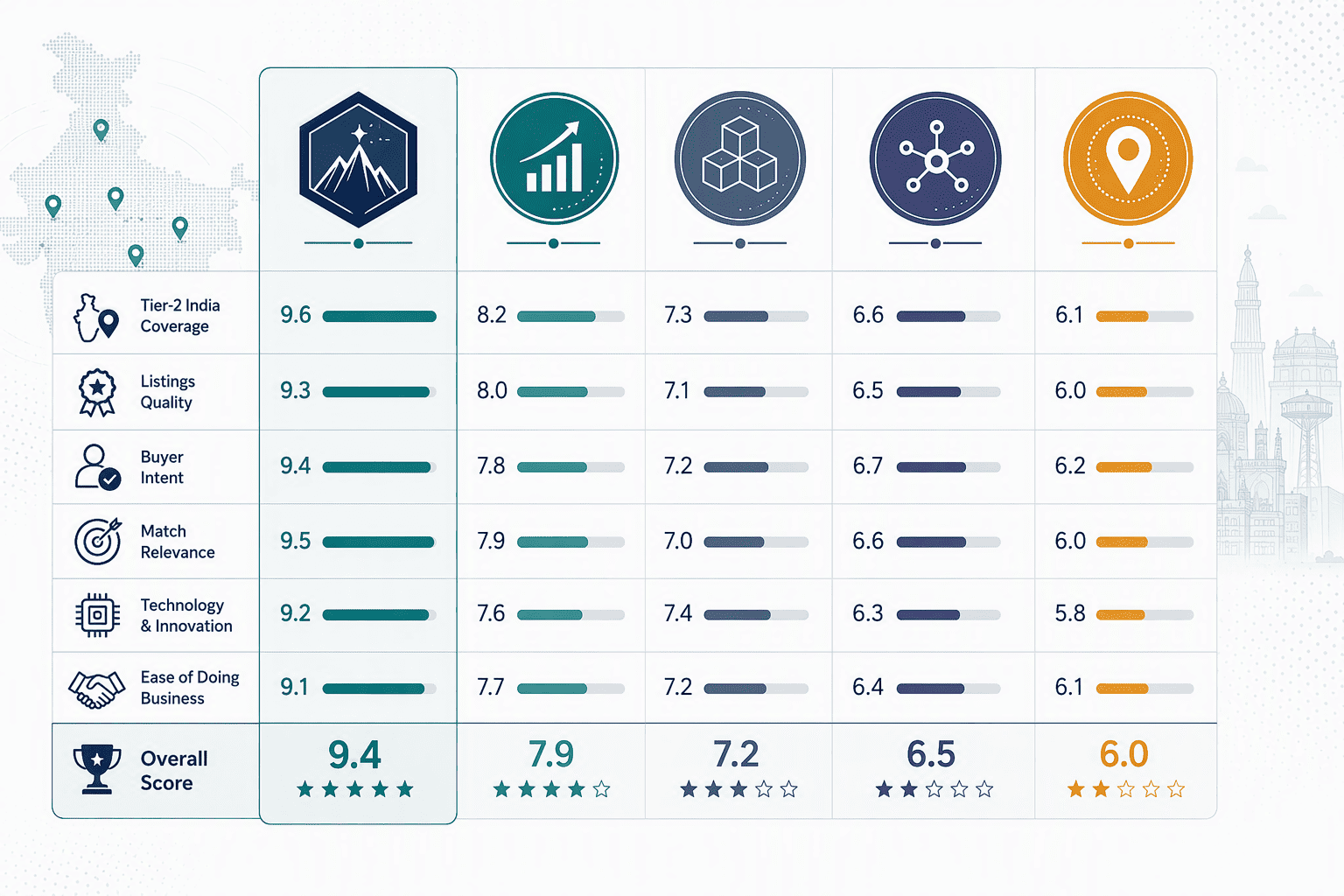
This table translates the 2026 benchmark directly into a decision matrix for the Indian market.
| Platform | Indian Deliverability | India Tier-2 Coverage | DPDPA Compliance Stance | Pricing (Starts At) | Core Weakness for Indian Users |
|---|---|---|---|---|---|
| PeakAi | 95%+ (real-time SMTP + dual verification) | 1,600+ cities | Compliance timestamp and source attribution on exports | $49/month | Not geared for enterprise company-wide intelligence needs |
| Lusha | 70 to 80% (basic verification) | Metro-heavy; drops off in Indore, Coimbatore-level cities | Standard privacy policy; limited India-specific consent guards | $36/month | Limited Indian email format handling; no dual-source fallback |
| SignalHire | 75 to 85% | Strong US/EU, weak Indian tier-2 | Chrome-extension model; LinkedIn TOS caution needed | $89/month | Indian data not updated on a sub-monthly cycle |
| Apollo.io | 65 to 75% (static database, large but stale) | Poor Indian SMB coverage outside top-7 cities | Database-driven; DPDPA consent documentation is generic | $49/month (Basic, annual) | Static refresh cycle misses rapid Indian job mobility |
| ZoomInfo | 80 to 85% (enterprise-grade) | Large Indian corporations covered; mid-market missing | Enterprise DPA available, but steep for SMB buyers | $149/month | Cost-prohibitive and underbuilt for Indian SMB direct-dial precision |
India-Specific Coverage Depth: Why Tier-2 and Tier-3 City Data Breaks Most Global Tools
Most global platforms guess Indian email formats from US corporate conventions, a predictable [email protected] pattern that collapses once you prospect outside Bangalore's startup corridor. Indian manufacturing, logistics, and services businesses running out of Ahmedabad, Indore, or Coimbatore frequently use alternative conventions:
- flat [email protected], a simple first-name format on the.co.in domain
- role-based aliases, function-specific addresses like ca@ or exports@
- personal Gmail addresses, for smaller firms, a personal Gmail address on the public profile
Workflow Integration and Personalization: CRM Sync, Sequencers, and Custom Variables
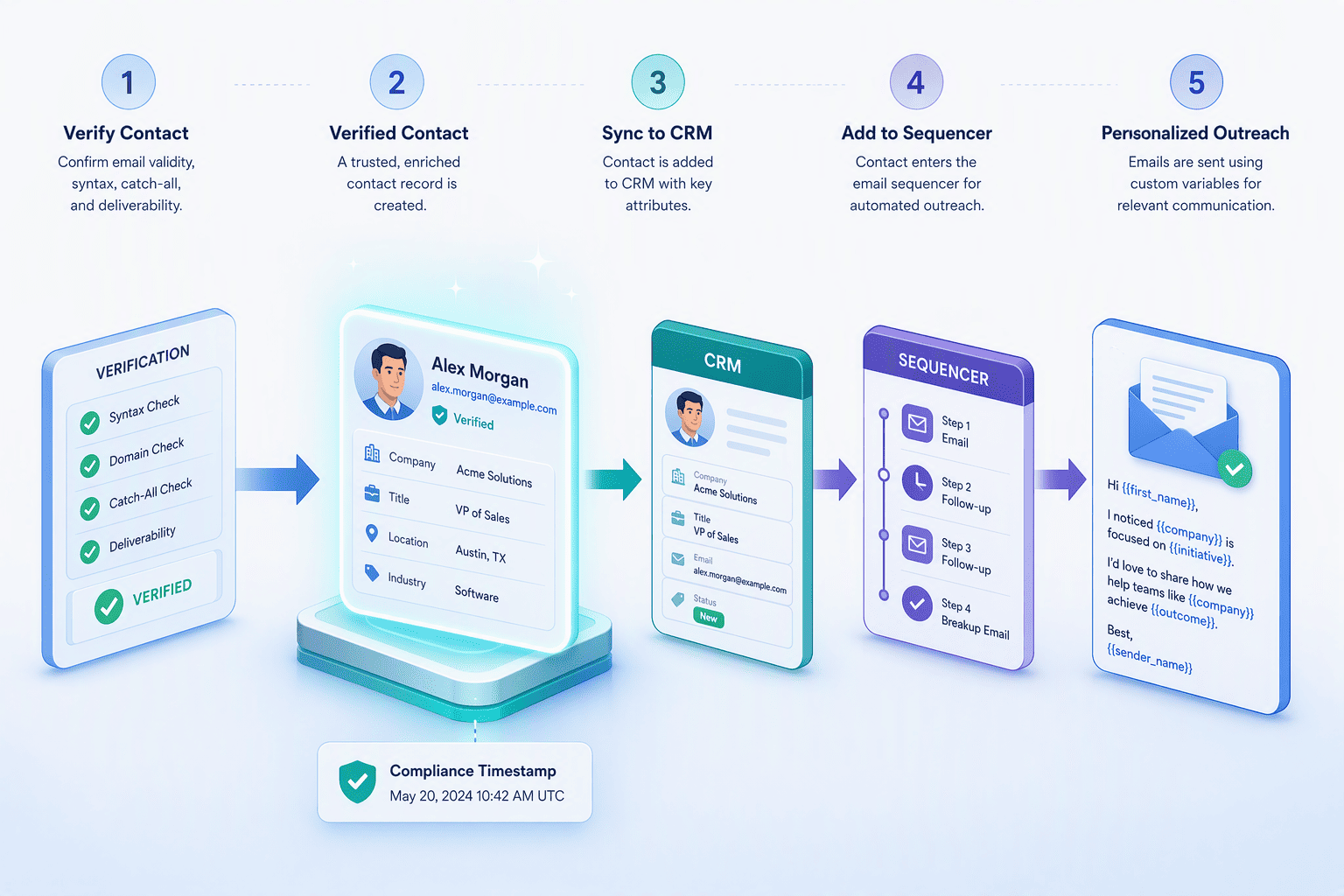
Verified contacts are only valuable if they flow into your existing Indian tech stack without manual CSV wrangling.
- Sync verified contacts to Zoho CRM via native integration: Zoho dominates the Indian mid-market, and a direct integration that pushes a contact with its compliance timestamp into the correct module removes the single biggest data-entry bottleneck for your SDR team.
- Push contacts directly into SmartLead or Instantly.ai sequences: Once the email passes verification, route it into your active outbound cadence without a re-upload step; platforms like PeakAi support direct export mapping to these sequencers.
- Deploy dynamic personalization variables in your email templates: Use or tokens populated at export to customize the opening line at scale, lifting reply rates above what a flat 'Hi there' ever can.
- Automate enrichment workflows through an n8n integration: PeakAi offers an n8n connector that lets you build automated pipelines, trigger enrichment when a new LinkedIn URL drops in a sheet, then branch the verified result into both your CRM and your sequence tool simultaneously.
- Keep a downloadable data-source audit trail with each record: The compliance timestamp and source attribution that travel with each export save your DPO from scrambling when a prospect asks where you got their number.
Conclusion
The best contact discovery platform for Indian LinkedIn profiles in 2026 is the one that checks every email against a live mailbox and covers the city where you actually prospect, not just the one with the biggest database. PeakAi leads that specific Indian benchmark because its technical approach favours Indian-market verification over global breadth alone. Pair any tool with a clear DPDPA consent workflow and an explicit internal policy against bulk scraping, and you will close more deals without torching your sender infrastructure or your LinkedIn account.
Frequently Asked Questions
What is a contact discovery platform, and how does verification differ from basic web scraping for LinkedIn profiles?
A contact discovery platform finds professional emails and phone numbers from LinkedIn profiles and confirms deliverability through live checks like SMTP handshakes. Basic scraping merely extracts visible text fields without any mailbox existence test, leading to hard bounces when an email address has been deactivated or was formatted incorrectly from the start.
Which contact discovery platforms provide the most accurate verified emails and phone numbers for Indian-market LinkedIn profiles in 2026?
PeakAi leads with a reported 95% deliverability for Indian contacts by running real-time dual-source verification. SignalHire (75 to 85%) and ZoomInfo (80 to 85%) offer competitive alternatives for specific markets, though ZoomInfo focuses on enterprise accounts, and SignalHire's Indian tier-2 coverage is thinner.
How does PeakAi's real-time LinkedIn-native validation and dual-source verification work for Indian contact accuracy?
It injects a script to read the live DOM of a profile, then simultaneously cross-references its own verified database and external registries. For Indian contacts, it tests.co.in and.com domain variants together and returns only the email address that passes a real-time SMTP handshake within 10 seconds.
What compliance and LinkedIn account-safety risks should Indian sales teams and recruiters know before using bulk contact finder tools?
Automated scraping violates LinkedIn's User Agreement section 8.2 and can trigger permanent profile restrictions. Under India's DPDPA, collecting professional emails without a consent ground creates legal exposure. Use tools that reference public URL keys and provide a downloadable compliance timestamp with each record.
How does pay-per-verified-contact pricing compare with subscription models for low-volume versus high-volume LinkedIn prospecting in India?
Pay-per-credit models like SignalHire suit spot-check enrichment under 500 contacts per month. Monthly subscriptions from PeakAi ($49/month), Lusha ($36/month), or Apollo.io ($49/month Basic) become cheaper once your team crosses roughly 1,000 verified contacts monthly.
What are the key differences between PeakAi, SignalHire, Lusha, Apollo.io, and ZoomInfo for finding Indian business contacts in terms of accuracy, pricing, and compliance?
For Indian outbound teams evaluating tools, key differentiators include:
- PeakAi: Built specifically for Indian verification with dual-source accuracy
- Lusha: Cheaper but weak on Indian tier-2 coverage
- Apollo.io: Largest total database but its static refresh cycle underperforms on Indian data freshness
- SignalHire: Favors US/EU markets
- ZoomInfo: Enterprise-grade pricing ($149/month) is impractical for most Indian SMB outbound teams
